1892 GILMAN, Charlotte Perkins (1860 – 1935)
The yellow wall-paper.
This 6,000-word short story by is regarded as an important early work of American feminist literature, illustrating and critiquing 19th century attitudes toward women's health, both physical and mental. Digital facsim…
GMN 9725 · https://historyofmedicine.com/id/11912
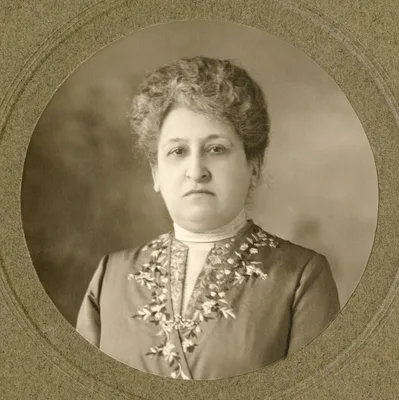
1892 MEYER, Annie Nathan (1867 – 1951)
Helen Brent, M. D. A social study.
A short, memorable novel about a woman who faces the agonizing choice between career and marriage, and chooses medicine. Among her achievements, Meyer was a founder of Barnard College. Digital facsimile from Google Bo…
GMN 13199 · https://historyofmedicine.com/id/15460
1893 LADD-FRANKLIN, Christine (1847 – 1930)
Eine neue Theorie der Licht-Empfindung.
Ladd-Franklin theory of vision.
GMN 1522 · https://historyofmedicine.com/id/2847
1893 ROBB, Isabel Adams Hampton (1859 – 1910)
Nursing: Its principles and practice for hospital and private use.
Isabel Hampton Robb was the first Superintendent of Nurses at the Johns Hopkins School of Nursing. Her textbook standardized the education of nursing in the U.S. and abroad. It included an outline for a 3-year long nu…
GMN 14364 · https://historyofmedicine.com/id/16696
1894 MANASEINA, Maria Mikhailovna (Marie de Manacéine) (1841 – 1903)
Quelques observations expérimentales sur l'influence de l'insomnie absolue.
The first experimental study of sleep deprivation. Manaseina "performed her experimental investigation on 10 puppies (2, 3, or 4 months old), fed by their mothers, by keeping the animals in constant activity. The expe…
GMN 12456 · https://historyofmedicine.com/id/14688
1895 –1901 DEJERINE, Joseph Jules (1849 – 1917); DEJERINE-KLUMPKE, Augusta (1859 – 1927)
Anatomie des centres nerveux. 2 vols.
Classic summary of neuroanatomy at the end of the nineteenth century—comprehensive, beautifully illustrated, and scholarly. It is a goldmine of historical information with an outstanding bibliography.
GMN 1424 · https://historyofmedicine.com/id/2158
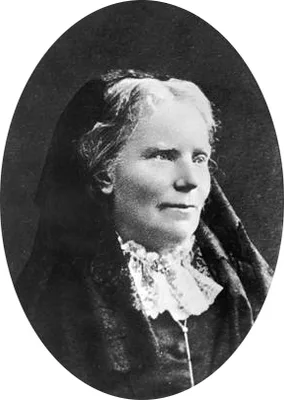
1895 BLACKWELL, Elizabeth (1821 – 1910)
Pioneer work in opening the medical profession to women; autobiographical sketches.
Blackwell led the movement in America to open the medical profession to women.
GMN 6649.92 · https://historyofmedicine.com/id/7781
1895 HOLLAND, Mary A. Gardner
Our army nurses. Interesting sketches, addresses, and photographs of nearly one hundred of the noble women who served in hospitals and on battlefields during our civil war.
Digital facsimile from the Internet Archive at this link.
GMN 9001 · https://historyofmedicine.com/id/11180
1896 MANASEINA, Maria Mikhailovna (Marie de Manacéine) (1841 – 1903)
Le sommeil, tiers de notre vie. Pathologie, physiologie, hygiène, psychologie. Traduit de Russe avec l'autorisation de l'auteur par Ernest Jaubert.
Perhaps the first book on the physiology of sleep. The author examines the physiology, pathology, hygiene, and psychology of sleep, including the differences between the waking and sleeping states, the general phenome…
GMN 12454 · https://historyofmedicine.com/id/14686
1897 JACOBS, Aletta Henriëtte (1854 – 1929)
De Vrouw: Haar bouw en haar inwendige organen. Een populaire schets.
Jacobs was the first woman in the Netherlands to graduate from medical school. In 1882 she founded the first birth control clinic in the Netherlands and "the first clinic in the world devoted solely to dissemtinating …
GMN 14308 · https://historyofmedicine.com/id/16633
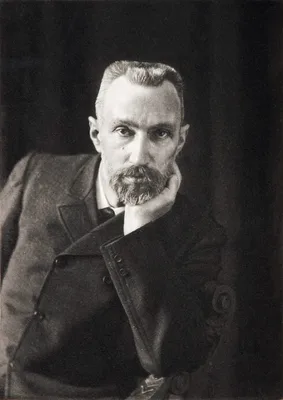
1898 CURIE, Pierre (1859 – 1906); CURIE, Marie Sklodowska (1867 – 1934)
Sur une substance nouvelle radio-active, contenue dans la pechblende.
The Curies, studying the radioactivity of minerals containing uranium and thorium, isolated from pitchblend a substance which they called radium and which they showed to possess an astonishing degree of radioactivity.…
GMN 2003 · https://historyofmedicine.com/id/1914
1898 BARTON, Clarissa (1821 – 1912)
The Red Cross in peace and war.
Barton founded the American Red Cross in 1881. Although Henry Dunant had suggested in 1864 that Red Cross societies provide disaster relief as well as wartime services, Barton became the strongest advocate for the dev…
GMN 7058 · https://historyofmedicine.com/id/9225
1900 LIPINSKA, Mélanie (1865 – 1933)
Histoire des femmes médecins depuis l’antiquité jusqu’à nos jours.
GMN 6649.93 · https://historyofmedicine.com/id/7784
1901 SABIN, Florence Rena (1871 – 1953)
An atlas of the medulla and midbrain: A laboratory manual.
GMN 11180 · https://historyofmedicine.com/id/13377
1902 MENDENHALL, Dorothy Mabel Reed (1874 – 1964)
On the pathological changes in Hodgkin’s disease, with especial reference to its relation to tuberculosis.
Dorothy Reed’s classic work on Hodgkin’s disease included a study of the histological picture. She described the proliferation of the endothelial and reticular cells, and the formation of lymphadenoma cells – “Dorothy…
GMN 3780 · https://historyofmedicine.com/id/4677
1902 BLACKWELL, Elizabeth (1821 – 1910)
Essays in medical sociology. 2 vols.
Digital facsimile from the Internet Archive at this link.
GMN 12082 · https://historyofmedicine.com/id/14291
1905 –1906 STARLING, Ernest Henry (1866 – 1927); LANE-CLAYPON, Janet Elizabeth (1877 – 1967)
An experimental enquiry into the factors which determine the growth and activity of the mammary glands.
In their classic paper on the mammary gland, these workers attributed its changes during pregnancy to the fetus.
GMN 1180 · https://historyofmedicine.com/id/1633
1905 KELLY, Howard Atwood (1858 – 1943); HURDON, Elizabeth (1869 – 1941); BRÖDEL, Max (1870 – 1941)
The vermiform appendix and its diseases. With 399 original illustrations, some in colors, and 3 lithographic plates.
The first comprehensive book on the pathology of the appendix. Many of the illustrations are by Max Brödel. Digital facsimile from the Internet Archive at this link.
GMN 3571 · https://historyofmedicine.com/id/4086
1906 HOPKINS, Sir Frederick Gowland (1861 – 1947); WILLCOCK, Edith Gertrude (1879 – 1953)
The importance of individual amino-acids in metabolism.
Demonstration of the importance of tryptophan in diet. The pioneer work of Hopkins led eventually to the discovery of vitamins.
GMN 732 · https://historyofmedicine.com/id/1097
1906 DE WITT, Lydia Maria Adams (1859 – 1928)
Morphology and physiology of areas of Langerhans in some vertebrates
Lydia De Witt ligated the pancreatic ducts and obtained extracts from the islets of Langerhans in cats, noting their glycolytic qualities.
GMN 3959 · https://historyofmedicine.com/id/5233
1907 BESREDKA, Alexandre (1870 – 1940); STEINHARDT, Edna
De l’anaphylaxie et de l’anti-anaphylaxie vis-à-vis du sérum de cheval.
“Anti-anaphylaxis” was the term given by Besredka and Steinhardt to the specific desensitization of sensitized animals.
GMN 2596 · https://historyofmedicine.com/id/2960
1907 –1912 NUTTING, Mary Adelaide (1858 – 1948); DOCK, Lavinia Lloyd (1858 – 1956)
A history of nursing. The evolution of nursing systems from the earliest times to the foundation of the first English and American training schools for nurses [and] From the earliest times to the present day with special reference to the work of the past thirty years. 4 vols.
Vols. 3-4 by L.L Dock only.
GMN 6635 · https://historyofmedicine.com/id/7731
1907 –1951 WARTHIN, Aldred Scott (1866 – 1931); ABBOTT, Maude Elizabeth Seymour (1869 – 1940)
Bulletin of the International Association of Medical Museums, Vols. 1-32. Edited by Maude E. Abbott, Alfred Scott Warthin, and others.
Digital facsimile from the Hathi Trust at this link.
GMN 11297 · https://historyofmedicine.com/id/13494
1910 LONDON, Efim Semenovich (1869 – 1939); DOBROVOLSKAYA-ZAVADSKAYA, Nadezhda Alexandrovna (1878 – 1954)
Studien über die spezifische Anpassung der Verdauungssäfte. III. Mittheilung.
Digital facsimile from ECHO at this link.
GMN 1028 · https://historyofmedicine.com/id/943
1911 FREUND, Ernst (1863 – 1946); KAMINER, Gisa (1883 – 1941)
Zur Diagnose des Karzinoms.
A serum reaction, employed by Freund and Kaminer in 1910 for the diagnosis of cancer.
GMN 2638 · https://historyofmedicine.com/id/3243
1911 AIKENS, Charlotte Albina (1868 – 1949)
Hospital management: A handbook for hospital trustees, superintendents, training-school principals, physicians, and all who are actively engaged in promoting hospital work. Edited by Charlotte A. Aikens.
Digital facsimile from the Google Books at this link.
GMN 8598 · https://historyofmedicine.com/id/10775
1913 MCCOLLUM, Elmer Verner (1879 – 1967); DAVIS, Marguerite (1887 – 1967)
The necessity of certain lipids in the diet during growth.
Discovery of “fat-soluble A” (vitamin A). See also J. biol. Chem., 1915, 23,181-246, in which the same authors showed the necessity in diet for at least two factors – “fat-soluble A” and “water-soluble B”.
GMN 1049 · https://historyofmedicine.com/id/594
1913 SABIN, Florence Rena (1871 – 1953)
The origin and development of the lymphatic system.
GMN 1113 · https://historyofmedicine.com/id/1191
1913 CANNON, Ida Maud (1877 – 1960)
Social work in hospitals: A contribution to progressive medicine.
Cannon, sister of Walter Bradford Cannon, established medical social work as an accepted subspecialty of social work first at Massachusetts General Hospital, and eventually throughout the U.S. Her career was closely a…
GMN 10791 · https://historyofmedicine.com/id/12987
1913 MENTEN, Maud Lenore (1879 – 1960); MICHAELIS, Leonor (1875 – 1949)
Die Kinetik der Invertinwirkung.
The Michaelis-Menten equation, which showed that the rate of an enzyme-catalyzed reaction is proportional to the amount of the enzyme-substrate complex. This relationship between reaction rate and enzyme–substrate con…
GMN 11438 · https://historyofmedicine.com/id/13637
1914 –1915 LEWIS, Margaret Adaline Reed (1881 – 1970); LEWIS, Warren Harmon (1870 – 1964)
Mitochondria and other cytoplasmic structures in tissue cultures.
Original investigations upon the visible mitochondria.
GMN 561 · https://historyofmedicine.com/id/288
1916 LOEB, Leo (1869 – 1959); LATHROP, Abbie E. C. (1868 – 1918)
Further investigations on the origin of tumours in mice. III. On the part played by internal secretion in the spontaneous development of tumours.
Demonstration of the influence of an internal secretion on the development of spontaneous cancer. Castration of female mice of a strain in which mammary cancer was frequent reduced its incidence and delayed its growth.
GMN 2642 · https://historyofmedicine.com/id/3268
1916 AIKENS, Charlotte Albina (1868 – 1949)
Studies in ethics for nurses.
Digital facsimile from the Hathi Trust at this link.
GMN 8599 · https://historyofmedicine.com/id/10776
1917 –1940 SANGER, Margaret (1879 – 1966)
The Birth Control Review.
Sanger edited The Birth Control Review until 1929. A new series began in 1933. It was a birth control advocacy periodical published by the American Birth Control League, and later by its successor, the Birth Control F…
GMN 7106 · https://historyofmedicine.com/id/9273
1919 HURLER, Gertrud (1889 – 1965)
Ueber einen Typ multipier Abartungen, vorwiegend am Sklettsystem.
Hurler syndrome (lipochondrodystrophy, gargoylism), earlier described by Hunter (No. 6371.1).
GMN 6371.2 · https://historyofmedicine.com/id/8308
1920 VOGT-MUGNIER, Cécile (1875 – 1962); VOGT, Oskar (1870 – 1959)
Zur Lehre der Erkrankungen des striären Systems.
“Vogt syndrome”, disease of the corpora striata.
GMN 4720 · https://historyofmedicine.com/id/1217
1920 MURRAY, Flora (1869 – 1923); ANDERSON, Louisa Garrett (1873 – 1943)
Women as army surgeons. Being the history of the Women's Hospital Corps in Paris, Wimereux & Endell Street, September 1914 - October 1919
Together with Louisa Garrett Anderson (1873-1943), to whom the book was dedicated, Murray co-founded the Women's Hospital for Children in 1912. The hospital provided health care for working-class children of the area,…
GMN 7157 · https://historyofmedicine.com/id/9324
1921 PEARCE, Louise (1886 – 1959)
Studies on the treatment of human trypanosomiasis with tryparsamide (the sodium salt of N-phenylglycineamide-p-arsonic acid).
Introduction of tryparsamide in the treatment of trypanosomiasis.
GMN 5287 · https://historyofmedicine.com/id/6364
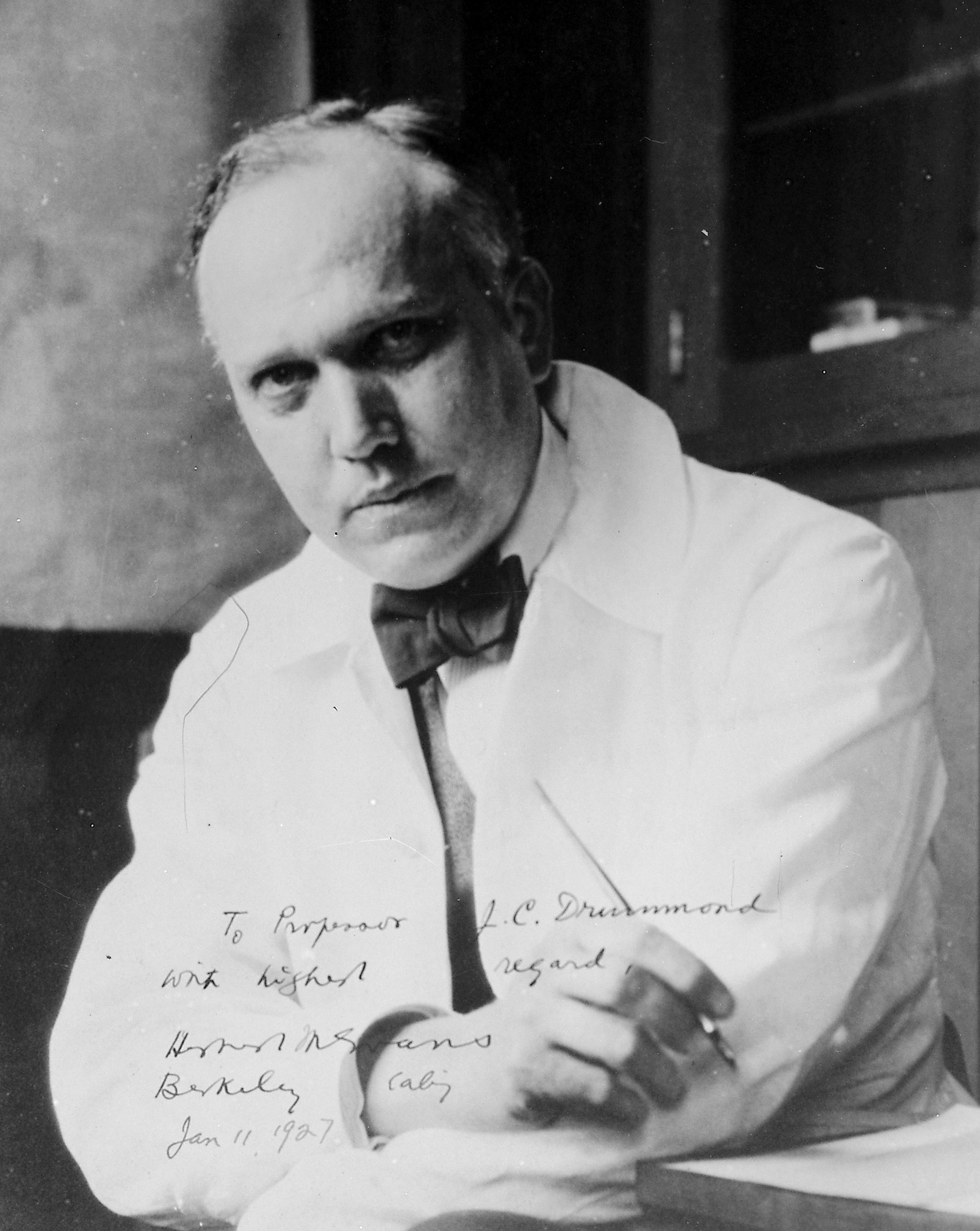
1922 EVANS, Herbert McLean (1882 – 1971); BISHOP, Katharine Scott (1889 – 1976)
On the existence of a hitherto unrecognized dietary factor essential for reproduction.
Discovery of vitamin E. See also their later paper in J. Amer. med. Ass.,1923, 81, 889-92.
GMN 1055 · https://historyofmedicine.com/id/641
1923 STOPES, Marie Charlotte Carmichael (1880 – 1958)
Contraception (birth control). Its theory, history and practice. A manual for the medical and legal professions.
The first formal handbook on birth control.
GMN 1641.2 · https://historyofmedicine.com/id/2124
1924 SPEMANN, Hans (1869 – 1941); MANGOLD, Hilde (1898 – 1924)
Über Induktion von Embryonalanlagen durch Implantation artfremder Organisatoren.
This was Hilde Mangold's thesis. Spemann designed the experiment, and Mangold performed the work, and was the co-discoverer of the "organizer," the chemical that directs the embryonic development of tissues and organs…
GMN 530 · https://historyofmedicine.com/id/1687
1924 DICK, George Frederick (1881 – 1967); DICK, Gladys Rowena Henry (1881 – 1963)
A skin test for susceptibility to scarlet fever.
The “Dick test” for the determination of individual susceptibility to scarlet fever.
GMN 5082 · https://historyofmedicine.com/id/5946
1924 DICK, George Frederick (1881 – 1967); DICK, Gladys Rowena Henry (1881 – 1963)
The etiology of scarlet fever.
Proof that streptococcus is the cause of scarlet fever.
GMN 5082.1 · https://historyofmedicine.com/id/5949
1924 DICK, George Frederick (1881 – 1967); DICK, Gladys Rowena Henry (1881 – 1963)
A scarlet fever antitoxin.
Following their successful attempts to establish individual susceptibility to scarlet fever, these workers prepared an antitoxin for immunization.
GMN 5083 · https://historyofmedicine.com/id/5951
1924 DOCHEZ, Alphonse Raymond (1882 – 1964); SHERMAN, Lillian
The significance of Streptococcus hemolyticus in scarlet fever and the preparation of a specific anti-scarlatinal serum by immunization of the horse to Streptococcus hemolyticus-scarlatinae.
Dochez and Sherman immunized a horse by repeated injections of scarlet fever toxin. A serum obtained from the horse blanched a scarlet fever rash and, when injected subcutaneously, caused marked amelioration of the ea…
GMN 5084 · https://historyofmedicine.com/id/5955
1925 DOAN, Charles Austin (1896 – 1990); CUNNINGHAM, Robert Sydney (1891 – 1963); SABIN, Florence Rena (1871 – 1953)
Experimental studies on the origin and maturation of avian and mammalian red blood-cells.
GMN 909 · https://historyofmedicine.com/id/1058
1925 HAMILTON, Alice (1869 – 1970)
Industrial poisons in the United States.
GMN 2134 · https://historyofmedicine.com/id/2670
1925 ROBSCHEIT-ROBBINS, Frieda Saur (1893 – 1973); WHIPPLE, George Hoyt (1878 – 1976)
Blood regeneration in severe anaemia. II. Favourable influence of liver, heart and skeletal muscle in diet.
These workers showed the beneficial effect of raw beef liver upon blood regeneration in anemia. Their work paved the way for the liver diet treatment of Minot and Murphy. In 1934 Whipple shared the Nobel Prize in Phys…
GMN 3139 · https://historyofmedicine.com/id/3949
1925 EVANS, Alice Catharine (1881 – 1975)
Studies on Brucella (Alkaligenes) melitensis.
Forms Bulletin No. 143 of the U.S. Public Health Service Hygienic Laboratory. Alice Evans showed that the causal organism of Malta fever was closely related to Brucella abortus, responsible for contagious abortion in …
GMN 5103 · https://historyofmedicine.com/id/6034
1926 LANE-CLAYPON, Janet Elizabeth (1877 – 1967)
A further report on cancer of the breast, with special reference to its associated antecedent conditions.
First modern case-control study.
GMN 5782.1 · https://historyofmedicine.com/id/6835