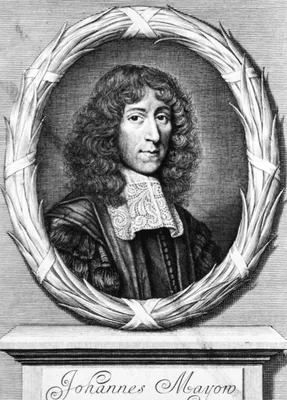
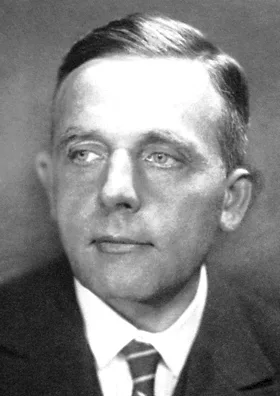
1674 MAYOW, John (1643 – 1679)
Tractatus quinque medico-physici.
Mayow was the first to locate the seat of animal heat in the muscles; he discovered the double articulation of the ribs with the spine and came near to discovering oxygen in his suggestion that the object of breathing…
GMN 2726.2 · https://historyofmedicine.com/id/366
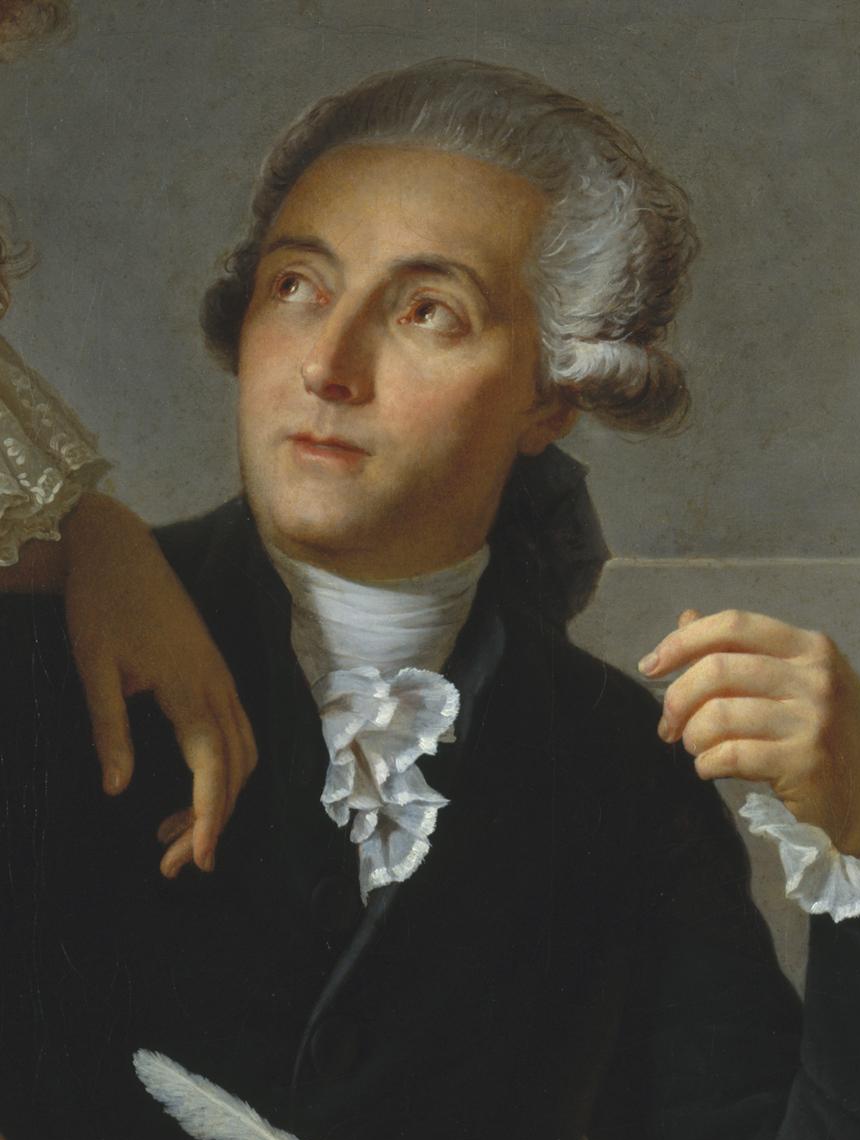
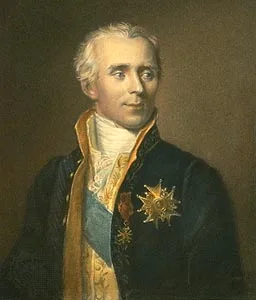
1784 LAVOISIER, Antoine Laurent de (1743 – 1794); LAPLACE, Pierre-Simon marquis de (1749 – 1827)
Mémoire sur la chaleur.
These workers invented an ice calorimeter, with it measured the respiratory quotient of a pig, and demonstrated the analogy between respiration and combustion.
GMN 592 · https://historyofmedicine.com/id/392
1793 LAVOISIER, Antoine Laurent de (1743 – 1794); SÉGUIN, Armand (1768 – 1835)
Premier mémoire sur la respiration des animaux.
Séguin and Lavoisier measured the metabolism of a man (Séguin himself). They made three observations of fundamental importance in this respect; that the intensity of oxidation in man is dependent upon (1) food, (2) en…
GMN 594 · https://historyofmedicine.com/id/420
1801 LE GALLOIS, Julien Jean César (Legallois) (1770 – 1814)
Le sang, est-il identique dans tous les vaisseaux qu’il parcourt?
Like de Bordeu, and more definitely, Legallois anticipated the conception of internal secretions. He surmised from the identity in composition of all varieties of arterial blood and the diversity of venous blood in di…
GMN 1118 · https://historyofmedicine.com/id/1200
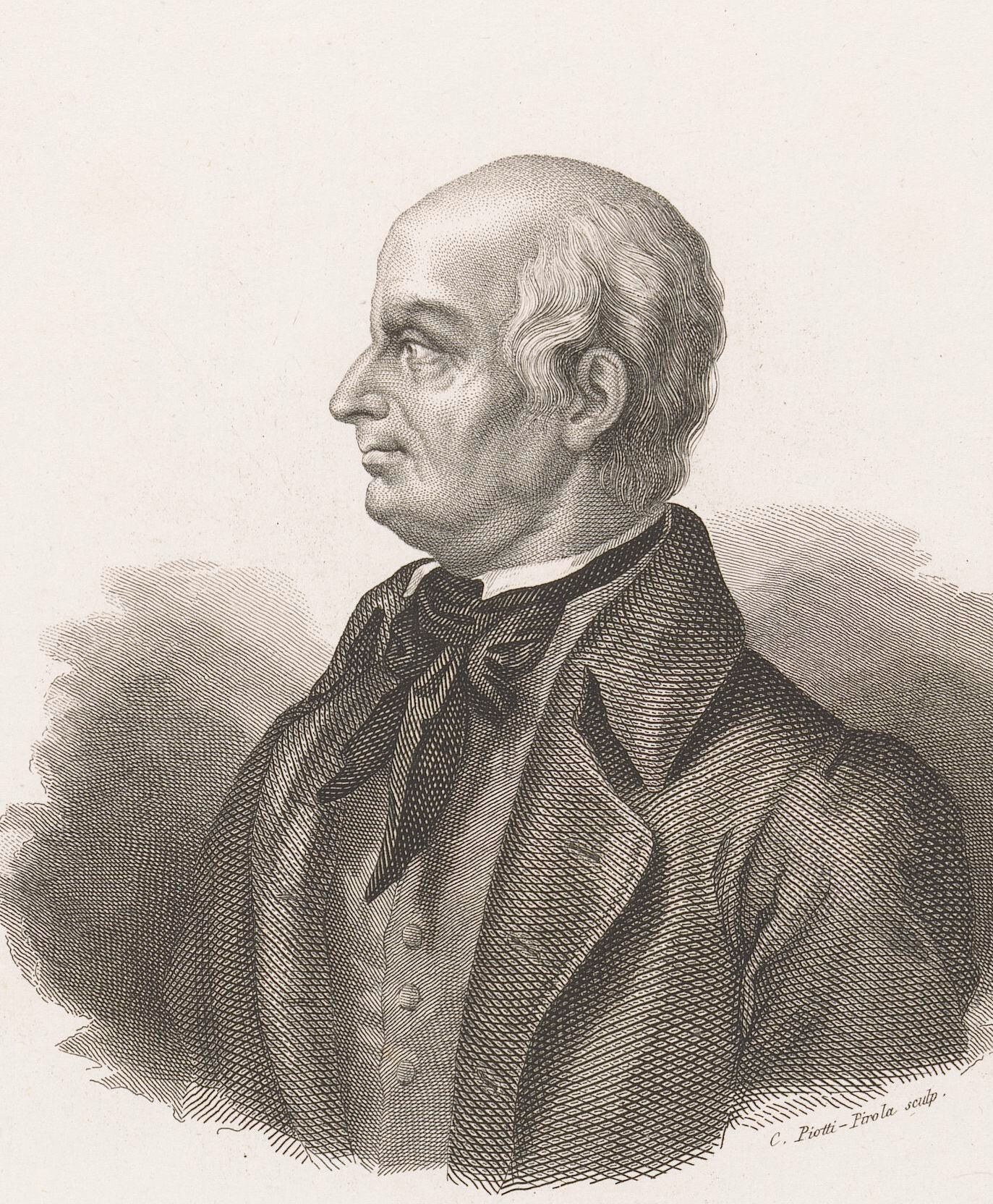
1803 SPALLANZANI, Lazzaro (1729 – 1799); SENEBIER, Jean (1742 – 1809)
Mémoires sur la respiration par Lazare Spallanzani, traduits en français, d'après son manuscrit inédit, par Jean Senebier.
Spallanzani's experimental data laid the groundwork for modern conceptions of respiratory physiology. In concluding that the blood transported carbon dioxide as a product of tissue oxidation, Spallanzani discovered pa…
GMN 11709 · https://historyofmedicine.com/id/13910
1837 MAGNUS, Heinrich Gustav (1802 – 1870)
Ueber die im Blute enthaltenen Gase, Sauerstoffe, Stickstoff, und Kohlensäure.
First quantitative analysis of the blood gases. Magnus proved that the arterial blood contains a higher concentration of oxygen than venous blood and that the latter had a higher carbon dioxide content.
GMN 929 · https://historyofmedicine.com/id/145
1846 HUTCHINSON, John (1811 – 1861)
On the capacity of the lungs, and on the respiratory functions, with a view of establishing a precise and easy method of detecting disease by the spirometer.
Invention of the spirometer, making possible the determination of the vital capacity of the lungs. Hutchinson used the spirometer while evaluating candidates for life insurance as a physician for Brittania Life. Parti…
GMN 930 · https://historyofmedicine.com/id/149
1847 SCHIFF, Moritz (1823 – 1896)
Die Ursache der Lungenveränderung nach Durchschneidung der pneumogastrischen Nerven.
Study of the effect of section of the vagus on respiration. See also No. 933.
GMN 931 · https://historyofmedicine.com/id/152
1849 REGNAULT, Henri Victor (1810 – 1878); REISET, Jules (1818 – 1896)
Recherches chimiques sur la respiration des animaux des diverses classes.
First determination of the respiratory quotient.
GMN 932 · https://historyofmedicine.com/id/155
1857 MEYER, Julius Lothar (1830 – 1895)
Die Gase des Blutes.
Meyer showed that the oxygen in the blood was not held in simple solution but came off in quantity only when the air pressure was reduced to one fiftieth of an atmosphere.
GMN 934 · https://historyofmedicine.com/id/160
1858 MEYER, Julius Lothar (1830 – 1895)
De sanguine oxydo carbonico infesto.
Investigation of the blood gases.
GMN 935 · https://historyofmedicine.com/id/165
1859 SMITH, Edward (1819 – 1874)
Experimental inquiries into the chemical and other phenomena of respiration, and their modifications by various physical agents.
Smith invented a respirometer to study changes in respiratory function under various conditions. See also the following paper (pp. 715-42) on the effects of foods on respiration. For an account of his work in this and…
GMN 935.1 · https://historyofmedicine.com/id/182
1866 PFLÜGER, Eduard Friedrich Wilhelm (1829 – 1910)
Zur Gasometrie des Blutes.
Pflüger showed that respiratory changes take place in the tissues.
GMN 939 · https://historyofmedicine.com/id/187
1875 JOURDANET, Denis (1815 – 1892)
Influence de la pression de l’air sur la vie de l’homme. Climats d'altitude et climats du montagne. 2 vols.
Jourdanet’s observational work in remote areas of Latin America and Asia produced important evidence for Bert’s proof that altitude sickness is due to anoxemia. In La pression barométrique (No. 944) Bert described how…
GMN 943.1 · https://historyofmedicine.com/id/201
1878 BERT, Paul (1833 – 1886)
La pression barométrique. Recherches de physiologie expérimentale.
The most famous work in the history of altitude physiology, in which Bert proved that the principal symptoms of altitude sickness arise from reduced partial pressure of oxygen and not from diminution of total pressure…
GMN 944 · https://historyofmedicine.com/id/204
1901 FREDERICQ, Léon (1851 – 1935)
Sur la cause de l’apnée.
Fredericq “established that chemical changes in the blood acting somewhere in the head were the major factor in the regulation of breathing” (Kellogg). English translation in No. 1588.16.
GMN 951.2 · https://historyofmedicine.com/id/230
1914 BARCROFT, Sir Joseph (1872 – 1947)
The respiratory function of the blood.
Barcroft’s studies of the oxygen-carrying capacity of the blood are recorded in the above monograph. He particularly concentrated on elucidation of the oxygen dissociation curve. The second edition, 2 vols., Cambridge…
GMN 964 · https://historyofmedicine.com/id/275
1917 HENDERSON, Yandell (1873 – 1944)
Effects of altitude on aviators.
The first discussion of decompression sickness in flying personnel.
GMN 2137.3 · https://historyofmedicine.com/id/2688
1925 HENDERSON, Yandell (1873 – 1944)
A lecture on respiration in anaesthesia: Control by carbon dioxide.
Henderson’s important investigations on the physiology of respiration included his demonstration of the relation of acapnia to anesthesia and the recommendation that carbon dioxide inhalation be used to overcome colla…
GMN 5707 · https://historyofmedicine.com/id/6415
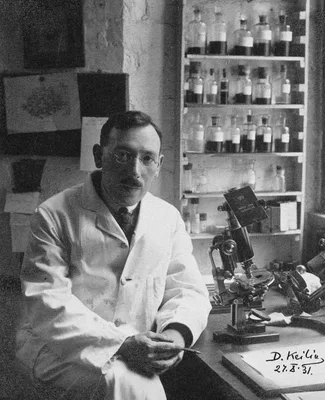
1929 KEILIN, David (1887 – 1963)
Cytochrome and respiratory enzymes.
Keilin discovered cytochrome and laid the foundations of the modern concept of cellular respiration. See No. 1588.3.
GMN 968 · https://historyofmedicine.com/id/296
1929 WARBURG, Otto Heinrich (1883 – 1970); NEGELEIN, Erwin (1897 – 1979)
Ueberden Absorptionsspektrum des Atmungsferments.
Warburg discovered the nature and function of the respiratory ferment. In 1931 Warburg was awarded the Nobel Prize in Physiology or Medicine "for discovery of the nature and mode of action of the respiratory enzyme."
GMN 969 · https://historyofmedicine.com/id/301
1933 ROUGHTON, Francis John Worsley (1899 – 1972); MELDRUM, Norman Urquhart (1907 – 1933)
Carbonic anhydrase: Its preparation and properties.
Isolation of carbonic anhydrase.
GMN 971 · https://historyofmedicine.com/id/332
1943 BERT, Paul (1833 – 1886); FULTON, John Farquhar (1899 – 1960); HITCHCOCK, Fred A.; HITCHCOCK, Mary Alice
Barometric pressure: Researches in experimental physiology. Translated from the French by Mary Alice Hitchcock and Fred A. Hitchcock. [Foreward by John F. Fulton].
Digital facsimile from the Internet Archive at this link.
GMN 12192 · https://historyofmedicine.com/id/14402
1947 SCHOLANDER, Per Fredrik (1905 – 1980)
Analyzer for accurate estimate of respiratory gases in one-half cubic centimeter samples.
An improvement on the classic Haldane method for analyzing oxygen and carbon dioxide in respiratory gases. It provides comparable accuracy over a wider range of gas concentrations with a gas sample of only 0.5 ml inst…
GMN 971.1 · https://historyofmedicine.com/id/335
1955 COMROE, Julius H. Jr. (1911 – 1984); DUBOIS, Arthur Brooks (1924 – 2020); FORSTER, Robert E. II; BRISCOE, William A. (1918 – 1985); CARLSEN, Elizabeth
The lung: Clinical physiology and pulmonary function tests.
Comroe and associates at the University of Pennsylvania introduced pulmonary function tests developed by physiologists into clinical practice. Comroe invented several of the tests described in the book.
GMN 12458 · https://historyofmedicine.com/id/14690
1996 WEST, John B. (1928 – )
Respiratory physiology: People and ideas, edited by John B. West.
GMN 7779 · https://historyofmedicine.com/id/9951
2015 WEST, John B. (1928 – )
Essays on the history of respiratory physiology.
GMN 7781 · https://historyofmedicine.com/id/9953