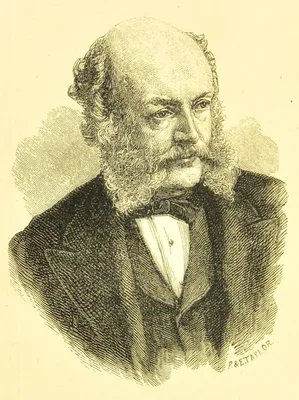
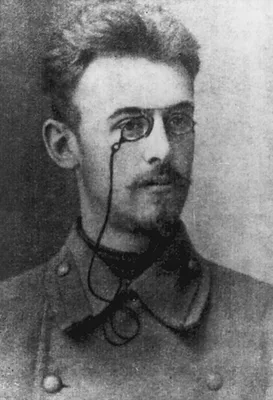
1817 DOUBLE, François Joseph (1776 – 1842)
Séméiologie générale, ou traité des signes et de leur valeur dans les maladies. Vol. 2.
Double introduced and applied auscultation (pp. 31 and 186).
GMN 2672.2 · https://historyofmedicine.com/id/3516
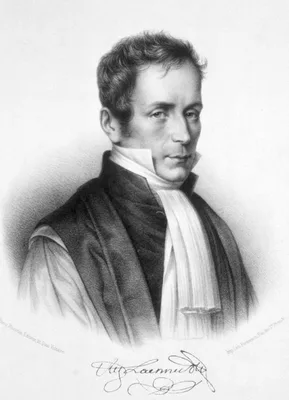
1819 LAENNEC, René Théophile Hyacinthe (1781 – 1826)
De l’auscultation médiate, ou traité du diagnostic des maladies des poumons et du coeur. 2 vols.
This book revolutionized the study of diseases of the chest. Auscultation in the instrumental sense dates from Laennec’s invention of the stethoscope (at first merely a roll of stiff paper) with a view to amplifying t…
GMN 2673 · https://historyofmedicine.com/id/3518
1822 KERGARADEC, Jean Alexandre le Jumeau, vicomte de (1787 – 1877)
Mémoire sur l’auscultation appliquée à l’étude de la grossesse.
Although not the first to record the auscultation of the fetal heart sound, Le Jumeau (Kergaradec), a pupil of Laennec, brought the importance of this diagnostic procedure to the notice of the medical profession. Laen…
GMN 6171 · https://historyofmedicine.com/id/7764
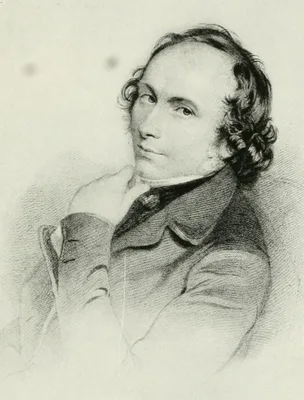
1825 STOKES, William (1804 – 1878)
An introduction to the use of the stethoscope.
Stokes, famous member of the Irish school of medicine, published the first systematic treatise on the use of the stethoscope – and this before his qualification at Edinburgh. His name is perpetuated in medical literat…
GMN 2674 · https://historyofmedicine.com/id/3519
1826 LAENNEC, René Théophile Hyacinthe (1781 – 1826)
Traité de l'auscultation médiate ou traité diagnostic des maladies des poumons et du coeur. 2 vols.
Second edition, hugely revised, expanded, and improved. The pagination of the first edition (1819) was 456 pp. in vol. 1 and 472 pp. in vol. 2. The second edition was expanded to 728pp. in vol. 1 and 790 pp. in vol. 2…
GMN 14323 · https://historyofmedicine.com/id/16648
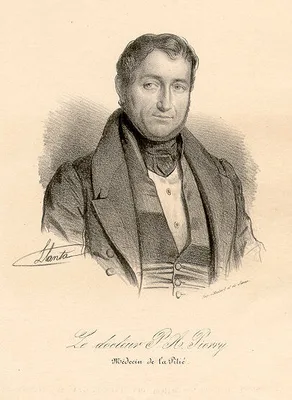
1828 PIORRY, Pierre Adolphe (1794 – 1879)
De la percussion médiate.
Piorry, pioneer of mediate percussion, introduced the percussor and the pleximeter in 1826. He also developed refinements to Laennec’s stethoscope.
GMN 2675 · https://historyofmedicine.com/id/3521
1838 NAEGELE, Hermann Franz Joseph (1810 – 1858)
Die geburtshülfiche Auscultation
Pioneering work on obstetric auscultation, including the sounds of the foetal heart. English translation by C. West, London, 1839.
GMN 6175 · https://historyofmedicine.com/id/7772
1839 ŠKODA, Josef (1805 – 1881)
Abhandlung über Perkussion und Auskultation.
Skoda classified the various sounds obtained on percussion according to their musical pitch and tone. “Skoda’s resonance” is an important diagnostic sign in pneumonia and pericardial effusion. Following Skoda’s work, …
GMN 2676 · https://historyofmedicine.com/id/3525
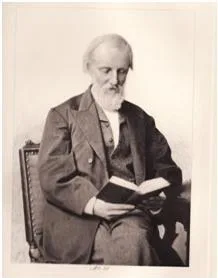
1846 BOWDITCH, Henry Ingersoll (1808 – 1892)
The young stethoscopist; or, the student's aid to auscultation.
Through this book Bowditch established the stethoscope as a diagnostic tool in America. Digital facsimile from the Medical Heritage Library, Internet Archive, at this link.
GMN 8587 · https://historyofmedicine.com/id/10764
1855 CAMMANN, George Philip (1804 – 1863)
Self-adjusting stethoscope of Dr. Cammann.
The American physician George P. Cammann invented the binaural flexible stethoscope. By 1852 Cammann "had developed a stethoscope with flexible tubing (spirals of wire covered with silk, later rubber, or as he called …
GMN 11566 · https://historyofmedicine.com/id/13765
1856 LEARED, Arthur (1822 – 1879)
On the self-adjusting double stethoscope.
Leared demonstrated a binaural stethoscope at the Great Exhibition, London, 1851. Camman introduced the pattern whose main design continues in use today; this was illustrated in the N.Y. med. Times, Jan. 1855, and rep…
GMN 2676.1 · https://historyofmedicine.com/id/3530
1905 KOROTKOV, Nikolai Sergeievich (1874 – 1920)
On methods of studying blood pressure.
Korotkov introduced the modern method of applying the stethoscope to the brachial artery during blood-pressure examination with Riva-Rocci’s sphygmomanometer, for the purpose of investigating the sounds made by the bl…
GMN 2818 · https://historyofmedicine.com/id/3498