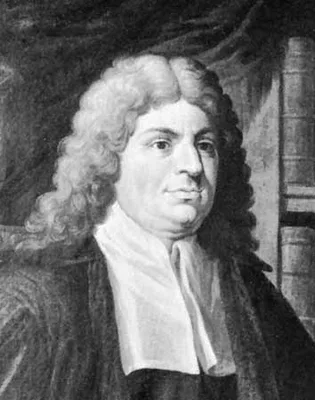
1483 GENTILI DA FOLIGNO, Gentile (Gentilis Fulginas; Gentilis de Flugineo) ( – 1348); GILLES DE CORBEIL, (Egidius de Corbolio; Egidius Corboliensis; Aegidius) (1140 – 1215); MUTIUS, Venantius, of Camerino
De urinis by Gilles de Corbeil, with commentary by Gentilis de Fulgineo. Edited by Venantius Mutius.
Gilles de Corbeil's medical poem De urinis was based on writings by Theophilus Protospatharius by way of the Articella. Poems such as this were intended as mnemonic aids for students, and they tended to be widely used…
GMN 8341 · https://historyofmedicine.com/id/10517
1662 BELLINI, Lorenzo (1643 – 1704)
Exercitatio anatomica de structura et usu renum.
Classic description of the gross anatomy of the kidney. Bellini discovered the renal excretory ducts (“Bellini’s ducts”) and advanced a physical theory of the secretion of the urine. A translation of an extract from t…
GMN 1229 · https://historyofmedicine.com/id/1948
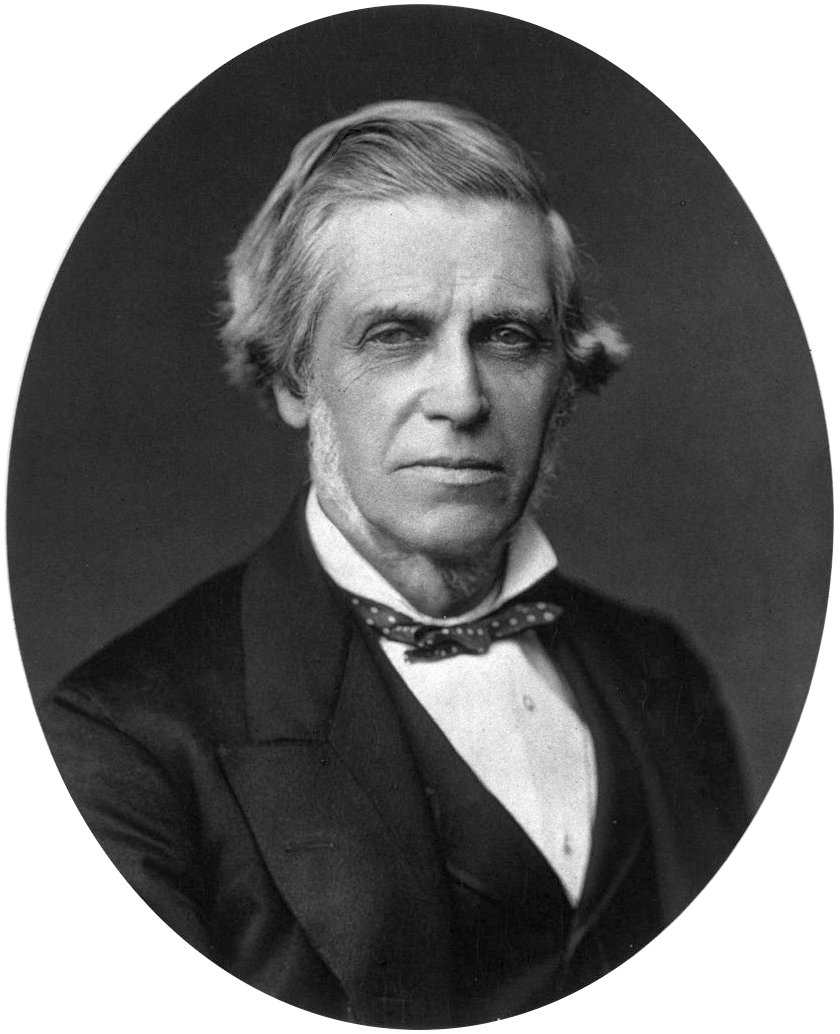
1842 BOWMAN, Sir William (1816 – 1892)
On the structure and use of the Malpighian bodies of the kidney with observations on the circulation through that gland.
“Bowman’s capsule”. Bowman provided convincing evidence that the glomerular corpuscle is continuous with the renal tubule and gave the first adequate description of the vascular supply of the nephron. He described the…
GMN 1231 · https://historyofmedicine.com/id/1955
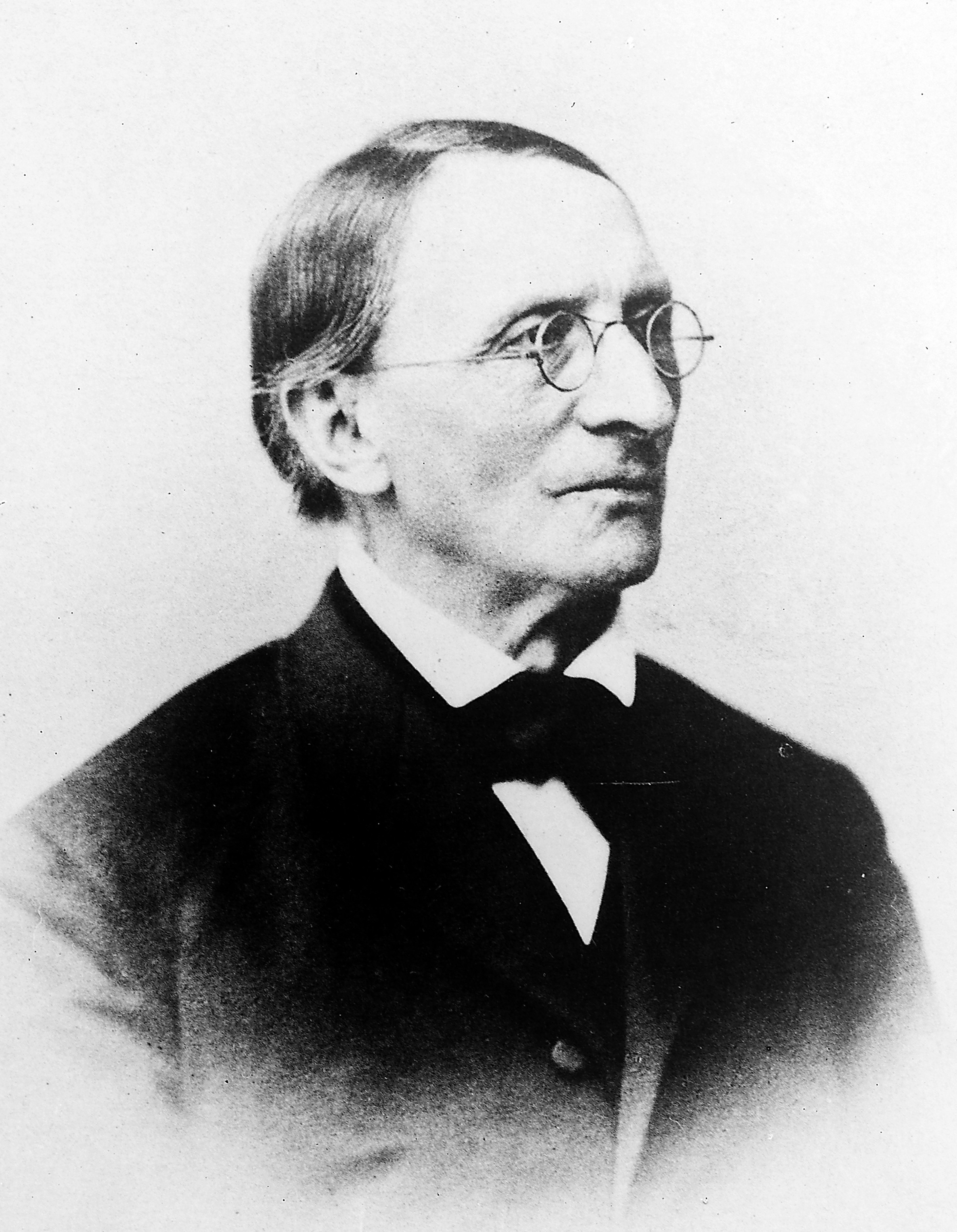
1843 LUDWIG, Carl Friedrich Wilhelm (1816 – 1895)
Beiträge zur Lehre vom Mechanismus der Harnsecretion.
Ludwig wrote a classic monograph on renal secretion. He theorized that urine formation could be explained purely in terms of the laws of physics and chemistry, and that under the hydrostatic pressure of the blood in t…
GMN 1232 · https://historyofmedicine.com/id/1960
1857 ISAACS, Charles Edward (1811 – 1860)
Researches into the structure and physiology of the kidney.
GMN 1233 · https://historyofmedicine.com/id/1963
1857 ISAACS, Charles Edward (1811 – 1860)
On the function of the Malpighian bodies of the kidney.
Isaacs confirmed and corrected the findings of Bowman; he introduced dye experiments in the study of the kidney, from which he drew the important conclusion that the Malpighian bodies are the most important agency in …
GMN 1234 · https://historyofmedicine.com/id/8971
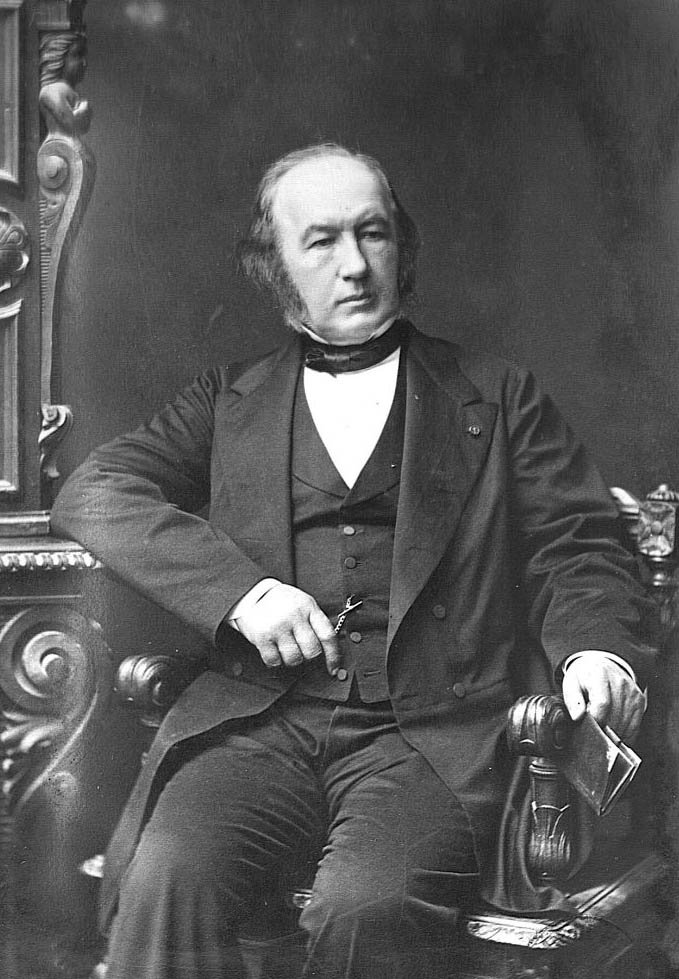
1859 BERNARD, Claude (1813 – 1878)
Leçons sur les propriétés physiologiques et les altérations pathologiques des liquides de l’organisme.
Bernard was the first to describe an effect of the renal nerves on urine flow.
GMN 1234.1 · https://historyofmedicine.com/id/1970
1874 HEIDENHAIN, Rudolf Peter Heinrich (1834 – 1897)
Versuche über den Vorgang der Harnabsonderung.
Heidenhain’s “secretion” theory of renal function.
GMN 1235 · https://historyofmedicine.com/id/1974
1894 KORÁNYI DE TOLCSVA, Baron Sandor (1866 – 1944)
A vizelet fagypontjának diagnostikus érteke. [The diagnostic value of the freezing point of urine.]
Korányi established cryoscopy of the urine as a kidney function test. See also his later papers in Z. klin. Med., 1897, 33, 1-54; 1898, 34, 1-52. Previously H. Dreser had made experiments on this subject; for these se…
GMN 4226 · https://historyofmedicine.com/id/5052
1898 TIGERSTEDT, Robert Adolf Armand (1853 – 1923); BERGMAN, Per Gustaf (1874 – 1955)
Niere und Kreislauf.
Discovery that a pressor substance (renin) is produced by the kidneys and enters the circulation by the renal veins. Abridged English translation in No. 3160.1.
GMN 1236 · https://historyofmedicine.com/id/1975
1901 STARLING, Ernest Henry (1866 – 1927); MAGNUS, Rudolf (1873 – 1927)
The action of pituitary extracts on the kidney.
Magnus and Starling reported that pituitary extracts caused expansion of the kidney and a marked and often prolonged diuresis. This was the first indication that the neurohypophysis plays a part in the regulation of u…
GMN 1236.1 · https://historyofmedicine.com/id/1977
1903 VOELCKER, Friedrich (1872 – 1955); JOSEPH, Eugen Jakob (1879 – 1933)
Funktionelle Nierendiagnostik ohne Ureterenkatheter.
Voelcker’s kidney-function test.
GMN 4230 · https://historyofmedicine.com/id/5064
1905 ALBARRAN Y DOMINGUEZ, Joaquin Maria (1860 – 1912)
Exploration des fonctions rénales.
Albarran’s polyuria test for renal inadequacy.
GMN 4232 · https://historyofmedicine.com/id/5071
1906 VOELCKER, Friedrich (1872 – 1955); LICHTENBERG, Alexander von (1880 – 1949)
Pyelographie (Roentgenographie des Nierenbeckens nach Kollargolfüllung).
Introduction of pyelography.
GMN 4231 · https://historyofmedicine.com/id/5068
1909 STARLING, Ernest Henry (1866 – 1927)
The fluids of the body.
Starling put forward the idea that renal excretion of salt (and water) was conditioned by the volume of body fluids, particularly the blood volume. He suggested that the sum total of body fluids was arranged so that t…
GMN 1236.2 · https://historyofmedicine.com/id/1981
1909 ABEL, John Jacob (1857 – 1938); ROWNTREE, Leonard George (1883 – 1959)
On the pharmacological action of some phthaleins and their derivatives.
This work led to the universal clinical use of phenolsulphonephthalein in renal function tests and of phenoltetrachlorphthalein in hepatic function tests.
GMN 1896 · https://historyofmedicine.com/id/2636
1910 ROWNTREE, Leonard George (1883 – 1959); GERAGHTY, John Timothy (1876 – 1924)
An experimental and clinical study of the functional activity of the kidneys by means of phenolsulphonephthalein.
The phenolsulphonephthalein kidney-function test.
GMN 4236 · https://historyofmedicine.com/id/5092
1917 CUSHNY, Arthur Robertson (1866 – 1926)
The secretion of the urine.
Cushny’s theory of urinary secretion was similar to that of Ludwig, with some modifications. Subsequent work of Richards and his co-workers confirmed his theory.
GMN 1237 · https://historyofmedicine.com/id/1985
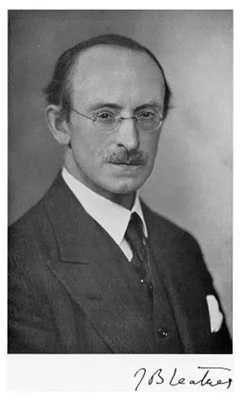
1919 LEATHES, John Beresford (1864 – 1956)
Renal efficiency tests in nephritis, and the reaction of the urine.
Alkaline tide of urine.
GMN 4239 · https://historyofmedicine.com/id/5107
1920 MACLEAN, Hugh (1879 – 1957); DE WESSELOW, Owen Lambert Vaughan (1883 – 1959)
On the testing of renal efficiency, with observations on the “urea coefficient”.
Urea concentration test.
GMN 4240 · https://historyofmedicine.com/id/5111
1921 CARELLI, Humberto Horacio (1882 – 1962); SORDELLI, Alfredo (1891 – 1967)
Un nuevo procedimiento para explorar al riñón.
Perirenal insufflation of oxygen, for the roentgenological study of the kidney.
GMN 4241 · https://historyofmedicine.com/id/5116
1923 MARSHALL, Eli Kennerly Jr. (1889 – 1966); VICKERS, J. L.
The mechanism of the elimination of phenolsulphonephthalein by the kidney–a proof of secretion by the convoluted tubules.
Proof of tubular secretion in mammals.
GMN 1237.1 · https://historyofmedicine.com/id/1998
1924 RICHARDS, Alfred Newton (1876 – 1966); SCHMIDT, Carl Frederic (1893 – 1988)
A description of the glomerular circulation in the frog’s kidney and observations concerning the action of adrenalin and various other substances upon it.
Richards made many experiments concerning the secretion of urine. Among other things he collected and analysed the fluid from a single glomerulus; his work confirmed the theories of Ludwig and Cushny.
GMN 1238 · https://historyofmedicine.com/id/2002
1924 RICHARDS, Alfred Newton (1876 – 1966); WEARN, Joseph Treloar (1893 – 1984)
Observations on the composition of glomerular urine with particular reference to the problem of reabsorption in the renal tubules.
Experimental proof that the initial step in urine production is the formation in Bowman’s space of a protein-free ultrafiltrate of plasma and that reabsorption of certain substances must occur in the tubules since the…
GMN 1239 · https://historyofmedicine.com/id/2011
1924 –1925 STARLING, Ernest Henry (1866 – 1927); VERNEY, Ernest Basil (1894 – 1967)
The secretion of urine as studied on the isolated kidney.
Demonstration that the anti-diuretic action of vasopressin is exerted directly on the kidney, and that tubules of the kidney reabsorb water.
GMN 1240 · https://historyofmedicine.com/id/2016
1924 ANDREWES, Sir Christopher Howard (1896 – 1988)
An unexplained diazo-colour-reaction in uraemic sera.
Diazo-color test of renal function.
GMN 4244 · https://historyofmedicine.com/id/5125
1926 REHBERG, Poul Brandt (1895 – 1985)
Studies on kidney function.
First attempt to determine the glomerular filtration rate in man.
GMN 1241 · https://historyofmedicine.com/id/2020
1927 HAYMAN, Joseph Marchant (1896 – )
Estimation of afferent arteriole and glomerular capillary pressures in the frog kidney.
GMN 1242 · https://historyofmedicine.com/id/2027
1928 –1929 MØLLER, Eggert Hugo Heiberg (1893 – 1978)
Studies of urea excretion.
Blood urea clearance test. With J. F. Mcintosh and D. D. Van Slyke.
GMN 4246 · https://historyofmedicine.com/id/5127
1929 MARSHALL, Eli Kennerly Jr. (1889 – 1966)
The aglomerular kidney of the toadfish (Opsanus tau).
Proof that the tubules of the kidney of a vertebrate could secrete foreign substances.
GMN 1243 · https://historyofmedicine.com/id/2031
1934 RHOADS, Cornelius Packard (1898 – 1959)
A method for explantation of the kidney.
GMN 1244 · https://historyofmedicine.com/id/2034
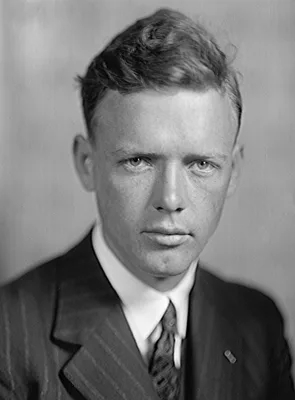
1935 LINDBERGH, Charles Augustus (1902 – 1974)
An apparatus for the culture of whole organs.
In 1931, the year before his son’s sensational kidnapping, the celebrity aviator began working with Alexis Carrel at the Rockefeller Institute on a perfusion pump which would allow the cultivation of whole organs in v…
GMN 858.1 · https://historyofmedicine.com/id/736
1937 HOUSSAY, Bernardo Alberto (1887 – 1971); FASCIOLO, Juan Carlos (1911 – )
Secreción hipertensora del rinón isquemiado.
Houssay and Fasciolo transplanted an ischemic kidney into an animal from which both kidneys had been removed. Hypertension resulted after establishment of circulation, supporting the view that hypertension is due to a…
GMN 2721 · https://historyofmedicine.com/id/4450
1940 ALVING, Alf Sven (1902 – 1965); MILLER, Benjamin Frank (1907 – )
A practical method for the measurement of glomerular filtration rate (inulin clearance) with an evaluation of the clinical significance of this determination.
Inulin clearance test.
GMN 4251 · https://historyofmedicine.com/id/5152
1941 WALKER, Arthur M.; OLIVER, Jean Redman (1889 – 1976); ET AL
Methods for the collection of fluid from single glomeruli and tubules of the mammalian kidney, and the collection and analysis of fluid from single nephrons of the mammalian kidney.
This was the first (and for many years) the only application of the Wearn-Richards procedure (No. 1239) to the mammalian kidney.
GMN 1244.1 · https://historyofmedicine.com/id/2038
1947 VERNEY, Ernest Basil (1894 – 1967)
The antidiuretic hormone and the factors which determine its release.
Verney elucidated the factors that determine the release of antidiuretic hormone, and introduced the osmoreceptor concept.
GMN 1244.2 · https://historyofmedicine.com/id/2041
1947 TRUETA I RASPALL, Josep (1897 – 1977); ET AL
Studies of the renal circulation.
With A. E. Barclay, P. M. Daniel, K. J. Franklin, and M. M. L. Prichard. In studying the anurias which follow injury, especially crushing injuries and burns, Trueta’s team demonstrated that both the processes of filtr…
GMN 1245 · https://historyofmedicine.com/id/2044
1951 SMITH, Homer William (1895 – 1962)
The kidney: structure and function in health and disease.
An encyclopaedic presentation of kidney physiology, including the many contributions of the author.
GMN 1246 · https://historyofmedicine.com/id/2048
1951 HARGITAY, Bart; KUHN, Werner (1899 – 1963)
Das Multiplikationsprinzip als Grundlage der Harnkonzentrierung in der Niere.
A theoretical treatment of the countercurrent hypothesis accompanied by data from a working model.
GMN 1246.01 · https://historyofmedicine.com/id/2054
1951 WIRZ, Heinrich (1914 – ); ET AL
Lokalisation des Konzentrierungsprozesses in der Niere durch direkte Kryoskopie.
The initial experimental evidence advanced in support of the countercurrent hypothesis. With B. Hargitay and W. Kuhn.
GMN 1246.1 · https://historyofmedicine.com/id/2056
1951 OLIVER, Jean Redman (1889 – 1976); MACDOWELL, M; TRACY, A
The pathogenesis of acute renal failure associated with traumatic and toxic injury. Renal ischemia, nephrotoxic damage and the ischemuric episode.
Oliver’s work on the structural lesions associated with acute renal failure in which he differentiated between the two types of damage: nephrotoxic, due to toxic substances, and tubulorhexic, due to ischemia, establis…
GMN 4256.11 · https://historyofmedicine.com/id/5183
1959 GOTTSCHALK, Carl William (1922 – 1997); MYLLE, Margaret
Micropuncture study of the mammalian urinary concentrating mechanism: Evidence for the countercurrent hypothesis.
Proof that tubular fluid is first concentrated in the loop of Henle, then diluted in the ascending limb of the loop before its final concentration in the collecting ducts, as predicted by the countercurrent hypothesis.
GMN 1246.2 · https://historyofmedicine.com/id/2060
1967 THURAU, Klaus (1928 – ); ET AL
Composition of tubular fluid in the macula densa segment as a factor regulating the function of the juxtaglomerular apparatus.
"This demonstration of 'tubulo-glomerular feedback' therefore provided mechanistic insights into one of the fundamental homeostatic functions of the kidney—the ability to conserve salt and water. Adjusting filtered so…
GMN 10006 · https://historyofmedicine.com/id/12195