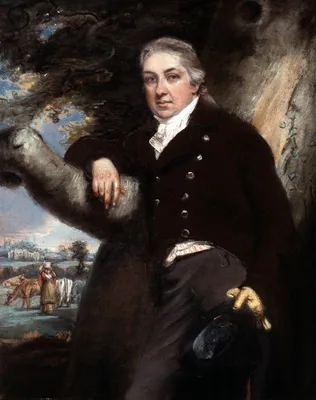
1798 JENNER, Edward (1749 – 1823)
An inquiry into the causes and effects of the variolae vaccinae.
Jenner established the fact that a “vaccination” or inoculation with vaccinia (cowpox) lymph matter protects against smallpox. He performed his first vaccination on May 14, 1796. The above work, describing 23 successf…
GMN 2529.3 · https://historyofmedicine.com/id/7353
1839 MAGENDIE, François (1783 – 1855)
Lectures on the blood, and on the changes which it undergoes during disease: Delivered at the College of France in 1837-8.
Pp. 244-49: Magendie showed that secondary or subsequent injections of egg/albumin caused death in rabbits who had tolerated an initial injection. This was the first experiment in anaphylaxis, though Jenner in 1798 ha…
GMN 2585 · https://historyofmedicine.com/id/4372
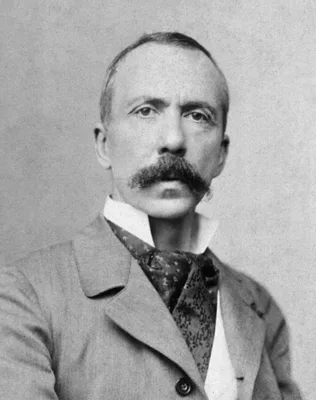
1902 RICHET, Charles Robert (1850 – 1935); PORTIER, Paul (1866 – 1962)
De l’action anaphylactique de certains venins.
First full description of the phenomenon of “anaphylaxis,” the name of which was coined by Richet. Abbreviated English translation in Bibel, Milestones of immunology (1988). In 1913, Richet was awarded the Nobel Prize…
GMN 2590 · https://historyofmedicine.com/id/4397
1903 ARTHUS, Nicolas Maurice (1862 – 1945)
Injections répétées de sérum de cheval chez le lapin.
The “Arthus phenomenon” – a symptom of anaphylaxis. Arthus showed that “antibody-mediated inflammation could be elicited in the skin of sensitized animals upon local introduction of an appropriate antigen” (Silverstei…
GMN 2591 · https://historyofmedicine.com/id/4400
1906 ROSENAU, Milton Joseph (1869 – 1946); ANDERSON, John Fleetezelle (1873 – 1958)
A study of the cause of sudden death following the injection of horse serum.
Forms Bulletin No. 29 of the Hygienic Laboratory, U. S. Marine Hospital Service. Rosenau and Anderson drew attention to the fact that animals receiving an injection of a foreign protein became sensitive to a second do…
GMN 2595 · https://historyofmedicine.com/id/2959
1907 OTTO, Richard (1872 – 1952)
Zur Frage der Serum-Ueberempfindlichkeit.
Otto discovered that a state of tolerance developed in animals that survived anaphylactic shock. He induced passive transfer of hypersensitivity.
GMN 2594.1 · https://historyofmedicine.com/id/2956
1907 BESREDKA, Alexandre (1870 – 1940); STEINHARDT, Edna
De l’anaphylaxie et de l’anti-anaphylaxie vis-à-vis du sérum de cheval.
“Anti-anaphylaxis” was the term given by Besredka and Steinhardt to the specific desensitization of sensitized animals.
GMN 2596 · https://historyofmedicine.com/id/2960
1907 NICOLLE, Maurice (1862 – 1932)
Contribution à l’étude du “phénomène d’Arthus.”
“Passive” anaphylaxis first demonstrated.
GMN 2597 · https://historyofmedicine.com/id/2966
1907 RICHET, Charles Robert (1850 – 1935)
De l’anaphylaxie en général et de l’anaphylaxie par la mytilocongestine en particulier.
In 1913 Richet was awarded the Nobel Prize in Physiology or Medicine "in recognition of his work on anaphylaxis."
GMN 2599 · https://historyofmedicine.com/id/2974
1910 LEWIS, Paul Adin (1879 – 1929); AUER, John (1875 – 1948)
The physiology of the immediate reaction of anaphylaxis in the guinea-pig.
First adequate account of the physiological reactions leading to fatal anaphylactic shock.
GMN 2600 · https://historyofmedicine.com/id/2978
1910 MELTZER, Samuel James (1851 – 1920)
Bronchial asthma as a phenomenon of anaphylaxis.
The work of Auer and Lewis (see No. 2600) led Meitzer to the conclusion that bronchial asthma was due to anaphylaxis, although he did not appreciate that not all cases of asthma were so caused.
GMN 2600.1 · https://historyofmedicine.com/id/2981
1910 SCHULTZ, William Henry (1873 – 1947)
Physiological studies in anaphylaxis. I. The reaction of smooth muscle of the guinea-pig sensitized with horse serum.
Schultz-Dale test for anaphylaxis. See also No. 2600.5
GMN 2600.2 · https://historyofmedicine.com/id/2984
1913 DALE, Sir Henry Hallett (1875 – 1968)
The anaphylactic reaction of plain muscle in the guinea-pig.
See No. 2600.2. Dale concluded that histamine induced hypersensitivity reactions.
GMN 2600.5 · https://historyofmedicine.com/id/3001
1917 BESREDKA, Alexandre (1870 – 1940)
Anaphylaxie et antianaphylaxie.
English translation, 1919.
GMN 2601 · https://historyofmedicine.com/id/3010
1929 SWANSON, Edward E.
The action of ephedrine, pseudoephedrine and epinephrine on the bronchioles.
Swanson showed that just 0.01 mg. of epinephrine was as vasconstrictive as 2 mg. of ephedrine and 4 mg. of pseudoephedrine. He also showed that all three of these drugs have bronchodilator properties, but epinephrine …
GMN 14192 · https://historyofmedicine.com/id/16508
1932 DRAGSTEDT, Carl Albert (1895 – 1983); GEBRAUER-FUELNEGG, Erich von (1900 – 1934)
Studies in anaphylaxis.
Detection of the release of histamines into the circulation during anaphylactic reaction. Thereafter histamine was identified as Lewis’s “H-substance.”
GMN 2605 · https://historyofmedicine.com/id/3038