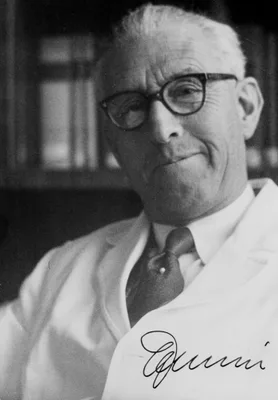
1893 EDEBOHLS, George Michael (1853 – 1908)
Movable kidney; with a report of twelve cases treated by nephrorrhaphy.
In his nephropexy operation Edebohls utilized flaps of the capsule of the kidney. He believed that decapsulation improved the renal blood supply.
GMN 4224 · https://historyofmedicine.com/id/6321
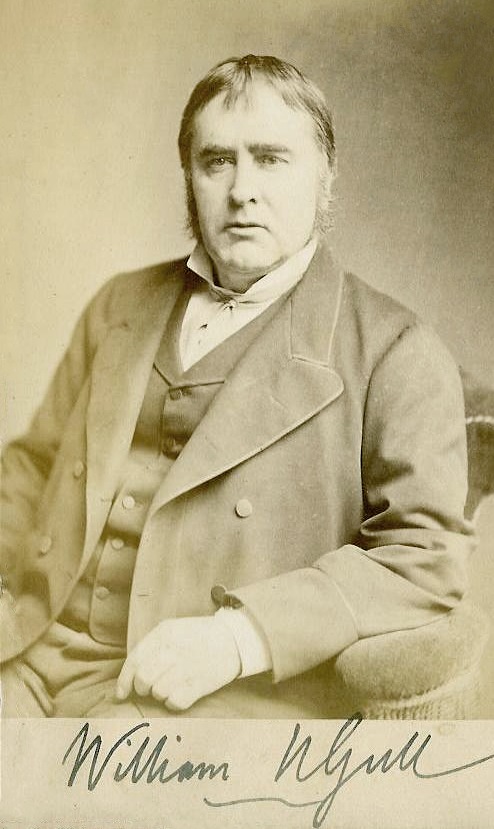
1894 –1896 GULL, Sir William Withey (1816 – 1890)
A collection of the published writings. 2 vols.
Gull, one of the best clinicians of his time, spent most of his working life at Guy’s Hospital. He described the spinal lesion of tabes and left an important account of aneurysm. His best works are his description of …
GMN 2232 · https://historyofmedicine.com/id/3794
1894 FENGER, Christian (1840 – 1902)
Operation for the relief of valve formation and stricture of the ureter in hydro- or pyo-nephrosis.
Fenger’s operation for stenosis of the uretero-pelvic junction.
GMN 4225 · https://historyofmedicine.com/id/5036
1894 KORÁNYI DE TOLCSVA, Baron Sandor (1866 – 1944)
A vizelet fagypontjának diagnostikus érteke. [The diagnostic value of the freezing point of urine.]
Korányi established cryoscopy of the urine as a kidney function test. See also his later papers in Z. klin. Med., 1897, 33, 1-54; 1898, 34, 1-52. Previously H. Dreser had made experiments on this subject; for these se…
GMN 4226 · https://historyofmedicine.com/id/5052
1896 CHAPPUIS, J; CHAUVEL, H
Calculs du rein. Calculs de la vésicule biliaire.
Chappuis and Chauvel were the first to study biliary concretions by means of Roentgen rays.
GMN 3636 · https://historyofmedicine.com/id/4634
1896 ALBARRAN Y DOMINGUEZ, Joaquin Maria (1860 – 1912)
Sur un série de quarante opérations pratiquées sur la rein.
First planned nephrostomy.
GMN 4226.1 · https://historyofmedicine.com/id/5055
1898 TIGERSTEDT, Robert Adolf Armand (1853 – 1923); BERGMAN, Per Gustaf (1874 – 1955)
Niere und Kreislauf.
Discovery that a pressor substance (renin) is produced by the kidneys and enters the circulation by the renal veins. Abridged English translation in No. 3160.1.
GMN 1236 · https://historyofmedicine.com/id/1975
1899 WILMS, Carl Max Wilhelm (1867 – 1918)
Die Mischgeschwülste. I. Die Mischgeschwülste der Niere.
Embryoma of the kidney (“Wilms’s tumor”). For the history of the operation for Wilms’s tumor see B. Thomasson and M.M. Ravitch, Wilms Tumor, Urol. Surg., 1961, 11, 83-100.
GMN 4227 · https://historyofmedicine.com/id/5058
1899 EDEBOHLS, George Michael (1853 – 1908)
Chronic nephritis affecting a movable kidney as an indication for nephropexy.
First operation on the kidneys for the relief of Bright’s disease.
GMN 4228 · https://historyofmedicine.com/id/5059
1901 STARLING, Ernest Henry (1866 – 1927); MAGNUS, Rudolf (1873 – 1927)
The action of pituitary extracts on the kidney.
Magnus and Starling reported that pituitary extracts caused expansion of the kidney and a marked and often prolonged diuresis. This was the first indication that the neurohypophysis plays a part in the regulation of u…
GMN 1236.1 · https://historyofmedicine.com/id/1977
1901 EDEBOHLS, George Michael (1853 – 1908)
The cure of chronic Bright’s disease by operation.
Edebohls introduced the operation of renal decortication for the treatment of chronic nephritis.
GMN 4229 · https://historyofmedicine.com/id/5060
1901 KELLY, Howard Atwood (1858 – 1943)
Scratch-marks on the wax-tipped catheter as a means of determining the presence of stone in the kidney and in the ureter.
Kelly tipped the catheter with wax, so that it registered clearly any pressure from sharp stones. This became an important means of diagnosing calculi.
GMN 4295 · https://historyofmedicine.com/id/5393
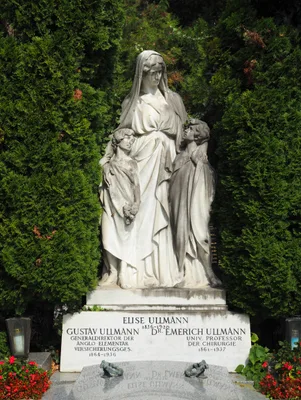
1902 ULLMANN, Emerich (1861 – 1937)
Experimentelle Nierentransplantation. Vorlaüfige Mittheilung.
Successful autotransplantation of kidneys in dogs.
GMN 4229.1 · https://historyofmedicine.com/id/5062
1903 VOELCKER, Friedrich (1872 – 1955); JOSEPH, Eugen Jakob (1879 – 1933)
Funktionelle Nierendiagnostik ohne Ureterenkatheter.
Voelcker’s kidney-function test.
GMN 4230 · https://historyofmedicine.com/id/5064
1903 ALBARRAN Y DOMINGUEZ, Joaquin Maria (1860 – 1912); IMBERT, Léon (1868 – 1955)
Les tumeurs du rein.
Seminal work on renal tumors with unsurpassed descriptions of the clinical semiology of these diseases. In 1903 Albarran was the first "... to diagnose transitional cell carcinoma of the renal pelvis by detecting mali…
GMN 7217 · https://historyofmedicine.com/id/9384
1905 ALBARRAN Y DOMINGUEZ, Joaquin Maria (1860 – 1912)
Exploration des fonctions rénales.
Albarran’s polyuria test for renal inadequacy.
GMN 4232 · https://historyofmedicine.com/id/5071
1906 VOELCKER, Friedrich (1872 – 1955); LICHTENBERG, Alexander von (1880 – 1949)
Pyelographie (Roentgenographie des Nierenbeckens nach Kollargolfüllung).
Introduction of pyelography.
GMN 4231 · https://historyofmedicine.com/id/5068
1906 ALBARRAN Y DOMINGUEZ, Joaquin Maria (1860 – 1912)
Technique de la néphropexie.
“Albarran’s operation” – nephropexy.
GMN 4233 · https://historyofmedicine.com/id/5083
1907 LÖHLEIN, Max Hermann Friedrich (1877 – 1921)
Ueber die entzündlichen Veränderungen der Glomeruli der menschlichen Nieren und ihre Bedeutung für die Nephritis.
“Focal nephritis”. Löhlein established the importance of the initial inflammatory reaction in the glomerular capillaries in glomerulonephritis. Forms part 4 of Arb. path. Inst. Leipzig.
GMN 4234 · https://historyofmedicine.com/id/5086
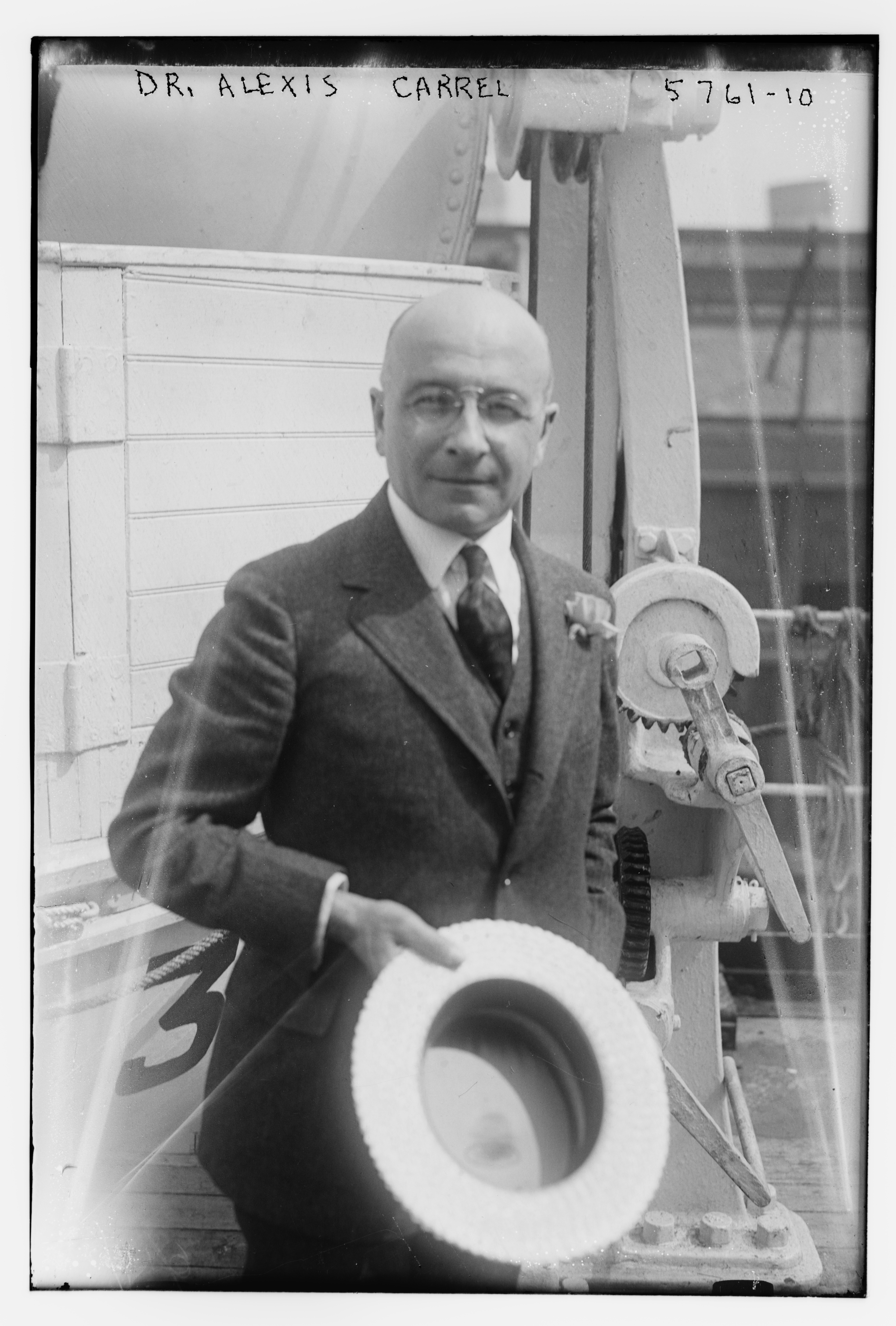
1908 CARREL, Alexis (1873 – 1944)
Transplantation in mass of the kidneys.
Carrel revolutionized vascular surgery. He transplanted the kidney from one animal to another, an operation later carried out successfully in man. For his earlier work on vascular anastomosis and transplantation of vi…
GMN 4235 · https://historyofmedicine.com/id/5089
1909 STARLING, Ernest Henry (1866 – 1927)
The fluids of the body.
Starling put forward the idea that renal excretion of salt (and water) was conditioned by the volume of body fluids, particularly the blood volume. He suggested that the sum total of body fluids was arranged so that t…
GMN 1236.2 · https://historyofmedicine.com/id/1981
1909 ABEL, John Jacob (1857 – 1938); ROWNTREE, Leonard George (1883 – 1959)
On the pharmacological action of some phthaleins and their derivatives.
This work led to the universal clinical use of phenolsulphonephthalein in renal function tests and of phenoltetrachlorphthalein in hepatic function tests.
GMN 1896 · https://historyofmedicine.com/id/2636
1910 ROWNTREE, Leonard George (1883 – 1959); GERAGHTY, John Timothy (1876 – 1924)
An experimental and clinical study of the functional activity of the kidneys by means of phenolsulphonephthalein.
The phenolsulphonephthalein kidney-function test.
GMN 4236 · https://historyofmedicine.com/id/5092
1912 BAEHR, George (1887 – 1978)
Glomerular lesions of subacute bacterial endocarditis.
Baehr drew attention to the renal lesions in subacute bacterial endocarditis.
GMN 2838 · https://historyofmedicine.com/id/3574
1913 MUNK, Fritz (1879 – 1950)
Klinische Diagnostik der degenerativen Nierenerkrankungen.
Munk introduced the term “lipoid nephrosis”. He found that urine in such cases contained anisotropic lipoid droplets.
GMN 4237 · https://historyofmedicine.com/id/5093
1914 ABEL, John Jacob (1857 – 1938); TURNER, Benjamin Bernard (1871 – 1945); ROWNTREE, Leonard George (1883 – 1959)
On the removal of diffusible substances from the circulating blood of living animals by dialysis.
Hemodialysis. See also No. 1976. Preliminary communication in Trans Ass. Amer. Phycns., 1913, 28, 51-4. "Together with L.G. Rowntree and B.B. Turner, Abel devised what they called a "vividiffusion" apparatus, consisti…
GMN 741.2 · https://historyofmedicine.com/id/1138
1914 VOLHARD, Franz (1872 – 1950); FAHR, Karl Theodor (1877 – 1945)
Die Brightsche Nierenkrankheit.
First full description of pure nephrosis, relating clinical features to morbid anatomy.
GMN 4238 · https://historyofmedicine.com/id/5098
1917 CUSHNY, Arthur Robertson (1866 – 1926)
The secretion of the urine.
Cushny’s theory of urinary secretion was similar to that of Ludwig, with some modifications. Subsequent work of Richards and his co-workers confirmed his theory.
GMN 1237 · https://historyofmedicine.com/id/1985
1918 HINMAN, Frank Sr. (1880 – 1961)
Experimental hydronephrosis; repair following ureterocysto-neostomy in white rats with complete ureteral obstruction.
Commencement of Hinman’s classic work on treatment of hydronephrosis.
GMN 4238.1 · https://historyofmedicine.com/id/5104
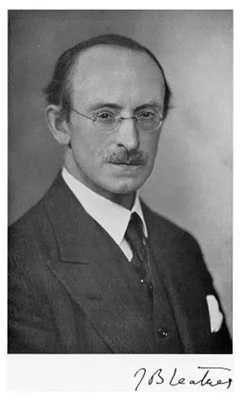
1919 LEATHES, John Beresford (1864 – 1956)
Renal efficiency tests in nephritis, and the reaction of the urine.
Alkaline tide of urine.
GMN 4239 · https://historyofmedicine.com/id/5107
1920 MACLEAN, Hugh (1879 – 1957); DE WESSELOW, Owen Lambert Vaughan (1883 – 1959)
On the testing of renal efficiency, with observations on the “urea coefficient”.
Urea concentration test.
GMN 4240 · https://historyofmedicine.com/id/5111
1921 CARELLI, Humberto Horacio (1882 – 1962); SORDELLI, Alfredo (1891 – 1967)
Un nuevo procedimiento para explorar al riñón.
Perirenal insufflation of oxygen, for the roentgenological study of the kidney.
GMN 4241 · https://historyofmedicine.com/id/5116
1922 LABBÉ, Ernest Marcel (1870 – 1939); ET AL
Crises solaires et hypertension paroxystique en rapport avec une tumeur surrénale.
First full description of chromaffin cell tumors of the adrenal medulla. With J. Tinel and E. Doumer.
GMN 3871 · https://historyofmedicine.com/id/4924
1923 MARSHALL, Eli Kennerly Jr. (1889 – 1966); VICKERS, J. L.
The mechanism of the elimination of phenolsulphonephthalein by the kidney–a proof of secretion by the convoluted tubules.
Proof of tubular secretion in mammals.
GMN 1237.1 · https://historyofmedicine.com/id/1998
1923 GANTER, Georg
Ueber die Beseitigung giftiger Stoffe aus dem Blute durch Dialyse.
First description of the experimental use of peritoneal dialysis in uremia.
GMN 4242 · https://historyofmedicine.com/id/5118
1923 MINAMI, Seigo (1893 – 1975)
Ueber Nierenveränderungen nach Verschüttung.
Crush syndrome.
GMN 4243 · https://historyofmedicine.com/id/5121
1924 RICHARDS, Alfred Newton (1876 – 1966); SCHMIDT, Carl Frederic (1893 – 1988)
A description of the glomerular circulation in the frog’s kidney and observations concerning the action of adrenalin and various other substances upon it.
Richards made many experiments concerning the secretion of urine. Among other things he collected and analysed the fluid from a single glomerulus; his work confirmed the theories of Ludwig and Cushny.
GMN 1238 · https://historyofmedicine.com/id/2002
1924 RICHARDS, Alfred Newton (1876 – 1966); WEARN, Joseph Treloar (1893 – 1984)
Observations on the composition of glomerular urine with particular reference to the problem of reabsorption in the renal tubules.
Experimental proof that the initial step in urine production is the formation in Bowman’s space of a protein-free ultrafiltrate of plasma and that reabsorption of certain substances must occur in the tubules since the…
GMN 1239 · https://historyofmedicine.com/id/2011
1924 –1925 STARLING, Ernest Henry (1866 – 1927); VERNEY, Ernest Basil (1894 – 1967)
The secretion of urine as studied on the isolated kidney.
Demonstration that the anti-diuretic action of vasopressin is exerted directly on the kidney, and that tubules of the kidney reabsorb water.
GMN 1240 · https://historyofmedicine.com/id/2016
1924 ANDREWES, Sir Christopher Howard (1896 – 1988)
An unexplained diazo-colour-reaction in uraemic sera.
Diazo-color test of renal function.
GMN 4244 · https://historyofmedicine.com/id/5125
1926 REHBERG, Poul Brandt (1895 – 1985)
Studies on kidney function.
First attempt to determine the glomerular filtration rate in man.
GMN 1241 · https://historyofmedicine.com/id/2020
1927 HAYMAN, Joseph Marchant (1896 – )
Estimation of afferent arteriole and glomerular capillary pressures in the frog kidney.
GMN 1242 · https://historyofmedicine.com/id/2027
1927 JONES, William Henry Samuel (1876 – 1963); HIPPOCRATES, [Ἱπποκράτης; Hippocrates of Kos] (-460 – -370); WITHINGTON, Edward Theodore (1860 – 1947)
Aphorisms, Section VII, number 34. In his Works. Ed. W. H. S. JONES and E. T. WITHINGTON
The first description of the association of proteinuria and chronic renal disease.
GMN 4203.9 · https://historyofmedicine.com/id/6208
1928 –1929 MØLLER, Eggert Hugo Heiberg (1893 – 1978)
Studies of urea excretion.
Blood urea clearance test. With J. F. Mcintosh and D. D. Van Slyke.
GMN 4246 · https://historyofmedicine.com/id/5127
1929 MARSHALL, Eli Kennerly Jr. (1889 – 1966)
The aglomerular kidney of the toadfish (Opsanus tau).
Proof that the tubules of the kidney of a vertebrate could secrete foreign substances.
GMN 1243 · https://historyofmedicine.com/id/2031
1929 GIERKE, Edgar Otto Konrad von (1877 – 1945)
Hepato-nephromegalia glykogenika (Glykogenspeicherkrankheit der Leber und Nieren).
“Von Gierke’s disease”, glycogen disease of hepatomegalic type. See also the review by S. van Creveld, Medicine, 1939, 18, 1-128.
GMN 3656 · https://historyofmedicine.com/id/4767
1931 FANCONI, Guido (1892 – 1979)
Die nicht diabetischen Glykosurien und Hyperglykämien des älteren Kindes.
“Fanconi’s syndrome”, dysfunction of the renal tubules with hypophosphatemia, renal glycosuria, and metabolic disturbances.
GMN 4248 · https://historyofmedicine.com/id/5132
1933 MASUGI, Matazo (1896 – 1947)
Über das Wesen der spezifischen Veränderungen der Niere und der Leber durch das Nephrotoxin bzw. das Hepatotoxin.
Experimental production of acute glomerulonephritis. For Masugi’s later work, see the same journal, 1933-34, 92, 429, and Klin. Wschr., 1935, 14, 373.
GMN 4249 · https://historyofmedicine.com/id/5135
1934 RHOADS, Cornelius Packard (1898 – 1959)
A method for explantation of the kidney.
GMN 1244 · https://historyofmedicine.com/id/2034
1934 GOLDBLATT, Harry (1891 – 1977); ET AL
Studies on experimental hypertension. 1. The production of persistent elevation of systolic blood pressure by means of renal ischemia.
Goldblatt discovered the role of the kidneys in the regulation of blood pressure. This was the first of Goldblatt’s papers on experimental hypertension, which established an aetiologic role for renal ischemia in the p…
GMN 2719 · https://historyofmedicine.com/id/4445

![HIPPOCRATES, [Ἱπποκράτης; Hippocrates of Kos] (-460 – -370)](/media/portraits/50)