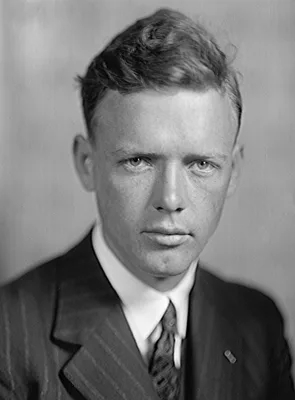
1935 LINDBERGH, Charles Augustus (1902 – 1974)
An apparatus for the culture of whole organs.
In 1931, the year before his son’s sensational kidnapping, the celebrity aviator began working with Alexis Carrel at the Rockefeller Institute on a perfusion pump which would allow the cultivation of whole organs in v…
GMN 858.1 · https://historyofmedicine.com/id/736
1936 WILSON, Clifford (1906 – 1997); KIMMELSTIEL, Paul (1900 – 1970)
Intercapillary lesions in the glomeruli of the kidney.
“Kimmelstiel–Wilson syndrome”. First description of nodular intercapillary glomerulosclerosis, the only known morphological alteration specific, or almost so, for diabetes mellitus.
GMN 4250 · https://historyofmedicine.com/id/5138
1937 HOUSSAY, Bernardo Alberto (1887 – 1971); FASCIOLO, Juan Carlos (1911 – )
Secreción hipertensora del rinón isquemiado.
Houssay and Fasciolo transplanted an ischemic kidney into an animal from which both kidneys had been removed. Hypertension resulted after establishment of circulation, supporting the view that hypertension is due to a…
GMN 2721 · https://historyofmedicine.com/id/4450
1937 FOLEY, Frederic Eugene Basil (1891 – 1966)
A new plastic operation for stricture at the uretero-pelvic junction: report of 20 operations.
Foley’s operation for hydronephrosis.
GMN 4250.1 · https://historyofmedicine.com/id/5145
1937 RANDALL, Alexander (1883 – 1951)
The origin and growth of renal calculi.
Randall founded the theory of kidney stone formation on anchored papillary plaque. https://kidneystones.uchicago.edu/randalls-plaque/ Digital facsimile from PubMedCentral at this link.
GMN 11466 · https://historyofmedicine.com/id/13665
1939 WILSON, Clifford (1906 – 1997); BYROM, Frank Burnet (1902 – 1976)
Renal changes in malignant hypertension; experimental evidence.
Production of hypertension in rats by constriction of one renal artery, and important studies of the renal changes produced, which included degeneration of the renal arterioles.
GMN 2724 · https://historyofmedicine.com/id/4456
1939 OLIVER, Jean Redman (1889 – 1976)
Architecture of the kidney in chronic Bright’s disease.
A description of the morphological changes in the nephrons of diseased kidneys. Hypertrophic, atrophic and aglomerular units are described.
GMN 4250.2 · https://historyofmedicine.com/id/5148
1940 BRAUN-MENÉNDEZ, Eduardo (1903 – 1959)
The substance causing renal hypertension.
Angiotensin. With J. C. Fasciolo, L. F. Leloir, and J. M. Muñoz. Independently isolated by Page and Helmer (see No. 2724.2) and later named angiotensin.
GMN 2724.1 · https://historyofmedicine.com/id/4458
1940 PAGE, Irvine Heinly (1901 – 1991); HELMER, Oscar Marvin (1900 – 1972)
A crystalline pressor substance (angiotonin) resulting from the reaction between renin and renin-activator.
Isolation of angiotonin (angiotensin).
GMN 2724.2 · https://historyofmedicine.com/id/4459
1940 ALVING, Alf Sven (1902 – 1965); MILLER, Benjamin Frank (1907 – )
A practical method for the measurement of glomerular filtration rate (inulin clearance) with an evaluation of the clinical significance of this determination.
Inulin clearance test.
GMN 4251 · https://historyofmedicine.com/id/5152
1941 WALKER, Arthur M.; OLIVER, Jean Redman (1889 – 1976); ET AL
Methods for the collection of fluid from single glomeruli and tubules of the mammalian kidney, and the collection and analysis of fluid from single nephrons of the mammalian kidney.
This was the first (and for many years) the only application of the Wearn-Richards procedure (No. 1239) to the mammalian kidney.
GMN 1244.1 · https://historyofmedicine.com/id/2038
1941 BYWATERS, Eric George Lapthorne (1910 – 2003); BEALL, Desmond (1910 – 1999)
Crush injuries with impairment of renal function.
Bywaters and Beali encountered cases of the “crush syndrome” among victims of the London air-raids of 1940-41.
GMN 4252 · https://historyofmedicine.com/id/5155
1941 WILSON, Clifford (1906 – 1997); BYROM, Frank Burnet (1902 – 1976)
The vicious circle in chronic Bright’s disease. Experimental evidence from the hypertensive rat.
GMN 4253 · https://historyofmedicine.com/id/5159
1942 ELLIS, Sir Arthur William Mickle (1883 – 1966)
Natural history of Bright’s disease. Clinical, histological and experimental observations.
Ellis’s classification of nephritis.
GMN 4254 · https://historyofmedicine.com/id/5164
1944 KEMPNER, Walter (1903 – 1997)
Treatment of kidney disease and hypertensive vascular disease with rice diet.
Kempner rice diet for the treatment of hypertension.
GMN 2725 · https://historyofmedicine.com/id/4461
1944 KOLFF, Willem Johann (1911 – 2009); ET AL
The artificial kidney: Dialyser with great area.
The Kolff artificial kidney. With H. T. J. Berk and others. Kolff first published his discovery in a neutral country (Sweden) since in 1944 Holland was occupied by the Germans. See also No. 1976.
GMN 4255 · https://historyofmedicine.com/id/5168
1946 FINE, Jacob (1900 – ); ET AL
The treatment of acute renal failure by peritoneal irrigation.
With H. A. Frank and A. M. Seligman.
GMN 4256 · https://historyofmedicine.com/id/5172
1946 KOLFF, Willem Johann (1911 – 2009)
Die kunstmatige Nier.
Kolff's first book on the artificial kidney. This was his doctoral dissertation. There were two versions published. The first was designated Proefschrift and credited Kolff as Willem Johan Kolff on the title page. It …
GMN 11510 · https://historyofmedicine.com/id/13709
1947 VERNEY, Ernest Basil (1894 – 1967)
The antidiuretic hormone and the factors which determine its release.
Verney elucidated the factors that determine the release of antidiuretic hormone, and introduced the osmoreceptor concept.
GMN 1244.2 · https://historyofmedicine.com/id/2041
1947 TRUETA I RASPALL, Josep (1897 – 1977); ET AL
Studies of the renal circulation.
With A. E. Barclay, P. M. Daniel, K. J. Franklin, and M. M. L. Prichard. In studying the anurias which follow injury, especially crushing injuries and burns, Trueta’s team demonstrated that both the processes of filtr…
GMN 1245 · https://historyofmedicine.com/id/2044
1947 MURRAY, Donald Walter Gordon (Gordon Murray) (1894 – 1976); ET AL
Development of an artificial kidney: Experimental and clinical experiences.
".... a significant contribution to renal therapies was made by Canadian surgeon Gordon Murray with the assistance of two doctors, an undergraduate chemistry student, and research staff. Murray's work was conducted si…
GMN 11511 · https://historyofmedicine.com/id/13710
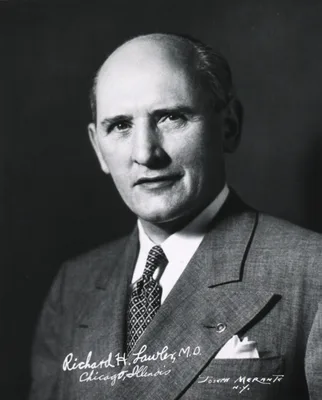
1950 LAWLER, Richard H. (1895 – 1982); ET AL
Homotransplantation of the kidney in human; preliminary report.
Report of first human patient to survive a kidney transplant. The operation was on June 17, 1950, and the patient was discharged on August 26. With four co-authors. See No. 4257.
GMN 4256.1 · https://historyofmedicine.com/id/5174
1951 SMITH, Homer William (1895 – 1962)
The kidney: structure and function in health and disease.
An encyclopaedic presentation of kidney physiology, including the many contributions of the author.
GMN 1246 · https://historyofmedicine.com/id/2048
1951 HARGITAY, Bart; KUHN, Werner (1899 – 1963)
Das Multiplikationsprinzip als Grundlage der Harnkonzentrierung in der Niere.
A theoretical treatment of the countercurrent hypothesis accompanied by data from a working model.
GMN 1246.01 · https://historyofmedicine.com/id/2054
1951 WIRZ, Heinrich (1914 – ); ET AL
Lokalisation des Konzentrierungsprozesses in der Niere durch direkte Kryoskopie.
The initial experimental evidence advanced in support of the countercurrent hypothesis. With B. Hargitay and W. Kuhn.
GMN 1246.1 · https://historyofmedicine.com/id/2056
1951 OLIVER, Jean Redman (1889 – 1976); MACDOWELL, M; TRACY, A
The pathogenesis of acute renal failure associated with traumatic and toxic injury. Renal ischemia, nephrotoxic damage and the ischemuric episode.
Oliver’s work on the structural lesions associated with acute renal failure in which he differentiated between the two types of damage: nephrotoxic, due to toxic substances, and tubulorhexic, due to ischemia, establis…
GMN 4256.11 · https://historyofmedicine.com/id/5183
1954 EVANS, John Arthur (1909 – ); ET AL
Nephrotomography. A preliminary report.
With W. Dubilier and J. C. Monteith.
GMN 4256.2 · https://historyofmedicine.com/id/5187
1955 HUME, David Milford (1917 – 1973); MERRILL, John Putnam (1917 – 1986); THORN, George Widmer (1906 – 2004); ET AL
Experiences with renal homotransplantation in the human. Report of nine cases.
With Benjamin F. Miller. Digital facsimile from PubMedCentral at this link.
GMN 4256.3 · https://historyofmedicine.com/id/5194
1956 MERRILL, John Putnam (1917 – 1986); MURRAY, Joseph Edward (1919 – 2012); HARRISON, John Hartwell (1909 – 1983); ET AL
Successful homotransplantation of the human kidney between identical twins.
This was the first successful kidney transplant. The patient, both of whose own kidneys had been removed, was alive 11 months after the transplant. With Warren R. Guild. See No. 4256.1. In 1990 Joseph Murray shared th…
GMN 4257 · https://historyofmedicine.com/id/5197
1956 KOLFF, Willem Johann (1911 – 2009); WATSCHINGER, B
Further developments of a coil kidney. Disposable artificial kidney.
Disposable twin coil kidney.
GMN 4257.1 · https://historyofmedicine.com/id/5201
1959 GOTTSCHALK, Carl William (1922 – 1997); MYLLE, Margaret
Micropuncture study of the mammalian urinary concentrating mechanism: Evidence for the countercurrent hypothesis.
Proof that tubular fluid is first concentrated in the loop of Henle, then diluted in the ascending limb of the loop before its final concentration in the collecting ducts, as predicted by the countercurrent hypothesis.
GMN 1246.2 · https://historyofmedicine.com/id/2060
1960 QUINTON, Wayne Everett (1921 – 2015); SCRIBNER, Belding Hibbard (1921 – 2003); DILLARD, David
Cannulation of blood vessels for prolonged hemodialysis.
Scribner, Quinton, and Dillard made repeated dialysis possible by their development of indwelling Teflon–Silastic arteriovenous shunts. These became known as Scribner Shunts.
GMN 4257.2 · https://historyofmedicine.com/id/5205
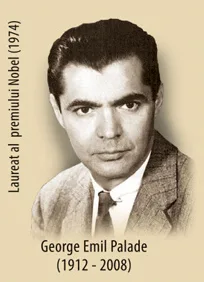
1961 FARQUHAR, Marilyn Gist (1928 – ); WISSIG, Steven L.; PALADE, George Emil (1912 – 2008)
Glomerular permeability. I. Ferritin transfer across the normal glomerular capillary wall.
"The authors used ferritin as an electron dense tracer, such that they could visualize both the structure of the capillary wall and the pathways taken by the ferritin moelcules across the wall....This report confirmed…
GMN 10005 · https://historyofmedicine.com/id/12194
1967 THURAU, Klaus (1928 – ); ET AL
Composition of tubular fluid in the macula densa segment as a factor regulating the function of the juxtaglomerular apparatus.
"This demonstration of 'tubulo-glomerular feedback' therefore provided mechanistic insights into one of the fundamental homeostatic functions of the kidney—the ability to conserve salt and water. Adjusting filtered so…
GMN 10006 · https://historyofmedicine.com/id/12195
1971 BRENNER, Barry M.; ET AL
The dynamics of glomerular ultrafiltration in the rat.
"Brenner and colleagues combined two relatively novel tools: a servo-null device for accurate measurment of capillary hydrostatic pressure... and a strain of specially selected rats with superficially located glomerul…
GMN 10007 · https://historyofmedicine.com/id/12196
1972 BLEKER, Johanna (1940 – )
Die Geschichte der Nierenkrankheiten.
GMN 4297.3 · https://historyofmedicine.com/id/5438
1974 SWAZEY, Judith P. (1939 – ); FOX, Renée Claire (1928 – )
The courage to fail: A social view of organ transplants and dialysis.
Includes chapters on the heart transplantation moratorium and the artificial heart.
GMN 12343 · https://historyofmedicine.com/id/14567
1980 GORDON, David B.
Hypertension, the renal basis. Benchmark papers in human physiology. Edited by David B. Gordon.
GMN 12344 · https://historyofmedicine.com/id/14568
1987 GOTTSCHALK, Carl William (1922 – 1997); BERLINER, Robert William (1915 – 2002); GIEBISCH, Gerhard H. (1927 – 2020)
Renal physiology: People and ideas.
A collective work on the history of renal physiology with thematic chapters by the editors and other prominent investigators.
GMN 1588.23 · https://historyofmedicine.com/id/1636
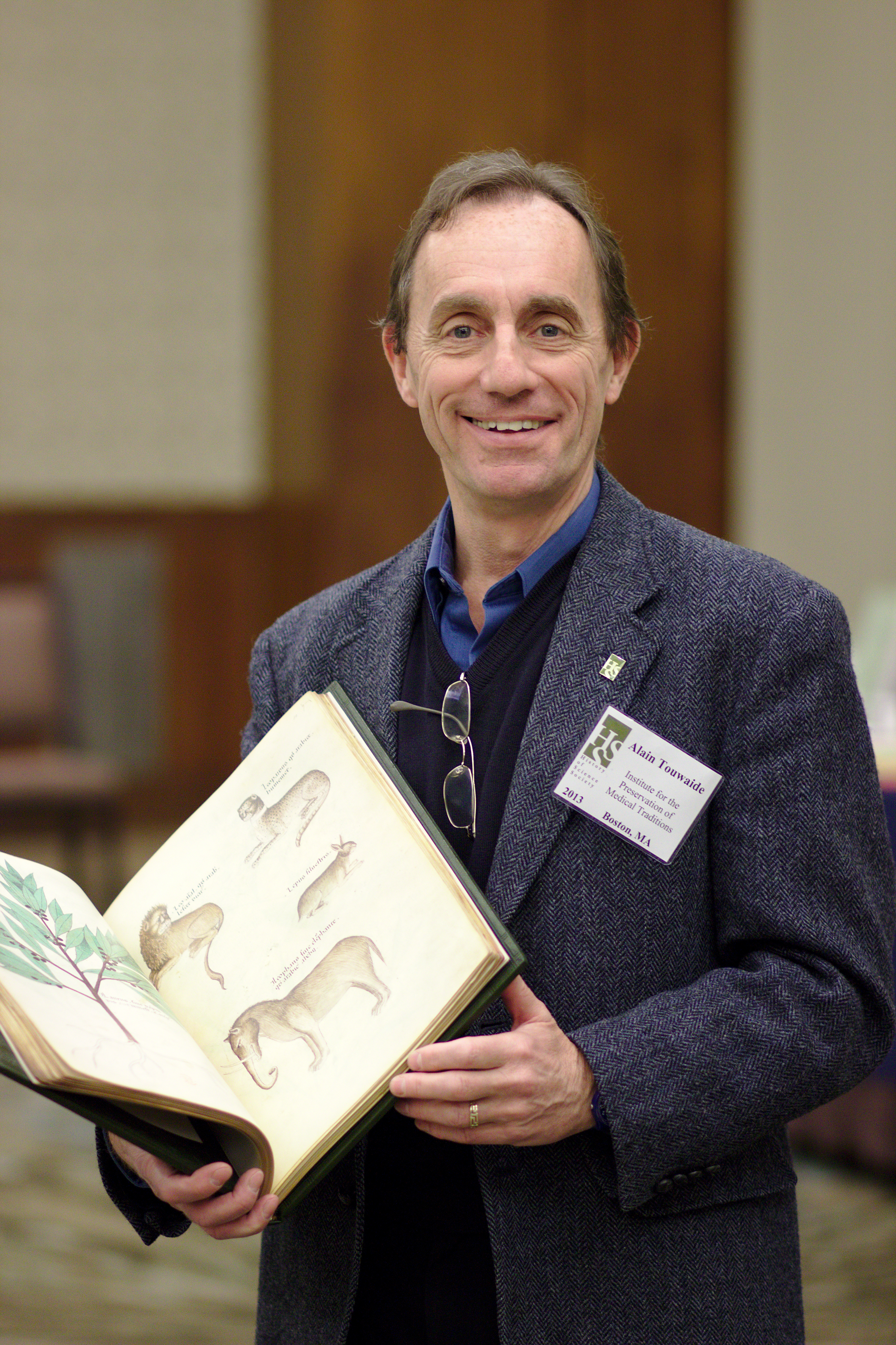
2002 TOUWAIDE, Alain (1953 – )
Healing kidney diseases in antiquity: Plants from Dioscorides' De materia medica, with Illustrations from Greek and Arabic manuscripts (A.D. 512-15th Century).
GMN 9715 · https://historyofmedicine.com/id/11902
2002 CAMERON, John Stewart (1934 – )
A history of the treatment of renal failure by dialysis.
GMN 9858 · https://historyofmedicine.com/id/12046
2012 ING, Todd S.; RAHMAN, Mohamed; KJELLSTRAND, Carl M. (1936 – )
Dialysis: History, development and promise. Edited by Todd S. Ing, Mohamed Rahman, and Carl M. Kjellstrand.
GMN 9850 · https://historyofmedicine.com/id/12038
2013 FREEHALLY, John; MCINTYRE, Christopher; CAMERON, John Stewart (1934 – )
Landmark papers in nephrology. Edited by John Freehally, Christopher McIntyre and J. Stewart Cameron.
GMN 9857 · https://historyofmedicine.com/id/12045
2014 MORAN, Michael Edward
Urolithiasis: A comprehensive history.
GMN 12149 · https://historyofmedicine.com/id/14359
2017 CHEVALIER, Robert L.
Evolutionary nephrology.
Abstract: "Progressive kidney disease follows nephron loss, hyperfiltration, and incomplete repair, a process described as “maladaptive.” In the past 20 years, a new discipline has emerged that expands research horizo…
GMN 12099 · https://historyofmedicine.com/id/14308
2019 CHEVALIER, Robert L.
Evolution, kidney development, and chronic kidney disease.
Abstract: "There is a global epidemic of chronic kidney disease (CKD) characterized by a progressive loss of nephrons, ascribed in large part to a rising incidence of hypertension, metabolic syndrome, and type 2 diabe…
GMN 12098 · https://historyofmedicine.com/id/14307