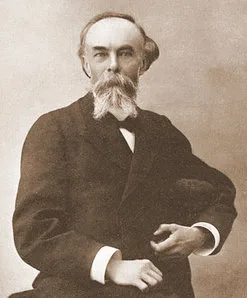
1876 HEWETT, Frederick Charles Cresswell
Thoracentesis: the plan of continuous aspiration.
Hewett introduced a method of continuous aspiration of the thorax for emphysema.
GMN 3170 · https://historyofmedicine.com/id/4139
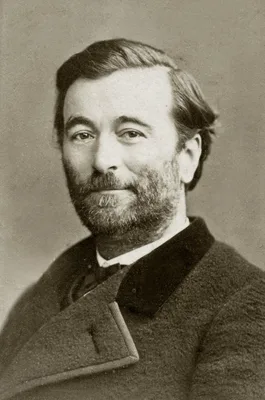
1876 BIOT, Camille (1850 – 1918)
Contribution a l’étude du phénomène respiratoire de Cheyne-Stokes.
Biot's respiration, "an abnormal pattern of breathing characterized by groups of quick, shallow inspirations followed by regular or irregular periods of apnea"
GMN 12220 · https://historyofmedicine.com/id/14431
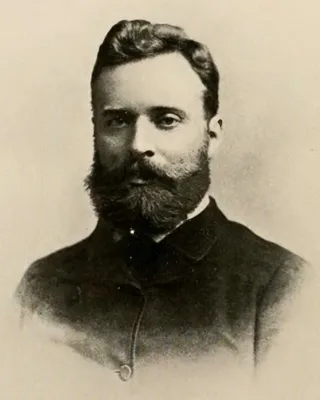
1878 BERT, Paul (1833 – 1886)
La pression barométrique. Recherches de physiologie expérimentale.
The most famous work in the history of altitude physiology, in which Bert proved that the principal symptoms of altitude sickness arise from reduced partial pressure of oxygen and not from diminution of total pressure…
GMN 944 · https://historyofmedicine.com/id/204
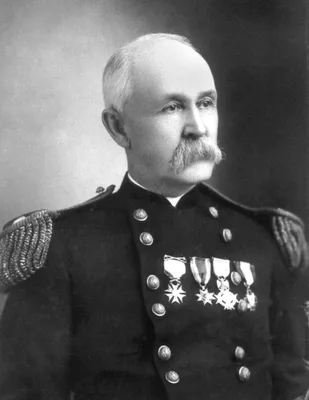
1879 –1880 MARTIN, Henry Newell (1848 – 1896); HARTWELL, Edward Mussey (1850 – 1922)
On the respiratory function of the internal intercostal muscles.
The important work of Martin and Hartwell on the intercostal muscles settled the controversy regarding their function.
GMN 945 · https://historyofmedicine.com/id/207
1881 PARROT, Joseph (1829 – 1883)
L’organisme microscopique trouvé par M. Pasteur dans la maladie nouvelle provoquée par la salive d’un enfant mort de la rage.
Probably the earliest record of pneumococcus. Parrot reported the discovery made by Louis Pasteur.
GMN 3172 · https://historyofmedicine.com/id/4155
1881 STERNBERG, George Miller (1838 – 1915)
A fatal form of septicaemia in the rabbit, produced by the subcutaneous injection of human saliva.
In the same year as Pasteur, and independently, Sternberg discovered the pneumococcus (Streptococcus pneumoniae) demonstrating its carriage in the healthy human mouth.
GMN 3173 · https://historyofmedicine.com/id/4159
1882 –1892 ZUCKERKANDL, Emil (1849 – 1910)
Normale und pathologische Anatomie der Nasenhöhle und ihrer pneumatischen Anhänge.
GMN 946 · https://historyofmedicine.com/id/211
1882 FRIEDLÄNDER, Carl (1847 – 1887)
Ueber die Schizomyceten bei der acuten fibrösen Pneumonie.
Isolation of Klebsiella pneumoniae (“Friedländer bacillus”), which Friedländer regarded as the causal organism in all cases of lobar pneumonia.
GMN 3174 · https://historyofmedicine.com/id/4160
1885 CAYLEY, William (1836 – 1916)
A case of haemoptysis treated by the induction of pneumothorax so as to collapse the lung.
Artificial pneumothorax by pleural incision in intractable haemoptysis. See also Lancet, 1885, 1, 894-95.
GMN 3226 · https://historyofmedicine.com/id/5020
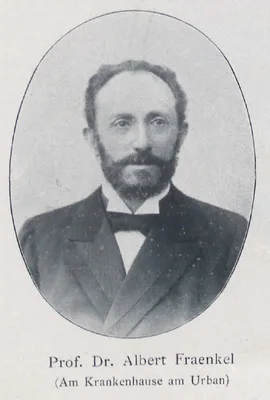
1886 FRAENKEL, Albert (1848 – 1916)
Die Mikrococcen der Pneumonie.
Fraenkel showed definitely that the organism found by Pasteur (No. 3172) and Sternberg (No. 3173) was a cause of pneumonia.
GMN 3175 · https://historyofmedicine.com/id/4165
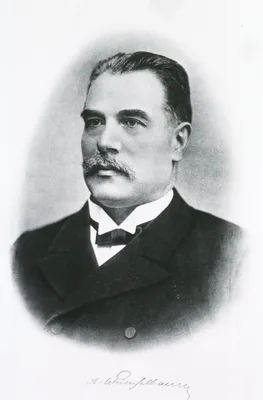
1886 WEICHSELBAUM, Anton (1845 – 1920)
Ueber die Aetiologie der acuten Lungen- und Rippenfellentzündungen.
Weichselbaum definitely established that Friedländer’s bacillus was responsible for pneumonia in a small percentage of cases.
GMN 3176 · https://historyofmedicine.com/id/4169
1889 HEAD, Sir Henry (1861 – 1940)
On the regulation of respiration.
Demonstration of the action of the vagus in respiration.
GMN 947 · https://historyofmedicine.com/id/214
1889 KÜSTER, Ernst Georg Ferdinand von (1839 – 1930)
Ueber die Grundsätze der Behandlung von Eiterungen in starrwandigen Höhlen, mit besonderer Berücksichtigung des Empyems der Pleura.
First thoracotomy for empyema.
GMN 3177 · https://historyofmedicine.com/id/4173
1890 SCHEDE, Max (1844 – 1902)
Die Behandlung der Empyeme.
Schede introduced the method of extensive rib resection for the treatment of empyema.
GMN 3177.1 · https://historyofmedicine.com/id/4176
1891 KLEMPERER, Georg (1865 – 1946); KLEMPERER, Felix (1866 – 1932)
Versuche über Immunisirung und Heilung bei der Pneumokokkeninfection.
Old antipneumococcal serum.
GMN 3178 · https://historyofmedicine.com/id/4180
1893 FOWLER, George Ryerson (1848 – 1906)
A case of thoracoplasty for the removal of a large cicatricial fibrous growth from the interior of the chest, the result of an old empyema.
First thoracoplasty.
GMN 3179 · https://historyofmedicine.com/id/4188
1894 HÜFNER, Gustav von (1840 – 1908)
Neue Versuche zur Bestimmung der Sauerstoffcapacität des Blutfarbstoffs.
Hüfner showed that 1 gm. hemoglobin combines with 1.34 cc oxygen.
GMN 949 · https://historyofmedicine.com/id/218
1896 THOREL, Christen (1868 – 1935)
Die Specksteinlunge. Ein Beitrag zur pathologischen Anatomie der Staublungen.
Talcosis of lung reported.
GMN 3181 · https://historyofmedicine.com/id/4193
1897 MOSSO, Angelo (1846 – 1910)
Fisiologia dell’uomo sulle Alpi. Studii fatti sul Monte Rosa.
Mosso made important investigations on respiration at high altitudes. He considered that the respiratory symptoms produced at high altitudes were due to lack of carbon dioxide. English translation, London, 1898.
GMN 950 · https://historyofmedicine.com/id/1072
1898 HALDANE, John Scott (1860 – 1936)
A contribution to the chemistry of haemoglobin and its immediate derivatives.
Potassium ferricyanide method for the determination of oxygen in oxyhemoglobin.
GMN 951 · https://historyofmedicine.com/id/225
1898 HALDANE, John Scott (1860 – 1936)
Some improved methods of gas analysis.
The Haldane apparatus for the analysis of the repiratory gases, which proved a method that could measure oxygen and carbon dioxide to 0.005%. It was the cornerstone of all respiratory gas analysis until P.F. Scholande…
GMN 951.1 · https://historyofmedicine.com/id/228
1901 FREDERICQ, Léon (1851 – 1935)
Sur la cause de l’apnée.
Fredericq “established that chemical changes in the blood acting somewhere in the head were the major factor in the regulation of breathing” (Kellogg). English translation in No. 1588.16.
GMN 951.2 · https://historyofmedicine.com/id/230
1903 –1904 MOSSO, Angelo (1846 – 1910)
La physiologie de l’apnée étudiée chez l’homme.
First studies of the physiology of apnea in man.
GMN 952 · https://historyofmedicine.com/id/238
1903 GROCCO, Pietro (1856 – 1916)
Triangolo paravertebrale opposto nella pleurite essudativa.
“Grocco’s triangle”. Grocco described paravertebral dullness on the opposite side in pleural effusion.
GMN 3183 · https://historyofmedicine.com/id/4198
1903 EMERSON, Charles Phillips (1872 – 1938)
Pneumothorax; a historical, clinical, and experimental study.
GMN 3184 · https://historyofmedicine.com/id/4201
1904 TISSOT, Jules (1870 – 1950)
Nouvelle méthode de mesure et d’inscription du débit et des mouvements respiratoires de l’homme et des animaux.
Tissot spirometer.
GMN 953 · https://historyofmedicine.com/id/241
1904 SHARPEY-SCHAFER, Sir Edward Albert (1850 – 1935)
Description of a simple and efficient method of performing artificial respiration on the human subject especially in cases of drowning. To which is appended instruction for the treatment of the apparently drowned.
GMN 2028.59 · https://historyofmedicine.com/id/2110
1904 SAUERBRUCH, Ernst Ferdinand (1875 – 1951)
Ueber die physiologischen and physikalischen Grundlagen bei intrathorakalen Eingriffen in meiner pneumatischen Operationskammer.
Sauerbruch’s negative pressure chamber for the prevention of pneumothorax.
GMN 3185 · https://historyofmedicine.com/id/4207
1904 SCHÄFER, Edward Albert (1850 – 1935); ROYAL MEDICAL AND CHIRURGICAL SOCIETY OF LONDON
An inquiry into the phenomena attending death by drowning and the means of promoting resuscitation in the apparently drowned. Report of a committee appointed by the Society, drawn up by Professor Schäfer, chairman of the committee.
The Schäfer method of artificial respiration. Digital facsimile from the Hathi Trust at this link.
GMN 11700 · https://historyofmedicine.com/id/13901
1905 HALDANE, John Scott (1860 – 1936); PRIESTLEY, John Gillies (1880 – 1941)
The regulation of the lung-ventilation.
Proof of the regulation of respiration by CO2 concentration of the alveolar air
GMN 954 · https://historyofmedicine.com/id/245
1906 BRAUER, Ludolph (1865 – 1951)
Die Behandlung der einseitigen Lungenphthisis mit künstlichem Pneumothorax (nach Murphy).
Brauer’s method of producing artificial pneumothorax by the injection of nitrogen.
GMN 3230 · https://historyofmedicine.com/id/3851
1907 NOWOTNY, Franz (1872 – 1925)
Bronchoskopie und bronchoskopische Behandlung von Bronchialasthma.
Introduction of therapeutic bronchoscopy, for treatment of asthma.
GMN 3186 · https://historyofmedicine.com/id/4211
1908 PASTEUR, William (1856 – 1943)
The Bradshaw Lecture on massive collapse of the lung.
William Pasteur discovered and described massive collapse of the lung.
GMN 3188 · https://historyofmedicine.com/id/4217
1909 KÖRTE, Werner (1853 – 1937)
Ueber Lungenresektion wegen bronchiektatischer Cavernen.
Körte was the first successfully to remove bronchiectatic lobes.
GMN 3187 · https://historyofmedicine.com/id/4213
1910 NEUFELD, Fred Julius (1869 – 1945); HAENDEL, Ludwig (1869 – 1939)
Weitere Untersuchungen über Pneumokokken-Heilsera. III. Mitteilung. Über Vorkommen und Bedeutung atypischer Varietäten des Pneumokokkus.
New antipneumococcus serum.
GMN 3190 · https://historyofmedicine.com/id/4223
1910 TUFFIER, Théodore (1857 – 1929)
Gangrène pulmonaire ouverte dans les bronches et traitée par décollement pleuro-pariétal, et greffe d’une masse lipomateuse entre la plèvre décollée et les espaces intercostaux.
Tuffier’s method of extrapleural pneumolysis.
GMN 3191 · https://historyofmedicine.com/id/4227
1911 DOUGLAS, Claude Gordon (1882 – 1963)
A method for determining the total respiratory exchange in man.
Douglas bag.
GMN 955 · https://historyofmedicine.com/id/248
1912 PETERS, Sir Rudolph Albert (1889 – 1982)
Chemical nature of specific oxygen capacity in haemoglobin.
Peters made accurate determinations of the ratio of iron to oxygen in the blood.
GMN 956 · https://historyofmedicine.com/id/250
1912 ADLER, Isaac (1849 – 1918)
Primary malignant growths of the lungs and bronchi.
Digital facsimile from the Internet Archive at this link.
GMN 3192 · https://historyofmedicine.com/id/4229
1914 HALDANE, John Scott (1860 – 1936); DOUGLAS, Claude Gordon (1882 – 1963); CHRISTIANSEN, Johanne Ostenfeld (1882 – 1968)
The absorption and dissociation of carbon dioxide by human blood.
CO2 dissociation curves. These workers discovered that hemoglobin indirectly greatly assists the transport of CO2 by the blood.
GMN 958 · https://historyofmedicine.com/id/256
1914 BARCROFT, Sir Joseph (1872 – 1947)
The respiratory function of the blood.
Barcroft’s studies of the oxygen-carrying capacity of the blood are recorded in the above monograph. He particularly concentrated on elucidation of the oxygen dissociation curve. The second edition, 2 vols., Cambridge…
GMN 964 · https://historyofmedicine.com/id/275
1914 KRUSE, Walther (1864 – 1943)
Die Erreger von Husten und Schnopfen.
Kruse reported that colds could be produced in volunteers by intranasal instillation of bacteria-free filtrates of secretions from persons suffering from colds.
GMN 3192.2 · https://historyofmedicine.com/id/4235
1917 HENDERSON, Yandell (1873 – 1944)
Effects of altitude on aviators.
The first discussion of decompression sickness in flying personnel.
GMN 2137.3 · https://historyofmedicine.com/id/2688
1917 CASTELLANI, Aldo (1877 – 1971)
Note sur la “broncho-spirochétose” et les “bronchites mycosiques”, affections simulant quelquefois la tuberculose pulmonaire.
“Castellani’s bronchitis” (bronchospirochetosis).
GMN 3193 · https://historyofmedicine.com/id/4240
1920 –1921 JOFFE, Jack; POULTON, Edward Palmer (1883 – 1939)
The partition of CO2, between plasma and corpuscles in oxygenated and reduced blood.
GMN 960 · https://historyofmedicine.com/id/262
1922 HALDANE, John Scott (1860 – 1936)
Respiration.
An account of the work of the Oxford School of Physiology, in particular the Pike’s Peak expedition (No. 957). Second edition, 1935, with J. G. Priestley.
GMN 961 · https://historyofmedicine.com/id/263
1923 HARTRIDGE, Hamilton (1886 – 1976); ROUGHTON, Francis John Worsley (1899 – 1972)
The velocity with which carbon monoxide displaces oxygen from combination with haemoglobin.
GMN 962 · https://historyofmedicine.com/id/267
1923 LUMSDEN, Thomas William
The regulation of respiration.
Lumsden introduced the concept of subsidiary respiratory centers in the brain stem.
GMN 963 · https://historyofmedicine.com/id/270
1925 GESELL, Robert A. (1886 – 1954)
The chemical regulation of respiration.
GMN 965 · https://historyofmedicine.com/id/279
1925 LAUGHLEN, George Franklin (1888 – 1946)
Studies on pneumonia following naso-pharyngeal injections of oil.
Lipoid pneumonia first described.
GMN 3200 · https://historyofmedicine.com/id/4295