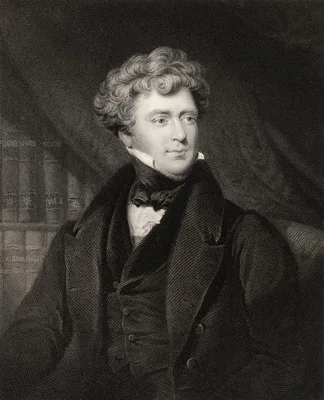
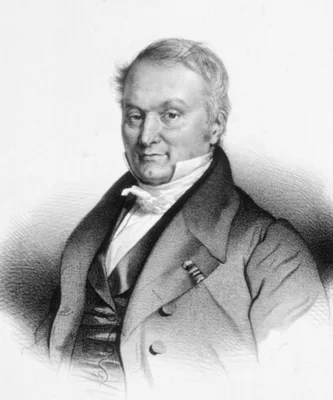
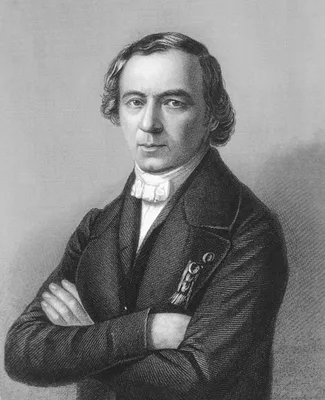
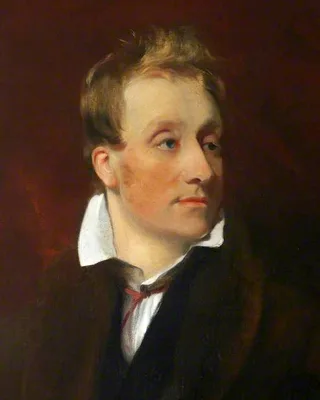
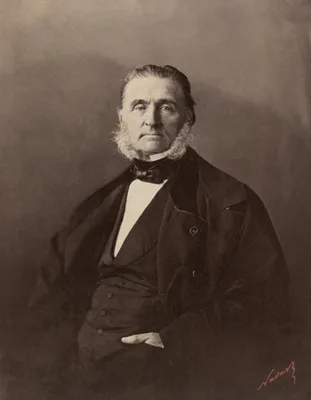
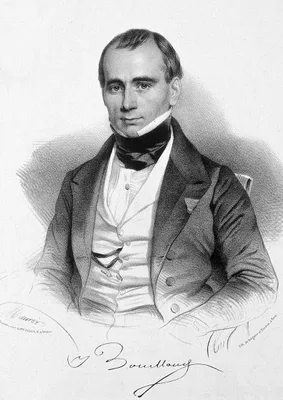
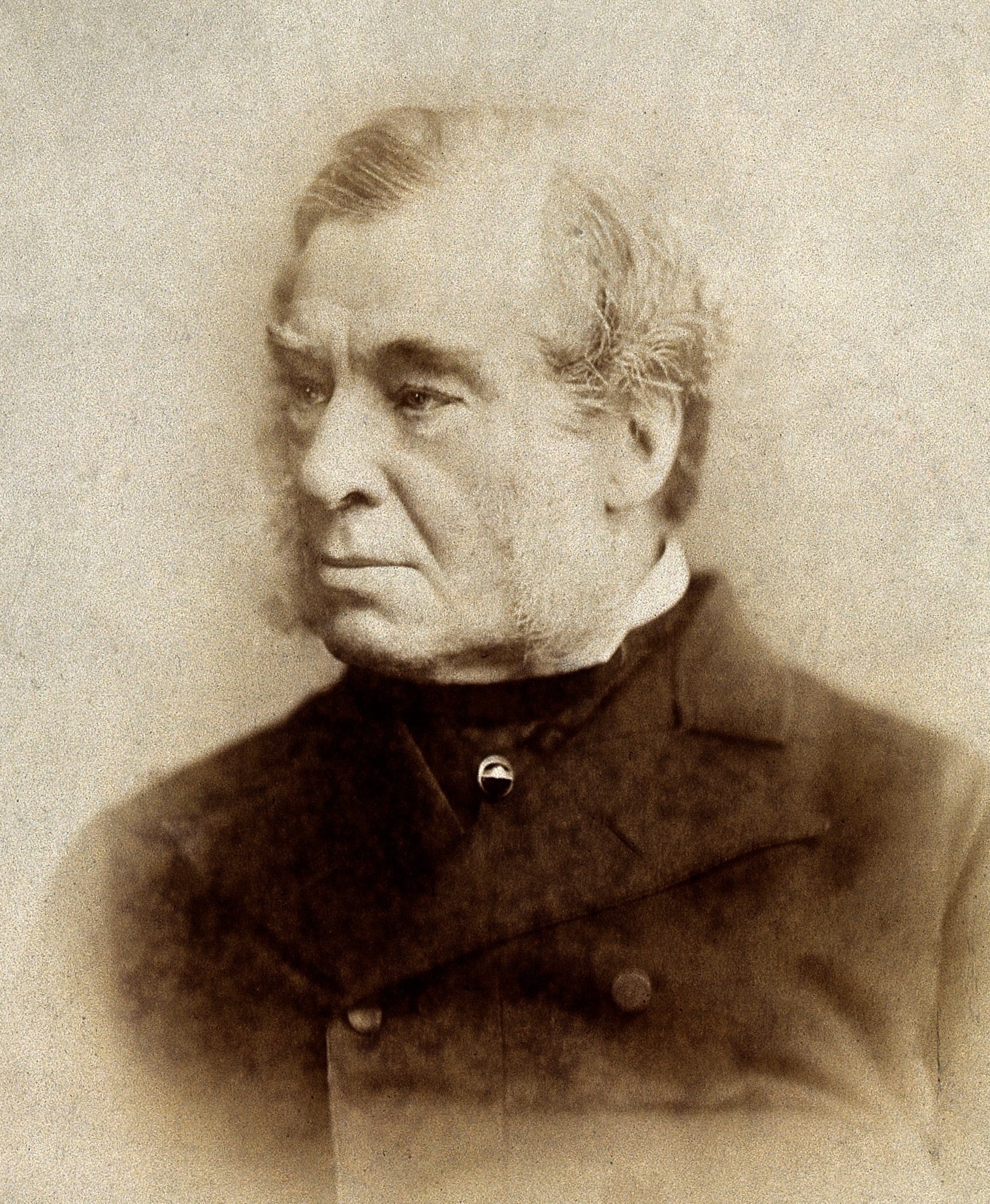
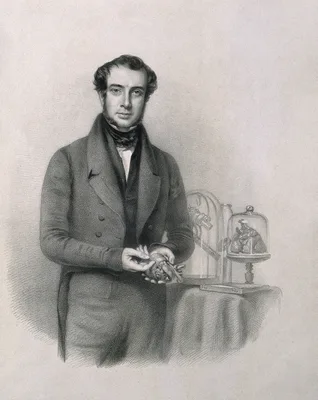
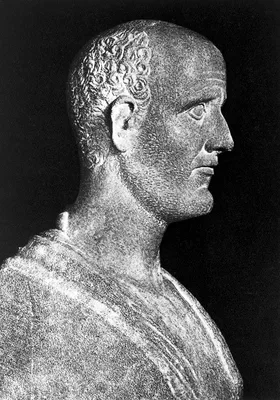
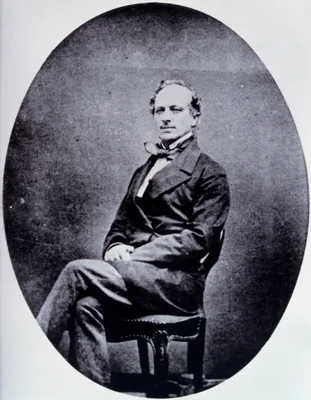
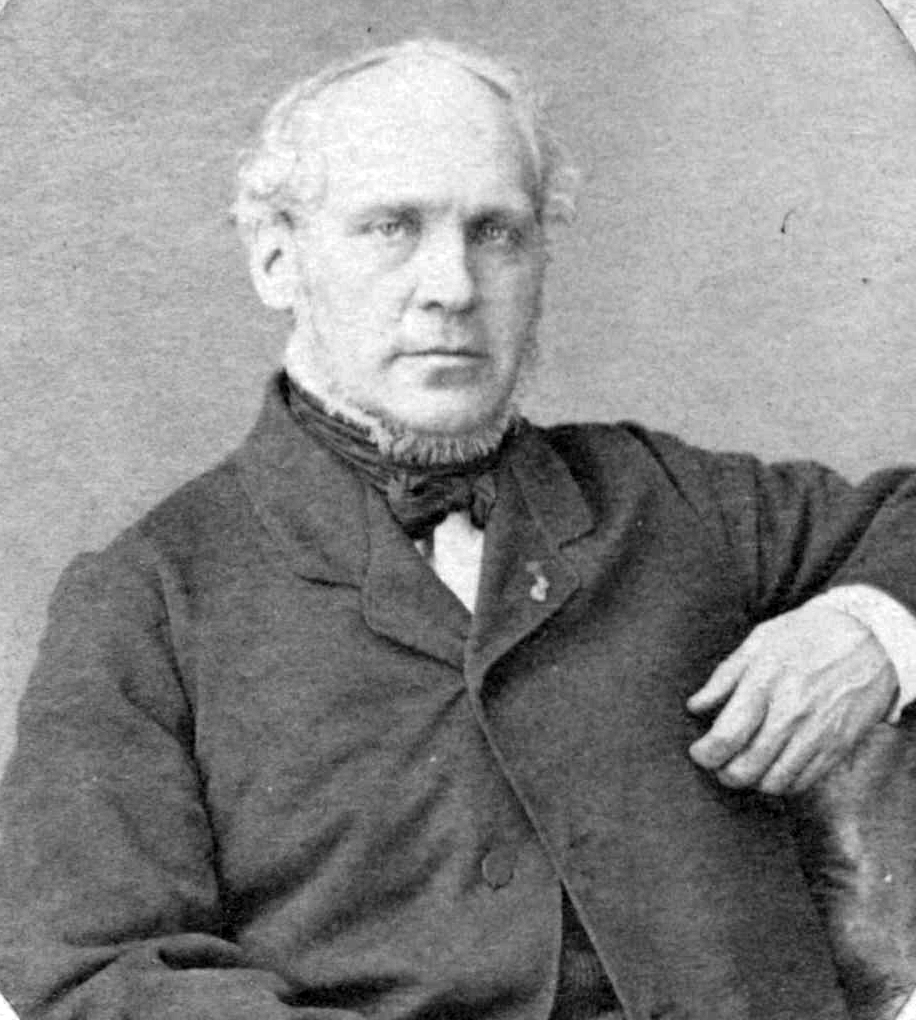
1810 HAHNEMANN, Christian Friedrich Samuel (1755 – 1843)
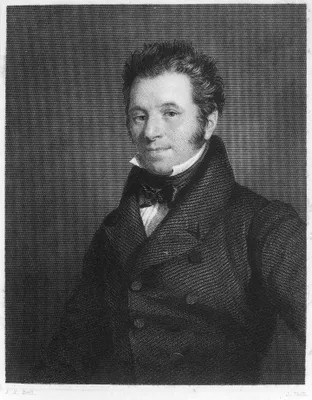
Organon der rationellen Heilkunde.
Hahnemann, the founder of homeopathy, embodied his theories in the Organon. The minute doses set down by him did much to correct the evils of the polypharmacy of his time, in which overdosage was pervasive. Hahnemann …
GMN 1966 · https://historyofmedicine.com/id/3745
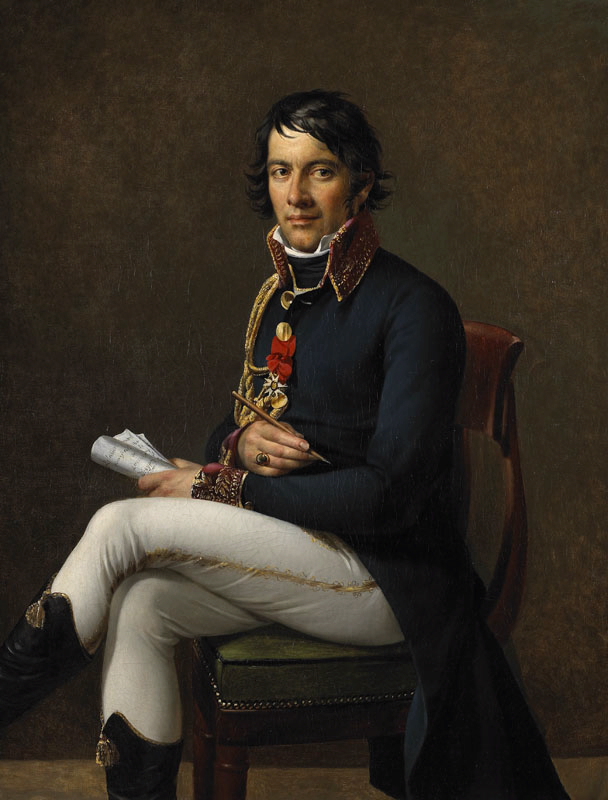
1812 –1817 LARREY, Dominique Jean (1766 – 1842)
Mémoires de chirurgie militaire, et campagnes. (Vol. 5 entitled Relation médicale de campagnes et voyages.) 5 vols.
Larrey was the greatest military surgeon in history. Of him Napoleon said: “C’est l’homme le plus vertueux que j’ai connu”. He was present at all Napoleon’s great battles and one of the few who stood by him on his abd…
GMN 2160 · https://historyofmedicine.com/id/888
1816 DÖBEREINER, Johann Wolfgang (1780 – 1849)
Anleitung zur Darstellung und Anwendung aller Arten der kräftigsten Bäder und Heilwässer welche von Gesunden und Kranken gebraucht werden.
Döbereiner was the first to treat the subject of light therapy on a scientific basis.
GMN 1990 · https://historyofmedicine.com/id/3820
1816 JOHNSON, James Rawlins ( – 1840)
A treatise on the medicinal leech; including its medical and natural history, with a description of its anatomical structure; also, remarks upon the diseases, preservation, and management of leeches.
Digital facsimile from the Hathi Trust at this link.
GMN 11799 · https://historyofmedicine.com/id/14001
1817 LEACOCK, John Henry ( – 1828)
On transfusion of blood in extreme cases of haemorrhage.
In 1816 Leacock, from Barbados, reported systematic experiments in Edinburgh on dogs and cats that established that donor and recipient must be of the same species, and recommended inter-human transfusion; he then ret…
GMN 9701 · https://historyofmedicine.com/id/11888
1817 GRÄFE, Karl Ferdinand von [Graefe] (1787 – 1840); GRAEFE, Eduard Adolph von (1794 – 1859)
De nova infusionis methodo. Dissertatio inauguralis medico-chirurgica....
Eduard von Graefe’s medical thesis described the method devised by his brother, Carl Ferdinand von Graefe (1787-1840), for transfusing blood or other liquids into the blood vessels. The work includes an illustration o…
GMN 9871 · https://historyofmedicine.com/id/12059
1818 BLUNDELL, James (1790 – 1877)
Experiments on the transfusion of blood by the syringe.
Blundell invented a syringe by means of which he was able to transfuse dogs.
GMN 2015 · https://historyofmedicine.com/id/1984
1818 BORDEU, Théophile de (1722 – 1776); RICHERAND, Anthelme Louis Claude Marie (1779 – 1840)
Oeuvres complètes de Bordeu, précédés d'une notice sur sa vie et sur ses ouvrages, par M. le Chevalier Richerand. 2 vols.
GMN 10069 · https://historyofmedicine.com/id/12258
1819 BLUNDELL, James (1790 – 1877)
Some account of a case of obstinate vomiting, in which an attempt was made to prolong life, by the injection of blood into the veins.
Records the first human to human transfusion. A man received 12 to 14 oz. of blood from several donors by means of Blundell’s funnel and syringe. He died 56 hours after the transfusion.
GMN 2015.1 · https://historyofmedicine.com/id/1986
1819 SARLANDIÈRE, Jean-Baptiste (1787 – 1838)
Bdellomètre du docteur Sarlandière.
Privately printed pamphlet describing Sarlandière's "artificial leech," a mechanical bleeding device designed to replace leeches when they were not available. Digital facsimile from Google Books at this link.
GMN 11801 · https://historyofmedicine.com/id/14003
1821 PRÉVOST, Jean-Louis (1790 – 1850); DUMAS, Jean-Baptiste André (1800 – 1884)
Examen du sang et de son action dans les divers phénomènes de la vie.
First successful use of defibrinated blood for animal transfusions. This was the first attempt to prevent coagulation during transfusion.
GMN 2016 · https://historyofmedicine.com/id/1990
1825 DERHEIM, Jean Lambert (1798 – )
Histoire naturelle et médicale des sangsues, contenant la description anatomique des organes de la sangsue officinale, avec des considérations physiologiques sur ces organes; des notions très-étendues sur la conservation domestique de ce ver, sa reproduction, ses maladies, son application, etc.
Digital facsimile from Biodiversity Heritage Library at this link.
GMN 11800 · https://historyofmedicine.com/id/14002
1828 –1829 BLUNDELL, James (1790 – 1877)
Observations on transfusion of blood.
The first human to human transfusion in which the patient did not die. Blundell established the most fundamental points in transfusion, including the incompatibility of interspecies transfusion and the method of indir…
GMN 2017 · https://historyofmedicine.com/id/1992
1830 HALL, Marshall (1790 – 1857)
Researches principally relative to the morbid and curative effects of loss of blood.
Hall's experiments on the physiological effects of therapeutic bleeding provided compelling evidence that bleeding could cause significant harm and even death. Digital facsimile from wellcomecollection.org at this link.
GMN 11605 · https://historyofmedicine.com/id/13805
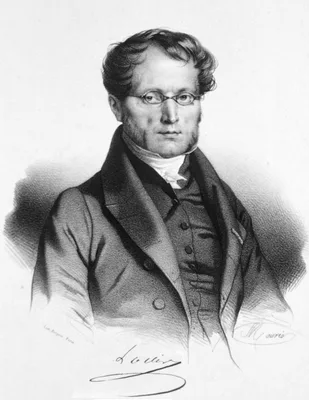
1835 LOUIS, Pierre Charles Alexandre (1787 – 1872)
Recherches sur les effets de la saignée dans quelques maladies inflammatoires, et sur l’action de l’émétique et des vésicatoires dans la pneumonie.
Louis refuted Broussais’s system of medicine, his “médicine physiologique.” Louis was instrumental in establishing medicine as an exact science by the introduction of the numerical or statistical method. English trans…
GMN 1698 · https://historyofmedicine.com/id/2455
1835 PRIESSNITZ, Vincenz (1799 – 1851)
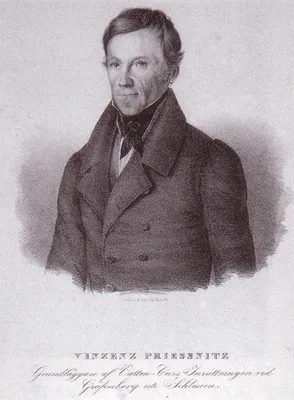
The coldwater cure, its principles, theory, and practice.
Priessnitz, a peasant farmer in Gräfenberg, Austrian Silesia, is generally considered the founder of modern hydrotherapy, which is used in alternative and orthodox medicine. Priessnitz stressed remedies such as suitab…
GMN 1992 · https://historyofmedicine.com/id/3828
1835 DUNGLISON, Robley (1798 – 1869)
On the influence of atmosphere and locality; change of air and climate; seasons; food; clothing; bathing; exercise; sleep; corporeal and intellectual pursuits, &c. &c. on human health; constituting elements of hygiéne.
Digital facsimile from the Internet Archive at this link.
GMN 10108 · https://historyofmedicine.com/id/12297
1835 WARDROP, James (1782 – 1869)
On blood-letting: An account of the curative effects of the abstraction of blood; with rules for employing both local and general blood-letting in the treatment of diseases.
Wardrop "promoted blood-letting in an era when a few physicians, notably Pierre Louis of Paris, were discouraging the therapeutic approach" (W. Bruce Fye, "James Wardrop," Profiles in cardiology, 91.) Digital facsimil…
GMN 11723 · https://historyofmedicine.com/id/13924
1836 –1839 TROUSSEAU, Armand (1801 – 1867); PIDOUX, Hermann (1808 – 1882)
Traité de thérapeutique et de matière médicale. 2 vols.
“A valuable work of reference, containing a large amount of information on the various articles or the materia medica, collected from the best authorities, interspersed with much original matter” (Waring).
GMN 1967 · https://historyofmedicine.com/id/3747
1836 BOUILLAUD, Jean Baptiste (1796 – 1881)
Nouvelles recherches sur le rhumatisme articulaire en général, et spécialement sur la loi de coincidence de la péricardite et de l'endocardite avec cette maladie, ainsi que sur l'efficacité de la formule des émissions sanguines coup sur coup dans son traitement.
"In this volume he [Bouillaud] irrevocably established the etiologic relationship between rheumatic fever and heart disease. Early reports on this relationship had been contributed by Pitcairn, Jenner, and Wells, but …
GMN 11556 · https://historyofmedicine.com/id/13755
1837 ADDISON, Thomas (1793 – 1860)
On the influence of electricity, as a remedy in certain convulsive and spasmodic diseases.
First therapeutic employment of static electricity.
GMN 4524 · https://historyofmedicine.com/id/385
1840 –1841 LANE, Samuel Armstrong (1802 – 1892)
Successful transfusion of blood.
Blood transfusion used in treatment of hemophilia.
GMN 3058.1 · https://historyofmedicine.com/id/3700
1841 –1843 CRUSELL, Gustaf Samuel (1810 – 1858)
Ueber den Galvanismus als chemisches Heilmittel gegen örtliche Krankheiten.
Crusell began to use electrolysis as a cauterizing agent in 1839. See No. 5604.
GMN 1994 · https://historyofmedicine.com/id/1838
1841 ASCLEPIADES OF BITHYNIA (ἈΣΚΛΗΠΙΆΔΗΣ) (-124 – -40); WELZ, Robert Anton Ritter von (1814 – 1878)
Des Asclepiades von Bithynien Gesundheitsvorschriften, nach den vorhandenen Handschriften zum ersten Male vollständig bearbeitet und erläutert. Von Robert Ritter von Welz.
The Greek physician Asclepiades acquired a great reputation in Rome. His remedies included change of diet, friction, bathing, and exercise. The above edition includes Greek, Latin, and German texts. Digital facsimile …
GMN 1984 · https://historyofmedicine.com/id/8811
1842 BERNARD, Karl Ambros (1808 – 1844)
Les bains de Brousse, en Bithynie (Turquie d'Asie), avec une vue des bains et un plan des environs de Brousse.
The introduction of Western hydrotherapy to the Ottoman world. Focusing upon the hot springs of Bursa, Bernard promoted the healing effects of warm waters to the general Ottoman population. Digital facsimile from Goog…
GMN 13708 · https://historyofmedicine.com/id/15992
1845 RYND, Francis (1801 – 1861)
Neuralgia - introduction of fluid to the nerve.
Rynd, an Irish physician, invented the hollow needle used in hypodermic syringes. The description of his instrument is given in Dublin Quart. J. med. Sci., 1861, 32, 13.
GMN 1968 · https://historyofmedicine.com/id/3749
1851 –1876 DAREMBERG, Charles Victor (1817 – 1872); ORIBASIUS (ὈΡΕΙΒΆΣΙΟΣ), [Oreibasius] (320 – 403); BUSSEMAKER, Ulco Cats (1810 – 1865); MOLINIER, Auguste (1851 – 1904)
Oeuvres d’Oribase, texte grec, en grande partie inédit…traduit pour la première fois en français; par les Drs. Bussemaker et Daremberg. 6 vols.
Oribasius was a compiler of existing knowledge rather than an original writer. His output was immense; he compiled the Synagoge, an encyclopedic digest of medicine, hygiene, therapeutics, and surgery from Hippocrates …
GMN 31 · https://historyofmedicine.com/id/8755
1852 JAMES, Constantin (1813 – 1888)
Guide pratique aux eaux minérales de France, de Belgique, d'Allemagne, de Suisse, de Savoie, d'Italie et aux bains de mer. 2nd ed.
Digital facsimile of the third edition (1855) from BnF Gallica at this link.
GMN 13853 · https://historyofmedicine.com/id/16143
1853 FRANCIS, D. J. T.
Change of climate considered as a remedy in dyspetic, pulmonary, and other chronic affections; with an account of the most eligible places of residence for invalids in Spain, Portugal, Algeria, etc., at different seasons of the year; and an appendix on the mineral springs of the Pyrenees, Vichy, and Aix les Bains.
The author, a pulmonary specialist at Cavendish Square, London, provides a detailed manual for invalid travellers, seeking cures for tuberculosis, and indigestion and "nervous affections." It may be one of the first t…
GMN 10235 · https://historyofmedicine.com/id/12425
1855 DUCHENNE DE BOULOGNE, Guillaume Benjamin Armand (1806 – 1875)
De l’électrisation localisée et de son application à la physiologie, à la pathologie, et à la thérapeutique.
Duchenne classified the electrophysiology of the entire muscular system and summed up his findings in the above work. The application of his results to pathological conditions marks him as the founder of electrotherap…
GMN 1995 · https://historyofmedicine.com/id/1848
1855 WOOD, Alexander (1817 – 1884)
New method of treating neuralgia by the direct application of opiates to the painful joints.
Wood of Edinburgh was the first (1853) to employ hypodermic injection that used a true syringe and hollow needle as a therapeutic procedure. He referred to his invention as "subcutaneous" rather than hypodermic. See a…
GMN 1969 · https://historyofmedicine.com/id/3750
1857 ZIEMSSEN, Hugo Wilhelm von (1829 – 1902)
Die Electricität in der Medicin.
Ziemssen confirmed Remak’s discovery of the motor points, established their exact location, and published exact instructions for finding the motor points for stimulating the various muscles of the body.
GMN 1996 · https://historyofmedicine.com/id/1855
1858 REMAK, Robert (1815 – 1865)
Galvanotherapie der Nerven- und Muskelkrankheiten.
Remak was a pioneer of galvanotherapy. Having treated some 700 patients with galvanic current, he believed that it was superior to faradic current for electrotherapy.
GMN 1996.1 · https://historyofmedicine.com/id/395
1861 BRAND, Ernst (1827 – 1897)
Die Hydrotherapie des Typhus.
Brand’s cold bath treatment of typhoid fever consisted of total immersion in water at 65°F. and the pouring of cold water over the neck and shoulders. The cold bath treatment of fevers was instituted by Currie (see No…
GMN 5028 · https://historyofmedicine.com/id/6758
1861 WILSON, Sir William James Erasmus (1809 – 1884)
The eastern, or Turkish bath: Its history, revival in Britain, and application to the purposes of health.
Digital facsimile from the Internet Archive at this link.
GMN 10049 · https://historyofmedicine.com/id/12238
1862 PELLIZZARI, Pietro (1823 – 1892)
Della trasmissione delle sifilide mediante la inoculazione del sangue.
Proof of the possibility of transmission of syphilis by blood transfusion.
GMN 2388 · https://historyofmedicine.com/id/3308
1865 BUSQUÉ TORRÓ, Sebastian (1831 – 1880)
Gimnástica, hygiénica, medica, y ortopédica.
Busqué developed the modern concept of rehabilitation.
GMN 1996.2 · https://historyofmedicine.com/id/1860
1867 ALTHAUS, Julius (1833 – 1900)
On the electrolytic treatment of tumors, and other surgical diseases.
Althaus introduced Duchenne’s methods into England. He was the first to employ electrolysis for medical purposes. Greatly expanded third edition, 1873.
GMN 1996.3 · https://historyofmedicine.com/id/1861
1867 VOLTOLINI, Friedrich Eduard Rudolph (1819 – 1889)
Die Anwendung der Galvanokaustik im Innern des Kehlkopfes und Schlundkopfes.
Voltolini was the first to use the galvanocautery in laryngeal surgery.
GMN 3275 · https://historyofmedicine.com/id/3985
1867 ULLERSPERGER, Jean Baptiste
Prize essay. Ancient transfusion and infusion compared with modern transfusion, infusion, and hypodermic or subcutaneous injections. Translated by Charles F. Wittig.
A comprehensive review, for the time, of the historical literature on these subjects. Digital facsimile from Google Books at this link.
GMN 9869 · https://historyofmedicine.com/id/12057
1869 HICKS, John Braxton (1823 – 1897)
Cases of transfusion, with some remarks on a new method of performing the operation.
Sodium phosphate used as anticoagulant in blood transfusion.
GMN 2017.1 · https://historyofmedicine.com/id/1995
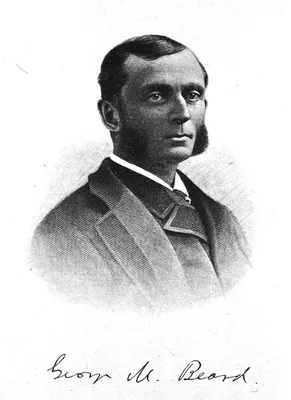
1871 BEARD, George Miller (1838 – 1883); ROCKWELL, Alphonse David (1840 – 1933)
A practical treatise on the medical and surgical uses of electricity, including localized and general electrization.
Beard and Rockwell were the leading American electrotherapists of the 19th century. This is the most influential American treatise ever published on electrotherapy. It is of especial value today for its comprehensive …
GMN 1996.4 · https://historyofmedicine.com/id/1866
1873 AVELING, James Hobson (1828 – 1892)
Immediate transfusion in England: seven cases, and the author’s method of operating.
Portable transfusion apparatus.
GMN 2017.2 · https://historyofmedicine.com/id/2001
1874 LANDOIS, Leonard (1837 – 1902)
Auflösung der rothen Blutzellen.
Landois discovered the hemolyzing effect of blood serum of one species when transfused into another.
GMN 2018 · https://historyofmedicine.com/id/2004
1874 WOOD, Horatio Charles (1841 – 1920)
A treatise on therapeutics.
Wood was a professor of botany (1866-76), therapeutics (1875-1907) and nervous diseases (1875-1901) in the University of Pennsylvania. In his book the effects of various drugs in small doses was first discussed; it al…
GMN 1972 · https://historyofmedicine.com/id/3751
1876 ORÉ, Pierre Cyprien (1828 – 1889)
Études historiques, physiologiques et cliniques sur la transfusion du sang.
An excellent and well-documented treatise on blood transfusion, including a comprehensive history of the subject from its beginnings in the seventeenth century to its revival in the nineteenth after a long period of d…
GMN 7215 · https://historyofmedicine.com/id/9382
1877 DOWNES, Sir Arthur Henry (1851 – 1938); BLUNT, Thomas Porter (1842 – 1929)
Researches on the effect of light upon bacteria and other organisms.
Downes and Blunt were the first to demonstrate the bactericidal action of sunlight; they regarded the germicidal property of light as depending on oxidation.
GMN 1997 · https://historyofmedicine.com/id/1871
1877 WINTERNITZ, Wilhelm (1835 – 1917)
Die Hydrotherapie. 2 vols.
GMN 1998 · https://historyofmedicine.com/id/1875
1877 PETERSEN, Jacob Julius (1840 – 1912)
Hauptmomente in der geschichtlichen Entwickelung der medicinischen Therapie.
Reprinted Hildesheim, 1966.
GMN 2033 · https://historyofmedicine.com/id/2170
1878 –1879 WARING, Edward John (1819 – 1891)
Bibliotheca therapeutica, or bibliography of therapeutics, chiefly in reference to articles of the materia medica, with numerous critical, historical, and therapeutical annotations, and an appendix containing the bibliography of British mineral waters. 2 vols.
References to over 10,000 items, ‘arranged under 660 separate headings or articles,’ some with comments by the compiler. Digital facsimile from the Hathi Trust at this link.
GMN 2034 · https://historyofmedicine.com/id/2173