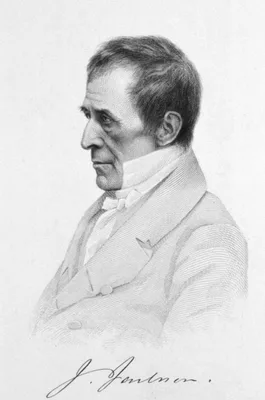
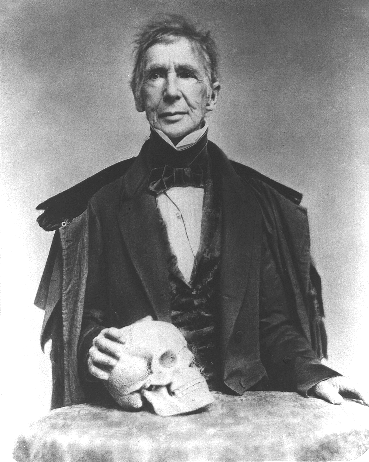
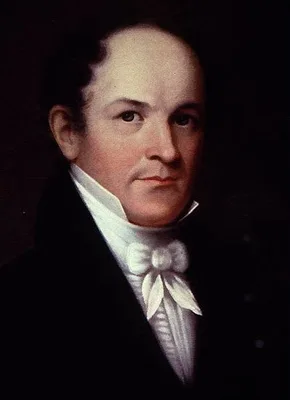
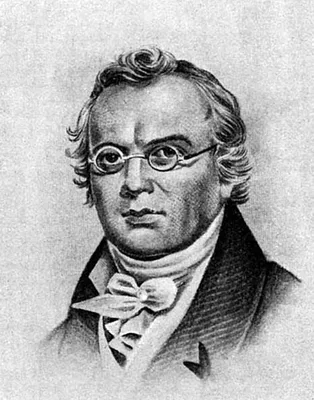
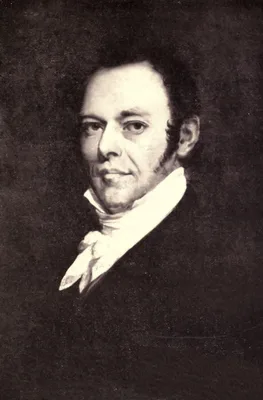
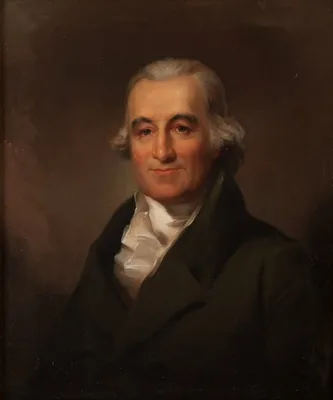
1808 JACKSON, James (1777 – 1867); WARREN, John Collins (1778 – 1856); MASSACHUSETTS MEDICAL SOCIETY
The pharmacopoeia of the Massachusetts Medical Society,
The first state pharmacopeia issued in the United States. Jackson and Warren were the "Committee for the Pharmacopoeia." Digital facsimile from the Internet Archive at this link.
GMN 10067 · https://historyofmedicine.com/id/12256
1810 STRONG, Nathan (1781 – 1837)
An inaugural dissertation on the disease termed petechial, or spotted fever. Submitted to the Examining Committee of the Medical Society of Connecticut, for the county of Hartford.
This graduation dissertation was the first published brochure on cerebrospinal meningitis. Digital facsimile from U.S. National Library of Medicine at this link.
GMN 4675 · https://historyofmedicine.com/id/942
1815 DRAKE, Daniel (1785 – 1852)
Natural and statistical view, or picture of Cincinnati and the Miami country, illustrated by maps: With an appendix, containing observations on the late earthquakes, the aurora borealis, and south-west wind.
Modeled on Thomas Jefferson's Notes on the State of Virginia, this work covered the geography, antiquities, topography, medical conditions and goverment of Ohio. Digital facsimile from digital.cincinnatilibrary.org at…
GMN 11520 · https://historyofmedicine.com/id/13719
1815 GALLUP, Joseph Adams (1769 – 1849)
Sketches of epidemic diseases in the state of Vermont; from the first settlement to the year 1815, with a consideration of their causes, phenomena, and treatment. To which is added remarks on pulmonary consumption.
Digital facsimile from U.S. National Library of Medicine at this link:
GMN 13487 · https://historyofmedicine.com/id/15761
1817 HEUSTIS, Jabez Wiggins (1784 – 1841)
Physical observations, and medical tracts and researches, on the topography and diseases of Louisiana.
Digital facsimile from U.S. National Library of Medicine at this link.
GMN 10519 · https://historyofmedicine.com/id/12712
1819 PASCALIS OUVIERE, Felix (1762 – 1833)
A statement of the occurrences during a malignant yellow fever in the city of New-York, in the summer and autumnal months of 1819; and of the check given to its progress, by the measures adopted by the Board of Health. With a list of cases and names of sick persons, and a map of their places of residence within the infected and proscribed limits: With a view of ascertaining, by comparative arguments, whether the distemper was engendered by domestic causes, or communicated by human contagion from foreign ports.
Pascalis mapped this yellow fever outbreak using a method similar to Valentine Seaman, but with a more extensive and detailed list of cases. A condensation of his 60-page pamphlet with a reissue of his map appeared in…
GMN 10456 · https://historyofmedicine.com/id/12649
1820 RAFINESQUE, Constantine Samuel (1783 – 1840)
Ichthyologia Ohiensis, or natural history of the fishes inhabiting the river Ohio and its tributary streams, preceded by a physical description of the Ohio and its branches.
In Rafinesque's polemic style the title page includes the following statement: "The art of seeing well, or of noticing and distinguishing with accuracy the objects which we perceive, is a high faculty of the mind, unf…
GMN 10617 · https://historyofmedicine.com/id/12810
1821 NUTTALL, Thomas (1786 – 1859)
A journal of travels into the Arkansas territory, during the year 1819. With occasional observations on the manners of the aborigines. Illustrated by a map and other engravings.
Nuttall travelled from Philadelphia, down the Ohio and Mississippi rivers to the Arkansas. From there he travelled across Arkansas to the interior of the modern Oklahoma; returning via the Arkansas and Mississippi riv…
GMN 7772 · https://historyofmedicine.com/id/9944
1821 –1824 ELLIOTT, Stephen (1771 – 1830)
A sketch of the botany of South-Carolina and Georgia. 2 vols.
A founding work of botany of the American South, containing first botanical descriptions of many species. Initially published in parts from 1816 to 1824. Digital facsimile from Biodiversity Heritage Library at this link.
GMN 13911 · https://historyofmedicine.com/id/16204
1822 HARDIE, James (1758 – 1826)
An account of the yellow fever which occurred in the city of New York, in the year 1822, to which is prefixed a brief sketch of the different pestilential diseases, with which this city was afflicted, in the years 1798, 1799, 1803 & 1805, with the opinion of several of our most eminent physicians, respecting the origin of the disease, its prevention and cure.To which is added a correct list of all the deaths by yellow fever during the late season.
Digital facsimile from the Internet Archive at this link.
GMN 9523 · https://historyofmedicine.com/id/11709
1823 DUDLEY, Benjamin Winslow (1785 – 1870)
Case reports: From injuries of the head.
Dudley was for many years the leading surgeon on the western frontier of the United States. This paper reports the first operations on the brain performed in the United States. Three of the five patients were relieved…
GMN 4851.1 · https://historyofmedicine.com/id/5599
1824 HORNER, William Edmonds (1793 – 1853); WISTAR, Caspar (1761 – 1818)
Report on the state of the anatomical museum of the University of Pennsylvania, 30th June, 1824.
This 36-page pamphlet is the earliest printed record of Caspar Wispar's museum collection. It was augmented by William Horner, whom Wistar appointed to manage the collection. The combined collections beame known as th…
GMN 11315 · https://historyofmedicine.com/id/13513
1825 KING, Frederick Gore (1801 – 1829)
Catalogue of the anatomical museum in the College of Physicians and Surgeons, New York.
Digital facsimile from the Hathi Trust at this link.
GMN 7603 · https://historyofmedicine.com/id/9775
1825 HEUSTIS, Jabez Wiggins (1784 – 1841)
Medical facts and inquiries, respecting the causes, nature, prevention and cure of fever: more expressly in relation to the endemic fevers of summer and autumn in the southern states: Together with a history of the bilious remitting fever of Alabama, as it appeared in Cahawba and its vicinity in the summers and autumns of 1821 and 1822.
Digital facsimile from the U.S. National Library of Medicine at this link.
GMN 10518 · https://historyofmedicine.com/id/12711
1825 LOWELL, Charles (1793 – 1858)
Report of the trial of an action: Charles Lowell against John Faxon and Micajah Hawks, doctors of medicine, defendants, for malpractice in the capacity of physicians and surgeons: At the Supreme Judicial Court of Maine, holden at Machias for the county of Washington, June term, 1824, before the Hon. Nathan Weston, Jun., justice of the court.
A detailed narrative on the trial based on the transcript. Digital facsimile from the U.S. National Library of Medicine at this link.
GMN 11730 · https://historyofmedicine.com/id/13931
1826 WARREN, John Collins (1778 – 1856)
A letter to the Hon. Isaac Parker, chief justice of the Supreme court of the state of Massachusetts, containing remarks on the dislocation of the hip joint, occasioned by the publication of a trial which took place at Machias, in the state of Maine, June, 1824. By John C. Warren. With an appendix of documents from the trial necessary to illustrate the history of the case.
This work, illustrated with 5 plates, contains several clear and minute descriptions of dislocation of the hip joint. In the course of the monograph Warrenproved the possibility of a type of dislocation that was denie…
GMN 11728 · https://historyofmedicine.com/id/13929
1829 WARREN, John Collins (1778 – 1856); MASSACHUSETTS MEDICAL SOCIETY
Address to the community, on the necessity of legalizing the study of anatomy
The petition to the Massachusetts legislature to legalize "the procuring of subjects for anatomical dissections" (from George Hayward's printed notice on the verso of the title page). Nine members of the Massachusetts…
GMN 11760 · https://historyofmedicine.com/id/13961
1830 GUNN, John C.
Gunn’s domestic medicine, or poor man’s friend in the hours of affliction, pain, and sickness. This book points out, in plain language, free from doctor's terms the diseases of men, women, and children, and the latest and most approved means used in their cure, and is expressly written for the benefit of families in the western and southern states. It also contains descriptions of the medicinal roots and herbs of the western and southern country, and how they are to be used in the cure of diseases: arranged on a new and simple plan, by which the practice of medicine reduced to the principles of common sense.
Gunn intended his book to serve as a guide for frontier and rural families who lived far away from any sort of medical care so it contained instructions on how to treat a wide variety of illnesses. While the first edi…
GMN 9150 · https://historyofmedicine.com/id/11329
1831 PEALE, Titian Ramsay (1799 – 1885)
Circular of the Philadelphia Museum: Containing directions for the preparation and preservation of objects of natural history.
GMN 10441 · https://historyofmedicine.com/id/12634
1831 MASSACHUSETTS. GENERAL COURT. HOUSE OF REPRESENTATIVES
Report of the Select Committee of the House of Representatives ... legalizing the study of anatomy.
This was the first law passed in the United States consigning the bodies of those who died in workhouses, hospitals, and similar institutions, the bodies of whom were "unclaimed," to medical schools for dissection. "S…
GMN 11759 · https://historyofmedicine.com/id/13960
1831 RIVINUS, Edward Florens
A catalogue of the medical library of the Philadelphia Alms-House, prepared agreeably to a resolution of the Board of Managers.
First edition, 1824. Founded in 1732/33, this institution became known in the 19th century as "Old Blockley" after it moved to the Blockley Township in West Philadelphia. It was renamed Philadelphia General Hospital i…
GMN 13405 · https://historyofmedicine.com/id/15677
1832 DRAKE, Daniel (1785 – 1852)
Practical essays on medical education, and the medical profession, in the United States.
Digital facsimile from the Internet Archive at this link.
GMN 8630 · https://historyofmedicine.com/id/10807
1835 WILSON, John R. W.
A case of introsussception in which an operation was successfully resorted to…in December, 1831.
First operation for intussusception in the United States, performed in Rutherford County, Tennessee. The patient was a negro slave; the operation was a complete success. Reported by Wilson’s pupil, W.W. Thompson.
GMN 3440.1 · https://historyofmedicine.com/id/5440
1838 ANONYMOUS
Botica general de los remedios esperimentados. Que á beneficio del público se reimprime por su original en Cadiz, en Sonoma, de la alta California: Por M. G. V.
The first medical book printed in California, a small 23-page pamphlet of folk or popular medicine. It was printed by Agustín V. Zamorano, the first printer in Alta California under Mexican rule before the region beca…
GMN 10402 · https://historyofmedicine.com/id/12595
c. 1838 MUSSEY, Reuben Dimond (1780 – 1866)
Anatomical cabinet, belonging to R. D. Mussey, M.D., Professor of Surgery in the Medical College of Ohio. Printed for the use of pupils.
This 20-page pamphlet described Mussey's personal collection of anatomical and pathological specimens. No place of printing or date of publication is indicated in the pamphlet; because of the reference to the Medical …
GMN 11310 · https://historyofmedicine.com/id/13508
1839 SMITH, Ashbel (1805 – 1886)
An account of the yellow fever which appeared in the city of Galveston, Republic of Texas, in the autumn of 1839, with cases and dissections,
In 1839 Smith treated the victims of a yellow fever epidemic in Galveston while writing reports about the treatment of the disease in the Galveston News. As a result of this experience, he wrote the first treatise on …
GMN 13896 · https://historyofmedicine.com/id/16188
1840 MORTON, Samuel George (1799 – 1851)
Catalogue of skulls of man, and the inferior animals, in the collection of Samuel George Morton.
Numbers 901-929 in Morton's catalogue are "Thirty Skulls of genuine unmixed NEGROES born in Africa. This interesting series series was collected by Don José Rodriguez Cisnerso, M. D. of Havana, in the island of Cuba, …
GMN 8828 · https://historyofmedicine.com/id/11006
1842 –1894 HALL, James Jr. (1811 – 1898); DE KAY, James Ellsworth (1792 – 1851)
[New York Natural History and Geological Survey.] Natural history of New York. 30 vols.
The New York Natural History and Geological Survey was established by the state legislature in 1836 under the direction of James Ellsworth DeKay. By far the most ambitious scientific project undertaken in the United S…
GMN 12480 · https://historyofmedicine.com/id/14713
1843 TORREY, John (1796 – 1873)
A flora of the state of New-York, comprising full descriptions of all the indigenous and naturalized plants hitherto discovered in the state; with remarks on their economical and medicinal properties. 2 vols.
For a long time this was the most comprehensive botany of any U.S. state. Digital facsimile from Biodiversity Heritage Library at this link.
GMN 10512 · https://historyofmedicine.com/id/12705
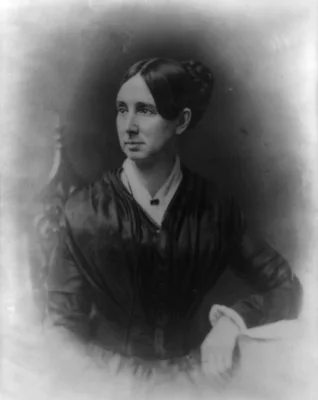
1843 DIX, Dorothea Lynde (1802 – 1887)
Memorial. To the Legislature of Massachusetts.
Dorothea Dix played an instrumental role in the founding or expansion of more than 30 hospitals for the treatment of the mentally ill in various U.S. states. This was probably the first of her many publications advoca…
GMN 13612 · https://historyofmedicine.com/id/15892
1844 SAPPINGTON, John S. (1776 – 1856)
The theory and treatment of fevers. Revised and corrected by Ferdinando Stith.
The first medical treatise published in Missouri and the first medical treatise published west of the Mississippi River. "John Sappington provided medical services, was a financial lender, and imported and exported go…
GMN 10446 · https://historyofmedicine.com/id/12639
1845 GRISCOM, John Hoskins (1809 – 1874)
The sanitary condition of the laboring population of New York with suggestions for its improvement.
Digital facsimile from the Internet Archive at this link.
GMN 9556 · https://historyofmedicine.com/id/11742
1846 BIGELOW, Henry Jacob (1818 – 1890)
Insensibility during surgical operations produced by inhalation.
William T. G. Morton used ether as an anesthetic for the first time on 16 October 1846 during at operation by John Collins Warren to remove a benign angioma under the jaw of a patient at Massachusetts General Hospital…
GMN 5651 · https://historyofmedicine.com/id/7292
1847 JACKSON, John Barnard Swett (1806 – 1879)
A descriptive catalogue of the Anatomical Museum of the Boston Society for Medical Improvement.
Digital facsimile from the Internet Archive at this link.
GMN 7602 · https://historyofmedicine.com/id/9774
1847 AMERICAN MEDICAL ASSOCIATION; HAYES, Isaac (1796 – 1879)
Proceedings of the National Medical Conventions, held in New York, May, 1846, and in Philadelphia, May, 1847.
The complete proceedings of the founding of the American Medical Association. This version also contains the text of the Code of Ethics written by Isaac Hayes and adopted by the AMA. In updated forms, this remains the…
GMN 10063 · https://historyofmedicine.com/id/12252
1847 –1847 HOLBROOK, John Edwards (1794 – 1871)
Southern ichthyology; or a description of the fishes inhabiting the waters of South Carolina, Georgia, and Florida. Pt. 2, 1847, Pt. 3, 1848.
Holbrook never published part one of this work.
GMN 10336 · https://historyofmedicine.com/id/12528
1848 AMERICAN MEDICAL ASSOCIATION; HAYES, Isaac (1796 – 1879)
Code of ethics of the American Medical Association. Adopted May 1847.
Heavily influenced by Percival's work, the AMA's code of ethics was written by Isaac Hayes. The first leaf of this 30-page pamphlet indicates that it was "Printed for Private Distribution by the Philadelphia Delegatio…
GMN 10056 · https://historyofmedicine.com/id/12245
1850 SHATTUCK, Lemuel (1793 – 1859)
Report of a general plan for the promotion of public and personal health, devised, prepared, and recommended by the commissioners appointed under a resolve of the legislature of Massachusetts relating to a sanitary survey of the State.
Compiled by a team, but entirely written by Shattuck, this report was the first general blueprint for the promotion of public health presented to an American governmental body. Its first proposal was for the creation …
GMN 1609 · https://historyofmedicine.com/id/1896
1850 TYSON, James Lawrence
Diary of a physician in California; being the results of actual experience, including notes of the journey by land and water, and observations on the climate, soil, resources of the country, etc.
Tyson sailed from Baltimore for California in January 1849, crossing the Isthmus and sailing on to San Francisco. His book recounts his 1849 tour of the Northern Mines in search of a likely place for his medical pract…
GMN 10426 · https://historyofmedicine.com/id/12619
1850 –1851 FENNER, Erasmus Darwin (1807 – 1866)
Southern medical reports: Consisting of general and special reports, on the medical topography, meteorology, and prevalent diseases, in the following states: Louisiana, Alabama, Mississippi, North Carolina, South Carolina, Georgia, Florida, Arkansas, Tennessee, Texas. Edited by E. D. Fenner. 2 vols.
Regarding Fenner see, John Duffy, "Erasmus Darwin Fenner (1807–1866) Journalist, Educator, and Sanitarian," Academic Medicine. 35 (1960) 819-831. Digital facsimile of the 1850-51 edition from the Internet Archive at t…
GMN 10517 · https://historyofmedicine.com/id/12710
1850 SAN FRANCISCO MEDICAL SOCIETY
Constitution, by-laws and fee bill of the San Francisco Medical Society: Organized June 22, 1850.
This 8-page pamphlet is one of the earliest separate publications relating to medicine printed in the State of California. The "Society" disbanded shortly after this was published, perhaps over disputes concerning the…
GMN 11306 · https://historyofmedicine.com/id/13504
1851 STILLMAN, Jacob David Babcock (1819 – 1888)
Observations on the medical topography and diseases (especially diarrhoea) of the Sacramento Valley, California, during the Years 1849, 1850.
Stillman was personal physician to Leland Stanford, the first governor of California, and was a partner of railroad magnate Mark Hopkins from their days on board a ship to California in 1849. Stillman was also co-foun…
GMN 12086 · https://historyofmedicine.com/id/14295
1854 GARNIER, Pierre (1819 – 1901)
Voyage médical en Californie.
Translated into English by L. Jay Oliva, introduced and annotated by Doyce B. Nunis, Jr. as A medical journey in California (Los Angeles: Zeitlin & Ver Brugge, 1967).
GMN 10404 · https://historyofmedicine.com/id/12597
1855 LA ROCHE, René (1795 – 1872)
Yellow fever, considered in its historical, pathological, etiological, and therapeutical relations: including a sketch of the disease as it has occurred in Philadelphia from 1699 to 1854, with an examination of the connections between it and the fevers known under the same name in other parts of temperate, as well as in tropical, regions. 2 vols.
The most important 19th century American monograph on yellow fever. La Roche’s work sketched the disease in its appearances from 1699 to 1854 at Philadelphia, which saw some of the worst yellow fever epidemics, and pr…
GMN 5454.2 · https://historyofmedicine.com/id/7545
1856 CASSIN, John (1813 – 1869)
Illustrations of the birds of California, Texas, Oregon, British and Russian America. Intended to contain descriptions and figures of North American birds not given by former American authors, and a general synopsis of North American ornithology. 1853 to 1855.
Originally issued in ten parts from 1853 to 1855. Cassin ran an engraving and lithographing firm in Philadelphia, which produced illustrations for government and scientific publications. He pursued ornithology as an a…
GMN 7875 · https://historyofmedicine.com/id/10047
1856 COOPER, Elias Samuel (1820 – 1862)
Anatomical and surgical lectures.
A one-page advertising circular dated December 10, 1856 advertising Cooper's first course of private lectures in San Francisco. Cooper, founder of California’s (and the West Coast’s) first medical school, came to San …
GMN 12319 · https://historyofmedicine.com/id/14542
1857 FISCHER, Emil (librarian)
Catalogue raisoneé of the medical library of the Pennsylvania Hospital.
Listing 10,500 items, the library of the Pennsylvania Hospital, founded in 1763, was undoubtedly the largest hospital library in the United States in 1857, and possibly the largest medical library in America. The firs…
GMN 7470 · https://historyofmedicine.com/id/9642
1857 MORTON, Samuel George (1799 – 1851); MEIGS, James Aitken (1829 – 1879)
Catalogue of human crania, in the collection of the Academy of Natural Sciences of Philadelphia: Based upon the third edition of Dr. Morton's "Catalogue of Skulls," &c.
"Since the death of the late lamented President of the Academy of Natural Sciences,- Dr. Samuel George Morton,- his magnifcent Collection of Human Crania, recently increased by the receipt of 67 skulls from various so…
GMN 8829 · https://historyofmedicine.com/id/11007
1857 PRASLOW, J.
Der Staat Californien in medicinisch-geographischer Hinsicht.
Dr. Praslow practiced medicine in San Francisco from 1849-1856, after which he returned to Germany. His book provides information concerning health and epidemics in San Francisco during this early period. Translated i…
GMN 10427 · https://historyofmedicine.com/id/12620
1857 –1859 TORREY, John (1796 – 1873); EMORY, William Hemsley (1811 – 1887); BAIRD, Spencer Fullerton (1823 – 1887); CONRAD, Timothy Abbott (1803 – 1877); ENGELMANN, George (1809 – 1884); GIRARD, Charles Frédéric (1822 – 1895); PARRY, Charles Christopher (1823 – 1890); SCHOTT, Arthur Carl Victor (1814 – 1875); HALL, James Jr. (1811 – 1898)
Report on the United States and Mexican boundary survey: Made under the direction of the secretary of the Interior
Vol. 1, pt. by W. H. Emory. Vol. 1, pt. 2: Geological reports by C.C. Parry and Arthur Schott, notes by W. H. Emory; Paleontology and geology of the boundary by James Hall; Description of cretaceous and tertiary fossi…
GMN 10514 · https://historyofmedicine.com/id/12707