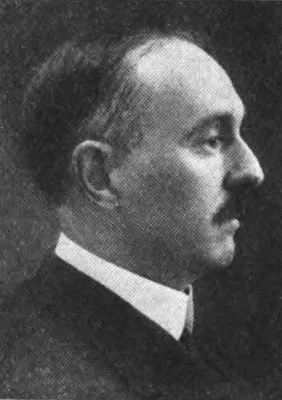
1721 BOYLSTON, Zabdiel (1679 – 1766)
Some account of what is said of inoculating or transplanting the small pox by the learned Dr. Emmanuel Timonius, and Jacobus Pylarinus. With some remarks theron. To which are added, a few queries in answer to the scruples of many about the lawfulness of this method.
An abridgement of Nos. 5409 & 5410 together with Boylston’s remarks. From internal evidence this 24-page pamphlet would appear to be the first North American publication on inoculation. See No. 5415. Digital facsimile…
GMN 5410.1 · https://historyofmedicine.com/id/7308
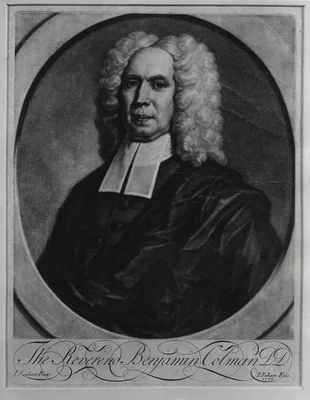
1721 COLMAN, Benjamin (1673 – 1747)
Some observations on the new method of receiving the smallpox by ingrafting or inoculating.
This work offers general support for the practice of Zabdiel Boylston, detailing some of Boylston’s cases, including accounts of occasions when patients died. Reprinted with additional material by Daniel Neal, as A na…
GMN 5411 · https://historyofmedicine.com/id/7309
1722 DOUGLASS, William (1691 – 1752)
Inoculation of the smallpox as practised in Boston.
GMN 5412 · https://historyofmedicine.com/id/7312
1722 DOUGLASS, William (1691 – 1752)
The abuses and scandals of some late pamphlets in favour of inoculation of the small-pox.
Douglass at first opposed inoculation for smallpox, but by 1730 he had changed his views and had become an advocate of inoculation.
GMN 5413 · https://historyofmedicine.com/id/7315
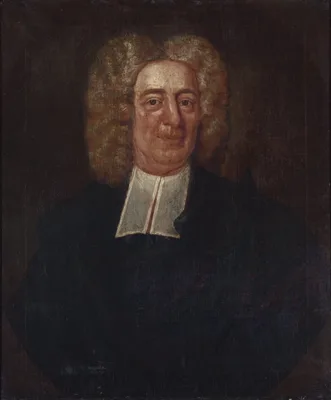
1722 MATHER, Cotton (1663 – 1728)
An account of the method and success of inoculating the small pox in Boston in New England.
Mather republished reports of earlier writers on inoculation. He persuaded Boylston to adopt the practice in June 1721, and he supported Boylston during a period of great opposition to inoculation.
GMN 5414 · https://historyofmedicine.com/id/7318
1726 BOYLSTON, Zabdiel (1679 – 1766)
An historical account of the small-pox inoculated in New-England, upon all sorts of persons, whites, blacks, and of all ages and constitutions: With some account of the nature of the infection in the natural and inoculated way, and their different effects on human bodies; with some short directions to the unexperienced in this method of practice .
Boylston was the first in America to inoculate for smallpox, at Boston on 26 June 1721. "During a smallpox outbreak in 1721 in Boston, he inoculated about 248 people[5] by applying pus from a smallpox sore to a small …
GMN 5415 · https://historyofmedicine.com/id/7324
1736 DOUGLASS, William (1691 – 1752)
The practical history of a new epidemical eruptive miliary fever, with an angina ulcusculosa, which prevailed in Boston New England in the years 1735 and 1736.
Douglass left the first adequate clinical description of scarlet fever, which he called angina ulcusculosa, in his account of New England’s first scarlet fever epidemic. He was one of the first American physicians to …
GMN 5076 · https://historyofmedicine.com/id/5925
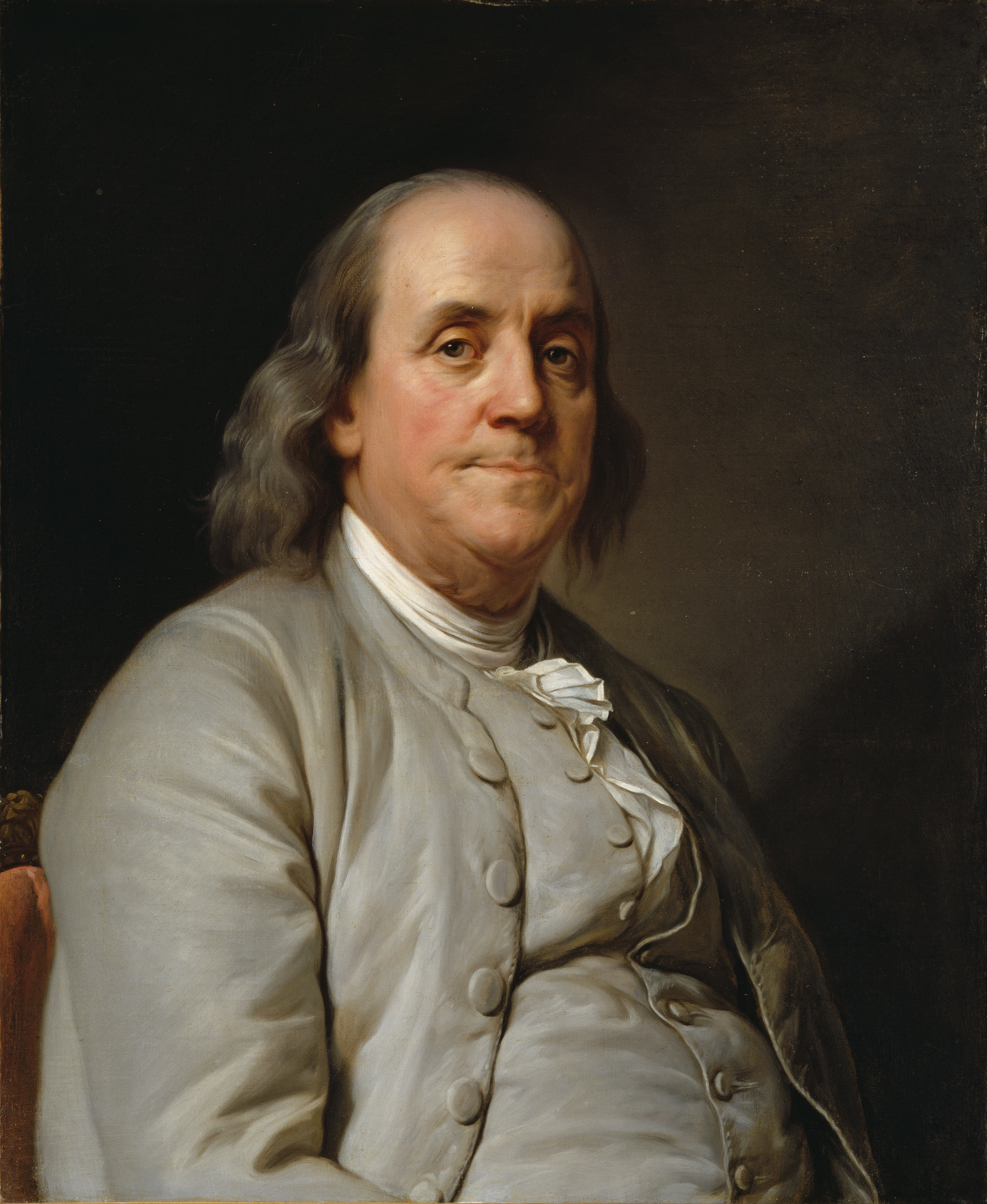
1759 FRANKLIN, Benjamin (1706 – 1790)
Some account of the success of inoculation for the small-pox in England and America. Together with plain instructions, by which any person may be enabled to perform the operation.
Franklin’s statistical account of smallpox inoculation in Boston during the epidemic of 1753-54, showing the beneficial effects of the practice, was written for William Heberden, who contributed the “Plain instruction…
GMN 5419 · https://historyofmedicine.com/id/7337
1787 LATHROP, John (1740 – 1816)
A Discourse before the Humane Society, ... Delivered on the Second Tuesday of June, 1787.
The first separate work on resuscitation published in the United States. A list of “Methods of Treatment to be used with Persons apparently dead from drowning, &c.” appears on p. iv; these methods included warming the…
GMN 7214 · https://historyofmedicine.com/id/9381
1790 KAST, Thomas (1755 – 1820)
An account of an aneurism in the thigh, perfectly cured by the operation.
The first femoral ligation reported in America, and the first paper on a surgical topic to be published in an American medical periodical.
GMN 2925.1 · https://historyofmedicine.com/id/4938
1800 –1802 WATERHOUSE, Benjamin (1754 – 1846)
A prospect of exterminating the small-pox, being the history of the variolae vaccinae, or kine-pox, commonly called the cow-pox; as it has appeared in England: With an account of a series of inoculations performed for the kine-pox in Massachusetts. [Part II:] A prospect of exterminating the small pox part II, being a continuation of a narrative of facts concerning the progress of the new inoculation in America; together with practical observations on the local appearance, symptoms, and mode of treating the variola vaccina, or kine pock; including some letters to the author, from distinguished characters, on the subject of this benign remedy, now passing with a rapid step through all ranks of society in Europe and America.
Waterhouse introduced Jennerian vaccination into the U.S.A. He vaccinated his own child as his first case. See J. B. Blake, Benjamin Waterhouse and the introduction of vaccination. A reappraisal. Philadelphia, 1957. D…
GMN 5424 · https://historyofmedicine.com/id/7359
1808 JACKSON, James (1777 – 1867); WARREN, John Collins (1778 – 1856); MASSACHUSETTS MEDICAL SOCIETY
The pharmacopoeia of the Massachusetts Medical Society,
The first state pharmacopeia issued in the United States. Jackson and Warren were the "Committee for the Pharmacopoeia." Digital facsimile from the Internet Archive at this link.
GMN 10067 · https://historyofmedicine.com/id/12256
1829 WARREN, John Collins (1778 – 1856); MASSACHUSETTS MEDICAL SOCIETY
Address to the community, on the necessity of legalizing the study of anatomy
The petition to the Massachusetts legislature to legalize "the procuring of subjects for anatomical dissections" (from George Hayward's printed notice on the verso of the title page). Nine members of the Massachusetts…
GMN 11760 · https://historyofmedicine.com/id/13961
1831 MASSACHUSETTS. GENERAL COURT. HOUSE OF REPRESENTATIVES
Report of the Select Committee of the House of Representatives ... legalizing the study of anatomy.
This was the first law passed in the United States consigning the bodies of those who died in workhouses, hospitals, and similar institutions, the bodies of whom were "unclaimed," to medical schools for dissection. "S…
GMN 11759 · https://historyofmedicine.com/id/13960
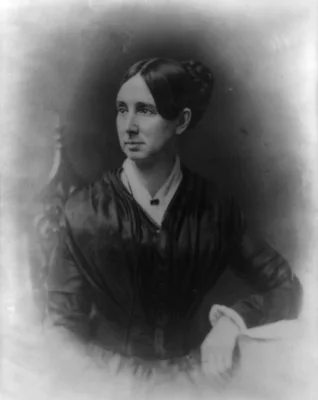
1843 DIX, Dorothea Lynde (1802 – 1887)
Memorial. To the Legislature of Massachusetts.
Dorothea Dix played an instrumental role in the founding or expansion of more than 30 hospitals for the treatment of the mentally ill in various U.S. states. This was probably the first of her many publications advoca…
GMN 13612 · https://historyofmedicine.com/id/15892
1846 BIGELOW, Henry Jacob (1818 – 1890)
Insensibility during surgical operations produced by inhalation.
William T. G. Morton used ether as an anesthetic for the first time on 16 October 1846 during at operation by John Collins Warren to remove a benign angioma under the jaw of a patient at Massachusetts General Hospital…
GMN 5651 · https://historyofmedicine.com/id/7292
1847 JACKSON, John Barnard Swett (1806 – 1879)
A descriptive catalogue of the Anatomical Museum of the Boston Society for Medical Improvement.
Digital facsimile from the Internet Archive at this link.
GMN 7602 · https://historyofmedicine.com/id/9774
1850 SHATTUCK, Lemuel (1793 – 1859)
Report of a general plan for the promotion of public and personal health, devised, prepared, and recommended by the commissioners appointed under a resolve of the legislature of Massachusetts relating to a sanitary survey of the State.
Compiled by a team, but entirely written by Shattuck, this report was the first general blueprint for the promotion of public health presented to an American governmental body. Its first proposal was for the creation …
GMN 1609 · https://historyofmedicine.com/id/1896
1870 JACKSON, John Barnard Swett (1806 – 1879)
A descriptive catalogue of the Warren Anatomical Museum.
Digital facsimile from the Internet Archive at this link.
GMN 7601 · https://historyofmedicine.com/id/9773
1872 BOWDITCH, Nathaniel Ingersoll (1805 – 1861); ELLIS, George Edward (1814 – 1894)
A history of the Massachusetts General Hospital. [Privately printed in 1851.] Second edition, with a continuation to 1872.
Digital facsimile from the Internet Archive at this link.
GMN 8613 · https://historyofmedicine.com/id/10790
1881 GREEN, Samuel Abbott (1830 – 1919)
History of medicine in Massachusetts. A centennial address delivered before the Massachusetts Medical Society at Cambridge, June 7, 1881.
Digital facsimile from the Hathi Trust at this link.
GMN 10334 · https://historyofmedicine.com/id/12526
1881 BILLINGS, John Shaw (1838 – 1913); BOWDITCH, Henry Ingersoll (1808 – 1892); HOLMES, Oliver Wendell Sr. (1809 – 1894); CHADWICK, James Read (1844 – 1905)
Dedication of the New Building and Hall of the Boston Medical Library Association, 19 Boylston Place, December 3, 1878. Order of exercises. Address by the president, Dr. Oliver Wendell Holmes. Report of the building committee. Remarks by Dr. J. S. Billings, Prof. Justin Winsor, Dr. George H. Lyman, Charles W. Eliot, Dr. David P. Smith, Dr. Calvin Ellis, Dr. Henry I. Bowditch.
The printed wrapper of this pamphlet has a different text: Address delivered at the dedication of the Hall of the Boston Medical Library Association, December III., MDCCLXXVIII., by Oliver Wendell Holmes, M.D., Presid…
GMN 10809 · https://historyofmedicine.com/id/13005
1906 WINSLOW, Charles-Edward Amory (1877 – 1957); PHELPS, Earle Bernard (1876 – 1953)
Investigation on the purification of Boston sewage, with a history of the sewage-disposal problem.
GMN 1637 · https://historyofmedicine.com/id/2026
1918 FARLOW, John Woodward (1853 – )
The history of the Boston Medical Library.
Digital facsimile from the Internet Archive at this link.
GMN 10807 · https://historyofmedicine.com/id/13003
1923 BURRAGE, Walter Lincoln (1860 – 1935)
A history of the Massachusetts Medical Society: With brief biographies of the founders and chief officers, 1781-1922.
Digital facsimile from the Internet Archive at this link.
GMN 11008 · https://historyofmedicine.com/id/13204
1930 VIETS, Henry Rouse (1890 – 1969)
A brief history of medicine in Massachusetts.
GMN 10333 · https://historyofmedicine.com/id/12525
1959 BLAKE, John Ballard (1922 – 2006)
Public health in the town of Boston, 1630-1822.
GMN 13800 · https://historyofmedicine.com/id/16087
1961 GARLAND, Joseph Everett (1922 – 2011)
Every man our neighbor: A brief history of the Massachusetts General Hospital.
GMN 10992 · https://historyofmedicine.com/id/13188
1968 KANNEL, William B. (1923 – 2011)
The Framingham Study: An epidemiological investigation of cardiovascular disease.
"The Framingham Heart Study is a long-term, ongoing cardiovascular cohort study on residents of the town of Framingham, Massachusetts. The study began in 1948 with 5,209 adult subjects from Framingham, and is now on i…
GMN 10213 · https://historyofmedicine.com/id/12402
1970 WESTERN, Karl A.; BENSON, Gordon D.; GLEASON, Neva N.; ET AL
Babesiosis in a Massachusetts resident.
Order of authorship in the original paper was Western, Benson, Gleason. First report of babesiosis in a non-immuncompromised patient, confirming the potential wide spread of this tick-transmitted illness. (Thanks to J…
GMN 10887 · https://historyofmedicine.com/id/13083
1972 CAULFIELD, Ernest (1893 – 1972)
Disease and society in provincial Massachusetts: Collected accounts, 1736-1939.
Includes Caulfield's "A history of the terrible epidemic, vulgarly called the throat distemper, as it occurred in His Majesty's New England colonies between 1735 and 1740," Yale J Biol Med. 11 (1939) 219–272. availabl…
GMN 9189 · https://historyofmedicine.com/id/11370
1972 ROSENKRANTZ, Barbara Gutman (1923 – 2014)
Public health and the state: Changing views in Massachusetts, 1842-1936.
GMN 12490 · https://historyofmedicine.com/id/14723
1973 CASH, Philip (1931 – 2005)
Medical men at the siege of Boston, April, 1775- April, 1776.
GMN 8621 · https://historyofmedicine.com/id/10798
1975 GARLAND, Joseph Everett (1922 – 2011)
The centennial history of the Boston Medical Library 1875-1975.
GMN 10808 · https://historyofmedicine.com/id/13004
1977 BEECHER, Henry Knowles
Medicine at Harvard: The first three hundred years.
GMN 10956 · https://historyofmedicine.com/id/13152
1979 SPIELMAN, Andrew (1930 – 2006); CLIFFORD, Carlton M.; PIESMAN, Joseph; ET AL
Human babesiosis on Nantucket Island, USA: Description of the vector, Ixodes dammini, N. Sp. (Acarina: Ixodidae)
Order of authorship in the original paper was Spielman, Clifford, Piesman. The authors identified and described the insect vector of Babesiosis. This was a new species; the same species causes Lyme disease. (Thanks to…
GMN 10888 · https://historyofmedicine.com/id/13084
1980 CASH, Philip (1931 – 2005); ESTES, J. Worth (1934 – 2000); CHRISTANSON, Eric H.
Medicine in colonial Massachusetts, 1620-1820. Edited by Philip Cash, Eric H. Christanson and J. Worth Estes.
A well-illustrated collection of essays covering medicine in Massachusetts but also applicable in some cases to the history of medicine and surgery throughout the American colonies.
GMN 6596.4 · https://historyofmedicine.com/id/8507
1980 VOGEL, Morris J.
Invention of the modern hospital: Boston, 1870-1930.
GMN 9163 · https://historyofmedicine.com/id/11342
2004 FRANCIS A. COUNTWAY LIBRARY OF MEDICINE
OnView: Curated content from the Center for the History of Medicine's extraordinary collections. The Francis A. Countway Library of Medicine: An alliance of the Boston Medical Library and Harvard Medical School.
http://collections.countway.harvard.edu/onview/collection-tree Archives for Women in Medicine Avery, Mary Ellen papers, 1929-2002 (inclusive) Baumgartner, Leona papers, 1837-1993 (inclusive) 1930-1970 (bulk) Bibring, …
GMN 9836 · https://historyofmedicine.com/id/12024
2010 SWEDLUND, Alan C.
Shadows in the valley: A cultural history of illness, death, and loss in New England, 1840-1916.
"...The study is organized for the most part around disease categories and the life cycle, so that the cultural framework of people's habits and values often seems secondary. Most of what we learn about illness and de…
GMN 10342 · https://historyofmedicine.com/id/12534