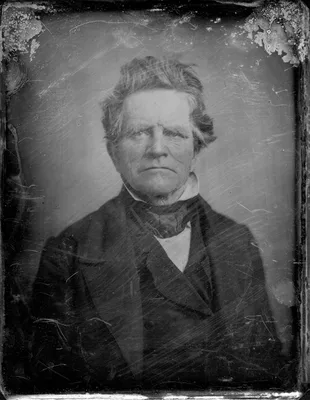
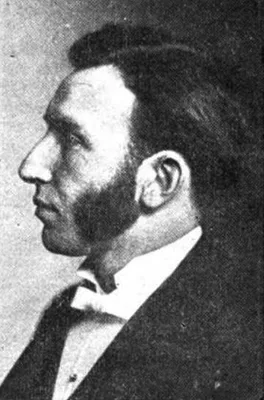
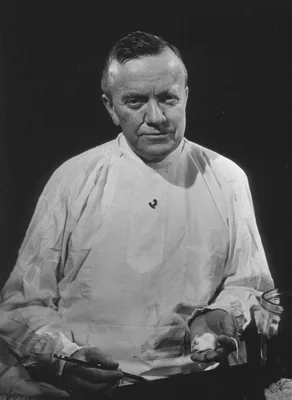
1844 SAPPINGTON, John S. (1776 – 1856)
The theory and treatment of fevers. Revised and corrected by Ferdinando Stith.
The first medical treatise published in Missouri and the first medical treatise published west of the Mississippi River. "John Sappington provided medical services, was a financial lender, and imported and exported go…
GMN 10446 · https://historyofmedicine.com/id/12639
1871 JAMINET, Alphonse
Physical effects of compressed air, and of the causes of pathological symptoms produced on man, by increased atmospheric pressure employed for the sinking of piers, in the construction of the Illinois and St. Louis Bridge over the Mississippi River at St. Louis, Missouri.
Study of caisson disease and its treatement resulting from experience in treating workmen constructing the Eads Bridge, which opened in 1874. Digital facsimile from the Internet Archive at this link.
GMN 10483 · https://historyofmedicine.com/id/12676
1900 GOLDSTEIN, Max Aaron (1870 – 1941)
One hundred years of medicine and surgery in Missouri: Historical and biographical review of the careers of the physicians and surgeons of the state of Missouri, and sketches of some of its notable medical institutions. Edited by Max A. Goldstein.
Digital facsimile from the Internet Archive at this link.
GMN 10314 · https://historyofmedicine.com/id/12506
1905 GOODWIN, Edward J. (1864 – )
A history of medicine in Missouri.
Digital facsimile from the Internet Archive at this link.
GMN 10447 · https://historyofmedicine.com/id/12640
1933 MUCKENFUSS, Ralph S. (1916 – )
Encephalitis: studies on experimental transmission.
Isolation of the St. Louis encephalitis virus. With C. Armstrong and H. A. McCordock.
GMN 4656 · https://historyofmedicine.com/id/765
1934 ARMSTRONG, Charles (1886 – 1967); LILLIE, Ralph Dougall (1896 – 1979)
Experimental lymphocytic choriomeningitis of monkeys and mice produced by a virus encountered in studies of the 1933 St. Louis encephalitis epidemic.
Isolation of the virus of benign lymphocytic choriomeningits.
GMN 4688 · https://historyofmedicine.com/id/966
1958 LUMSDEN, Leslie Leon (1875 – 1946)
St. Louis encephalitis in 1933; observations on epidemiological features.
In a report to the Surgeon General in 1933, Lumsden concluded that the Culex mosquito was the vector of the St. Louis encephalitis virus. His report was not published until 1958.
GMN 4661.2 · https://historyofmedicine.com/id/791
1998 ROLAND, William E.; EVERETT, E. Dale; CYR, Tracy L.; ET AL
Ehrlichia chaffeensis in Missouri ticks.
Order of authorship in the original paper: Roland, Everett, Cyr. Using PCR, the authors demonstrated that the tick Amblyoma americanum (the Lone Star Tick) was the insect vector of Ehrlichia chaffeensis. Digital facsi…
GMN 10900 · https://historyofmedicine.com/id/13096
1999 BULLER, Richard; ARENS, Max; HMIEL, S. Paul; ET AL
Ehrlichia ewingii, a newly recognized agent of human Ehrlichiosis.
Order of authorship in the original publication: Buller, Arens, Hmiel. The authors confirmed that the agent of human granulocytic ehrlichiosis (HGE), is Ehrlichia ewingii, a pathogen carried by dogs and known in that …
GMN 10903 · https://historyofmedicine.com/id/13099
2012 MCMULLAN, Laura K.; FOLK, Scott; KELLY, Aubree J.; ET AL
A new phlebovirus associated with severe febrile illness in Missouri.
Order of authorship in the original paper: McMullan, Folk, Kelly. Discovery of a new Phlebovirus, which the authors name the "Heartland virus" and with high probability that Amblyoma is the tick vector. Digital facsim…
GMN 10915 · https://historyofmedicine.com/id/13111