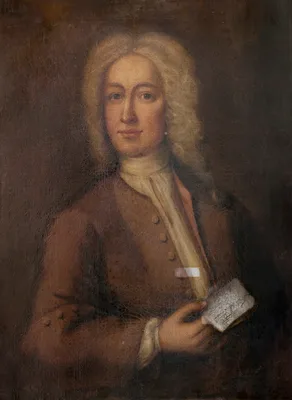
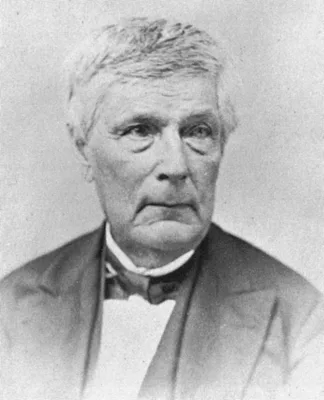
1709 LAWSON, John (1674 – 1711)
A new voyage to Carolina; Containing the exact description and natural history of that country: Together with the present state thereof. And a journal of a thousand miles, travel'd Thro' several nations of Indians. Giving a particular account of Their customs, manners, &c.
Lawson, who characterized himself as "Surveyer-General of North Carolina" explored the interior of colonial North Carolina, South Carolina and George. He was guided by American Indians and made careful note of vegetat…
GMN 12474 · https://historyofmedicine.com/id/14707
1731 –1747 CATESBY, Mark (1683 – 1749)
The natural history of Carolina, Florida and the Bahama Islands: Containing the figures of birds, beasts, fishes, serpents, insects, and plants: Particularly, the forest-trees, shrubs, and other plants, not hitherto described, or very incorrectly figured by authors. Together with their descriptions in English and French. To which are added observations on the air, soil and waters: With remarks on agriculture, grain, pulse, roots &c. To the whole is prefixed a new and complete map of the countries treated of. 2 vols.
The only attempt to record the natural history of a region of America during the colonial period. Includes 220 fine handcolored etched plates after and by Catesby and mostly signed with his cipher, excepting plates 61…
GMN 9571 · https://historyofmedicine.com/id/11758
1743 KILPATRICK, James (Kirkpatrick) (1696 – 1770)
An essay on inoculation, occasioned by the small-pox being brought into South Carolina in the year 1738.
After its initial popularity, inoculation fell into disuse in England. Kirkpatrick, who became a prominent inoculator in England after experience in America, helped considerably in reviving its popularity. He attempte…
GMN 5416 · https://historyofmedicine.com/id/7327
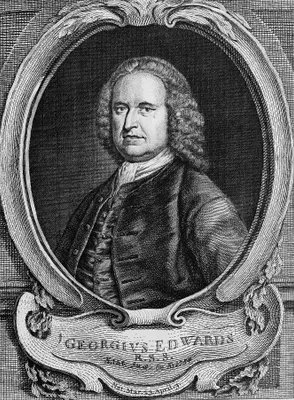
1754 CATESBY, Mark (1683 – 1749); EDWARDS, George (1693 – 1773)
The natural history of Carolina, Florida, and the Bahama Islands, containing the figures of birds, beasts, fishes, serpents, insects, and plants, particulary the forest trees, shrubs, and other plants, not hitherto described, or very incorrectly figured by authors. Together with their descriptions in English and French. To which are added, observations on the air, soil, and waters with remarks upon agriculture, grain, pulse, roots, &c. To the whole is prefixed a new and correct map of the countries treated of / by the late Mark Catesby; revised by Mr. [George] Edwards. 2 vols.
Second edition, edited by ornithologist George Edwards. Digital facsimile from the Internet Archive at this link.
GMN 7678 · https://historyofmedicine.com/id/9850
1775 ADAIR, James (1709 – 1793)
The history of the American Indians; particularly those nations adjoining to the Missisippi [sic] East and West Florida, Georgia, South and North Carolina, and Virginia: containing an account of their origin, language, manners, religious and civil customs, laws, form of government, punishments, conduct in war and domestic life, their habits, diet, agriculture, manufactures, diseases and method of cure... With observations on former historians, the conduct of our colony governors, superintendents, missionaries, & c. Also an appendix, containing a description of the Floridas, and the Missisippi [sic] lands, with their productions--the benefits of colonizing Georgiana, and civilizing the Indians--and the way to make all the colonies more valuable to the mother country....
The author characterized himself on the title page as "a Trader with the Indians and a Resident in their Country for Forty Years." Digital facsimile from the Internet Archive at this link.
GMN 7505 · https://historyofmedicine.com/id/9677
1776 CHALMERS, Lionel (1715 – 1777)
An account of the weather and diseases of South-Carolina. 2 vols.
Originally published in the Gentleman’s Magazine, 1751-54.
GMN 1773 · https://historyofmedicine.com/id/3326
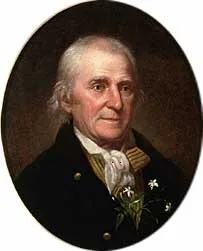
1791 BARTRAM, William (1739 – 1823)
Travels through North & South Carolina, George, East & West Florida, the Cherokee country, the extensive territories of the Muscogulges, or Creek confederacy, and the country of the Chactaws [sic]...
Digital facsimile of London, 1794 second edition from the Internet Archive at this link.
GMN 7770 · https://historyofmedicine.com/id/9942
1799 LINING, John (1708 – 1760)
A description of the American yellow fever, which prevailed at Charleston, in South Carolina, in the year 1748.
Digital facsimile from U.S. National Library of Medicine at this link.
GMN 10511 · https://historyofmedicine.com/id/12704
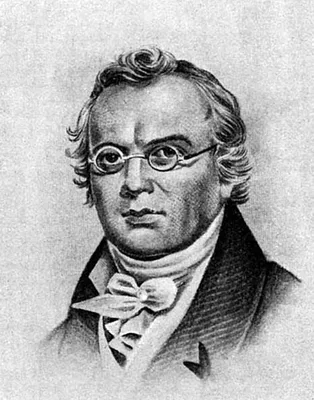
1821 –1824 ELLIOTT, Stephen (1771 – 1830)
A sketch of the botany of South-Carolina and Georgia. 2 vols.
A founding work of botany of the American South, containing first botanical descriptions of many species. Initially published in parts from 1816 to 1824. Digital facsimile from Biodiversity Heritage Library at this link.
GMN 13911 · https://historyofmedicine.com/id/16204
1847 –1847 HOLBROOK, John Edwards (1794 – 1871)
Southern ichthyology; or a description of the fishes inhabiting the waters of South Carolina, Georgia, and Florida. Pt. 2, 1847, Pt. 3, 1848.
Holbrook never published part one of this work.
GMN 10336 · https://historyofmedicine.com/id/12528
1850 –1851 FENNER, Erasmus Darwin (1807 – 1866)
Southern medical reports: Consisting of general and special reports, on the medical topography, meteorology, and prevalent diseases, in the following states: Louisiana, Alabama, Mississippi, North Carolina, South Carolina, Georgia, Florida, Arkansas, Tennessee, Texas. Edited by E. D. Fenner. 2 vols.
Regarding Fenner see, John Duffy, "Erasmus Darwin Fenner (1807–1866) Journalist, Educator, and Sanitarian," Academic Medicine. 35 (1960) 819-831. Digital facsimile of the 1850-51 edition from the Internet Archive at t…
GMN 10517 · https://historyofmedicine.com/id/12710
1860 HOLBROOK, John Edwards (1794 – 1871)
Ichthyology of South Carolina. Vol. 1 (All Published).
Digital facsimile from BnF Gallica at this link.
GMN 10337 · https://historyofmedicine.com/id/12529
1863 PORCHER, Francis Peyre (1825 – 1895)
Resources of the southern fields and forests, medical, economical, and agricultural: Being also a medical botany of the Confederate States; with practical information on the useful properties of the trees, plants and shrubs.
The first extensive treatise on the botany of the Southern States of the US and the only Confederate manual of materia medica. This is also a manual of “survival information”, teaching how live off the land and how to…
GMN 1865.1 · https://historyofmedicine.com/id/2429
1964 –1971 WARING, Joseph Ioor Jr. (1897 – 1977)
A history of medicine in South Carolina. Vol. 1: 1670-1825. Vol. 2: 1825-1900. Vol. 3: 1900-1970.
GMN 8783 · https://historyofmedicine.com/id/10961
1999 SANDERS, Albert E.; ANDERSON, William D. Jr.
Natural history investigations in South Carolina from colonial times to the present.
GMN 10338 · https://historyofmedicine.com/id/12530
2000 STEPHENS, Lester D. (1933 – )
Science, race, and religion in the American South. John Bachman and the Charleston circle of naturalists, 1815-1895.
GMN 10339 · https://historyofmedicine.com/id/12531