1513 GALEN, [Κλαύδιος Γαληνός; Galen of Pergamon] (129 – 216); COPP, Wilhelm (1460 – 1532)
Galen: De affectorum locorum notitia libri vi.
First separate dated Latin translation of De locis affectis, made by Wilhelm Copp of Basel. In this work devoted to pathology, Galen made many valuable deductions on inflammation and on tumors. He was familiar with ch…
GMN 2269 · https://historyofmedicine.com/id/2834
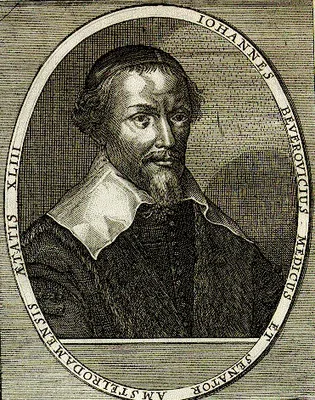
1638 BEVERWIJCK, Johan van (Johannes Beverovicius) (1594 – 1647)
De calculo renum & vesicae liber singularis. Cum epistolis & consultationibus magnorum virorum.
The first medical book to contain an endorsement of Harvey's theory of the circulation of the blood (originally published ten years earlier in 1628). Beverwijck began his work with a treatise on urinary and renal calc…
GMN 11647 · https://historyofmedicine.com/id/13848
1796 WALTER, Johann Gottlieb (1734 – 1818); WALTER, Friedrich August (1764 – 1826)
Anatomisches museum. Gesammelt von Johann Gottlieb Walter. Beschrieben von Friedrich August Walter. 2 vols.
Includes fine hand-colored plates of kidney stones and gall stones. Digital facsimile from the Internet Archive at this link.
GMN 7723 · https://historyofmedicine.com/id/9895
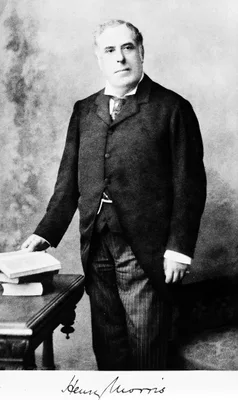
1880 –1881 MORRIS, Sir Henry (1844 – 1926)
A case of nephro-lithotomy; or the extraction of a calculus from an undilated kidney.
Nephrolithotomy; removal of a renal calculus by a lumbar incision.
GMN 4292.1 · https://historyofmedicine.com/id/5380
1896 CHAPPUIS, J; CHAUVEL, H
Calculs du rein. Calculs de la vésicule biliaire.
Chappuis and Chauvel were the first to study biliary concretions by means of Roentgen rays.
GMN 3636 · https://historyofmedicine.com/id/4634
1901 KELLY, Howard Atwood (1858 – 1943)
Scratch-marks on the wax-tipped catheter as a means of determining the presence of stone in the kidney and in the ureter.
Kelly tipped the catheter with wax, so that it registered clearly any pressure from sharp stones. This became an important means of diagnosing calculi.
GMN 4295 · https://historyofmedicine.com/id/5393
1937 RANDALL, Alexander (1883 – 1951)
The origin and growth of renal calculi.
Randall founded the theory of kidney stone formation on anchored papillary plaque. https://kidneystones.uchicago.edu/randalls-plaque/ Digital facsimile from PubMedCentral at this link.
GMN 11466 · https://historyofmedicine.com/id/13665
2014 MORAN, Michael Edward
Urolithiasis: A comprehensive history.
GMN 12149 · https://historyofmedicine.com/id/14359

![GALEN, [Κλαύδιος Γαληνός; Galen of Pergamon] (129 – 216)](/media/portraits/21)