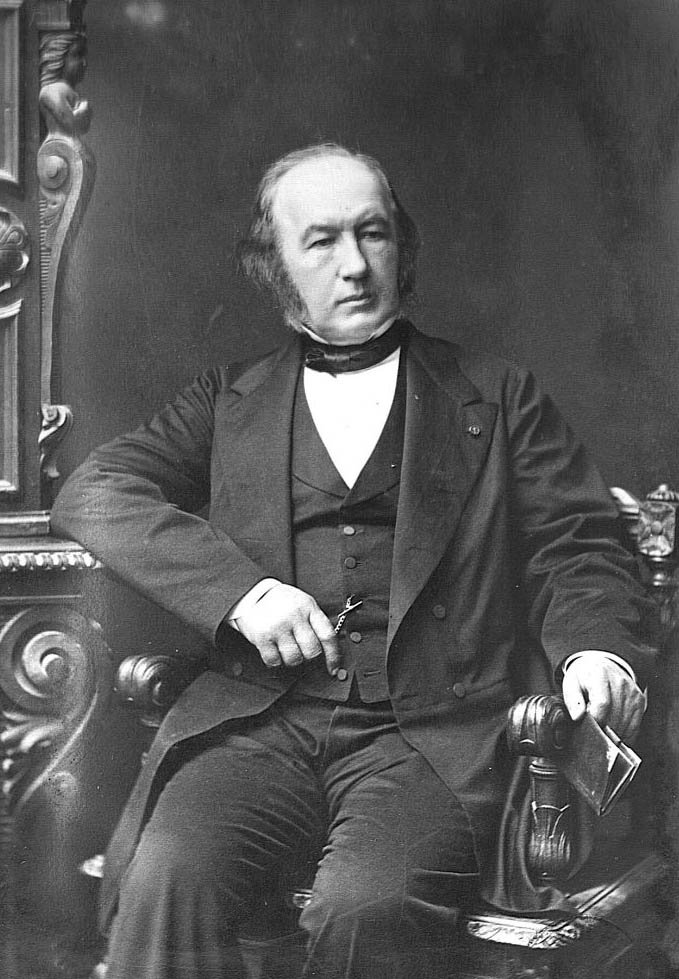
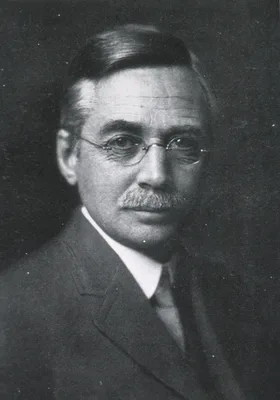
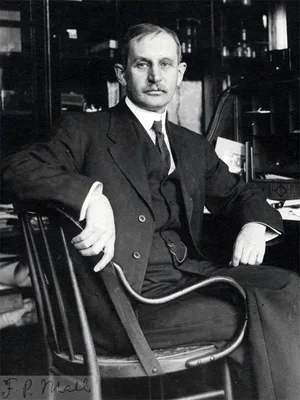
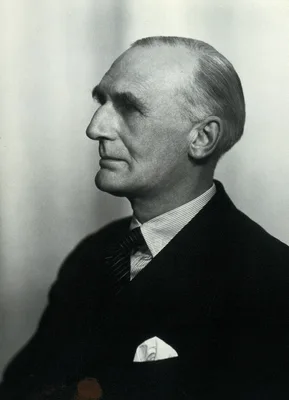
1848 BERNARD, Claude (1813 – 1878)
De l’origine du sucre dans l’économie animale.
Bernard’s first communication regarding his investigation of the glycogenic function of the liver. Reprinted, with translation, in Med. Classics, 1939, 3, 552-80.
GMN 995 · https://historyofmedicine.com/id/735
1849 BERNARD, Claude (1813 – 1878)
Du sue pancréatique et de son rôle dans les phénomenès de la digestion.
Discovery of the digestive action of the pancreatic juice, especially its role in the digestion and absorption of fats. Reprinted, with translation, in Med. Classics, 1939, 3, 581-617.
GMN 996 · https://historyofmedicine.com/id/740
1855 –1856 BERNARD, Claude (1813 – 1878)
Leçons de physiologie expérimentale appliquée à la médecine. 2 vols.
Claude Bernard made strenuous efforts to introduce experimental methods into physiology. The above includes his classic work on the function of the liver, pancreas, and gastric glands. Vol. 1, p. 126: Catheterization …
GMN 615 · https://historyofmedicine.com/id/493
1855 BERNARD, Claude (1813 – 1878)
Sur le mécanisme de la formation du sucre dans le foie.
The culmination of Bernard’s work on the glycogenic function of the liver. He invented the term “internal secretion” and can be said to have started the scientific investigation of the internal secretions, although fo…
GMN 1000 · https://historyofmedicine.com/id/763
1856 BERNARD, Claude (1813 – 1878)
Mémoire sur le pancréas et sur le rôle du sue pancréatique dans les phénomènes digestifs.
The most beautifully illustrated of all Bernard’s writings, which summed up the results of his work on the role of the pancreas in digestion. English translation as Memoir on the pancreas, and on the role of pancreati…
GMN 1000.1 · https://historyofmedicine.com/id/764
1857 –1863 CORVISART, François Remy Lucien (1824 – 1882)
Sur une fonction peu connue du pancréas. La digestion des aliments azotés. 10 pts.
Corvisart showed that pancreatic proteolysis takes place at body temperature, in acid, alkaline, or neutral media.
GMN 1001 · https://historyofmedicine.com/id/772
1858 BERNARD, Claude (1813 – 1878)
Nouvelles recherches expérimentales sur les phénomènes glycogéniques du foie.
Isolation of glycogen. See also C. R. Acad. Sci. (Paris), 1857, 44, 578-86, 1325-31.
GMN 999.1 · https://historyofmedicine.com/id/759
1862 DANILEVSKY, Aleksandr Yakolevich (1838 – 1923)
Ueber specifisch wirkende Körper des natürlichen und künstlichen pancreatischen Saftes.
Discovery of trypsin.
GMN 1004 · https://historyofmedicine.com/id/800
1862 FLINT (YOUNGER), Austin (1836 – 1915)
Experimental researches into a new excretory function of the liver, consisting in the removal of cholesterine from the blood and its discharge from the body in the form of stercorine.
Discovery, in the feces, of “stercorine” (coprosterol).
GMN 1005 · https://historyofmedicine.com/id/805
1877 ECK, Nikolai Vladimirovich (1848 – 1908)
K voprosu o perevyazkie vorotnoi veni. Predvaritelnoye soobshtshenize. [On the ligature of the portal vein.]
Eck developed the “Eck fistula” for the experimental study of diseases of the liver and the relation of the liver to metabolism. English translation in Surg. Gynec. Obstet., 1953, 96, 375.
GMN 630 · https://historyofmedicine.com/id/586
1900 –1901 HEKTOEN, Ludvig (1863 – 1951)
Experimental bacillary cirrhosis of the liver.
Hektoen produced experimental cirrhosis of the liver. His notable work in pathology includes the foundation of the Archives of Pathology.
GMN 3640 · https://historyofmedicine.com/id/4650
1906 BAUER, Richard
Ueber die Assimilation von Galaktose und Milchzucker Beim Gesunden und Kranken.
Galactose tolerance test.
GMN 3643 · https://historyofmedicine.com/id/4669
1906 MALL, Franklin Paine (1862 – 1917)
A study of the structural unit of the liver.
Mall defined the liver's structural unit as a tissue block centered on a portal vein, rather than the classic hepatic lobule centered on a central vein. He proposed that the structural unit of the liver is defined by …
GMN 14351 · https://historyofmedicine.com/id/16681
1913 –1914 MCNEE, Sir John William (1887 – 1984)
Experiments on haemolytic icterus.
McNee showed that bile pigment formation is not a function of the liver cells alone, but can take place in other tissues. He thus disproved the theory propounded by Minkowski and Naunyn in 1886.
GMN 3648 · https://historyofmedicine.com/id/4729
1926 MINOT, George Richards (1885 – 1950); MURPHY, William Parry (1892 – 1987)
Treatment of pernicious anemia by a special diet.
Introduction of raw liver diet in the treatment of pernicious anemia. This treatment ranks as one of the greatest modern advances in therapy. See also the later paper in the same journal, 1927, 89,759-66. Reprinted in…
GMN 3140 · https://historyofmedicine.com/id/3950
1927 PEABODY, Francis Weld (1881 – 1927)
The pathology of the bone marrow in pernicious anaemia.
Peabody studied the bone marrow in pernicious anemia. He suggested that failure of blood formation rather than hemolysis was the main defect in the disease, and that the benefit from liver feeding was due to a factor …
GMN 3142.1 · https://historyofmedicine.com/id/3955
1930 GÄNSSLEN, Max (1859 – 1969)
Ein hochwirksamer, injizierbarer Leberextrakt.
Gänsslen introduced an injectable liver extract in the treatment of pernicious anemia.
GMN 3144.1 · https://historyofmedicine.com/id/3968
1931 TAYLOR, Francis Henry Laskey (1900 – 1959); CASTLE, William Bosworth (1897 – 1990)
Intravenous use of extract of liver.
GMN 3145.1 · https://historyofmedicine.com/id/3977
1936 DRAGSTEDT, Lester Reynold (1893 – 1975); ET AL
Observations on a substance in pancreas (a fat metabolizing hormone) which permits survival and prevents liver changes in depancreatized dogs.
Lipocaic. With J. Van Prohaska and H. P. Harms.
GMN 1086.1 · https://historyofmedicine.com/id/845
1946 ANGIER, Robert Crane (1917 – )
The structure and synthesis of liver. L. casei factor.
Isolation, determination of structure, and final synthesis of folic acid.
GMN 3151 · https://historyofmedicine.com/id/4005