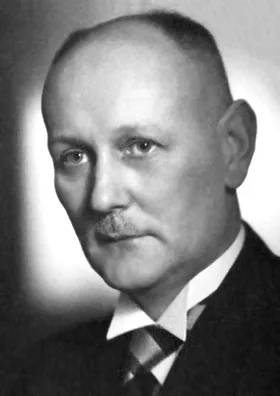
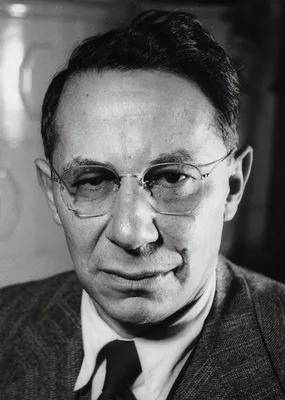
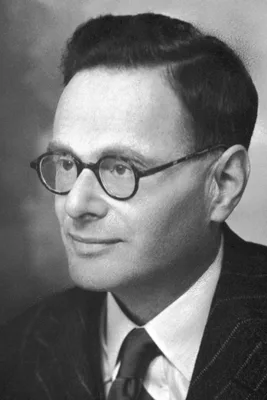
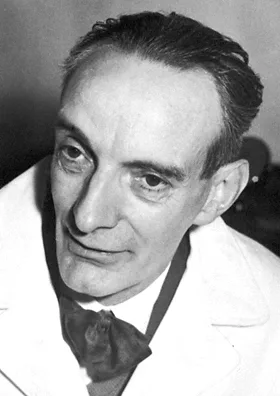
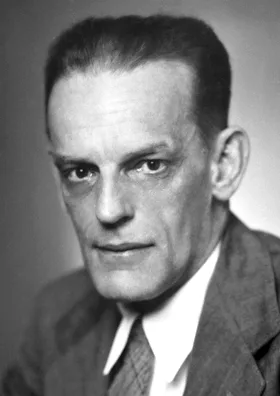
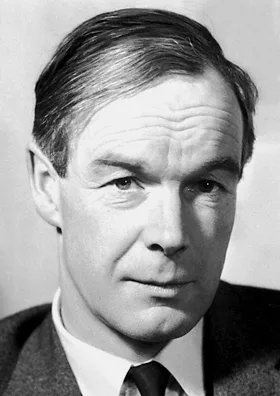
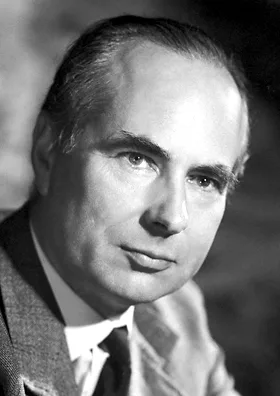
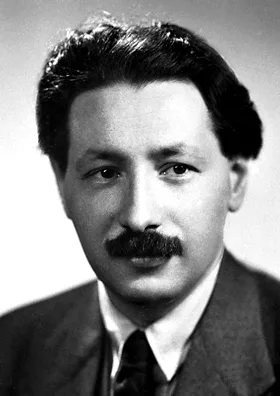
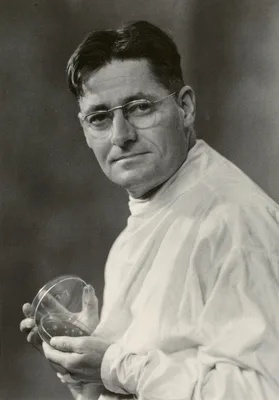
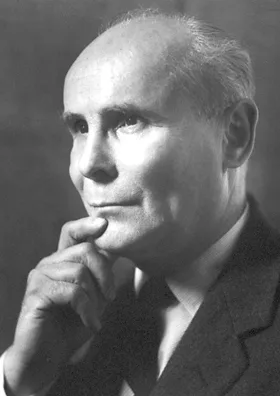
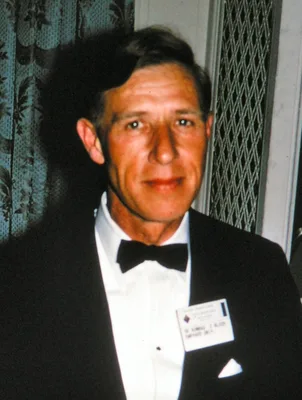
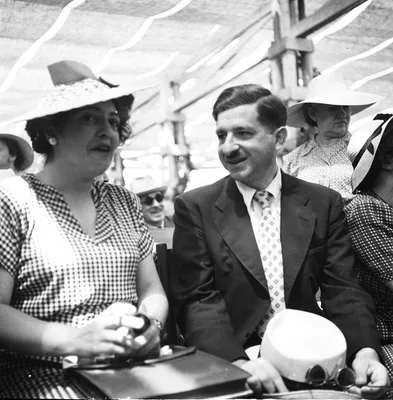
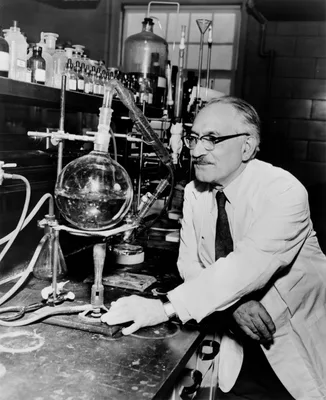
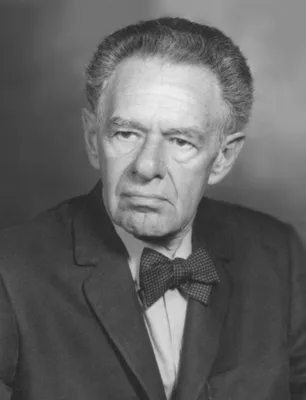
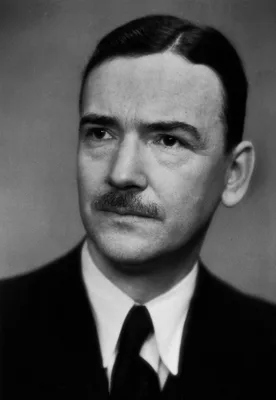
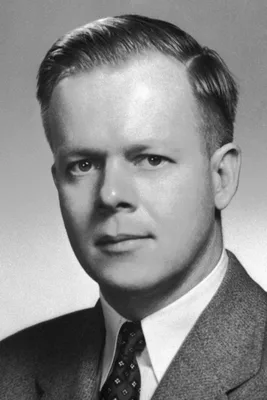
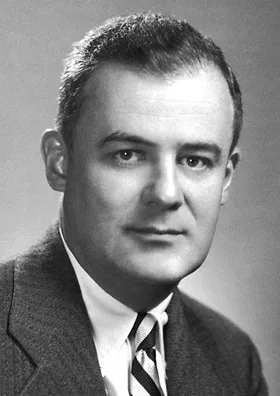
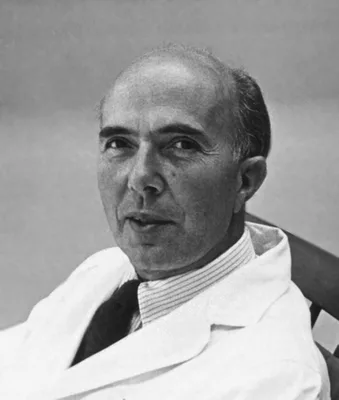
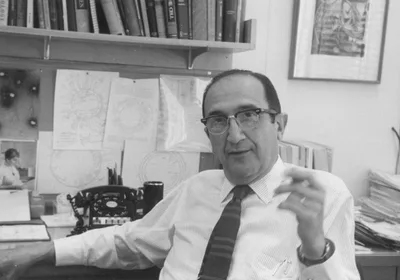
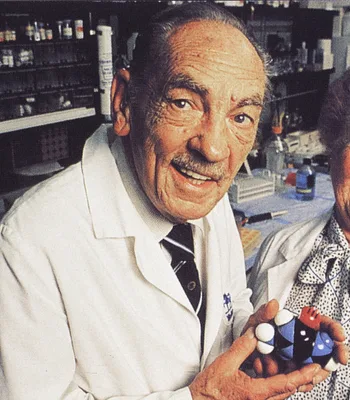
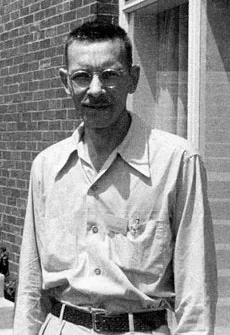
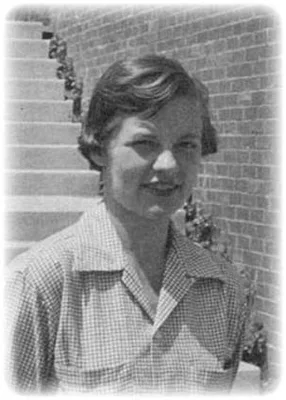
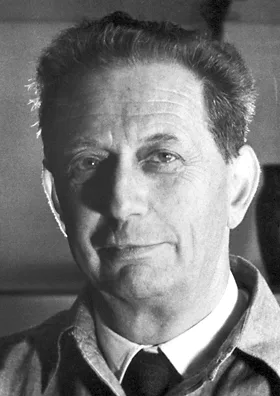
1935 DOMAGK, Gerhard Johannes Paul (1895 – 1964)
Ein Beitrag zur Chemotherapie der bakteriellen Infektionen.
Introduction of Prontosil, the first drug containing sulfanilamide. In 1939 Domagk was awarded the Nobel Prize in Physiology or Medicine "for the discovery of the antibacterial effects of prontosil."
GMN 1949 · https://historyofmedicine.com/id/2824
1935 LORENZ, Konrad (1903 – 1989)
Der Kumpan in der Umwelt des Vogels - Der Artgenosse als auslösendes Moment sozialer Verhaltensweisen.
This paper is often considered the foundational text and conceptual bedrock for ethology, the scientific study of animal behavior. Lorenz concentrated his studies in the bird populations. He analyzed social behavior i…
GMN 14370 · https://historyofmedicine.com/id/16702
1936 REICHSTEIN, Tadeusz (1897 – 1996)
Über Bestandteile der Nebennieren-Rinde. VI. Trennungsmethoden sowie Isolierung der Substanzen Fa, H, und j.
Isolation of Compound Fa, identical with Compounds E and F. "In the mid-1930s Edward Kendall and Tadeus Reichstein succeeded in isolating and analyzing the composition of a number of similar hormones derived from the …
GMN 1153 · https://historyofmedicine.com/id/1463
1936 EGAS MONIZ, Antonio Caetano de Abreu Freire (1874 – 1955)
Essai d’un traitement chirurgical de certaines psychoses.
Prefrontal leucotomy (lobotomy). Translation in J. Neurosurg., 1964, 21, 1110-14. See also Egas Moniz's book Tentatives opératoires dans le traitement de certaines psychoses, Paris, 1936. His name was originally Anton…
GMN 4905 · https://historyofmedicine.com/id/5959
1937 KREBS, Sir Hans Adolf (1900 – 1981); JOHNSON, William Arthur (1913 – 1993)
Citric acid in intermediate metabolism in animal tissues.
Citric acid cycle (CAC) of aerobic carbohydrate metabolism (Krebs cycle). Three months after his initial publication on CAC Krebs published a supplementary paper aimed at the medical audience, rather than the biochemi…
GMN 751.1 · https://historyofmedicine.com/id/1735
1937 BOVET, Daniel (1907 – 1992); STAUB, Anne-Marie (1914 – 2012)
Action protectrice des éthers phénoliques au cours de l’intoxication histaminique.
First description of structure and action of an antihistamine. In 1957 Bovet was awarded the Nobel Prize in Physiology or Medicine “for his discoveries relating to synthetic compounds that inhibit the action of certai…
GMN 1925 · https://historyofmedicine.com/id/2718
1937 THEILER, Max (1899 – 1972); SMITH, Hugh Hollingsworth (1902 – 1995)
The use of yellow fever virus modified by in vitro cultivation for human immunization.
Immunization without the use of immune serum. In 1951 Theiler was awared the Nobel Prize in Physiology or Medicine "for his discovery of an effective vaccine against yellow fever." This was the first Nobel Prize award…
GMN 5467 · https://historyofmedicine.com/id/7597
1938 HARTLINE, Haldon Keffer (1903 – 1983)
The responses of single optic nerve fibers of the vertebrate eye to illumination of the retina.
Hartline continued and extended the work initiated by Adrian and Matthews on electrical discharges from the optic nerve. See also his later papers In the same journal, 1940, 130, 690-711. Reprinted with historical int…
GMN 1532 · https://historyofmedicine.com/id/2858
1939 BINKLEY, Stephen Bennett (1910 – 1987); DOISY, Edward Adelbert (1883 – 1986); MACCORQUODALE, Donald William (1898 – 1986); THAYER, Sidney A.
The isolation of vitamin K1.
Order of authorship in the original publication: Binkley, MacCorquodale, Thayer, Doisy. In 1943 Doisy received half of the Nobel Prize in Physiology or Medicine "for his discovery of the chemical nature of vitamin K."…
GMN 1081 · https://historyofmedicine.com/id/812
1939 HODGKIN, Sir Alan Lloyd (1914 – 1998); HUXLEY, Sir Andrew Fielding (1917 – 2012)
Action potentials recorded from inside a nerve fibre.
Hodgkin and Huxley were the first to succeed in inserting electrodes into a living giant nerve fiber and to measure directly the action potential within it. In 1963 Hodgkin and Huxley shared the Nobel Prize in Physiol…
GMN 1310.1 · https://historyofmedicine.com/id/1165
1940 CHAIN, Sir Ernst Boris (1906 – 1979); FLOREY, Howard Walter (1898 – 1968); HEATLEY, Norman George (1911 – 2004); GARDNER, Andrew Duncan (1884 – 1977); SANDERS, A. G.; JENNINGS, Margaret Augusta (1904 – 1994); ORR-EWING, J.
Penicillin as a chemotherapeutic agent.
Proof of the therapeutic action in vivo of penicillin against streptococcal and other bacterial infections. Building upon Fleming’s work (No. 1933 and 10784), the consequences of which had originally been widely unapp…
GMN 1934 · https://historyofmedicine.com/id/2783
1941 COURNAND, André Frédéric (1895 – 1988); RANGES, Hilmert Albert (1906 – 1969)
Catheterization of the right auricle in man.
First investigations with the cardiac catheter as a clinical method of investigation. In 1956 Cournand in 1956 shared the Nobel Prize in Physiology or Medicine with Forssmann (No. 2858) and Richards (No. 2883.2) "for …
GMN 2871 · https://historyofmedicine.com/id/4194
1941 HUGGINS, Charles Brenton (1901 – 1997); HODGES, Clarence Vernard (1914 – 2001)
Studies on prostatic cancer. I. The effect of castration, of estrogen, and of androgen injection on serum phosphatases in metastatic carcinoma of the prostate.
In 1966 Huggins was awarded the Nobel Prize for Physiology or Medicine for discovering in 1941 "for his discoveries concerning hormonal treatment of prostatic cancer."
GMN 4276 · https://historyofmedicine.com/id/5291
1941 BEADLE, George Wells (1903 – 1989); TATUM, Edward Lawrie (1909 – 1975)
Genetic control of biochemical reactions in Neurospora.
Beadle and Tatum proposed the "one gene, one enzyme" hypothesis in 1941. This was a restatement of ideas originally proposed by Archibald Garrod (No. 244.1) in 1908. 1958 Beadle and Tatum shared the Nobel Prize in Phy…
GMN 254.3 · https://historyofmedicine.com/id/8688
1942 BLOCH, Konrad Emil (1912 – 2000); RITTENBERG, David (1906 – 1970)
On the utilization of acetic acid for cholesterol formation.
See also, Rittenberg & Bloch, "The Utilization of Acetic Acid for the Synthesis of Fatty Acids," J. Biol. Chem. 160, 1945, 417-424. Bloch, "The Biological Conversion of Cholesterol to Pregnanediol," J. Biol. Chem. 157…
GMN 14239 · https://historyofmedicine.com/id/16558
1944 MÜLLER, Paul Hermann (1899 – 1965); ET AL
Über Konstitution und toxische Wirkung von natürlichen und neuen synthetischen insektentötenden Stoffen.
Müller introduced Dichlordiphenyltrichlorethane (DDT) as an insecticide. With H. Martin and P. Läuger. In 1948 Müller received the Nobel Prize in Physiology or Medicine "for his discovery of the high efficiency of DDT…
GMN 1928.3 · https://historyofmedicine.com/id/2732
1944 SCHATZ, Albert (1920 – 2005); WAKSMAN, Selman Abraham (1888 – 1973); GREGORY, Elizabeth Bugie
Streptomycin, a substance exhibiting antibiotic activity against Grampositive and Gram-negative bacteria.
Introduction of streptomycin. Order of authorship: Schatz, Gregory, Waksman. In 1952 Waksman was awarded the Nobel Prize in Physiology or Medicine "for ingenious, systematic, and successful studies of the soil microbe…
GMN 1935 · https://historyofmedicine.com/id/2788
1945 LIPMANN, Fritz Albert (1899 – 1986)
Acetylation of sulfanilamide by liver homogenates and extracts.
Discovery of co-enzyme A and its importance for intermediary metabolism. This discovery illuminated “the process by which cells make available the energy to drive their manufacturing processes” (Judson, p. 245). In 19…
GMN 14284 · https://historyofmedicine.com/id/16607
1946 EULER, Ulf Svante Hansson von (1905 – 1983)
A specific sympathomimetic ergone in adrenergic nerve fibres (sympathin) and its relations to adrenaline and nor-adrenaline.
Noradrenaline shown to be the predominant transmitter of the effects of sympathetic nerve impulses. In 1970 Euler shared the Nobel Prize in Physiology or Medicine with Katz and Axelrod "for their discoveries concernin…
GMN 1354.1 · https://historyofmedicine.com/id/1612
1946 DELBRÜCK, Max (1906 – 1981); BAILEY, W. T.
Induced mutations in bacterial viruses.
Genetic recombination in bacteriophages. In 1969 Delbrück shared the Nobel Prize with A. D. Hershey and S. E. Luria "for their discoveries concerning the replication mechanism and the genetic structure of viruses."
GMN 2578.5 · https://historyofmedicine.com/id/4142
1946 TATUM, Edward Lawrie (1909 – 1975); LEDERBERG, Joshua (1925 – 2008)
Gene recombination in Escherichia coli.
Discovery of sexual processes in the reproduction of bacteria. In 1958 Lederberg shared the Nobel Prize in Physiology or Medicine with Tatum and Beadle (No. 254.3) "for his discoveries concerning genetic recombination…
GMN 255.4 · https://historyofmedicine.com/id/8693
1946 FRISCH, Karl Ritter von (1886 – 1982)
Die Tänze der Bienen.
Von Frisch discovered the waggle dance, a particular figure-eight dance of honey bees by which successful foragers can communicate information with other members of their colony about the direction and distance to pat…
GMN 14138 · https://historyofmedicine.com/id/16452
1947 CORI, Carl Ferdinand (1896 – 1984)
Enzymatic reactions in carbohydrate metabolism.
In 1947 Carl Cori and his wife Gerty Cori (1896-1957) shared the Nobel Prize (with Houssay) “for their discovery of the course of the catalytic conversion of glycogen.” They are more often remembered for the Cori cycl…
GMN 751.4 · https://historyofmedicine.com/id/1737
1947 GRANIT, Ragnar Arthur (1900 – 1991)
Sensory mechanisms of the retina: with an appendix on electroretinography.
An account of twenty years’ work on the electrical responses of the retina, a discussion of visual purple and visual violet, and an exposition of Granit’s hypothesis of colour vision. His researches have done much to …
GMN 1534 · https://historyofmedicine.com/id/2861
1948 HESS, Walter Rudolf (1881 – 1973)
Die funktionelle Organisation des vegetativen Nervensystems.
In 1949 Hess shared the Nobel Prize in Physiology or Medicine with Egas Moniz in 1949 “for his discovery of the functional organization of the interbrain as a coordinator of the activities of the internal organs.”
GMN 1451.1 · https://historyofmedicine.com/id/2324
1949 HENCH, Philip Showalter (1896 – 1965); KENDALL, Edward Calvin (1886 – 1972)
The effects of a hormone of the adrenal cortex (17-hydroxy-11-dehydrocorticosterone: compound E) and of pituitary adrenocorticotropic hormone on rheumatoid arthritis.
Introduction of cortisone and A.C.T.H. in treatment of rheumatoid arthritis. With C. H. Slocumb, and H. F. Polley. In 1950 Hench and Kendall shared the Nobel Prize in Physiology or Medicine with Tadeusz Reichstein (No…
GMN 4508 · https://historyofmedicine.com/id/354
1949 ENDERS, John Franklin (1897 – 1985); WELLER, Thomas Huckle (1915 – 2008); ROBBINS, Frederick Chapman (1916 – 2003)
Cultivation of the Lansing strain of poliomyelitis virus in cultures of various human embryonic tissues.
Enders, Weller, and Robbins grew the poliomyelitis virus in cultures of different tissues. Their method proved of great value in virus research, and removed the final obstacles to vaccine production. In 1974 Enders, W…
GMN 4671.1 · https://historyofmedicine.com/id/874
1949 DULBECCO, Renato (1914 – 2012); LURIA, Salvador Edward (1912 – 1991)
Genetic recombinations leading to production of active bacteriophage from ultraviolet inactivated bacteriophage particles.
In 1969 Luria shared the Nobel Prize in Physiology or Medicine in with Delbrück (No. 2578.5) and A. D. Hershey (No. 256) "for their discoveries concerning the replication mechanism and the genetic structure of viruses."
GMN 2526.1 · https://historyofmedicine.com/id/3458
1950 MCCLINTOCK, Barbara (1902 – 1992)
The origin and behavior of mutable loci in maize.
"In the summer of 1944 at Cold Spring Harbor Laboratory, McClintock systematic studies on the mechanisms of the mosaic color patterns of maize seed and the unstable inheritance of this mosaicism.[44] She identified tw…
GMN 12063 · https://historyofmedicine.com/id/14272
1951 MEDAWAR, Sir Peter Brian (1915 – 1987); BILLINGHAM, Rupert Everett (1921 – 2002)
The technique of free skin grafting in mammals.
This "paper facilitated the later discovery of `actively acquired tolerance' and the definition of the principal laws of transplantation tolerance. Thus, it was in a series of classic experiments (stemming from this J…
GMN 13595 · https://historyofmedicine.com/id/15874
1952 KATZ, Sir Bernard (1911 – 2003)
Different forms of signalling employed by the nervous system.
In 1970 Katz shared the Nobel Prize in Physiology or Medicine with Ulf von Euler and J. Axelrod "for their discoveries concerning the humoral transmitters in the nerve terminals and the mechanism for their storage, re…
GMN 1354.2 · https://historyofmedicine.com/id/1619
1952 ELION, Gertrude Belle (1918 – 1999); HITCHINGS, George Herbert (1905 – 1998); BURGI, E.; ET AL
Studies on condensed pyrimidine system. IX. The synthesis of some 6-substituted purines.
Synthesis of 6-mercaptopurine. In 1988 Gertrude Elion shared the Nobel Prize in Physiology or Medicine with George Hitchings and Sir James Black “for their discoveries of important principles for drug treatment.”
GMN 3108.2 · https://historyofmedicine.com/id/3825
1952 HERSHEY, Alfred Day (1908 – 1997); CHASE, Martha Cowles (1927 – 2003)
Independent functions of viral protein and nucleic acid in growth of bacteriophage.
DNA shown to be the carrier of genetic information in virus reproduction. In 1969 Hershey shared the Nobel Prize in Physiology or Medicine with S. E. Luria and M. Delbrück for "for their discoveries concerning the rep…
GMN 256 · https://historyofmedicine.com/id/8697
1952 LWOFF, André Michel (1902 – 1994)
Rôle des cations bivalents dans l'induction du développement du prophage par les agents reducteurs.
Lwoff gave the name "prophage" to the form in which the genome of the bacteriophage is perpetuated in lysogenic bacteria. The bacteriophages produced by these bacteria, known as temperate bacteriophages, can therefore…
GMN 13938 · https://historyofmedicine.com/id/16235
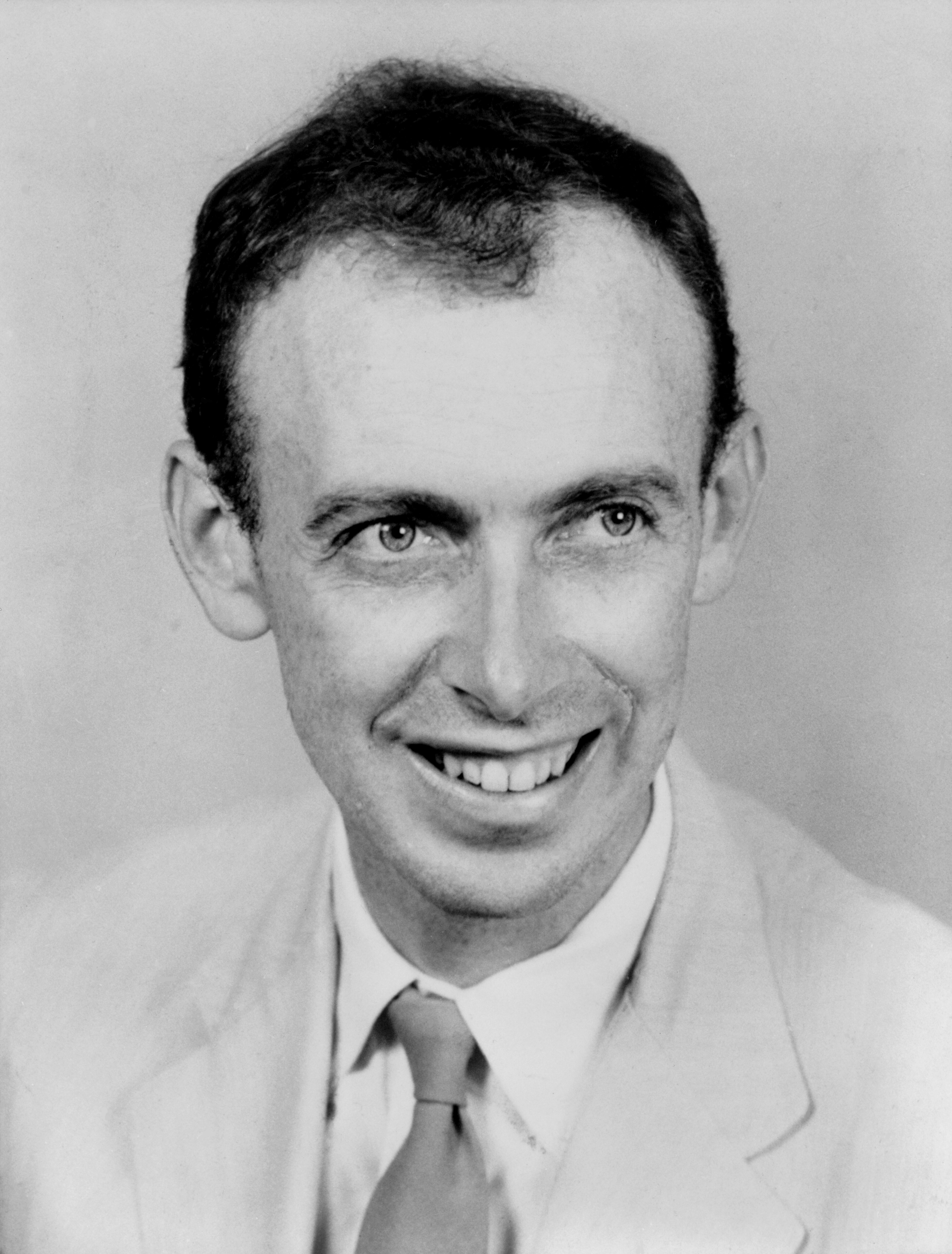
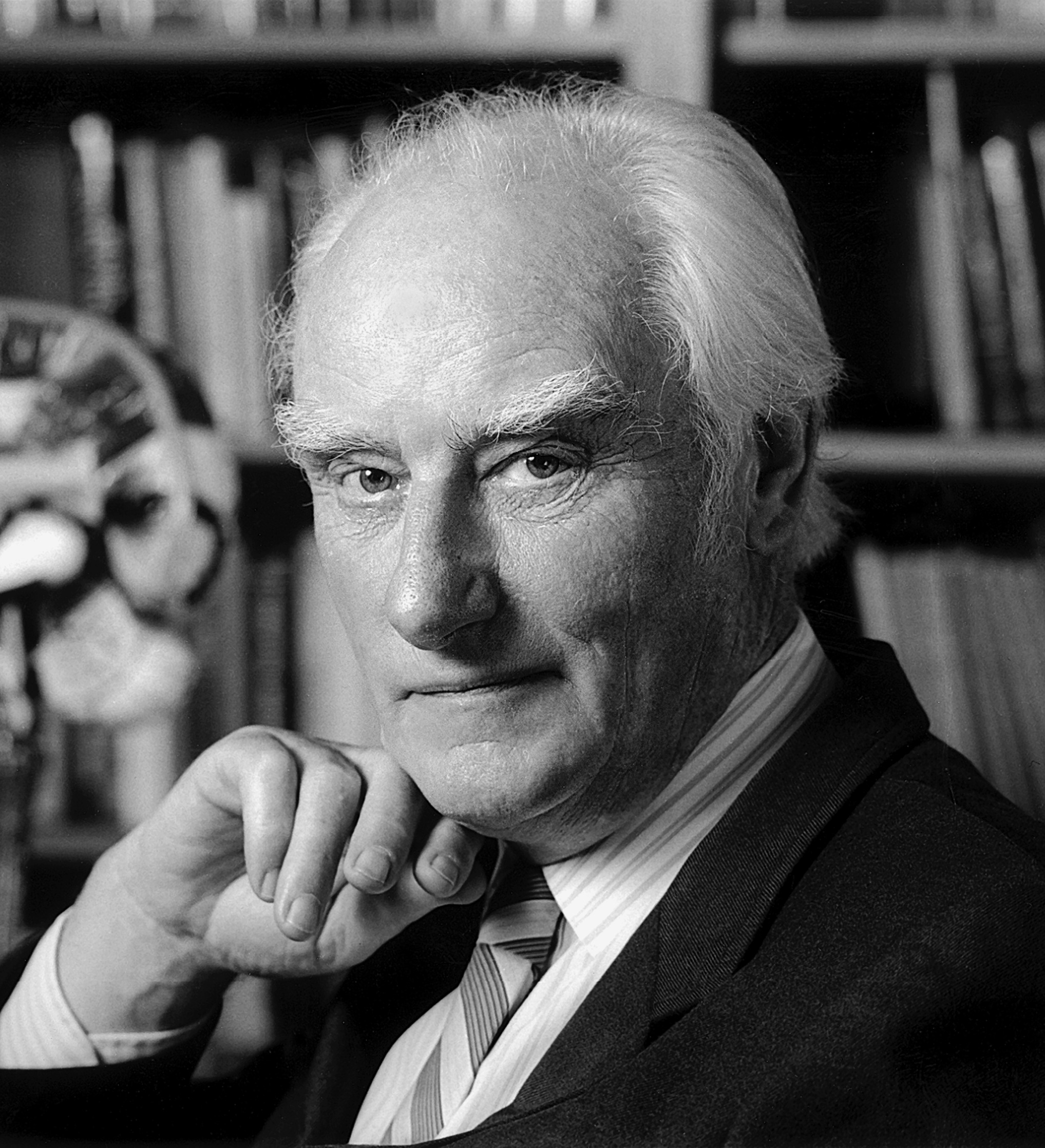
1953 WATSON, James Dewey (1928 – ); CRICK, Francis Harry Compton (1916 – 2004)
Molecular structure of nucleic acids. A structure for deoxyribose nucleic acid.
Watson and Crick shared the Nobel Prize with M. H. F. Wilkins (No. 256.4) "for their discoveries concerning the molecular structure of nucleic acids and its significance for information transfer in living material." L…
GMN 256.3 · https://historyofmedicine.com/id/8700
1953 WILKINS, Maurice Hugh Frederick (1916 – 2004); STOKES, Alexander Rawson (1919 – 2003); SEEDS, William Etienne; WILSON, Herbert Rees (1929 – 2008)
Helical structure of crystalline deoxypentose nucleic acid.
In 1962 Wilkins shared the Nobel Prize in Physiology or Medicine with Crick and Watson "for their discoveries concerning the molecular structure of nucleic acids and its significance for information transfer in living…
GMN 256.4 · https://historyofmedicine.com/id/8701
1954 LEVI-MONTALCINI, Rita (1909 – 2012); MEYER, Hertha; HAMBURGER, Viktor (1900 – 2001)
In vitro experiments on the effects of mouse sarcomas 180 and 37 on the spinal and sympathetic ganglia of the chick embryo.
Discovery of nerve growth factor (NGF). Order of authorship in the original publication: Levi-Montalcini, Meyer, Hamburger. In 1986 Levi-Montalcini was awarded half of the Nobel Prize in Physiology or Medicine, and St…
GMN 14243 · https://historyofmedicine.com/id/16562
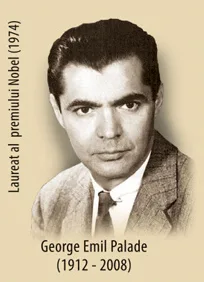
1955 PALADE, George Emil (1912 – 2008)
A small particulate component of the cytoplasm.
Palade first described the association of what were subsequently determined to ribosomes with membranes. He and Keith Porter subsequently named this structure the endoplasmic reticulum. Digital facsimile from PubMedCe…
GMN 13685 · https://historyofmedicine.com/id/15967
1956 KORNBERG, Arthur (1918 – 2007); LEHMAN, Israel Robert (1924 – ); BESSMAN, Maurice Jules (1928 – 2021); SIMMS, E. S.; ET AL
Enzymic synthesis of deoxyribonucleic acid.
In 1959 Kornberg shared the Nobel Prize in Physiology or Medicine with Severo Ochoa "for their discovery of the mechanisms in the biological synthesis of ribonucleic acid and deoxyribonucleic acid." Order of authorshi…
GMN 752.4 · https://historyofmedicine.com/id/1739
1956 MERRILL, John Putnam (1917 – 1986); MURRAY, Joseph Edward (1919 – 2012); HARRISON, John Hartwell (1909 – 1983); ET AL
Successful homotransplantation of the human kidney between identical twins.
This was the first successful kidney transplant. The patient, both of whose own kidneys had been removed, was alive 11 months after the transplant. With Warren R. Guild. See No. 4256.1. In 1990 Joseph Murray shared th…
GMN 4257 · https://historyofmedicine.com/id/5197
1957 THEORELL, Axel Hugo Teodor (1903 – 1982)
The nature and mode of action of oxidation enzymes. Nobel Lecture, December 12, 1955. In: Festschrift Arthur Stoll, pp. 35-47.
In 1955 Theorell was awarded the Nobel Prize in Physiology or Medicine "for his discoveries relating to the nature and mode of action of oxidation enzymes."
GMN 752.5 · https://historyofmedicine.com/id/1859
1957 THOMAS, Edward Donnall (1920 – 2012); LOCHTE, Harry L. Jr.; LU, Wan Ching; ET AL
Intravenous infusion of bone marrow in patients receiving radiation and chemotherapy.
Thomas and colleagues reported the first bone marrow transplants. They described the treatment of six patients with cancers and/leukemia and one patient with multiple myeloma. Three of the patients died, two responded…
GMN 13594 · https://historyofmedicine.com/id/15873
1957 CARLSSON, Arvid (1923 – 2018); LINDQVIST, Margit; MAGNUSSON, Tor
3,4-Dihydroxyphenylalanine and 5-Hydroxytryptophan as reserpine rntagonists.
Carlsson demonstrated that dopamine was a neurotransmitter in the brain and not just a precursor for norepinephrine. Digital facsimile from nature.com at this link. In 2000 Arvid Carlsson shared the Nobel Prize in Phy…
GMN 14250 · https://historyofmedicine.com/id/16569
1958 GILHAM, Peter Thomas (1930 – 2008); KHORANA, Har Gobind (1922 – 2011)
Studies on polynucleotides. I. A new and general method for the chemical synthesis of the C5'-C3' intemucleotide linkage. Synthesis of deoxyribo-dinucleotides.
In 1968 Khorana shared the Nobel Prize in Physiology or Medicine with R. W. Holley and M. W. Nirenberg "for their interpretation of the genetic code and its function in protein synthesis." H. G. Khorana, T. M. Jacob, …
GMN 752.6 · https://historyofmedicine.com/id/1862
1958 AXELROD, Julius (1912 – 2004); TOMCHICK, R.
Enzymatic O-methylation of epinephrine and other catechols.
The authors discovered the enzyme "COMT" or cathecol-O-methyltransferase, and determined that it was crucial in the methylation and inactivation of adrenergic and other catecholamine type neurotransmitters. (Thanks to…
GMN 1931.6 · https://historyofmedicine.com/id/2761
1958 PORTER, Rodney Robert (1917 – 1985)
Separation and isolation of fractions of rabbit gamma-globulin containing the antibody and antigenic combining sites.
In 1972 Porter shared the Nobel Prize in Physiology or Medicine with G.M. Edelman (No. 2578.39) "for their discoveries concerning the chemical structure of antibodies."
GMN 2578.25 · https://historyofmedicine.com/id/4245
1958 DAUSSET, Jean (1916 – 2009)
Iso-leuco-anticorps.
Discovery of the first histocompatibility antigen. In 1980 Dausset shared the Nobel Prize in Physiology or Medicine with B. Benacerraf and G. D. Snell "for their discoveries concerning genetically determined structure…
GMN 2578.26 · https://historyofmedicine.com/id/4248
1958 SNELL, George Davis (1903 – 1996)
Histocompatibility genes of the mouse.
Snell made fundamental contributions to transplantation genetics. At his suggestion genes governing transplantation were called histocompatibility genes and Gorer’s Antigen II became Histocompatibility-2 (H-2). In 198…
GMN 2578.30 · https://historyofmedicine.com/id/4268
1959 BURNET, Sir Frank Macfarlane (1899 – 1985)
The clonal selection theory of acquired immunity. The Abraham Flexner Lectures of Vanderbilt University 1958.
Burnet's clonal selection theory extended the idea that each antibody-producing cell makes antibodies of only one specificity, predicting these cells proliferate in response to the detection of antigens, cloning and t…
GMN 2578.31 · https://historyofmedicine.com/id/4276
1959 KREBS, Edwin Gerhard (1918 – 2009); GRAVES, Donald J. (1931 – 2007); FISCHER, Edmond Henri (1920 – 2021)
Factors affecting the activity of muscle phosphorylase b kinase.
In 1992 Krebs and Fischer were awarded the Nobel Prize in Physiology or Medicine "for their discoveries concerning reversible protein phosphorylation as a biological regulatory mechanism." Digital facsimile from PubMe…
GMN 14141 · https://historyofmedicine.com/id/16455