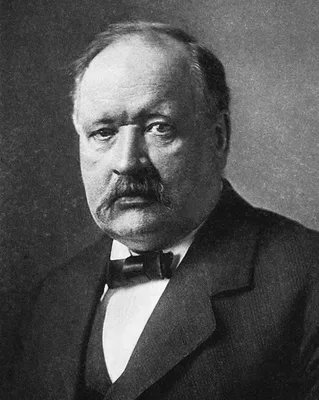
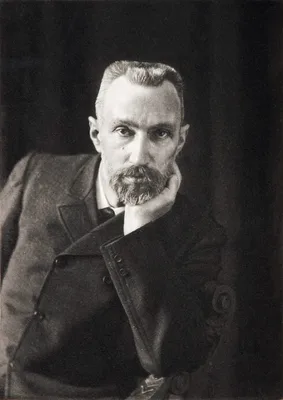
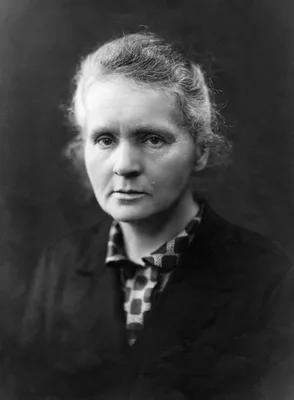
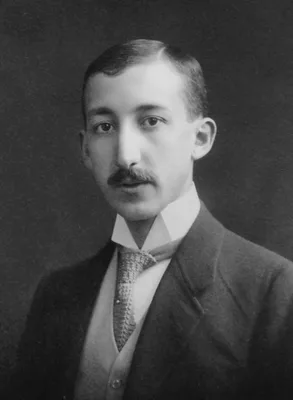
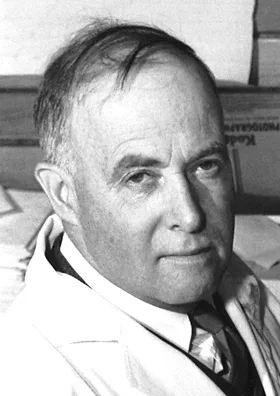
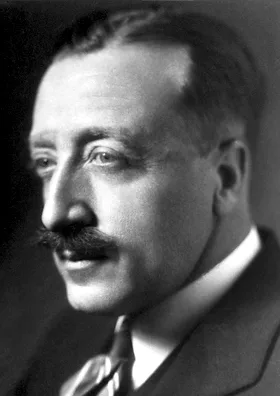
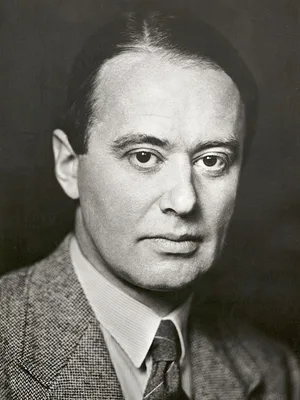
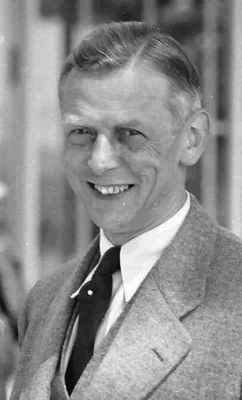
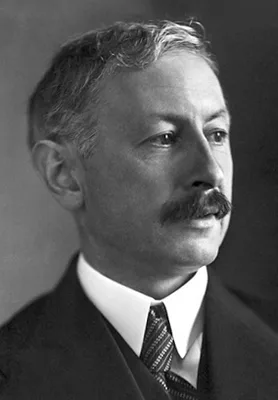
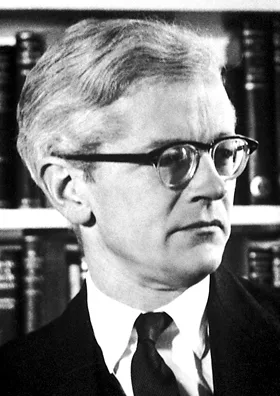
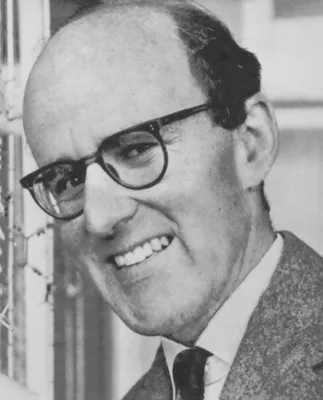
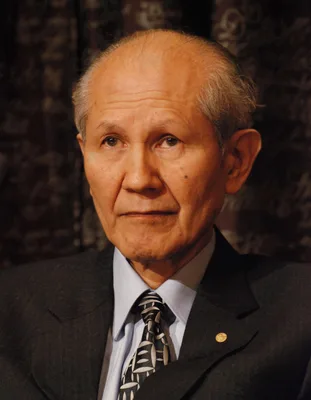
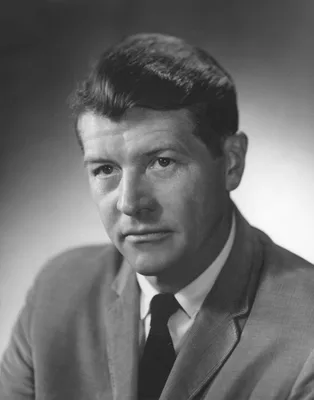
1884 ARRHENIUS, Svante August (1859 – 1927)
Recherches sur la conductibilité galvanique des electrolytes. 1 & 2.
Arrhenius first published the theory of electrolytic dissociation in his doctoral thesis of 1884. In 1903 he received the Nobel Prize in chemistry "in recognition of the extraordinary services he has rendered to the a…
GMN 14278 · https://historyofmedicine.com/id/16600
1885 VAN’T HOFF, Jacobus Hendricus (1852 – 1911)
Lois d’équilibre chimique dans l’état dilué, gazeux ou dissous.
Van’t Hoff stated that osmotic pressure is proportional to the concentration if the temperature remains invariable, and proportional to the absolute temperature if the concentration remains invariable. In 1901 Van't H…
GMN 706 · https://historyofmedicine.com/id/956
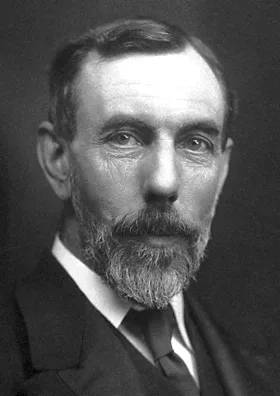
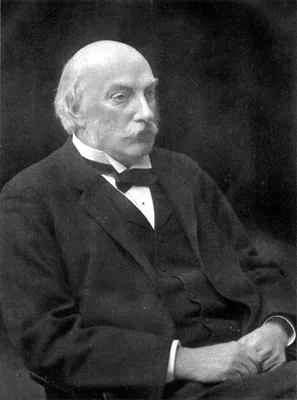
1895 RAMSAY, Sir William (1852 – 1916); STRUTT, John William 3rd Baron Rayleigh (1842 – 1919)
Argon, a new constituent of the atmosphere.
Discovery of argon, the first discovery of an inert gas. In 1904 Ramsay was awarded the Nobel Prize in Chemistry "in recognition of his services in the discovery of the inert gaseous elements in air, and his determina…
GMN 14310 · https://historyofmedicine.com/id/16635
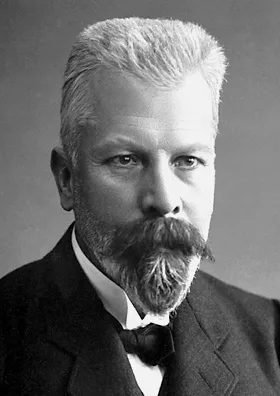
1897 BUCHNER, Eduard (1860 – 1907)
Alkoholische Gärung ohne Hefezellen.
Discovery of cell-free fermentation, the turning point in the study of enzymes. In 1907 Buchner was awarded the Nobel Prize in Chemistry "for his biochemical researches and his discovery of cell-free fermentation."
GMN 719.1 · https://historyofmedicine.com/id/1043
1898 CURIE, Pierre (1859 – 1906); CURIE, Marie Sklodowska (1867 – 1934)
Sur une substance nouvelle radio-active, contenue dans la pechblende.
The Curies, studying the radioactivity of minerals containing uranium and thorium, isolated from pitchblend a substance which they called radium and which they showed to possess an astonishing degree of radioactivity.…
GMN 2003 · https://historyofmedicine.com/id/1914
1923 HEVESY, George Charles de (1885 – 1966)
The absorption and translocation of lead by plants: A contribution to the application of the method of radioactive indicators in the investigation of the change of substance in plants.
The first application of radioactive tracers in biological studies. Digital facsimile from PubMedCentral at this link. Hevesy received the 1943 Nobel Prize in Chemistry "for his work on the use of isotopes as tracers …
GMN 9333 · https://historyofmedicine.com/id/11515
1926 SUMNER, James Batcheller (1887 – 1955)
The isolation and crystallization of the enzyme urease.
Sumner first isolated and crystallized an enzyme (urease) and proved that enzymes are proteins. One month after publication of the above paper Sumner reinforced his discovery by recrystalizing urease, publishing a fol…
GMN 14025 · https://historyofmedicine.com/id/16332
1930 NORTHROP, John Howard (1891 – 1987)
Crystalline pepsin.
Crystallization of pepsin and its identity as a protein. In 1946 Northrop shared half of the Nobel Prize in Chemistry with Wendell Meredith Stanley "for their preparation of enzymes and virus proteins in a pure form."…
GMN 1038.1 · https://historyofmedicine.com/id/1021
1930 TISELIUS, Arne Wilhelm Kaurin (1902 – 1971)
The moving boundary method of studying the electrophoresis of proteins. (Nova Acta Reg. Soc. Scient. Upsaliensis, IV, 7, No. 4.)
Tilesius's doctoral dissertation introduced the laboratory technique of moving-boundary electrophoresis, a technique for separation of chemical compounds by electrophoresis in free solution. For this work, and the wor…
GMN 12830 · https://historyofmedicine.com/id/15076
1931 BUTENANDT, Adolf Friedrich Johann (1903 – 1995)
Ueber die chemische Untersuchung der Sexualhormone.
The male sex hormone, androsterone, was isolated in crystalline form by Butenandt. In 1939 Butenandt received half of the Nobel Prize in Chemistry "for his work on sex hormones." The other half was awarded to Leopold …
GMN 1195 · https://historyofmedicine.com/id/1806
1931 KARRER, Paul (1889 – 1971); MORF, R.; SCHÖPP, K.
Zur Kenntnis des Vitamins-A aus Fischtranen.
In 1930 Karrer established the correct formula for carotene (the chief precursor of vitamin A), the first demonstration of the chemical structure of a vitamin. Shortly thereafter, he was able to determine the formula …
GMN 14238 · https://historyofmedicine.com/id/16557
1933 HAWORTH, Sir Walter Norman (1883 – 1950); HIRST, Sir Edmund Langley (1898 – 1975)
Synthesis of ascorbic acid.
Haworth and Hirst successfully synthesized vitamin C in the laboratory. This was the first vitamin to be artificially produced. Their breakthrough made it possible for vitamin C, or ascorbic acid as Haworth called it,…
GMN 14280 · https://historyofmedicine.com/id/16602
1934 JOLIOT-CURIE, Jean Frédéric (1900 – 1958); JOLIOT-CURIE, Irène (1897 – 1956)
I. Un nouveau type de radioactivité. II. Séparation chimique des nouveaux radioéléments émetteur d’électrons positifs.
Discovery of artificially produced radionuclides or radioisotopes. In February 1934, the Joliot-Curies reported the first artificial production of radioactive material after discovering radioactivity in aluminum foil …
GMN 9340 · https://historyofmedicine.com/id/11522
1935 STANLEY, Wendell Meredith (1904 – 1971)
Isolation of a crystalline protein possessing the properties of tobacco-mosaic virus.
Stanley first crystallized a virus— tobacco mosaic virus. The following year Bawden, Pirie, Bernal and Fankuchen (No. 12005) showed that tobacco mosaic virus molecules are asnisometric and consist of ribonucleoprotein…
GMN 2524.5 · https://historyofmedicine.com/id/3353
1945 MCMILLAN, Edwin Mattison (1907 – 1991)
The synchrotron: a proposed high energy particle accelerator.
In 1951 McMillan shared the Nobel Prize in Chemistry with Glenn Theodore Seaborg "for their discoveries in the chemistry of the transuranium elements."
GMN 2659.4 · https://historyofmedicine.com/id/3358
1946 MCMILLAN, Edwin Mattison (1907 – 1991); SEABORG, Glenn Theodore (1912 – 1999); KENNEDY, Joseph William (1916 – 1957); WAHL, A. C.
Radioactive Element 94 from deuterons on uranium.
"This letter was received for publication on the date indicated (January 28, 1941), but was voluntarily withheld from publication until the end of the war." Seaborg and McMillan discovered element 94, which they named…
GMN 14317 · https://historyofmedicine.com/id/16642
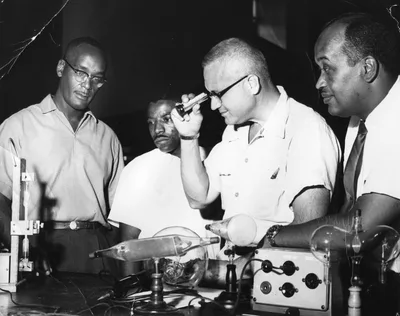
1951 PAULING, Linus Carl (1901 – 1994); COREY, Robert Brainard (1897 – 1971); BRANSON, Herman Russell (1914 – 1995)
The structure of proteins: Two hydrogen-bonded configurations of the polypeptide chain.
Pauling, his crystallographer R. B. Corey, and African-American physicist and chemist H.R. Branson announced the α-helix, a principal structural feature of proteins. Digital facsimile from the National Academy of Scie…
GMN 6846 · https://historyofmedicine.com/id/9010
1953 VIGNEAUD, Vincent du (1901 – 1978)
The synthesis of an octapeptide amide with the hormonal activity of oxytocin.
Synthesis of oxytocin. With C. Ressler, J. M. Swan, C. W. Roberts, P. G. Katsoyannis, and S. Gordon. In 1955 Vigneaud was awarded the Nobel Prize in Chemistry "for his work on biochemically important sulphur compounds…
GMN 1175.3 · https://historyofmedicine.com/id/1591
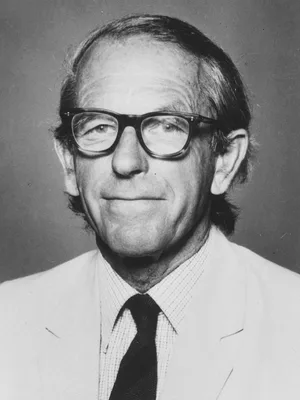
1955 SANGER, Frederick (1918 – 2013)
The disulphide bonds of insulin.
Sanger sequenced the amino acids of insulin, the first of any protein. His work “revealed that a protein has a definite constant, genetically determined sequence—and yet a sequence with no general rule for its assembl…
GMN 1207 · https://historyofmedicine.com/id/1852
1955 HODGKIN, Dorothy Crowfoot (1910 – 1994)
The crystal structure of the hexacarboxylic acid derived from B12 and the molecular structure of the vitamin.
The final structure of vitamin B12. With J. Pickworth, J.H. Robertson, K.N. Trueblood, R.J. Prosen, J. G. White. In 1964 Hodgkin was awarded the Nobel Prize in Chemistry "for her determinations by X-ray techniques of …
GMN 6928 · https://historyofmedicine.com/id/9093
1957 CALVIN, Melvin Ellis (1911 – 1997); BASSHAM, James Alan (1922 – 2012)
The path of carbon in photosynthesis.
Discovery of the Calvin cycle, also known as the Calvin–Benson–Bassham (CBB) cycle, or reductive pentose phosphate cycle or C3 cycle — a series of biochemical redox reactions that take place in the stroma of chloropla…
GMN 7386 · https://historyofmedicine.com/id/9558
1958 KENDREW, Sir John Cowdery (1917 – 1997); DINTZIS, Howard M.
A three-dimensional model of the myoglobin molecule obtained by x-ray analysis.
Initial paper on the first solution of the three-dimensional molecular structure of a protein. Computing the molecular structure in 3 dimensions was possible through the use of the Cambridge EDSAC stored-program elect…
GMN 6911 · https://historyofmedicine.com/id/9076
1960 PERUTZ, Max Ferdinand (1914 – 2002); ROSSMANN, Michael G. (1930 – 2019); CULLIS, Ann F.; MUIRHEAD, Hilary; WILL, Georg A.; NORTH, A. C. T.
Structure of haemoglobin: A three-dimensional Fourier synthesis at 5.5-A. resolution, obtained by X-ray analysis.
Solution of the structure of hemoglobin, a protein with 10,000 atoms. This was the culmination of 30 years of research by Perutz. Order of authorship in the original paper: Perutz, Rossmann, Culis, Muirhead, Will, Nor…
GMN 14283 · https://historyofmedicine.com/id/16606
1960 MOORE, Stanford (1913 – 1982); STEIN, William Howard (1911 – 1980); HIRS, C. H. W.
The sequence of the amino acid residues in performic acid-oxidized ribonuclease.
In 1959 Moore and Stein announced the first determination of the complete amino acid sequence of an enzyme, ribonuclease. In 1972 Moore and Stein shared half of the Nobel Prize in Chemistry with Christian B. Anfinsen …
GMN 14306 · https://historyofmedicine.com/id/16631
1962 SHIMOMURA, Osamu (1928 – 2018); JOHNSON, Frank H.; SAIGA, Yo
Extraction, purification and properties of Aequorin, a bioluminescent protein from the luminous hydromedusan, Aequorea.
Shimomura reported the discovery of green fluorescent protein (GFP) in a single footnote in this paper that was otherwise devoted to an entirely different bioluminescent protein: photoprotein aequorin. This may be the…
GMN 13562 · https://historyofmedicine.com/id/15839
1963 ANFINSEN, Christian Boehmer Jr. (1916 – 1995); EPSTEIN, Charles Joseph (1933 – 2011); GOLDBERGER, Robert Frank (1934 – 2003)
The genetic control of tertiary protein structure studies with mode systems.
In 1972 Anfinsen shared half of the Nobel Prize in Chemistry with Stanford Moore and William H. Stein for "for his work on ribonuclease, especially concerning the connection between the amino acid sequence and biologi…
GMN 14305 · https://historyofmedicine.com/id/16630
1965 SKOU, Jens Christian (1918 – 2018)
Enzymatic basis for the active transport of sodium and potassium across the cell membrane.
Skou discovered that the active transport of sodium and potassium is carried out in the cell membrane by an enzyme that serves as a sodium and potassium "pump," that catalyzes ATP hydrolysis. He named the enzyme "sodi…
GMN 14311 · https://historyofmedicine.com/id/16636
1968 KLUG, Sir Aaron (1926 – 2018); DEROSIER, David J.
Reconstruction of three-dimensional structures from electron micrographs.
Klug and deRosier invented methods for two-dimensional and three-dimensional digital image processing of electron microscope images. The latter method provided the theory behind the development of computed tomography …
GMN 13935 · https://historyofmedicine.com/id/16231
1972 JACKSON, David Archer (1942 – ); SYMONS, Robert Henry (1934 – 2006); BERG, Paul (1926 – )
Biochemical method for inserting new genetic information into DNA of simian virus 40: Circular SV40 DNA molecules containing Lambda phage genes and the galactose operon of Escherichia coli.
First recombinant DNA molecules generated. Digital facsimile from PubMedCentral at this link. In 1980 Berg was awarded half of the Nobel Prize in Chemistry "for his fundamental studies of the biochemistry of nucleic a…
GMN 257.3 · https://historyofmedicine.com/id/8713
1974 BOYER, Paul Delos (1918 – 2018)
"Conformational Coupling in Biological Energy Transductions." In L. Ernster et al. (eds.), Dynamics of Energy-Transducing Membranes, pp. 289-301.
In 1997 Boyer shared the Nobel Prize in Chemistry with John Walker and Jens C. Skou “for their elucidation of the enzymatic mechanism underlying the synthesis of adenosine triphosphate (ATP).” The Nobel Prize committe…
GMN 14315 · https://historyofmedicine.com/id/16640
1975 HENDERSON, Richard (1945 – ); UNWIN, Peter Nigel Tripp
Three-dimensional model of purple membrane obtained by electron microscopy.
The invention of Cryogenic electron microscopy (cryo-EM). The novel technique was achieved by "by applying the method to tilted specimens, and using the principles put forward by De Rosier and Klug (GM - 13935), for t…
GMN 14182 · https://historyofmedicine.com/id/16497
1977 SANGER, Frederick (1918 – 2013)
DNA sequencing with chain-terminating inhibitors.
Sanger and colleagues developed methods for rapid sequencing of long sections of DNA molecules. Sanger’s method, and that developed by Gilbert and Maxam, made it possible to read the nucleotide sequence for entire gen…
GMN 6883 · https://historyofmedicine.com/id/9047
1977 GILBERT, Walter (1932 – ); MAXAM, Allan M. (1942 – )
A new method for sequencing DNA.
The Gilbert-Maxam method for sequencing DNA. This paper is available from PNAS at this link. In 1980 Gilbert shared the 1980 Nobel Prize in Chemistry with Frederick Sanger and Paul Berg. Berg received half of the priz…
GMN 6926 · https://historyofmedicine.com/id/9091
1978 HUTCHISON, III, Clyde A.; SMITH, Michael (1932 – 2000); ET AL
Mutagenesis at a specific position in a DNA sequence.
Smith and Hutchison introduced site-directed mutagenesis, or oligonucleotide-directed mutagenesis, into molecular biology, resolving the problem of how to determine the effect of a single mutant gene with efficiency. …
GMN 13986 · https://historyofmedicine.com/id/16289
1979 HERSHKO, Avram (1937 – ); CIECHANOVER, Aaron (1947 – ); ROSE, Irwin Allan (1926 – 2015)
Resolution of the ATP-dependent proteolytic system from reticulocytes: a component that interacts with ATP.
Discovery of ubiquitin-mediated protein degradation. The paper is available at doi:10.1073/pnas.76.7.3107,PMC 383772, PMID 290989. See also Hershko, A.; Ciechanover, A.; Heller, H.; Haas, A.L.; Rose, I.A. (1980), "Pro…
GMN 6901 · https://historyofmedicine.com/id/9065
1981 FRANK, Joachim (1940 – ); VERSCHOOR, Adriana; BOUBLIK, Miloslav (1929 – 1994)
Computer averaging of electron micrographs of the 405 ribosomal subunit.
Frank and colleagues developed a method that allows sorting of particle images into classes based on their orientation, as well as their structural features. Specifically Frank developed mathematical tools used for im…
GMN 14183 · https://historyofmedicine.com/id/16498
1981 YONATH, Ada E. (1939 – ); APPELT, Krzysztof; DIJK, Jan; ET AL
The crystallization of ribsomal proteins from the 50 S subunit of the Escherichia coli and Bacillus stearothermophilus ribosome.
The authors crystallized fragments of the 50S subunit of a thermophile bacterium’s ribosome to 3 angstroms resolution. Order of authorship in the original publication: Appelt, Dyck, et al., Yonath. Digital facsimile f…
GMN 14224 · https://historyofmedicine.com/id/16541
1982 CECH, Thomas Robert (1947 – ); KRUGER, Kelly; GRABOWSKI, Paula; ET AL
Self-splicing RNA: Autoexcision and autocyclization of the ribosomal RNA intervening sequence of tetrahymena.
Discovery of ribozymes (ribonucleic acid enzymes). Cech discovered that RNA itself could cut strands of RNA, suggesting that life might have started as RNA. "In the 1970s, Cech had been studying the splicing of RNA in…
GMN 13932 · https://historyofmedicine.com/id/16227
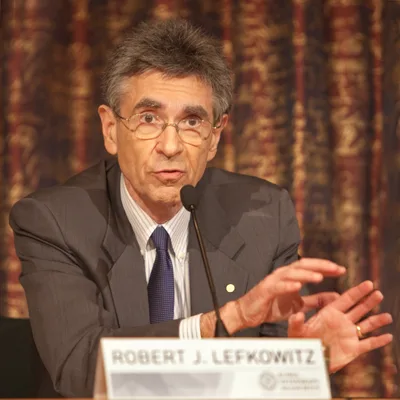
1983 LEFKOWITZ, Robert Joseph (1943 – ); STILES, Gary L.; STRASSER, Ruth H.; CARON, Marc G. (1946 – 2022)
Mammalian beta-adrenergic receptors. Structural differences in beta 1 and beta 2 subtypes revealed by peptide maps.
Lefkowitz and colleagues showed that there are two different types of beta receptors, distinguishing them as Beta-1 and Beta-2. They noticed that each has specific pharmacological characteristics. Order of authorship …
GMN 14140 · https://historyofmedicine.com/id/16454
1985 MULLIS, Kary Banks (1944 – 2019); ET AL
Enzymatic amplication of B-globin genomic sequences and restriction site analysis for diagnosis of sickle cell anemia.
Polymerase chain reaction first published. With Randall K. Saiki, Stephen Scharf, Fred Faloona et al. Order of authorship in the original paper was Saiki, Scharf, Faloona, Mullis.... In 1993 the Nobel Prize in Chemist…
GMN 10785 · https://historyofmedicine.com/id/12981
1985 DEISENHOFER, Johann (1943 – ); MICHEL, Hartmut (1948 – ); HUBER, Robert (1937 – ); ET AL
Structure of the protein subunit in the photosynthetic reaction centre of Rhodopseudomonas viridis at 3 Å resolution.
Discovery of the three-dimensional structure of a protein complex found in certain photosynthetic bacteria, called the photosynthetic reaction center. This was the first elucidation of the 3D crystal structure of any …
GMN 11060 · https://historyofmedicine.com/id/13256
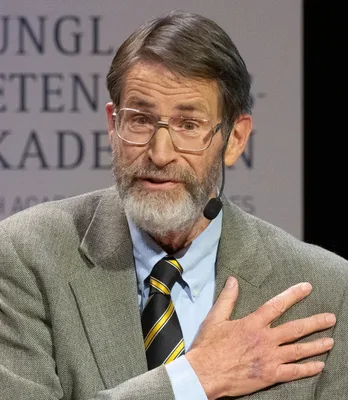
1985 SMITH, George Pearson (1941 – )
Filamentous fusion phage: Novel expression vectors that display cloned antigens on the virion surface.
In this paper Smith invented "phage display technology," a technique where a specific protein sequence is artifically inserted into the coat protein gene of a bacteriophage, causing the protein to be expressed on the …
GMN 14339 · https://historyofmedicine.com/id/16667
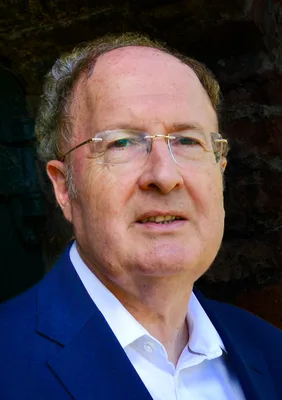
1990 WINTER, Sir Gregory Paul (1951 – ); MCCAFFERTY, John; GRIFFITHS, Andrew D.; CHISWELL, David J.
Phage antibodies: Filamentous phage displaying antibody variable domains.
Working in the Laboratory of Molecular Biology at Cambridge University, Winter became interested in the idea that all antibodies have the same basic structure, with only small changes making them specific for one targ…
GMN 14340 · https://historyofmedicine.com/id/16669
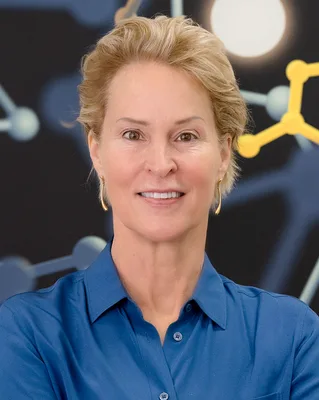
1993 ARNOLD, Frances Hamilton (1956 – ); CHEN, K. Q.
Tuning the activity of an enzyme for unusual environments: Sequential random mutagenesis of subtilisin E for catalysis in dimethylformamide.
Arnold introduced a biochemical molecule manipulating technique to mimic the process of natural selection in creating new enzymes adapted to a specific catalytic reaction. She directed evolution of subtilisin E to obt…
GMN 14341 · https://historyofmedicine.com/id/16670
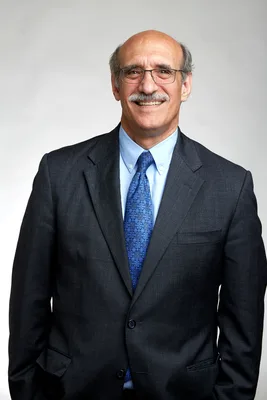
1994 CHALFIE, Martin Lee (1947 – ); TU, Yuan; EUSKIRCHEN, Ghia; PRASHER, Douglas C. (1951 – ); WARD, William W.
Green fluorescent protein as a marker for gene expression.
Chalfie and colleagues showed that the green fluorescent protein (GFP) from the jellyfish Aequorea victoria, could be used as a visible marker for protein localization and expression in vivo, in bacteria and worm cell…
GMN 13564 · https://historyofmedicine.com/id/15842
1994 WALKER, Sir John Ernest (1941 – ); ABRAHAMS, Jan Pieter; LESLIE, Andrew Grieg William; LUTTER, René
Structure at 2.8 Â resolution of F1-ATPase from bovine heart mitochondria.
Walker used X-ray crystallography to determine the structure of ATP synthase (ATPase or adenosine triphosphatase). In 1997 Walker shared the Nobel Prize in Chemistry with Paul Boyer and Jens C. Skou “for their elucida…
GMN 14314 · https://historyofmedicine.com/id/16639
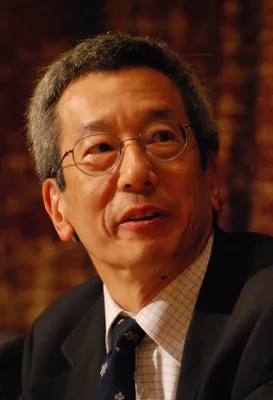
1996 TSIEN, Roger Yonchien (1952 – 2016); ORMÖ, Mats F.; CUBITT, Andrew; KALLIO, Karen; REMINGTON, S. James; ET AL
Crystal structure of Aequorea victoria green fluorescent protein.
Tsien and colleagues published the crystal structure of the 238 A.A. long green fluorescent protein (GFP). With this data, the authors could determine what had to be modified within the protein in such a way that the …
GMN 13565 · https://historyofmedicine.com/id/15843
1998 MACKINNON, Roderick (1956 – ); DOYLE, Declan A.; CABRAL, Joao Morais
The structure of the potassium channel: Molecular basis of K+ conduction and selectivity.
The authors determined the first high resolution structure of an ion channel, called KcsA from the bacterium Streptomyces lividans. The structure that they revealed was perfectly adapted to allow entry of potassium io…
GMN 14332 · https://historyofmedicine.com/id/16657
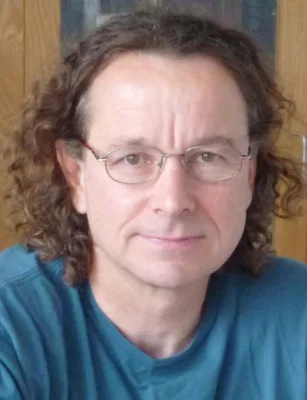
2000 RAMAKRISHNAN, Venkatraman (1952 – ); ET AL
Structure of the 30S ribosomal subunit.
Ramakrishnan and colleagues determined the complete molecular structure of the 30S subunit of the ribosome and its complexes with several antibiotics. " The Abstract: "Genetic information encoded in messenger RNA is t…
GMN 13952 · https://historyofmedicine.com/id/16251
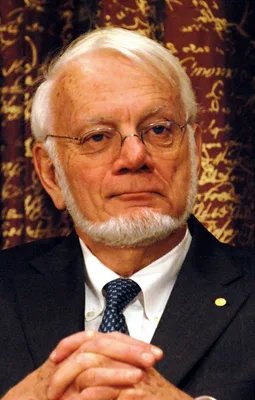
2000 STEITZ, Thomas Arthur (1940 – 2018)
The structural basis of ribosome activity in peptide bond synthesis.
With Poul Nissen, Jeffrey Hansen, Nenad Ban, Peter B. Moore. Steitz shared the 2009 Nobel Prize in Chemistry with Venkatraman Ramakrishnan and Ada Yonath "for studies of the structure and function of the ribosome."
GMN 13953 · https://historyofmedicine.com/id/16252