1895 RÖNTGEN, Wilhelm Conrad (1845 – 1923)
Ueber eine neue Art von Strahlen. (Vorläufige Mittheilung.); Eine neue Art von Strahlen. II. Mittheilung.
The discovery of x rays, which Kölliker later renamed “Roentgen rays”; the foundation stone of the science of roentgenology. English translation in Nature, (February,) 1896, 53, 274 and 377. See also Röntgen’s third p…
GMN 2683 · https://historyofmedicine.com/id/4359
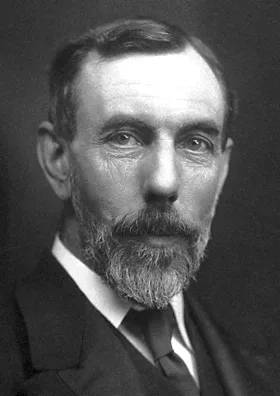
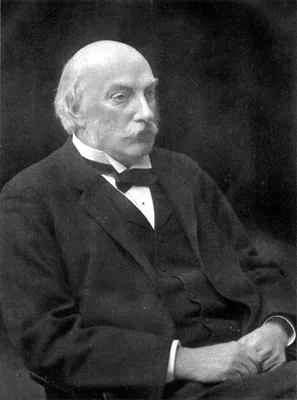
1895 RAMSAY, Sir William (1852 – 1916); STRUTT, John William 3rd Baron Rayleigh (1842 – 1919)
Argon, a new constituent of the atmosphere.
Discovery of argon, the first discovery of an inert gas. In 1904 Ramsay was awarded the Nobel Prize in Chemistry "in recognition of his services in the discovery of the inert gaseous elements in air, and his determina…
GMN 14310 · https://historyofmedicine.com/id/16635
1896 BECQUEREL, Antoine Henri (1852 – 1908)
Sur les radiations émises par phosphorescence.
The discovery of radioactivity – research stimulated by Roentgen’s discovery of x rays. In 1903 Becquerel received half of the Nobel Prize in Physics 1903 "in recognition of the extraordinary services he has rendered …
GMN 2001 · https://historyofmedicine.com/id/4181
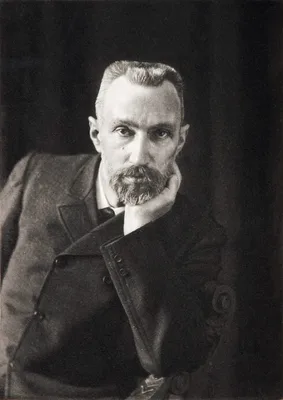
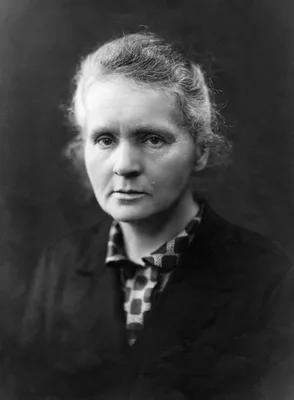
1898 CURIE, Pierre (1859 – 1906); CURIE, Marie Sklodowska (1867 – 1934)
Sur une substance nouvelle radio-active, contenue dans la pechblende.
The Curies, studying the radioactivity of minerals containing uranium and thorium, isolated from pitchblend a substance which they called radium and which they showed to possess an astonishing degree of radioactivity.…
GMN 2003 · https://historyofmedicine.com/id/1914
1912 LAUE, Max Theodor Felix von (1879 – 1960); KNIPPING, Paul (1883 – 1935)
Interferenz-Erscheinungen bei Röntgenstrahlen. . . . Eine quantitative Prüfung der Theorie für die Interferenz-Erscheinungen bei Röntgenstrahlen
Discovery of the diffraction of X-rays in crystals. Laue’s discovery was of dual importance: it allowed the subsequent investigation of X-radiation by means of wavelength determination, and it provided the means for t…
GMN 6917 · https://historyofmedicine.com/id/9082
1913 BRAGG, Sir William Lawrence (1890 – 1971); BRAGG, Sir William Henry (1862 – 1942)
The reflection of x-rays by crystals.
Discovery of X-ray crystallography. The father and son team of physicists, William Henry Bragg and William Lawrence Bragg, constructed the first X-ray spectrometer using crystals as gratings, using a known wavelength …
GMN 6920 · https://historyofmedicine.com/id/9085
1932 BOHR, Niels (1885 – 1962)
Light and life. Address delivered at the opening meeting of the International Congress on Light Therapy in Copenhagen 15. August 1932.
In 1922 Bohr was awarded the Nobel Prize in Physics "for his services in the investigation of the structure of atoms and of the radiation emanating from them." Including Bohr's 1932 address, Light and life, in the Nob…
GMN 12060 · https://historyofmedicine.com/id/14269
1935 ZERNIKE, Frits (1888 – 1966)
Das Phasenkontrastverfahren b.d. mikroskopischen Beobachtung.
Zernicke invented phase contrast microscopy. In 1953 Zernike was awarded the Nobel Prize in Physics "for his demonstration of the phase contrast method, especially for his invention of the phase contrast microscope."
GMN 269.5 · https://historyofmedicine.com/id/8750
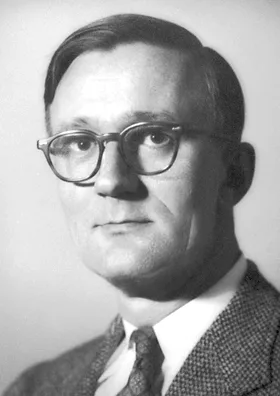
1938 RABI, Isidore Isaac (1898 – 1988); KUSCH, Polykarp (1911 – 1993); ZACHARAIS, Jerrold R. (1905 – 1986); ET AL
A new method of measuring nuclear magnetic moment.
Order of authorship in the original publication: Rabi, Zacharais,...Kusch. Followed by: (2) The magnetic moments of 3Li6, 3Li7, and 9F19. Physical Review 53, 1938. (3) The molecular beam resonance method for measuring…
GMN 14335 · https://historyofmedicine.com/id/16662
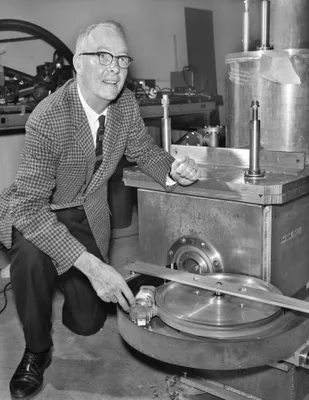
1946 ALVAREZ, Luis Walter (1911 – 1988)
The design of a proton linear accelerator.
Linear ion accelerator. In 1968 Alvarez received the Nobel Prize in Physics "for his decisive contributions to elementary particle physics, in particular the discovery of a large number of resonance states, made possi…
GMN 2659.5 · https://historyofmedicine.com/id/3361
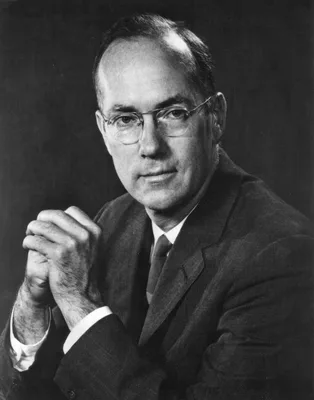
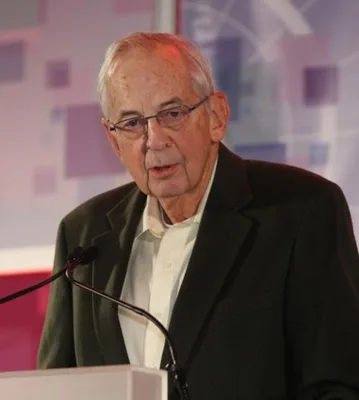
1955 TOWNES, Charles Hard (1915 – 2015); GORDON, James Power (1928 – 2013); ZEIGER, Herbert (1925 – 2011)
The maser - new type of microwave amplifier, frequency standard, and spectrometer.
In 1964 Townes shared the Nobel Prize in Physics with Nicolay Gennadiyevich Basov and Alexandr Mihailovich Prokhorov "for fundamental work in the field of quantum electronics, which has led to the construction of osci…
GMN 14312 · https://historyofmedicine.com/id/16637