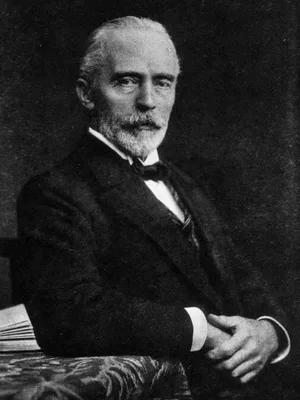
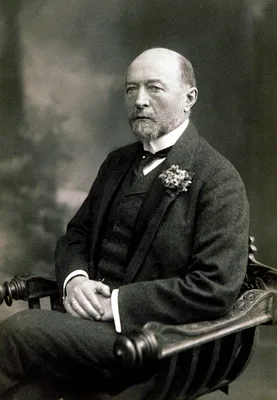
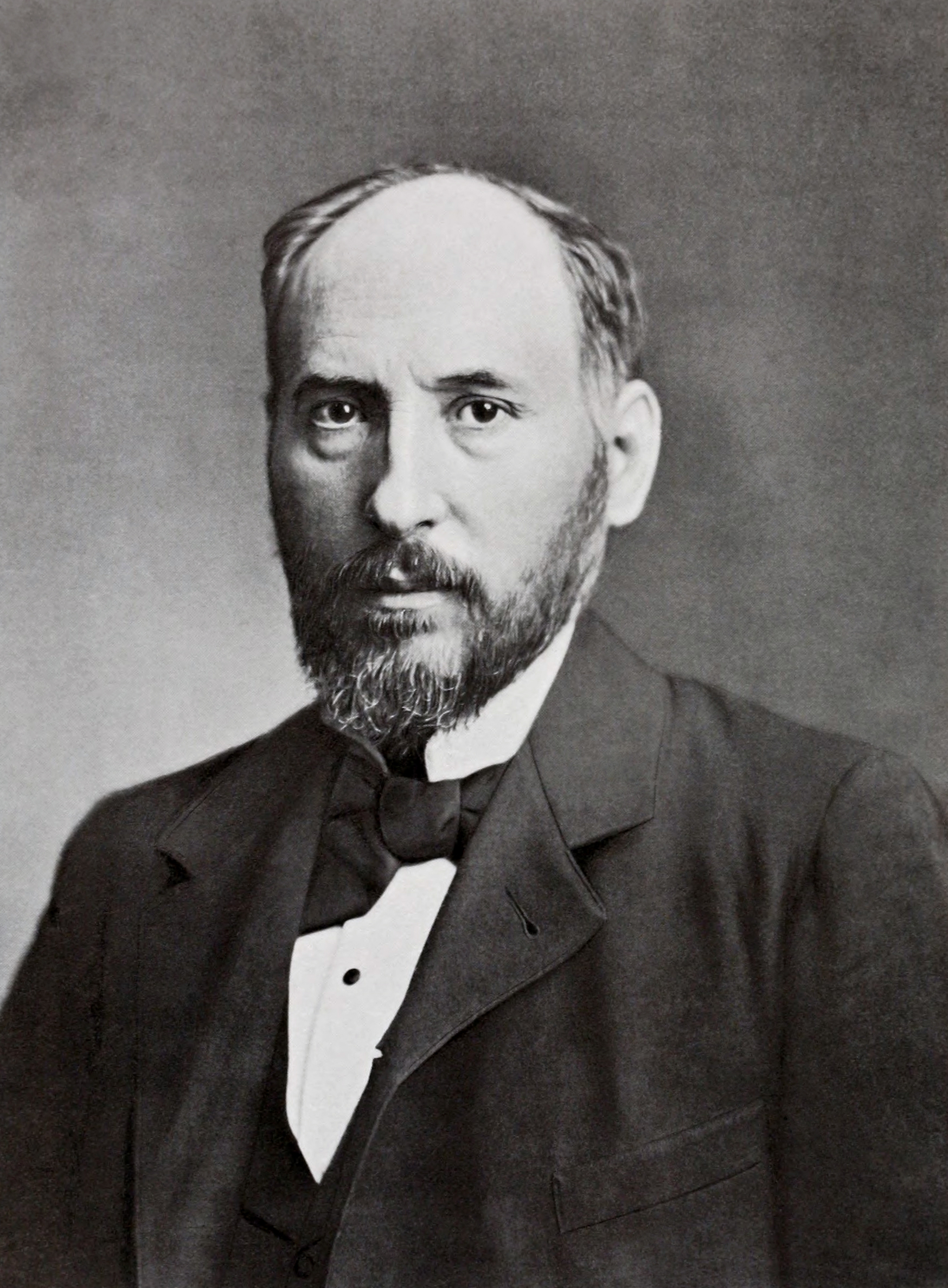
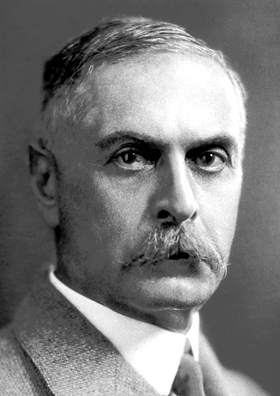
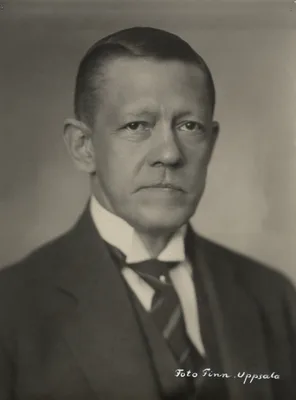
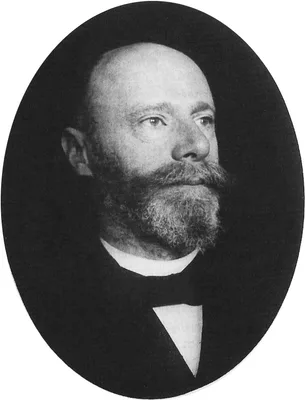
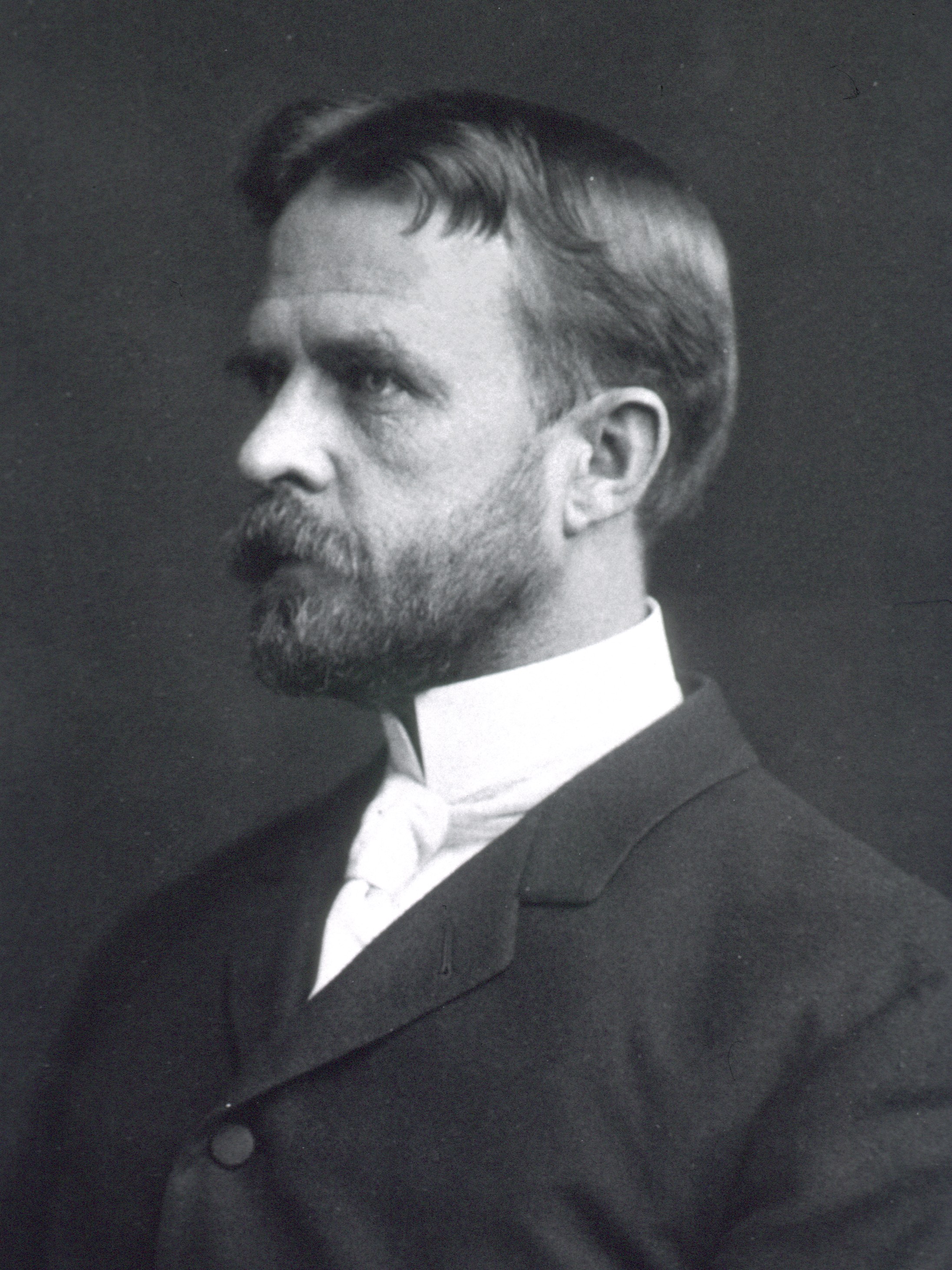
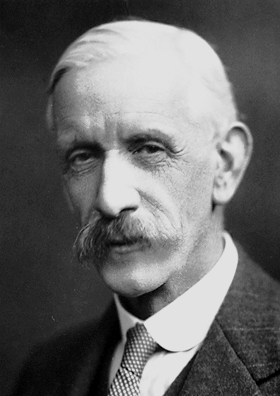
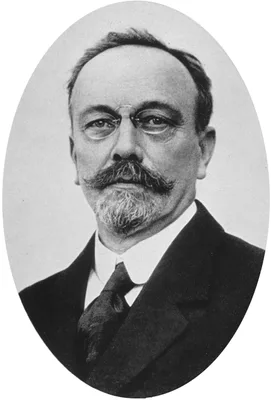
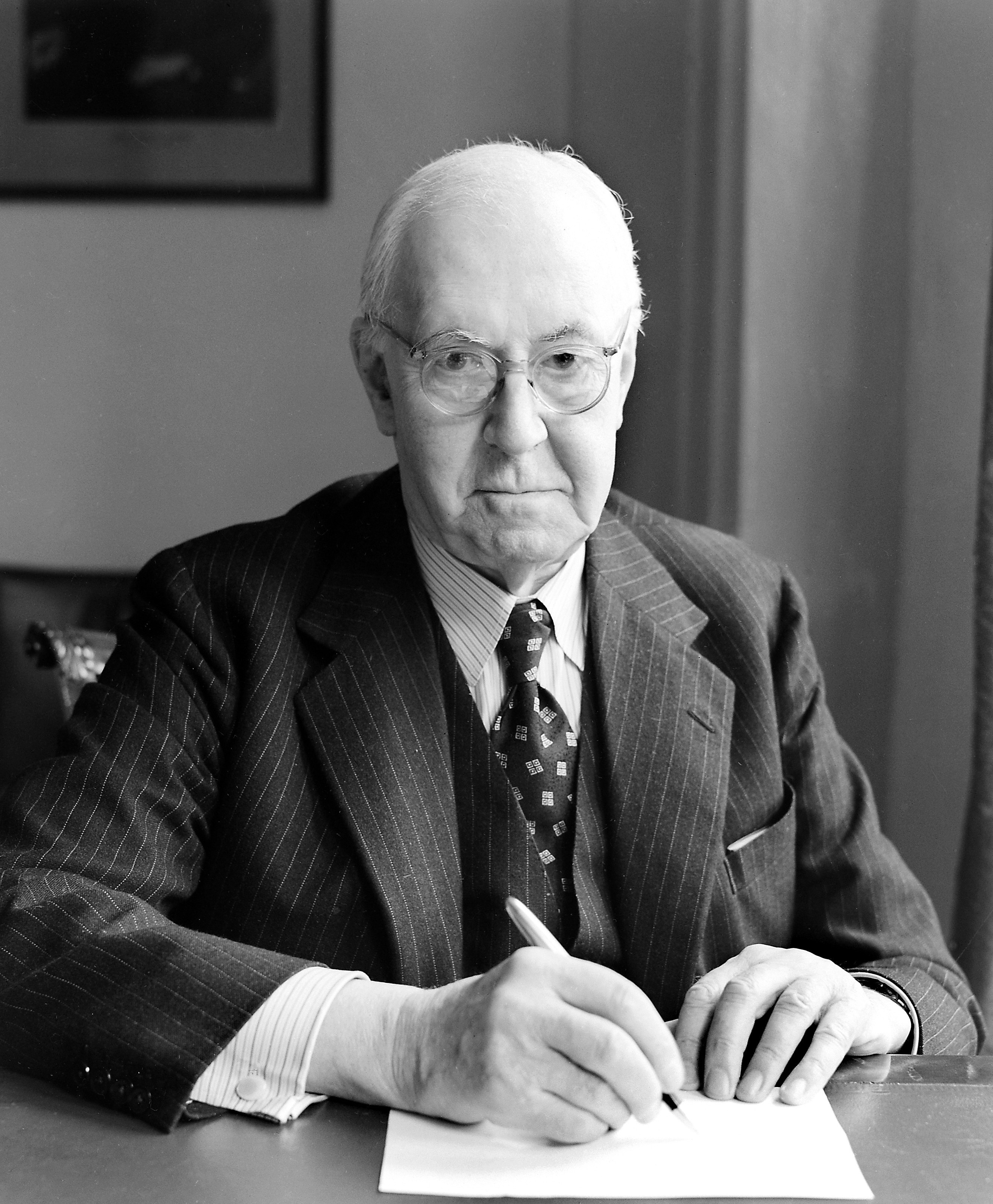
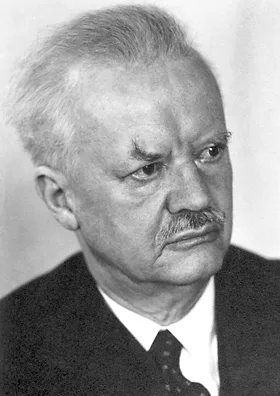
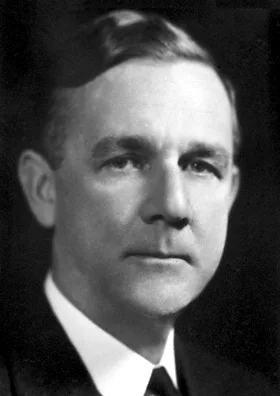
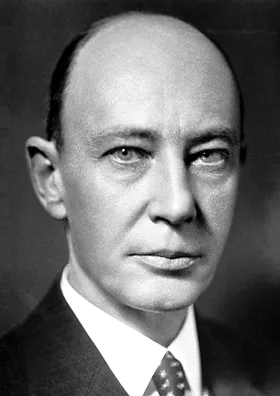
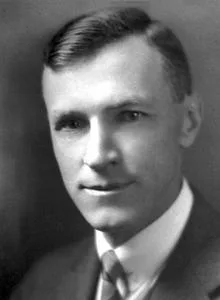
1878 KOCHER, Emil Theodor (1841 – 1917)
Exstirpation einer Struma retroesophagea.
Kocher, a pupil of Billroth, was a pioneer of thyroidectomy for goitre. Before his time the operation was seldom performed. Garrison says that Kocher performed this difficult operation 2,000 times, with a mortality ra…
GMN 3826 · https://historyofmedicine.com/id/4841
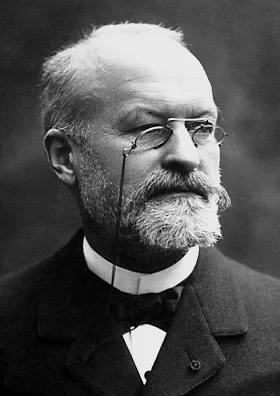
1881 LAVERAN, Charles Louis Alphonse (1845 – 1922)
Un nouveau parasite trouvé dans le sang plusieurs malades atteints de fièvre palustre.
Laveran first saw the malaria parasite on 20 October 1880; he at once recognized its significance. He named it Oscillaria malariae. English translation in Kean (No. 2268.1). Laveran also published a monograph on the d…
GMN 5236 · https://historyofmedicine.com/id/7884
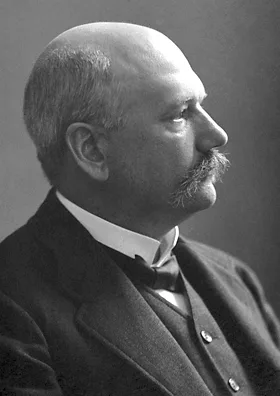
1882 –1883 KOSSEL, Albrecht (1853 – 1927)
Zur Chemie des Zellkerns.
Among the many important contributions of Kossel was his study of the chemistry of the cell and cell-nucleus. Kossel correctly concluded that the function of nuclein is neither to act as a storage substance nor to fur…
GMN 702 · https://historyofmedicine.com/id/1829
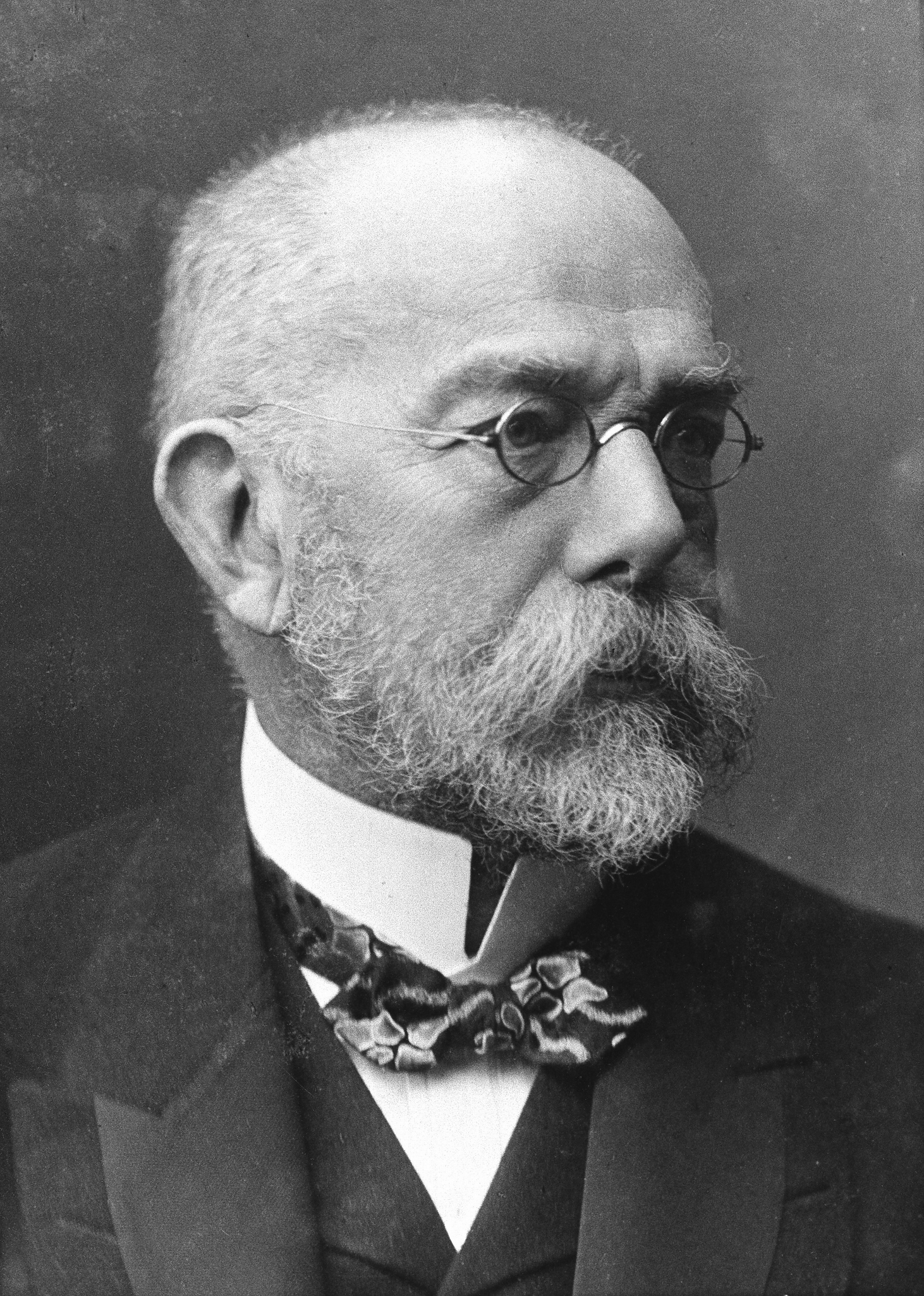
1882 KOCH, Robert Heinrich Hermann (1843 – 1910)
Die Aetiologie der Tuberkulose.
Discovery of the tubercle bacillus announced March 24, 1882. This paper also contains a statement of “Koch’s postulates”. See also Nos. 2536 and 5167. Koch published a fuller account as "Die Aetiologie der Tuberkulose…
GMN 2331 · https://historyofmedicine.com/id/3057
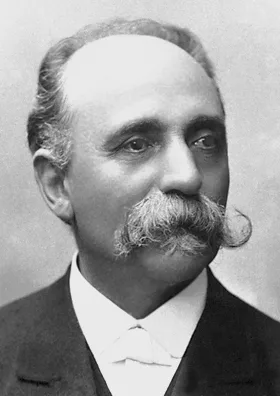
1886 GOLGI, Camillo (1844 – 1926)
Sulla fina anatomia degli organi centrali del sistema nervoso.
Golgi’s histological studies made a clear conception of the nervous system possible for the first time. He demonstrated the existence of multipolar nerve-cells (Golgi cells) by means of his silver nitrate stain, and d…
GMN 1416 · https://historyofmedicine.com/id/2103
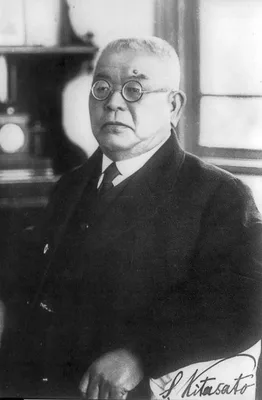
1890 BEHRING, Emil Adolf von (1854 – 1917); KITASATO, Shibasaburō (1852 – 1931)
Ueber das Zustandekommen der Diphtherie-Immunität und der Tetanus-Immunität bei Thieren.
Antitoxins and their immunizing powers were discovered when Behring and Kitasato published their paper dealing with immunity to tetanus and diphtheria. This work laid the foundation of all future treatment with antito…
GMN 2544 · https://historyofmedicine.com/id/3562
1890 EIJKMAN, Christiaan (1858 – 1930)
Polyneuritis bij hoenders.
Eijkman produced beriberi experimentally in fowls; from this he was led to conclude that a diet of over-milled rice was the chief cause, both in fowls and humans. Thus his work was of great importance in determining t…
GMN 3741 · https://historyofmedicine.com/id/4544
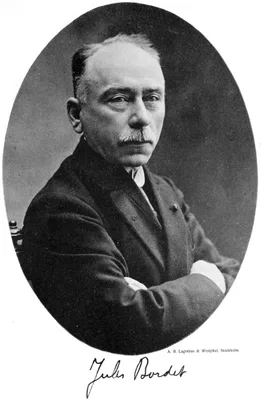
1895 BORDET, Jules Jean Baptiste Vincent (1870 – 1961)
Contribution à l’ étude du sérum chez les animaux vaccinés.
In Bordet’s classic paper on the properties of the sera of immunized animals he showed that two different substances (now known as sensitizing antibody and complement) are involved in the phenomenon of bacteriolysis. …
GMN 2547 · https://historyofmedicine.com/id/3592
1896 FINSEN, Niels Ryberg (1860 – 1904)
Om anvendelse medicinen af koncentrerede kemiske lysstraaler.
Finsen was the founder of modern phototherapy. He demonstrated the value of invisible light, the actinic or chemical ray, the ultra-violet ray, as therapeutic measures. Digital facsimile from wellcomecollection.org at…
GMN 2000 · https://historyofmedicine.com/id/1895
1897 PAVLOV, Ivan Petrovich (1849 – 1936)
Lektsii o rabotie glavnikh pishtshevaritelnikh zhelyoz. [Lectures on the work of the principal digestive glands.]
Pavlov's classic study of the physiology of digestion. Especially notable was his method of producing gastric and pancreatic fistulae for the purpose of his experiments. The second published edition was a German trans…
GMN 1022 · https://historyofmedicine.com/id/913
1897 EHRLICH, Paul (1854 – 1915)
Die Wertbestimmung des Diphtherieheilserums.
Ehrlich improved Behring’s diphtheria antitoxin through quantitative titration and established an international standard for this and other antitoxins. This was the beginning of the concept of biological standardizati…
GMN 5064 · https://historyofmedicine.com/id/5894
1897 ROSS, Sir Ronald (1857 – 1932)
On some peculiar pigmented cells found in two mosquitoes fed on malarial blood.
Ross proved that the mosquito was responsible for the transmission of malaria. On 20 August 1897, he found Laveran’s Plasmodium in the stomach of the Anopheles mosquito after it had fed on the blood of malaria patient…
GMN 5247 · https://historyofmedicine.com/id/7904
1899 –1904 CAJAL, Santiago Ramón y (1852 – 1934)
Textura del sistema nervioso del hombre y de los vertebrados. 2 vols. in 3.
From publication in fascicules, 1897-1904 (vol. 1 in 3 pts., vol. 2 in 4 pts.) This monumental work set out the cytological and histological foundations of modern neurology. Ramón y Cajal’s research confirmed the neur…
GMN 1293.1 · https://historyofmedicine.com/id/2335
1900 LANDSTEINER, Karl (1868 – 1943)
Zur Kenntniss der antifermentativen, lytischen und agglutinierenden Wirkungen des Blutserums und der Lymphe.
Also: Landsteiner, "Ueber Agglutinationsercheinungen normalen menschlichen Blutes," Wiener klinische Wochenschrift, 14, 1901, 1132-1134. Landsteiner discovered that human blood contains iso-agglutinins capable of aggl…
GMN 889 · https://historyofmedicine.com/id/936
1900 GULLSTRAND, Allvar (1862 – 1930)
Allgemeine Theorie der monochromatischen Aberrationen und ihre nächsten Ergebnisse für die Ophthalmologie.
The above work is the exposition of Gullstrand's general theory of monochromatic aberrations. This is an offprint from Nova Acta Reg. Soc. Sci. Ups., 1900-01, ser. 3, 20. In 1911 Gullstrand was awarded the Nobel Prize…
GMN 5945 · https://historyofmedicine.com/id/6925
1901 EINTHOVEN, Willem (1860 – 1927)
Un nouveau galvanomètre.
Einthoven directed much of his research to the development and perfection of recording instruments. His most famous work was in connexion with his string galvanometer, a perfection of the instrument invented by J. S. …
GMN 840 · https://historyofmedicine.com/id/598
1901 METCHNIKOFF, Élie [MECHNIKOV] (1845 – 1916)
L’immunité dans les maladies infectieuses.
A classic study of the mechanisms concerned in specific antibacterial immunity, and one of Metchnikoff’s best works. Russian edition: Nevospriimchivost’ k infekcionnim boleznyam. St. Petersburg: K.L. Rikker, 1903. Eng…
GMN 2555 · https://historyofmedicine.com/id/3670
1902 RICHET, Charles Robert (1850 – 1935); PORTIER, Paul (1866 – 1962)
De l’action anaphylactique de certains venins.
First full description of the phenomenon of “anaphylaxis,” the name of which was coined by Richet. Abbreviated English translation in Bibel, Milestones of immunology (1988). In 1913, Richet was awarded the Nobel Prize…
GMN 2590 · https://historyofmedicine.com/id/4397
1906 SHERRINGTON, Sir Charles Scott (1857 – 1952)
The integrative action of the nervous system.
Sherrington insisted that the essential function of the nervous system was the co-ordination of activities of the various parts of the organism. His work on the nervous system, especially his experimental studies of r…
GMN 1432 · https://historyofmedicine.com/id/2209
1906 BÁRÁNY, Robert (1876 – 1936)
Untersuchungen über den vom Vestibularapparat des Ohres reflektorisch ausgelösten Rhythmischen und seine Begleiterscheinungen.
Bárány’s pointing test for the localization of circumscribed cerebellar lesions. Republished in book form, Berlin, 1906. In 1914 Bárány was awarded the Nobel Prize in Physiology or Medicine "for his work on the physio…
GMN 3401 · https://historyofmedicine.com/id/5161
1907 RICHET, Charles Robert (1850 – 1935)
De l’anaphylaxie en général et de l’anaphylaxie par la mytilocongestine en particulier.
In 1913 Richet was awarded the Nobel Prize in Physiology or Medicine "in recognition of his work on anaphylaxis."
GMN 2599 · https://historyofmedicine.com/id/2974
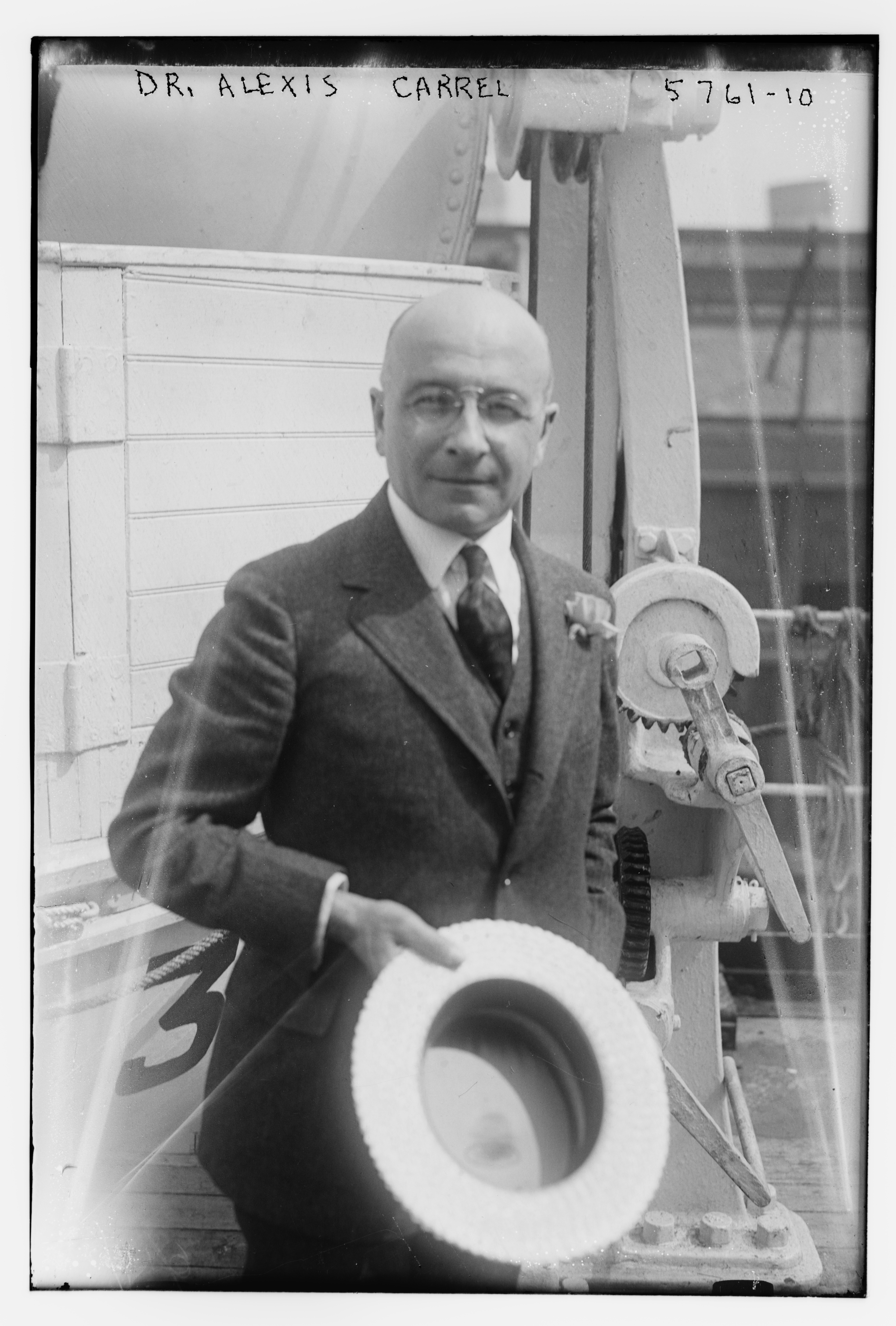
1908 CARREL, Alexis (1873 – 1944)
Transplantation in mass of the kidneys.
Carrel revolutionized vascular surgery. He transplanted the kidney from one animal to another, an operation later carried out successfully in man. For his earlier work on vascular anastomosis and transplantation of vi…
GMN 4235 · https://historyofmedicine.com/id/5089
1910 ROUS, Francis Peyton (1879 – 1970)
A transmissible avian neoplasm (sarcoma of the common fowl).
Original description of the chicken sarcoma (Rous sarcoma). Rous demonstrated that sarcomatous tumors in hens could be transmitted to normal hens by the injection of cell-free filtrates (virus) of the original tumor. …
GMN 2637 · https://historyofmedicine.com/id/3238
1910 –1911 NICOLLE, Charles Jules Henri (1866 – 1936)
Recherches experimentales sur le typhus exanthématique.
Nicolle demonstrated the transmission of typhus by the body louse Pediculus corporis. He also produced the disease in monkeys and guinea-pigs by the injection of infected blood. Preliminary communication in C. R. Acad…
GMN 5384 · https://historyofmedicine.com/id/7096
1910 MORGAN, Thomas Hunt (1866 – 1945)
Sex-limited inheritance in Drosophila.
Morgan demonstrated sex-limited inheritance. In 1933 Morgan was awarded the Nobel Prize in Physology or Medicine "for discoveries elucidating the role that the chromosome plays in heredity." See also Nos. 245.3, 246, …
GMN 245.2 · https://historyofmedicine.com/id/8676
1912 HOPKINS, Sir Frederick Gowland (1861 – 1947)
Feeding experiments illustrating the importance of accessory factors in normal dietaries.
In 1929 Hopkins shared the Nobel Prize in Physiology or Medicine with Eijkman "for his discovery of the growth-stimulating vitamins."
GMN 1048 · https://historyofmedicine.com/id/589
1913 FIBIGER, Johannes (1867 – 1928)
Untersuchungen über eine Nematode (Spiroptera sp. n.) und deren Fähigkeit papillomatöse und carcinomatose Geschwulstbildungen im Magen der Ratte hervorzurufen.
Fibiger demonstrated that the roundworm, which he called Spiroptera carcinoma (but is correctly named Gongylonema neoplasticum), could cause stomach cancer (squamous cell carcinoma) in rats and mice. His experimental …
GMN 2640 · https://historyofmedicine.com/id/3257
c. 1914 DALE, Sir Henry Hallett (1875 – 1968)
The action of certain esters and ethers of choline, and their relation to muscarine.
Demonstration of the inhibitory action of acetylcholine on the heart. In 1936 Dale shared the Nobel Prize in Physiology or Medicine with Otto Loewi (No. 1343) "for their studies in the chemical mediation of nervous im…
GMN 1340 · https://historyofmedicine.com/id/1465
1918 MEYERHOF, Otto Fritz (1884 – 1951)
Ueber das Vorkommen des Coferments des alcoholischen Hefegärung im Muskelgewebe und seine muttmassliche Bedeutung im Atmungsmechanismus.
In 1922 Meyerhof was awarded half of the Nobel Prize in Pysiology or Medicine "for his discovery of the fixed relationship between the consumption of oxygen and the metabolism of lactic acid in the muscle." The other …
GMN 959 · https://historyofmedicine.com/id/258
1918 –1919 WAGNER VON JAUREGG, Julius (1857 – 1940)
Ueber die Einwirkung der Malaria auf die progressive Paralyse.
In 1917 Wagner von Jauregg returned to the idea of the inoculation of paretics with malaria to induce pyrexia, first proposed by him in 1887 (Ueber die Einwirkung fieberhafter Erkrankungen auf Psychosen, Jb. Psychiat.…
GMN 4806 · https://historyofmedicine.com/id/1579
1920 HILL, Archibald Vivian (1886 – 1977); HARTREE, William (1870 – 1943)
The four phases of heat-production of muscle.
Hill and Hartree made valuable contributions to the knowledge of the thermodynamics of muscle. See also Physiol. Rev., 1922, 2, 310-41, and Hill, A. V., Trails and trials in physiology: a bibliography 1909-1964, 1965.…
GMN 659 · https://historyofmedicine.com/id/535
1921 –1922 LOEWI, Otto (1873 – 1961)
Ueber humorale Uebertragbarkeit der Herznervenwirkung.
Loewi’s important experiments firmly established the theory of chemical intermediaries in nervous reactions. In 1936 Loewi shared the Nobel Prize in Physiology or Medicine with Dale "for discoveries related to chemica…
GMN 1343 · https://historyofmedicine.com/id/1486
1922 KROGH, Schack August Steenberg (1874 – 1949)
The anatomy and physiology of the capillaries.
Silliman Lectures. Krogh was first to describe the adaptation of blood perfusion in muscle and other organs according to demands through opening and closing the arterioles and capillaries. In 1920 Krogh received the N…
GMN 793 · https://historyofmedicine.com/id/118
1922 BANTING, Sir Frederick Grant (1891 – 1941); BEST, Charles Herbert (1899 – 1978); MACLEOD, John James Rickard (1876 – 1935)
The internal secretion of the pancreas. (Abstract).
A preliminary one-page communication regarding the isolation of insulin, made to a meeting of the American Physiological Society in December 1921. Digital facsimile from insulin.library.utoronto.ca at this link. In 19…
GMN 3966 · https://historyofmedicine.com/id/5253
1924 ERLANGER, Joseph (1874 – 1965); GASSER, Herbert Spencer (1888 – 1963)
The compound nature of the action current of nerve as disclosed by the cathode ray oscillograph.
In 1944 Erlanger and Gasser shared the Nobel Prize in Physiology or Medicine "for their discoveries regarding the highly differentiated functions of single nerve fibers."
GMN 1305 · https://historyofmedicine.com/id/1130
1924 SPEMANN, Hans (1869 – 1941); MANGOLD, Hilde (1898 – 1924)
Über Induktion von Embryonalanlagen durch Implantation artfremder Organisatoren.
This was Hilde Mangold's thesis. Spemann designed the experiment, and Mangold performed the work, and was the co-discoverer of the "organizer," the chemical that directs the embryonic development of tissues and organs…
GMN 530 · https://historyofmedicine.com/id/1687
1925 ROBSCHEIT-ROBBINS, Frieda Saur (1893 – 1973); WHIPPLE, George Hoyt (1878 – 1976)
Blood regeneration in severe anaemia. II. Favourable influence of liver, heart and skeletal muscle in diet.
These workers showed the beneficial effect of raw beef liver upon blood regeneration in anemia. Their work paved the way for the liver diet treatment of Minot and Murphy. In 1934 Whipple shared the Nobel Prize in Phys…
GMN 3139 · https://historyofmedicine.com/id/3949
1926 MINOT, George Richards (1885 – 1950); MURPHY, William Parry (1892 – 1987)
Treatment of pernicious anemia by a special diet.
Introduction of raw liver diet in the treatment of pernicious anemia. This treatment ranks as one of the greatest modern advances in therapy. See also the later paper in the same journal, 1927, 89,759-66. Reprinted in…
GMN 3140 · https://historyofmedicine.com/id/3950
1927 MULLER, Hermann Joseph (1890 – 1967)
Artificial transmutation of the gene.
Muller showed that radiation causes mutations that are passed on from one generation to the next. This was the first suggestion that inherited traits might be altered or controlled, and it created a sensation: “Man’s …
GMN 251.1 · https://historyofmedicine.com/id/8680
1928 SZENT-GYÖRGYI, Albert (1893 – 1987)
Observations on the function of peroxidase systems and the chemistry of the adrenal cortex. Description of a new carbohydrate derivative.
Isolation of vitamin C, ascorbic acid. In 1937 Szent-Györgyi was awarded the Nobel Prize in Physiology or Medicine "for his discoveries in connexion with the biological combustion process with special reference to vit…
GMN 1059 · https://historyofmedicine.com/id/676
1928 ADRIAN, Edgar Douglas (1889 – 1977)
The basis of sensation. The action of the sense organs.
In 1932 Adrian shared the Nobel Prize in Physiology or Medicine with Charles Scott Sherrington "for their discoveries about the function of neurons." See also Nos. 1307, 1528, and 1303.
GMN 1308 · https://historyofmedicine.com/id/1144
1929 HEYMANS, Corneille Jean François (1892 – 1968)
Le sinus carotidienet la zone homologue cardio-aortique.
In 1938 Heymans was awarded the Nobel Prize in Physiology or Medicine "for the discovery of the role played by the sinus and aortic mechanisms in the regulation of respiration."
GMN 967 · https://historyofmedicine.com/id/285
1929 WARBURG, Otto Heinrich (1883 – 1970); NEGELEIN, Erwin (1897 – 1979)
Ueberden Absorptionsspektrum des Atmungsferments.
Warburg discovered the nature and function of the respiratory ferment. In 1931 Warburg was awarded the Nobel Prize in Physiology or Medicine "for discovery of the nature and mode of action of the respiratory enzyme."
GMN 969 · https://historyofmedicine.com/id/301
1929 DAM, Carl Pieter Henrik (1895 – 1976)
Cholesterinstoffwechsel in Hühnereiern und Hühnchen.
In 1943 Dam shared the Nobel Prize with Doisy "for discovery of vitamin K, the blood coagulating factor."
GMN 1062 · https://historyofmedicine.com/id/690
1929 FLEMING, Sir Alexander (1881 – 1955)
On the antibacterial action of cultures of a penicillium, with special reference to their use in the isolation of B. influenzae.
Discovery of the growth-inhibiting action of Penicillium on certain bacteria. In 1945 Fleming shared the Nobel Prize in Physiology or Medicine with Ernst Boris Chain and Sir Howard Walter Florey "for the discovery of …
GMN 1933 · https://historyofmedicine.com/id/2774
1929 FORSSMANN, Werner Theodor Otto (1904 – 1979)
Die Sondierung des rechten Herzens.
The first cardiac catheterization on a living person. Forssmann catheterized his own heart. Historical note by N. Howard-Jones, Bull. Hist. Med.,1973, 47,524-6. English translation in Callahan, Keys & Key, Classics of…
GMN 2858 · https://historyofmedicine.com/id/3654
1930 HOUSSAY, Bernardo Alberto (1887 – 1971); BIASOTTI, Alfredo Benito (1903 – 1991)
La diabetes pancreática de los perros hipofisoprivos.
Houssay’s depancreatized hypophysectomized dog. This work led to Houssay’s demonstration of the importance of the anterior pituitary in sugar metabolism. See also Endocrinology, 1931,15, 511-23. In 1947 Houssay shared…
GMN 1169 · https://historyofmedicine.com/id/1562
1933 BÉKÉSY, Georg von (1899 – 1972)
Über den Knall und die Theorie des Hörens.
In 1961 Békésy was awarded the Nobel Prize in Physiology or Medicine "for his discoveries of the physical mechanism of stimulation within the cochlea." English translation in Békésy, Experiments in hearing, 1960.
GMN 1570.1 · https://historyofmedicine.com/id/1290
1933 WALD, George (1906 – 1997)
Vitamin A in the retina.
Through his research on xerophthalmia, karatomalacia and night blindness Wald revealed the critical function of vitamin A in normal vision and visual pathology. (Thanks to Juan Weiss for this reference and their inter…
GMN 1535 · https://historyofmedicine.com/id/3634
1934 RUZICKA, Leopold (1887 – 1976); ET AL
Über die Synthese des Testikelhormons (Androsteron) und Stereoisomerer desselben durch Abbau hydrierter Sterine.
First complete synthesis of a sex hormone (androsterone). With M. W. Goldberg, J. Meyer, H. Brüngger, and E. Eichenberger. In 1939 Ruzicka shared the 1939 Nobel Prize in Chemistry with Butenandt (No. 1195) "for his wo…
GMN 1201 · https://historyofmedicine.com/id/1821