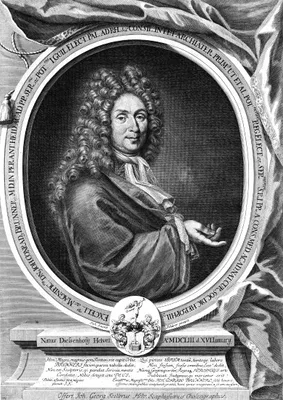
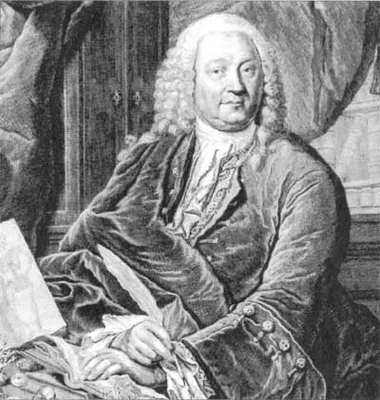
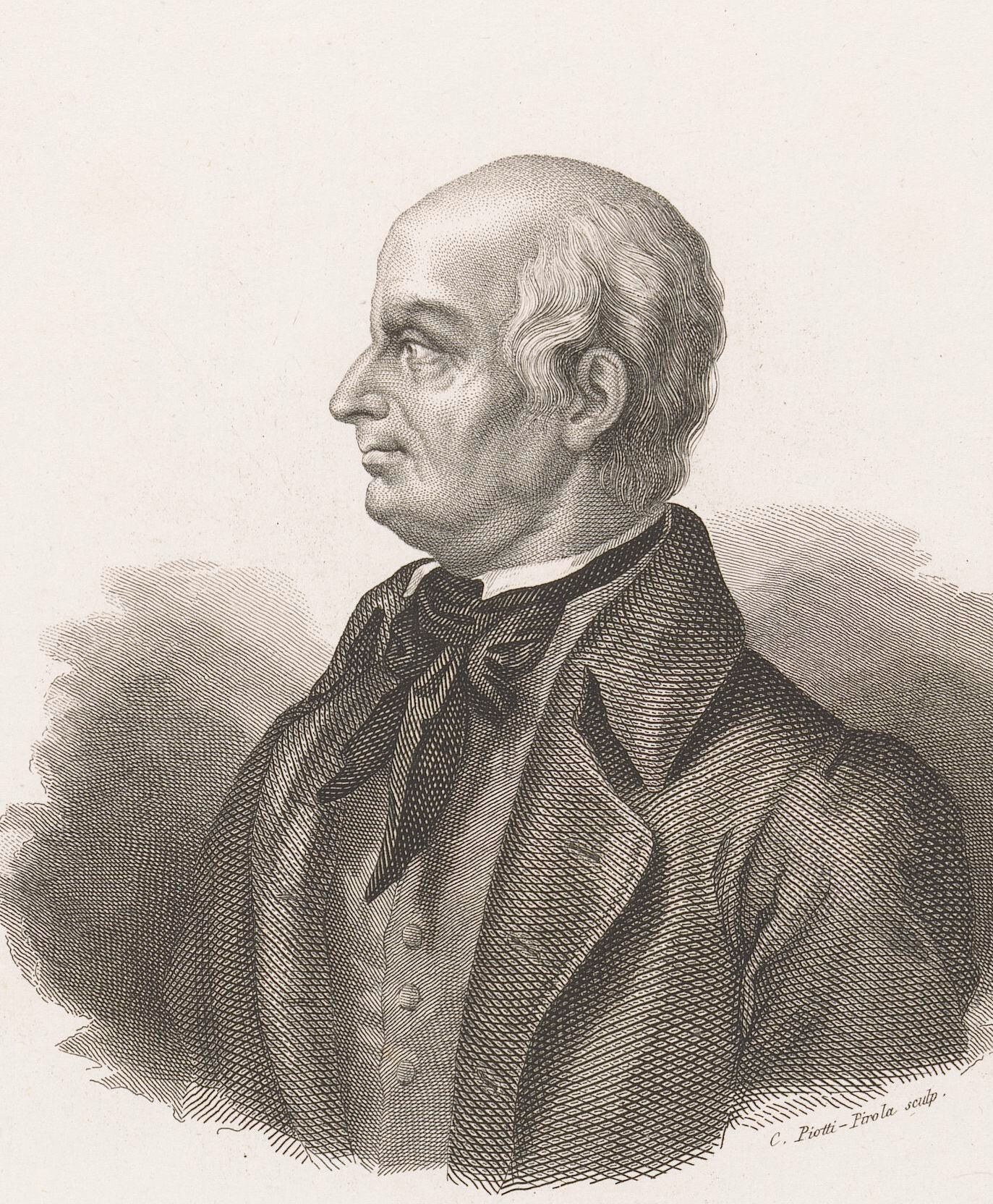
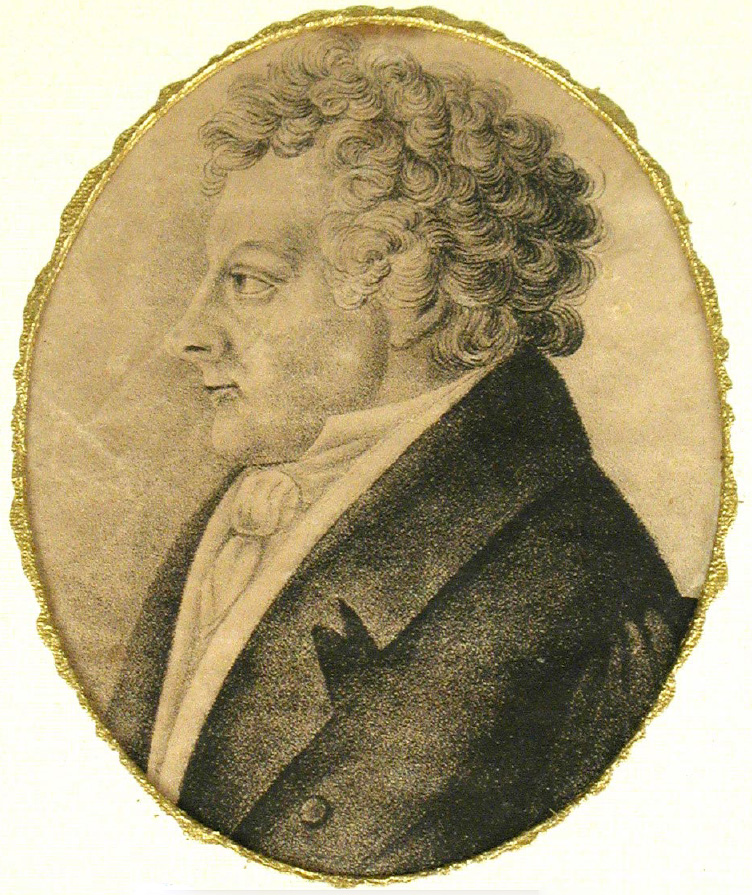
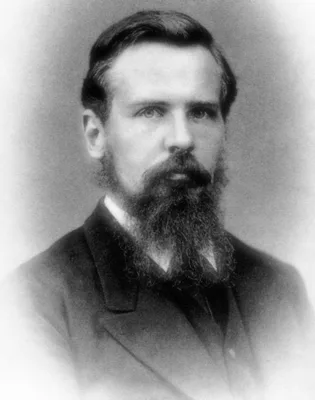
1651 PECQUET, Jean (1622 – 1674)
Experimenta nova anatomica, quibus incognitum chyli receptaculum, et ab eo per thoracem in ramos usque subclavis vasa lactea deteguntur.
Pecquet discovered the thoracic duct in dogs and its relation to the lacteals. Using a dog that was digesting, he described the thoracic duct, its entry into the subclavian veins, and the receptaculum chyli or chyle r…
GMN 1095 · https://historyofmedicine.com/id/929
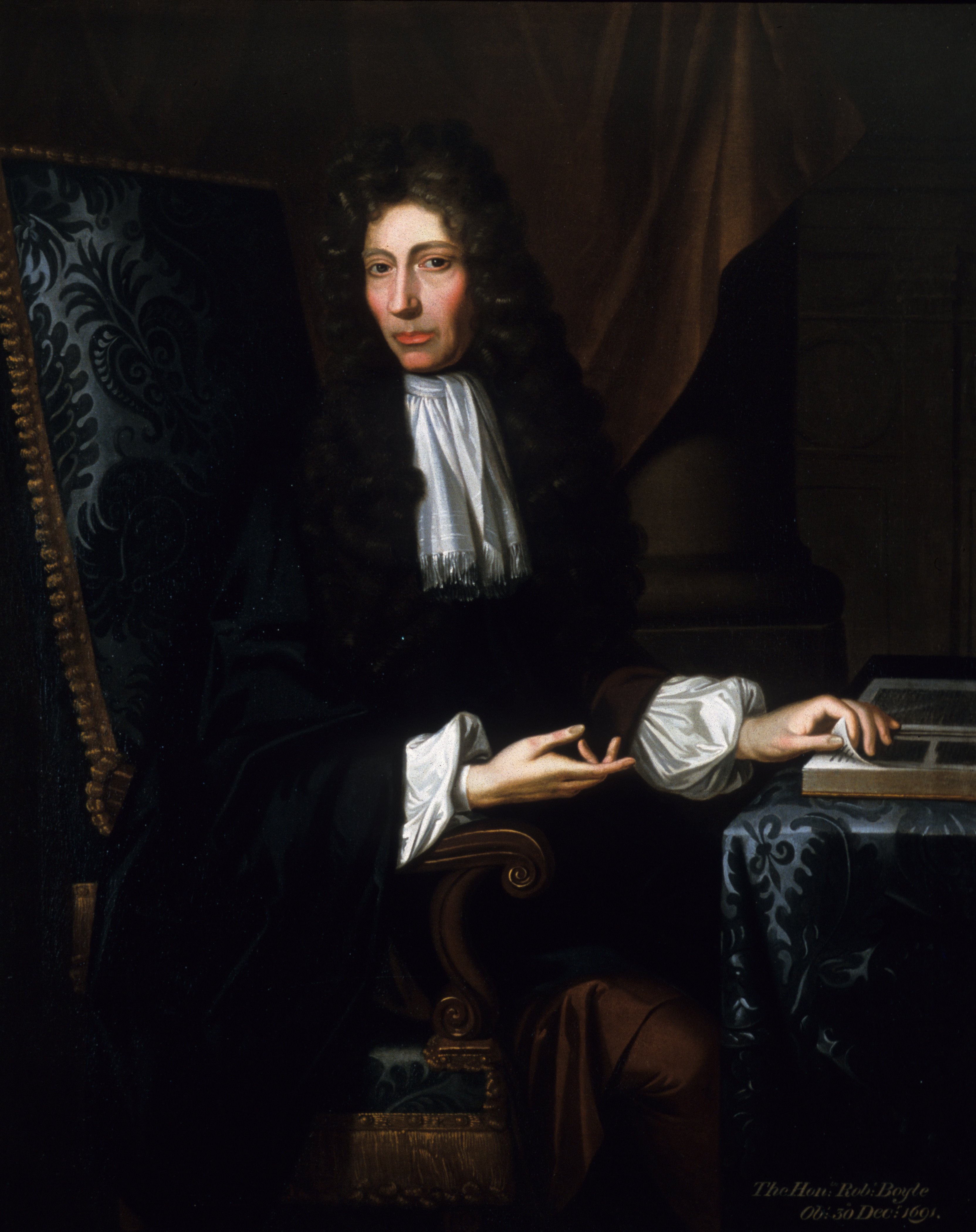
1661 BOYLE, Robert (1627 – 1691)
Certain physiological essays.
In this prelude to Boyle’s Sceptical chymist Boyle describes his corpuscular view of digestion, “giving recognition to the existence of the agents now designated the ‘enzymes’ ” (Fulton, Bibliography of Robert Boyle […
GMN 665.1 · https://historyofmedicine.com/id/542
1662 STENO, Nicolas [Niels Steensen, Nicholaus Stenonis] (1638 – 1686)
Observationes anatomicae, quibus varia oris, oculorum & narium vas describuntur novique salivae, lacrymarum & muci fontes deteguntur.
Includes the first account of the excretory duct of the parotid gland (“Stensen’s duct”), discovered by Stensen. He first reported his discovery in a letter to his teacher, Thomas Bartholin, dated April, 22, 1661. Ste…
GMN 1543 · https://historyofmedicine.com/id/567
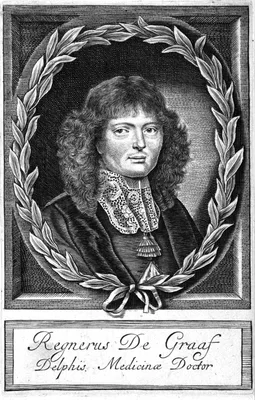
1664 GRAAF, Regnier de (1641 – 1673)
De succi pancreatici natura et usu exercitatio anatomico-medica.
De Graaf was an early investigator of the pancreatic secretion. He collected the pancreatic juice of dogs by means of artificial pancreatic fistulae, commenting on the small quantity of juice secreted and on its alkal…
GMN 974 · https://historyofmedicine.com/id/570
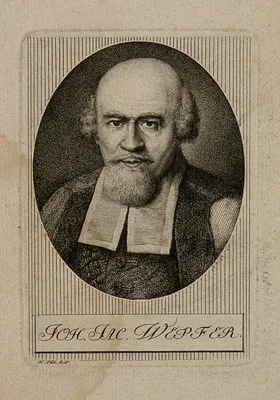
1679 WEPFER, Johann Jacob (1620 – 1695)
Cicutae aquaticae historia et noxae.
This is primarily a work on the poisonous water hemlock, its dangerous effects, its medicinal uses, and antidotes to counter the poison. However, it also contains the first description of the tiny glands in the mucosa…
GMN 974.1 · https://historyofmedicine.com/id/576
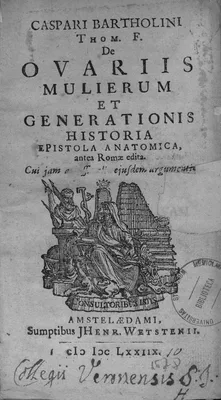
1684 BARTHOLIN, Caspar Junior (1655 – 1738)
Du ductu salivati hactenus non descriptio.
“Bartholin’s duct” and “gland”, the sublingual salivary gland and ducts.
GMN 974.2 · https://historyofmedicine.com/id/588
1687 BRUNNER, Johann Conrad (1653 – 1727)
De glandulis in intestino duodeno hominis detectis.
“Brunner’s glands”, earlier described by Wepfer (No. 974.1).
GMN 975 · https://historyofmedicine.com/id/592
1720 VATER, Abraham (1684 – 1751)
Dissertatio anatomica qua novum bilis diverticulum circa orificium ductus choledochi ut et valvulosam colli vesicae felleae constructionem ad disceptandum proponit.
Following Vater’s classic description of the ampulla of the bile duct, it was named the “ampulla of Vater”.
GMN 976 · https://historyofmedicine.com/id/600
1730 POUPART, François (1661 – 1709)
Suspenseurs de l’abdomen.
“Poupart’s ligament”, the inguinal ligament.
GMN 977 · https://historyofmedicine.com/id/609
1745 LIEBERKÜHN, Johann Nathanael (1711 – 1756)
De fabrica et actione villorum intestinorum tenuium hominis.
“Lieberkühn’s glands” or “crypts” described. They were discovered by Malpighi in 1688.
GMN 978 · https://historyofmedicine.com/id/613
1756 RÉAUMUR, René Antoine Ferchault de (1683 – 1757)
Sur la digestion des oiseaux.
Using a pet buzzard, de Réaumur succeeded in isolating the gastric juice and demonstrating its solvent effect on foods.
GMN 979 · https://historyofmedicine.com/id/619
1777 STEVENS, Edward (1755 – 1834)
Dissertatio physiologica inauguralis de alimentorum concoctione.
First isolation of human gastric juice. Stevens was also the first successfully to perform an in vitro digestion, proving the presence in the gastric juice of the active principle necessary for the assimilation of foo…
GMN 980 · https://historyofmedicine.com/id/625
1780 SPALLANZANI, Lazzaro (1729 – 1799)
Dissertazioni di fisica animale e vegetable. 2 vols.
In the first patrt of this work, Della digestione dissertazione prima Spallanzani confirmed earlier doctrines of the solvent property of the gastric juice and discovered the action of the saliva in digestion. He state…
GMN 981 · https://historyofmedicine.com/id/628
1803 YOUNG, John Richardson (1782 – 1804)
An experimental inquiry into the principles of nutrition, and the digestive process.
Young, one of the first American experimental physiologists, showed the solvent principle in the gastric juice to be an acid, but wrongly inferred that it was phosphoric acid. He also deduced the association and synch…
GMN 982 · https://historyofmedicine.com/id/630
1806 HESSELBACH, Franz Kaspar (1759 – 1816)
Anatomisch-chirurgische Abhandlung über den Ursprung der Leistenbrüche
Includes description of “Hesselbach’s hernia” and “triangle”. He wrote a further volume on the subject in 1814.
GMN 3582 · https://historyofmedicine.com/id/5360
1809 MECKEL, Johann Friedrich (1781 – 1833)
Ueber die Divertikel am Darmkanal.
“Meckel’s diverticulum”.
GMN 984 · https://historyofmedicine.com/id/639
1813 MAGENDIE, François (1783 – 1855)
Mémoire sur le vomissement.
Physiologists still consult Magendie’s classic description of the physiology of deglutition and vomiting. Magendie proved, against the current theory of Haller, that the stomach was passive rather than active in vomit…
GMN 985 · https://historyofmedicine.com/id/642
1813 MAGENDIE, François (1783 – 1855)
Mémoire sur l’usage de l’epiglotte dans la déglutition …
Magendie showed that the epiglottis is not necessary for swallowing, which disproved the accepted doctrine that the epiglottis was necessary to cover the glottis to prevent food from entering the trachea.
GMN 985.1 · https://historyofmedicine.com/id/647
1814 BRODIE, Sir Benjamin Collins (1783 – 1862)
Experiments and observations on the influence of the nerves of the eighth pair on the secretions of the stomach.
Before turning to surgery, Brodie did important work in physiology. Above is his study of the influence of the pneumogastric nerve on gastric secretion.
GMN 986 · https://historyofmedicine.com/id/655
1816 –1817 MAGENDIE, François (1783 – 1855)
Précis élémentaire de physiologie. 2 vols.
The first modern physiology textbook, in which doctrine gave way to simple, precise descriptions of experimental facts. Vol. 2 contains Magendie’s classic demonstration of the importance of nitrogenous food, or protei…
GMN 1041.1 · https://historyofmedicine.com/id/1048
1824 PROUT, William (1785 – 1850)
On the nature of the acid and saline matters usually existing in the stomachs of animals.
Proof that the gastric juice contains free hydrochloric acid.
GMN 987 · https://historyofmedicine.com/id/660
1825 BEAUMONT, William (1785 – 1853)
A case of wounded stomach [by Joseph Lovell].
Beaumont’s first report on Alexis St. Martin was accidentally published under the name of Joseph Lovell, Surgeon-General of the U.S. Army. See No. 989.
GMN 987.1 · https://historyofmedicine.com/id/666
1826 BEAUMONT, William (1785 – 1853)
Further experiments on the case of Alexis San Martin, who was wounded in the stomach by a load of buckshot.
In this and No. 987.1 Beaumont first described his revolutionary experiments on Alexis St. Martin. He continued these researches and published his monograph in 1833. See No. 989.
GMN 987.2 · https://historyofmedicine.com/id/672
1826 –1827 TIEDEMANN, Friedrich (1781 – 1861); GMELIN, Leopold (1788 – 1853)
Die Verdauung nach Versuchen. 2 vols.
Confirmation of the work of Prout.
GMN 988 · https://historyofmedicine.com/id/680
1833 BEAUMONT, William (1785 – 1853)
Experiments and observations on the gastric juice, and the physiology of digestion.
Alexis St. Martin, a Canadian half-breed who had sustained a gastric fistula, was treated and investigated by Beaumont. With his human medium, Beaumont as the first to study digestion and the movements of the stomach …
GMN 989 · https://historyofmedicine.com/id/685
1836 MÜLLER, Johannes Peter (1801 – 1858); SCHWANN, Theodor (1810 – 1882)
Versuche über die künstliche Verdauung des geronnenen Eiweisses.
Digital facsimile from Google Books at this link.
GMN 990 · https://historyofmedicine.com/id/689
1836 SCHWANN, Theodor (1810 – 1882)
Ueber das Wesen des Verdauungsprocesses.
William Beaumont recognized that the gastric juice contained some other active chemical substance besides hydrochloric acid. Schwann proved this to be pepsin. Digital facsimile from Google Books at this link.
GMN 991 · https://historyofmedicine.com/id/692
1839 BOUSSINGAULT, Jean-Baptiste Joseph Dieudonné (1801 – 1887)
Analyses comparées des alimens consommés et des produits rendus par une vache laitière.
The first analysis of foodstuffs and fertilizers. Boussingault made a balance of intake and outgo of nutrients in food and excreta.
GMN 992 · https://historyofmedicine.com/id/698
1843 BASOV, Vasili Aleksandrovich (1812 – 1879)
Voie artificielle dans l’estomac des animaux.
First gastric fistula established specially for the purpose of experimentation.
GMN 992.1 · https://historyofmedicine.com/id/713
1843 BLONDLOT, Nicolas (1810 – 1877)
Traité analytique de la digestion considérée particulièrement dans l’homme et dans les animaux.
Gastric fistula for experimental purposes.
GMN 992.2 · https://historyofmedicine.com/id/716
1843 BERNARD, Claude (1813 – 1878)
Du suc gastrique et de son rôle dans la nutrition.
Bernard showed that if sucrose is injected directly into the blood it is eliminated by the kidneys while glucose is retained, and that gastric juice transforms sucrose into assimilable sugar. See F. J. Holmes, Claude …
GMN 992.3 · https://historyofmedicine.com/id/718
1844 SCHWANN, Theodor (1810 – 1882)
Versuche um auszumitteln, ob die Galle im Organismus eine für das Leben wesentliche Rolle spielt.
Proof of the indispensability of bile to digestion.
GMN 993 · https://historyofmedicine.com/id/723
1847 GERLACH, Joseph von (1820 – 1896)
Beobachtung einer tödlichen Peritonitis, als Folge einer Perforation des Wurmfortsatzes.
Description of “Gerlach’s valve”, sometimes seen at the orifice of the appendix.
GMN 994 · https://historyofmedicine.com/id/729
1849 BERNARD, Claude (1813 – 1878)
Du sue pancréatique et de son rôle dans les phénomenès de la digestion.
Discovery of the digestive action of the pancreatic juice, especially its role in the digestion and absorption of fats. Reprinted, with translation, in Med. Classics, 1939, 3, 581-617.
GMN 996 · https://historyofmedicine.com/id/740
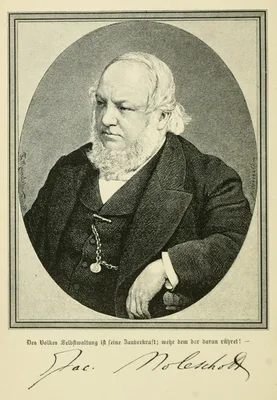
1850 MOLESCHOTT, Jacob (1822 – 1893)
Die Physiologie der Nahrungsmittel.
GMN 997 · https://historyofmedicine.com/id/744
1851 LUDWIG, Carl Friedrich Wilhelm (1816 – 1895)
Neue Versuche über die Beihilfe der Nerven zur Speichelabsonderung.
The innervation of the salivary glands first elucidated.
GMN 998 · https://historyofmedicine.com/id/747
1852 BIDDER, Friedrich Karl Heinrich von (1810 – 1894); SCHMIDT, Carl Ernst Heinrich (1822 – 1894)
Die Verdauungssäfte und der Stoffwechsel.
Even after the work of Prout and Beaumont, some physiologists thought that the free acid of the gastric juice was lactic acid; Bidder and Schmidt finally proved that normally the gastric juice always contains HCl in e…
GMN 999 · https://historyofmedicine.com/id/752
1855 BERNARD, Claude (1813 – 1878)
Sur le mécanisme de la formation du sucre dans le foie.
The culmination of Bernard’s work on the glycogenic function of the liver. He invented the term “internal secretion” and can be said to have started the scientific investigation of the internal secretions, although fo…
GMN 1000 · https://historyofmedicine.com/id/763
1856 BERNARD, Claude (1813 – 1878)
Mémoire sur le pancréas et sur le rôle du sue pancréatique dans les phénomènes digestifs.
The most beautifully illustrated of all Bernard’s writings, which summed up the results of his work on the role of the pancreas in digestion. English translation as Memoir on the pancreas, and on the role of pancreati…
GMN 1000.1 · https://historyofmedicine.com/id/764
1857 –1863 CORVISART, François Remy Lucien (1824 – 1882)
Sur une fonction peu connue du pancréas. La digestion des aliments azotés. 10 pts.
Corvisart showed that pancreatic proteolysis takes place at body temperature, in acid, alkaline, or neutral media.
GMN 1001 · https://historyofmedicine.com/id/772
1858 BERNARD, Claude (1813 – 1878)
Nouvelles recherches expérimentales sur les phénomènes glycogéniques du foie.
Isolation of glycogen. See also C. R. Acad. Sci. (Paris), 1857, 44, 578-86, 1325-31.
GMN 999.1 · https://historyofmedicine.com/id/759
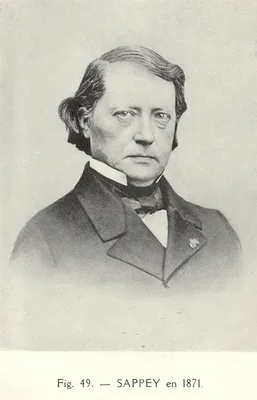
1859 SAPPEY, Marie Philibert Constant (1810 – 1896)
Mémoire sur un point d’anatomie pathologique relatif à l’histoire de la cirrhose.
“Sappey’s veins” in the falciform ligament of the liver.
GMN 1002 · https://historyofmedicine.com/id/778
1861 BRÜCKE, Ernst Wilhelm von (1819 – 1892)
Beiträge zur Lehre von der Verdauung.
GMN 1003 · https://historyofmedicine.com/id/784
1862 DANILEVSKY, Aleksandr Yakolevich (1838 – 1923)
Ueber specifisch wirkende Körper des natürlichen und künstlichen pancreatischen Saftes.
Discovery of trypsin.
GMN 1004 · https://historyofmedicine.com/id/800
1862 FLINT (YOUNGER), Austin (1836 – 1915)
Experimental researches into a new excretory function of the liver, consisting in the removal of cholesterine from the blood and its discharge from the body in the form of stercorine.
Discovery, in the feces, of “stercorine” (coprosterol).
GMN 1005 · https://historyofmedicine.com/id/805
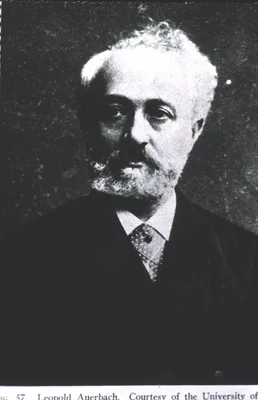
1863 AUERBACH, Leopold (1828 – 1897)
Ueber einen Plexus gangliosus myogastricus.
Auerbach’s plexus and ganglion. See also his book Ueber einen Plexus myentericus, Breslau, Morgenstern, 1862.
GMN 1006 · https://historyofmedicine.com/id/808
1865 THIRY, Ludwig (1817 – 1897)
Ueber eine neue Methode den Dünndarm zu isolieren.
Thiry-Vella fistula. See also No. 1014.
GMN 1007 · https://historyofmedicine.com/id/811
1868 HEIDENHAIN, Rudolf Peter Heinrich (1834 – 1897)
Beiträge zur Lehre von der Speichelsecretion.
GMN 1008 · https://historyofmedicine.com/id/816
1869 LANGERHANS, Paul (1847 – 1888)
Beiträge zur mikroskopischen Anatomie der Bauchspeicheldrüse. Inaugural-Dissertation.
First account of the islets of Langerhans. In 1893 Édouard Laguesse attached the name of Langerhans to the structures. Langerhans did not suggest any function for them. The book was reprinted with an English translati…
GMN 1009 · https://historyofmedicine.com/id/821
1871 PACHOUTINE, Victor Vasilyevich (Paschutin) (1845 – 1901)
Einige Versuche mit Fermenten, welche Stärke und Rohrzucker in Traubenzucker verwandeln.
GMN 1010 · https://historyofmedicine.com/id/824