1586 DONATI, Marcello (1538 – 1602)
De medica historia mirabili.
An early history of diseases, with extensive sections on ophthalmology (ff. 66-77) and urology (ff. 260-271). Lib. IV, Cap. iii, page 196 contains the first recorded case of gastric ulcer. Lib. VI. cap. iii contains t…
GMN 3417 · https://historyofmedicine.com/id/5319
1707 PIMENTA, Miguel Dias (1661 – 1715)
Noticias do que he o achaque do bicho, diffiniçam do seu crestame[n]to, subimento corrupçaõ, sinaes, & cura atè, o quinto grao, ou intensaõ delle, suas differenças, & co[m]plicaços, com que se ajunta.
This book has been "considered by some authors to be the first reference to the chagasic megaesophagus and megacolon that appeared in history. In descriptions considered to refer megaesophagus, although dysphagia, the…
GMN 8938 · https://historyofmedicine.com/id/11116
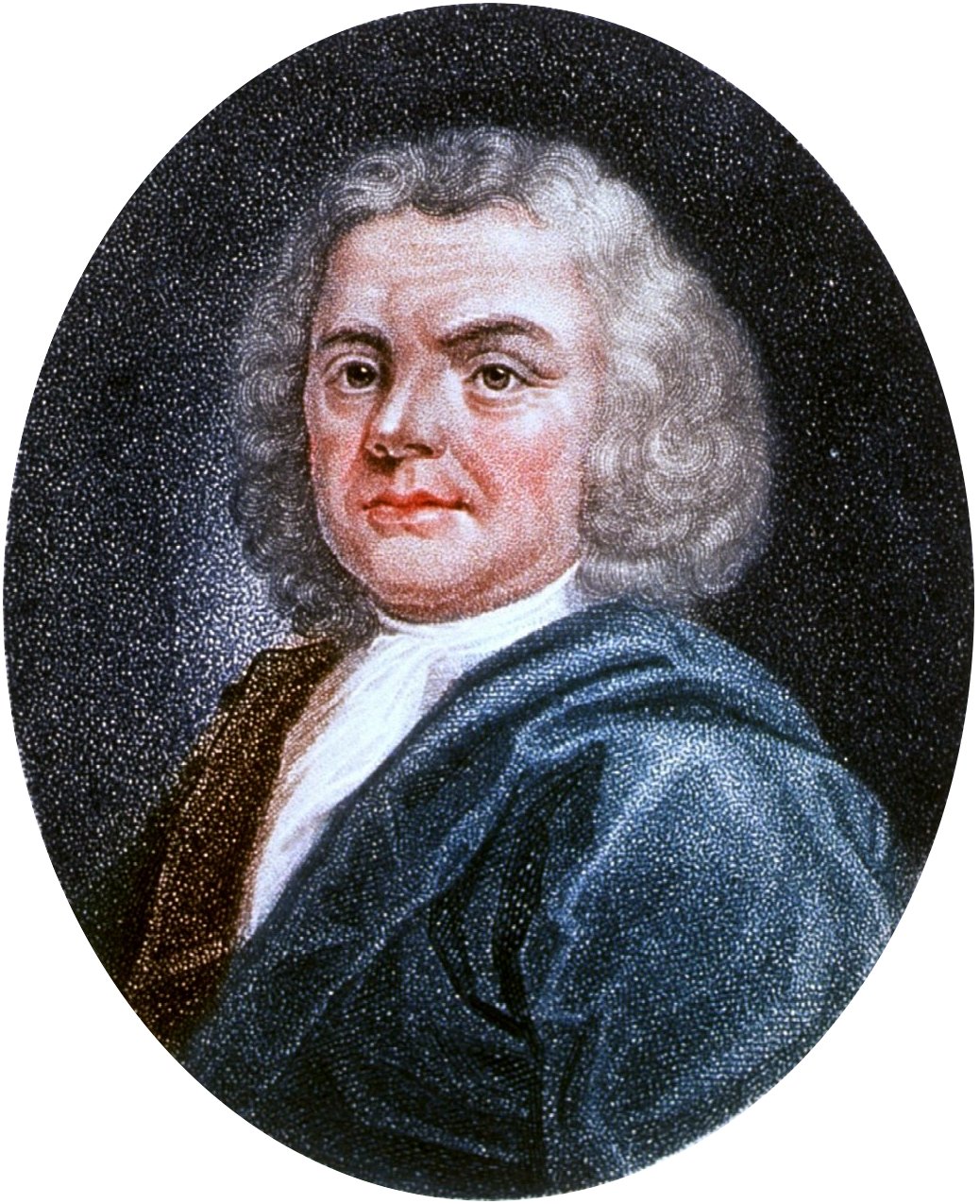
1724 BOERHAAVE, Herman (1668 – 1738)
Atrocis, nec descripti prius, morbis historia: Secundum medicae artis leges conscripta.
Boerhaave's syndrome: complete, transmural laceration of the lower part of oesophagus with exit of the gastric content into the mediastinum in the patient with a pre-existing oesophageal disease. This typically occurs…
GMN 13643 · https://historyofmedicine.com/id/15924
1727 RAWLINSON, Christopher
A preternatural perforation found in the upper part of the stomach, with the symptoms it produced.
First reported case of perforating gastric ulcer.
GMN 3420 · https://historyofmedicine.com/id/5341
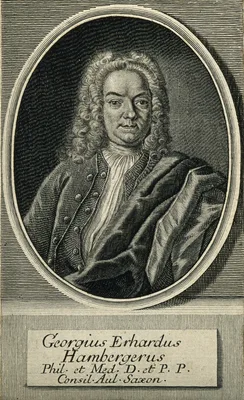
1746 HAMBERGER, Georg Erhard (1697 – 1755)
De ruptura intestini duodeni.
First description of duodenal ulcer.
GMN 3424 · https://historyofmedicine.com/id/5349
1759 HILLARY, William (1697 – 1763)
Observations on the changes of the air and the concomitant epidemical diseases, in the Island of Barbados.
Hillary included good accounts of lead colic and infective hepatitis, and probably the first description of sprue (celiac disease).
GMN 1770 · https://historyofmedicine.com/id/3314
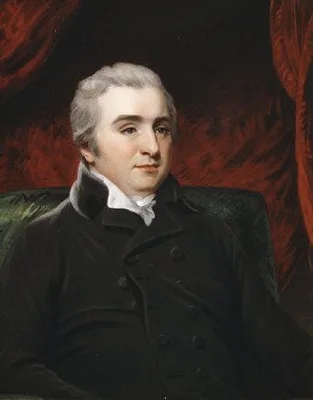
1793 BAILLIE, Matthew (1761 – 1823)
The morbid anatomy of some of the most important parts of the human body.
Baillie was a nephew and pupil of William Hunter. The above is the first systematic textbook of morbid anatomy, treating the subject for the first time as an independent science. See also Nos. 2736, 3167.1. Baillie wa…
GMN 2281 · https://historyofmedicine.com/id/2898
1793 PENADA, Jacopo (1748 – 1828)
Saggio d’osservazioni, e memoire sopra alcuni case singolari riscontrati nell’esercizio della medicina, e della anatomia pratica.
Includes (pp. 33-56) an account of perforating duodenal ulcer.
GMN 3428 · https://historyofmedicine.com/id/5373
1842 CURLING, Thomas Blizard (1811 – 1888)
On acute ulceration of the duodenum, in cases of burn.
“Curling’s ulcer”. Although not first to report duodenal ulcers as a complication of burns, Curling correlated the work of previous writers on the subject and directed attention to it.
GMN 3445 · https://historyofmedicine.com/id/5486
1855 BERGERON, Étienne Jules (1817 – 1900)
Note sur l’emploi du chlorate de potasse dans le traitement de la stomatite ulcéreuse.
Classic description of ulcero-membranous stomatitis and its treatment.
GMN 3453 · https://historyofmedicine.com/id/5577
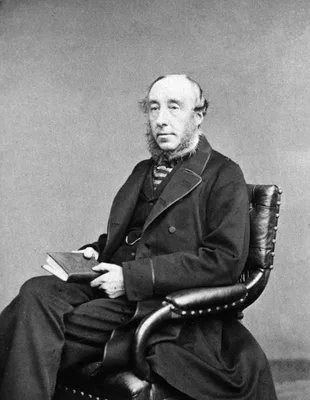
1857 BRINTON, William (1823 – 1867)
On the pathology, symptoms, and treatment of ulcer of the stomach.
A comprehensive account of peptic (duodenal) ulcer; includes a review of the results of more than 7,000 post mortems.
GMN 3454 · https://historyofmedicine.com/id/5579
1859 BRINTON, William (1823 – 1867)
The diseases of the stomach.
Includes (pp. 310-31) original description of linitis plastica (“Brinton’s disease”). Brinton lectured on physiology and forensic medicine at St. Thomas’s Hospital.
GMN 3458 · https://historyofmedicine.com/id/5591
1864 KRAUSS, Julius (1841 – )
Das perforirende Geschwür im Duodenum.
The first comprehensive study of duodenal ulcer. Commercial edition, Berlin: A. Hirschwald, 1865. Digital facsimile of the 1864 edition from the Bayerische Staatsbibliothek at this link. Digital facsimile of the 1865 …
GMN 3461 · https://historyofmedicine.com/id/5600
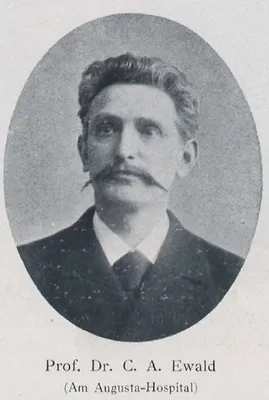
1879 –1902 EWALD, Carl Anton (1845 – 1915)
Klinik der Verdauungskrankheiten. 3 vols.
An important work on disorders of digestion. With Boas, Ewald devised the test breakfast and he utilized intubation for exploring the contents of the stomach. English translation of vols. 1-2, 1891-92.
GMN 3471 · https://historyofmedicine.com/id/5642
1884 FINKLER, Dittmar (1852 – 1912); PRIOR, J
Untersuchungen über Cholera nostras.
Finkler and Prior isolated Vibrio proteus from stools in a case of acute gastro-enteritis.
GMN 3481 · https://historyofmedicine.com/id/5685
1885 GLÉNARD, Frantz (1848 – 1920)
Application de la méthode naturelle à l’analyse de la dyspepsie nerveuse. – Détermination d’une espèce.
Important description of enteroptosis and gastroptosis.
GMN 3484 · https://historyofmedicine.com/id/5704
1886 ESCHERICH, Theodor (1857 – 1911)
Die Darmbakterien des Säuglings und ihre Beziehungen zur Physiologie der Verdauung.
Includes the first account of Bact. coli infection. The organism was later renamed Escherichia coli (E.coli).
GMN 1017 · https://historyofmedicine.com/id/877
1886 GLÉNARD, Frantz (1848 – 1920)
Neurasthénie et enteroptose.
Splanchnoptosis (“Glénard’s disease”).
GMN 3485 · https://historyofmedicine.com/id/3874
1888 GEE, Samuel Jones (1839 – 1911)
On the coeliac affection.
Coeliac disease (non-tropical sprue, idiopathic steatorrhoea) was first described by Gee. Later Thaysen (No. 3550) studied the disease, which acquired the eponym “Gee-Thaysen disease”.
GMN 3491 · https://historyofmedicine.com/id/3892
1888 MÉNÉTRIER, Pierre Eugène (1859 – 1935)
Des polyadénomes gastriques et de leurs rapports avec le cancer de l’estomac.
“Menetrier’s disease” – giant hypertrophic gastritis.
GMN 3492.1 · https://historyofmedicine.com/id/3898
1890 –1893 BOAS, Ismar Isidor (1858 – 1938)
Diagnostik und Therapie der Magenkrankheiten. 2 pts.
Boas, who devised the test breakfast, became the foremost gastroenterologist in Europe. He founded the Archivfür Verdauungskrankheiten, the first journal devoted to the subject of gastroenterology.
GMN 3497 · https://historyofmedicine.com/id/3909
1891 CHIARI, Hans (1851 – 1916)
Ueber Magensyphilis.
Important study of gastric syphilis.
GMN 3498 · https://historyofmedicine.com/id/3911
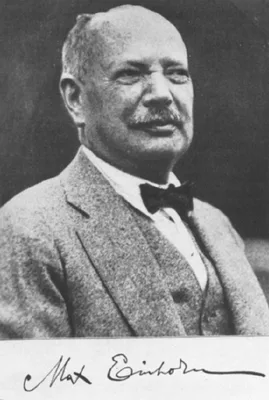
1892 EINHORN, Max (1862 – 1953)
On achylia gastrica.
Einhorn introduced the concept of achylia gastrica, to indicate a primary nervous functional disorder of the gastric secretion.
GMN 3503 · https://historyofmedicine.com/id/3924
1892 KRIEGE, Hermann; HEUSNER, Ludwig (1843 – 1916)
Ein Fall von einem frei in die Bauchhöhle perforirten Magengeschwür; Laparotomie; Naht der Perforationsstelle; Heilung.
In 1892 Ludwig Heusner (1846-1916) successfully sutured a perforated gastric ulcer, the first successful case on record. It was reported by H. Kriege.
GMN 3505 · https://historyofmedicine.com/id/3946
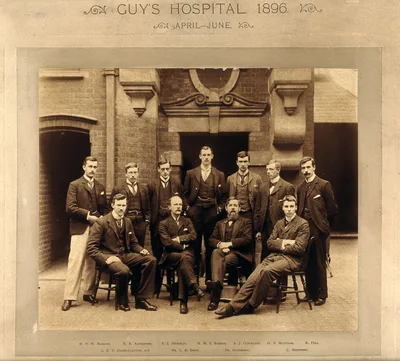
1893 PERRY, Sir Edwin Cooper (1856 – 1938); SHAW, Lauriston Elgie (1859 – 1923)
On diseases of the duodenum.
A careful examination of the records of post mortems carried out at Guy’s Hospital, 1826-92, was made by Perry and Shaw, who showed that of 70 reports of duodenal ulcer, ten occurred in cases of severe burns.
GMN 3510 · https://historyofmedicine.com/id/3975
1896 BECHER, Wolf (1862 – 1906)
Zur Anwendung des Röntgenschen Verfahrens in der Medicin.
Becher introduced a solution of lead into the stomach of a guinea-pig, making it opaque to x rays; he thus showed the possibility of radiological diagnosis of gastric disease.
GMN 3516 · https://historyofmedicine.com/id/3992
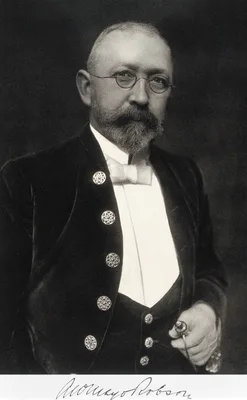
1901 ROBSON, Sir Arthur William Mayo (1853 – 1933); MOYNIHAN, Berkeley George Andrew (1865 – 1936)
Diseases of the stomach and their surgical treatment.
GMN 3524 · https://historyofmedicine.com/id/4016
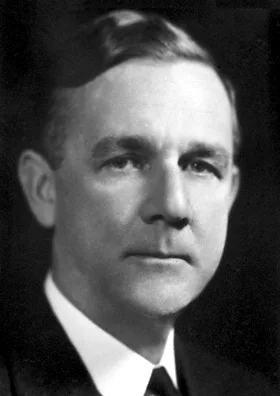
1907 WHIPPLE, George Hoyt (1878 – 1976)
A hitherto undescribed disease characterized anatomically by deposits of fat and fatty acids in the intestinal and mesenteric lymphatic tissues.
“Whipple’s disease”. Whipple suggested the name lipodystrophia intestinalis (intestinal lipodystrophy) for this condition because there were abnormal lipid deposits in the small intestine wall. In figure 9 of his pape…
GMN 3782 · https://historyofmedicine.com/id/4680
1910 HAUDEK, Martin (1880 – 1931)
Zur röntgenologischen Diagnose der Ulzerationen in der Pars media des Magens.
First demonstration of the characteristic niche in gastric ulcer.
GMN 3533 · https://historyofmedicine.com/id/4029
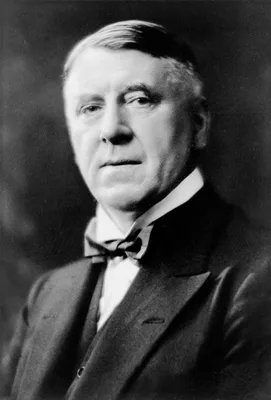
1910 MOYNIHAN, Berkeley George Andrew (1865 – 1936)
Duodenal ulcer.
Moynihan greatly advanced our knowledge of duodenal ulcer. He developed the concept of the so-called ulcer sequence, pain-food-ease, and he stressed the well-ordered sequence of symptoms. More than any other he establ…
GMN 3535 · https://historyofmedicine.com/id/4033
1913 HELLER, Ernest (1877 – 1964)
Extramukose cardiaplastik beim chronischen cardiospasmus mit dilatation des esophagus.
Heller myotomy for the treatment of achalasia.
GMN 14325 · https://historyofmedicine.com/id/16650
1915 SIPPY, Bertram Welton (1866 – 1924)
Gastric and duodenal ulcer; medical cure by an efficient removal of gastric juice corrosion.
“Sippy diet” for the treatment of peptic ulcer.
GMN 3541 · https://historyofmedicine.com/id/4047
1928 KONJETZNY, Georg Ernst (1880 – 1957)
Die Entzündungen des Magens. In: F. Henke & O. Lubarsch: Handbuch der speziellen pathologischen Anatomie und Histologie, 4, Heft 2, 768-1116.
Konjetzny suggested that peptic ulceration is the sequel to a specific form of gastritis.
GMN 3546 · https://historyofmedicine.com/id/4057
1929 HURST, Sir Arthur Frederick (1879 – 1944); STEWART, Matthew John (1885 – 1956)
Gastric and duodenal ulcer.
GMN 3547 · https://historyofmedicine.com/id/4058
1929 THAYSEN, Thorald Einar Hess (1883 – 1936)
The “coeliac affection” – idiopathic steatorrhoeas.
Idiopathic steatorrhoea, first described by Gee (No. 3491) was extensively studied by Thaysen, in so far as it occurs in adults and adolescents in non-tropical countries. It also bears the name “Gee-Thaysen disease”.
GMN 3550 · https://historyofmedicine.com/id/4061
1932 CROHN, Burrill Bernard (1884 – 1983); ET AL
Regional ileitis. A pathologic and clinical entity.
“Crohn’s disease” – regional ileitis. With L. Ginzburg and G. D. Oppenheimer. "Some of Crohn's initial research into the causes of the Crohn's disease was centered around his personal conviction that it was caused by …
GMN 3551 · https://historyofmedicine.com/id/4062
1932 CUSHING, Harvey Williams (1869 – 1939)
Papers relating to the pituitary body, hypothalamus, and para-sympathetic nervous system.
Cushing advanced the theory that the hypothalamus is responsible for the development of peptic ulcer (see p. 175 et seq.). This work contains his four principal contributions to pituitary-hypothalamic interrelationshi…
GMN 3552 · https://historyofmedicine.com/id/4063
1934 MEULENGRACHT, Jens Einar (1887 – 1976)
Treatment of hematemesis and melaena with food.
Meulengracht diet.
GMN 3555 · https://historyofmedicine.com/id/4066
1943 DRAGSTEDT, Lester Reynold (1893 – 1975); OWENS, Frederick Mitchum (1913 – 2004)
Supra-diaphragmatic section of the vagus nerves in treatment of duodenal ulcer.
Vagotomy for peptic ulcer.
GMN 3557 · https://historyofmedicine.com/id/4068
1955 ZOLLINGER, Robert Milton (1903 – 1992); ELLISON, Edwin Homer (1918 – 1970)
Primary peptic ulcerations of the jejunum associated with islet cell tumors of the pancreas.
Zollinger-Ellison syndrome.
GMN 3558.2 · https://historyofmedicine.com/id/4071
1958 EISEMAN, Ben (1917 – 2012); BASCOM, George S. (1927 – 1993); SILEN, W.; ET AL
Fecal enema as an adjunct in the treatment of pseudomembranous enterocolitis.
Order of authorship in the original publication: Eiseman, Silen, Bascom.... Report of the first "fecal transplant / fecal therapy," also known as "faecal microbiota transplanation," for recurrent / resistant C. diffic…
GMN 11458 · https://historyofmedicine.com/id/13657
1961 YARDLEY, John Howard (1926 – 2011); HENDRIX, Thomas Russell (1920 – 2013)
Combined electron and light microscopy in Whipple's disease. Demonstration of "bacillary bodies" in the intestine.
Order of authorship in the original publication: Yardley, Hendrix. The authors made the first observations of previously uncultured, unseen and unidentified bacilli associated with Whipple's disease, suggesting that i…
GMN 11979 · https://historyofmedicine.com/id/14187
1983 MARSHALL, Barry James (1951 – ); WARREN, John Robin (1937 – )
Unidentified curved bacilli on gastric epithelium in active chronic gastritis.
In 2005 Marshall and Warren shared the Nobel prize in Physiology or Medicine "for their discovery of the bacterium Helicobacter pylori and its role in gastritis and peptic ulcer disease." See also their follow-up pape…
GMN 8475 · https://historyofmedicine.com/id/10652
1992 RELMAN, David Arnold; SCHMIDT, Thomas M.; MACDERMOTT, Richard P.; ET AL
Identification of the uncultured bacillus of Whipple's disease.
Order of authorship in the original publication: Relman, Schmidt, MacDermott....The authors used 16S ribosomal RNA sequencing to identify the bacillus associated with Whipple's disease that had resisted culturing meth…
GMN 11980 · https://historyofmedicine.com/id/14188
2000 RAOULT, Didier (1952 – ); BIRG, Marie-Laure; LA SCOLA, Bernard; ET AL
Cultivation of the bacillus of Whipple's disease.
Order of authorship in the original publication: Raoult, Birg, La Scola. Raoult and colleagues cultured the bacterium causing the systemic digestive tract infection Whipple's disease from a mitral valve of a patient w…
GMN 11981 · https://historyofmedicine.com/id/14189
2006 RAOULT, Didier (1952 – ); BIRG, Marie-Laure; FENOLLAR, Florence
Culture of T. whipplei from the stool of a patient with Whipple's disease.
Order of authorship in the original publication: Raoult, Fenollar, Birg. Raoult and colleagues cultured the infectious agent of Whipple's disease from the stool of a patient with the disease. In the process the author…
GMN 11982 · https://historyofmedicine.com/id/14190