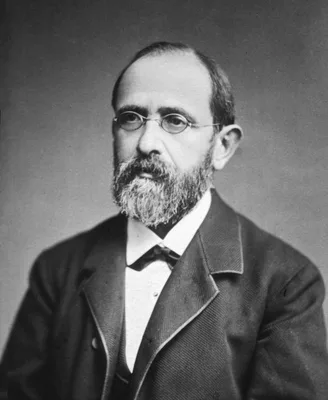
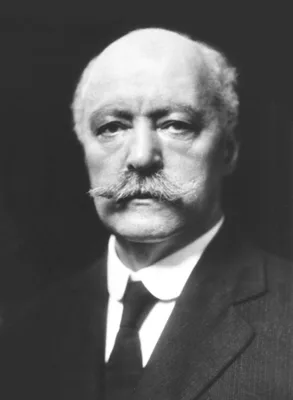
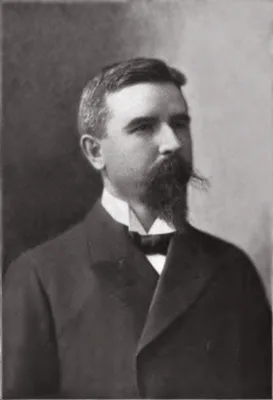
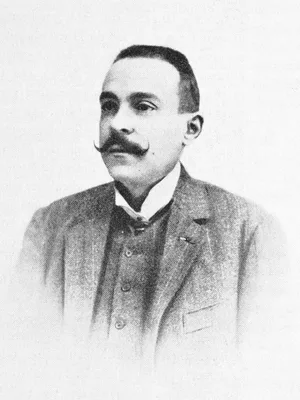
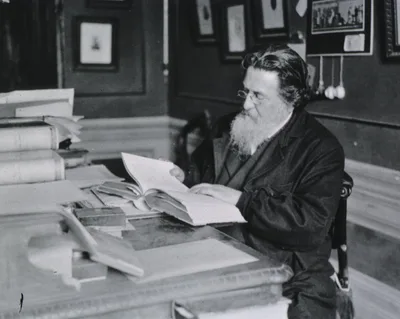
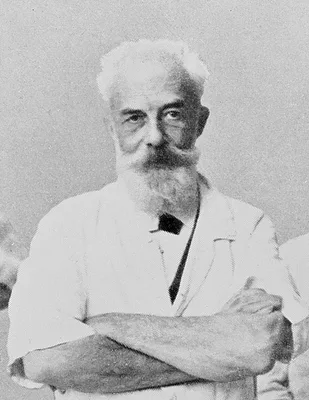
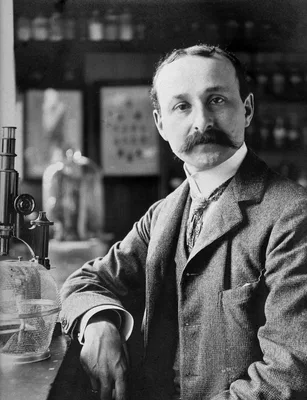
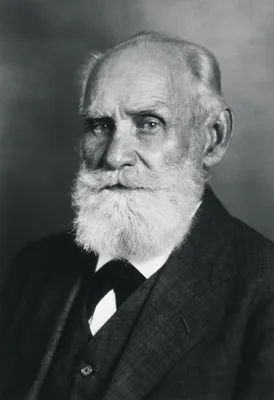
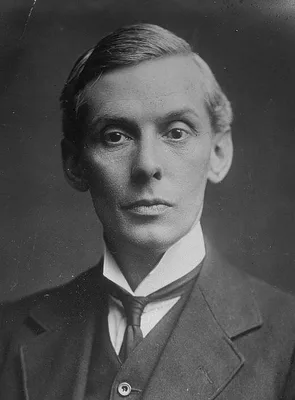
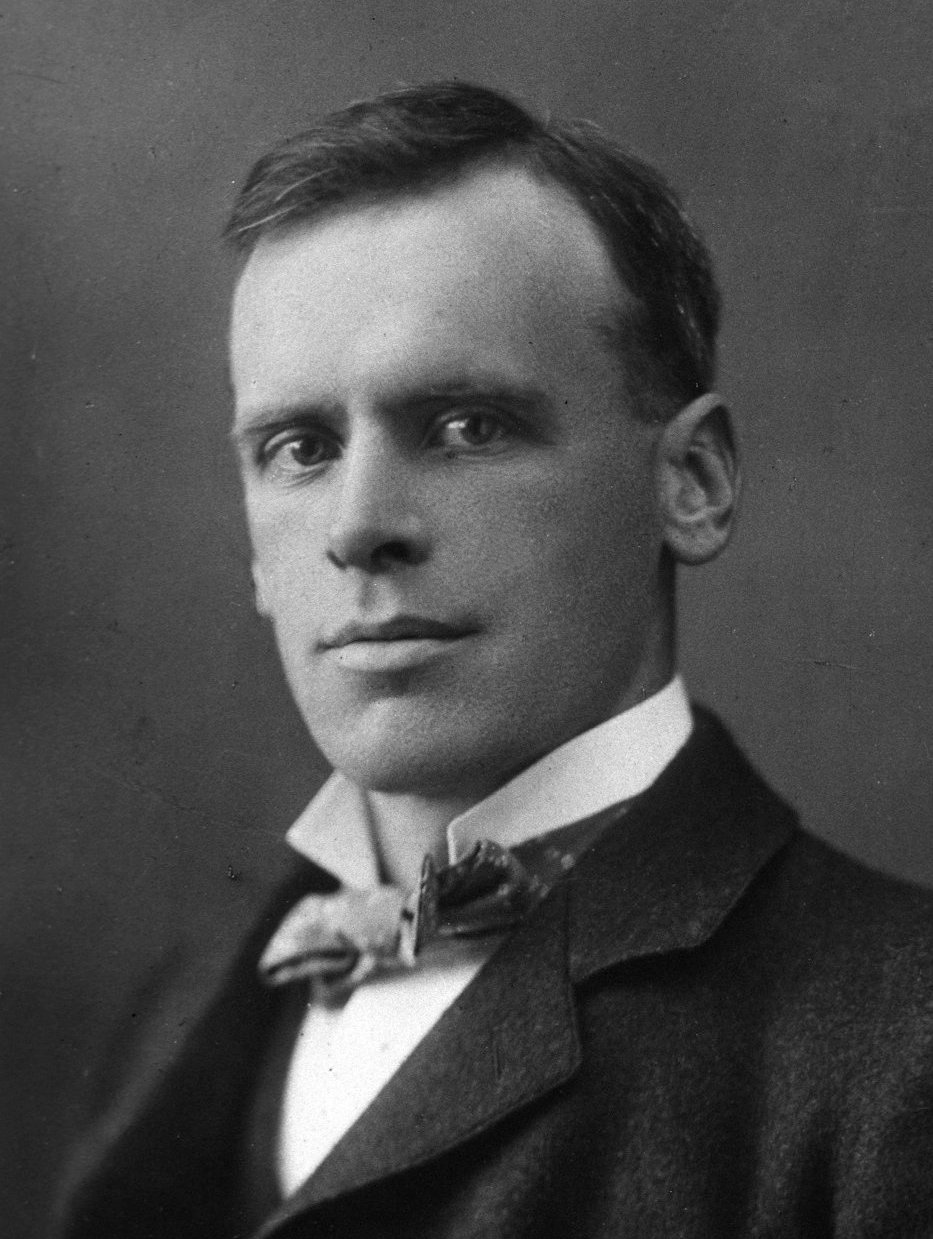
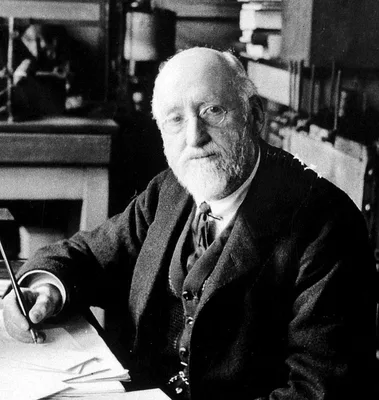
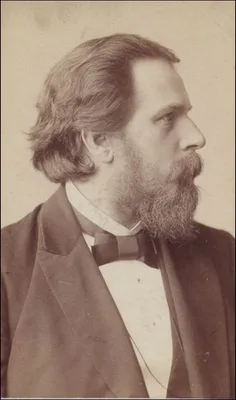
1872 HEIDENHAIN, Rudolf Peter Heinrich (1834 – 1897)
Ueber die Wirkung einiger Gifte auf die Nerven der glandula submaxillaris.
Study of the effect of poisons on the nerves of the submaxillary gland.
GMN 1011 · https://historyofmedicine.com/id/829
1874 –1877 KÜHNE, Wilhelm Friedrich (1837 – 1900)
Ueber das Trypsin.
Isolation of trypsin.
GMN 1012 · https://historyofmedicine.com/id/838
1878 HEIDENHAIN, Rudolf Peter Heinrich (1834 – 1897)
Ueber die Pepsinbildung in den Pylorusdrusen.
Heidenhain pouch.
GMN 1012.1 · https://historyofmedicine.com/id/846
1881 VELLA, Luigi (1825 – 1886)
Nuovo metodo per avere il succo enterico puro, e stabilime le proprietà fisiologiche.
GMN 1014 · https://historyofmedicine.com/id/856
1883 KRONECKER, Karl Hugo (1839 – 1914); MELTZER, Samuel James (1851 – 1920)
Der Schluckmechanismus, seine Erregung und seine Hemmung.
An experimental study, by means of a balloon, of swallowing and of oesophageal contractions.
GMN 1015 · https://historyofmedicine.com/id/865
1883 KÜHNE, Wilhelm Friedrich (1837 – 1900); CHITTENDEN, Russell Henry (1856 – 1943)
Ueber die nächsten Spaltungsproducte der Eiweisskörper.
Kühne and Chittenden isolated and named several new substances during their investigation of the products of digestion. See also the same journal, 1884, 20, 11-51; 1886, 22, 409-58; 1889, 25, 358-67.
GMN 1016 · https://historyofmedicine.com/id/871
1887 ODDI, Ruggero (1864 – 1913)
D’une disposition à sphincter spéciale de l’ouverture du canal cholédoque.
“Sphincter of Oddi” of the bile duct, already known to Glisson in 1654. Reprinted as a pamphlet, Perugia, 1887.
GMN 1018 · https://historyofmedicine.com/id/880
1889 LUCIANI, Luigi (1840 – 1919)
Fisiologia del digiuni.
Luciani distinguished three stages of starvation in man – hunger, physiological inanition, and pathological inanition. Digital facsimile from Google Books at this link.
GMN 1013 · https://historyofmedicine.com/id/852
1891 HARTMANN, Henri Albert (1860 – 1952)
Quelques points de l’anatomie et de la chirurgie des voies biliaires.
“Hartmann’s pouch”, a dilatation of the neck of the gall-bladder.
GMN 1018.1 · https://historyofmedicine.com/id/886
1891 SAHLI, Hermann (1856 – 1933)
Ueber eine neue Untersuchungsmethode der Verdauungsorgane und einige Resultate derselben.
Sahli’s test for estimating the functional activity of the stomach.
GMN 3500 · https://historyofmedicine.com/id/3914
1894 HEIDENHAIN, Rudolf Peter Heinrich (1834 – 1897)
Neue Versuche liber die Aufsaugung im Dunndarm.
GMN 1019 · https://historyofmedicine.com/id/890
1894 TOEPFER, Gustav
Eine Methode zur titrimetrischen Bestimmung der hauptsächlichsten Factoren der Magenacidität.
Toepfer’s test for hydrochloric acid in gastric juice.
GMN 3513 · https://historyofmedicine.com/id/3987
1895 –1896 NUTTALL, George Henry Falkiner (1862 – 1937); THIERFELDER, Hans (1858 – 1930)
Thierisches Leben ohne Bakterien im Verdauungskanal.
Proof that healthy life and perfect digestion are possible without the presence of bacteria in the digestive tract.
GMN 1020 · https://historyofmedicine.com/id/902
1897 KULSCHITZKY, Nikolai Konstantinovich (1856 – 1925)
Zur Frage über den Bau des Darmkanals.
The “cells of Kultschitzky” in the epithelium of the intestine, between the cells which line the gland of Lieberkühn.
GMN 1021 · https://historyofmedicine.com/id/906
1897 PAVLOV, Ivan Petrovich (1849 – 1936)
Lektsii o rabotie glavnikh pishtshevaritelnikh zhelyoz. [Lectures on the work of the principal digestive glands.]
Pavlov's classic study of the physiology of digestion. Especially notable was his method of producing gastric and pancreatic fistulae for the purpose of his experiments. The second published edition was a German trans…
GMN 1022 · https://historyofmedicine.com/id/913
1899 ADDISON, Christopher (1869 – 1951)
On the topographical anatomy of abdominal viscera in man, especially the gastrointestinal canal.
“Addison’s transpyloric plane”. Addison was Britain’s first Minister of Health (1919-21).
GMN 1023 · https://historyofmedicine.com/id/921
1902 STARLING, Ernest Henry (1866 – 1927); BAYLISS, Sir William Maddock (1860 – 1924)
The mechanism of pancreatic secretion.
Demonstration of the existence of secretin in the duodenal secretion. Preliminary note in Lancet, 1902, 1, 813.
GMN 1024 · https://historyofmedicine.com/id/924
1902 RUBNER, Max (1854 – 1932)
Die Gesetze des Energieverbrauchs bei der Ernährung.
Rubner’s classic work on the influence of foodstuffs on metabolism. In it he introduced the term “specific dynamic action of the foodstuffs”.
GMN 1025 · https://historyofmedicine.com/id/930
1905 CANNON, Walter Bradford (1871 – 1945)
Auscultation of the rhythmic sounds produced by the stomach and intestines.
Cannon reported on the rhythmic sounds made by the GI tract, mostly basing his observations on his own abdomen. This may be the first serous study of this topic.
GMN 12457 · https://historyofmedicine.com/id/14689
1906 EDKINS, John Sydney (1863 – 1940)
The chemical mechanism of gastric secretion.
Gastric secretin (gastrin) was first described by Edkins. A preliminary communication is in Proc. roy. Soc. B, 1905, 76, 376.
GMN 1026 · https://historyofmedicine.com/id/934
1910 LONDON, Efim Semenovich (1869 – 1939); DOBROVOLSKAYA-ZAVADSKAYA, Nadezhda Alexandrovna (1878 – 1954)
Studien über die spezifische Anpassung der Verdauungssäfte. III. Mittheilung.
Digital facsimile from ECHO at this link.
GMN 1028 · https://historyofmedicine.com/id/943
1911 CANNON, Walter Bradford (1871 – 1945)
The mechanical factors of digestion.
Summarized research begun in 1896. See No. 3519.
GMN 1029 · https://historyofmedicine.com/id/948
1912 –1913 CARLSON, Anton Julius (1875 – 1956)
Contributions to the physiology of the stomach.
Carlson recorded stomach movements by means of a balloon inserted through a gastric fistula. Much of his important work on gastric physiology was summed up in his book published in 1916. See No. 1033.
GMN 1030 · https://historyofmedicine.com/id/995
1913 GLÉNARD, Roger (1880 – 1964)
Le mouvement de l’intestin en circulation artificielle (chez les vertébrés). Thèses présentées a la Faculté des sciences de Paris.
Cinematographic studies of the movements of the intestines in animals. Digital facsimile from the Internet Archive at this link.
GMN 1031 · https://historyofmedicine.com/id/1000
1914 BABKIN, Boris Petrovich (1877 – 1950)
Die äussere Sekretion der Verdauungsdrüsen.
GMN 1032 · https://historyofmedicine.com/id/1001
1916 CARLSON, Anton Julius (1875 – 1956)
The control of hunger in health and disease.
Digital facsimile from the Internet Archive at this link.
GMN 1033 · https://historyofmedicine.com/id/1004
1917 TRENDELENBURG, Paul (1884 – 1931)
Physiologische und pharmakologische Versuche über die Dünndarmperistaltik.
"Trendelenburg preparation", a preparation used in determining the actions of pharmacological agents on peristalsis.
GMN 1034 · https://historyofmedicine.com/id/1007
1922 ALVAREZ, Walter Clement (1884 – 1978)
The mechanics of the digestive tract.
Includes (p. 111) his smooth diet for duodenal ulcer. Fourth edition entitled Introduction to gastro-enterology, 1950.
GMN 1035 · https://historyofmedicine.com/id/1009
1925 IVY, Andrew Conway (1893 – 1977); FARRELL, James Irving (1900 – )
Contributions to the physiology of gastric secretion. The proof of a humoral mechanism. A new procedure for the study of gastric physiology.
GMN 1037 · https://historyofmedicine.com/id/1016
1928 –1941 PAVLOV, Ivan Petrovich (1849 – 1936)
Lectures on conditioned reflexes. 2 vols.
Besides his work on digestion, Pavlov is remembered for his investigations upon conditioned reflexes. An English translation of another work by Pavlov, entitled Conditioned reflexes, appeared in 1927.
GMN 1445 · https://historyofmedicine.com/id/2244
1930 KOSAKA, T; LIM, Robert Kho-Seng (1897 – 1969)
Demonstration of the humoral agent in fat inhibition of gastric secretion.
The work of Kosaka and Lim led to the discovery of a hormone inhibiting gastric secretion (“enterogastrone”).
GMN 1038 · https://historyofmedicine.com/id/1018
1930 NORTHROP, John Howard (1891 – 1987)
Crystalline pepsin.
Crystallization of pepsin and its identity as a protein. In 1946 Northrop shared half of the Nobel Prize in Chemistry with Wendell Meredith Stanley "for their preparation of enzymes and virus proteins in a pure form."…
GMN 1038.1 · https://historyofmedicine.com/id/1021
1934 ÅGREN, Karl Gunnar (1907 – 1982)
Ueber die pharmakodynamischen Wirkungen und chemischen Eigenschaften des Secretins.
Preparation of crystalline secretin.
GMN 1039 · https://historyofmedicine.com/id/1024
1943 HAHN, Paul Francis (1908 – 1967); ET AL
Radioactive iron absorption by gastro-intestinal tract. Influence of anemia, anoxia, and antecedent feeding distribution in growing dogs.
An important contribution to the knowledge of iron absorption. With W. F. Bale, J. F. Ross, W. M. Balfour, and G. H. Whipple.
GMN 1040 · https://historyofmedicine.com/id/1032
1943 HARPER, Alfred Alexander (1907 – ); RAPER, Henry Stanley (1882 – 1951)
Pancreozymin, a stimulant of the secretion of pancreatic enzymes in extracts of the small intestine.
GMN 1040.1 · https://historyofmedicine.com/id/1038
1943 WOLF, Stewart George Jr. (1914 – 2005); WOLFF, Harold George (1898 – 1962)
Human gastric function. An experimental study of a man and his stomach.
Important experiments on gastric function, made on “Tom”, a man who had a gastric fistula from the age of 9. Second edition in 1947.
GMN 1041 · https://historyofmedicine.com/id/1042
1992 DAVENPORT, Horace Willard (1913 – 2005)
A history of gastric secretion and digestion: Experimental studies to 1975.
GMN 10671 · https://historyofmedicine.com/id/12864