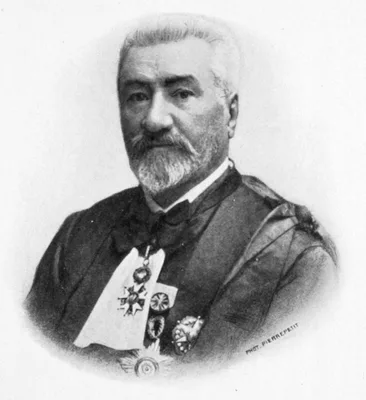
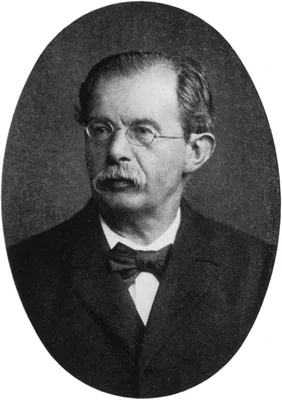
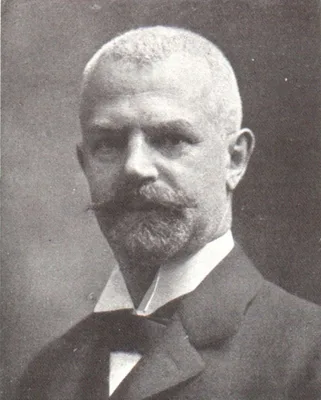
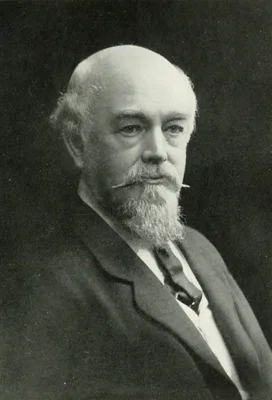
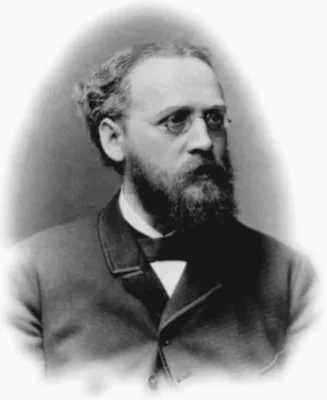
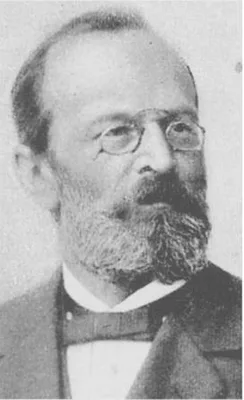
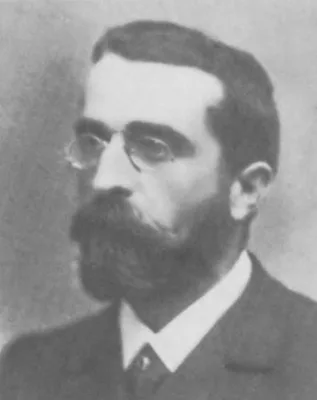
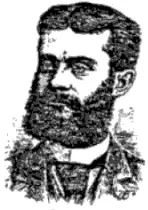
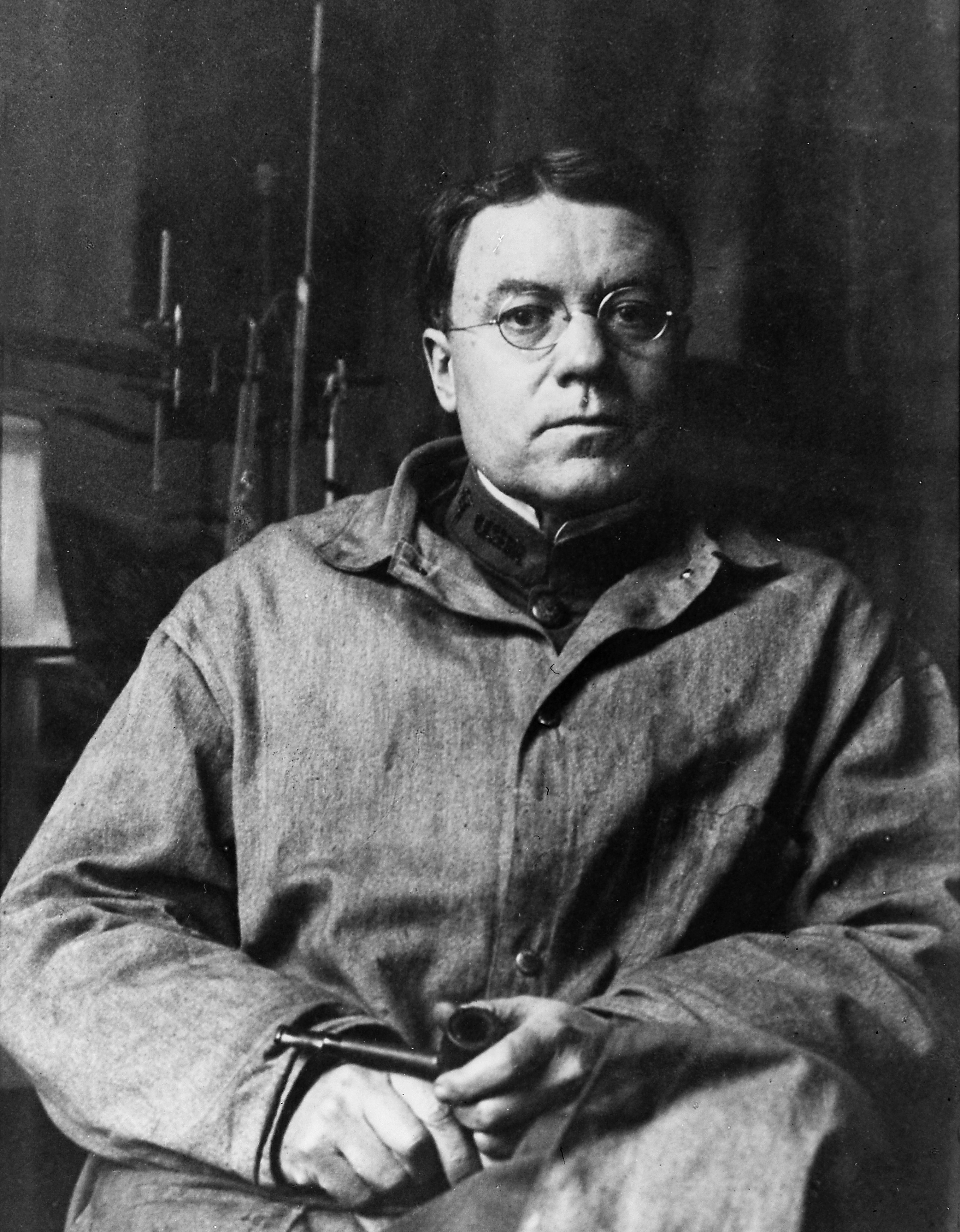
1890 LANNELONGUE, Odilon Marc (1840 – 1911)
Transplantation du corps thyroïde sur l’homme.
First thyroid transplantation (for treatment of cretinism).
GMN 3837 · https://historyofmedicine.com/id/4857
1891 MARCHAND, Felix Jacob (1846 – 1928)
Ueber eine Geschwulst der sogen. Glandula carotica oder des Nodulus caroticus. In Festschrift Rudolf Virchow, 1, 547-54.
First account of the pathology of carotid body tumors.
GMN 3791 · https://historyofmedicine.com/id/4714
1891 MURRAY, George Redmayne (1865 – 1939)
Note on the treatment of myxoedema by hypodermic injections of an extract of the thyroid gland of a sheep.
Murray injected thyroid extract subcutaneously in the treatment of myxedema with highly successful results.
GMN 3838 · https://historyofmedicine.com/id/4859
1891 RECKLINGHAUSEN, Friedrich Daniel von (1833 – 1910)
Die fibröse oder deformirende Ostitis, die Osteomalacie und die osteoplastische Carcinose in ihren gegenseitigen Beziehungen. In: Festschrift R. Virchow.
Recklinghausen gave an important description of generalized osteitis fibrosa. His reference to the earlier case reported by Engel (see No. 4335) has led to this condition being sometimes referred to as “Engel–Reckling…
GMN 4358 · https://historyofmedicine.com/id/5794
1892 EISELSBERG, Anton von (1860 – 1939)
Lieber erfolgreiche Einheilung der Katzenschilddrüse in die Bauchdecke und Auftreten von Tetanie nach deren Exstirpation.
Experimental production of tetany by excision of the thyroid of a cat, previously successfully transplanted into the abdomen.
GMN 3856 · https://historyofmedicine.com/id/4901
1893 MÜLLER, Friedrich von (1858 – 1941)
Beiträge zur Kenntniss der Basedow’schen Krankheit.
Müller demonstrated that an increased metabolism accompanies exophthalmic goitre.
GMN 3839 · https://historyofmedicine.com/id/4860
1893 CATON, Richard (1842 – 1926); PAUL, Frank Thomas (1851 – 1941)
Notes on a case of acromegaly treated by operation.
First attempt (unsuccessful) to treat acromegaly operatively. Decompression was performed to relieve cranial pressure.
GMN 3886 · https://historyofmedicine.com/id/4957
1895 –1896 BAUMANN, Eugen (1846 – 1896)
Ueber das normale vorkommen von Jod im Thierkörper.
Demonstration of the presence of iodine in organic combination in the thyroid. Baumann isolated an iodine-containing compound (“Thyrojodin”). The biochemical research stimulated by this work led eventually to the disc…
GMN 1131 · https://historyofmedicine.com/id/1294
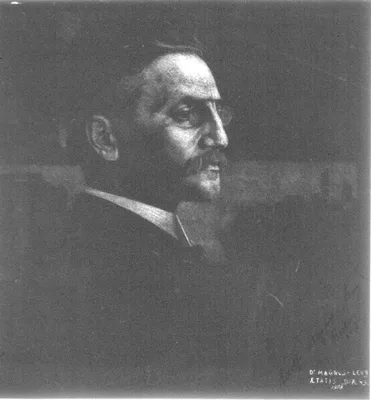
1895 MAGNUS-LEVY, Adolf (1865 – 1955)
Ueber den respiratorischen Gaswechsel unter dem Einfluss der Thyreoidea sowie unter verschiedenen pathologischen Zuständen.
Magnus-Levy demonstrated the increased metabolic rate in toxic goitre, confirming the work of Müller. His experimental investigations laid the foundation for the modern conception of thyroid function. See also Z. klin…
GMN 3840 · https://historyofmedicine.com/id/4862
1896 PENDRED, Vaughan (1869 – 1946)
Deaf-mutism and goitre.
Pendred syndrome, a genetic disorder leading to congenital bilateral (both sides) sensorineural hearing loss and goitre with euthyroid or mild hypothyroidism (decreased thyroid gland function).
GMN 3840.1 · https://historyofmedicine.com/id/4864
1896 RIEDEL, Bernhard Moritz Carl Ludwig (1846 – 1916)
Die chronische, zur Bildung eisenharter Tumoren führende Entzündung der Schilddrüse.
Riedel described a type of chronic inflammation of the thyroid (“Riedel’s disease”).
GMN 3841 · https://historyofmedicine.com/id/4866
1896 VASSALE, Giulio (1862 – 1912); GENERALI, Francesco
Sugli effeti dell’ estirpazione delle ghiandole paratiroidee.
Demonstration that tetany follows removal of the parathyroids. A French translation of the paper is in Arch. ital. Biol., 1896, 25, 459-64.
GMN 3857 · https://historyofmedicine.com/id/4903
1897 GILFORD, Hastings (1861 – 1941)
On a condition of mixed premature and immature development.
Hastings Gilford gave progeria its name; it was first fully reported by him in Practitioner, 1904, 73, 188-217. Digital facsimile of the 1897 paper from PubMedCentral at this link.
GMN 3792 · https://historyofmedicine.com/id/4716
1897 OSLER, Sir William (1849 – 1919)
Sporadic cretinism in America.
In 1893 Osler was among the first American physicians to use thyroid extract to treat myxedema or cretinism. He made a special study of the disease, corresponding with physicians across America to try to determine its…
GMN 11272 · https://historyofmedicine.com/id/13469
1900 BABINSKI, Joseph François Félix (1857 – 1932)
Tumeur du corps pituitaire sans acromégalie et avec arrêt de développement des organes génitaux.
Babinski preceded Fröhlich in describing dystrophia adiposo-genitalis.
GMN 3887 · https://historyofmedicine.com/id/4949
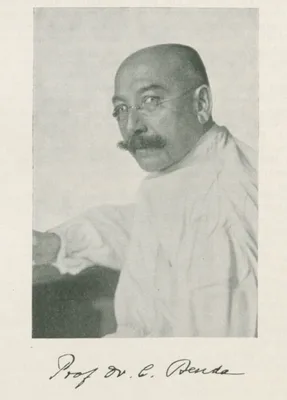
1900 BENDA, Carl (1857 – 1933)
Beiträge zur normalen und pathologischen Histologie der menschlichen Hypophysis cerebri.
Benda showed that the pituitary tumor in acromegaly consists of chromophil cells.
GMN 3888 · https://historyofmedicine.com/id/4950
1901 PEPPER, William Jr. (1843 – 1898)
A study of congenital sarcoma of the liver and suprarenal. With report of a case.
Pepper’s type of adrenal medullary tumor.
GMN 3866 · https://historyofmedicine.com/id/4917
1901 FRÖHLICH, Alfred (1871 – 1953)
Ein Fall von Tumor der Hypophysis cerebri ohne Akromegalie.
Fröhlich’s classic description of dystrophia adiposogenitalis, pituitary tumor, with obesity and sexual infantilism (“Fröhlich’s syndrome”). Reprinted (in German) in Research Publications, Association for Nervous and …
GMN 3889 · https://historyofmedicine.com/id/4951
1902 PINELES, Friedrich (1868 – 1936)
Ueber Thyreoaplasie (kongenitales Myxoedem und infantiles Myxoedem)
Pineles differentiated endemic (familial) cretinism associated with goitre from sporadic cretinism.
GMN 3842 · https://historyofmedicine.com/id/4868
1903 –1907 SAJOUS, Charles Euchariste de Medicis (1852 – 1929)
The internal secretions and the principles of medicine. 2 vols.
Sajous, pioneer American endocrinologist, wrote the first treatise on the subject. In this work he regarded the adrenal, pituitary, and thyroid glands as controlling the immunizing mechanism of the body.
GMN 3793 · https://historyofmedicine.com/id/4718
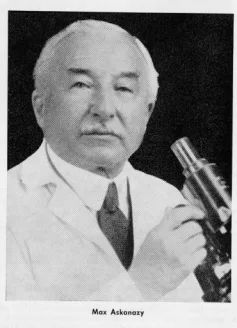
1904 ASKANAZY, Max (1865 – 1940)
Ueber Ostitis deformans ohne osteoides Gewebe.
Askanazy was the first to associate osteitis fibrosa cystica with parathyroid tumors.
GMN 3858 · https://historyofmedicine.com/id/4905
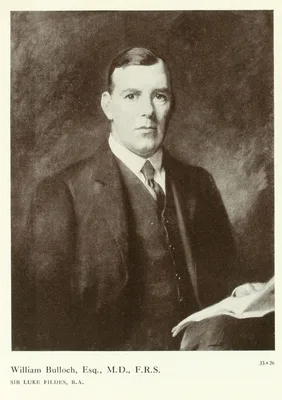
1905 BULLOCH, William (1868 – 1941); SEQUEIRA, James Harry (1865 – 1948)
On the relation of the suprarenal capsules to the sex organs.
First recognition of the “adrenogenital syndrome”. This paper showed a relationship to exist between the adrenals and the sex organs.
GMN 3867 · https://historyofmedicine.com/id/4918
1906 CUSHING, Harvey Williams (1869 – 1939)
Sexual infantilism with optic atrophy in cases of tumor affecting the hypophysis cerebri.
GMN 3890 · https://historyofmedicine.com/id/4953
1906 SCHLOFFER, Hermann (1868 – 1937)
Zur Frage der Operationen an der Hypophyse.
Schloffer’s Operation for acromegaly. He was the first successfully to operate upon a pituitary tumor in man (See No. 3892).
GMN 3891 · https://historyofmedicine.com/id/4954
1907 BRISSAUD, Edouard (1852 – 1909)
L’infantilisme vrai.
Brissaud described thyroid infantilism.
GMN 3843 · https://historyofmedicine.com/id/4870
1907 HUTCHISON, Sir Robert (1871 – 1960)
On suprarenal sarcoma in children with metastases in the skull.
Hutchison’s tumors.
GMN 3868 · https://historyofmedicine.com/id/4920
1907 SCHLOFFER, Hermann (1868 – 1937)
Erfolgreiche Operation eines hypophysen Tumors auf nasalem Wege.
Schloffer’s Operation by the nasal route.
GMN 3892 · https://historyofmedicine.com/id/4955
1908 MARINE, David (1880 – 1976); WILLIAMS, William Whitridge (1875 – 1983)
The relation of iodin to the structure of the thyroid gland.
Marks the beginning of Marine’s lifelong study of the thyroid.
GMN 3844 · https://historyofmedicine.com/id/4872
1908 RENON, Louis (1863 – 1922); DELILLE, Arthur (1876 – )
Insuffisance thyro-ovarienne et hyperactivité hypophysaire (troubles acromégaliques).
Rénon–Delille syndrome – dyspituitarism manifested by lowered blood-pressure, tachycardia, oliguria, insomnia, hyperhidrosis, and intolerance to heat.
GMN 3893 · https://historyofmedicine.com/id/4956
1908 NEUGEBAUER, Franz Ludwig [Franciszek Ludwik Neugebauer] (1856 – 1914)
Hermaphroditismus beim Menschen.
Digital facsimile from the Internet Archive at this link.
GMN 9502 · https://historyofmedicine.com/id/11687
1909 DALE, Sir Henry Hallett (1875 – 1968)
The action of extracts of the pituitary body.
Oxytocic action of posterior pituitary injection.
GMN 1159 · https://historyofmedicine.com/id/1500
1909 MACCALLUM, William George (1874 – 1944); VOEGTLIN, Carl (1879 – 1960)
On the relation of tetany to the parathyroid glands and to calcium metabolism.
Proof that the parathyroids control calcium metabolism. MacCallum and Voegtlin were able to demonstrate the removal of post-parathyroidectomy tetany by administration of calcium.
GMN 3859 · https://historyofmedicine.com/id/4907
1909 HALSTED, William Stewart (1852 – 1922)
Auto- and isotransplantation, in dogs, of the parathyroid glandules.
GMN 3860 · https://historyofmedicine.com/id/4908
1909 HIRSCH, Oskar (1877 – 1965)
Eine neue Methode der endonasalen operation von Hypophysentumoren.
Hirsch first demonstrated the transnasal transseptal exposure of the sphenoid sinus and pituitary gland in a cadaveric specimen in front of the medical society of Vienna.
GMN 3895 · https://historyofmedicine.com/id/4959
1909 BLAIR-BELL, William (1871 – 1936)
The pituitary body and the therapeutic value of the infundibular extract in shock, uterine atony, and intestinal paresis.
GMN 6215 · https://historyofmedicine.com/id/7630
1910 BIEDL, Artur (1869 – 1933)
Innere Sekretion.
Biedl showed that the adrenal cortex is essential for life. His classic work shows the rapid development of the knowledge concerning endocrinology. In 1890 there were few publications dealing with internal secretion, …
GMN 1123 · https://historyofmedicine.com/id/1239
1910 CUSHING, Harvey Williams (1869 – 1939); CROWE, Samuel James (1883 – 1955); HOMANS, John (1877 – 1955)
Experimental hypophysectomy.
First experimental evidence of the relationship between the pituitary and the reproductive system; demonstration that hypophysectomy causes genital atrophy.
GMN 1160 · https://historyofmedicine.com/id/1504
1910 CUSHING, Harvey Williams (1869 – 1939)
The functions of the pituitary body.
See No. 3896.
GMN 1161 · https://historyofmedicine.com/id/1505
1911 WATERHOUSE, Rupert (1873 – 1958)
A case of suprarenal apoplexy.
Waterhouse–Friderichsen (WFS) syndrome (see also Nos. 4679, 4686).
GMN 4685 · https://historyofmedicine.com/id/8875
1912 HASHIMOTO, Hakaru (1881 – 1934)
Zur Kenntniss der lymphomatösen Veränderung der Schilddrüse (Struma lymphomatosa).
“Hashimoto’s disease”, struma lymphomatosa, lymphoid infiltration of the thyroid.
GMN 3845 · https://historyofmedicine.com/id/4874
1912 WAGNER VON JAUREGG, Julius (1857 – 1940)
Myxödem und Kretinismus.
GMN 3846 · https://historyofmedicine.com/id/4875
1912 CUSHING, Harvey Williams (1869 – 1939)
The pituitary body and its disorders.
The first clinical monograph on the hypophysis. Cushing, outstanding neurological surgeon of the early 20th century, added much to our knowledge of the pituitary body and its disorders. The above work includes a descr…
GMN 3896 · https://historyofmedicine.com/id/4960
1912 FRANK, Alfred Erich (1884 – 1957)
Ueber Beziehungen der Hypophyse zum Diabetes insipidus.
Frank was the first definitely to connect the posterior lobe of the pituitary with diabetes insipidus.
GMN 3897 · https://historyofmedicine.com/id/4962
1912 MARK, Leonard Portal (1855 – 1930)
Acromegaly: a personal experience.
Mark, a medical practitioner, suffered from acromegaly from the age of 24. The condition was obvious to his friends, but Mark was 50 before he realized the cause of the symptoms of which he had kept a record for many …
GMN 3898 · https://historyofmedicine.com/id/4966
1913 FALTA, Wilhelm (1875 – 1950)
Die Erkrankungen der Blutdrüsen
First attempt to systematize the endocrine disorders. English translation, 1915.
GMN 3795 · https://historyofmedicine.com/id/4730
1913 SOUQUES, Achille Alexandre (1860 – 1944); CHAUVET, Stephen (1885 – 1950)
Infantilism hypophysaire.
Classic account of pituitary infantilism.
GMN 3899 · https://historyofmedicine.com/id/4968
1913 GLIÑSKI, Leon Konrad (1870 – 1918)
Z kazuistyki zmian anatomo-patholigicznych w przysadce mózgowej
Glinski preceded Simmonds in this important description of post-partum necrosis of the anterior pituitary. Abstract in Dtsch med. Wschr., 1913, 39, 473.
GMN 3900 · https://historyofmedicine.com/id/4970
1914 MCCARRISON, Sir Robert (1878 – 1960)
The pathogenesis of experimentally produced goitre.
GMN 3847 · https://historyofmedicine.com/id/4876
1914 SIMMONDS, Morris (1855 – 1925)
Ueber Hypophysisschwund mit tödlichem Ausgang.
“Simmonds’s disease”-pituitary cachexia. See also Virchows Arch. path. Anat., 1914, 217, 226-39.
GMN 3901 · https://historyofmedicine.com/id/4973
1915 CANNON, Walter Bradford (1871 – 1945)
Bodily changes in pain, hunger, fear, and rage. An account of recent researches into the function of emotional excitement.
Observation of the effect of strong emotions on gastrointestinal motility (No. 1029) led Cannon to examination of the sympathetic nervous system and its emergency function. Cannon showed the close connexion between th…
GMN 1124 · https://historyofmedicine.com/id/1241