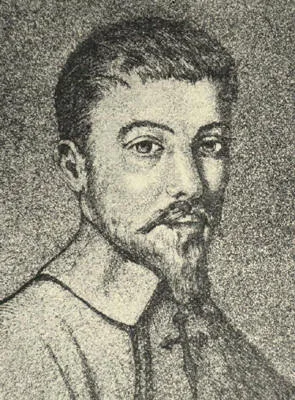
1616 BONIFACIO, Giovanni (1547 – 1635)
L’arte de’ cenni, con quale, formandosi favella visible, si tratta della muta eloquenza.
Bonifacio’s sign-language for the deaf and dumb employed almost every part of the body for conversational purposes.
GMN 3344 · https://historyofmedicine.com/id/4622
1620 BONET, Juan Pablo (1579 – 1633)
Reduction de las letras, y arte para enseñar a ablar los mudos.
Bonet put into practice the “combined” system of teaching the deaf to speak and the dumb to communicate with others. He showed how the deaf could be taught to speak by reducing the letters to their phonetic value, and…
GMN 3345 · https://historyofmedicine.com/id/4625
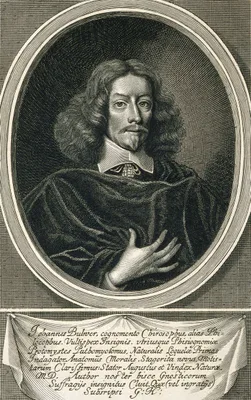
1644 BULWER, John (1606 – 1656)
Chironomia: or, the art of manuall rhetorique.
GMN 3346 · https://historyofmedicine.com/id/4626
1644 BULWER, John (1606 – 1656)
Chirologia; or the naturall language of the hand. Composed of the speaking motions, and discoursing gestures thereof. Whereunto is added Chironomia: or, the art of manuall rhetoricke.
Bulwer was the first Englishman to write about the teaching of deaf-mutes. "Chirologia is often cited as Bulwer’s link to later Deaf studies because it focuses on hand gestures [15] which have come to be seen as the d…
GMN 3347 · https://historyofmedicine.com/id/4629
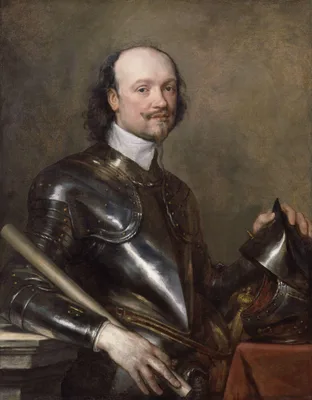
1644 DIGBY, Sir Kenelm (1603 – 1665)
Two treatises in the one of which the nature of bodies, in the other, the nature of mans soule is looked into in way of discovery of the immortality of reasonable soules.
"Digby's Two Treatises was intended to prove the immortality of the rational soul and its distinction from the material body, a dualistic view shared by many of his contemporaries. the work is noteworthy on several co…
GMN 11581 · https://historyofmedicine.com/id/13780
1648 BULWER, John (1606 – 1656)
Philocophus: or the deafe and dumbe mans friend.
"Bulmer promoted what we would call today 'central nervous system plasticity,' in describing how one sense could take over the duties of another. This is well illustrated in the frontispiece of this work, which is the…
GMN 7230 · https://historyofmedicine.com/id/9399
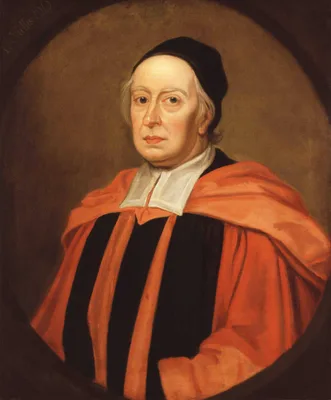
1653 WALLIS, John (1616 – 1703)
Grammatica linguae anglicae. Cui praefigitur, de loquela sive sonorum formatione tractatus grammatico-physicus.
Wallis, a prominent teacher of deaf-mutes, classified the various sounds of the human voice. He taught by writing and gesture. He was Savilian Professor of Mathematics at Oxford.
GMN 3348 · https://historyofmedicine.com/id/4704
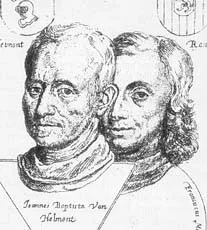
1667 HELMONT, Franciscus Mercurius van (1614 – 1698)
Aphabeti verè naturalis Hebraici brevissima delineatio.
A work on the teaching of lip-reading and speaking to deaf-mutes based on the notion that letter-forms of the Hebrew alphabet resembled in profile the positions of the tongue required to produce their corresponding so…
GMN 13236 · https://historyofmedicine.com/id/15501
1669 HOLDER, William (1616 – 1698)
Elements of speech, an essay of inquiry into the natural production of letters; with an appendix concerning persons deaf and dumb.
Includes a section on the education of deaf-mutes. Paracusis is described in the Appendix, p. 166.
GMN 3349 · https://historyofmedicine.com/id/4705
1680 DALGARNO, George (1626 – 1687)
Didascalocophus or the deaf and dumb mans tutor, to which is added a discourse of the nature and number of double consonants: both which tracts being the first (for what the author knows) that have been published upon either of the subjects.
Dalgarno considered that the deaf had an advantage over the blind in opportunities of learning languages. He invented an alphabet for the use of deaf-mutes.
GMN 3350 · https://historyofmedicine.com/id/4709
1692 AMMAN, Johann Konraad (1663 – 1730)
Surdus loquens; seu, methodus, quâ qui surdus natus est loqui descere possit.
English translation, 1694, by John Wallis (see No. 3348).
GMN 3352 · https://historyofmedicine.com/id/4717
1700 AMMAN, Johann Konraad (1663 – 1730)
Dissertatio de loquela, qua non solum vox humana, & loquendi artificium ex originibus suis erruunter.
Amman’s method of instructing deaf-mutes. He was one of the most successful of all teachers in this sphere. English translation as A dissertation on speech. To which not only the human voice and the art of speaking ar…
GMN 3353 · https://historyofmedicine.com/id/4720
1776 L'ÉPÉE, Charles-Michel de (1712 – 1789)
Institution des sourds et muets, par la voie des signes méthodiques.
Includes a reprint of the author’s Institution des sourds et muets; ou, recueil des exercices. Paris, 1774.
GMN 3358 · https://historyofmedicine.com/id/4735
1783 GREEN, Francis
Vox oculis. A dissertation on the … art of imparting speech to the naturally deaf; with a particular account of the academy of Messrs. Braidwood …
Thomas Braidwood (1715-1806) founded the first British school for the deaf and dumb, in Edinburgh. His method consisted of a combination of lip-reading and signs.
GMN 3360 · https://historyofmedicine.com/id/4742
1784 L'ÉPÉE, Charles-Michel de (1712 – 1789)
La véritable manière d’instruire les sourds et muets.
The Abbé de L’Épée met two deaf girls, decided to educate them, and soon had a class of 60 devoted pupils, whom he supported and amongst whom he lived. He based his methods on those of Bonet and Amman, and was the fir…
GMN 3359 · https://historyofmedicine.com/id/4737
1795 HERVÁS Y PANDURO, Lorenzo (1735 – 1809)
Escuela española de sordo mudos, ó arte par enseñaries á escribir y hablar el idoma española. 2 vols.
Digital facsimile from the Hathi Trust at this link.
GMN 13237 · https://historyofmedicine.com/id/15502
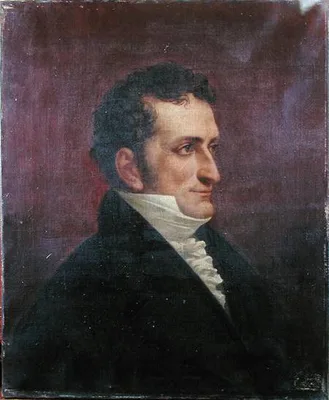
1801 ITARD, Jean Marie Gaspard (1774 – 1838)
De l’éducation d’un homme sauvage, ou des premier développemens physiques et moraux du jeune sauvage de l’Aveyron.
A pupil of Pinel, Itard pioneered in the attempt to educate a young “wild boy” who had lived since infancy entirely apart from human contact. In adapting the methods of teaching deaf-mutes to his extraordinary pupil, …
GMN 4969.1 · https://historyofmedicine.com/id/6381
1851 JARISCH, Anton Hieronymus (1818 – 1890)
Methode für den Unterricht der Taub-Stummen in der Laut-Sprache im Rechnen und in der Religion. Verfasst von …. Gezeichnet von Ant. Jarisch.
An illustrated manual of sign language for the deaf and dumb specifically for education in mathematics and religion. The book has a particularly distinctive title page. Digital facsimile from Google Books at this link.
GMN 12285 · https://historyofmedicine.com/id/14506
1878 LAMSON, Mary Swift (1822 – 1909)
The life and education of Laura Dewey Bridgman, the deaf, dumb, and blind girl.
Biography of Laura Bridgman (1829-89, the first deaf-blind person ever to read, write, and converse in the finger alphabet. The book includes a signed holograph facsimile of Bridgman's widely circulated religious poem…
GMN 7745 · https://historyofmedicine.com/id/9917
1888 ARNOLD, Thomas (1823 – 1900)
Education of deaf-mutes. A manual for teachers.
Includes a history of the subject. Digital facsimile from the Internet Archive at this link.
GMN 3390 · https://historyofmedicine.com/id/5113
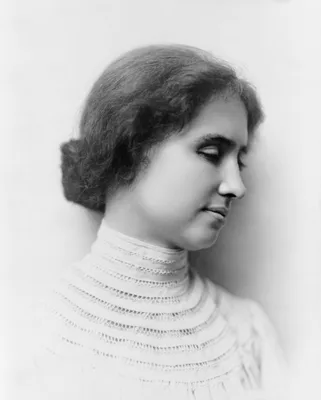
1905 KELLER, Helen Adams (1880 – 1968)
The story of my life.
Helen Keller became blind and deaf at the age of 19 months, as the result of an illness. Her education was a triumph of patience and skill on the part of her teacher, Anne M. Sullivan, and a demonstration of the great…
GMN 3399 · https://historyofmedicine.com/id/5150
1976 LANE, Harlan (1936 – )
The wild boy of Aveyron.
GMN 7486 · https://historyofmedicine.com/id/9658