1536 MASSA, Niccoló (1489 – 1569)
Liber introductorius anatomiae sive dissectionis corporis humani; in quo quam plurima membra, operationes, & utilitates tam ab antiquis, quam a modernis praetermissa manifestantur.
A practical manual for dissection, showing how to carry out an anatomy from the first incision onwards. Massa based his work on his experience gained from numerous dissections that he had undertaken in the hospital of…
GMN 1536 · https://historyofmedicine.com/id/2862
1561 FALLOPPIO, Gabriele [FALLOPPIUS] (1523 – 1562)
Observationes anatomicae.
Observationes anatomicae, a work of 232 leaves printed in the comparatively small octavo format, with no illustrations, was the only work Fallopio published before his death from tuberculosis at age thirty-nine, and i…
GMN 1208 · https://historyofmedicine.com/id/562
1563 –1564 EUSTACHI, Bartolomeo [EUSTACHIUS] (1510 – 1574)
Opuscula anatomica.
Eustachius is credited with several anatomical discoveries, among them the tensor tympani muscle and the Eustachian tube, published in his chapter entitled De auditus organis. In the last respect, however, he was anti…
GMN 1093 · https://historyofmedicine.com/id/159
1572 –1573 COITER, Volcher (1534 – 1576)
Externarum et internarum principalium humani corporis partium tabulae.
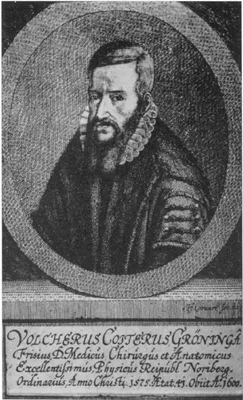
Coiter made several important contributions to the study of human anatomy, and was the first to elevate comparative anatomy to the rank of an independent branch of biology. His Externarum et internarum principalium hu…
GMN 1539 · https://historyofmedicine.com/id/1251
1600 –1601 CASSERI, Giulio Cesare [Julius Casserius Placentinus; Giulio Casserio] (1552 – 1616)
De vocis auditusque organis historia anatomica. 2 pts.
Casseri, originally a servant to Fabrizio, was personally trained by his employer and eventually succeeded to Fabrizio’s chair of anatomy. Like Fabrizio, who studied the development of the chick for clues to human emb…
GMN 1540 · https://historyofmedicine.com/id/2863
1603 INGRASSIA, Giovanni Filippo (Ioannis Philippi Ingrassiae) (1510 – 1580)
In Galeni librum de ossibus.
Ingrassia is by some accredited with the discovery of the stapes; he also observed the sound-conducting capacity of the teeth.
GMN 1541 · https://historyofmedicine.com/id/2864
1648 BULWER, John (1606 – 1656)
Philocophus: or the deafe and dumbe mans friend.
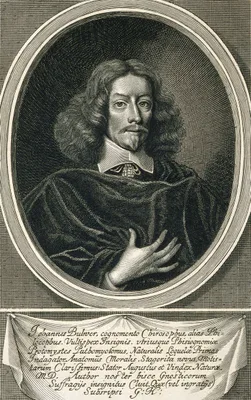
"Bulmer promoted what we would call today 'central nervous system plasticity,' in describing how one sense could take over the duties of another. This is well illustrated in the frontispiece of this work, which is the…
GMN 7230 · https://historyofmedicine.com/id/9399
1662 STENO, Nicolas [Niels Steensen, Nicholaus Stenonis] (1638 – 1686)
Observationes anatomicae, quibus varia oris, oculorum & narium vas describuntur novique salivae, lacrymarum & muci fontes deteguntur.
Includes the first account of the excretory duct of the parotid gland (“Stensen’s duct”), discovered by Stensen. He first reported his discovery in a letter to his teacher, Thomas Bartholin, dated April, 22, 1661. Ste…
GMN 1543 · https://historyofmedicine.com/id/567
1669 HOLDER, William (1616 – 1698)
Elements of speech, an essay of inquiry into the natural production of letters; with an appendix concerning persons deaf and dumb.
Includes a section on the education of deaf-mutes. Paracusis is described in the Appendix, p. 166.
GMN 3349 · https://historyofmedicine.com/id/4705
1672 WILLIS, Thomas (1621 – 1675)
De anima brutorum
Chap. XIV is devoted to the sense of hearing; in it Willis described the “paracusis of Willis” (p. 73). English translation, 1683. A probable description of myasthenia gravis is given in Pars. 2, Cap. IX. In Pars 2, C…
GMN 1544 · https://historyofmedicine.com/id/3644
1683 DU VERNEY, Guichard-Joseph (Guichard Joseph Duverney) (1648 – 1730)
Traité de l’organe de l’ouie; contenant la structure, les usages et les maladies de toutes les parties de l’oreille.
The first scientific account of the structure, function and diseases of the ear. Du Verney showed that the bony external meatus develops from the tympanic ring and that the mastoid air cells communicate with the tympa…
GMN 1545 · https://historyofmedicine.com/id/2867
1684 SCHELHAMMER, Gunther Christopher (1649 – 1712)
De auditu liber unus.
An early account of the anatomy, physics and physiology of hearing, preceded by a historical summary of earlier work.
GMN 1545.1 · https://historyofmedicine.com/id/2868
1704 VALSALVA, Antonio Maria (1666 – 1723)
De aure humana tractatus.
Valsalva, a pupil of Malpighi and teacher of Morgagni, is best remembered for his work upon the ear, in which he described and depicted its most minute muscles and nerves. He divided the ear into “external”, “middle”,…
GMN 1546 · https://historyofmedicine.com/id/2869
1734 –1735 CASSEBOHM, Johann Friedrich (1699 – 1743)
Tractatus quatuor anatomici de aure humana. Tractatus quintus anatomicus de aure humana. Cui accedit tractatus sextus de aure monstri humani.
Important tracts on the anatomy and physiology of the ear. Cassebohm’s studies of the embryonic ear far surpassed his predecessors, including Valsalva and Morgagni, and were not themselves surpassed until the work of …
GMN 1547 · https://historyofmedicine.com/id/1280
1742 PYL, Theodor
Dissertatio medica de auditu in genere et de illo que fit per os in specie.
Pyl was the first (page 20) to record the labyrinthine fluid and to discuss its rôle in the transmission of sound.
GMN 1548 · https://historyofmedicine.com/id/2871
1761 COTUGNO, Domenico [COTUNNIUS] (1736 – 1822)
De aquaeductibus auris humanae intemae.
Cotugno is sometimes accredited with the discovery of the “liquor Cotunnii”, the labyrinthine fluid, first noted by Pyl in 1742. He did, however, make important contributions to the knowledge on the structure and func…
GMN 1549 · https://historyofmedicine.com/id/2872
1772 SCARPA, Antonio (1752 – 1832)
De structura fenestrae rotundae auris, et de tympano secundario anatomicae observationes.
Scarpa’s first scientific work, a comparative anatomical investigation of the ear, in which he offered a more accurate and complete description of the osseous labyrinth and demonstrated the true function of the round …
GMN 1550 · https://historyofmedicine.com/id/2873
1778 GEOFFROY, Étienne Louis (1725 – 1810)
Dissertations sur l’organe de l’ouie. 1. De l’homme. 2. Des reptiles. 3. Des poissons.
GMN 1551 · https://historyofmedicine.com/id/1133
1789 COMPARETTI, Andrea (1746 – 1801)
Observationes anatomicae de aure interna comparata.
GMN 1552 · https://historyofmedicine.com/id/1136
1789 SCARPA, Antonio (1752 – 1832)
Anatomicae disquisitiones de auditu et olfactu.
Scarpa made important researches concerning the auditory and olfactory apparatus of fishes, birds, reptiles, and man. See L. Sellers and B. Anson, [Scarpa’s] Anatomical observations on the round window, Arch. Otolaryn…
GMN 1453 · https://historyofmedicine.com/id/2342
1799 SCARPA, Antonio (1752 – 1832)
De penitiori ossium structura commentarius.
GMN 1553 · https://historyofmedicine.com/id/1139
1806 SOEMMERRING, Samuel Thomas von (1755 – 1830)
Abbildungen des menschlichen Hoerorganes
GMN 1554 · https://historyofmedicine.com/id/1173
1818 JACOBSON, Ludwig Levin (1783 – 1843)
Supplementa ad otojatriam. Supplementum primum de anastomosi nervorum nova in aure detecta.
Jacobson described the tympanic canal, nerve, and plexus, all of which are named after him. In 1809 he discovered “Jacobson’s organ”, as reported two years later by G. Cuvier.
GMN 1555 · https://historyofmedicine.com/id/1181
1820 WEBER, Ernst Heinrich (1795 – 1878)
De aure et auditu hominis et animalium.
GMN 1556 · https://historyofmedicine.com/id/1184
1827 WHEATSTONE, Sir Charles (1802 – 1875)
Experiments on audition.
Occlusion effect on sound perception.
GMN 1556.1 · https://historyofmedicine.com/id/1185
1828 FLOURENS, Marie Jean Pierre (1794 – 1867)
Expériences sur les canaux semi-circulaires de l’oreille chez les oiseaux.
Flourens showed that lesion of the semicircular canals produces motor incoordination and loss of equilibrium. Menière based his work (No. 3372) on Flourens’s crucial experiments.
GMN 1557 · https://historyofmedicine.com/id/1189
1832 SHRAPNELL, Henry Jones (1792 – 1834)
On the form and structure of the membrana tympani.
Description of the pars flaccida (“Shrapnell’s membrane”) of the tympanic membrane.
GMN 1558 · https://historyofmedicine.com/id/1192
1834 WEBER, Ernst Heinrich (1795 – 1878)
De pulsu, resorptione, auditu et tactu. Annotationes anatomicae et physiologicae.
Includes Weber’s law on the relationship between stimulus and sensation. English translation of De tactu, New York Academic Press, 1978. Weber's hearing test is on p.41.
GMN 1457 · https://historyofmedicine.com/id/2367
1851 CORTI, Alfonso Giacomo Gaspare (1822 – 1888)
Recherches sur l’organe de l’ouïe des mammifères.
Corti made important investigations on the finer anatomy of the mammalian cochlea. The “organ of Corti” in the cochlea is named after him.
GMN 1559 · https://historyofmedicine.com/id/1194
1851 REISSNER, Ernst (1824 – 1878)
De auris internae formatione.
Description of the vestibular membrane (“Reissner’s membrane”).
GMN 1560 · https://historyofmedicine.com/id/1220
1855 RINNE, Friedrich Heinrich (1819 – 1868)
Beiträge zur Physiologie des menschlichen Ohres.
Rinne’s test.
GMN 3370 · https://historyofmedicine.com/id/4772
1858 SCHULTZE, Max Johann Sigismund (1825 – 1874)
Ueber die Endigungsweise des Hörnerven im Labyrinth.
Schultze’s great monographs on the nerve-endings of the sense organs were of prime importance in the development of the science of histology. Besides that dealing with the internal ear, he wrote others dealing with th…
GMN 1561 · https://historyofmedicine.com/id/1221
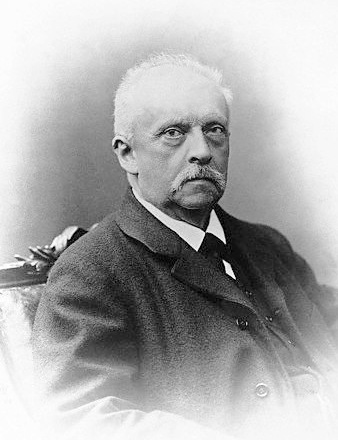
1863 HELMHOLTZ, Hermann Ludwig Ferdinand von (1821 – 1894)
Die Lehre von der Tonempfindungen als physiologische Grundlage für die Theorie der Musik.
Helmholtz’s theory of hearing, upon which all modern theories of resonance are based. This exhaustive study of acoustics ranks as one of the greatest books on the subject and shows that Helmholtz was, besides being a …
GMN 1562 · https://historyofmedicine.com/id/1223
1868 HELMHOLTZ, Hermann Ludwig Ferdinand von (1821 – 1894)
Die Mechanik der Gehörknöchelchen und des Trommelfells.
Helmholtz’s study of the mechanism of the tympanum and ossicles of the middle ear did much to elucidate the phenomenon of audition. It includes a description of “Helmholtz’s ligament” of the malleus. Separate offprint…
GMN 1563 · https://historyofmedicine.com/id/1227
1870 LUCAE, Johann Constantin August (1835 – 1911)
Die Schalleitung durch die Kopfknochen und ihre Bedeutung für die Diagnostik der Ohrenkrankheiten.
Lucae was the first to study the transmission of sounds through the cranial bones for the purpose of diagnosing diseases of the ear.
GMN 3381 · https://historyofmedicine.com/id/4803
1881 –1884 RETZIUS, Magnus Gustaf (1842 – 1919)
Das Gehörorgan der Wirbelthiere. 2 vols.
The most magnificent of all comparative anatomical studies of the ear, and the most beautiful studies of the ear after those of Casseri (No.1540). Retzius described the “Retzius bodies” in the labyrinth.
GMN 1566 · https://historyofmedicine.com/id/1237
1894 STEIN, Stanislav Aleksandr Fyodorovich (1855 – )
Die Lehren von den Funktionen der einzelnen Theile des Ohrlabyrinths.
Stein studied the functions of separate parts of the labyrinth. This is a translation from the Russian.
GMN 1567 · https://historyofmedicine.com/id/1243
1894 EWALD, Ernst Julius Richard (1855 – 1921)
Zur Physiologie des Labyrinths. 3. Mittheilung. Das Hören der labyrinthlosen Tauben.
GMN 1568 · https://historyofmedicine.com/id/1249
1895 EWALD, Ernst Julius Richard (1855 – 1921)
Zur Physiologie des Labyrinths. 4. Mittheilung. Die Beziehungen des Grosshirns zum Tonuslabyrinth.
GMN 1569 · https://historyofmedicine.com/id/1262
1896 BEAUREGARD, Emmanuel Henri (1851 – 1900); DUPUY, Pierre Edmond (1855 – 1904)
Note sur la variation éléctrique (courant d’action) déterminée dans le nerf acoustique par le son.
Beauregard and Dupuy recorded the action potential in the auditory nerve of the frog.
GMN 1569.1 · https://historyofmedicine.com/id/1267
1906 BÁRÁNY, Robert (1876 – 1936)
Ueber die vom Ohrlabyrinth ausgelöste Gegenrollung der Augen bei Normalhörenden.
Bárány’s caloric test for labyrinthine function.
GMN 3400 · https://historyofmedicine.com/id/5156
1906 BÁRÁNY, Robert (1876 – 1936)
Untersuchungen über den vom Vestibularapparat des Ohres reflektorisch ausgelösten Rhythmischen und seine Begleiterscheinungen.
Bárány’s pointing test for the localization of circumscribed cerebellar lesions. Republished in book form, Berlin, 1906. In 1914 Bárány was awarded the Nobel Prize in Physiology or Medicine "for his work on the physio…
GMN 3401 · https://historyofmedicine.com/id/5161
1907 YERKES, Robert Means (1876 – 1956)
The dancing mouse: A study in animal behavior.
The first work to examine the characteristics of deaf mice, which became the most important model for the study of genetic deafness. Digital facsimile from the Biodiversity Heritage Library, Internet Archive at this l…
GMN 7226 · https://historyofmedicine.com/id/9394
1924 GRAY, Albert Alexander (1869 – 1936); WILKINSON, George (1867 – 1956)
The mechanism of the cochlea. A restatement of the resonance theory of hearing.
GMN 1570 · https://historyofmedicine.com/id/1285
1924 POHLMAN, Augustus Grote (1879 – 1950); KRANZ, Frederick William (1887 – 1979)
Binaural minimum audition in a subject with ranges of deficient acuity.
First demonstration of the phenomenon of loudness recruitment.
GMN 3405.1 · https://historyofmedicine.com/id/5199
1930 WEVER, Ernest Glen (1902 – 1991); BRAY, Charles W.
Action currents in the auditory nerve in response to acoustical stimulation.
Wever and Bray discovered the electrical activity of the inner ear−then called the coclear microphonic−which enabled the development of the physiology of the ear.
GMN 7225 · https://historyofmedicine.com/id/9393
1931 GUILD, Stacy R. (1881 – 1966)
Correlations of the differences in the density of innervation of the organ of Corti with differences in the acuity of hearing, including evidence as to the location in the cochlea of the receptors of certain tones.
The first study to relate hair cell and neuron loss to the hearing of patients. It was the first to show that high frequency sound is "heard" at the base of the cochlea and low frequency sound at the apex. With S. J. …
GMN 7224 · https://historyofmedicine.com/id/9392
1933 BÉKÉSY, Georg von (1899 – 1972)
Über den Knall und die Theorie des Hörens.
In 1961 Békésy was awarded the Nobel Prize in Physiology or Medicine "for his discoveries of the physical mechanism of stimulation within the cochlea." English translation in Békésy, Experiments in hearing, 1960.
GMN 1570.1 · https://historyofmedicine.com/id/1290
1935 MCLACHLAN, Norman William (1888 – )
Noise: A comprehensive survey from every point of view.
Chapter 1: General considerations: behaviour of the ear. Chapter 10: Physiological and psychological effects of noise.
GMN 7476 · https://historyofmedicine.com/id/9648
1951 WAARDENBURG, Petrus Johannes (1886 – 1979)
A new syndrome combining developmental anomalies of the eyelids, eyebrows and nose root with pigmentary defects of the iris and head hair with congenital deafness.
“Waardenburg’s syndrome”.
GMN 4154.4 · https://historyofmedicine.com/id/5883