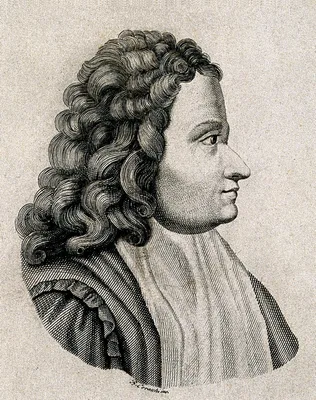
1645 FOLLI, Cecilio [FOLIUS, FUOLI] (1615 – 1660)
Nova auris internae delineatio.
An article which announces the discovery of the long process of the malleus. Folius “accurately discussed the general configuration of the middle ear, described the round and oval windows, delineated the three ossicle…
GMN 1542 · https://historyofmedicine.com/id/2865
1683 DU VERNEY, Guichard-Joseph (Guichard Joseph Duverney) (1648 – 1730)
Traité de l’organe de l’ouie; contenant la structure, les usages et les maladies de toutes les parties de l’oreille.
The first scientific account of the structure, function and diseases of the ear. Du Verney showed that the bony external meatus develops from the tympanic ring and that the mastoid air cells communicate with the tympa…
GMN 1545 · https://historyofmedicine.com/id/2867
1684 SCHELHAMMER, Gunther Christopher (1649 – 1712)
De auditu liber unus.
An early account of the anatomy, physics and physiology of hearing, preceded by a historical summary of earlier work.
GMN 1545.1 · https://historyofmedicine.com/id/2868
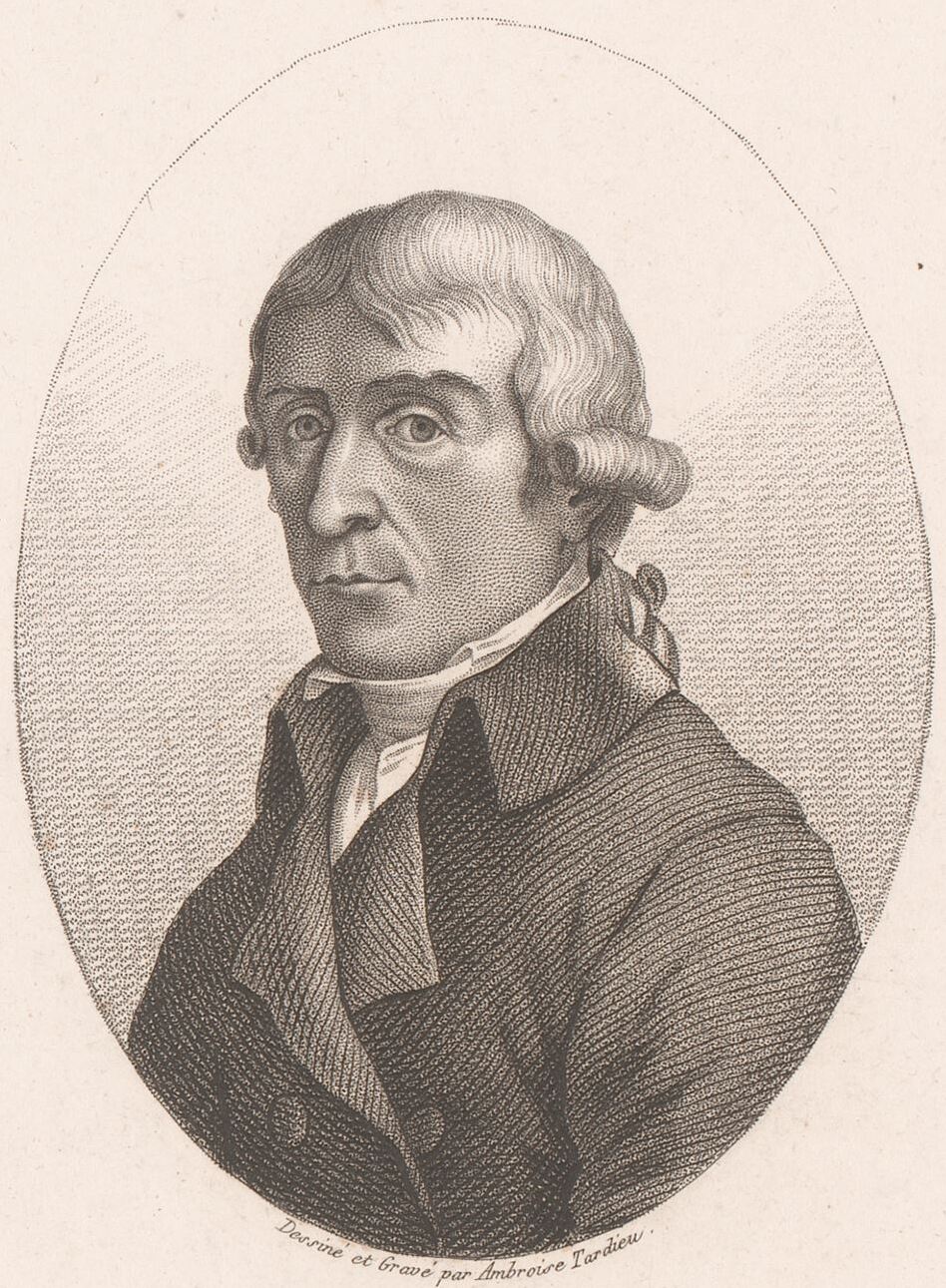
1704 VALSALVA, Antonio Maria (1666 – 1723)
De aure humana tractatus.
Valsalva, a pupil of Malpighi and teacher of Morgagni, is best remembered for his work upon the ear, in which he described and depicted its most minute muscles and nerves. He divided the ear into “external”, “middle”,…
GMN 1546 · https://historyofmedicine.com/id/2869
1761 COTUGNO, Domenico [COTUNNIUS] (1736 – 1822)
De aquaeductibus auris humanae intemae.
Cotugno is sometimes accredited with the discovery of the “liquor Cotunnii”, the labyrinthine fluid, first noted by Pyl in 1742. He did, however, make important contributions to the knowledge on the structure and func…
GMN 1549 · https://historyofmedicine.com/id/2872
1772 SCARPA, Antonio (1752 – 1832)
De structura fenestrae rotundae auris, et de tympano secundario anatomicae observationes.
Scarpa’s first scientific work, a comparative anatomical investigation of the ear, in which he offered a more accurate and complete description of the osseous labyrinth and demonstrated the true function of the round …
GMN 1550 · https://historyofmedicine.com/id/2873
1799 SCARPA, Antonio (1752 – 1832)
De penitiori ossium structura commentarius.
GMN 1553 · https://historyofmedicine.com/id/1139
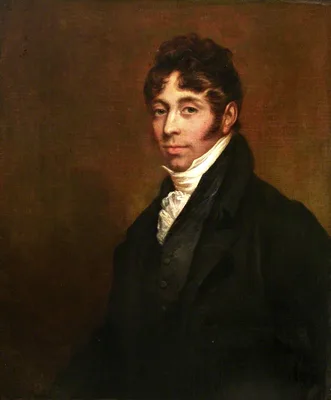
1806 SAUNDERS, John Cunningham (1773 – 1810)
The anatomy of the human ear … with a treatise on the diseases of the organ.
Saunders was the first to advise paracentesis in acute middle-ear suppuration.
GMN 3362 · https://historyofmedicine.com/id/4746
1832 SHRAPNELL, Henry Jones (1792 – 1834)
On the form and structure of the membrana tympani.
Description of the pars flaccida (“Shrapnell’s membrane”) of the tympanic membrane.
GMN 1558 · https://historyofmedicine.com/id/1192
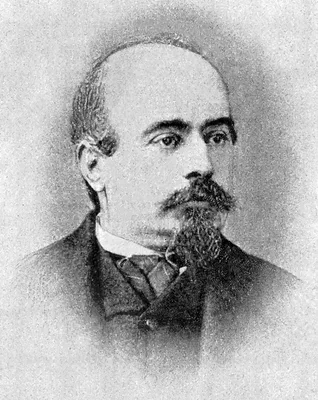
1851 CORTI, Alfonso Giacomo Gaspare (1822 – 1888)
Recherches sur l’organe de l’ouïe des mammifères.
Corti made important investigations on the finer anatomy of the mammalian cochlea. The “organ of Corti” in the cochlea is named after him.
GMN 1559 · https://historyofmedicine.com/id/1194
1851 REISSNER, Ernst (1824 – 1878)
De auris internae formatione.
Description of the vestibular membrane (“Reissner’s membrane”).
GMN 1560 · https://historyofmedicine.com/id/1220
1874 HINTON, James (1822 – 1875)
Atlas of the membrana tympani.
GMN 3384 · https://historyofmedicine.com/id/5077
1881 –1884 RETZIUS, Magnus Gustaf (1842 – 1919)
Das Gehörorgan der Wirbelthiere. 2 vols.
The most magnificent of all comparative anatomical studies of the ear, and the most beautiful studies of the ear after those of Casseri (No.1540). Retzius described the “Retzius bodies” in the labyrinth.
GMN 1566 · https://historyofmedicine.com/id/1237
1907 –1908 GRAY, Albert Alexander (1869 – 1936)
The labyrinth of animals. 2 vols.
“An important and elaborate work designed to give the anatomy of the labyrinth, or inside of the ears of vertebrates, with the exception of fishes” (Casey Wood). Illustrated with stereoscopic photographs.
GMN 1569.2 · https://historyofmedicine.com/id/1276
1924 –1933 GRAY, Albert Alexander (1869 – 1936)
Atlas of otology illustrating the normal and pathological anatomy of the temporal bone. 2 vols.
GMN 3405 · https://historyofmedicine.com/id/5195