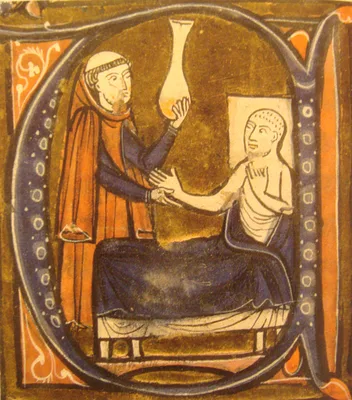
1500 –1501 ABULCASIS (ABU AL-QASIM KHALAF IBN AL-ABBAS AL-ZAHRAWI; أبو القاسم خلف بن العباس الزهراوي), [Albucasis] (936 – 1013); GUY DE CHAULIAC, (Guido de Cauliaco) (1298 – 1368); GERARD OF CREMONA, (Gerardus Cremonensis) (1114 – 1187); IBN 'ISÃ AL-KAHHAL, Ali (Jesu Occulist) (980 – ); AMMAR AL MAWSILĪ, Abu'l -l Kāsim (1050 – ); MARROCHINUS, Dominicus ( – 1300); CANAMUSALI DE BALDACH (1220 – )
Chirurgia cum formis instrumentorum (Tr: Gerardus Cremonensis). IN: Guy de Chauliac: Chirurgia parva. Add: Albulcasis: Chirurgia cum formis instrumentorum. Jesus filius Hali: De oculis (Tr: Dominicus Marrochinus). Canamusali de Baldach: De oculis.
The surgical section of Albucasis’s Altasrif, the first rational, complete and illustrated treatise on surgery and surgical instruments. The author was an Arab Muslim physician and surgeon who lived in Al-Andalus. Dur…
GMN 3666.82 · https://historyofmedicine.com/id/5371
1564 PARÉ, Ambroise (1510 – 1590)
Dix livres de la chirurgie avec le magasin des instruments necessaires à icelle.
Paré’s first general treatise on surgery, and the most comprehensive of his treatises before his collected works (1575). Dix livres included Paré's first description of the use of the ligature in amputations, one of h…
GMN 3668.1 · https://historyofmedicine.com/id/6937
1573 CROCE, Giovanni Andrea Della (1514 – 1575)
Chirurgiae Ioannis Andrea a Cruce, Veneti medici libri septem, Quamplurimis instrumentorum imaginibus arti chirurgicae opportunis suis locis exornati, theoricam, practicam ac verissimam experientiam continentes....
Croce improved the instruments for trephination, and published classic woodcuts depicting the operation, including the first illustration of a neurological surgery operation actually taking place. The work is also imp…
GMN 4850.4 · https://historyofmedicine.com/id/5586
1655 SCHULTES, Johannes [SCULTETUS] (1595 – 1645)
Χειροπλοθήκη seu armamentarium chirurgicum.
Scultetus is famous for his illustrations of surgical procedures and both surgical and dental instruments. With respect to dentistry he describes and illustrates stomatological operations and includes fine illustratio…
GMN 3669.1 · https://historyofmedicine.com/id/6982
1744 CLELAND, Archibald (1700 – 1771)
Instruments proposed to remedy some kinds of deafness proceeding from obstructions in the external and internal auditory passages.
Cleland, an army surgeon, devised the method of catheterization of the Eustachian tube by way of the nose; he designed the instruments necessary for the operation.
GMN 3355 · https://historyofmedicine.com/id/4723
1766 SOLDO, Mauro (Soldi)
Descrizione degl'instrumenti, delle macchine, e delle suppellettili raccolte ad uso chirurgico e medico dal P. Don Ippolito Rondinelli...
Catalogue of the private museum of surgical and medical instruments established by Father Ippolito Rondinelli in Ravenna, which Soldo described as “the first museum of medicine and surgery.” Extensively illustrasted. …
GMN 7808 · https://historyofmedicine.com/id/9980
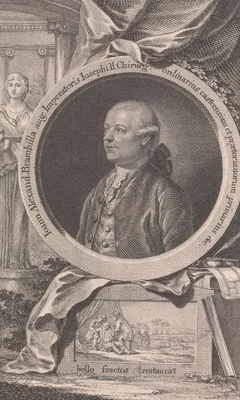
1781 BRAMBILLA, Giovanni Alessandro (1728 – 1800)
Instrumentarium chirurgicum Viennense oder, Wiennerische chirurgische Instrumenten-Sammlung.
Brambilla was a personal physician to Holy Roman Emperor Joseph II and the first director of the Vienna hospital and the Josefinum school for military surgeons (now a medical museum). Brambilla provided a history of s…
GMN 10715 · https://historyofmedicine.com/id/12909
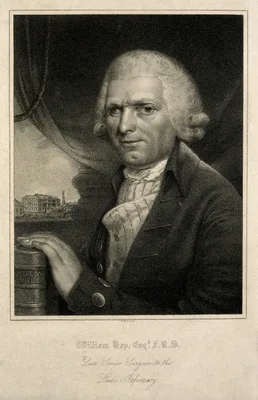
1803 HEY, William (1736 – 1819)
Practical observations in surgery.
Hey is remembered for “Hey’s saw” and “Hey’s internal derangement of the knee,” a phrase that he coined. He was an outstanding surgeon in his day; he founded and was senior surgeon of the General Infirmary, Leeds. He …
GMN 4308.1 · https://historyofmedicine.com/id/5506
1828 PHYSICK, Philip Syng (1768 – 1837)
Description of a forceps, employed to facilitate the extirpation of the tonsil.
Invention of the modern tonsillotome.
GMN 3255 · https://historyofmedicine.com/id/3923
1834 GUTHRIE, George James (1785 – 1856)
On the anatomy and diseases of the neck of the bladder, and of the urethra.
Guthrie was the first to describe non-prostatic obstruction at the neck of the bladder. On p. 252 of the above work is an account of Guthrie’s prostatic catheter for use in trans-urethral prostatectomy.
GMN 4167 · https://historyofmedicine.com/id/5986
1853 PRAVAZ, Charles Gabriel (1791 – 1853)
Sur un nouveau moyen d’opérer la coagulation du sang dans les artères, applicable à la guérison des anéurismes.
Pravaz invented galvanocautery.
GMN 5603 · https://historyofmedicine.com/id/7108
1854 MIDDELDORPF, Albrecht Theodor (1824 – 1868)
Die Galvanokaustik.
Middeldorpf improved the galvano-cautery and introduced it in major surgery.
GMN 5604 · https://historyofmedicine.com/id/7114
1867 WALES, Philip Skinner (1837 – 1906)
Mechanical therapeutics. A practical treatise on surgical apparatus, appliances, and elementary operations; embracing bandaging, minor surgery, orthopraxy, and the treatment of fractures and dislocations.
Digital facsimile from the Hathi Trust at this link.
GMN 10718 · https://historyofmedicine.com/id/12912
1867 –1872 GAUJOT, Constantin Mametz Gustav (1828 – 1913); SPILLMANN, Eugène-Pierre
Arsenal de la chirurgie contemporaine. Description, mode d'emploi et appréciation des appareils et instruments en usage pour le diagnostic et le traitement des maladies chirurgicales, l'orthopédie, la prothèse, les opérations simples, générales, spéciales et obstétricales. 2 vols.
Digital facsimile from Google Books at this link.
GMN 14321 · https://historyofmedicine.com/id/16646
1869 RIZZOLI, Francesco (1809 – 1880)
Collezione della memorie chirurgiche ed ostetriche. 2 vols.
Rizzoli was Professor of Surgery at Bologna and an outstanding operative surgeon. He introduced a compressor for aneurysms, a tracheotome, cystotome, lithotrite, enterotome, osteoclast, and performed acupressure as ea…
GMN 5610 · https://historyofmedicine.com/id/7129
1891 ALTUKHOV, Nikolai
Entsefalometriya mozga cheloveka v otnoshenii k polu, vozrastu i cherepnomu ukazatelyu [in Cyrillic].
In 1889, nearly 20 years before Horsley and Clarke published their paper on the use of stereotaxy to examine the brain, Dmitrii Zernov, a professor of anatomy at Moscow University, invented the first prototype of a st…
GMN 7243 · https://historyofmedicine.com/id/9412
1898 GIGLI, Leonardo (1863 – 1908)
Zur Technik der temporären Schädelresektion mit meiner Drahtsäge.
Gigli’s saw adapted for craniotomy. Translation in J. Neurosurg., 1962, 19, 1103.
GMN 4874 · https://historyofmedicine.com/id/5718
1899 TRUAX, Charles (1852 – 1918)
The mechanics of surgery.
An encyclopedic work that described illustrated and analysed the entire range of instrumentation employed in medical and surgical practice at the end of the 19th century. Reprinted with introduction by James M. Edmons…
GMN 2680.01 · https://historyofmedicine.com/id/3563
1908 HORSLEY, Sir Victor Alexander Haden (1857 – 1916); CLARKE, Robert Henry (1850 – 1926)
The structure and functions of the cerebellum examined by a new method.
Stereotactic apparatus for the accurate location of electrodes in the brain. The apparatus devised by Horsley and Clarke opened the way to stereotactic surgery of the brain.
GMN 1435.1 · https://historyofmedicine.com/id/2230
1921 BIRCHER, Eugen (1882 – 1956)
Die Arthroendoskopie.
First published account of the use of the laparoscope for arthroscopy.
GMN 4388.2 · https://historyofmedicine.com/id/5956
1925 STROMAYR, Caspar ( – 1566); BRUNN, Walter Albert Ferdinand von (1876 – 1952)
Die Handschrift des Schnitt- und Augenarztes Caspar Stromayr in Lindau im Bodensee: In der Lindauer Handschrift (P.1.46) vom 4. Juli 1559. Mit einer historischen Einführung und Wertung von Walter von Brunn.
Stroymayr's manuscript was discovered in Lindau in 1909, and remained unpublished until the above edition, which reproduced his drawings in color. Like Bartisch (No. 5817) Stromayr specialized in hernia repair and eye…
GMN 3573.1 · https://historyofmedicine.com/id/8659
1926 STERN, Maxmilian (1878 – 1946)
Minor surgery of the prostate gland; a new cystoscopic instrument employing a cutting current capable of operation in a water medium.
Stern’s resectoscope.
GMN 4273 · https://historyofmedicine.com/id/5278
1928 CUSHING, Harvey Williams (1869 – 1939); BOVIE, William T.
Electro-surgery as an aid to the removal of intracranial tumors. With a preliminary note on a new surgical-current generator by W.T. Bovie.
Introduction of electrocoagulation in neurosurgery.
GMN 4897.1 · https://historyofmedicine.com/id/5906
1931 BURMAN, Michael S. (1901 – 1975)
Arthroscopy or the direct visualization of joints: An experimental cadaver study.
The first description of arthroscopic appearance of joints other than the knee, and a classic on the fundamental principles of the procedure. Follow-up paper by Burman, H. Finkelstein, & L. Mayer: Arthroscopy of the k…
GMN 4400.1 · https://historyofmedicine.com/id/6021
1947 SPIEGEL, Ernest Adolf (1895 – 1985); WYCIS, Henry T. (1911 – 1972); ET AL
Stereotaxic apparatus for operations on the human brain.
"The first successful cranial application of stereotactic surgery in humans is credited to the team of Ernest Spiegel and Henry Wycis in the Department of Experimental Neurology at Temple University in Philadelphia (S…
GMN 4912.1 · https://historyofmedicine.com/id/6004
1949 LEKSELL, Lars (1907 – 1986)
A stereotaxic apparatus for intracerebral surgery.
"In 1947 Leksell visited Wycis in Philadelphia and then developed and described his instrument in a publication in 1949. This was the first example of a stereotactic system based on the principle of ‘‘center-of-arc’’.…
GMN 11987 · https://historyofmedicine.com/id/14195
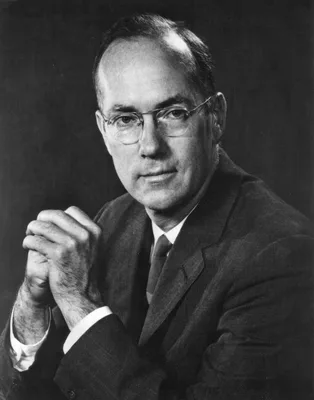
1955 TOWNES, Charles Hard (1915 – 2015); GORDON, James Power (1928 – 2013); ZEIGER, Herbert (1925 – 2011)
The maser - new type of microwave amplifier, frequency standard, and spectrometer.
In 1964 Townes shared the Nobel Prize in Physics with Nicolay Gennadiyevich Basov and Alexandr Mihailovich Prokhorov "for fundamental work in the field of quantum electronics, which has led to the construction of osci…
GMN 14312 · https://historyofmedicine.com/id/16637
1957 WATANABE, Masaki (1911 – 1995)
Atlas of arthroscopy.
The first atlas of arthroscopy, a major step in gaining wide acceptance of this operating technique. The color illustrations were prepared by an artist as available arthroscopes did not permit color photography. Watan…
GMN 4405.01 · https://historyofmedicine.com/id/6093
1959 BAILEY, Percival (1892 – 1973); SCHALTENBRAND, Georges (1897 – 1979)
Einführung in die stereotaktischen Operationen mit einem Atlas des menschlichen Gehirns. Introduction to stereotaxis with an atlas of the human brain. Large folio text plus 2 large folio binders of plates with captions.
One of the most elaborately produced medical books of the 20th century, with numerous very large plates folding out to the size of four folio sheets, and numerous photographs with plastic overlays.
GMN 14227 · https://historyofmedicine.com/id/16544
1963 GOLDMAN, Leon (1906 – 1997)
Effect of the laser beam on the skin.
One of the first papers on the application of lasers in medicine. In 1961 Goldman became the first researcher to use a laser to treat a human skin disease when he treated melanoma. The method later became popular in r…
GMN 6941 · https://historyofmedicine.com/id/9106
1965 KNIGHT, Geoffrey Cureton (1906 – 1993)
Stereotactic tractotomy in the surgical treatment of mental illness.
GMN 4914.3 · https://historyofmedicine.com/id/6022
1967 GOLDMAN, Leon (1906 – 1997)
Biomedical aspects of the laser: The introduction of laser applications into biology and medicine.
The first book on the use of lasers in medicine and biology.
GMN 6942 · https://historyofmedicine.com/id/9107
1973 KELLY, Desmond Hamilton Wilson (1934 – )
Stereotactic limbic leucotomy: Neurophysiological aspects and operative technique.
With A. Richardson and N. Mitchell-Heggs.
GMN 4914.6 · https://historyofmedicine.com/id/6033
1973 ABULCASIS (ABU AL-QASIM KHALAF IBN AL-ABBAS AL-ZAHRAWI; أبو القاسم خلف بن العباس الزهراوي), [Albucasis] (936 – 1013); SPINK, Martin S.; LEWIS, Geoffrey Lewis (1920 – 2008)
Albucasis on surgery and instruments. A definitive edition of the Arabic text, with English translation and commentary by M. S. Spink and G. L. Lewis.
GMN 9353 · https://historyofmedicine.com/id/11535
1987 SEILER, Theo (1949 – ); WOLLENSAK, J
Correction of astigmatism with the excimer laser.
In 1985 Seiler performed the first large area ablation in a human eye to remove a corneal scar, having previously performed T-incisions with an excimer laser to correct for astigmatism.
GMN 7136 · https://historyofmedicine.com/id/9303
1988 KWOH, Yik San
A robot with improved absolute positioning accuracy for CT guided stereotactic brain surgery.
With Jin Hou, E. A. Jonckheere, and S. Hyati.
GMN 7952 · https://historyofmedicine.com/id/10127
1990 PALLIKARIS, Ionnis (Παλλήκαρης Ιωάννης) (1947 – ); ET AL
Laser in situ keratomileusis.
Though several researchers developed the procedures for using an excimer laser to perform in situ karatomileusis (LASIK), "Pallikaris also independently conceived of a hinged flap using a microkeratome he had specific…
GMN 7135 · https://historyofmedicine.com/id/9302
1994 SMITH, K. R.; FRANK, K. J.; BUCHOLZ, R. D.
The NeuroStation--a highly accurate, minimally invasive solution to frameless stereotactic neurosurgery.
The beginning of image-guided surgery. Abstract: "The NeuroStation is an image-guided neurosurgery workstation designed to deliver frameless stereotaxy within an ergonomic, integrated surgical environment. Generally, …
GMN 8140 · https://historyofmedicine.com/id/10316
2001 MARESCAUX, Jacques (1948 – ); LEROY, Joël
Transatlantic robot-assisted telesurgery.
The "Lindbergh operation", a complete very long distance tele-surgical gallbladder operation carried out by a team of French surgeons located in New York on a patient in Strasbourg, France using high-spreed telecommun…
GMN 7959 · https://historyofmedicine.com/id/10134
2002 THURTLE, Phillip; MITCHELL, Robert E.
Semiotic flesh: Information and the human body. Edited by Phillip Thurtle and Robert Mitchell.
Includes "The virtual surgeon: Operating on the data in an age of medialization" by Timothy Lenoir.
GMN 7953 · https://historyofmedicine.com/id/10128
2004 LANFRANCO, Anthony R.; CASTELLANOS, Andres E.; DESAI, Jaydev P.; MYERS, William C.
Robotic surgery: A current perspective.
A review of the history, development and then-current applications of robotics in surgery. The paper is freely available from PubMedCentral at this link.
GMN 7958 · https://historyofmedicine.com/id/10133
2004 MARESCAUX, Jacques (1948 – ); BALLANTYNE, Garth H.; GIULIANOTTI, Pier Cristoforo (1953 – )
Primer of robotic & telerobotic surgery. Edited by Garth H. Ballantyne, Jacques Marescaux, and Pier Cristoforo Giulianotti.
GMN 8137 · https://historyofmedicine.com/id/10313
2006 FAUST, Russel A.
Robotics in surgery: History, Current and future applications. Edited by Russel A. Faust.
GMN 7951 · https://historyofmedicine.com/id/10126
2013 PHULARI, Basavaraj Subhaschandra
History of orthodontics.
This history covers 19th century and earlier developments but emphasizes 20th century material including "History of dental lasers and their applications in orthodontics," "History of of Invisalign," etc.
GMN 12927 · https://historyofmedicine.com/id/15174