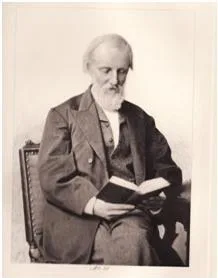
1554 RUF, Jacob [RUEFF; RÜFF; RUOFF] (1500 – 1558)
Ein schön lustig Trostbüchle von den Empfengknussen und Geburten der Menschen…
An improved version of Rösslin’s Swangern frawen. This contains the first true anatomical pictures in an obstetrics book. Rueff described smooth-edged forceps for delivery of a live baby, preceding Chamberlen, and a t…
GMN 463 · https://historyofmedicine.com/id/7685
1603 SANTORIO, Santorio [SANCTORIUS] (1561 – 1636)
Methodi vitandorum errorum omnium, qui in arte medica…
First mention of Santorio’s pulse-clock (“pulsilogium”) and his scale. Through most of the 17th and 18th centuries Santorio’s name was linked with that of Harvey as the greatest figure in physiology and experimental m…
GMN 572.1 · https://historyofmedicine.com/id/364
1612 SANTORIO, Santorio [SANCTORIUS] (1561 – 1636)
Commentaria in artem medicinalem Galeni.
First printed mention of the air thermometer, an instrument that played a vital part in the creation of static medicine. This device was similar to Galileo’s open-air thermoscope, of which Santorio may have known, but…
GMN 572.2 · https://historyofmedicine.com/id/348
1625 SANTORIO, Santorio [SANCTORIUS] (1561 – 1636)
Commentaria in primam fen primi libri canonis Avicennae.
The chief value of this work is in its cautious revelation of the principles of construction of various instruments that Santorio had invented, including a hygrometer, a pendulum for measuring pulse rate, a syringe fo…
GMN 2668 · https://historyofmedicine.com/id/3506
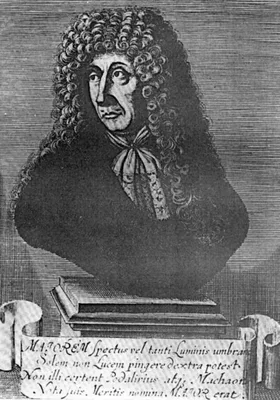
1667 MAJOR, Johann Daniel (1634 – 1693)
Chirurgia infusoria.
Major, the first Professor of Medicine at Kiel, was the first to make successful intravenous injections of drugs into the human body, in 1662. Sir Christopher Wren in 1656 had injected wine and ale into the veins of a…
GMN 1963 · https://historyofmedicine.com/id/3739
1668 MAURICEAU, François (1637 – 1709)
Des maladies des femmes grosses et accouchées.
The outstanding textbook of the time. Mauriceau, leading obstetrician of his day, introduced the practice of delivering his patients in bed instead of in the obstetrical chair. It was to Mauriceau that Hugh Chamberlen…
GMN 6147 · https://historyofmedicine.com/id/7708
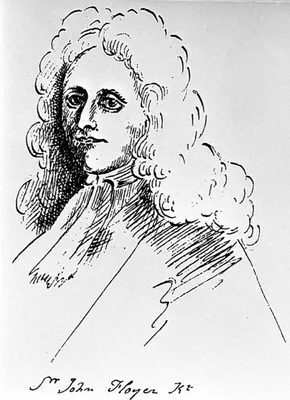
1707 –1710 FLOYER, Sir John (1649 – 1734)
The physician’s pulse-watch. 2 vols.
Before watches had hands to record the seconds, Floyer invented a pulse-watch which divided the minute. He was the first to count the pulse with the aid of a watch and to make regular observations on the pulse-rate. T…
GMN 2670 · https://historyofmedicine.com/id/3507
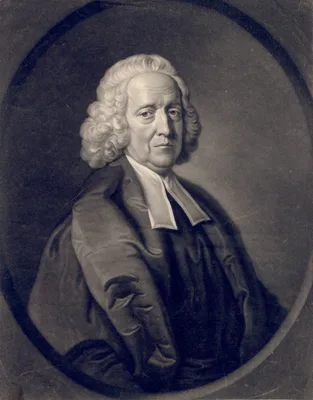
1727 –1733 HALES, Stephen (1677 – 1761)
Vegetable staticks: Or, an account of some statical experiments on the sap in vegetables. Statical essays, containing haemastaticks. 2 vols.
Hales initiated a new stage in physiological experimentation with his "statical" methods, which were characterized by precise quantitative measurements, repetition and the used of controls, and were based on the assum…
GMN 765 · https://historyofmedicine.com/id/1752
1733 CHAPMAN, Edmund (1680 – 1756)
An essay on the improvement of midwifery.
Gives the first published account of the forceps, kept secret by the Chamberlen family for generations. Chapman was the second person in England to teach midwifery publicly. The first edition of his book was not illus…
GMN 6156.2 · https://historyofmedicine.com/id/7730
1734 GIFFARD, William ( – 1731); HODY, Edward (1698 – 1759)
Cases in midwifry. Revised by Edward Hody.
Giffard was one of the first, after the Chamberlens, to use the forceps. His book contains, under case 14, the earliest published record of the use of the hitherto secret Chamberlen forceps, in 1726, together with ill…
GMN 6156.3 · https://historyofmedicine.com/id/7732
1740 MARTINE, George (1702 – 1741)
Essays medical and philosophical.
First important work on clinical thermometry, and the only scientific treatment of the subject before Wunderlich.
GMN 2671 · https://historyofmedicine.com/id/3509
1747 LEVRET, André (1703 – 1780)
Observations sur les causes et les accidens de plusieurs accouchemens laborieux.
Levret, who improved the obstetric forceps, was a famous teacher in Paris.
GMN 6152 · https://historyofmedicine.com/id/7716
1752 SMELLIE, William (1697 – 1763)
A treatise on the theory and practice of midwifery.
Smellie contributed more to the fundamentals of obstetrics than virtually any individual. In his Treatise he described more accurately than any previous writer the mechanism of parturition, stressing the importance of…
GMN 6154 · https://historyofmedicine.com/id/7719
1753 LEVRET, André (1703 – 1780)
L’art des accouchemens.
Besides introducing a curved forceps (see No. 6152) Levret invented several other obstetric instruments and made fundamental observations on pelvic anomalies. His book covered the whole field of obstetrics and remaine…
GMN 6153 · https://historyofmedicine.com/id/7718
1759 COUDRAY, Angélique Marguerite Le Boursier du (1712 – 1794)
Abregé de l'art des accouchements, dans lequel on donne les préceptes nécessaires pour le mettre heureusement en pratique, et auquel on a joint plusieurs observations intéressantes sur des cas singuliers.
After ten years as a midwife in Paris, Madame du Coudray was hired by King Louis XV to travel across France to better train rural midwives.There were political motivations for this; Louis wanted to boost a “declining”…
GMN 6848 · https://historyofmedicine.com/id/9012
1766 SOLDO, Mauro (Soldi)
Descrizione degl'instrumenti, delle macchine, e delle suppellettili raccolte ad uso chirurgico e medico dal P. Don Ippolito Rondinelli...
Catalogue of the private museum of surgical and medical instruments established by Father Ippolito Rondinelli in Ravenna, which Soldo described as “the first museum of medicine and surgery.” Extensively illustrasted. …
GMN 7808 · https://historyofmedicine.com/id/9980
1786 SMELLIE, William (1697 – 1763); NORMAN, John (1748 – 1817)
The first American edition, An abridgement of the practice of midwifery: and a set of anatomical tables.
An abridgement of Smellie's obstetrical writings, with plates engraved by the editor and publisher, John Norman, was the first medical book with engraved illustrations published in North America, and also the first bo…
GMN 11534 · https://historyofmedicine.com/id/13733
1797 CURRIE, James (1756 – 1805)
Medical reports, on the effects of water, cold and warm, as a remedy in fever and febrile diseases.
Currie was among the first in Britain to use cold water packs in the treatment of fever. He made some original observations on the clinical use of the thermometer. It was Currie who first edited Robert Burns’s Collect…
GMN 1988 · https://historyofmedicine.com/id/3810
1806 BOZZINI, Philipp (1773 – 1809)
Lichtleiter, eine Erfindung zur Anschauung innerer Theile und Krankheiten nebst der Abbildung.
Bozzini introduced a speculum in which the idea of illumination and reflection by mirrors was utilized. English translation in Urology, 1974, 3, 119-23. Bozzini published his work in book form, Der Lichtleiter, Weimar…
GMN 2672.1 · https://historyofmedicine.com/id/3514
1811 NORTH, Elisha (1771 – 1843)
A treatise on a malignant epidemic, commonly called spotted fever.
First book on cerebrospinal meningitis; in it North recommended the use of the clinical thermometer, not in general use until the time of Wunderlich. For more information on this book, see the article by F. L. Pleadwe…
GMN 4676 · https://historyofmedicine.com/id/944
1818 BLUNDELL, James (1790 – 1877)
Experiments on the transfusion of blood by the syringe.
Blundell invented a syringe by means of which he was able to transfuse dogs.
GMN 2015 · https://historyofmedicine.com/id/1984
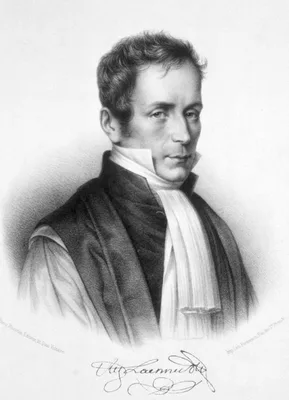
1819 LAENNEC, René Théophile Hyacinthe (1781 – 1826)
De l’auscultation médiate, ou traité du diagnostic des maladies des poumons et du coeur. 2 vols.
This book revolutionized the study of diseases of the chest. Auscultation in the instrumental sense dates from Laennec’s invention of the stethoscope (at first merely a roll of stiff paper) with a view to amplifying t…
GMN 2673 · https://historyofmedicine.com/id/3518
1819 SARLANDIÈRE, Jean-Baptiste (1787 – 1838)
Bdellomètre du docteur Sarlandière.
Privately printed pamphlet describing Sarlandière's "artificial leech," a mechanical bleeding device designed to replace leeches when they were not available. Digital facsimile from Google Books at this link.
GMN 11801 · https://historyofmedicine.com/id/14003
1823 PURKYNĔ, Jan Evangelista [PURKINJE] (1787 – 1869)
Commentatio de examine physiologico organi visus et systematis cutanei.
Purkynĕ was first to examine the interior of the human eye and the dog eye, using only a candle and a concave spherical lens. He thus invented the ophthalmoscope three decades before Helmholtz (1851; No. 5866). Reprin…
GMN 1492.1 · https://historyofmedicine.com/id/8806
1824 AUENBRUGGER, Leopold (1722 – 1809); FORBES, Sir John (1788 – 1861)
Original cases with dissections and observations illustrating the use of the stethoscope and percussion in the diagnosis of diseases of the chest: Also commentaries on the same subjects selected and translated from Auenbrugger, Corvisart, Laennec and others
This is the earliest English work on the stethoscope. It "includes the first English translation of Auenbrugger's book on percussion, selected sections from Laennec's book on auscultation, and detailed reports from 39…
GMN 11599 · https://historyofmedicine.com/id/13798
1825 STOKES, William (1804 – 1878)
An introduction to the use of the stethoscope.
Stokes, famous member of the Irish school of medicine, published the first systematic treatise on the use of the stethoscope – and this before his qualification at Edinburgh. His name is perpetuated in medical literat…
GMN 2674 · https://historyofmedicine.com/id/3519
1826 LAENNEC, René Théophile Hyacinthe (1781 – 1826)
Traité de l'auscultation médiate ou traité diagnostic des maladies des poumons et du coeur. 2 vols.
Second edition, hugely revised, expanded, and improved. The pagination of the first edition (1819) was 456 pp. in vol. 1 and 472 pp. in vol. 2. The second edition was expanded to 728pp. in vol. 1 and 790 pp. in vol. 2…
GMN 14323 · https://historyofmedicine.com/id/16648
1827 SÉGALAS D'ETCHÉPARE, Pierre Salomon (1792 – 1875)
Un moyen d’éclairer l’urètre et la vessie de manière à voir dans l’intérieur de ces organes.
Urethro-cystic speculum (endoscope).
GMN 4165.1 · https://historyofmedicine.com/id/5982
1828 POISEUILLE, Jean Léonard Marie (1799 – 1869)
Recherches sur la force du coeur aortique.
Poiseuille was the first after Stephen Hales to make any important addition to the knowledge of the physiology of circulation. In his graduation thesis, above, he described a “hemodynamometer” invented by himself and …
GMN 767 · https://historyofmedicine.com/id/2024
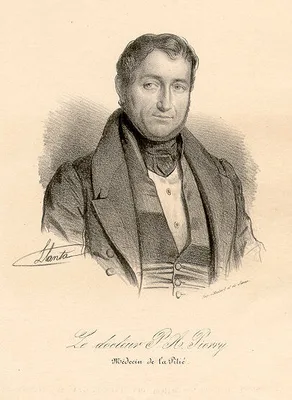
1828 PIORRY, Pierre Adolphe (1794 – 1879)
De la percussion médiate.
Piorry, pioneer of mediate percussion, introduced the percussor and the pleximeter in 1826. He also developed refinements to Laennec’s stethoscope.
GMN 2675 · https://historyofmedicine.com/id/3521
1829 BABINGTON, Benjamin Guy (1794 – 1866)
[Description of the glottiscope.]
Babington was responsible for the introduction of laryngoscopy. He demonstrated a crude “glottiscope” to the Hunterian Society on March 18, 1829, but his effort attracted little attention.
GMN 3327 · https://historyofmedicine.com/id/4569
1834 HÉRISSON, Jules
Le sphygmomètre; instrument qui traduit à l’oeil toute l’action des artères.
Hérisson invented an instrument for recording blood pressure. Translated into English as The sphygmometer, an instrument which renders the action of the arteries apparent to the eye. A memoir... with an improvement of…
GMN 2748.2 · https://historyofmedicine.com/id/4630
1837 STOKES, William (1804 – 1878)
A treatise on the diagnosis and treatment of diseases of the chest.
Stokes, most prominent of the Irish school of medicine, established his reputation by his book on diseases of the chest. Important among its contents are his discovery of a stage of pneumonia prior to that described b…
GMN 2213 · https://historyofmedicine.com/id/1697
1839 ŠKODA, Josef (1805 – 1881)
Abhandlung über Perkussion und Auskultation.
Skoda classified the various sounds obtained on percussion according to their musical pitch and tone. “Skoda’s resonance” is an important diagnostic sign in pneumonia and pericardial effusion. Following Skoda’s work, …
GMN 2676 · https://historyofmedicine.com/id/3525
1842 –1843 RÉCAMIER, Joseph Claude Anthelme (1774 – 1852)
Invention du spéculum plein et brisé.
Description of the speculum invented by Récamier.
GMN 6033 · https://historyofmedicine.com/id/7326
1845 RYND, Francis (1801 – 1861)
Neuralgia - introduction of fluid to the nerve.
Rynd, an Irish physician, invented the hollow needle used in hypodermic syringes. The description of his instrument is given in Dublin Quart. J. med. Sci., 1861, 32, 13.
GMN 1968 · https://historyofmedicine.com/id/3749
1846 HUTCHINSON, John (1811 – 1861)
On the capacity of the lungs, and on the respiratory functions, with a view of establishing a precise and easy method of detecting disease by the spirometer.
Invention of the spirometer, making possible the determination of the vital capacity of the lungs. Hutchinson used the spirometer while evaluating candidates for life insurance as a physician for Brittania Life. Parti…
GMN 930 · https://historyofmedicine.com/id/149
1846 BOWDITCH, Henry Ingersoll (1808 – 1892)
The young stethoscopist; or, the student's aid to auscultation.
Through this book Bowditch established the stethoscope as a diagnostic tool in America. Digital facsimile from the Medical Heritage Library, Internet Archive, at this link.
GMN 8587 · https://historyofmedicine.com/id/10764
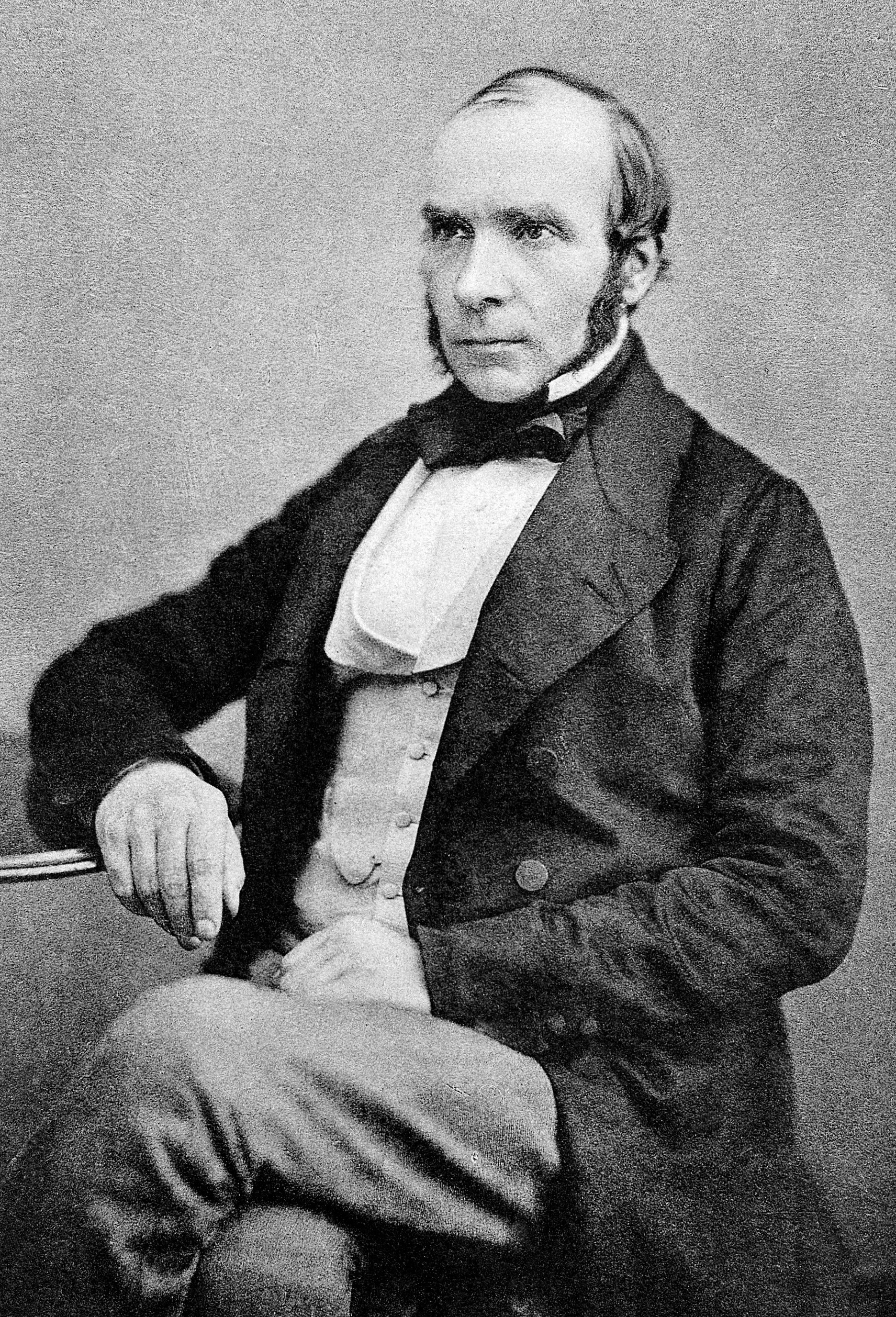
1848 SNOW, John (1813 – 1858)
On the inhalation of chloroform and ether. With description of an apparatus.
Snow’s chloroform inhaler.
GMN 5663 · https://historyofmedicine.com/id/7310
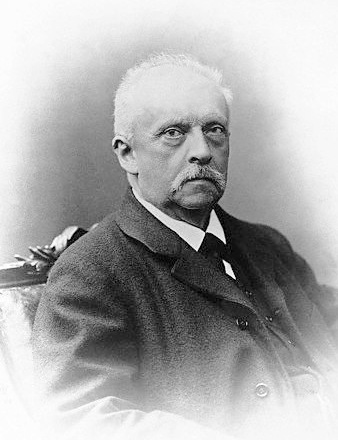
1851 HELMHOLTZ, Hermann Ludwig Ferdinand von (1821 – 1894)
Beschreibung eines Augen-Spiegels zur Untersuchung der Netzhaut im lebenden Auge.
Invention of the ophthalmoscope, one of the greatest events in the history of ophthalmology. English translation by T. H. Shastid, Chicago, Cleveland Press, 1916.
GMN 5866 · https://historyofmedicine.com/id/7238
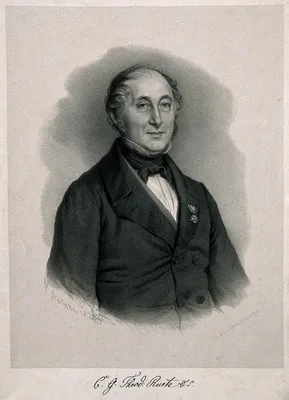
1852 RUETE, Christian Georg Theodor (1810 – 1867)
Der Augenspiegel und des Optometer für practische Aerzte.
Ruete introduced a practical lens system for examining the inverted image, and improved the illumination, producing the first practical ophthalmoscope.
GMN 5866.1 · https://historyofmedicine.com/id/7240
1853 TRIGT, Adrien Christophe van (1825 – 1864)
Dissertatio ophthalmologica inauguralis de speculo oculi.
Trigt's thesis contains the first printed illustrations of the fundus of the eye. Digital facsimile from Google Books at this link. The following year Trigt's thesis was translated into German by C. H. Schauenberg as …
GMN 5869.1 · https://historyofmedicine.com/id/7258
1854 VIERORDT, Karl von (1818 – 1884)
Die bildliche Darstellung des menschlichen Arterienpulses.
Vierordt invented a sphygmograph which acted on the principle that indirect estimation of blood-pressure could be accomplished by measuring the counter-pressure necessary to obliterate the arterial pulsation. This was…
GMN 2759 · https://historyofmedicine.com/id/1760
1854 –1855 HELMHOLTZ, Hermann Ludwig Ferdinand von (1821 – 1894)
Ueber die Accommodation des Auges.
Helmholtz determined the optical constants and explained the mechanism of accommodation, with the help of the ophthalmometer which he had invented in 1852.
GMN 1509 · https://historyofmedicine.com/id/2595
1854 –1855 GARCIA, Manuel Patricio Rodríguez (1805 – 1906)
Observations on the human voice.
Garcia, a teacher of singing, invented the modern laryngoscope.
GMN 3329 · https://historyofmedicine.com/id/4575
1854 JONES, Thomas Wharton (1808 – 1891)
Report on the ophthalmoscope.
Jones reported that Charles Babbage (1792-1871), the computer pioneer, had produced a simple ophthalmoscope in 1847. After the success of Helmholtz’s instrument in 1851 (No. 5866) Jones wrote about Babbage’s instrumen…
GMN 5874 · https://historyofmedicine.com/id/7269
1855 WOOD, Alexander (1817 – 1884)
New method of treating neuralgia by the direct application of opiates to the painful joints.
Wood of Edinburgh was the first (1853) to employ hypodermic injection that used a true syringe and hollow needle as a therapeutic procedure. He referred to his invention as "subcutaneous" rather than hypodermic. See a…
GMN 1969 · https://historyofmedicine.com/id/3750
1855 CAMMANN, George Philip (1804 – 1863)
Self-adjusting stethoscope of Dr. Cammann.
The American physician George P. Cammann invented the binaural flexible stethoscope. By 1852 Cammann "had developed a stethoscope with flexible tubing (spirals of wire covered with silk, later rubber, or as he called …
GMN 11566 · https://historyofmedicine.com/id/13765
1856 LEARED, Arthur (1822 – 1879)
On the self-adjusting double stethoscope.
Leared demonstrated a binaural stethoscope at the Great Exhibition, London, 1851. Camman introduced the pattern whose main design continues in use today; this was illustrated in the N.Y. med. Times, Jan. 1855, and rep…
GMN 2676.1 · https://historyofmedicine.com/id/3530
1857 FERGUSSON, Sir William (1808 – 1877)
System of practical surgery. 4th ed.
Fergusson’s vaginal speculum is described on p. 724.
GMN 6043 · https://historyofmedicine.com/id/7360