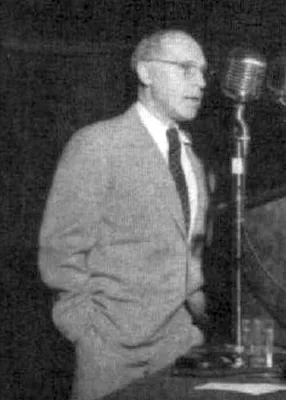
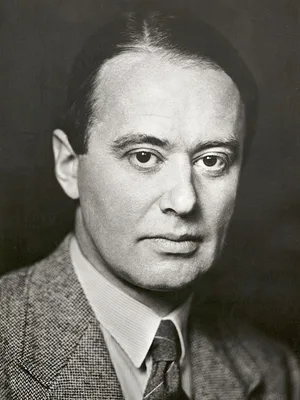
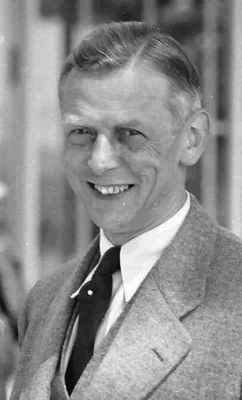
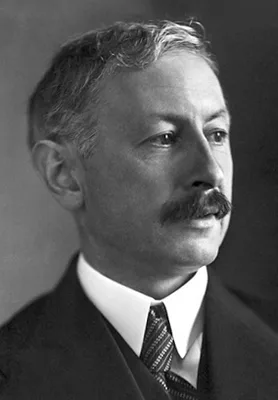
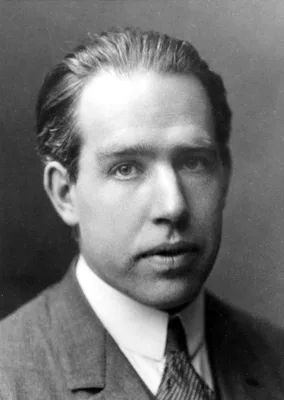
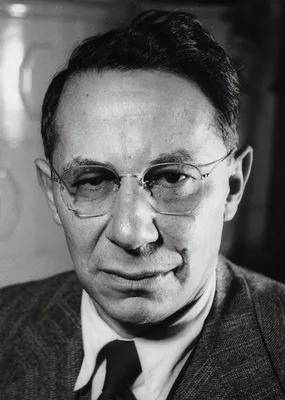
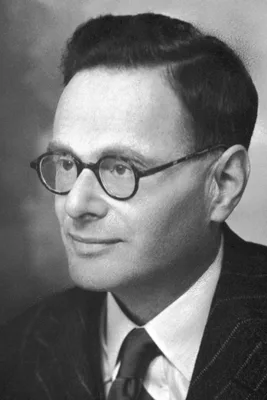
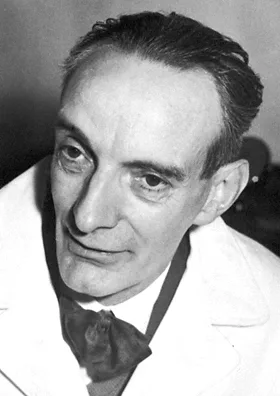
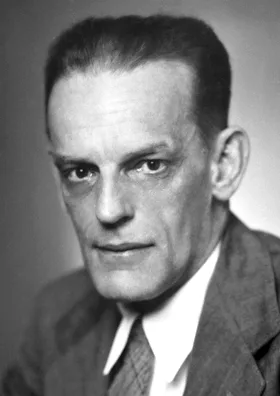
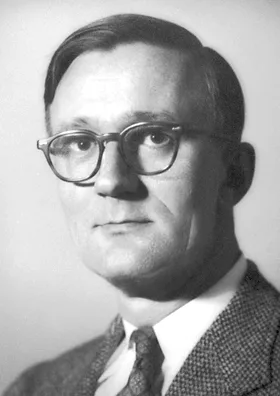
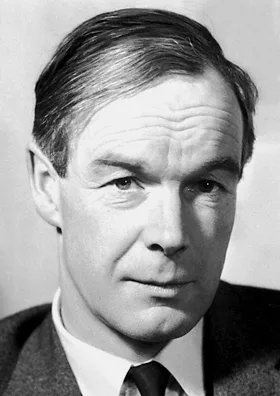
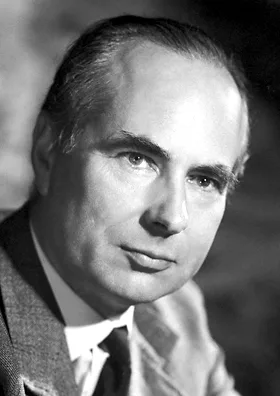
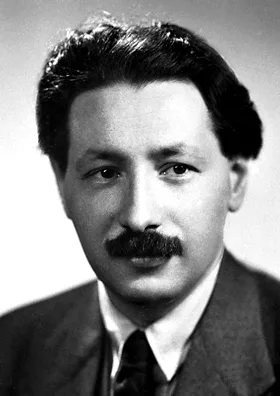
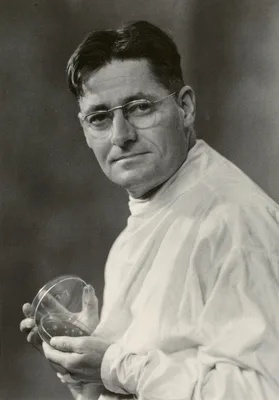
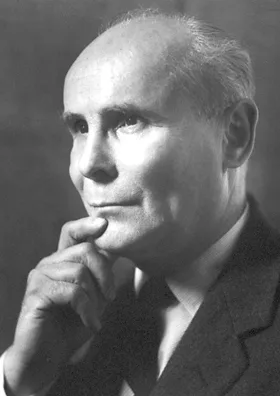
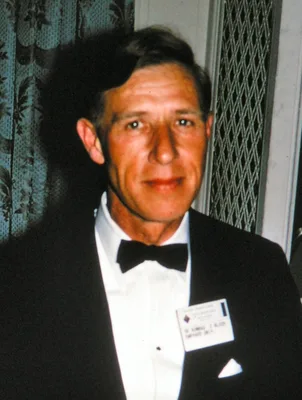
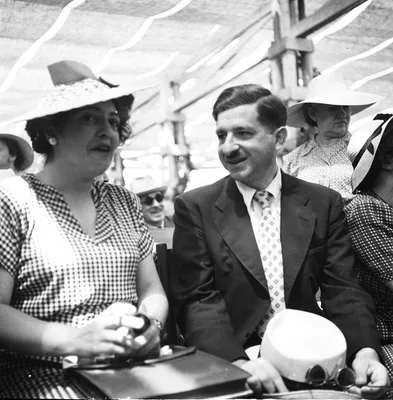
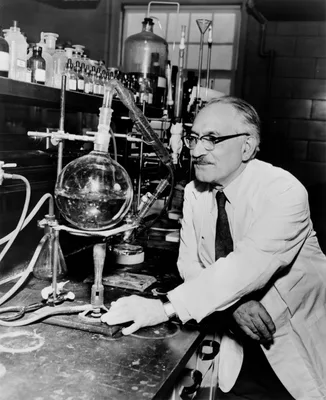
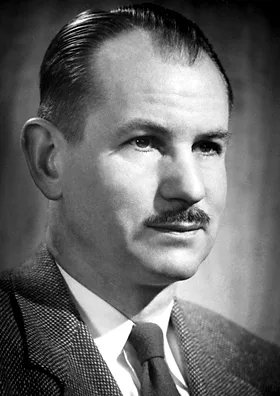
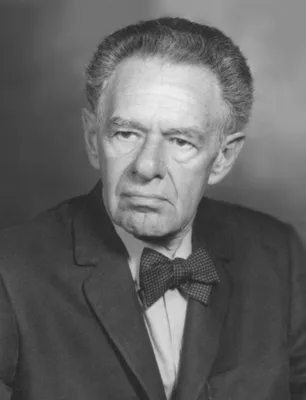
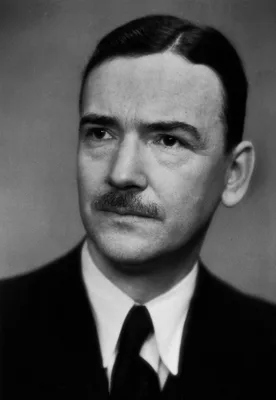
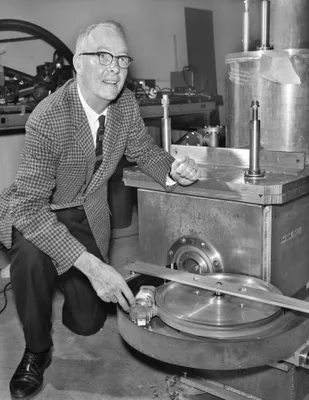
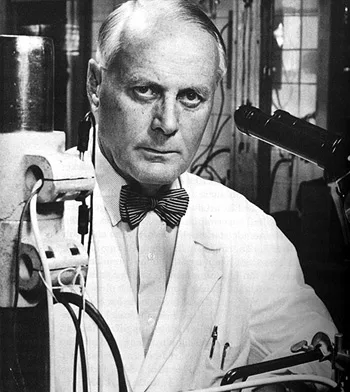
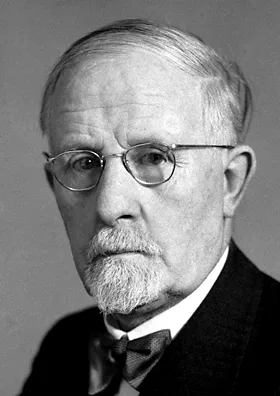
1927 MULLER, Hermann Joseph (1890 – 1967)
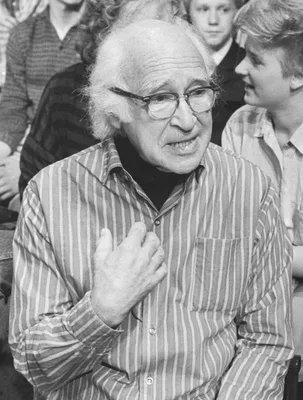
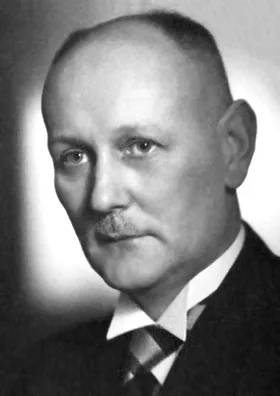
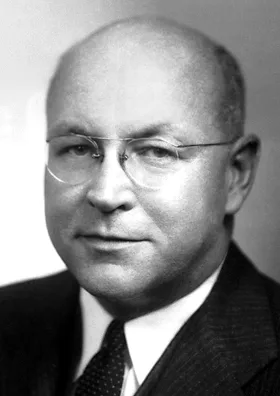
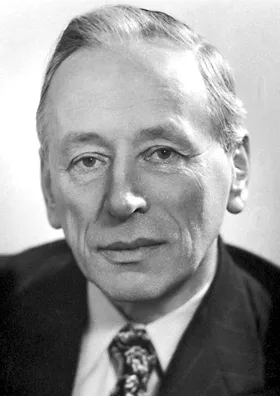
Artificial transmutation of the gene.
Muller showed that radiation causes mutations that are passed on from one generation to the next. This was the first suggestion that inherited traits might be altered or controlled, and it created a sensation: “Man’s …
GMN 251.1 · https://historyofmedicine.com/id/8680
1928 SZENT-GYÖRGYI, Albert (1893 – 1987)
Observations on the function of peroxidase systems and the chemistry of the adrenal cortex. Description of a new carbohydrate derivative.
Isolation of vitamin C, ascorbic acid. In 1937 Szent-Györgyi was awarded the Nobel Prize in Physiology or Medicine "for his discoveries in connexion with the biological combustion process with special reference to vit…
GMN 1059 · https://historyofmedicine.com/id/676
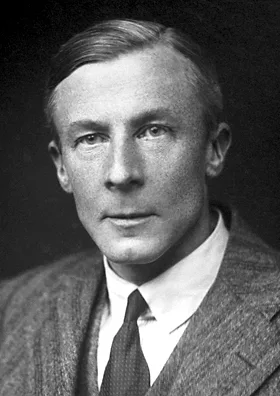
1928 ADRIAN, Edgar Douglas (1889 – 1977)
The basis of sensation. The action of the sense organs.
In 1932 Adrian shared the Nobel Prize in Physiology or Medicine with Charles Scott Sherrington "for their discoveries about the function of neurons." See also Nos. 1307, 1528, and 1303.
GMN 1308 · https://historyofmedicine.com/id/1144
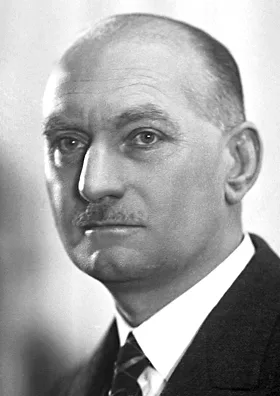
1929 HEYMANS, Corneille Jean François (1892 – 1968)
Le sinus carotidienet la zone homologue cardio-aortique.
In 1938 Heymans was awarded the Nobel Prize in Physiology or Medicine "for the discovery of the role played by the sinus and aortic mechanisms in the regulation of respiration."
GMN 967 · https://historyofmedicine.com/id/285
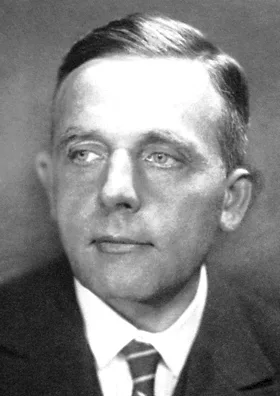
1929 WARBURG, Otto Heinrich (1883 – 1970); NEGELEIN, Erwin (1897 – 1979)
Ueberden Absorptionsspektrum des Atmungsferments.
Warburg discovered the nature and function of the respiratory ferment. In 1931 Warburg was awarded the Nobel Prize in Physiology or Medicine "for discovery of the nature and mode of action of the respiratory enzyme."
GMN 969 · https://historyofmedicine.com/id/301
1929 DAM, Carl Pieter Henrik (1895 – 1976)
Cholesterinstoffwechsel in Hühnereiern und Hühnchen.
In 1943 Dam shared the Nobel Prize with Doisy "for discovery of vitamin K, the blood coagulating factor."
GMN 1062 · https://historyofmedicine.com/id/690
1929 FLEMING, Sir Alexander (1881 – 1955)
On the antibacterial action of cultures of a penicillium, with special reference to their use in the isolation of B. influenzae.
Discovery of the growth-inhibiting action of Penicillium on certain bacteria. In 1945 Fleming shared the Nobel Prize in Physiology or Medicine with Ernst Boris Chain and Sir Howard Walter Florey "for the discovery of …
GMN 1933 · https://historyofmedicine.com/id/2774
1929 FORSSMANN, Werner Theodor Otto (1904 – 1979)
Die Sondierung des rechten Herzens.
The first cardiac catheterization on a living person. Forssmann catheterized his own heart. Historical note by N. Howard-Jones, Bull. Hist. Med.,1973, 47,524-6. English translation in Callahan, Keys & Key, Classics of…
GMN 2858 · https://historyofmedicine.com/id/3654
1930 NORTHROP, John Howard (1891 – 1987)
Crystalline pepsin.
Crystallization of pepsin and its identity as a protein. In 1946 Northrop shared half of the Nobel Prize in Chemistry with Wendell Meredith Stanley "for their preparation of enzymes and virus proteins in a pure form."…
GMN 1038.1 · https://historyofmedicine.com/id/1021
1930 HOUSSAY, Bernardo Alberto (1887 – 1971); BIASOTTI, Alfredo Benito (1903 – 1991)
La diabetes pancreática de los perros hipofisoprivos.
Houssay’s depancreatized hypophysectomized dog. This work led to Houssay’s demonstration of the importance of the anterior pituitary in sugar metabolism. See also Endocrinology, 1931,15, 511-23. In 1947 Houssay shared…
GMN 1169 · https://historyofmedicine.com/id/1562
1930 TISELIUS, Arne Wilhelm Kaurin (1902 – 1971)
The moving boundary method of studying the electrophoresis of proteins. (Nova Acta Reg. Soc. Scient. Upsaliensis, IV, 7, No. 4.)
Tilesius's doctoral dissertation introduced the laboratory technique of moving-boundary electrophoresis, a technique for separation of chemical compounds by electrophoresis in free solution. For this work, and the wor…
GMN 12830 · https://historyofmedicine.com/id/15076
1931 BUTENANDT, Adolf Friedrich Johann (1903 – 1995)
Ueber die chemische Untersuchung der Sexualhormone.
The male sex hormone, androsterone, was isolated in crystalline form by Butenandt. In 1939 Butenandt received half of the Nobel Prize in Chemistry "for his work on sex hormones." The other half was awarded to Leopold …
GMN 1195 · https://historyofmedicine.com/id/1806
1931 KARRER, Paul (1889 – 1971); MORF, R.; SCHÖPP, K.
Zur Kenntnis des Vitamins-A aus Fischtranen.
In 1930 Karrer established the correct formula for carotene (the chief precursor of vitamin A), the first demonstration of the chemical structure of a vitamin. Shortly thereafter, he was able to determine the formula …
GMN 14238 · https://historyofmedicine.com/id/16557
1932 BOHR, Niels (1885 – 1962)
Light and life. Address delivered at the opening meeting of the International Congress on Light Therapy in Copenhagen 15. August 1932.
In 1922 Bohr was awarded the Nobel Prize in Physics "for his services in the investigation of the structure of atoms and of the radiation emanating from them." Including Bohr's 1932 address, Light and life, in the Nob…
GMN 12060 · https://historyofmedicine.com/id/14269
1933 BÉKÉSY, Georg von (1899 – 1972)
Über den Knall und die Theorie des Hörens.
In 1961 Békésy was awarded the Nobel Prize in Physiology or Medicine "for his discoveries of the physical mechanism of stimulation within the cochlea." English translation in Békésy, Experiments in hearing, 1960.
GMN 1570.1 · https://historyofmedicine.com/id/1290
1933 WALD, George (1906 – 1997)
Vitamin A in the retina.
Through his research on xerophthalmia, karatomalacia and night blindness Wald revealed the critical function of vitamin A in normal vision and visual pathology. (Thanks to Juan Weiss for this reference and their inter…
GMN 1535 · https://historyofmedicine.com/id/3634
1933 HAWORTH, Sir Walter Norman (1883 – 1950); HIRST, Sir Edmund Langley (1898 – 1975)
Synthesis of ascorbic acid.
Haworth and Hirst successfully synthesized vitamin C in the laboratory. This was the first vitamin to be artificially produced. Their breakthrough made it possible for vitamin C, or ascorbic acid as Haworth called it,…
GMN 14280 · https://historyofmedicine.com/id/16602
1934 RUZICKA, Leopold (1887 – 1976); ET AL
Über die Synthese des Testikelhormons (Androsteron) und Stereoisomerer desselben durch Abbau hydrierter Sterine.
First complete synthesis of a sex hormone (androsterone). With M. W. Goldberg, J. Meyer, H. Brüngger, and E. Eichenberger. In 1939 Ruzicka shared the 1939 Nobel Prize in Chemistry with Butenandt (No. 1195) "for his wo…
GMN 1201 · https://historyofmedicine.com/id/1821
1934 JOLIOT-CURIE, Jean Frédéric (1900 – 1958); JOLIOT-CURIE, Irène (1897 – 1956)
I. Un nouveau type de radioactivité. II. Séparation chimique des nouveaux radioéléments émetteur d’électrons positifs.
Discovery of artificially produced radionuclides or radioisotopes. In February 1934, the Joliot-Curies reported the first artificial production of radioactive material after discovering radioactivity in aluminum foil …
GMN 9340 · https://historyofmedicine.com/id/11522
1935 DOMAGK, Gerhard Johannes Paul (1895 – 1964)
Ein Beitrag zur Chemotherapie der bakteriellen Infektionen.
Introduction of Prontosil, the first drug containing sulfanilamide. In 1939 Domagk was awarded the Nobel Prize in Physiology or Medicine "for the discovery of the antibacterial effects of prontosil."
GMN 1949 · https://historyofmedicine.com/id/2824
1935 STANLEY, Wendell Meredith (1904 – 1971)
Isolation of a crystalline protein possessing the properties of tobacco-mosaic virus.
Stanley first crystallized a virus— tobacco mosaic virus. The following year Bawden, Pirie, Bernal and Fankuchen (No. 12005) showed that tobacco mosaic virus molecules are asnisometric and consist of ribonucleoprotein…
GMN 2524.5 · https://historyofmedicine.com/id/3353
1935 ZERNIKE, Frits (1888 – 1966)
Das Phasenkontrastverfahren b.d. mikroskopischen Beobachtung.
Zernicke invented phase contrast microscopy. In 1953 Zernike was awarded the Nobel Prize in Physics "for his demonstration of the phase contrast method, especially for his invention of the phase contrast microscope."
GMN 269.5 · https://historyofmedicine.com/id/8750
1935 LORENZ, Konrad (1903 – 1989)
Der Kumpan in der Umwelt des Vogels - Der Artgenosse als auslösendes Moment sozialer Verhaltensweisen.
This paper is often considered the foundational text and conceptual bedrock for ethology, the scientific study of animal behavior. Lorenz concentrated his studies in the bird populations. He analyzed social behavior i…
GMN 14370 · https://historyofmedicine.com/id/16702
1936 REICHSTEIN, Tadeusz (1897 – 1996)
Über Bestandteile der Nebennieren-Rinde. VI. Trennungsmethoden sowie Isolierung der Substanzen Fa, H, und j.
Isolation of Compound Fa, identical with Compounds E and F. "In the mid-1930s Edward Kendall and Tadeus Reichstein succeeded in isolating and analyzing the composition of a number of similar hormones derived from the …
GMN 1153 · https://historyofmedicine.com/id/1463
1936 EGAS MONIZ, Antonio Caetano de Abreu Freire (1874 – 1955)
Essai d’un traitement chirurgical de certaines psychoses.
Prefrontal leucotomy (lobotomy). Translation in J. Neurosurg., 1964, 21, 1110-14. See also Egas Moniz's book Tentatives opératoires dans le traitement de certaines psychoses, Paris, 1936. His name was originally Anton…
GMN 4905 · https://historyofmedicine.com/id/5959
1937 KREBS, Sir Hans Adolf (1900 – 1981); JOHNSON, William Arthur (1913 – 1993)
Citric acid in intermediate metabolism in animal tissues.
Citric acid cycle (CAC) of aerobic carbohydrate metabolism (Krebs cycle). Three months after his initial publication on CAC Krebs published a supplementary paper aimed at the medical audience, rather than the biochemi…
GMN 751.1 · https://historyofmedicine.com/id/1735
1937 BOVET, Daniel (1907 – 1992); STAUB, Anne-Marie (1914 – 2012)
Action protectrice des éthers phénoliques au cours de l’intoxication histaminique.
First description of structure and action of an antihistamine. In 1957 Bovet was awarded the Nobel Prize in Physiology or Medicine “for his discoveries relating to synthetic compounds that inhibit the action of certai…
GMN 1925 · https://historyofmedicine.com/id/2718
1937 THEILER, Max (1899 – 1972); SMITH, Hugh Hollingsworth (1902 – 1995)
The use of yellow fever virus modified by in vitro cultivation for human immunization.
Immunization without the use of immune serum. In 1951 Theiler was awared the Nobel Prize in Physiology or Medicine "for his discovery of an effective vaccine against yellow fever." This was the first Nobel Prize award…
GMN 5467 · https://historyofmedicine.com/id/7597
1938 HARTLINE, Haldon Keffer (1903 – 1983)
The responses of single optic nerve fibers of the vertebrate eye to illumination of the retina.
Hartline continued and extended the work initiated by Adrian and Matthews on electrical discharges from the optic nerve. See also his later papers In the same journal, 1940, 130, 690-711. Reprinted with historical int…
GMN 1532 · https://historyofmedicine.com/id/2858
1938 RABI, Isidore Isaac (1898 – 1988); KUSCH, Polykarp (1911 – 1993); ZACHARAIS, Jerrold R. (1905 – 1986); ET AL
A new method of measuring nuclear magnetic moment.
Order of authorship in the original publication: Rabi, Zacharais,...Kusch. Followed by: (2) The magnetic moments of 3Li6, 3Li7, and 9F19. Physical Review 53, 1938. (3) The molecular beam resonance method for measuring…
GMN 14335 · https://historyofmedicine.com/id/16662
1939 BINKLEY, Stephen Bennett (1910 – 1987); DOISY, Edward Adelbert (1883 – 1986); MACCORQUODALE, Donald William (1898 – 1986); THAYER, Sidney A.
The isolation of vitamin K1.
Order of authorship in the original publication: Binkley, MacCorquodale, Thayer, Doisy. In 1943 Doisy received half of the Nobel Prize in Physiology or Medicine "for his discovery of the chemical nature of vitamin K."…
GMN 1081 · https://historyofmedicine.com/id/812
1939 HODGKIN, Sir Alan Lloyd (1914 – 1998); HUXLEY, Sir Andrew Fielding (1917 – 2012)
Action potentials recorded from inside a nerve fibre.
Hodgkin and Huxley were the first to succeed in inserting electrodes into a living giant nerve fiber and to measure directly the action potential within it. In 1963 Hodgkin and Huxley shared the Nobel Prize in Physiol…
GMN 1310.1 · https://historyofmedicine.com/id/1165
1940 CHAIN, Sir Ernst Boris (1906 – 1979); FLOREY, Howard Walter (1898 – 1968); HEATLEY, Norman George (1911 – 2004); GARDNER, Andrew Duncan (1884 – 1977); SANDERS, A. G.; JENNINGS, Margaret Augusta (1904 – 1994); ORR-EWING, J.
Penicillin as a chemotherapeutic agent.
Proof of the therapeutic action in vivo of penicillin against streptococcal and other bacterial infections. Building upon Fleming’s work (No. 1933 and 10784), the consequences of which had originally been widely unapp…
GMN 1934 · https://historyofmedicine.com/id/2783
1941 COURNAND, André Frédéric (1895 – 1988); RANGES, Hilmert Albert (1906 – 1969)
Catheterization of the right auricle in man.
First investigations with the cardiac catheter as a clinical method of investigation. In 1956 Cournand in 1956 shared the Nobel Prize in Physiology or Medicine with Forssmann (No. 2858) and Richards (No. 2883.2) "for …
GMN 2871 · https://historyofmedicine.com/id/4194
1941 HUGGINS, Charles Brenton (1901 – 1997); HODGES, Clarence Vernard (1914 – 2001)
Studies on prostatic cancer. I. The effect of castration, of estrogen, and of androgen injection on serum phosphatases in metastatic carcinoma of the prostate.
In 1966 Huggins was awarded the Nobel Prize for Physiology or Medicine for discovering in 1941 "for his discoveries concerning hormonal treatment of prostatic cancer."
GMN 4276 · https://historyofmedicine.com/id/5291
1941 BEADLE, George Wells (1903 – 1989); TATUM, Edward Lawrie (1909 – 1975)
Genetic control of biochemical reactions in Neurospora.
Beadle and Tatum proposed the "one gene, one enzyme" hypothesis in 1941. This was a restatement of ideas originally proposed by Archibald Garrod (No. 244.1) in 1908. 1958 Beadle and Tatum shared the Nobel Prize in Phy…
GMN 254.3 · https://historyofmedicine.com/id/8688
1942 BLOCH, Konrad Emil (1912 – 2000); RITTENBERG, David (1906 – 1970)
On the utilization of acetic acid for cholesterol formation.
See also, Rittenberg & Bloch, "The Utilization of Acetic Acid for the Synthesis of Fatty Acids," J. Biol. Chem. 160, 1945, 417-424. Bloch, "The Biological Conversion of Cholesterol to Pregnanediol," J. Biol. Chem. 157…
GMN 14239 · https://historyofmedicine.com/id/16558
1944 MÜLLER, Paul Hermann (1899 – 1965); ET AL
Über Konstitution und toxische Wirkung von natürlichen und neuen synthetischen insektentötenden Stoffen.
Müller introduced Dichlordiphenyltrichlorethane (DDT) as an insecticide. With H. Martin and P. Läuger. In 1948 Müller received the Nobel Prize in Physiology or Medicine "for his discovery of the high efficiency of DDT…
GMN 1928.3 · https://historyofmedicine.com/id/2732
1944 SCHATZ, Albert (1920 – 2005); WAKSMAN, Selman Abraham (1888 – 1973); GREGORY, Elizabeth Bugie
Streptomycin, a substance exhibiting antibiotic activity against Grampositive and Gram-negative bacteria.
Introduction of streptomycin. Order of authorship: Schatz, Gregory, Waksman. In 1952 Waksman was awarded the Nobel Prize in Physiology or Medicine "for ingenious, systematic, and successful studies of the soil microbe…
GMN 1935 · https://historyofmedicine.com/id/2788
1945 MCMILLAN, Edwin Mattison (1907 – 1991)
The synchrotron: a proposed high energy particle accelerator.
In 1951 McMillan shared the Nobel Prize in Chemistry with Glenn Theodore Seaborg "for their discoveries in the chemistry of the transuranium elements."
GMN 2659.4 · https://historyofmedicine.com/id/3358
1945 LIPMANN, Fritz Albert (1899 – 1986)
Acetylation of sulfanilamide by liver homogenates and extracts.
Discovery of co-enzyme A and its importance for intermediary metabolism. This discovery illuminated “the process by which cells make available the energy to drive their manufacturing processes” (Judson, p. 245). In 19…
GMN 14284 · https://historyofmedicine.com/id/16607
1946 EULER, Ulf Svante Hansson von (1905 – 1983)
A specific sympathomimetic ergone in adrenergic nerve fibres (sympathin) and its relations to adrenaline and nor-adrenaline.
Noradrenaline shown to be the predominant transmitter of the effects of sympathetic nerve impulses. In 1970 Euler shared the Nobel Prize in Physiology or Medicine with Katz and Axelrod "for their discoveries concernin…
GMN 1354.1 · https://historyofmedicine.com/id/1612
1946 ALVAREZ, Luis Walter (1911 – 1988)
The design of a proton linear accelerator.
Linear ion accelerator. In 1968 Alvarez received the Nobel Prize in Physics "for his decisive contributions to elementary particle physics, in particular the discovery of a large number of resonance states, made possi…
GMN 2659.5 · https://historyofmedicine.com/id/3361
1946 DELBRÜCK, Max (1906 – 1981); BAILEY, W. T.
Induced mutations in bacterial viruses.
Genetic recombination in bacteriophages. In 1969 Delbrück shared the Nobel Prize with A. D. Hershey and S. E. Luria "for their discoveries concerning the replication mechanism and the genetic structure of viruses."
GMN 2578.5 · https://historyofmedicine.com/id/4142
1946 TATUM, Edward Lawrie (1909 – 1975); LEDERBERG, Joshua (1925 – 2008)
Gene recombination in Escherichia coli.
Discovery of sexual processes in the reproduction of bacteria. In 1958 Lederberg shared the Nobel Prize in Physiology or Medicine with Tatum and Beadle (No. 254.3) "for his discoveries concerning genetic recombination…
GMN 255.4 · https://historyofmedicine.com/id/8693
1946 FRISCH, Karl Ritter von (1886 – 1982)
Die Tänze der Bienen.
Von Frisch discovered the waggle dance, a particular figure-eight dance of honey bees by which successful foragers can communicate information with other members of their colony about the direction and distance to pat…
GMN 14138 · https://historyofmedicine.com/id/16452
1946 MCMILLAN, Edwin Mattison (1907 – 1991); SEABORG, Glenn Theodore (1912 – 1999); KENNEDY, Joseph William (1916 – 1957); WAHL, A. C.
Radioactive Element 94 from deuterons on uranium.
"This letter was received for publication on the date indicated (January 28, 1941), but was voluntarily withheld from publication until the end of the war." Seaborg and McMillan discovered element 94, which they named…
GMN 14317 · https://historyofmedicine.com/id/16642
1947 CORI, Carl Ferdinand (1896 – 1984)
Enzymatic reactions in carbohydrate metabolism.
In 1947 Carl Cori and his wife Gerty Cori (1896-1957) shared the Nobel Prize (with Houssay) “for their discovery of the course of the catalytic conversion of glycogen.” They are more often remembered for the Cori cycl…
GMN 751.4 · https://historyofmedicine.com/id/1737
1947 GRANIT, Ragnar Arthur (1900 – 1991)
Sensory mechanisms of the retina: with an appendix on electroretinography.
An account of twenty years’ work on the electrical responses of the retina, a discussion of visual purple and visual violet, and an exposition of Granit’s hypothesis of colour vision. His researches have done much to …
GMN 1534 · https://historyofmedicine.com/id/2861
1948 HESS, Walter Rudolf (1881 – 1973)
Die funktionelle Organisation des vegetativen Nervensystems.
In 1949 Hess shared the Nobel Prize in Physiology or Medicine with Egas Moniz in 1949 “for his discovery of the functional organization of the interbrain as a coordinator of the activities of the internal organs.”
GMN 1451.1 · https://historyofmedicine.com/id/2324