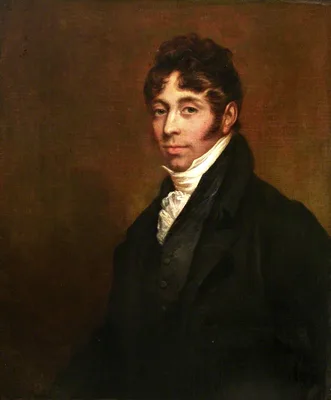
1806 SOEMMERRING, Samuel Thomas von (1755 – 1830)
Abbildungen des menschlichen Hoerorganes
GMN 1554 · https://historyofmedicine.com/id/1173
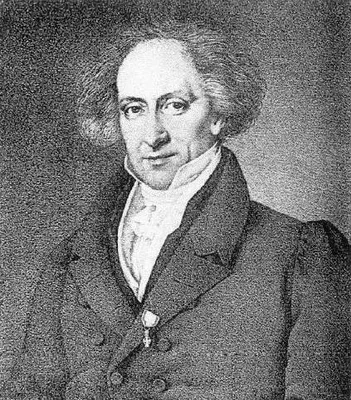
1806 SAUNDERS, John Cunningham (1773 – 1810)
The anatomy of the human ear … with a treatise on the diseases of the organ.
Saunders was the first to advise paracentesis in acute middle-ear suppuration.
GMN 3362 · https://historyofmedicine.com/id/4746
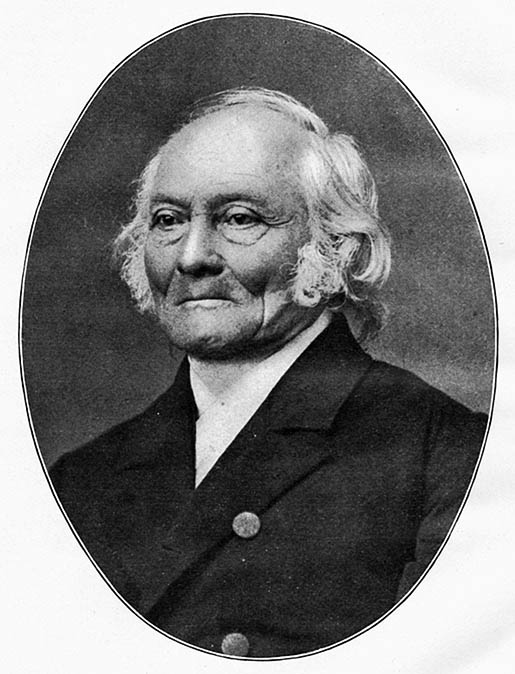
1818 JACOBSON, Ludwig Levin (1783 – 1843)
Supplementa ad otojatriam. Supplementum primum de anastomosi nervorum nova in aure detecta.
Jacobson described the tympanic canal, nerve, and plexus, all of which are named after him. In 1809 he discovered “Jacobson’s organ”, as reported two years later by G. Cuvier.
GMN 1555 · https://historyofmedicine.com/id/1181
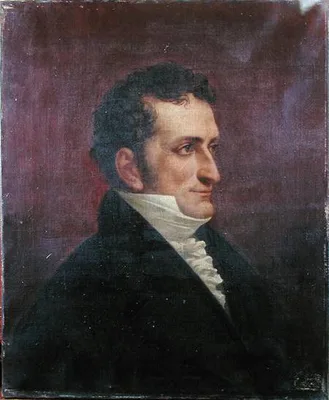
1820 WEBER, Ernst Heinrich (1795 – 1878)
De aure et auditu hominis et animalium.
GMN 1556 · https://historyofmedicine.com/id/1184
1821 ITARD, Jean Marie Gaspard (1774 – 1838)
Traité des maladies de l’oreille et de l’audition. 2 vols.
First of the modern textbooks on diseases of the ear, this work did much to establish otology on a firm basis. Itard described startle tests for the hearing of children and malingerers, and he developed an acumeter.
GMN 3364 · https://historyofmedicine.com/id/4749
1827 WHEATSTONE, Sir Charles (1802 – 1875)
Experiments on audition.
Occlusion effect on sound perception.
GMN 1556.1 · https://historyofmedicine.com/id/1185
1827 SAISSY, Jean Antoine (1756 – 1822)
Essai sur les maladies de l’oreille interne.
Saissy described a Eustachian bougie; he was probably the first to use this instrument. Besides dealing with the labyrinth, his book discusses diseases of the tympanum and Eustachian tube. English translation, Baltimo…
GMN 3365 · https://historyofmedicine.com/id/4750
1828 FLOURENS, Marie Jean Pierre (1794 – 1867)
Expériences sur les canaux semi-circulaires de l’oreille chez les oiseaux.
Flourens showed that lesion of the semicircular canals produces motor incoordination and loss of equilibrium. Menière based his work (No. 3372) on Flourens’s crucial experiments.
GMN 1557 · https://historyofmedicine.com/id/1189
1828 DELEAU, Nicolas (1797 – 1862)
Sur le cathétérisme de la trompe d'Eustache, et sur les expériences de M. Itard, mémoire qui démontre l'utilité de l'air atmosphérique dans le traitement de diverse espèces de surdité.
The first publication on the use of air insufflation to cure some types of hearing loss.
GMN 7228 · https://historyofmedicine.com/id/9396
1832 SHRAPNELL, Henry Jones (1792 – 1834)
On the form and structure of the membrana tympani.
Description of the pars flaccida (“Shrapnell’s membrane”) of the tympanic membrane.
GMN 1558 · https://historyofmedicine.com/id/1192
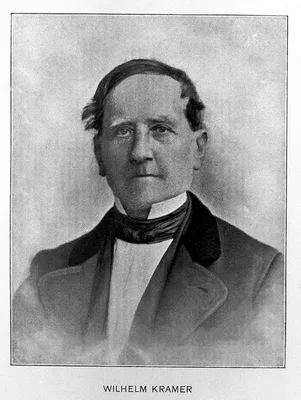
1833 KRAMER, Wilhelm (1801 – 1875)
Erfahrungen über die Erkenntniss und Heilung der langwierigen Schwerhörigkeit.
Kramer’s first and best work. English translation, 1837.
GMN 3366 · https://historyofmedicine.com/id/4752
1834 WEBER, Ernst Heinrich (1795 – 1878)
De pulsu, resorptione, auditu et tactu. Annotationes anatomicae et physiologicae.
Includes Weber’s law on the relationship between stimulus and sensation. English translation of De tactu, New York Academic Press, 1978. Weber's hearing test is on p.41.
GMN 1457 · https://historyofmedicine.com/id/2367
1835 KRAMER, Wilhelm (1801 – 1875)
Die Erkenntniss und Heilung der Ohrenkrankheiten.
Kramer was a pioneer German otologist.
GMN 3367 · https://historyofmedicine.com/id/4754
1846 SCHMALZ, Eduard (1801 – 1871)
Erfahrungen über die Krankheiten des Gehöres und ihre Heilung.
Schmalz demonstrated the clinical significance of Weber’s hearing test (see No. 3368). He was a student of Weber.
GMN 3368.1 · https://historyofmedicine.com/id/4760
1849 SCHMALZ, Eduard (1801 – 1871)
Mémoire sur l’emploi de la fourchette tonique ou du diapason, pour distinguer une dureté d’ouïe nerveuse de celle que est causée par une obstruction.
Schwabach’s hearing test (see No. 3389) was earlier employed by Schmalz.
GMN 3368.2 · https://historyofmedicine.com/id/4764
1851 CORTI, Alfonso Giacomo Gaspare (1822 – 1888)
Recherches sur l’organe de l’ouïe des mammifères.
Corti made important investigations on the finer anatomy of the mammalian cochlea. The “organ of Corti” in the cochlea is named after him.
GMN 1559 · https://historyofmedicine.com/id/1194
1851 REISSNER, Ernst (1824 – 1878)
De auris internae formatione.
Description of the vestibular membrane (“Reissner’s membrane”).
GMN 1560 · https://historyofmedicine.com/id/1220
1851 JARISCH, Anton Hieronymus (1818 – 1890)
Methode für den Unterricht der Taub-Stummen in der Laut-Sprache im Rechnen und in der Religion. Verfasst von …. Gezeichnet von Ant. Jarisch.
An illustrated manual of sign language for the deaf and dumb specifically for education in mathematics and religion. The book has a particularly distinctive title page. Digital facsimile from Google Books at this link.
GMN 12285 · https://historyofmedicine.com/id/14506
1853 WILDE, Sir William Robert Wills (1815 – 1876)
Practical observations on aural surgery and the nature and treatment of diseases of the ear.
This work did more to place British otology on a scientific basis than anything previously published. In his own words, Wilde “laboured to rescue the treatment of ear diseases from empiricism and found it upon the wel…
GMN 3369 · https://historyofmedicine.com/id/4768
1855 RINNE, Friedrich Heinrich (1819 – 1868)
Beiträge zur Physiologie des menschlichen Ohres.
Rinne’s test.
GMN 3370 · https://historyofmedicine.com/id/4772
1858 SCHULTZE, Max Johann Sigismund (1825 – 1874)
Ueber die Endigungsweise des Hörnerven im Labyrinth.
Schultze’s great monographs on the nerve-endings of the sense organs were of prime importance in the development of the science of histology. Besides that dealing with the internal ear, he wrote others dealing with th…
GMN 1561 · https://historyofmedicine.com/id/1221
1860 FORGET, Amedée (1811 – 1869)
De la trépanation de l’apophyse mastoïde et des lésions morbides qui rendent cette opération nécessaire.
Operative treatment of acute otitis by drainage through the antrum.
GMN 3371 · https://historyofmedicine.com/id/4774
1860 TOYNBEE, Joseph (1815 – 1866)
The diseases of the ear; their nature, diagnosis, and treatment.
The foundation of aural pathology. In this book Toynbee described the method of removing the temporal bone and discussed the post mortem appearances in relation to the symptoms observed during life. He made over 2,000…
GMN 3373 · https://historyofmedicine.com/id/4778
1860 TRÖLTSCH, Anton Freiherr von (1829 – 1890)
Die Untersuchung des Gehörgangs und Trommelfells. Ihre Bedeutung. Kritik der bisherigen Untersuchungsmethoden und Angabe einer neuen.
Invention of the modern otoscope.
GMN 3374 · https://historyofmedicine.com/id/4780
1861 MENIÈRE, Prosper (1799 – 1862)
Mémoire sur des lésions de l’oreille interne donnant lieu à des symptomes de congestion cérébrale apoplectiforme.
First description of aural vertigo (“Menière’s syndrome”). First appeared in summary form in Bull. Acad. imp. Méd., 1860-61, 26, 241, and in Gaz. méd. Paris, 1861, 16, 29, with title: Surune forme de surdité grave dép…
GMN 3372 · https://historyofmedicine.com/id/4776
1861 TRÖLTSCH, Anton Freiherr von (1829 – 1890)
Ein Fall von Anbohrung des Warzenfortsatzes bei Otitis interna mit Bemerkungen über diese Operation.
The first modern mastoid operation was devised by von Tröltsch.
GMN 3375 · https://historyofmedicine.com/id/4782
1862 TRÖLTSCH, Anton Freiherr von (1829 – 1890)
Die Krankheiten des Ohres.
Tröltsch was Professor of Otology as Würzburg. He was the founder of the Archiv für Ohrenheilkunde. English translation, 1874.
GMN 3376 · https://historyofmedicine.com/id/4786
1863 HELMHOLTZ, Hermann Ludwig Ferdinand von (1821 – 1894)
Die Lehre von der Tonempfindungen als physiologische Grundlage für die Theorie der Musik.
Helmholtz’s theory of hearing, upon which all modern theories of resonance are based. This exhaustive study of acoustics ranks as one of the greatest books on the subject and shows that Helmholtz was, besides being a …
GMN 1562 · https://historyofmedicine.com/id/1223
1863 POLITZER, Ádám (1835 – 1920)
Ueber ein neues Heilverfahren gegen Schwerhörigkeit in Folge von Unwegsamkeit der Eustachischen Ohrtrompete.
Politzer’s method of effecting permeability of the Eustachian tube.
GMN 3377 · https://historyofmedicine.com/id/4792
1865 POLITZER, Ádám (1835 – 1920)
Die Beleuchtungsbilder des Trommelfells im gesunden und kranken Zustande.
Politzer was the first to obtain pictures of the membrana tympani by means of illumination. English translation, New York, 1869.
GMN 3378 · https://historyofmedicine.com/id/4794
1865 BRUNTON, John (1836 – 1899)
A new otoscope or speculum auris.
Brunton’s otoscope.
GMN 3378.1 · https://historyofmedicine.com/id/4796
1867 LUCAE, Johann Constantin August (1835 – 1911)
Ueber eine neue Methode zur Untersuchung des Gehörorgans zu physiologischen und diagnostischen Zwecken mit Hülfe des Interferenz Otoscopes.
Lucae described an interference otoscope, precursor of auditory impedance devices.
GMN 3378.2 · https://historyofmedicine.com/id/4798
1867 VOLTOLINI, Friedrich Eduard Rudolph (1819 – 1889)
Die akute Entzündung des heutigen Labyrinthes, gewöhnlich für Meningitis cerebro-spinalis gehalten.
First description of “Voltolini’s disease” – an acute painful inflammation of the internal ear, followed by fever, delirium, and loss of consciousness. Voltolini was the founder of the Monatsschrift.
GMN 3379 · https://historyofmedicine.com/id/4799
1867 WREDEN, Robert Robertovich (1837 – 1893)
Sechs Fälle von Myringomykosis (Aspergillus glaucus Lk.).
Wreden, otologist to the Czar, was the first to call special attention to otomycosis.
GMN 3380 · https://historyofmedicine.com/id/4801
1868 HELMHOLTZ, Hermann Ludwig Ferdinand von (1821 – 1894)
Die Mechanik der Gehörknöchelchen und des Trommelfells.
Helmholtz’s study of the mechanism of the tympanum and ossicles of the middle ear did much to elucidate the phenomenon of audition. It includes a description of “Helmholtz’s ligament” of the malleus. Separate offprint…
GMN 1563 · https://historyofmedicine.com/id/1227
1870 GOLTZ, Friedrich Leopold (1834 – 1902)
Ueber die physiologische Bedeutung der Bogengänge des Ohrlabyrinths.
Goltz demonstrated the relation of vertigo and vestibular disturbance, showing that the former is a result of disease or irritation of the semicircular canals.
GMN 1564 · https://historyofmedicine.com/id/1230
1870 LUCAE, Johann Constantin August (1835 – 1911)
Die Schalleitung durch die Kopfknochen und ihre Bedeutung für die Diagnostik der Ohrenkrankheiten.
Lucae was the first to study the transmission of sounds through the cranial bones for the purpose of diagnosing diseases of the ear.
GMN 3381 · https://historyofmedicine.com/id/4803
1873 SCHWARTZE, Hermann Hugo Rudolf (1837 – 1910); EYSELL, Adolph (1846 – )
Ueber die künstliche Eröffnung des Warzenfortsatzes.
These workers helped to revive the mastoid operation (which had fallen into disuse), placing it on a modern basis. They described the method of opening the ear by chiselling, “Schwartze’s operation”.
GMN 3382 · https://historyofmedicine.com/id/4806
1874 CHARCOT, Jean Martin (1825 – 1893)
Vertiges ab aure laesa (maladie de Menière).
Charcot completed the description of the syndrome first described by Menière.
GMN 3383 · https://historyofmedicine.com/id/5075
1874 HINTON, James (1822 – 1875)
Atlas of the membrana tympani.
GMN 3384 · https://historyofmedicine.com/id/5077
1874 HINTON, James (1822 – 1875)
The questions of aural surgery.
Hinton was one of the most eminent aural surgeons in England during the latter half of the 19th century, and the first Aural Surgeon to Guy’s Hospital. In 1868 he performed the first operation for mastoiditis in Engla…
GMN 3385 · https://historyofmedicine.com/id/5079
1874 BREUER, Josef (1842 – 1925)
Ueber die Function der Bogengänge des Ohrlabyrinthes.
“[Breuer’s] basic premise was that the semicircular canals sense angular movement of the head by movement of the fluid (endolymph) within them. The endolymph moves relative to the walls of the canals because of its in…
GMN 14350 · https://historyofmedicine.com/id/16680
1877 BEZOLD, Friedrich (1842 – 1908)
Erkrankungen des Warzentheiles.
First clear description of mastoiditis.
GMN 3386 · https://historyofmedicine.com/id/5082
1877 POLITZER, Ádám (1835 – 1920)
Ueber einen einheitlichen Hörmesser.
Politzer described an acumeter.
GMN 3387.1 · https://historyofmedicine.com/id/5087
1878 –1882 POLITZER, Ádám (1835 – 1920)
Lehrbuch der Ohrenheilkunde. 2 pts.
Politzer was one of the greatest of all otologists. He was the first Professor of Otology in Vienna and his textbook was for many years the standard authority on the subject. English translation, 1883.
GMN 3387 · https://historyofmedicine.com/id/5085
1878 HARTMANN, Arthur Wilhelm (1849 – 1931)
Ueber eine neue Methode der Hörprüfung mit Hülfe elektrischer Ströme.
First audiometer.
GMN 3387.2 · https://historyofmedicine.com/id/5091
1878 LAMSON, Mary Swift (1822 – 1909)
The life and education of Laura Dewey Bridgman, the deaf, dumb, and blind girl.
Biography of Laura Bridgman (1829-89, the first deaf-blind person ever to read, write, and converse in the finger alphabet. The book includes a signed holograph facsimile of Bridgman's widely circulated religious poem…
GMN 7745 · https://historyofmedicine.com/id/9917
1881 –1884 RETZIUS, Magnus Gustaf (1842 – 1919)
Das Gehörorgan der Wirbelthiere. 2 vols.
The most magnificent of all comparative anatomical studies of the ear, and the most beautiful studies of the ear after those of Casseri (No.1540). Retzius described the “Retzius bodies” in the labyrinth.
GMN 1566 · https://historyofmedicine.com/id/1237
1881 GELLÉ, Marie Ernest (1834 – 1923)
Les lésions nerveuses dans la surdité.
Gellédescribed a test for determination of ossicular fixation.
GMN 3387.3 · https://historyofmedicine.com/id/5094
1884 ZAUFAL, Emanuel (1833 – 1910)
Sinusthrombose in Folge von Otitis media. [Trepanation des Proc. mastoid mit Hammer und Meissel.]
Improvement of the mastoid operation devised by Schwartze and Eysell.
GMN 3388 · https://historyofmedicine.com/id/5097