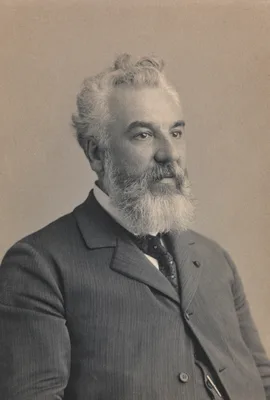
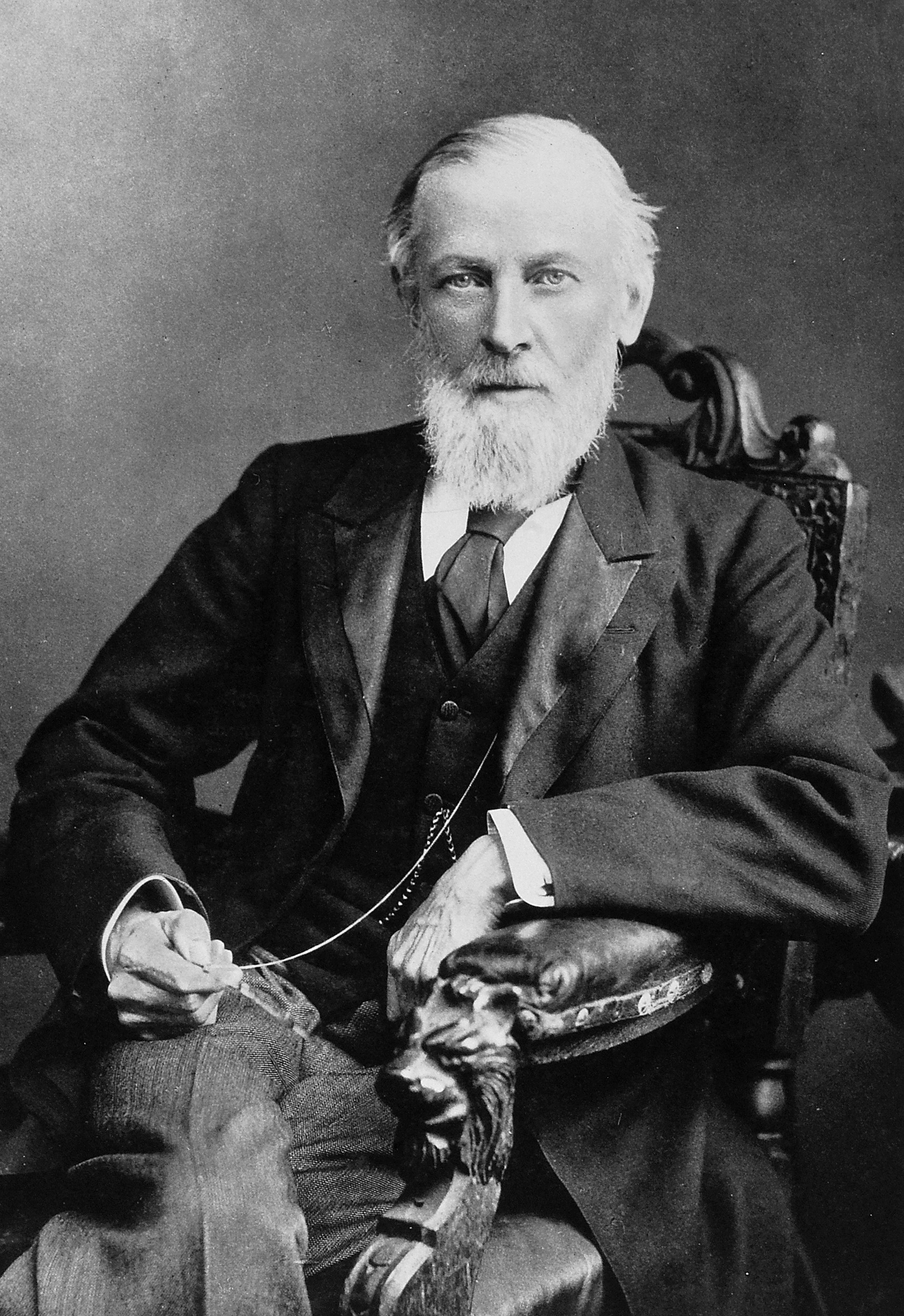
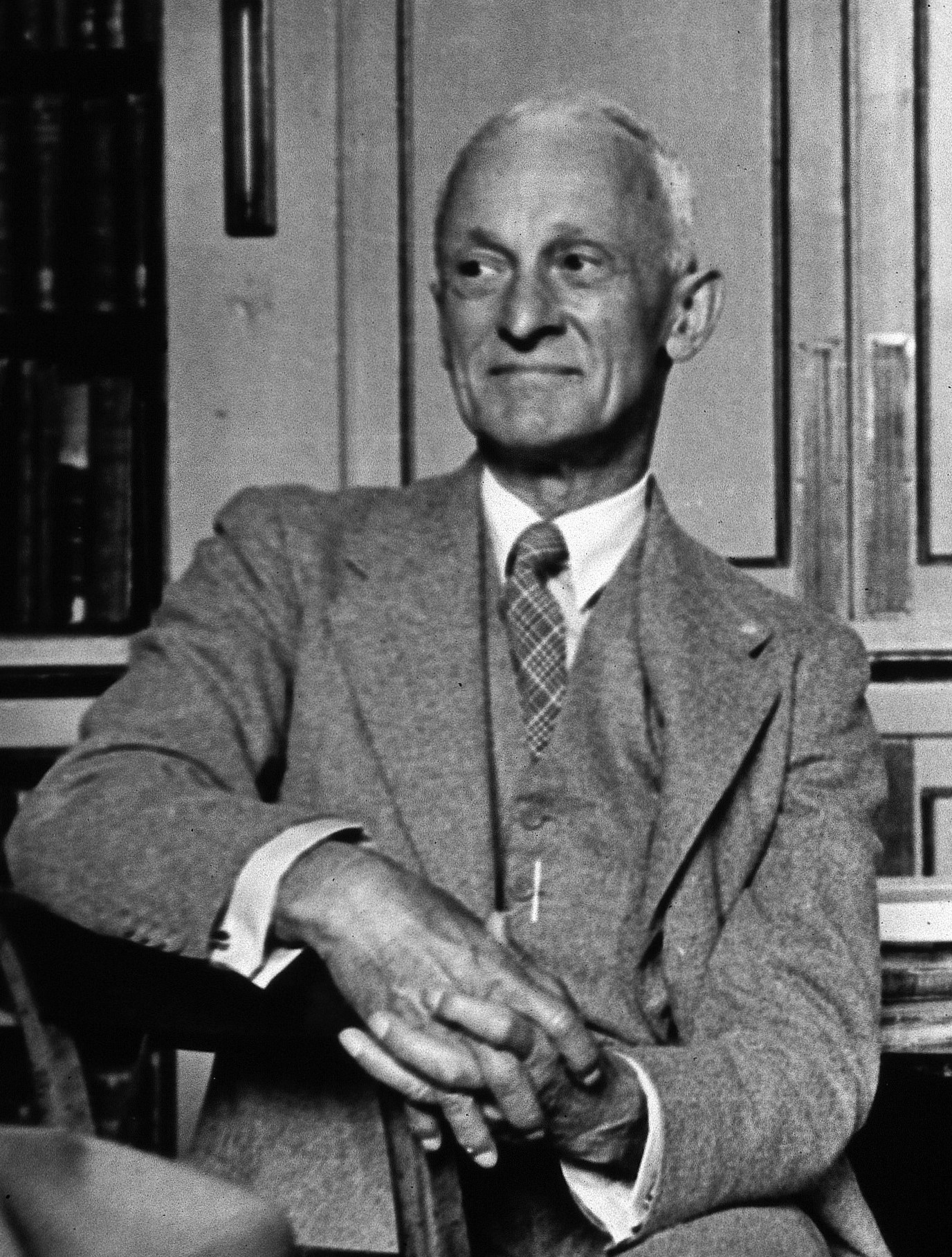
1884 BELL, Alexander Graham (1847 – 1922)
Memoir upon the formation of a deaf variety of the human race.
Bell determined that deafness was an inheritable trait and that deaf individuals had a tendency to marry other deaf individuals. As a eugenicist Bell considered this a problem because he thought it risked the developm…
GMN 13063 · https://historyofmedicine.com/id/15315
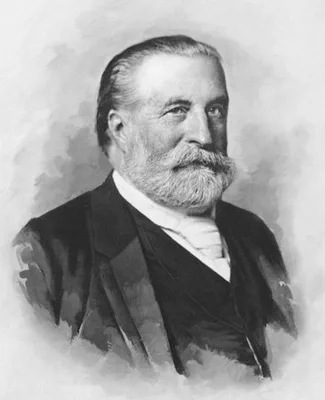
1885 SCHWABACH, Dagobert (1846 – 1920)
Ueber den Werth des Rinne’schen Versuches für die Diagnostik der Gehörkrankheiten.
Schwabach’s hearing test.
GMN 3389 · https://historyofmedicine.com/id/5102
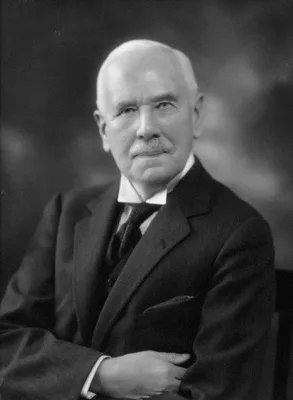
1886 HÖGYES, Endre (1847 – 1906)
Ueber Nystagmus und associierte Augenbewegungsversuche bei Hystero-Epileptischen.
Rotational nystagmus described. First published in Magyar in Orvosi Hetilap, 1886, 30, 857, 889.
GMN 3389.1 · https://historyofmedicine.com/id/5109
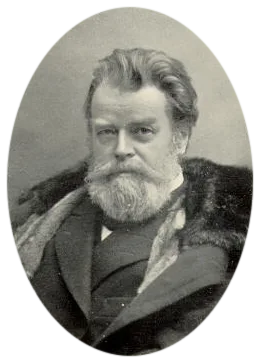
1888 ARNOLD, Thomas (1823 – 1900)
Education of deaf-mutes. A manual for teachers.
Includes a history of the subject. Digital facsimile from the Internet Archive at this link.
GMN 3390 · https://historyofmedicine.com/id/5113
1888 BERGMANN, Ernst von (1836 – 1907)
Krankenvorstellung: Geheilter Hirnabscess.
Radical mastoidectomy. (See No. 3392.)
GMN 3391 · https://historyofmedicine.com/id/5115
1889 KÜSTER, Ernst Georg Ferdinand von (1839 – 1930)
Ueber die Gründsätze der Behandlung von Eiterungen in starrwandigen Höhlen, mit besonderer Berücksichtigung des Empyems der Pleura.
Küster and von Bergmann developed the Operation of radical mastoidectomy.
GMN 3392 · https://historyofmedicine.com/id/5122
1890 STACKE, Ludwig (1859 – 1918)
Indicationen, betreffend die Excision von Hammer und Amboss.
Stacke introduced the operation of excision of the ossicles.
GMN 3393 · https://historyofmedicine.com/id/5126
1890 FOSTER, Wallace
The deaf soldier: A brief synopsis of one hundred and two cases of deafness. Prepared for the consideration of the Senate and House of Representatives of the United States.
One of the earliest accounts of the recognition of loss of hearing due to firearms and explosions during war. Foster, secretary and treasurer of the Silent Army of Deaf Soldiers, Sailors and Marines, presented 100 cas…
GMN 7229 · https://historyofmedicine.com/id/9397
1892 STACKE, Ludwig (1859 – 1918)
Weitere Mittheilungen über die operative Freilegung der Mittelohrräume nach Ablösung der Ohrmuschel.
Stacke did much to improve the surgery of the middle ear. He made important modifications in the radical mastoidectomy operation of Küster and von Bergmann.
GMN 3394 · https://historyofmedicine.com/id/5130
1892 GRADENIGO, Giuseppe (1859 – 1926)
Sui caratteri clinici offerti dalle lesioni del nervo acustico.
Gradenigo’s test for tone decay. Translation in Arch. Otol. (N.Y.), 1893, 22, 213-15.
GMN 3394.1 · https://historyofmedicine.com/id/5131
1892 LANE, Sir William Arbuthnot (1856 – 1943)
Antrectomy as a treatment for chronic purulent otitis media.
Mastoidectomy for the efficient drainage of the results of middle ear suppuration.
GMN 3394.2 · https://historyofmedicine.com/id/5134
1894 STEIN, Stanislav Aleksandr Fyodorovich (1855 – )
Die Lehren von den Funktionen der einzelnen Theile des Ohrlabyrinths.
Stein studied the functions of separate parts of the labyrinth. This is a translation from the Russian.
GMN 1567 · https://historyofmedicine.com/id/1243
1894 EWALD, Ernst Julius Richard (1855 – 1921)
Zur Physiologie des Labyrinths. 3. Mittheilung. Das Hören der labyrinthlosen Tauben.
GMN 1568 · https://historyofmedicine.com/id/1249
1895 EWALD, Ernst Julius Richard (1855 – 1921)
Zur Physiologie des Labyrinths. 4. Mittheilung. Die Beziehungen des Grosshirns zum Tonuslabyrinth.
GMN 1569 · https://historyofmedicine.com/id/1262
1895 POLITZER, Ádám (1835 – 1920)
On a peculiar affection of the labyrinthine capsule as a frequent cause of deafness.
First report of otosclerosis as a separate clinical entity.
GMN 3395 · https://historyofmedicine.com/id/5137
1896 BEAUREGARD, Emmanuel Henri (1851 – 1900); DUPUY, Pierre Edmond (1855 – 1904)
Note sur la variation éléctrique (courant d’action) déterminée dans le nerf acoustique par le son.
Beauregard and Dupuy recorded the action potential in the auditory nerve of the frog.
GMN 1569.1 · https://historyofmedicine.com/id/1267
1896 PENDRED, Vaughan (1869 – 1946)
Deaf-mutism and goitre.
Pendred syndrome, a genetic disorder leading to congenital bilateral (both sides) sensorineural hearing loss and goitre with euthyroid or mild hypothyroidism (decreased thyroid gland function).
GMN 3840.1 · https://historyofmedicine.com/id/4864
1897 –1909 BEZOLD, Friedrich (1842 – 1908)
Ueber die funktionelle Prüfung des menschlichen Gehörorgans. 3 vols.
Bezold introduced important tests for audition.
GMN 3396 · https://historyofmedicine.com/id/5139
1897 PASSOW, Adolf (1859 – 1926)
First attempt at improving hearing by fenestration. No title; forms part of a paper by R. Passe.
GMN 3397 · https://historyofmedicine.com/id/5143
1904 GRADENIGO, Giuseppe (1859 – 1926)
Sulla leptomeningite circonscritta e sulla paralisi dell abducente di origine otitica.
“Gradenigo’s syndrome” – acute otitis media followed by abductor paralysis. Translation of the paper is in the German Arch. Ohrenheilk., 1904, 62, 255-70.
GMN 3398 · https://historyofmedicine.com/id/5147
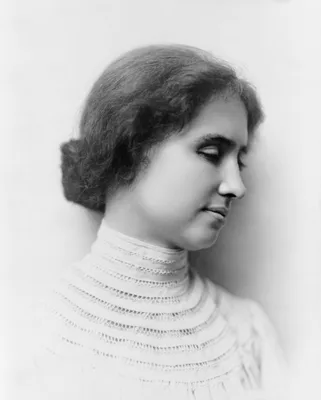
1905 KELLER, Helen Adams (1880 – 1968)
The story of my life.
Helen Keller became blind and deaf at the age of 19 months, as the result of an illness. Her education was a triumph of patience and skill on the part of her teacher, Anne M. Sullivan, and a demonstration of the great…
GMN 3399 · https://historyofmedicine.com/id/5150
1906 BÁRÁNY, Robert (1876 – 1936)
Ueber die vom Ohrlabyrinth ausgelöste Gegenrollung der Augen bei Normalhörenden.
Bárány’s caloric test for labyrinthine function.
GMN 3400 · https://historyofmedicine.com/id/5156
1906 BÁRÁNY, Robert (1876 – 1936)
Untersuchungen über den vom Vestibularapparat des Ohres reflektorisch ausgelösten Rhythmischen und seine Begleiterscheinungen.
Bárány’s pointing test for the localization of circumscribed cerebellar lesions. Republished in book form, Berlin, 1906. In 1914 Bárány was awarded the Nobel Prize in Physiology or Medicine "for his work on the physio…
GMN 3401 · https://historyofmedicine.com/id/5161
1907 –1908 GRAY, Albert Alexander (1869 – 1936)
The labyrinth of animals. 2 vols.
“An important and elaborate work designed to give the anatomy of the labyrinth, or inside of the ears of vertebrates, with the exception of fishes” (Casey Wood). Illustrated with stereoscopic photographs.
GMN 1569.2 · https://historyofmedicine.com/id/1276
1907 GOWERS, Sir William Richard (1845 – 1915)
The border-land of epilepsy. Faints, vagal attacks, vertigo, migraine, sleep symptoms, and their treatment.
GMN 4821 · https://historyofmedicine.com/id/1628
1907 –1913 POLITZER, Ádám (1835 – 1920)
Geschichte der Ohrenheilkunde. 2 vols.
It is fitting that Politzer should have been the greatest historian of otology. He was Professor of Otology in Vienna and his teaching had great influence upon the advancement of the subject. The Geschichte is a maste…
GMN 3413 · https://historyofmedicine.com/id/5246
1907 YERKES, Robert Means (1876 – 1956)
The dancing mouse: A study in animal behavior.
The first work to examine the characteristics of deaf mice, which became the most important model for the study of genetic deafness. Digital facsimile from the Biodiversity Heritage Library, Internet Archive at this l…
GMN 7226 · https://historyofmedicine.com/id/9394
1907 HUNT, James Ramsay (1872 – 1937)
On herpetic inflammations of the geniculate ganglion: A new syndrome and its complications.
Herpes zoster oticus, also known as Ramsay Hunt syndrome type 2.
GMN 12253 · https://historyofmedicine.com/id/14468
1910 LOMBARD, Étienne (1869 – 1920)
Contribution à la seméiologie de la surdité; un nouveau signe pour en dévoiler la simulation.
Lombard’s test for simulated unilateral deafness.
GMN 3402.1 · https://historyofmedicine.com/id/5173
1911 BÁRÁNY, Robert (1876 – 1936)
Vestibularapparat und Zentralnervensystem.
“Bárány’s syndrome” – unilateral deafness, vertigo, and pain in the occipital region.
GMN 3402 · https://historyofmedicine.com/id/5169
1913 JENKINS, George John (1874 – 1939)
Otosclerosis: certain clinical features and experimental operative procedures.
Jenkins suggested the modern fenestration operation of otosclerosis.
GMN 3403 · https://historyofmedicine.com/id/5181
1913 BÁRÁNY, Robert (1876 – 1936)
Die Geschichte der Physiologie des Vestibular Apparates seit 1850. IN: Politzer’s Geschichte der Ohrenheilkunde, Vol. 2.
Translated into English by Dennis G. Pappas, as "Barany's History of vestibular physiology: Translation and commentary," Ann. Otol. Rhin. Larygngol.,1984, 93, no. 2, pt. 3. Supplement 110.
GMN 9496 · https://historyofmedicine.com/id/11681
1917 CUSHING, Harvey Williams (1869 – 1939)
Tumors of the nervus acusticus and the syndrome of the cerebello-pontile angle.
Reprinted 1963.
GMN 4601 · https://historyofmedicine.com/id/552
1919 BALLANCE, Sir Charles Alfred (1865 – 1936); GREEN, Charles David (1862 – 1937)
Essays on the surgery of the temporal bone. 2 vols.
Finely illustrated, and beautifully produced, with several historical chapters. Includes a history of the development of temporal bone surgery.
GMN 3403.1 · https://historyofmedicine.com/id/5186
1923 HOLMGREN, Gunnar (1875 – 1954)
Some experiences in the surgery of otosclerosis.
Holmgren’s fenestration operation.
GMN 3404 · https://historyofmedicine.com/id/5190
1924 MAGNUS, Rudolf (1873 – 1927)
Körperstellung.
A classic work on muscle tone and posture, a subject upon which Magnus spent many years of study. He demonstrated among other things that the labyrinth is the one sense organ entirely concerned with posture and equili…
GMN 661 · https://historyofmedicine.com/id/537
1924 GRAY, Albert Alexander (1869 – 1936); WILKINSON, George (1867 – 1956)
The mechanism of the cochlea. A restatement of the resonance theory of hearing.
GMN 1570 · https://historyofmedicine.com/id/1285
1924 –1933 GRAY, Albert Alexander (1869 – 1936)
Atlas of otology illustrating the normal and pathological anatomy of the temporal bone. 2 vols.
GMN 3405 · https://historyofmedicine.com/id/5195
1924 POHLMAN, Augustus Grote (1879 – 1950); KRANZ, Frederick William (1887 – 1979)
Binaural minimum audition in a subject with ranges of deficient acuity.
First demonstration of the phenomenon of loudness recruitment.
GMN 3405.1 · https://historyofmedicine.com/id/5199
1926 MAGNUS, Rudolf (1873 – 1927)
Cameron Prize Lectures on some results of studies in the physiology of posture.
Magnus demonstrated the function of the otoliths and semicircular canals of the inner ear in regulating the equilibrium of the body.
GMN 663.1 · https://historyofmedicine.com/id/539
1927 ALEXANDER, Gustav (1873 – 1932)
Die Ohrenkrankheiten im Kindesalter mit Einschuss der Grenzgebiete.
The first work on pediatric ear diseases, dedicated to the author's teacher, Adam Politzer. Alexander "was assassinated on the street between his home and the Poliklinik by Johann Sokoup, a Czechoslovakian former pati…
GMN 7227 · https://historyofmedicine.com/id/9395
1928 DANDY, Walter Edward (1886 – 1946)
Menière’s disease; its diagnosis and a method of treatment.
Dandy’s operation for relief of Menière’s syndrome.
GMN 3406 · https://historyofmedicine.com/id/5203
1930 MAYER, Ernst Georg (1893 – )
Otologische Röntgendiagnostik.
Includes a brief history of the subject.
GMN 3407 · https://historyofmedicine.com/id/5208
1930 WEVER, Ernest Glen (1902 – 1991); BRAY, Charles W.
Action currents in the auditory nerve in response to acoustical stimulation.
Wever and Bray discovered the electrical activity of the inner ear−then called the coclear microphonic−which enabled the development of the physiology of the ear.
GMN 7225 · https://historyofmedicine.com/id/9393
1931 GUILD, Stacy R. (1881 – 1966)
Correlations of the differences in the density of innervation of the organ of Corti with differences in the acuity of hearing, including evidence as to the location in the cochlea of the receptors of certain tones.
The first study to relate hair cell and neuron loss to the hearing of patients. It was the first to show that high frequency sound is "heard" at the base of the cochlea and low frequency sound at the apex. With S. J. …
GMN 7224 · https://historyofmedicine.com/id/9392
1933 BÉKÉSY, Georg von (1899 – 1972)
Über den Knall und die Theorie des Hörens.
In 1961 Békésy was awarded the Nobel Prize in Physiology or Medicine "for his discoveries of the physical mechanism of stimulation within the cochlea." English translation in Békésy, Experiments in hearing, 1960.
GMN 1570.1 · https://historyofmedicine.com/id/1290
1935 MCLACHLAN, Norman William (1888 – )
Noise: A comprehensive survey from every point of view.
Chapter 1: General considerations: behaviour of the ear. Chapter 10: Physiological and psychological effects of noise.
GMN 7476 · https://historyofmedicine.com/id/9648
1937 SOURDILLE, Maurice Louis Joseph Marie (1885 – 1961)
New technique in the surgical treatment of severe and progressive deafness from otosclerosis.
First successful attempt to restore hearing in otosclerosis by fenestration.
GMN 3408 · https://historyofmedicine.com/id/5211
1938 HALLPIKE, Charles Skinner (1900 – 1979); CAIRNS, Sir Hugh William Bell (1896 – 1952)
Observations on the pathology of Menière’s syndrome.
Hallpike and Cairns were first to describe the characteristic histological changes in Menière’s disease. Also published in J Laryng. Otol., 1938, 53, 625-55.
GMN 3409 · https://historyofmedicine.com/id/5216
1938 LEMPERT, Julius (1890 – 1968)
Improvement of hearing in cases of otosclerosis: a new, one-stage surgical technic.
Lempert’s fenestration operation.
GMN 3410 · https://historyofmedicine.com/id/5219