1563 –1564 EUSTACHI, Bartolomeo [EUSTACHIUS] (1510 – 1574)
Opuscula anatomica.
Eustachius is credited with several anatomical discoveries, among them the tensor tympani muscle and the Eustachian tube, published in his chapter entitled De auditus organis. In the last respect, however, he was anti…
GMN 1093 · https://historyofmedicine.com/id/159
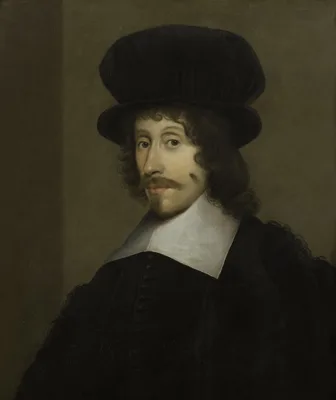
1656 WHARTON, Thomas (1614 – 1673)
Adenographia: sive, glandularum totius corporis descriptio.
Wharton described the duct of the submaxillary salivary gland (“Wharton’s duct”). He described the thyroid more accurately than his predecessors, naming it. He also described “Wharton’s jelly” of the umbilical cord (p…
GMN 1116 · https://historyofmedicine.com/id/1196
1856 BROWN-SÉQUARD, Charles Édouard (1817 – 1894)
Recherches expérimentales sur la physiologie et la pathologie des capsules surrénales.
Brown-Séquard found that excision of both adrenals in animals invariably proved fatal, thus determining their indispensability. He also believed that they had an antitoxic influence upon the blood. His experimental wo…
GMN 1140 · https://historyofmedicine.com/id/1363
1856 VULPIAN, Edmé Félix Alfred (1826 – 1887)
Note sur quelques réactions propres à la substance des capsules surrénales.
Vulpian discovered adrenaline in the adrenal medulla.
GMN 1141 · https://historyofmedicine.com/id/1365
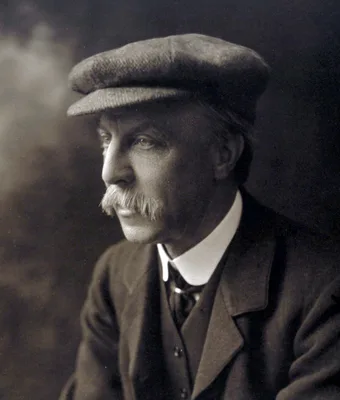
1895 SHARPEY-SCHAFER, Sir Edward Albert (1850 – 1935); OLIVER, George (1841 – 1915)
The physiological effects of extracts of the suprarenal capsules.
These workers demonstrated the existence of a pressor substance (adrenaline) in the adrenal medulla. Preliminary communications regarding the above appeared in the proceedings of the Physiological Society, J. Physiol.…
GMN 1143 · https://historyofmedicine.com/id/1368
1897 ABEL, John Jacob (1857 – 1938); CRAWFORD, Albert Cornelius (1869 – 1921)
On the blood-pressure-raising constituent of the suprarenal capsule.
Abel and Crawford further investigated the pressor substance of Oliver and Schäfer calling it “epinephrine”.
GMN 1144 · https://historyofmedicine.com/id/1386
1899 ABEL, John Jacob (1857 – 1938)
Ueber den blutdruckerregenden Bestandtheil der Nebenniere, das Epinephrin.
GMN 1145 · https://historyofmedicine.com/id/1432
1901 JÕKICHI, Takamine (1854 – 1922)
The blood-pressure-raising principle of the suprarenal glands.
Isolation of adrenaline.
GMN 1146 · https://historyofmedicine.com/id/1435
1901 ALDRICH, Thomas Bell (1861 – 1939)
A preliminary report on the active principle of the suprarenal gland.
Independently of Takamine, Aldrich succeeded in isolating adrenaline in a crystalline form. He gave it the formula C9H13NO3. Adrenaline was the first hormone to be isolated.
GMN 1147 · https://historyofmedicine.com/id/1438
1904 STOLZ, Friedrich (1860 – 1936)
Ueber Adrenalin und Alkylaminoacetobrenzcatechin.
Synthesis of adrenaline.
GMN 1147.1 · https://historyofmedicine.com/id/1443
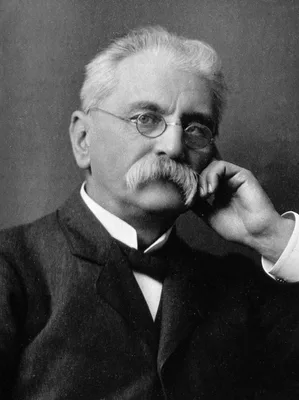
1910 BIEDL, Artur (1869 – 1933)
Innere Sekretion.
Biedl showed that the adrenal cortex is essential for life. His classic work shows the rapid development of the knowledge concerning endocrinology. In 1890 there were few publications dealing with internal secretion, …
GMN 1123 · https://historyofmedicine.com/id/1239
1924 RICHARDS, Alfred Newton (1876 – 1966); SCHMIDT, Carl Frederic (1893 – 1988)
A description of the glomerular circulation in the frog’s kidney and observations concerning the action of adrenalin and various other substances upon it.
Richards made many experiments concerning the secretion of urine. Among other things he collected and analysed the fluid from a single glomerulus; his work confirmed the theories of Ludwig and Cushny.
GMN 1238 · https://historyofmedicine.com/id/2002
1927 ROGOFF, Julius Moses (1883 – 1966); STEWART, George Neil (1860 – 1930)
Further studies on adrenal insufficiency in dogs.
Cortical hormone first obtained.
GMN 1148 · https://historyofmedicine.com/id/1445
1929 PFIFFNER, Joseph John (1903 – 1975); SWINGLE, Wilbur Willis (1891 – 1975)
The preparation of an active extract of the supra-renal cortex.
First practical method of preparing an extract of the active agent of the adrenal cortical hormone. It was named cortin until it was recognized that there are several active agents in the secretion.
GMN 1149 · https://historyofmedicine.com/id/1449
1929 SWANSON, Edward E.
The action of ephedrine, pseudoephedrine and epinephrine on the bronchioles.
Swanson showed that just 0.01 mg. of epinephrine was as vasconstrictive as 2 mg. of ephedrine and 4 mg. of pseudoephedrine. He also showed that all three of these drugs have bronchodilator properties, but epinephrine …
GMN 14192 · https://historyofmedicine.com/id/16508
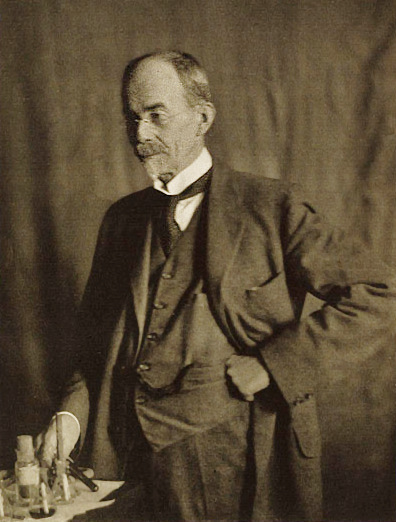
1934 KENDALL, Edward Calvin (1886 – 1972); ET AL
Isolation in crystalline form of the hormone essential to life from the suprarenal cortex; its chemical nature and physiologic properties.
Together with H. L. Mason, B. F. McKenzie, C. S. Myers, and G. A. Koelsche, Kendall reported the isolation in crystalline form of cortin ('C20H30O5)'
GMN 1150 · https://historyofmedicine.com/id/1451
1935 PFIFFNER, Joseph John (1903 – 1975); WINTERSTEINER, Oskar Paul (1898 – 1971)
Chemical studies on the adrenal cortex. II. Isolation of several physicologically inactive crystalline compounds from active extracts. III. Isolation of two new physiologically inactive compounds.
Isolation of Compound F, identical with Kendall’s Compund E. See No. 1151.
GMN 1152 · https://historyofmedicine.com/id/1460
1936 KENDALL, Edward Calvin (1886 – 1972)
A physiologic and chemical investigation of the suprarenal cortex.
Isolation of nine closely related steroid hormones from adrenal cortical extracts; one of these was Compound E (C21H28O5) which in 1939 was renamed cortisone. With H. L. Mason, C. S. Myers, and W. D. Allers. See also …
GMN 1151 · https://historyofmedicine.com/id/1455
1936 REICHSTEIN, Tadeusz (1897 – 1996)
Über Bestandteile der Nebennieren-Rinde. VI. Trennungsmethoden sowie Isolierung der Substanzen Fa, H, und j.
Isolation of Compound Fa, identical with Compounds E and F. "In the mid-1930s Edward Kendall and Tadeus Reichstein succeeded in isolating and analyzing the composition of a number of similar hormones derived from the …
GMN 1153 · https://historyofmedicine.com/id/1463
1937 FREMERY, P. de; ET AL
Corticosteron, a crystallized compound with the biological activity of the adrenal-cortical hormone.
Isolation of corticosterone. With E. Laqueur, T. Reichstein, R. W. Spanhoff, and I. E. Uyldert.
GMN 1154 · https://historyofmedicine.com/id/1468
1949 BERGSTRÖM, Sune (1916 – 2004); ET AL
Isolation of nor-adrenaline from the adrenal gland.
With U.S. von Euler and U. Hamberg. See also fuller account in Acta physiol. scand., 1950, 20, 101-8. Noradrenaline was independently isolated by B. F. Tullar, Science, 1950, 109, 536-7.
GMN 1155 · https://historyofmedicine.com/id/1472
1952 GRUNDY, Hilary M.; ET AL
Isolation of a highly active mineralocorticoid from beef adrenal extract.
Isolation of aldosterone. With S. A. Simpson and J. F. Tait.
GMN 1155.1 · https://historyofmedicine.com/id/1476
1952 WOODWARD, Robert Burns (1917 – 1979); SONDHEIMER, Franz (1926 – 1981); ET AL
The total synthesis of steroids.
Synthesis of cortisone by Woodward and colleagues. With F. D. Taub, K. Heusler, and W. M. McLamore.
GMN 1155.2 · https://historyofmedicine.com/id/1484