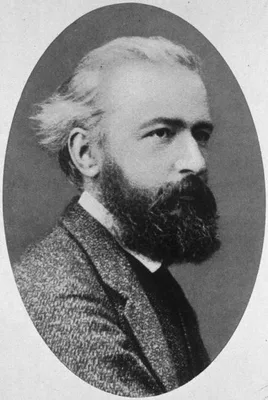
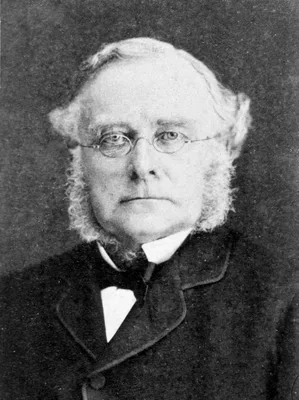
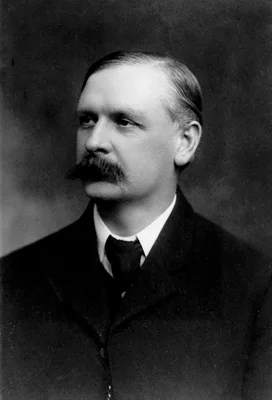
1858 TÜRCK, Ludwig (1810 – 1868)
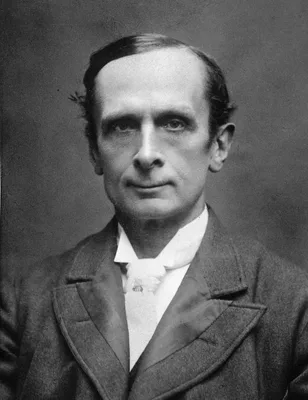
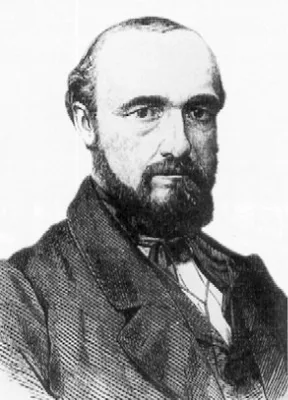
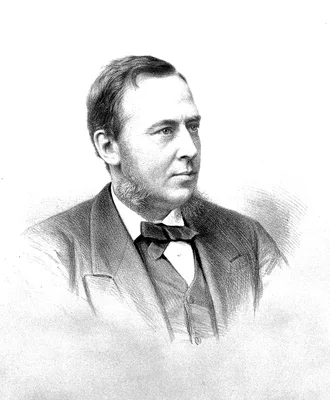
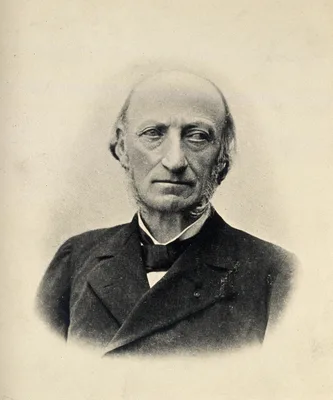
Der Kehlkopfrachenspiegel und die Methode seines Gebrauches.
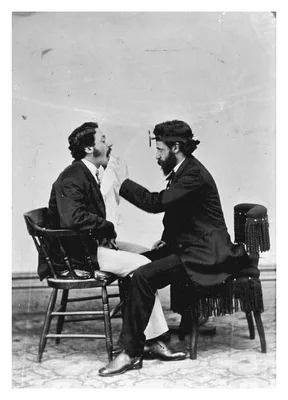
Türck, at first sceptical of Garcia’s laryngoscope, later adopted it and claimed from Czermak priority in its clinical employment; these two gentlemen fought one another bitterly for some years over this point.
GMN 3330 · https://historyofmedicine.com/id/4580
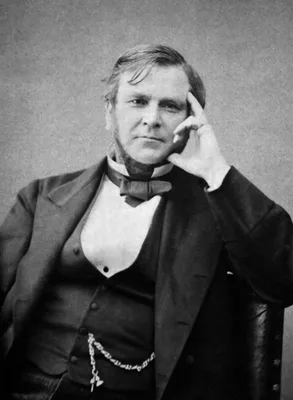
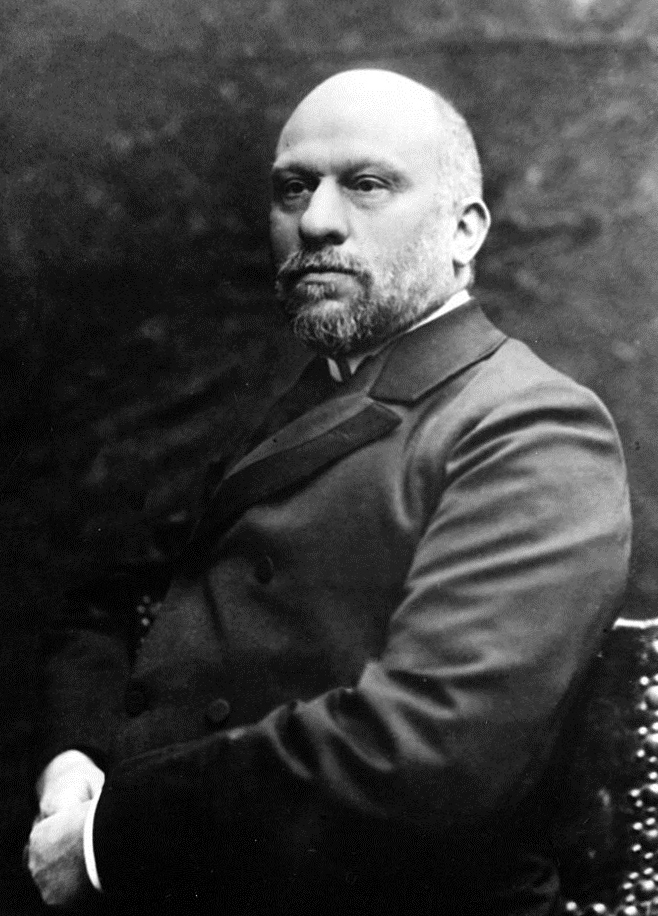
1858 CZERMAK, Johann Nepomuk (1828 – 1873)
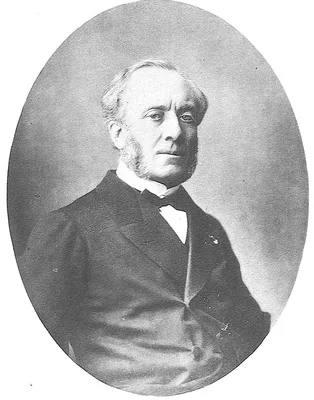
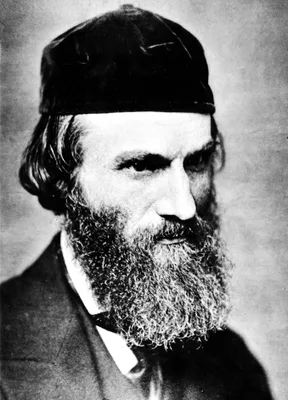
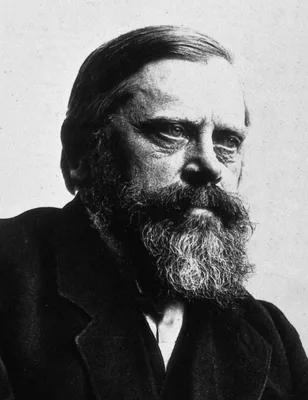
Physiologie Untersuchungen mit Garcia’s Kehlkopfspiegel.
Czermak was the first to demonstrate the utility of the laryngoscope invented by Garcia. He substituted artificial light for sunlight and made other improvements.
GMN 3331 · https://historyofmedicine.com/id/4582
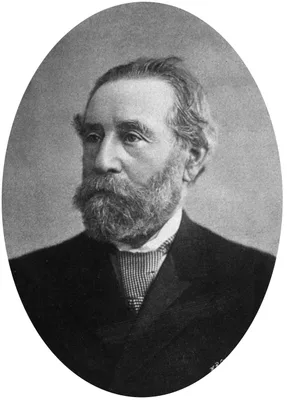
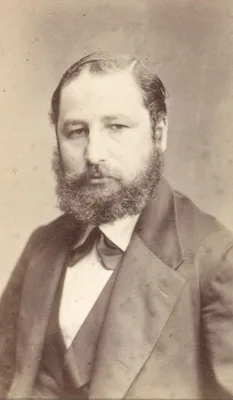
1858 GRAEFE, Alfred Carl (1830 – 1899)
Klinische Analyse der Motilitätsstörungendes Auges.
Alfred Carl Graefe, cousin of Albrecht, made a careful clinical analysis of disordered movements of the eye. He also invented a special “localization ophthalmoscope”, and, with Saemisch, edited the great Handbuch der …
GMN 5883 · https://historyofmedicine.com/id/7286
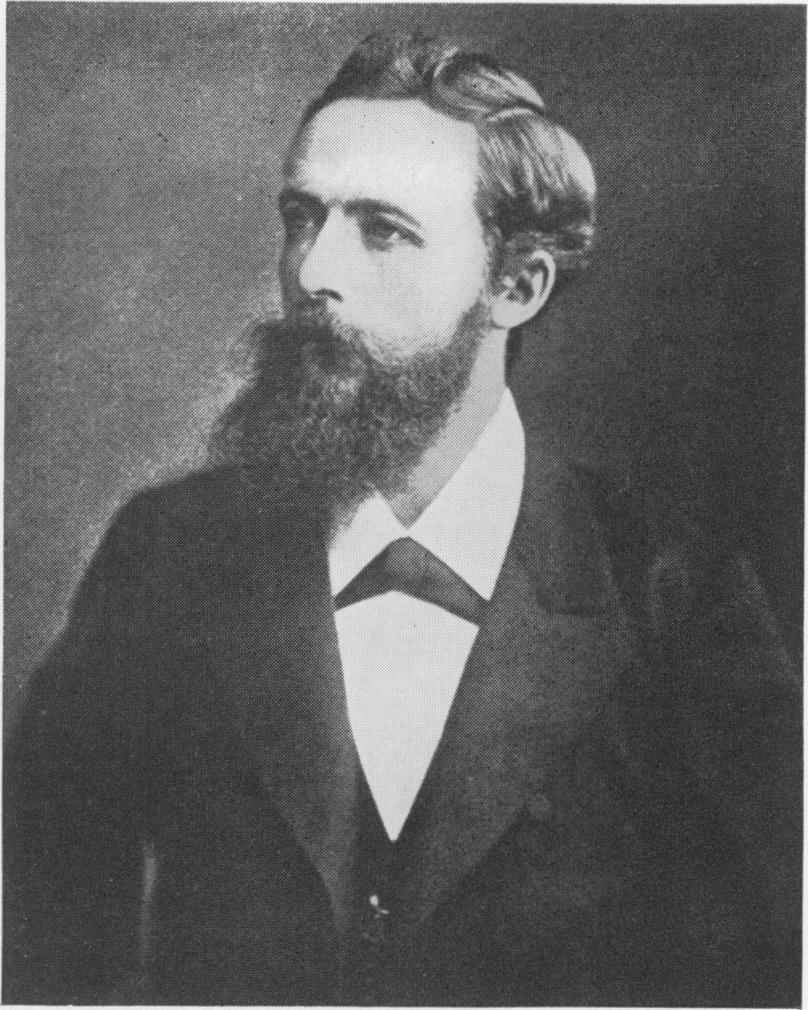
1859 SMITH, Edward (1819 – 1874)
Experimental inquiries into the chemical and other phenomena of respiration, and their modifications by various physical agents.
Smith invented a respirometer to study changes in respiratory function under various conditions. See also the following paper (pp. 715-42) on the effects of foods on respiration. For an account of his work in this and…
GMN 935.1 · https://historyofmedicine.com/id/182
1860 TÜRCK, Ludwig (1810 – 1868)
Praktische Anleitung zur Laryngoscopie.
GMN 3333 · https://historyofmedicine.com/id/4589
1860 TRÖLTSCH, Anton Freiherr von (1829 – 1890)
Die Untersuchung des Gehörgangs und Trommelfells. Ihre Bedeutung. Kritik der bisherigen Untersuchungsmethoden und Angabe einer neuen.
Invention of the modern otoscope.
GMN 3374 · https://historyofmedicine.com/id/4780
1860 SNOWDON & BROTHER
Illustrated wholesale catalogue of surgical and dental instruments, elastic trusses, medical saddle bags, abdominal supporters, shoulder braces and druggists sundries, offered by Snowden & Brother.
Snowden & Brother provided an excellent selection of the exact types of equipment used by the Union Army during the Civil War. Facsimile reprint, with John Weiss & Son 1863 catalogue, with a new introduction by James …
GMN 10495 · https://historyofmedicine.com/id/12688
1862 BILL, Joseph Howland (1835 – 1885)
Notes on arrow wounds.
The definitive work on American Indian arrow wounds suffered by U. S. troops and settlers in frontier warfare during the Western expansion of the United States. Bill eventually developed a "Forceps for the Extraction …
GMN 2166.1 · https://historyofmedicine.com/id/1101
1862 LEWIN, Georg Richard (1820 – 1896)
Beiträge zur Laryngoscopie.
Lewin was probably the first to extirpate a laryngeal growth with the aid of the laryngoscope. Bruns claimed this distinction, but may not have heard of Lewin.
GMN 3269 · https://historyofmedicine.com/id/3969
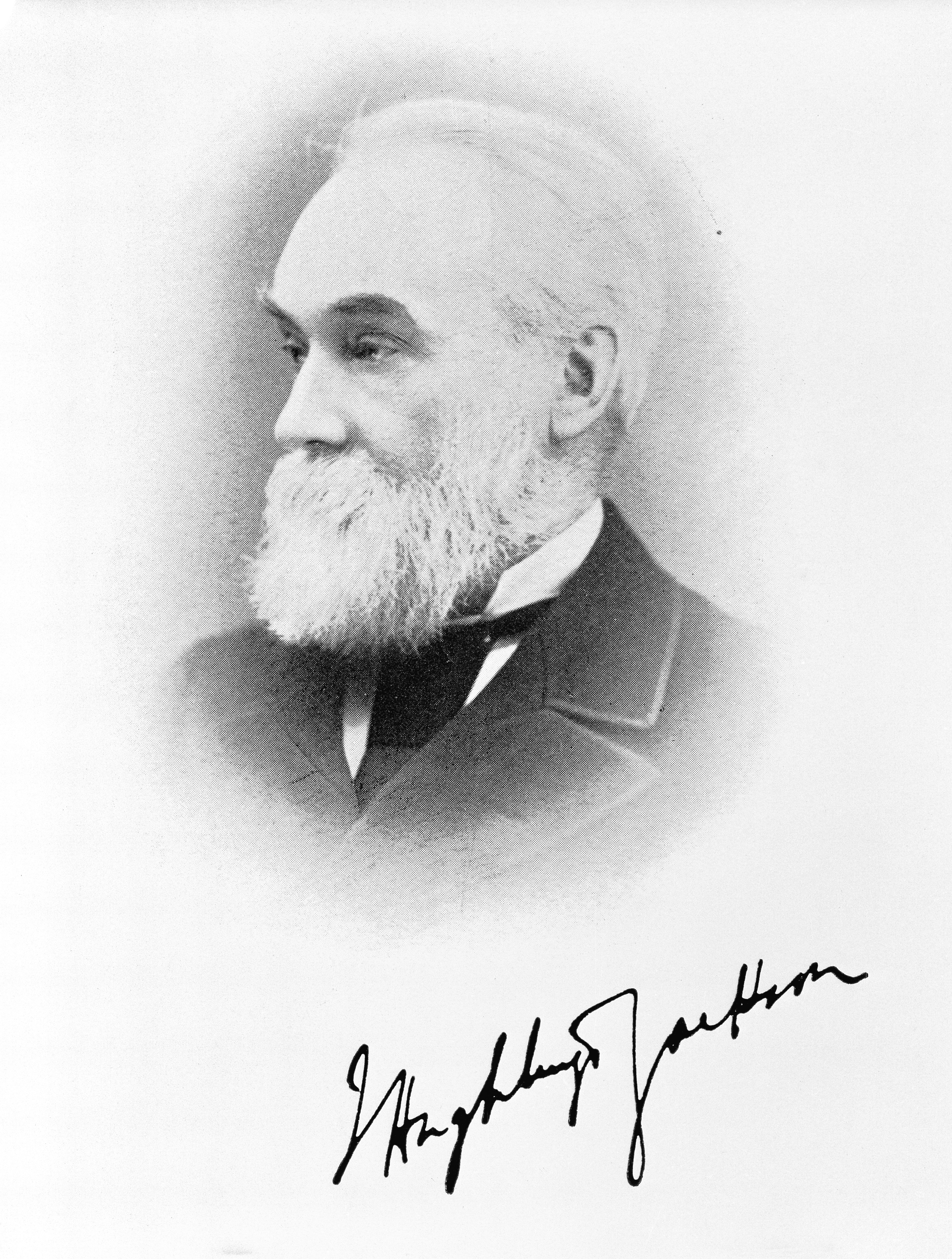
1863 –1865 JACKSON, John Hughlings (1835 – 1911)
Observations on defects of sight in brain disease.
In this work Jackson showed the importance of the ophthalmoscope in the investigation of diseases of the nervous system. Reprinted in Med. Classics, 1939, 3, 918-26.
GMN 4537 · https://historyofmedicine.com/id/8899
1863 JOHN WEISS & SON
A catalogue of surgical instruments, apparatus, appliances, etc. Manufactured and sold by John Weiss & Son.
Though based in England, John Weiss & Son's catalogue offered and illustrated a wide range of equipment that would have been used in the American Civil War or the Crimean War. Facsimile reprint, with Snowdon & Brother…
GMN 10496 · https://historyofmedicine.com/id/12689
1864 FICK, Adolph Eugen (1829 – 1901)
Untersuchungen über elektrische Nervenreizung.
Among the instruments introduced by Fick for the study of muscle and nerve physiology were the myotonograph, the cosine lever, and an improved thermopile.
GMN 623 · https://historyofmedicine.com/id/506
1864 HODGE, Hugh Lenox (1796 – 1873)
The principles and practice of obstetrics.
Hodge, nearly blind, dictated this superb textbook from memory to his son. It includes his concept of “parallel planes” at the various levels of the pelvic canal, and his placental forceps for the completion of aborti…
GMN 6185 · https://historyofmedicine.com/id/7519
1865 BRUNS, Viktor von (1812 – 1883)
Die Laryngoskopie und die laryngoskopische Chirurgie. 1 vol. and atlas.
Bruns claimed to have been the first to remove a tumor from the larynx with the aid of the laryngoscope.
GMN 3271 · https://historyofmedicine.com/id/3974
1865 MACKENZIE, Sir Morell (1837 – 1892)
The use of the laryngoscope in diseases of the throat; with an appendix on rhinoscopy.
GMN 3334 · https://historyofmedicine.com/id/4592
1865 BRUNTON, John (1836 – 1899)
A new otoscope or speculum auris.
Brunton’s otoscope.
GMN 3378.1 · https://historyofmedicine.com/id/4796
1865 DESORMEAUX, Antonin Jean (1815 – 1894)
De l’endoscope et de ses applications au diagnostic et au traitement des affections de l’urèthre et de la vessie.
Desormeaux was a pioneer of endoscopy. Digital facsimile from Google Books at this link.
GMN 4172 · https://historyofmedicine.com/id/6019
1867 SOLIS-COHEN, Jacob da Silva (1838 – 1927)
Removal of a fibrous polyp from the inferior anterior surface of the right vocal cord with the aid of the laryngoscope.
First successful operation for cancer of the larynx.
GMN 3274 · https://historyofmedicine.com/id/3982
1867 LUCAE, Johann Constantin August (1835 – 1911)
Ueber eine neue Methode zur Untersuchung des Gehörorgans zu physiologischen und diagnostischen Zwecken mit Hülfe des Interferenz Otoscopes.
Lucae described an interference otoscope, precursor of auditory impedance devices.
GMN 3378.2 · https://historyofmedicine.com/id/4798
1867 JUNKER, Ferdinand Ethelbert (1828 – 1901)
Description of a new apparatus for administering narcotic vapors.
Junker’s chloroform inhaler.
GMN 5668 · https://historyofmedicine.com/id/7325
1867 JAVAL, Louis Émile (1839 – 1907)
Sur un nouvel instrument pour la détermination de l’astigmatisme.
Javal invented the astigmometer, and described it in the above paper.
GMN 5901 · https://historyofmedicine.com/id/7402
1867 ULLERSPERGER, Jean Baptiste
Prize essay. Ancient transfusion and infusion compared with modern transfusion, infusion, and hypodermic or subcutaneous injections. Translated by Charles F. Wittig.
A comprehensive review, for the time, of the historical literature on these subjects. Digital facsimile from Google Books at this link.
GMN 9869 · https://historyofmedicine.com/id/12057
1867 OBSTETRICAL SOCIETY OF LONDON
Catalogue and report of obstetrical and other instruments exhibited at the Conversazione of the Obstetrical Society of London...held, by permission, at the Royal College of Physicians, March 28th, 1866.
“ A key reference source for mid-19th century [obstetrical] instruments. Many of these instruments became incorporated into the Museum of the Obstetrical Society of London, the contents of which became the property of…
GMN 11641 · https://historyofmedicine.com/id/13842
1867 –1872 GAUJOT, Constantin Mametz Gustav (1828 – 1913); SPILLMANN, Eugène-Pierre
Arsenal de la chirurgie contemporaine. Description, mode d'emploi et appréciation des appareils et instruments en usage pour le diagnostic et le traitement des maladies chirurgicales, l'orthopédie, la prothèse, les opérations simples, générales, spéciales et obstétricales. 2 vols.
Digital facsimile from Google Books at this link.
GMN 14321 · https://historyofmedicine.com/id/16646
1868 WUNDERLICH, Carl Reinhold August (1815 – 1877)
Das Verhalten der Eigenwärme in Krankheiten.
This work on temperature in disease laid the foundation of modern knowledge regarding clinical thermometry. Wunderlich reportedly took over a million measurements from 25,000 people. Temperatures ranged from 97.2 to 9…
GMN 2677 · https://historyofmedicine.com/id/3542
1870 ALLBUTT, Sir Thomas Clifford (1836 – 1925)
Medical thermometry.
Allbutt introduced the modern clinical thermometer.
GMN 2679 · https://historyofmedicine.com/id/3555
1871 ALLBUTT, Sir Thomas Clifford (1836 – 1925)
On the use of the ophthalmoscope in diseases of the nervous system and of the kidneys; also in certain other general disorders.
One of the earliest works on the wider appications of the ophthalmoscope. Digital facsimile from Google Books at this link.
GMN 11545 · https://historyofmedicine.com/id/13744
1873 CLOVER, Joseph Thomas (1825 – 1882)
Description of a new double current inhaler for administering ether.
Clover’s gas-ether inhaler.
GMN 5671 · https://historyofmedicine.com/id/7339
1876 CLOVER, Joseph Thomas (1825 – 1882)
On an apparatus for administering nitrous oxide gas and ether, singly or combined.
Clover’s ether inhaler. See also the same journal, 1877, 1, 69. He invented an inhaler in 1862; this was described, but not by Clover, in Med. Times Gaz., 1862, 2, 149.
GMN 5674 · https://historyofmedicine.com/id/7351
1877 MARCHAND, Richard
Beiträge zur Kenntniss der Reizwell und Contractionswelle des Herzmuskels.
Marchand obtained the first electrocardiogram. Using the differential rheotome he measured the time course of the potential variations from the frog’s heart.
GMN 823.1 · https://historyofmedicine.com/id/271
1877 TARNIER, Étienne Stéphane (1828 – 1897)
Description de deux nouveaux forceps.
Tarnier invented the axis-traction forceps. See also Ann. Gynéc., 1877, 7, 241-64
GMN 6192 · https://historyofmedicine.com/id/7540
1878 MAREY, Étienne Jules (1830 – 1904)
La méthode graphique dans les sciences expérimentales et particulièrement en physiologie et en médecine.
Marey pioneered the use of graphical recording in the experimental sciences, using instruments (many of his own invention) to capture and display data impossible to observe with the senses alone, and to record the pro…
GMN 7294 · https://historyofmedicine.com/id/9464
1879 –1880 BURDON-SANDERSON, Sir John Scott (1828 – 1905); PAGE, Frederick James Montague (1848 – 1907)
On the time-relations of the excitatory process in the ventricle of the heart of the frog.
These workers were among the first to study the action currents of the heart, and made the first records (with the capillary electrometer) of the minute electrical current produced by the beating of the heart. See als…
GMN 824 · https://historyofmedicine.com/id/278
1879 WELLS, Sir Thomas Spencer (1818 – 1897)
Remarks on forcipressure and the use of pressure-forceps in surgery.
Spencer Wells forceps.
GMN 5615 · https://historyofmedicine.com/id/7137
1880 MOSSO, Angelo (1846 – 1910)
Sulla circolazione del sangue nel cervello dell’uomo. Ricerche sfigmografiche.
In this work Angelo Mosso reported his discovery that blood circulation in the brain increases in certain discrete areas during mental activity, and published the records of this activity produced by the machine he in…
GMN 6838 · https://historyofmedicine.com/id/9002
1880 WALDENBURG, Louis (1837 – 1881)
Die Messung des Pulses und des Blutdrucks am Menschen.
Probably the first book published on the messurement blood pressure in mankind. Mostly concerned with normal physiologic conditions, with a small section on fluctuations in illness. Digital facsimile from Google Books…
GMN 11721 · https://historyofmedicine.com/id/13922
1881 MIKULICZ-RADECKI, Jan (Johann Freiherr von) (1850 – 1905)
Ueber Gastroskopie und Oesophagoskopie.
Mikulicz was the first to use the electric oesophagoscope invented by Leiter in 1880. He was among the most distinguished of Billroth’s pupils and contributed much to cancer surgery.
GMN 3475 · https://historyofmedicine.com/id/5660
1882 AVELING, James Hobson (1828 – 1892)
The Chamberlens and the midwifery forceps.
GMN 6283 · https://historyofmedicine.com/id/8964
1884 MOSSO, Angelo (1846 – 1910)
La paura.
Mosso conducted experiments with special equipment, which he devised to suit the requirements of the studies. He pursued two main lines of research: the analysis of motor functions and the relationship between physiol…
GMN 10113 · https://historyofmedicine.com/id/12302
1885 FREY, Maximilian (Max) Ruppert Franz von (1852 – 1932); GRUBER, Max von (1853 – 1927)
Untersuchungen über den Stoffwechsel isolirte Organe. I. Ein Respirationsapparat für isolirte Organe. II. Versuche über den Stoffwechsel des Muskels.
(Part 1 by Frey & Gruber; Part 2 by Frey.) Frey and Gruber developed the first heart-lung machine. Their machine "consisted of a double-acting pump in the form on an injection syringe with a capacity of 10 ml, which i…
GMN 13907 · https://historyofmedicine.com/id/16199
1887 WITKOWSKI, Gustave-Joseph (1844 – 1922)
Histoire des accouchements chez tous les peuples.
182-page appendix: "L'arsenal obstétrical", containing numerous illustrations of instruments, at end. Digital facsimile from the Internet Archive at this link.
GMN 6286 · https://historyofmedicine.com/id/8015
1889 POTAIN, Pierre Charles Édouard (1825 – 1901)
Du sphygmomanomètre et de la mésure de la pression artérielle chez l’homme à l’état normale et pathologique.
Potain devised a simple portable air sphygmomanometer for blood-pressure estimation.
GMN 2798 · https://historyofmedicine.com/id/3419
1891 MOSSO, Angelo (1846 – 1910)
La fatica.
Mosso investigated muscular fatigue with the ergograph of his invention. He showed fatigue to be due to a toxin produced by muscular contraction. English translation, 1906.
GMN 639 · https://historyofmedicine.com/id/519
1894 HEWITT, Sir Frederic William (1857 – 1916)
Further observations on the use of oxygen with nitrous oxide.
Includes description of Hewitt’s nitrous oxide/oxygen stopcock.
GMN 5682.1 · https://historyofmedicine.com/id/7384
1895 MOSSO, Angelo (1846 – 1910)
Sphygmomanomètre pour mésurer la pression du sang chez l’homme.
A sphygmomanometer for registering the blood-pressure in the finger was invented by Mosso.
GMN 2801 · https://historyofmedicine.com/id/3425
1895 KIRSTEIN, Alfred (1863 – 1922)
Autoskopie des Larynx und der Trachea. (Laryngoscopia directa, Euthyskopie, Besichtigung ohne Spiegel.)
First direct-vision laryngoscope.
GMN 3335 · https://historyofmedicine.com/id/4595
1896 RIVA-ROCCI, Scipione (1863 – 1937)
Un nuovo sfigmomanometro.
Riva-Rocci’s sphygmomanometer marked the end of the search for a simple clinical method of estimating the blood-pressure. Abridged English translation in Ruskin (No. 3160.1).
GMN 2804 · https://historyofmedicine.com/id/3433
1896 ROSENHEIM, Theodor (1868 – 1939)
Ueber Gastroskopie.
Rosenheim’s gastroscope.
GMN 3516.1 · https://historyofmedicine.com/id/3994
1897 HILL, Sir Leonard Erskine (1866 – 1952); BARNARD, Harold Leslie (1868 – 1908)
A simple and accurate form of sphygmomanometer or arterial pressure gauge contrived for clinical use.
Hill and Barnard made an important modification to the Riva-Rocci sphygmomanometer when they substituted a pressure gauge in place of the mercury manometer used for pressure readings.
GMN 2807 · https://historyofmedicine.com/id/3446
1899 TRUAX, Charles (1852 – 1918)
The mechanics of surgery.
An encyclopedic work that described illustrated and analysed the entire range of instrumentation employed in medical and surgical practice at the end of the 19th century. Reprinted with introduction by James M. Edmons…
GMN 2680.01 · https://historyofmedicine.com/id/3563