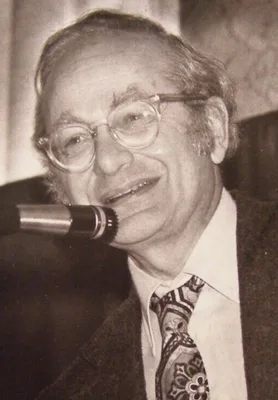
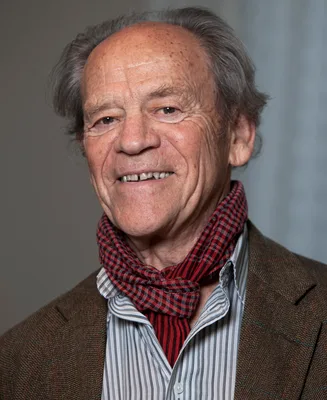
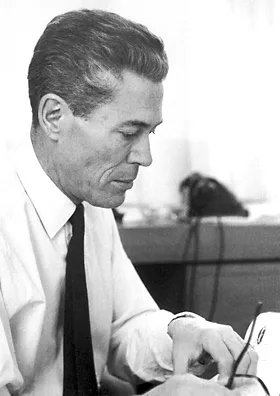
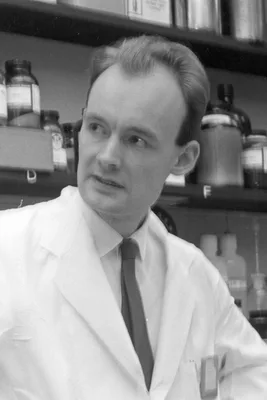
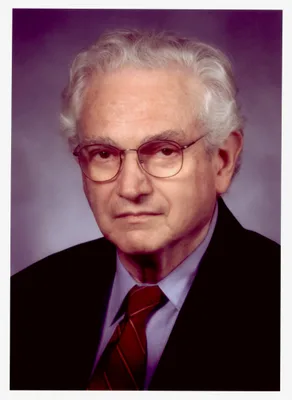
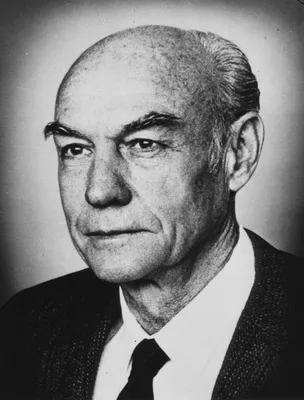
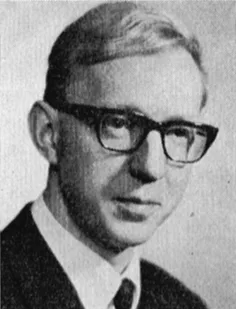
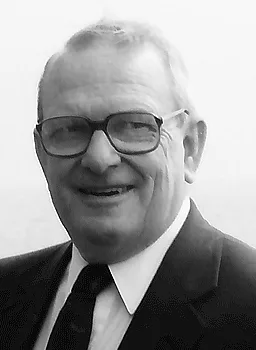
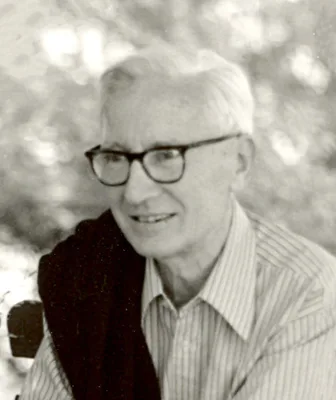
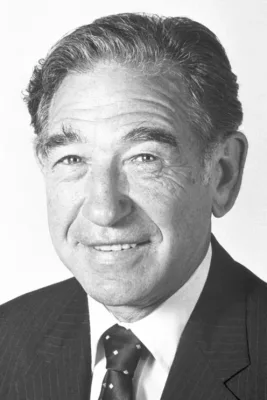
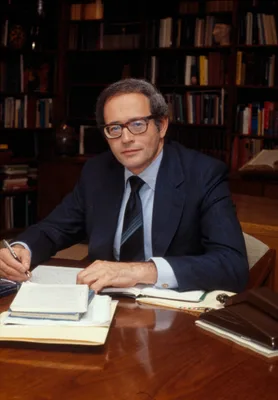
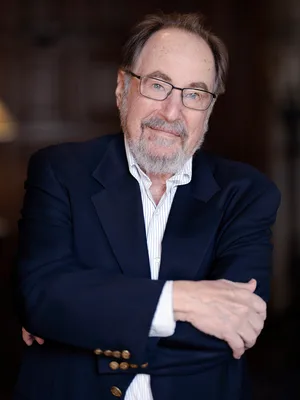
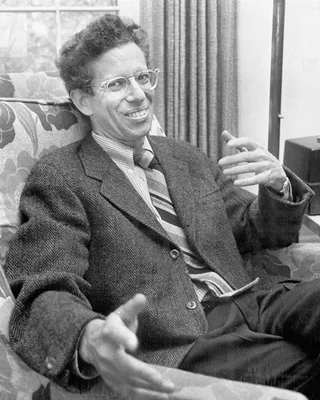
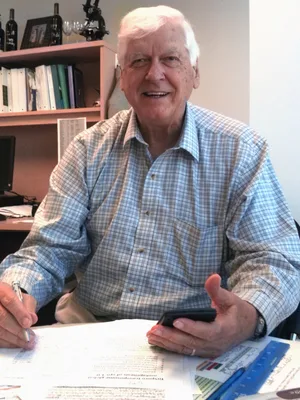
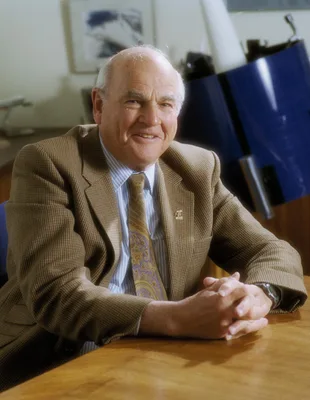
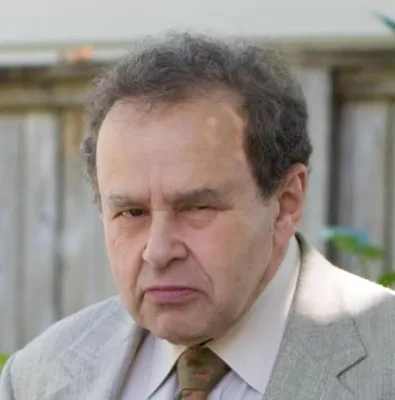
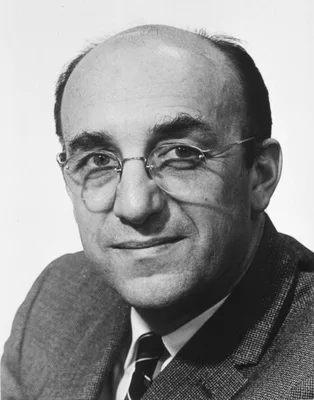
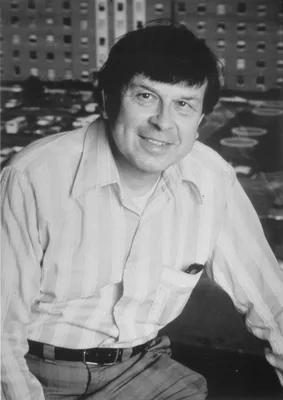
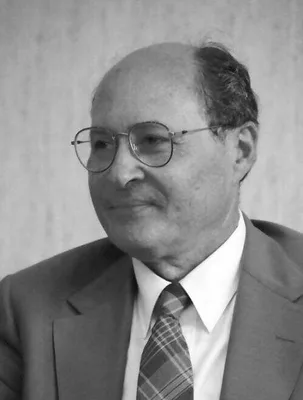
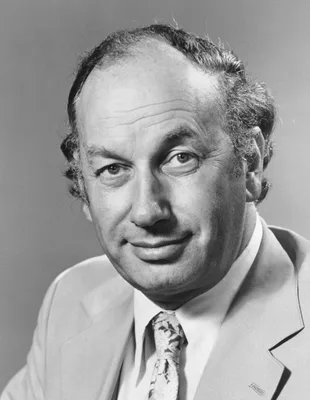
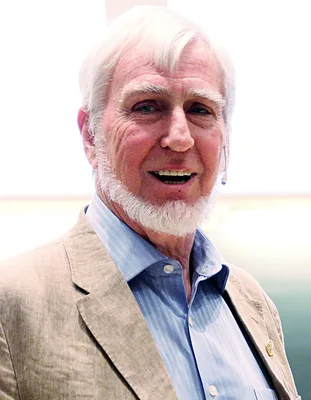
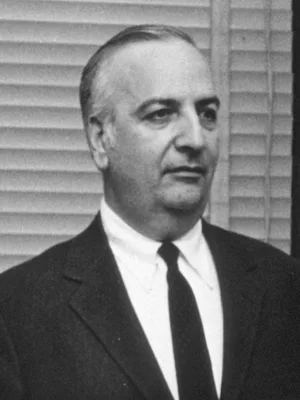
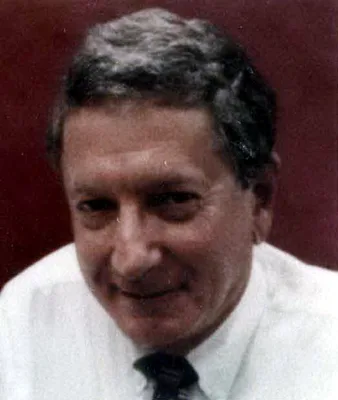
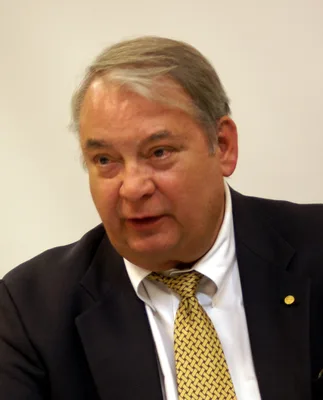
1959 HUBEL, David Hunter (1926 – 2013); WIESEL, Torsten Nils (1924 – )
Receptive fields of single neurones in the cat's striate cortex.
Also: Hubel & Wiesel, Receptive fields, binocular interaction and functional architecture in the cat's visual cortex, J. Physiol., 160, 1962, 106-154. In 1981 Hubel and Wiesel shared half of the Nobel Prize in Physiol…
GMN 14242 · https://historyofmedicine.com/id/16561
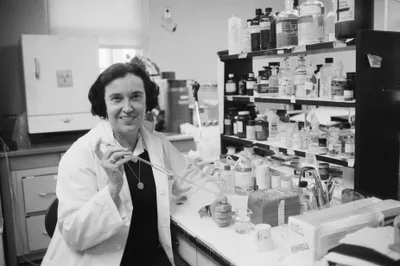
1960 YALOW, Rosalyn Sussman (1921 – 2011); BERSON, Solomon Aaron (1918 – 1972)
Immunosassay of endogenous plasma insulin in man.
First radioimmunoassay of a hormone, a test capable of estimating nonogram or even picogram quantities. In 1977 Yalow received half of the Nobel Prize in Physiology or Medicine "for the development of radioimmunoassay…
GMN 2578.28 · https://historyofmedicine.com/id/4257
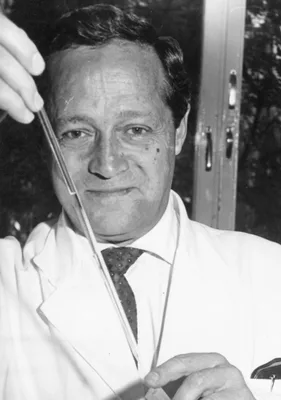
1960 LYNEN, Feodor Felix Konrad; BUCHER, N. L.; OVERATH, P.
β-Hydroxy-β-methyl-glutaryl coenzyme A reductase, cleavage and condensing enzymes in relation to cholesterol formation in rat liver.
In 1964 Feodor Lynen shared the Nobel Prize in Physiology or Medicine with Konrad Bloch “for their discoveries concerning the mechanism and regulation of the cholesterol and fatty acid metabolism.” Order of authorship…
GMN 14240 · https://historyofmedicine.com/id/16559
1961 JACOB, François (1920 – 2013); MONOD, Jacques (1910 – 1976)
Genetic regulatory mechanisms in the synthesis of proteins.
In 1965 Jacob, Monod, and André Lwoff shared the Nobel Prize in Physiology or Medicine "for their discoveries concerning genetic control of enzyme and virus synthesis."
GMN 256.9 · https://historyofmedicine.com/id/8706
1961 MATTHAEI, J. Heinrich (1929 – ); NIRENBERG, Marshall Warren (1927 – 2010)
Characteristics and stabilization of DNAase-sensitive protein synthesis in E. coli extracts.
With Matthaei, Nirenberg demonstrated that messenger RNA is required for protein synthesis, and that synthetic messenger RNA preparations can be used to decipher various aspects of the genetic code. Nirenberg first re…
GMN 256.11 · https://historyofmedicine.com/id/8708
1961 SPERRY, Roger Wolcott (1913 – 1994)
Cerebral organization and behavior: The split brain behaves in many respects like two separate brains, providing new research possibilities.
Sperry and colleagues, including Michael Gazzaniga, conducted extensive experiments on an epileptic patient who had had his corpus collosum, the "bridge" between the left and right hemispheres of the brain, split so t…
GMN 9648 · https://historyofmedicine.com/id/11835
1962 BERGSTRÖM, Sune (1916 – 2004); SAMUELSSON, Bengt Ingemar (1934 – ); ET AL
The structure of prostaglandin E, F1 and F2.
In this and subsequent papers Bergström and Samuelsson elucidated the chemical structure of prostaglandins. In 1982 the Nobel Prize in Physiology or Medicine was awarded jointly to Sune K. Bergström, Bengt I. Samuelss…
GMN 1931.4 · https://historyofmedicine.com/id/2757
1963 CORMACK, Allan McLeod (1924 – 1998)
Representation of a Function by its Line Integrals, with Some Radiological Applications.
Cormack showed that changes in tissue density could be computed from x-ray data. Because of limitations in computing power no machine was constructed during the 1960s. Cormack's papers generated little interest until …
GMN 8149 · https://historyofmedicine.com/id/10325
1963 TINBERGEN, Nikolaas (1909 – 1988)
On the aims and methods of ethology.
In this paper Tinbergen defined Tinbergen's Four Questions, or complementary categories of explanations for animal behavior. that form the basis of ethology: Causation, Ontogeny, Survival Value, and Evolution. In 1973…
GMN 14069 · https://historyofmedicine.com/id/16380
1964 BLACK, Sir James Whyte (1924 – 2010); CROWTHER, Albert Frederick (1917 – 2006); ET AL
A new adrenergic beta-receptor antagonist.
Development of Propranolol, the first beta-blocker effectively used in the treatment of coronary heart disease and hypertension. R. G. Shanks, L. H. Smith and A. C. Dornhorst. In 1988 the Nobel Prize in Physiology or …
GMN 1931.5 · https://historyofmedicine.com/id/2759
1965 HOLLEY, Robert William (1922 – 1993); ET AL
Structure of a ribonucleic acid.
The complete sequence of an alanine transfer RNA determined – the first nucleic acid structure to be determined. With seven co-authors. In 1968 Holley shared the Nobel Prize in Physiology or Medicine with Har Gobind K…
GMN 257.2 · https://historyofmedicine.com/id/8712
1965 COHEN, Stanley (1922 – 2020)
The stimulation of epidermal proliferation by a specific protein (EGF).
Discovery of Epidermal Growth Factor (EGF). In 1986 Cohen shared the Nobel Prize in Physiology or Medicine with Rita Levi-Montalcini "for their discoveries of growth factors."
GMN 14244 · https://historyofmedicine.com/id/16563
1966 GURDON, Sir John Bertrand (1933 – ); UEHLINGER, V.
"Fertile" intestine nuclei.
Gurdon and Uehlinger replaced the cell nucleus of frog ova with frog intestinal nuclei to generate tadpoles, some of which became fertile adult male and female frogs. In 2012 the Nobel Prize in Physiology or Medicine …
GMN 14064 · https://historyofmedicine.com/id/16375
1967 HENLE, Gertrude Szpingier (1912 – 2006); HENLE, Werner (1910 – 1987); DIEHL, Volker S. (1938 – ); HAUSEN, Harald zur (1936 – ); KOHN, G.
Herpes-type virus and chromosome marker in normal leukocytes after growth with irradiated Burkitt cells.
Hausen and colleagues showed for the first time that a cancer virus (Epstein-Barr virus) can transform healthy cells (lymphocytes) into cancer cells. This showed that viruses can cause cancer cell formation. (Order of…
GMN 12662 · https://historyofmedicine.com/id/14906
1968 ROBSON, George Alan (1934 – ); BUTCHER, Reginald William (1930 – ); SUTHERLAND, Earl Wilber Jr. (1915 – 1974)
Cyclic AMP.
Sutherland elucidated the role of cyclic adenosine monophosphate, the second messenger mediating actions in a wide range of hormonal effects. In 1971 Sutherland was awarded the Nobel Prize in in Physiology or Medicine…
GMN 752.7 · https://historyofmedicine.com/id/1740
1968 DULBECCO, Renato (1914 – 2012); SAMBROOK, J.; WESTPHAL, H.; SRINVASAN, P. R.
The integrated state of viral DNA in SV40-transformed cells.
Dulbecco and his group demonstrated that the infection of normal cells with certain types of viruses (oncoviruses) led to the incorporation of virus-derived genes into the host-cell genome, and that this event lead to…
GMN 13947 · https://historyofmedicine.com/id/16245
1969 EDWARDS, Robert Geoffrey (1925 – 2013); BAVISTER, B. D.; STEPTOE, Patrick Christopher (1913 – 1988)
Early stages of fertilization in vitro of human oocytes.
First successful in-vitro fertilization of human oocytes. In 2010 Robert Edwards was awarded the Nobel Prize in Physiology or Medicine "for the development of in vitro fertilization."
GMN 532.4 · https://historyofmedicine.com/id/1703
1969 EDELMAN, Gerald Maurice (1929 – 2014); ET AL
The covalent structure of an entire ÁG immunoglobulin molecule.
Complete sequence of an immunoglobulin molecule. With five coauthors. In 1972 Edelman shared the Nobel Prize in Physiology or Medicine with R. R. Porter “for their discoveries concerning the chemical structure of anti…
GMN 2578.39 · https://historyofmedicine.com/id/4302
1970 BALTIMORE, David (1938 – )
Viral RNA-dependent DNA polymerase: RNA-dependent DNA polymerase in virions of RNA tumour viruses.
In 1970 Baltimore and Temin discovered that certain viruses that have their genes in the form of RNA can copy the RNA "backward" into DNA in infected cells. The enyzme, reverse transcriptase, enables the manufacture o…
GMN 2660.22 · https://historyofmedicine.com/id/3429
1970 TEMIN, Howard Martin (1934 – 1994); MIZUTANI, Satoshi
RNA-dependent DNA polymerase in virions of Rous sarcoma virus.
Discovery of reverse transcriptase. "In 1969, Temin and a postdoctoral fellow, Satoshi Mizutani, began searching for the enzyme that was responsible for the phenomenon of viral RNA being transferred into proviral DNA.…
GMN 2660.23 · https://historyofmedicine.com/id/3432
1970 SMITH, Hamilton Othanel (1931 – ); KELLY, T. J.
A restriction endonuclease from Hemophilus influenzae. II. Base sequence of the recognition site.
Discovery of the first type II restriction enzyme (HindII). Smith shared the 1978 Nobel Prize in Physiology or Medicine with Werner Arber and Daniel Nathans "for the discovery of restriction enzymes and their applicat…
GMN 6889 · https://historyofmedicine.com/id/9053
1970 BLUMBERG, Baruch Samuel (1925 – 2011); MILLMAN, Irving (1923 – 2012); BAYER, Manfred E. (1928 – 2015); LOEB, Lawrence A.
Australia antigen (a hepatitis-associated antigen). Purification and physical properties.
Purification of the Australia antigen and investigation of its physical properties. (Order of authorship in the original publication: Millman, Loeb, Bayer, Blumberg.) Blumberg shared the 1976 Nobel Prize in Physiology…
GMN 12321 · https://historyofmedicine.com/id/14544
1970 BURGUS, Roger Cecil (1934 – ); DUNN, Thomas F.; DESIDERIO, Dominic; GUILLEMIN, Roger (1924 – 2024)
Characterization of ovine hypothalamic hypophysiotropic TSH-releasing factor.
Working with sheep preparations, the authors determined that the molecular structure of TRF (thyroid releasing hormone), is 2-pyrrolidone-5-carboxylyl-histidyl-L-proline amide. On page 324, they showed the molecular s…
GMN 14232 · https://historyofmedicine.com/id/16550
1971 GAJDUSEK, Daniel Carleton (1923 – 2008); GIBBS, Clarence Joseph Jr. (1924 – 2001)
Transmission of two subacute spongiform encephalopathies of man (Kuru and Creutzfeldt–Jakob disease) to New World monkeys.
Following Hadlow's suggestion (1959), Gadjusek was able to transmit Kuru and Creutzfeldt–Jakob disease to primates through cerebral inoculations. Similarity in the clinical course of the diseases and in the cellular p…
GMN 4729.2 · https://historyofmedicine.com/id/1255
1971 NATHANS, Daniel (1928 – 1999)
Specific cleavage of simian virus 40 DNA by restriction endonuclease of Hemophilus influenzae.
Nathans showed that the restriction enzyme discovered by Hamilton Smith cleaved SV40 DNA into 11 specific pieces. Nathans and his student Kathleen Danna wrote: "The availability of pieces of SV40 DNA from specific sit…
GMN 6890 · https://historyofmedicine.com/id/9054
1971 VANE, Sir John Robert (1927 – 2004)
Inhibition of prostaglandin synthesis as a mechanism of action for aspirin-like drugs.
In 1982 Vane shared the Nobel Prize in Physiology or Medicine with Sune Bergström and Bengt Samuelsson for "their discoveries concerning prostaglandins and related biologically active substances."
GMN 13958 · https://historyofmedicine.com/id/16259
1971 SCHALLY, Andrzej Viktor "Andrew" (1926 – ); BABA, Yoshihiko; MATSUO, Hisayuki (1928 – 2022)
Structure of the porcine LH-and FSH-releasing hormone. II. Confirmation of the proposed structure by conventional sequential analyses.
Publication in May 1971: Working with pig preparations, the authors reinvestigated the peptide that they had previously isolated, which acted as an LH-FSH releasing hormone. They performed an Edman-dansyl degradation …
GMN 14231 · https://historyofmedicine.com/id/16549
1971 O'KEEFE, John (1939 – ); DOSTROVSKY, Jonathan
The hippocampus as a spatial map. Preliminary evidence from unit activity in the freely-moving rat.
See also: O'Keefe, "Place units in the hippocampus of the freely moving rat," Experimental Neurology, 51 (1976) 78–109. O’Keefe and his student Jonathan Dostrovsky discovered place cells in the hippocampus, and that t…
GMN 14258 · https://historyofmedicine.com/id/16579
1972 BENACERRAF, Baruj (1920 – 2011); MCDEVITT, Hugh O’Neill (1930 – )
Histocompatibility-linked immune response genes.
Benacerraf and McDevitt discovered that the capacity to mount certain immune responses is genetically determined. In 1980 Benacerraf shared the Nobel Prize in Physiology or Medicine with J. Dausset and G. D. Snell "fo…
GMN 2578.29 · https://historyofmedicine.com/id/4262
1973 HOUNSFIELD, Sir Godfrey Newbold (1919 – 2004)
Computerized transverse axial scanning (tomography).
Hounsfield invented computer-assisted tomography (CAT), or computed tomography (CT). In 1979 Hounsfield shared the Nobel Prize in Physiology or Medicine with Allen M. Cormack "for the development of computer assisted …
GMN 2700.4 · https://historyofmedicine.com/id/4340
1973 LAUTERBUR, Paul Christian (1929 – 2007)
Image formation by induced local interactions: Examples employing nuclear magnetic resonance.
Lauterbur proposed a workable method for using nuclear magnetic resonance to produce images of tissues. In 2003 Lauterbur shared the Nobel Prize in Physiology or Medicine with Sir Peter Mansfield “for their discoverie…
GMN 2700.5 · https://historyofmedicine.com/id/4343
1973 STEINMAN, Ralph Marvin (1943 – 2011); COHN, Zanvil Alexander (1926 – 1993)
Identification of a novel cell type in peripheral lymphoid organs in mice. I. Morphology, quantitation, tissue distribution.
Order of authorship in the original publication: Steinman, Cohn. In this paper Steinman announced his discovery of the dendritic cell. Digital facsimile from PubMedCentral at this link. In 2011 Steinman received half …
GMN 11074 · https://historyofmedicine.com/id/13270
1973 BROWN, Michael Stuart (1941 – ); GOLDSTEIN, Joseph Leonard (1940 – )
Regulation of 3-Hydroxy-3-Methylglutaryl Coenzyme A Reductase activity in human fibroblasts by lipoproteins.
Goldstein and Brown discovered that human cells have low-density lipoprotein (LDL) receptors that remove cholesterol from the blood and that when LDL receptors are not present in sufficient numbers, individuals develo…
GMN 14241 · https://historyofmedicine.com/id/16560
1974 ZINKERNAGEL, Rolf Martin (1944 – ); DOHERTY, Peter Charles (1940 – )
Restriction of in vitro T cell-mediated cytotoxicity in lymphocytic choriomeningitis within a syngeneic or semiallogeneic system.
Doherty and Zinkernagel discovered how a class of white blood cells known as T cells kill virus-infected cells in the body, and so present the spread of viruses. In 1998 Zinkernagel and Doherty were awarded the Nobel …
GMN 7453 · https://historyofmedicine.com/id/9625
1974 BRENNER, Sydney (1927 – 2019)
The genetics of CAENORHABDITIS ELEGANS.
In 2002 Brenner shared the Nobel Prize in Physiology or Medicine in Physiology or Medicine with H. Robert Horvitz and John Sulston "for their discoveries concerning genetic regulation of organ development and programm…
GMN 9941 · https://historyofmedicine.com/id/12129
1974 BRENNER, Sydney (1927 – 2019); SULSTON, Sir John Edward (1942 – 2018)
The DNA of CAENORHABDITIS ELEGANS.
Digital facsimile from PubMedCentral at this link.
GMN 9942 · https://historyofmedicine.com/id/12130
1974 HARTWELL, Leland Harrison (1939 – ); CULOTTI, Joseph; REID, Brian J.; PRINGLE, John R. (1943 – )
Genetic control of the cell division cycle in yeast.
In 2001 Hartwell shared the Nobel Prize in Physiology or Medicine with Tim Hunt and Sir Paul M. Nurse "for their discoveries of key regulators of the cell cycle." See also No. 13933. In this paper the authors demonstr…
GMN 13934 · https://historyofmedicine.com/id/16230
1975 DULBECCO, Renato (1914 – 2012)
From the molecular biology of oncogenic DNA viruses to cancer. Les Prix Nobel en 1975, pp. 172-80.
In 1975 Dulbecco shared the Nobel Prize in Physiology or Medicine with David Baltimore and Howard Martin Temin "for their discoveries concerning the interaction between tumour viruses and the genetic material of the c…
GMN 2660.27 · https://historyofmedicine.com/id/3440
1975 KÖHLER, Georges Jean Franz (1946 – 1995); MILSTEIN, César (1927 – 2002)
Continuous cultures of fused cells secreting antibody of predefined specificity.
Hybridomas. In 1984 Köhler and Milstein shared the Nobel Prize in Physiology or Medicine with Niels K. Jerne, "for theories concerning the specificity in development and control of the immune system and the discovery …
GMN 2578.43 · https://historyofmedicine.com/id/4314
1975 BLOBEL, Günter (1936 – 2018); DOBBERSTEIN, Bernhard (1944 – )
Transfer of proteins across membranes. I. Presence of proteolytically processed and unprocessed nascent immunoglobulin light chains on membrane-bound ribosomes of murine myeloma. II. Reconstitution of functional rough microsomes from heterologous components.
"In 1975 Günther Blobel showed that in certain cases amino acids in a protein serve as an address label that determines where a protein is to be delivered. Amino acid sequences determine whether a protein is to be pas…
GMN 14249 · https://historyofmedicine.com/id/16568
1976 VARMUS, Harold Eliot (1942 – ); BISHOP, John Michael (1936 – ); STEHELIN, Dominique (1943 – 2019); VOGT, Peter K. (1932 – )
DNA related to the transforming gene(s) of avian sarcoma viruses is present in normal avian DNA.
Discovery of the first “oncogene. In 1989 Varmus and Bishop shared the Nobel Prize for in Physiology or Medicine "for their discovery of the cellular origin of retroviral oncogenes."
GMN 2660.28 · https://historyofmedicine.com/id/3441
1976 NEHER, Erwin (1944 – ); SAKMANN, Bert (1942 – )
Single-channel currents recorded from membrane of denervated frog muscle fibres.
In 1991 Neher and Sakmann were awarded the 1991 Nobel Prize in Physiology or Medicine for "their discoveries concerning the function of single ion channels in cells." They were also awarded the prize for the invention…
GMN 7454 · https://historyofmedicine.com/id/9626
1976 TONEGAWA, Susumu (1939 – )
Evidence for somatic rearrangement of immunoglobulin genes coding for variable and constant regions.
Discovery of V(D)J recombination, the genetic mechanism which produces antibody diversity. In 1987 Tonegawa was awarded the Nobel Prize in Physiology or Medicine "for his discovery of the genetic principle for generat…
GMN 14245 · https://historyofmedicine.com/id/16564
1976 NURSE, Sir Paul Maxime (1949 – ); THURIAUX, Pierre; NASMYTH, Kim Ashley (1952 – )
Genetic control of the cell division cycle in the fission yeast Schizosaccharomyces pombe.
"Beginning in 1976, Nurse identified the gene cdc2 in fission yeast (Schizosaccharomyces pombe). This gene controls the progression of the cell cycle from G1 phase to S phase and the transition from G2 phase to mitosi…
GMN 14253 · https://historyofmedicine.com/id/16573
1977 MANSFIELD, Sir Peter (1933 – 2017); MAUDSLEY, Andrew A.
Medical imaging by NMR.
Mansfield developed a mathematical technique that would allow NMR scans to take seconds rather than hours and produce clearer images than the technique Paul Lauterbur developed in 1973. Mansfield showed how gradients …
GMN 8150 · https://historyofmedicine.com/id/10326
1977 CHOW, Louise Tsi (1943 – ); GELINAS, Richard E.; BROKER, Thomas R.; ROBERTS, Richard John Sir (1943 – )
An amazing sequence arrangement at the 5' ends of adenovirus 2 messenger RNA.
Discovery of introns. In 1993 Roberts shared the Nobel Prize in Physiology or Medicine with Phillip A. Sharp "for their discoveries of split genes." It was frequently suggested that Chow deserved a share of that prize…
GMN 11043 · https://historyofmedicine.com/id/13239
1977 BERGET, Susan M.; MOORE, Claire; SHARP, Philip Allen (1944 – )
Spliced segments at the 5' terminus of adenovirus 2 late mRNA.
Discovery of introns simultaneously with Roberts, Chow, Broker (No. 11043). Sharp's electron microscopist, Berget, visualized the introns in the electron microscope. James D. Watson took note of the profound significa…
GMN 11044 · https://historyofmedicine.com/id/13240
1977 GILMAN, Alfred Goodman (1941 – 2015); ROSS, Elliot M.
Resolution of some components of adenylate cyclase necessary for catalytic activity.
Goodman shared the 1994 Nobel Prize in Physiology or Medicine with Martin Rodbell "for their discovery of G-proteins and the role of these proteins in signal transduction in cells." In this paper Goodman and Ross show…
GMN 14143 · https://historyofmedicine.com/id/16457
1977 MURAD, Ferid (1936 – 2023); ET AL
Nitric oxide activates guanylate cyclase and increases guanosine 3',5'-monophosphate levels in various tissue preparations.
Murad demonstrated that nitroglycerin and related drugs worked by releasing nitric oxide into the body, which relaxed smooth muscle by elevating intracellular cyclic GMP. With W. P. Arnold, C. K. Mittal, S. Katsuki. I…
GMN 14248 · https://historyofmedicine.com/id/16567
1978 LEWIS, Edward Butts (1918 – 2004)
A gene complex controlling segmentation in Drosophila.
Discovery of the Drosophila Bithorax complex and elucidation of its function. Lewis founded the field of developmental genetics and laid the groundwork for current understanding of the universal, evolutionarily conser…
GMN 7456 · https://historyofmedicine.com/id/9628