1735 ATKINS, John (1685 – 1757)
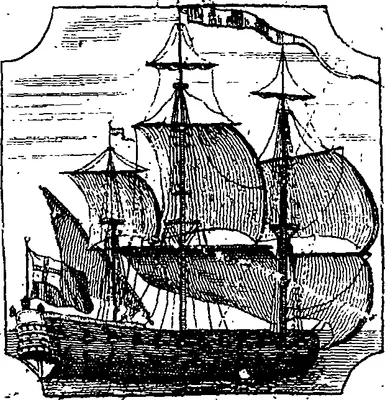
A voyage to Guinea, Brasil and the West Indies; in His Majesty's ships, the Swallow and Weymouth: Describing the several islands and Settlements, viz, Madeira, the Canaries, Cape de Verd, Sierraleon, Sesthos, Cape Apollonia, Cabo Corso, and others on the Guinea coast; Barbadoes, Jamaica, &c. in the West-Indies; the colour, diet, languages, habits, manners, customs, and religions of the respective natives, and inhabitants. With remarks on the gold, ivory, and slave-trade; and on the winds, tides and currents of the several coasts.
Atkins, surgeon on the voyage, included information about the slave trade and the natural history of the Gold Coast. "Atkins describes the manatee accurately, and tells much about fetish worship. He shows that there w…
GMN 8483 · https://historyofmedicine.com/id/10660
1779 ROBERTSON, Robert (1742 – 1829)
A physical journal kept on board H. M. Ship Rainbow during three voyages to the coast of Africa and the West Indies, in the years 1772, 1773, and 1774: To which is prefixed, a particular account of the remitting fever which happened on board of His Majesty's Sloop Weasel, on that coast, in 1769.
GMN 9501 · https://historyofmedicine.com/id/11686
1781 SMEATHMAN, Henry (1742 – 1786)
Some account of the termites, which are found in Africa and other hot climates. In a letter from Mr. Henry Smeathman...to Sir Joseph Banks, Bart.
Pioneering study of tropical termites, their mounds, and their behavior, well illustrated with engravings. Digital facsimile from the Royal Society at this link.
GMN 10230 · https://historyofmedicine.com/id/12420
1788 FALCONBRIDGE, Alexander (1760 – 1791)
An account of the slave trade on the coast of Africa.
Falconbridge was a surgeon in the slave trade before becoming an abolitionist. Digital facsimile from Google Books at this link.
GMN 10813 · https://historyofmedicine.com/id/13009
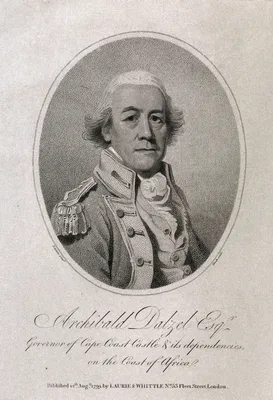
1793 DALZEL, Archibald (Dalziel) (1740 – 1811)
The history of Dahomy, an inland kingdom of Africa; compiled from authentic memoirs; with an introduction and notes.
Dalzel studied medicine at Edinburgh, and served in the Royal Navy as a surgeon during the Seven Years’ War (1756–63). Discharged in 1763, he accepted a position as a surgeon in the Company of Merchants Trading to Afr…
GMN 13041 · https://historyofmedicine.com/id/15291
1795 CHISHOLM, Colin (1755 – 1825)
An essay on the malignant pestilential fever introduced into the West Indian Islands from Boullam, on the coast of Guinea, as it appeared in 1793 and 1794.
Chisholm, "Surgeon to his Majesty's Ordnance in Grenada," was apparently the first to observe the mode of transmission of the Guinea worm, Dracunculus medinensis. Chishom was also one of the first to recognize that th…
GMN 5336.3 · https://historyofmedicine.com/id/6710
1799 PARK, Mungo (1771 – 1806); RENNELL, James (1742 – 1830)
Travels in the interior districts of Africa: Performed under the direction and patronage of the African Association, in the Years 1795, 1796, and 1797. By Mungo Park, surgeon. With an appendix, containing geographical illustrations of Africa by Major Rennell.
Park, a Scottish physician, was the first Westerner to travel to the central portion of the Niger River. Digital facsimile from Google Books at this link.
GMN 7931 · https://historyofmedicine.com/id/10104
1803 WINTERBOTTOM, Thomas Masterman (1765 – 1859)
An account of the native Africans in the neighbourhood of Sierra Leone; to which is added, an account of the present state of medicine among them. 2 vols.
In his travels in Africa, Winterbottom, physician to the Colony of Sierra Leone (now Republic of Sierra Leone) on the west coast of Africa, saw sleeping sickness, which he described in vol. 2, pp. 29-31, as a species …
GMN 5266 · https://historyofmedicine.com/id/8561
1822 GOMES, Bernardino António (1769 – 1823)
Memoria sobre a virtude toenifuga da romeira, com observações zoologicas e zoonomicas relativas á toenea, e com huma estampa.
On the use of a root medicine to treat tapeworms, roundworms and similar parasites. The author refers to cases from Portuguese Africa, India and Brazil, and gives clinical observations based on his own case studies, s…
GMN 9071 · https://historyofmedicine.com/id/11250
1822 RICHARDSON, Robert (1779 – 1847)
Travels along the Mediterranean, and parts adjacent; in the company with the Earl of Belmore, during the years 1816-17-18: Extending as far as the second cataract of the Nile, Jerusalem, Damascus, Balbec &c. &c. 2 vols.
Digital facsimile from the Internet Archive at this link.
GMN 12497 · https://historyofmedicine.com/id/14730
1831 BOYLE, James
A practical medico-historical account of the western coast of Africa: Embracing a topographical description of its shores, rivers, and settlements, with their seasons and comparative healthiness: Together with the causes, symptoms, and treatment, of the fevers of western Africa, and a similar account respecting the other diseases which prevail there.
Digital facsimile from the Internet Archive at this link.
GMN 10790 · https://historyofmedicine.com/id/12986
1840 CLARKE, Robert B.
Observations on the disease lethargus: with cases and pathology.
Clarke left a detailed account of African trypanosomiasis; he saw cases of the disease while serving as a colonial surgeon at Sierra Leone, and named it “narcoleptic dropsy”.
GMN 5267 · https://historyofmedicine.com/id/8562
1840 MORTON, Samuel George (1799 – 1851)
Catalogue of skulls of man, and the inferior animals, in the collection of Samuel George Morton.
Numbers 901-929 in Morton's catalogue are "Thirty Skulls of genuine unmixed NEGROES born in Africa. This interesting series series was collected by Don José Rodriguez Cisnerso, M. D. of Havana, in the island of Cuba, …
GMN 8828 · https://historyofmedicine.com/id/11006
1843 MCWILLIAM, James Ormiston (1808 – 1862)
Medical history of the expedition to the Niger during the years 1841-42, comprising an account of the fever which led to its abrupt termination.
McWilliam included a history of yellow fever, pathology, description of symptoms, sequences, causes, treatment. He also described the state of medicine among the Africans. He specifically described the ventilation of …
GMN 10737 · https://historyofmedicine.com/id/12932
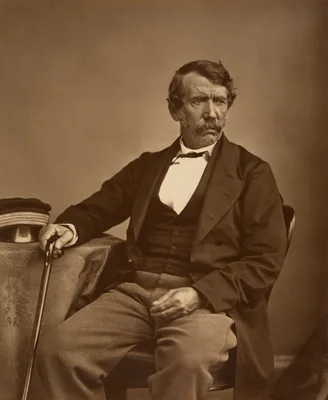
1857 LIVINGSTONE, David (1813 – 1873)
Missionary travels and researches in South Africa.
Livingstone gave an accurate account of the tsetse fly Glossina morsitans and of the disease in cattle following its bite (see pp. 80-83; picture of the tsetse fly on p. 571). In his time the bite of the fly was thoug…
GMN 5269 · https://historyofmedicine.com/id/8570
1858 LIVINGSTONE, David (1813 – 1873)
Arsenic as a remedy for the tsetse bite.
Livingstone was probably the first to administer arsenic for the treatment of “nagana”, a disease of horses caused by trypanosomes. This followed a suggestion by James Braid. Digital facsimile from PubMedCentral at th…
GMN 5270 · https://historyofmedicine.com/id/8572
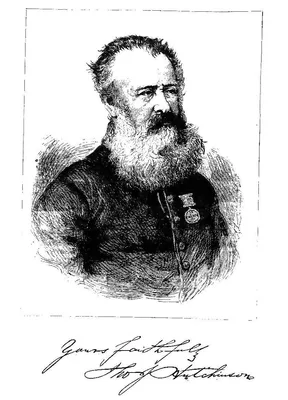
1858 HUTCHINSON, Thomas Joseph (1820 – 1885)
Impressions of Western Africa. With remarks on the diseases of the climate and a report on the peculiarities of trade up the rivers in the Bight of Biafra.
Digital facsimile from Google Books at this link.
GMN 12482 · https://historyofmedicine.com/id/14715
1874 LIVINGSTONE, David (1813 – 1873); WALLER, Horace (1833 – 1896)
The Last Journals of David Livingstone, in Central Africa. From eighteen hundred and sixty-five to his death. Continued by a narrative of his last Moments and sufferings, obtained from his faithful servants, Chuma and Susi, by Horace Waller, F.R.G.S.
"Livingstone’s most famous expedition was in 1866–73, when he traversed much of central Africa in an attempt to find the source of the Nile. This book contains the daily journals that Livingstone kept on this expediti…
GMN 12705 · https://historyofmedicine.com/id/14950
1876 CHRISTIE, James
Cholera epidemics in East Africa. An account of the several diffusions of the disease in the country from 1821 till 1872, with an outline of the geography, ethnology, and trade connections of the regions through which the epidemics passed.
Digital facsimile from the Internet Archive at this link.
GMN 10681 · https://historyofmedicine.com/id/12874
1887 QUATREFAGES DE BRÉAU, Jean Louis Armand de (1810 – 1892)
Les pygmées.
De Quatrefages showed that pygmies are descended from ancient races and are not, as was believed by many, a retrograde or degenerate type of negro of comparatively recent growth. English translation by Frederick Starr…
GMN 182 · https://historyofmedicine.com/id/3364
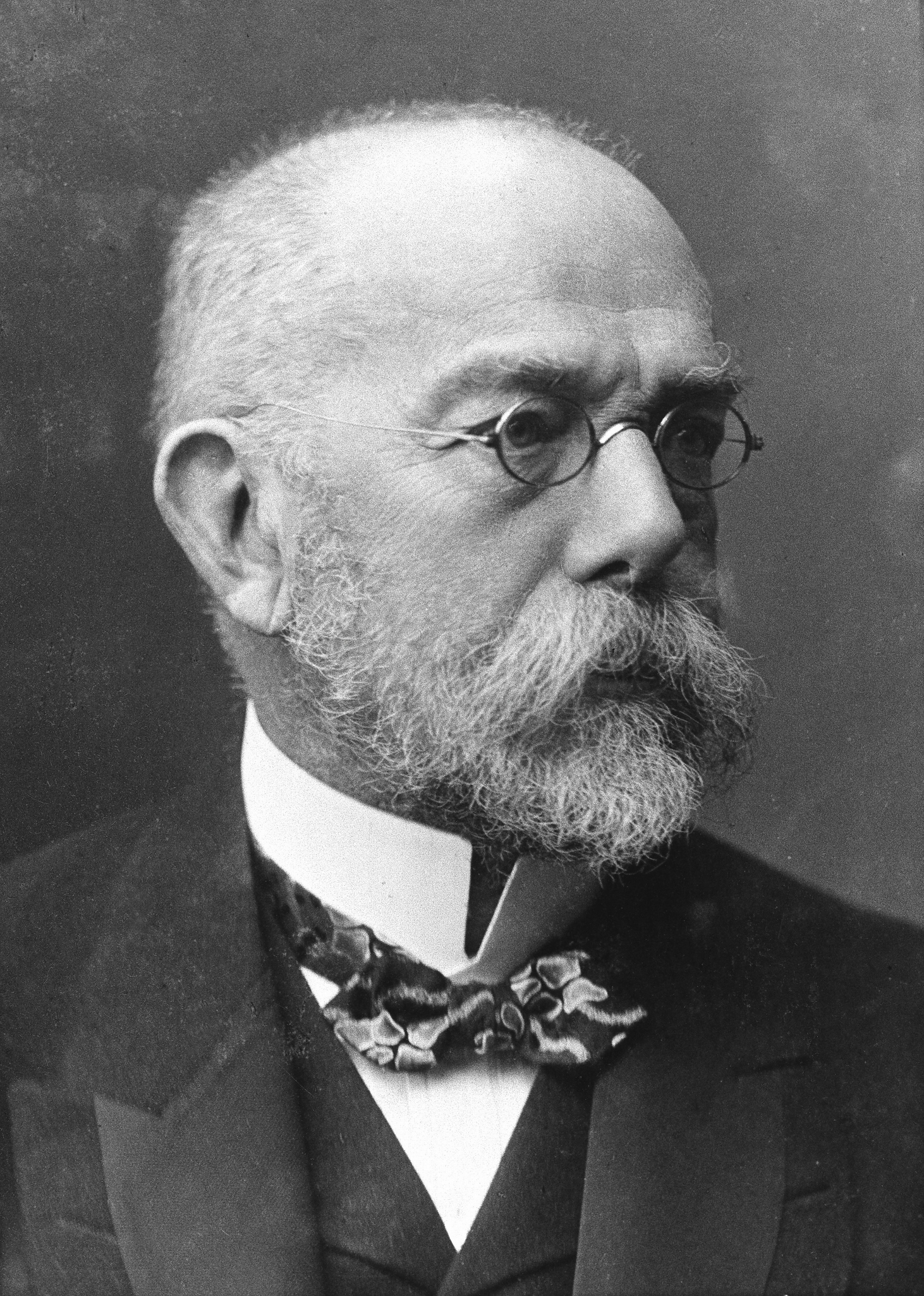
1898 KOCH, Robert Heinrich Hermann (1843 – 1910)
Reise-Bericht über Rinderpest, Bubonenpest in Indien und Afrika, Tsetse-oder Surrakrankheit, Texasfieber, tropische Malaria, Schwarzwasserfieber.
GMN 2457 · https://historyofmedicine.com/id/2986
1902 FORDE, Robert Michael (1861 – 1948)
Some clinical notes on a European patient in whose blood a trypanosoma was observed.
In 1901 Forde saw (but did not at first recognize as such) trypanosomes in the blood of a patient in Gambia. (See No. 5275.)
GMN 5274 · https://historyofmedicine.com/id/8581
1903 –1919 BRUCE, Sir David (1855 – 1931); NABARRO, David N.
Reports of the Sleeping Sickness Commission of the Royal Society, 1903-1912. 17 pts.
Bruce and D.N. Nabarro were sent to Africa by the Royal Society to study sleeping sickness, and in their report they showed that the tsetse fly was the vector of trypanosomiasis. They also found that Gambia fever and …
GMN 5277 · https://historyofmedicine.com/id/8587
1917 YOUNG, Francis Brett (1884 – 1954)
Marching on Tanga (with General Smuts in East Africa).
Digital facsimile from the Hathi Trust at this link.
GMN 12500 · https://historyofmedicine.com/id/14733
1927 BLACKLOCK, Donald Breadalbane (1879 – 1955)
The insect transmission of Onchocerca volvulus (Leuckart, 1893), the cause of worm nodules in man in Africa.
The fly Simulium damnosum shown to be the vector of onchocerciasis.
GMN 5350.8 · https://historyofmedicine.com/id/6874
1931 DAUBNEY, Robert (1891 – ); HUDSON, John Richard
Enzootic hepatitis or Rift Valley fever. An undescribed virus disease of sheep, cattle and man from East Africa.
First description.
GMN 5541 · https://historyofmedicine.com/id/6730
1941 HARLEY, George Way (1894 – 1966)
Native African medicine: With special reference to Its practice in the Mano tribe of Liberia.
GMN 6466 · https://historyofmedicine.com/id/7639
1941 LIGHT, Richard Upjohn (1902 – 1994)
Focus on Africa.
Includes the first aerial photographs of Africa taken by Mary Light. This was the second book to reproduce aerial photographs. Richard Light was an American neurosurgeon, a noted aviator, and a photographer and cinema…
GMN 13881 · https://historyofmedicine.com/id/16171
1958 –1959 BURKITT, Denis Parsons (1911 – 1993)
A sarcoma involving the jaws in African children.
Burkitt’s lymphoma (African lymphoma), first described in detail by Sir Albert Cook, a medical missionary, but not published by him.
GMN 2660.12 · https://historyofmedicine.com/id/3397
1962 WATT, John Mitchell (1892 – 1980); BREYER-BRANDWIJK, Maria Gerdina (1918 – 1945)
The medicinal and poisonous plants of southern and eastern Africa: Being an account of their medicinal and other uses, chemical composition, pharmacological effects and toxicology in man and animal. Second edition.
1457pp. The first edition of 1932 had only 314pp.
GMN 8793 · https://historyofmedicine.com/id/10971
1964 PULVERTAFT, Robert James Valentine (1897 – 1990)
Cytology of Burkitt’s tumour (African lymphoma).
GMN 2660.19 · https://historyofmedicine.com/id/3415
1964 GELFAND, Michael (1912 – 1985)
Medicine and custom in Africa.
GMN 8652 · https://historyofmedicine.com/id/10829
1965 KIRK, Sir John (1832 – 1922); FOSKETT, Reginald (1909 – 1973)
The Zambesi Journal and Letters of Dr. John Kirk, 1858-63. Edited by Reginald Foskett. 2 vols.
GMN 12420 · https://historyofmedicine.com/id/14650
1969 HOEPPLI, Reinhard (1893 – 1973)
Parasitic diseases in Africa and the Western Hemisphere. Early documentation and transmission by the slave trade.
GMN 10675 · https://historyofmedicine.com/id/12868
1970 BECK, Ann Frank (1900 – 2002)
A history of the British medical administration of East Africa, 1900-1950.
Concerns modernization and development of scientific health services in Kenya, Uganda, and Tanganyika (now Tanzania) during the first half of the twentieth century.
GMN 8496 · https://historyofmedicine.com/id/10673
1971 FORD, John (1910 – )
The role of the trypanosomiases in African ecology: A study of the Tsetse fly problem.
GMN 10678 · https://historyofmedicine.com/id/12871
1977 IMPERATO, Pascal James (1937 – )
African folk medicine: Practices and beliefs of the Bambara and other peoples.
GMN 13369 · https://historyofmedicine.com/id/15640
1978 JOHANSON, Donald Carl (1943 – ); WHITE, Timothy Douglas (1950 – ); COPPENS, Yves (1934 – )
A new species of the genus Australopithecus (Primates: Hominidae) from the Pliocene of Eastern Africa.
Johanson and colleagues formally named the species Afarensis of the genus Australopithecus in 1978.
GMN 7277 · https://historyofmedicine.com/id/9447
1978 HARTWIG, Gerald W.; PATTERSON, Karl David (1941 – )
Disease in African history.
GMN 8495 · https://historyofmedicine.com/id/10672
1983 RANSFORD, Oliver (1914 – )
"Bid the sickness cease": Disease in the history of black Africa.
GMN 8745 · https://historyofmedicine.com/id/10923
1987 LAGUERRE, Michael S. (1943 – )
Afro-Caribbean folk medicine.
GMN 9900 · https://historyofmedicine.com/id/12088
1988 LAPEYSSONNIE, Léon (1915 – 2001)
La médecine coloniale: Mythe et réalités.
GMN 11542 · https://historyofmedicine.com/id/13741
1992 FEIERMAN, Steven (1940 – ); JANZEN, John M. (1937 – )
The social basis of health and healing in Africa. Edited by Steven Feierman and John M. Janzen.
The essays in this book concern disease, health and healing practices on the African continent. The contributors all emphasize the social conditions linked to ill health and the development of local healing traditions…
GMN 8414 · https://historyofmedicine.com/id/10591
1994 NEUWINGER, Hans Dieter
Afrikanische Arzneipflanzen und Jagdgifte.
Translated into English by Aileen Porter as African ethnobotany: Poisons and drugs. Chemistry - Pharmacology - Toxicology (Chapman & Hall, 1996).
GMN 8029 · https://historyofmedicine.com/id/10205
1996 BADO, Jean-Paul
Médecine coloniale et grandes endémies en Afrique 1900-1960. Lèpre, trypanosomiase humaine et onchocercose.
GMN 7922 · https://historyofmedicine.com/id/10095
1999 LYONS, Maryinez; LEWIS, Milton James; SETEL, Philip W.
Histories of sexually transmitted diseases and HIV/AIDS in Sub-Saharan Africa. Edited by Philip W, Setel, Milton J. Lewis, and Maryinez Lyons.
GMN 10031 · https://historyofmedicine.com/id/12220
2000 NEUWINGER, Hans Dieter
African traditional medicine: A dictionary of plant use and applications with supplement: Search system for diseases.
GMN 8030 · https://historyofmedicine.com/id/10206
2000 GREEN, Edward C. (1944 – )
Indigenous theories of contagious disease.
GMN 8504 · https://historyofmedicine.com/id/10681
2003 SELIN, Helaine (1946 – )
Medicine across cultures: History and practice of medicine in non-Western cultures. Edited by Helaine Selin.
A very wide-ranging selection of essays
GMN 9746 · https://historyofmedicine.com/id/11934
2006 BADO, Jean-Paul
Histoire de la médecine et des maladies en Afrique. Edited by Jean-Paul Bado.
GMN 7923 · https://historyofmedicine.com/id/10096