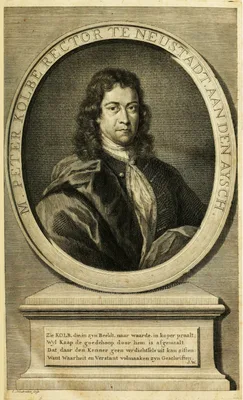
1719 KOLBE, Peter (Kolb) (1675 – 1726)
Caput Bonae Spei hodiernum, das ist: vollständige Beschreibung des africanischen Vorgebürges der Guten Hofnung. Worinnen in dreyen Theilen abgehandelt wird, wie es heut zu Tage, nach seiner Situation und Eigenschaft aussiehet; ingleichen was ein Natgur-Forscher in den dreyen Reichen der Natur....
Includes the first study of the natural history of the Cape region of South Africa. Translated into English by "Mr. Medley" as The present state of the Cape of Good-Hope. 2 vols., London, 1738-31. Digital facsimile of…
GMN 13538 · https://historyofmedicine.com/id/15815
1789 PATTERSON, William (1755 – 1810)
A narrative of four journeys into the country of the Hottentots, and Caffraria. In the years one thousand seven hundred and seventy-seven, eight, and nine.
Trained in horticulture at Syon House, London, Paterson was sent in 1777 to the Cape of Good Hope to collect plants for the estate of the Countess of Strathmore, undertaking four journeys into the South African interi…
GMN 13763 · https://historyofmedicine.com/id/16048
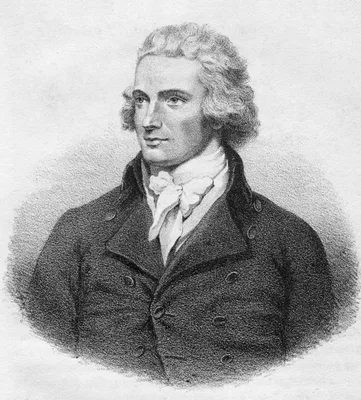
1815 PARK, Mungo (1771 – 1806)
Journal of a mission to the interior of Africa, in the year 1805. Together with other documents, official and private, relating to the same mission. To which is prefixed an account of the life of Mr. Park.
Park died in Africa in 1806, as a result of conflicts with native peoples. This volume includes the journal of Isaaco, an African, who served as Mungo Park's guide. Digital facsimile from the Internet Archive at this …
GMN 7932 · https://historyofmedicine.com/id/10105
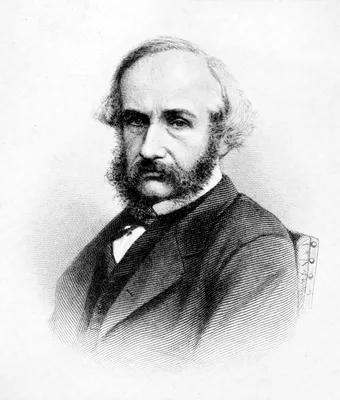
1859 –1933 THISTELTON-DYER, Sir William Turner (1843 – 1928); HARVEY, William Henry (1811 – 1866); SONDER, Otto Wilhelm (1812 – 1881); HILL, Sir Arthur William (1875 – 1941)
Flora capensis: Being a systematic description of the plants of the Cape colony, Caffraria, & Port Natal. 7 vols. in 11.
This work was published over 73 years. Vols. 1-3 were by Harvey and Sonder. The remaining volumes were by "Various Botanists" edited by Thiselton-Dyer, except for Vol. 5, Section 2 (Supplement) edited by Arthur Willia…
GMN 11961 · https://historyofmedicine.com/id/14168
1864 HARLEY, John (1833 – 1921)
On the endemic haematuria of the Cape of Good Hope.
Like Cobbold, Harley expressed the view that a mollusc was the intermediate host in bilharziasis.
GMN 5344.5 · https://historyofmedicine.com/id/6777
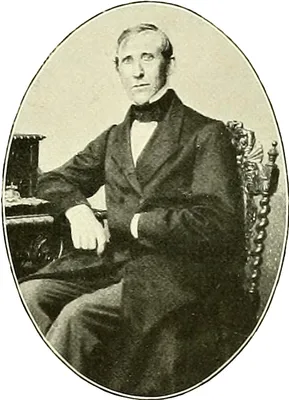
1870 CALLAWAY, Henry (1817 – 1890)
The religious system of the Amazulu. Izinyanga zokubula; or, divination, as existing among the Amazulu, in their own words, with a translation into English, and notes.
Callaway, a surgeon turned missionary and bishop of the Diocese of Natal, may have been the first to publish actual transcriptions of Zulu divination, including indigenous medical beliefs and practices, in their origi…
GMN 10567 · https://historyofmedicine.com/id/12760
1885 SMITH, Andrew (1828 – 1898)
A contribution to South African materia medica, chiefly from plants in use among the natives.
The first edition was a pamphlet of 23 pp. Smith issued a much-expanded second edition with 163 pp., also at Lovedale in 1888, and a further expanded third edition with 262 pp. (Cape Town, 1895). Digital facsimile of …
GMN 9500 · https://historyofmedicine.com/id/11685
1890 HILLIER, Alfred Peter (1858 – 1911)
The antiquity of man in South Africa, and evolution.
The first separately published work on human origins published in the continent of Africa. Hillier's text was read on his behalf before the Eastern Province Literary and Scientific Society in Grahamstown, Eastern Cape…
GMN 11449 · https://historyofmedicine.com/id/13648
1895 BRUCE, Sir David (1855 – 1931)
Preliminary report on the tsetse fly disease or nagana, in Zululand.
In 1895 Bruce found that nagana, the tsetse fly disease of Zululand, was due to a trypanosome (T. brucei). He described a hematozoon in the blood of the affected animals that had not been previously described. Digital…
GMN 5273 · https://historyofmedicine.com/id/8580
1896 BRUCE, Sir David (1855 – 1931)
Further report on the tsetse fly disease or nagana, in Zululand.
In this more-detailed follow-up to his "preliminary" paper of 1895 published in Durban, South Africa, Bruce provided definitive proof that the Trypanosoma was the cause of nagana, and the tsetse fly was the vector of …
GMN 11077 · https://historyofmedicine.com/id/13273
1909 BRYANT, Alfred T.
Zulu medicine and medicine-men.
Digital facsimile from the Internet Archive at this link.
GMN 8797 · https://historyofmedicine.com/id/10975
1912 –1914 SMITH, Sir Frederick (1857 – 1929)
A veterinary history of the war in South Africa, 1899-1902. Supplement to: Veterinary record May 25, 1912-Sept. 26, 1914.
Digital facsimile from the Hathi Trust at this link.
GMN 10151 · https://historyofmedicine.com/id/12340
1925 DART, Raymond Arthur (1893 – 1988)
Australopithecus africanus: The man-ape of South Africa.
First report on Dart's discovery in 1924 of the first member of the genus Australopithecus, the first hominin found in Africa. In their 150th anniversary issue published on November 4, 2019 the editors of Nature inclu…
GMN 211.1 · https://historyofmedicine.com/id/3871
1938 BROOM, Robert (1866 – 1951)
The Pleistocene anthropoid apes of South Africa.
Paranthropus robustus, discovered by Broom in Kromdraal, South Africa, in 1938. The species is generally dated from about 2 million to 1.2 million years before present.
GMN 7281 · https://historyofmedicine.com/id/9451
1946 BROOM, Robert (1866 – 1951); SCHEPERS, Gerrit Willem Hendrik (1914 – )
Pretoria: The South African fossil ape-men. The Australopithecinae. Part I. The occurrence and general structure of the South African ape-men.
With this comprehensive report Broom presented his case to the scientific establishment that Australopithecus probably represented the stock from which mankind had evolved.
GMN 214.1 · https://historyofmedicine.com/id/3948
1958 BURROWS, Edmund Hartford (1927 – 2002)
A history of medicine in South Africa up to the end of the nineteenth century.
GMN 8500 · https://historyofmedicine.com/id/10677
1967 BARNARD, Christiaan Neethling (1922 – 2001)
A human cardiac transplant: An interim report of a successful operation performed at Groote Schuur Hospital, Cape Town.
First human heart transplant. The operation was on Dec. 3, 1967, and the patient died on Dec. 21.
GMN 3047.20 · https://historyofmedicine.com/id/3636
1971 LAIDLER, Percy Ward; GELFAND, Michael (1912 – 1985)
South Africa: Its medical history 1652-1898.
GMN 6604.5 · https://historyofmedicine.com/id/8536
1971 CARTWRIGHT, Alan Patrick
Doctors of the mines: A commemorative volume published in 1971 to mark the 50th anniversary of the founding of the Mine Medical Officer's Association of South Africa. With a history of the work of mine medical officers.
GMN 8501 · https://historyofmedicine.com/id/10678
1977 NGUBANE, Harriet (1929 – 2007)
Body and mind in Zulu medicine: An ethnography of health and disease in Nyuswa-Zulu thought and practice.
GMN 7921 · https://historyofmedicine.com/id/10094
1981 GUNN, Mary Davidson (1899 – 1989); CODD, Leslie Edward Wostall (1908 – 1999)
Botanical exploration of Southern Africa: A illustrated history of early botanical literature on the Cape flora. Biographical accounts of the leading plant collectors and their activities in southern Africa from the days of the East India Company until modern times.
GMN 12776 · https://historyofmedicine.com/id/15022
1985 TOBIAS, Phillip Valentine (1925 – 2012)
History of physical anthropology in Southern Africa.
GMN 7273 · https://historyofmedicine.com/id/9443
1988 KERKHAM, A. S.
Southern African botanical literature, 1600-1988.
GMN 11778 · https://historyofmedicine.com/id/13979
1989 HAMMOND-TOOKE, David
Rituals and medicines: Indigenous healing in South Africa.
GMN 7920 · https://historyofmedicine.com/id/10093
2008 FLINT, Karen E.
Healing traditions: African medicine, cultural exchange, and competition in South Africa, 1820-1948.
GMN 7925 · https://historyofmedicine.com/id/10098
2010 BERGER, Lee Rogers (1960 – )
Australopithecus sediba: A New Species of Homo-Like Australopith from South Africa.
Matthew Berger, the young son of Lee Berger, discovered the first specimen of Australopithecus sediba, the right clavicle of MH1, on the 15th of August in 2008. This species of Australopithecus dates to about 2 millio…
GMN 7280 · https://historyofmedicine.com/id/9450