1563 ORTA, Garcia de [Garcia d'Orta] (1501 – 1568)
Colóquios dos simples, e drogas he cousas mediçinais da Índia e assi dalgũas frutas achadas nella onde se tratam algũas cousas tocantes a medicina, pratica, e outras cousas boas pera saber.
The first account of Indian materia medica and the first textbook on tropical medicine written by a European. It includes a classic account of Asiatic cholera, the first account of this disease by a European. This is …
GMN 1815 · https://historyofmedicine.com/id/2046
1578 ACOSTA, Cristóbal [Cristóvão da Costa; Christophorus Acosta Africanus] (1540 – 1599)
Tractado de las drogas, y medicinas de las Indias Orientales, con sus plantas debuxadas al bivo.
This is mainly a translation of Garcia d’Orta’s Coloquios (No. 1815) with the addition of some illustrations. Acosta, a Portuguese Jesuit physician and surgeon, travelled to India where he met Garcia d’Orta. Acosta pi…
GMN 1819 · https://historyofmedicine.com/id/2084
1678 –1703 COMMELIN, Jan [COMMELIJN] (1629 – 1692); VAN RHEEDE TOT DRAKENSTEIN, Hendrik Adriaan (1636 – 1691); ALMELOVEEN, Theodorus Janssonius van (1657 – 1712); CASEARIUS, Johannes (1642 – 1677); VAN DYCK, Jan; MUNNICKS, Johannes (Munnickius) (1652 – 1711); POOT, Abraham van (1617 – ); SOMEREN, Joannes van; SEYEN, Arnold (Syen) (1640 – 1678); BOOM, Henrik & Dirk
Hortus Indicus Malabaricus: Continens regni Malabarici apud Indos cereberrimi onmis generis plantas rariores, Latinas, Malabaricis, Arabicis, Brachmanum charactareibus hominibusque expressas ....12 vols.
The earliest comprehensive printed work on the flora of Asia and the tropics in 12 folio volumes written and published under the supervision of van Rheede tot Drakenstein, a colonial administrator of the Dutch East In…
GMN 9543 · https://historyofmedicine.com/id/11729
1685 DELLON, Charles Gabriel (1649 – 1710)
Traité des maladies particulières aux pays orientaux, et dans la route, et de leurs Remèdes. Par M.C.D.D.E.M.
At the age of 17, Dellon, who is sometimes referred to as Gabriel Dellon, embarked as second surgeon aboard the ship La Force. He arrived at Darman, in the Portuguese Indies, in 1673, where he was doctor to Luis de Me…
GMN 11128 · https://historyofmedicine.com/id/13324
1721 GAUDEREAU, Martin (1663 – 1743)
Relation des différentes espèces de peste qui reconnaissent les orientaux, des précautions & des remèdes qu'ils prennent pour empêcher la communication & le progrès; et ce que nous devons faire à leur exemple pour nous en préserver, & nous en guérir.
Gaudereau worked as a missionary in Turkey, Armenia, Persia, and India, facing plague outbreaks several times. In Turkey he almost succumbed to the plague, himself, but was cured using local remedies. These remedies a…
GMN 10651 · https://historyofmedicine.com/id/12844
1758 HOLWELL, John Zephaniah (1711 – 1798)
A genuine narrative of the deplorable deaths of the English gentlemen and others who were suffocated in the Black Hole in Fort-William, at Calcutta, in the Kingdom of Bengal, in the night succeeding the 20th day of June, 1756, in a letter to a friend.
Holwell was a survivor of the Black Hole of Calcutta in Fort William, Calcutta , a poorly ventilated dungeon measuring 4.30 × 5.50 metres (14 × 18 feet), in which troops of Siraj ud-Daulah, the Nawab of Bengal, hel…
GMN 12396 · https://historyofmedicine.com/id/14625
1767 HOLWELL, John Zephaniah (1711 – 1798)
An account of the manner of inoculating for the small pox in the East Indies: With some observations on the practice and mode of treating that disease in those parts.
Holwell's account of smallpox variolation in India prior to Jenner has been disputed by historians. Digital facsimile from the Internet Archive at this link.
GMN 12397 · https://historyofmedicine.com/id/14626
1783 IVES, Edward ( – 1786)
A voyage from England to India, in the year MDCCLIV, and an historical narrative of the operations of the squadron and army in India, under the command of Vice-Admiral Watson and Colonel Clive, in the years 1755, 1756, 1757; including a correspondence between the Admiral and the Nabob Serajah Dowlah. Interspersed with some interesting passages relating to the manners, customs, &c. of several nations in Indostan. Also, a journey from Persia to England, by an unusual route. With an appendix, containing an account of the diseases prevalent in Admiral Watson's squadron, a description of most of the trees, shrubs, and plants of India, with their real, or supposed, medicinal virtues. Also a copy of a letter written by a late ingenious physician, on the disorders incidental to Europeans at Gombroon in the Gulf of Persia. Illustrated with a chart, maps, and other copper-plates.
Digital facsimile from wellcomecollection.org at this link.
GMN 13867 · https://historyofmedicine.com/id/16157
1793 WADE, John Peter (1762 – 1802)
A paper on the prevention and treatment of the disorders of the seamen and soldiers in Bengal. Presented to the Honourable Court of East-India Directors, in the year 1791.
Murray was in the Bengal Medical Service from 1782 to 1802. This was his report to the Directors of the East-India Company. Digital facsimile from the Internet Archive at this link.
GMN 13619 · https://historyofmedicine.com/id/15899
1794 LONGMATE, Barak (1768 – 1836)
Article on Indian rhinoplasty.
The first report published in Europe on the so-called Indian or Hindu method of rhinoplasty using a forehead flap, accompanied by an engraving of the patient, Cowasjee, with a restored nose and showing the stages of t…
GMN 5735.1 · https://historyofmedicine.com/id/6521
1796 RUSSELL, Patrick (1727 – 1805)
An account of Indian serpents collected on the coast of Coromandel: containing descriptions and drawings of each species, together with experiments and remarks on their several poisons.
First attempt at a description of Indian serpents and serpent venoms. Includes the original description of Russell’s viper, Daboia russellii. Digital facsimile from the Linda Hall LIbrary at this link.
GMN 310 · https://historyofmedicine.com/id/127
1800 DONOVAN, Edward (1768 – 1837)
An epitome of the natural history of the insects of India, and the islands in the Indian seas: Comprising upwards of two hundred and fifty figures and descriptions of the most singular and beautiful species, selected chiefly from those recently discovered, and which have not appeared in the works of any preceding author. The figures are accurately drawn, engraved, and coloured, from specimens of the insects; the descriptions are arranged according to the system of Linnaeus; with references to the writings of Fabricius, and other systematic authors.
"For Insects of India Donovan described and figured specimens in his own cabinet, that were originally collected by the late Duchess of Portland, Marmaduke Tunstall, a Governor Holford (many years resident in India), …
GMN 9084 · https://historyofmedicine.com/id/11263
1807 CURTIS, Charles
An account of the diseases of India, as they appeared in the English fleet, and in the naval hospital at Madras, in 1782 and 1783; with observations on ulcers, and the hospital sores of that country, &c. & c. To which is prefixed a view of the diseases of an expedition and passage of a fleet and armament to India, in 1781.
Digital facsimile from Google Books at this link.
GMN 8814 · https://historyofmedicine.com/id/10992
1813 AINSLIE, Whitelaw (1767 – 1837)
Materia medica of Hindoostan, and artisan’s and agriculturist’s nomenclature.
The first book in English on the materia medica of India, and a pioneering work in the field of Indian medical history. Ainslie joined the British East India Company as an assistant surgeon in 1788 and spent the next …
GMN 6975 · https://historyofmedicine.com/id/9141
1813 JOHNSON, James (1777 – 1845)
The influence of tropical climates, more especially the climate of India, on European constitutions; the principal effects and diseases thereby induced, their prevention or removal, and the means of preserving health in hot climates, rendered obvious to to Europeans in every capacity: An essay .
Digital facsimile from the Internet Archive at this link. Enlarged and retitled second edition: The influence of tropical climates on European constitutions: to which is added tropical hygiene, or the preservation of …
GMN 8211 · https://historyofmedicine.com/id/10387
1814 ROXBURGH, William (1751 – 1815)
Hortus Bengalensis, or, a catalogue of the plants growing in the East India Company's Botanic Garden at Calcutta.
Digital facsimile from Google Books at this link.
GMN 10761 · https://historyofmedicine.com/id/12957
1817 MACLEAN, Charles (1760 – 1824)
Results of an investigation, respecting epidemic and pestilential diseases; including researches in the Levant, concerning the plague. 2 vols.
"From 1815 to 1817 Maclean travelled in Spain, Turkey, and the Levant, and he studied the plague at the Greek Pest Hospital at Constantinople, in the service of the Levant Company. His experiences in the Levant and in…
GMN 8816 · https://historyofmedicine.com/id/10994
1818 BALLINGALL, Sir George (1780 – 1855)
Practical observations on fever, dysentery and liver complaints as they occur amongst European troops in India. With introductory remarks on the disadvantages of selecting boys for Indian military service.
Ballingall distinguished between amoebic and bacillary dysentery. Digital facsimile from the Internet Archive at this link.
GMN 5182.1 · https://historyofmedicine.com/id/6307
1820 –1824 ROXBURGH, William (1751 – 1815); WALLICH, Nathaniel (1786 – 1854); CAREY, William (1761 – 1834)
Flora Indica; or descriptions of Indian plants by the late William Roxburgh. Edited by William Carey, to which are added descriptions of plants recently discovered by Nathaniel Wallich. 2 vols.
Digital facsimile from the Internet Archive at this link.
GMN 10762 · https://historyofmedicine.com/id/12958
1824 WALLACE, James
A voyage to India: Containing reflections on a voyage to Madras and Bengal, in 1821, in the ship Lonach; instructions for the preservation of health in Indian climates; and hints to surgeons and owners of private trading-ships.
Digital facsimile from Google Books at this link.
GMN 13875 · https://historyofmedicine.com/id/16165
1828 ANNESLEY, Sir James (1780 – 1847)
Researches into the causes, nature and treatment of the more prevalent diseases of India, and of warm climates generally. Illustrated with cases, post mortem examinations, and numerous coloured engravings of morbid structures. 2 vols.
A landmark in geographical pathology, superbly illustrated. Annesley’s cases, collected over many years’ service throughout India, represented the most complete treatment of diseases on the sub-continent to date. Digi…
GMN 1776.1 · https://historyofmedicine.com/id/3342
1832 TWINING, William (1790 – 1835)
Clinical illustrations of the more important diseases of Bengal, with the result of an inquiry into their pathology and treatment.
Digital facsimile from the Medical Heritage Library, Internet Archive at this link.
GMN 8806 · https://historyofmedicine.com/id/10984
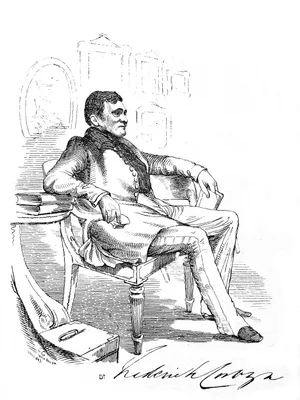
1832 CORBYN, Frederick
A treatise on the epidemic cholera, as it has prevailed in India; together with the reports of the medical officers, made to the medical boards of the presidencies of Bengal, Madras, and Bombay, for the purpose of ascertaining a successful mode of treating that destructive disease; And a critical examination of all the works that have hitherto appeared on the subject.
Corbyn mapped the history of cholera in India within British regimental stations. He included the date of each reported outbreak in a table of British regimental locations to describe the temporal progression of the d…
GMN 10463 · https://historyofmedicine.com/id/12656
1835 MALCOLMSON, John Grant ( – 1844)
A practical essay on the history and treatment of beriberi.
A classic account, in which the author brought together all that was known about the disease in his day.
GMN 3738 · https://historyofmedicine.com/id/4533
1837 MARTIN, James Ranald (1796 – 1874)
Notes on the medical topography of Calcutta.
Digital facsimile from the Internet Archive at this link.
GMN 8803 · https://historyofmedicine.com/id/10981
1843 MACGREGOR, William Lewis (1801 – 1853)
Practical observations on the principal diseases affecting the health of the European and native soldiers in the north-western provinces of India with a supplement on dysentery.
Digital facsimile from the Internet Archive at this link.
GMN 8807 · https://historyofmedicine.com/id/10985
1844 SLEEMAN, Sir William Henry (1788 – 1856)
Rambles and recollections of an Indian official. 2 vols.
Lathyrism, a disease occuring in India, and parts of Africa, was known to Hippocrates. Sleeman, an Indian official and major general who presided over the suppression of Thuggee, had no special knowledge of medicine, …
GMN 2077.1 · https://historyofmedicine.com/id/2548
1844 WEBB, Allan (1803 – 1863)
Pathologia Indica, or, The anatomy of Indian diseases, medical and surgical: Based upon morbid specimens from all parts of India in the museum of the Calcutta Medical College; illustrated by detailed cases, with the prescriptions and treatment employed, and comments, physiological, practical and historical.
Significantly expanded second edition, in two parts (Calcutta: Thacker & Co., 1848). Digital facsimile of the 1848 edition from the Internet Archive at this link.
GMN 8810 · https://historyofmedicine.com/id/10988
1845 WISE, Thomas Alexander (1801 – 1889)
Commentary on the Hindu system of medicine.
Wise was a physician and surgeon in the Bengal Medical Service. Digital facsimile from The Medical Heritage Library, Internet Archive, at this link.
GMN 7169 · https://historyofmedicine.com/id/9336
1845 VOIGT, Joachim Johann Otto (1798 – 1843)
Hortus suburbanus Calcuttensis. A catalog of the plants which were cultivated in the Hon. East India Company's Botanical Garden, Calcutta and in the Serampore Botanical Garden, known as Dr. Carey's Garden, from the beginning of both establishments (1786 and 1800) to the end of August 1841; drawn up according to the Jussieuan arrangement, and mostly in conformity with the second edition (1836) of Lindsay 's Natural System of Botany.
Catalogue of the thousands of plants which were cultivated in the East India Company’s Royal Botanical Garden in Shibpur (near Calcutta, founded in 1786) and ‘Dr. William Carey’s’ botanical garden in Serampore, Bengal…
GMN 10760 · https://historyofmedicine.com/id/12956
1849 BALFOUR, Edward Green (1813 – 1889)
Notes on the influence exercised by trees in inducing rain and preserving moisture.
Digital facsimile from the Internet Archive at this link.
GMN 11757 · https://historyofmedicine.com/id/13957
1849 –1851 HOOKER, Sir Joseph Dalton (1817 – 1911); HOOKER, Sir William Jackson (1785 – 1865)
The rhododendrons of Sikkim-Himalaya: Being an account, botanical and geographical, of the rhododendrons recently discovered in the mountains of eastern Himalaya, from drawings and descriptions made on the spot, during a government botanical mission to that country
Digital facsimile from Biodiversity Heritage Library at this link.
GMN 13651 · https://historyofmedicine.com/id/15932
1850 WEBB, Allan (1803 – 1863)
The historical relations of ancient Hindu with Greek medicine in connection with the study of modern medical science in India: Being a general introductory lecture delivered June 1850, at the Calcutta Medical College.
Webb was surgeon in the Bengal Army, and later Professor of Anatomy at the Calcutta Medical College. Digital facsimile from the Internet Archive at this link.
GMN 8808 · https://historyofmedicine.com/id/10986
1851 HONIGBERGER, Johann Martin (1795 – 1869)
Früchte aus dem Morgenlande oder Reise-Erlebnisse. Nebst naturhistorisch-medicinischen Erfahrungen, einigen hundert erprobten Arzneimitteln und einer neuen Heilart dem Medial-Systeme. Mit vierzig lithographirten Tafeln: Porträte, Pflanzenabbildungen, sonstige Natur- und Kunstprodukte, Facsimile, Landkarte und Ansicht der Citadelle von Lahor; endlich als Anhang ein medizinisches Wörterbuch in mehreren europäischen und orientalischen Sprachen.
Digital facsimile from the Biodiversity Heritage Library at this link. Translated into English (1852) as Thirty-five years in the East. Adventures, discoveries, experiments, and historical sketches, relating to the Pu…
GMN 9515 · https://historyofmedicine.com/id/11700
1851 GILCHRIST, William
A practical treatise on the treatment of the diseases of the elephant, camel, and horned cattle, with instructions for preserving their efficiency.
GMN 11754 · https://historyofmedicine.com/id/13954
1852 –1855 HESSLER, Franz (1799 – 1890)
Commentarii et annotationes in Suśruta Āyurvedam. 2 vols.
Hessler, editor and translator of the first edition of Suśruta published in the West (3 vols., 1844-50) followed that edition with two separate volumes of commentary.
GMN 7168 · https://historyofmedicine.com/id/9335
1854 HOOKER, Sir Joseph Dalton (1817 – 1911)
Himalayan journals; or, notes of a naturalist in Bengal, the Sikkim and Nepal Himalayas, the Khasia Mountains, &c. 2 vols.
Digital facsimile from the Internet Archive at this link.
GMN 7447 · https://historyofmedicine.com/id/9619
1855 WEBB, Allan (1803 – 1863)
Elephantiasis orientalis, and especially elephantiasis genitalis in Bengal.
Digital facsimile from Google Books at this link.
GMN 8809 · https://historyofmedicine.com/id/10987
1855 HOOKER, Sir Joseph Dalton (1817 – 1911); THOMSON, Thomas (1817 – 1878)
Flora indica: Being a systematic account of the plants of British India, together with observations on the structure and affinities of their natural orders and genera. Vol. 1. Ranunculaceae to Fumariaceae, with an Introductory Essay. All published.
Digital facsimile from Biodiversity Heritage Library at this link. The Introductory Essay was also published separately by W. Pamphlin in 1855 with the following title: Introductory essay to the Flora Indica: includin…
GMN 13733 · https://historyofmedicine.com/id/16017
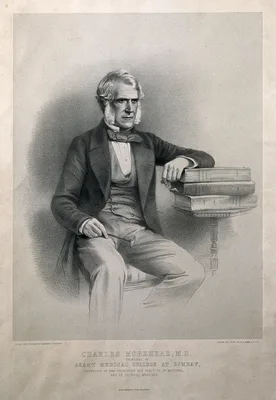
1856 MOREHEAD, Charles (1807 – 1882)
Clinical researches on disease in India. 2 vols.
One of the most comprehensive studies of disease in India during the mid-19th century; includes 556 case reports. Digital facsimile from the Internet Archive at this link
GMN 10112 · https://historyofmedicine.com/id/12301
1859 LONGMORE, Sir Thomas (1816 – 1895)
Remarks upon a tabular return (No. 1), or synopsis of sixteen cases of heat-apoplexy.
Longmore was an army surgeon in India; he gave an excellent account of heat-stroke.
GMN 2248 · https://historyofmedicine.com/id/2769
1859 MCCLELLAND, John (1805 – 1875)
Sketch of the medical topography, or climate and soils, of Bengal and the N.W. Provinces.
Digital facsimile from the internet Archive at this link.
GMN 8212 · https://historyofmedicine.com/id/10388
1860 BARCLAY, Alexander (1822 – 1874)
Contributions to the natural history of insolatio.
Barclay, an army surgeon in India, wrote an important paper on heat-stroke.
GMN 2249 · https://historyofmedicine.com/id/2773
1860 WARING, Edward John (1819 – 1891)
Remarks on the uses of some bazaar medicines, and on a few of the common indigenous plants of India, according to European practice.
At the time of publication of this work, which contained texts in both Sanskrit and English, Waring was "Physician to His Highness The Maha Rajah of Travancore." Digital facsimile of the 1860 edition from the Biodiver…
GMN 8818 · https://historyofmedicine.com/id/10996
1861 CARTER, Henry Vandyke (1831 – 1897)
On a new and striking form of fungus disease, principally affecting the foot, and prevailing endemically in many parts of India.
First modern description of mycetoma of the foot – “Madura foot”, “Carter’s mycetoma”. It was mentioned by E. Kaempfer in his Amoenitates exoticae, Lemgo, 1712, p. 561. Colebrook at the Madura Dispensary is said to ha…
GMN 4047 · https://historyofmedicine.com/id/5379
1868 WARING, Edward John (1819 – 1891)
Pharmacopoeia of India, prepared under the authority of Her Majesty's Secretary of State for India in Council
Waring was "Surgeon in Her Majesty's Indian Army." Digital facsimile from the Internet Archive at this link.
GMN 8817 · https://historyofmedicine.com/id/10995
1868 MURCHISON, Charles (1830 – 1879); FALCONER, Hugh (1808 – 1865)
Palaeontological memoirs and notes of the late Hugh Falconer. For many years superintendent of the H.E.I. Company's botanical gardens at Suharunpoor and Calcutta. With a biographical sketch of the author. Compiled and edited by Charles Murchison. Vol. 1. Fauna Antiqua Sivalensis. Vol. II. Mastodon, elephant, rhinoceros, ossiferous caves, primeval man and his cotemporaries. 2 vols.
Falconer's writings on human antiquity appear in Vol. 2 of his Palaeontogical memoirs. Together with William Pengelly, Falconer was one of the first two scientists to visit Brixham Cave after its discovery in 1858, an…
GMN 14093 · https://historyofmedicine.com/id/16404
1870 BRISCOE, Thomas Benjamin
Kala azar.
Kala azar is mentioned briefly in the Proceedings in 1869 (No. 34, p. 19) but the above is the first full description, given by Briscoe in a report dated 1 Dec 1869.
GMN 5292 · https://historyofmedicine.com/id/8609
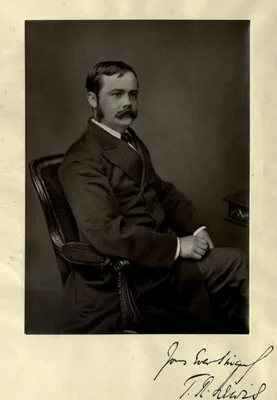
1871 LEWIS, Timothy Richards (1841 – 1886)
On a haemotozoon inhabiting human blood. Its relation to chyluria and other diseases.
Independently of Demarquay (No. 5344.3) and Wucherer (No. 5344.6), Lewis found microfilariae in the urine and blood in chyluria. He was first to use the term Filaria sanguinis hominis for the parasite.
GMN 5344.8 · https://historyofmedicine.com/id/6785
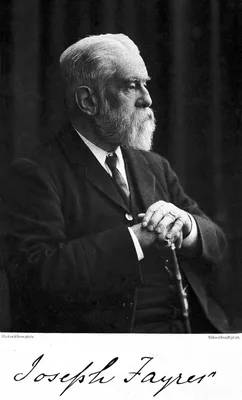
1872 FAYRER, Sir Joseph (1824 – 1907)
The thanatophidia of India. Being a Description of the venomous snakes of the Indian Peninsula, with an account of the influence of their poison on life and a series of experiments
Considered the first systematic work on venomous snakes. Describes all the venomous snakes of India. Digital facsimile from the Internet Archive at this link.
GMN 2105 · https://historyofmedicine.com/id/2604

![ORTA, Garcia de [Garcia d'Orta] (1501 – 1568)](/media/portraits/2236)