1642 BONDT, Jacob de [Jacobus Bontius] (1592 – 1631)
De medicina Indorum.
Bontius was probably the first to regard tropical medicine as an independent branch of medical science. He spent the last four years of his life in the Dutch East Indies, and his book incorporates the experience he ga…
GMN 2263 · https://historyofmedicine.com/id/2816
1658 PISO, Willem [Guillaume le Pois] (1611 – 1678); BONDT, Jacob de [Jacobus Bontius] (1592 – 1631)
De Indiae utriusque re naturali et medica libri quatuordecim.
This is an extensively revised and enlarged second edition of Piso’s Historia naturalis Brasiliae (1648). In this edition Piso reprinted Bontius's De medicina Indorum (1642) with two additional books on Asian flora an…
GMN 1825 · https://historyofmedicine.com/id/2125
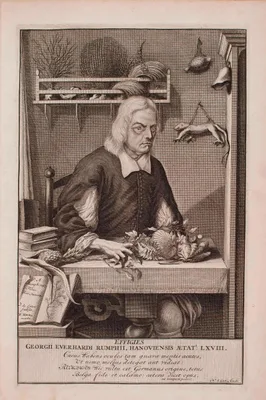
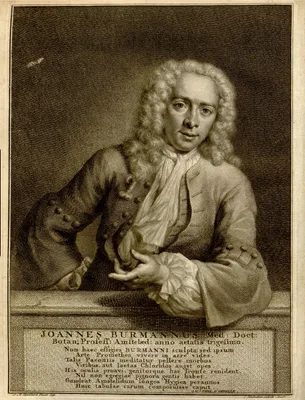
1741 –1750 RUMPHIUS, Georg Eberhard (1627 – 1702); BURMAN, Johannes (1707 – 1780)
Het Amboinsche Kruidboek . . . Herbarium Amboinense . . . nunc primum in lucem edidit & in Latinum semonem vertit Joannes Burmannus. 6 vols.
Het Amboinsche kruidboek or Herbarium Amboinense, a catalogue of the plants of Ambon in the Maluku Islands of Indonesia, by Georg Eberhard Rumphius, a German-born soldier and botanist employed by the Dutch East India …
GMN 6837 · https://historyofmedicine.com/id/9001
1754 RENARD, Louis (1678 – 1746)
Poissons, écrevisses et crabes, de diverse couleurs et figures extraordinaires, que l'on trouve autour des Isles Moluques, et sur les côtes des Terres Australes....
"This extraordinary work purports to show marine life from the seas around Indonesia at a time when the natural wildlife of that area was virtually unknown in Europe. Renard, both a publisher and a spy for the British…
GMN 13783 · https://historyofmedicine.com/id/16070
1780 BYLON, David
Korte aantekening wegens eene algemeene ziekte, doorgaans genaamd knokkel-koorts.
Bylon described an epidemic of dengue which appeared in the Dutch East Indies in 1779, the first definite description of the disease. O. H. P. Pepper published a photographic reproduction of the article in Ann. med. H…
GMN 5469 · https://historyofmedicine.com/id/7605
1782 SONNERAT, Pierre (1749 – 1814)
Voyage aux Indes Orientales et à la Chine, fait par ordre du Roi depuis 1774 jusqu’en 1781. 2 vols.
Vol. 1, pp. 113-16, “No author before the time of Sonnerat gives us so distinct an account of the epidemic prevalence of cholera, so full a description of its varieties or has attributed it so positively to the physic…
GMN 5104.1 · https://historyofmedicine.com/id/6038
1829 WAITZ, Friedrich Carl August (1798 – 1882)
Praktische waarnemingen over eenige Javaansche geneesmiddelen, welke niet alleen vele uitheemsche medicamenten, die thans nog van Europa naar Java moeten worden overgezonden, kunnen vervangen, maar dezelve ook tegen eenige ziekten op het eiland Java heerschende, in werkzaamheid overtreffen.
An early account of Jamu (old spelling Djamu), the traditional medicine of Indonesia, especially Java. "It is a predominantly herbal medicine made from natural materials, such as parts of plants such as roots, bark, f…
GMN 9450 · https://historyofmedicine.com/id/11633
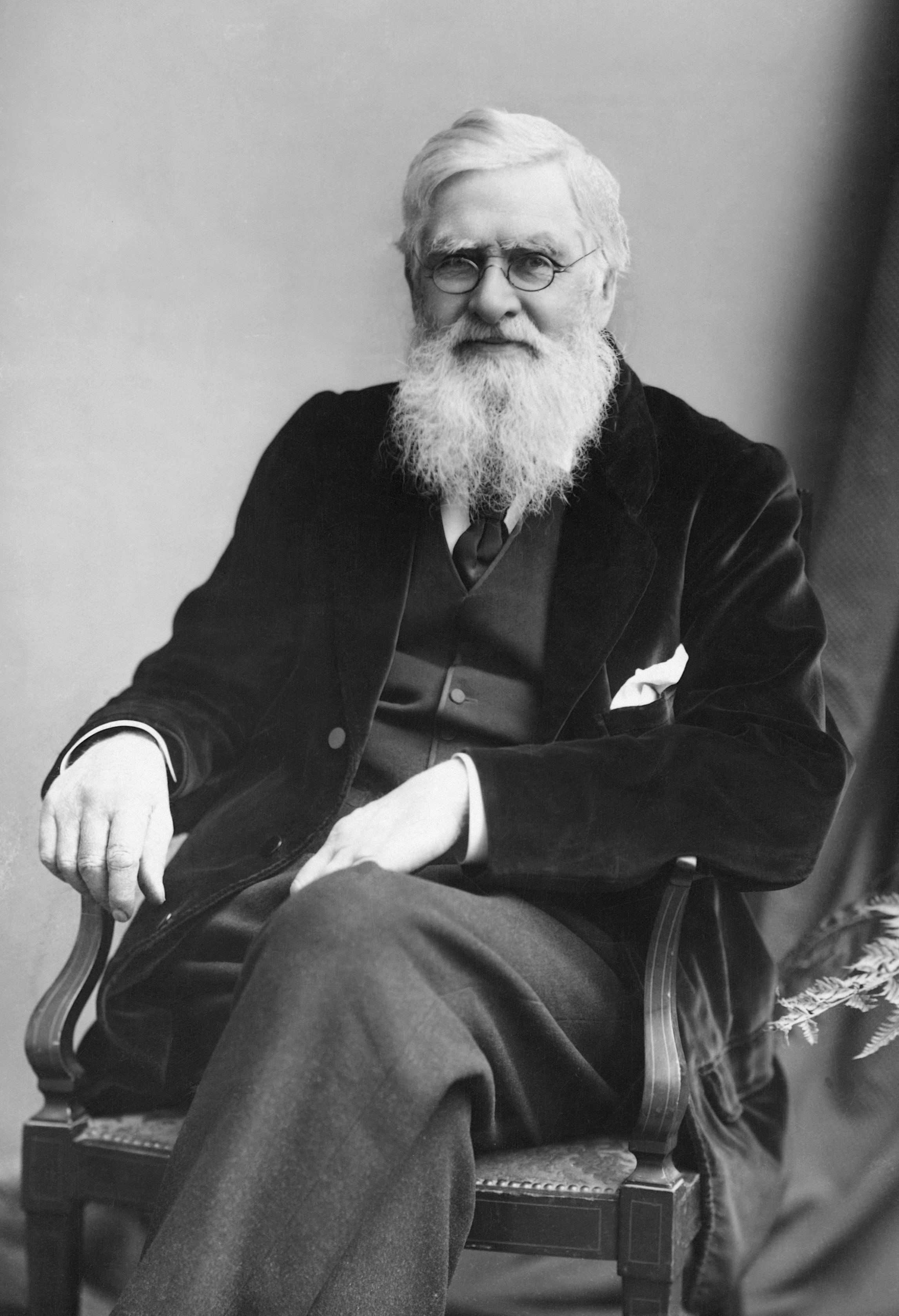
1860 WALLACE, Alfred Russel (1823 – 1913)
The Malay archipelago: The land of the orang-utan and the bird of paradise. 2 vols.
GMN 7439 · https://historyofmedicine.com/id/9611
1894 DUBOIS, Marie Eugène François Thomas (1858 – 1940)
Pithecanthropus erectus. Eine menschenähnliche Uebergangsform aus Java.
Privately issued first report on Homo erectus. In 1891 Dubois discovered remains of what he described as "a species in between humans and apes" at Trinil, Java. He called his finds Pithecanthropus erectus ("ape-human …
GMN 210 · https://historyofmedicine.com/id/3848
1937 SCHOUTE, Dirk (1873 – 1953)
Occidental therapeutics in the Netherlands East Indies during three centuries of Netherlands settlement. 1600-1900.
An English summary of two earlier Dutch works by D. Schoute, 1929-1936.
GMN 6604.4 · https://historyofmedicine.com/id/8535
1937 WECK, Wolfgang (1881 – )
Heilkunde und Volkstum auf Bali.
GMN 6465 · https://historyofmedicine.com/id/8606
1945 TAYLOR, Norman (1883 – 1967)
Cinchona in Java: The story of quinine.
GMN 2061 · https://historyofmedicine.com/id/2330
1987 OWEN, Norman G.
Death and disease in Southeast Asia: Explorations in social, medical, and demographic history. Edited by Norman G. Owen.
GMN 12107 · https://historyofmedicine.com/id/14316
1993 ELLEN, Roy Frank (1947 – )
The cultural relations of classification: An analysis of Nuaulu animal categories from central Seram.
The Nuaulu or Naulu are a tribe located in Seram, Maluku, Indonesia.
GMN 9301 · https://historyofmedicine.com/id/11483
1996 BOOMGAARD, Peter (1946 – ); SCIORTINO, Rosalia; SMYTH, Ines A.
Health care in Java: past and present. Edited by Peter Boomgaard, Rosalia Sciortino and Ines Smyth.
GMN 8214 · https://historyofmedicine.com/id/10390
2001 BEERS, Susan-Jane
Jamu: The ancient Indonesian art of herbal healing.
GMN 9451 · https://historyofmedicine.com/id/11634
2003 KARCH, Steven B.
A history of cocaine: The mystery of coca Java and the Kew plant.
This work is not actually a "history", rather it contains translations, with commentary, of three late nineteenth and early twentieth century treatises on coca and cocaine, plus other documents. "An exploration of the…
GMN 11744 · https://historyofmedicine.com/id/13944
2004 BROWN, Peter; MORWOOD, Michael John (1950 – 2013)
A new small-bodied hominin from the Late Pleistocene of Flores, Indonesia.
In 2003 a joint Indonesian-Australian research team led by Michael Morwood found LB-1—a nearly complete female skeleton of a tiny human that lived about 80,000 years ago—in Liang Bua cave on the island of Flores, Indo…
GMN 7286 · https://historyofmedicine.com/id/9456