1656 BOYM, Michal Piotr (1612 – 1659)
Flora sinensis, fructus floresque humillime porrigens serenissimo et potentissimo Leopoldo Ignatio, Hungariae regi florentissimo, &c. Fructus saecul promittenti Augustissimos.
The first description published in Europe of an ecosystem of the Far East, including animals as well as plants, with particular attention to Chinese fruit bearing plants, and medicinal properties of Chinese plants. Di…
GMN 8591 · https://historyofmedicine.com/id/10768
1671 ANONYMOUS
Les secrets de la médecine des chinois, consistant en la parfaite connoissance du pouls. Envoyez de la Chine par un françois, homme de grand mérite.
The first Western book on Chinese medicine, with a few brief comments on Japanese methods. This anonymous collection of translations of early Chinese texts on pulse medicine has been variously attributed to different …
GMN 6491.9 · https://historyofmedicine.com/id/7994
1682 CLEYER, Andreas (1634 – 1698)
Specimen medicinae Sinicae.
One of the earliest studies of Chinese medicine published in the West. (See also Nos. 6472.10 et seq.). Cleyer edited these translations of Chinese medical texts, reproducing a series of 30 plates dealing with Chinese…
GMN 6492 · https://historyofmedicine.com/id/7995
1686 BOYM, Michal Piotr (1612 – 1659)
Clavis medica ad Chinarum doctrinam de pulsibus. Autore R.P. Michaele Boymo, e Soc. Jesu, & in China missionario. Huius operis ultra viginti annos iam sepulti fragmenta, hinc inde dispersa, collegit & in gratiam medicae facultatis in lucem Europaeam produxit Cl. Dn. Andreas Cleyerus, M.D. & Societatis Batavo-Orientalis Proto-Medicus. A quo nunc demum mittitur totius operis exemplar, e China recens allatum, & a mendis purgatum, Procuratore R.P. Philippo Copletio, Belga, e Soc. Jesu, Chinensis missionis Romam misso.
Translations of Chinese treatises on pulse medicine with illustrations of hands and wrists to illustrate pulse-taking. The texts published here are different from those published by Cleyer in No. 6492. Previously publ…
GMN 6492.1 · https://historyofmedicine.com/id/7998
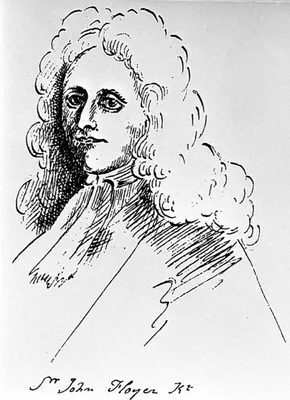
1707 –1710 FLOYER, Sir John (1649 – 1734)
The physician’s pulse-watch. 2 vols.
Before watches had hands to record the seconds, Floyer invented a pulse-watch which divided the minute. He was the first to count the pulse with the aid of a watch and to make regular observations on the pulse-rate. T…
GMN 2670 · https://historyofmedicine.com/id/3507
1781 BUC'HOZ, Pierre-Joseph (1731 – 1807)
Herbier ou collection des plantes médicinales de la Chine: D'après un manuscrit peint et unique qui se trouve dans la Bibliothèque de l'Empereur de la Chine, pour servir suitte [sic] à la collection des fleurs qui se cultivent dans les Jardins de la Chine et de l'Europe.
Digital facsimile from Google Books at this link.
GMN 13004 · https://historyofmedicine.com/id/15254
1782 SONNERAT, Pierre (1749 – 1814)
Voyage aux Indes Orientales et à la Chine, fait par ordre du Roi depuis 1774 jusqu’en 1781. 2 vols.
Vol. 1, pp. 113-16, “No author before the time of Sonnerat gives us so distinct an account of the epidemic prevalence of cholera, so full a description of its varieties or has attributed it so positively to the physic…
GMN 5104.1 · https://historyofmedicine.com/id/6038
1798 DONOVAN, Edward (1768 – 1837)
An epitome of the natural history of the insects of China: Comprising figures and descriptions of upwards of one hundred new, singular, and beautiful species: together with some that are of importance in medicine, domestic economy, &c. The figures are accurately, drawn, engraved, and coloured, from speciemsn of the insects; the descriptions are arranged accordig to the system of Linnaeus, with references to the writings of Fabricius, and other systematic authors.
The first work in a Western language on the insects of China, including pharmaceutical aspects. For this work Donovan obtained specimens and information from George Macartney a British envoy to China. Includes 50 colo…
GMN 9082 · https://historyofmedicine.com/id/11261
1813 LEPAGE, François-Albin (1793 – )
Recherches historiques sur la médecine des chinois.
The first Western history of Chinese medicine. Lepage, a pupil of Pierre Sue, was a friend and colleague of pioneer sinologist Jean-Pierre Abel-Rémusat. In his medical thesis Lepage presented an overview of what was t…
GMN 14178 · https://historyofmedicine.com/id/16493
1818 ABEL, Clarke (1789 – 1826)
Narrative of a journey in the interior of China, and of a voyage to and from that country, in the years 1816 and 1817; containing an account of the most interesting transactions of Lord Amherst's embassy to the court of Pekin and observations on the countries which it visited.
Digital facsimile from Google Books at this link.
GMN 7369 · https://historyofmedicine.com/id/9541
1842 DONOVAN, Edward (1768 – 1837); WESTWOOD, John Obadiah (1805 – 1893)
Natural history of the insects of China, containing upwards of two hundred and twenty figures and descriptions by E. Donovan. A new edition, brought down to the present state of the science, with systematic characters of each species, synonyms, indexes, and other additional matter by J. O. Westwood.
Digital facsimile from the Biodiversity Heritage Archive at this link.
GMN 9083 · https://historyofmedicine.com/id/11262
1846 WILSON, John (1788 – 1870)
Medical notes on China.
Wilson served as Inspector of Hospitals and Fleets from 1841 to 1843 onboard the Minden, a British hospital ship deployed in China at Chusan and Hong Kong at the end of 1841 to treat casualties in the First Opium War …
GMN 13739 · https://historyofmedicine.com/id/16023
1851 HOBSON, Benjamin (1816 – 1873)
Quan ti xin lun [New Treatise Concerning the Whole Body.]
The earliest treatise on Western medicine published in Chinese for the use of Chinese medical staff. The work primarily concerns anatomy and physiology, with most illustrations derived from Cheselden's Anatomy of the …
GMN 13313 · https://historyofmedicine.com/id/15579
1861 BENTHAM, George (1800 – 1884)
Flora hongkonensis: A description of the flowering plants and ferns of the island of Hongkong.
The first comprehensive work on any part of the flora of China and Hong Kong. It included the first published description of Hong Kong Croton, or Croton hancei.
GMN 9171 · https://historyofmedicine.com/id/11350
1863 DABRY DE THIERSANT, Philibert (1826 – 1898); SOUBEIRAN, Jean-Léon (1827 – 1892)
La médecine chez les Chinois par Le capitaine P. Dabry. Ouvrage corrigé et précédé d’une préface par J. Léon Soubeiran.
The best account of Chinese medicine published in Europe during the 19th century, including translations from original Chinese medical texts. Dabry was French consul at Hang-Keou. Soubeiran, a pharmacist, edited his w…
GMN 6492.2 · https://historyofmedicine.com/id/8000
1863 GORDON, Sir Charles Alexander (1821 – 1899)
China from a medical point of view in 1860 and 1861: To which is added a chapter on Nagasaki as a sanitarium.
Digital facsimile from wellcomecollection.org at this link.
GMN 13844 · https://historyofmedicine.com/id/16134
1868 –1874 MILNE-EDWARDS, Henri (1800 – 1885); MILNE-EDWARDS, Alphonse (1835 – 1900)
Recherches pour servir à l'histoire naturelle des mammifères comprenant des considérations sur la classification de ces animaux. 2 vols.
Concerns primarily the mammals of China and Tibet. Volume 2 is an atlas of 108 plates. Digital facsimile from Biodiversity Heritage Library at this link.
GMN 13444 · https://historyofmedicine.com/id/15716
1877 MANSON, Sir Patrick (1844 – 1922)
Filaria sanguinis hominis.
GMN 5345 · https://historyofmedicine.com/id/6795
1877 DAVID, Jean Pierre Armand (1826 – 1900); OUSTALET, Jean Frédéric Émile (1844 – 1905)
Les oiseaux de la Chine. Avec un atlas de 124 planches, dessinées et lithographiées par M. Arnoul et coloriées au pinceau. 2 vols.
Digital facsimile from Google Books at this link.
GMN 12948 · https://historyofmedicine.com/id/15195
1879 MANSON, Sir Patrick (1844 – 1922)
Additional notes on filaria sanguinis hominis and filiaria disease.
On p. 36 of this paper Manson first described nocturnal periodicity in Filaria Bancrofti, an adaptation to the nocturnal biting habits of their mosquito vector. (Thanks to Juan Weiss for this reference and its interpr…
GMN 11248 · https://historyofmedicine.com/id/13445
1880 MANSON, Sir Patrick (1844 – 1922)
Distoma ringeri.
Manson made a fundamental contribution to knowledge on paragonimiasis with his description of its etiology and of the parasite. He named it Distoma ringeri after Dr. Ringer, who recovered it from the lung at necropsy;…
GMN 5346.2 · https://historyofmedicine.com/id/6808
1881 BRETSCHNEIDER, Emil (1833 – 1901)
Early European researches into the flora of China.
Digital facsimile from Google Books at this link.
GMN 13005 · https://historyofmedicine.com/id/15255
1882 KANE, Harry Hubbell (1854 – )
Opium-smoking in America and China: A study of its prevalence, and effects, immediate and remote, on the individual and the nation.
The author claims (p. 1) that "the first white man who smoked opium in America is said to have been a sporting character named Clendenyn. The second—induced to try it by the first—smoked in 1871." Digital facsimile fr…
GMN 9506 · https://historyofmedicine.com/id/11691
1882 –1895 BRETSCHNEIDER, Emil (1833 – 1901)
Botanicon sinicum: Notes on Chinese botany from native and western sources. 3 parts.
Part 1 was first published in the Journal of the North-China Branch of the Royal Asiatic Society, XVI (1881). Part 2 was published in the Journal of the China Branch of the Royal Asiatic Society for 1890-91, XXV (1893…
GMN 13006 · https://historyofmedicine.com/id/15256
1883 MANSON, Sir Patrick (1844 – 1922)
The Filaria sanguinis hominis and certain new form of parasitic disease in India, China and warm countries.
A collection of several papers written by Manson.
GMN 2455 · https://historyofmedicine.com/id/2980
1884 GORDON, Sir Charles Alexander (1821 – 1899)
An epitome of the reports of the medical officers to the Chinese Imperial Maritime Customs Office from 1871 to 1882. With chapters on the history of medicine in China: Materia medica: Epidemics: Famine: Ethnology: And chronology in relation to medicine and public health.
Apart from studies of common diseases, public health issues, and epizootics, this work contains a chapter on opium smoking and a chapter on the castration of Chinese eunuchs, of which there were around a thousand work…
GMN 9422 · https://historyofmedicine.com/id/11605
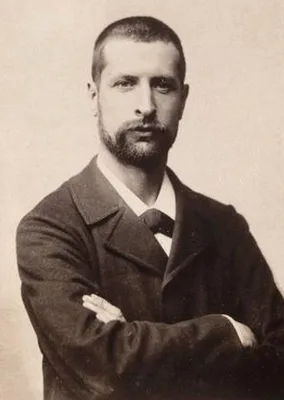
1894 YERSIN, Alexandre Émile Jean (1863 – 1943)
La peste bubonique à Hong-Kong.
Yersin discovered the plague bacillus Pasteurella (Yersinia) pestis, isolating it from excised buboes. He published the first account of this organism. Preliminary note in C. R. Acad. Sci. (Paris), 1894, 119, 356.
GMN 5125 · https://historyofmedicine.com/id/6113
1897 OGATA, Masanori (1852 – 1919)
Ueber die Pestepidemie in Formosa.
Ogata considered the flea (principally Xenopsylla cheopis) to be the principal, if not the sole, vector of bubonic plague infection.
GMN 5128 · https://historyofmedicine.com/id/6130
1900 YASUZUMI, Saneyoshi (1848 – 1932)
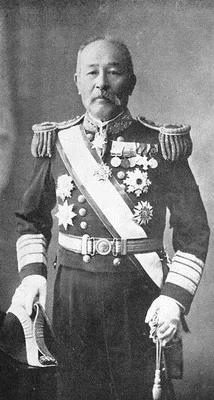
The surgical history of the naval war between Japan & China during 1894-95. Translated from the original Japanese report under the supervision of Baron Y. Saneyoshi by S. Suzuki.
Surgical history of the naval aspects of the First Sino-Japanese War. Digital facsimile from the Internet Archive at this link.
GMN 9421 · https://historyofmedicine.com/id/11604
1900 MATIGNON, Jean-Jacques (1866 – 1928)
Superstition, crime et misère en Chine.
Pages 275-288 are titled "Note sur la médecine des Mongols." Digital facsimile from Google Books at this link.
GMN 12816 · https://historyofmedicine.com/id/15062
1904 –1924 CORDIER, Henri (1849 – 1925)
Bibliotheca Sinica: Dictionnaire bibliographique des ouvrages relatifs à l'empire Chinois. Deuxième édition, revue, corrigée et considérablement augmentée. 4 vols. (1904-1908), plus Supplement (1923-1945).
The "standard enumerative bibliography" of 70,000 works on China up to 1921, including the full titles, tables of contents, and annotations regarding many books. Cordier was able to achieve this despite having only mi…
GMN 12952 · https://historyofmedicine.com/id/15199
1912 STRONG, Richard Pearson (1872 – 1948)
Report of the International Plague Conference held at Mukden [Shenyang], April, 1911.
Report on the epidemic of pneumonic plague that raged in Manchuria and north China during the winter months of 1910-11, causing the death of nearly 50,000 people. This was the first outbreak of epidemic pneumonic plag…
GMN 12582 · https://historyofmedicine.com/id/14821
1927 BLACK, Davidson (1884 – 1934)
The lower molar hominid tooth from the Chou Kou Tien deposit.
In this report on a single hominid tooth found by Swedish archeologist Birger Bohlin at the Zhoukoudian site in 1927 Black named a new genus and species of hominid, Sinanthropus pekinensis. He characterized the specim…
GMN 7255 · https://historyofmedicine.com/id/9424
1931 SMITH, Sir Grafton Elliot (1871 – 1937)
Sinanthropus – Peking Man, its discovery and significance.
Elliot Smith visited Peking to view the skull of Sinanthropus pekinensis, discovered by W. C. Pei on December 2, 1929. A preliminary description by Pei is to be found in Bull. geol. Soc. China, 1929, 8, 3.
GMN 213 · https://historyofmedicine.com/id/3877
1932 WU, Lien-Teh (1879 – 1959); WONG, K. Chimin (1889 – 1972)
History of Chinese medicine.
The writers spent 15 years in the compilation of this work, the first important contribution to the history of Chinese medicine for Western readers. Beginning with demonology, plant lore and folk medicine, the writers…
GMN 6493 · https://historyofmedicine.com/id/8002
1934 MORSE, William Reginald (1874 – 1939)
Chinese medicine
GMN 6494 · https://historyofmedicine.com/id/8004
1938 POWELL, Charles Austin (1887 – 1950)
Bound feet.
The author was assistant superintendent of Massachusetts Memorial Hospitals in Boston and Assistant Professor of Tropical Diseases at Boston University School of Medicine. His book is part travelogue and part memoir o…
GMN 13328 · https://historyofmedicine.com/id/15595
1940 HUME, Edward Hicks (1876 – 1957)
The Chinese way in medicine.
GMN 6495 · https://historyofmedicine.com/id/8006
1943 WEIDENREICH, Franz (1873 – 1948)
The skull of Sinanthropus pekinensis: A comparative study on a primitive hominid skull.
Digital facsimile from the Internet Archive at this link.
GMN 214 · https://historyofmedicine.com/id/8936
1959 HUARD, Pierre Alphonse (1901 – 1983); WONG, Ming (1926 – 1989)
La médecine chinoise au cours des siècles.
English translation by B. Fielding, London, 1968.
GMN 6495.1 · https://historyofmedicine.com/id/8008
1967 NATHAN, Carl F.
Plague prevention and politics in Manchuria, 1910-1931.
"The Chinese winter of 1910-1911 was one of death and discontent: an epidemic of pneumonic plague—the greatest since the Black Death of the fourteenth century—scourged China's three Eastern Provinces (Manchuria), and …
GMN 12581 · https://historyofmedicine.com/id/14820
1972 BOWERS, John Zimmerman (1913 – 1993)
Western medicine in a Chinese palace: Peking Union Medical College, 1917-1951.
Traces the development of Western medicine in China from 1805 to the creation of the Peking Union Medical College.
GMN 8614 · https://historyofmedicine.com/id/10791
1973 QUINN, Joseph R.
Medicine and public health in the People's Republic of China. Edited by Joseph R. Quinn.
Digital facsimile from the Internet Archive at this link.
GMN 10223 · https://historyofmedicine.com/id/12413
1974 PORKERT, Manfred (1933 – )
The theoretical foundations of Chinese medicine. Systems of correspondence.
GMN 6495.2 · https://historyofmedicine.com/id/8010
1975 MAJNO, Guido (1922 – 2010)
The healing hand: Man and wound in the ancient world.
Emphasizing surgery, this is an exceptionally imaginative and exquisitely designed and illustrated history of medicine in ancient Egypt, Greece, Rome, and China.
GMN 5813.10 · https://historyofmedicine.com/id/6961
1975 AMERICAN HERBAL PHARMACOLOGY DELEGATION
Herbal pharmacology in the People's Republic of China: A trip report of the American Herbal Pharmacology Delegation. Submitted to the Committee on Scholarly Communication with the People's Republic of China.
Digital facsimile from swsbm.com at this link.
GMN 9345 · https://historyofmedicine.com/id/11527
1981 PARENNIN, Dominique (1665 – 1741); SAUNDERS, John Bertrand deCusance Morant (1903 – 1991); LEE, Francis Ruey-Shuang (1929 – 2008)
The Manchu anatomy and its historical origin. With annotations and translations by John B. de C. M. Saunders and Francis R. Lee.
The Anatomie Manchoue, a series of graphic illustrations taken from Western anatomical works, with notes in the Manchu-Tungus language. This was compiled under the supervision of Father Parrenin, a French Jesuit worki…
GMN 6958 · https://historyofmedicine.com/id/9123
1985 UNSCHULD, Paul Ulrich (1943 – )
Medicine in China: A history of ideas.
The first comprehensive and analytical history of therapeutic concepts and practices in China, encompassing all aspects of Chinese medicine over 3500 years. Approximately one third of the work consists of primary text…
GMN 6495.4 · https://historyofmedicine.com/id/8014
1990 CHOA, G. H.
"Heal the sick" was their motto: The Protestant medical missionaries in China.
GMN 12585 · https://historyofmedicine.com/id/14824
1999 FURTH, Charlotte (1934 – )
A flourishing Yin: Gender in China's medical history: 960-1665.
GMN 10092 · https://historyofmedicine.com/id/12281