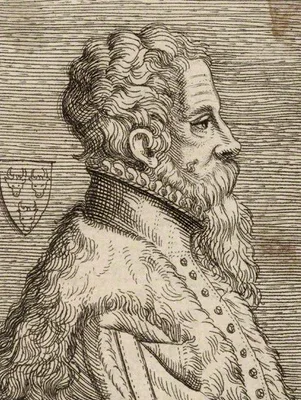
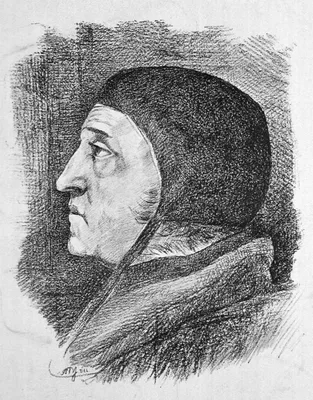
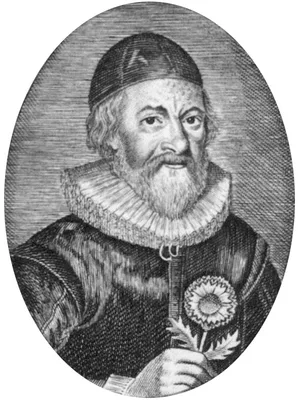
1471 BARTHOLOMAEUS ANGLICUS (1203 – 1272)
De proprietatibus rerum.
A condensed encyclopedia of what was then understood by natural science. The work was probably written about the middle of the 13th century. It was one of the most widely read scientific works of the Middle Ages. Caxt…
GMN 91 · https://historyofmedicine.com/id/52
c. 1496 BARTHOLOMAEUS ANGLICUS (1203 – 1272); TREVISA, John (John of Trevisa) (1342 – 1402)
De proprietatibus rerum. English translation by John of Trevisa.
This English translation of Bartholomaeus Anglicus was made by John of Trevisa in 1398. Bibliographically it is of interest as being one of the earliest books printed in London, one of the finest of the 15th century, …
GMN 92 · https://historyofmedicine.com/id/8784
1525
Here begynnyth a new mater, the whiche sheweth and treateth of ye vertues & proprytes of herbes, the whiche is called an Herball.
BANCKES' HERBAL
Earliest English printed herbal. Published anonymously, it is usually referred to as “Banckes’ Herbal”, after its publisher, Rycharde Banckes. The text was derived from a medieval manuscript, and although the work had…
GMN 1799 · https://historyofmedicine.com/id/1928
1532 EDWARDES, David (1502 – 1542)
De indiciis et praecognitionibus, opus apprime utile medicis. Eiusdem in anatomicen introductio luculenta et brevis.
The first anatomical text by an Englishman, but only a very brief account of 15 pages. The only known copy of the original edition is in the British Library. Edwardes made the first recorded dissection in England (153…
GMN 368.1 · https://historyofmedicine.com/id/463
1544 PHAER, Thomas [PHAYER; PHAYR] (1510 – 1560); GOEUROT, Jean (1500 – 1551)
The regiment of life, whereunto is added a treatise of the pestilence, with the boke of children.
The “boke of children” is the first work on diseases of children to be written by an Englishman the English language. Phaer enabled Englishmen to read and think of pediatrics in their own language. The edition include…
GMN 6317 · https://historyofmedicine.com/id/8081
1547 BOORDE, Andrew [BORDE] (1490 – 1549)
The breviary of helthe, for all manner of syckenesses and diseases the whiche may be in man, or woman doth folowe.
This, probably the earliest “modern” work on hygiene, throws some light on the condition of that subject in the 16th century.
GMN 1591 · https://historyofmedicine.com/id/1691
1562 BULLEIN, William (1515 – 1576)
Bullein's bulwarke of defẽce againste all sicknes, sornes, and woundes that dooe daily assaulte mankinde, which bulwarke is kepte with Hillarius the Gardiner, Health the Phisician, with their chyrurgian to helpe the wounded soldiors. Gathered and practised frō the moste worthie learned, both old and newe: to the greate comforte of mankinde. Doen by Williyam Bulleyn, and ended this Marche, Anno Salutis 1562.
A work of medical humanism written while Bullein and his wife were in prison for debts. Bullein was the only writer of medical works in English in the sixteenth century to employ the dialogue form, allowing the physic…
GMN 14123 · https://historyofmedicine.com/id/16434
1566 SECURIS, John (1530 – 1580)
A detection and querimonie of the daily enormities and abuses committed in physick.
Securis was a Latinized version of the English surname Hatchett.
GMN 7223 · https://historyofmedicine.com/id/9391
1570 CAIUS, John [Johannes Caius; born John Kays] (1510 – 1573)
De canibus Britannicis liber unus. De rariorum animalium et stirpium historia, liber unus. De libris propriis, liber unus.
Caius, a pioneer naturalist as well as a physician, corresponded with Conrad Gessner, with whom he had made friends while returning from Padua. Caius wrote this study of British dogs to send to Gessner as a contributi…
GMN 9203 · https://historyofmedicine.com/id/11384
1577 VICARY, Thomas (1490 – 1561)
A profitable treatise of the anatomie of mans body.
A small book, of which only two copies survived, at the British Library and Cambridge University. As first shown by J F Payne in 1896, this work is very similar to a manuscript (MS 564) in the Wellcome Library. This m…
GMN 6836 · https://historyofmedicine.com/id/9000
1603
True bill of the vvhole number that hath died at London.
BILL OF MORTALITY
The collection, recording, and publishing of medical statistics in the form of Bills of Mortality began in England as a result of the epidemic of plague in 1592-93. The earliest surviving copy of the Bills of Mortalit…
GMN 6821 · https://historyofmedicine.com/id/8984
1629 PARKINSON, John (1567 – 1650)
Paradisi in sole paradisus terrestris. Or a garden of all sorts of pleasant flowers which our English ayre will permitt to be noursed vp: with a kitchen garden of all manner of herbes, rootes, & fruites, for meate or sause vsed with vs, and an orchard of all sorte of fruitbearing trees and shrubbes fit for our land together with the right orderinge planting & preseruing of them and their vses & vertues.
The title is a pun on the author’s name (park-in-sun). Digital facsimile from Biodiversity Heritage Library at this link.
GMN 1822 · https://historyofmedicine.com/id/2111
1640 PARKINSON, John (1567 – 1650)
Theatrum botanicum: The theater of plants: Or, An herball of large extent: containing therein a more ample and exact history and declaration of the physicall herbs and plants ... distributed into sundry classes or tribes, for the more easie knowledge of the many herbes of one nature and property ... / collected by the many yeares travaile, industry and experience in this subject.
Parkinson, the last of the old English herbalists, was Apothecary to James I. His massive herbal of 1,755 pages described nearly 3,800 plants, nearly double the number described in the first edition of Gerard. Parkins…
GMN 1823 · https://historyofmedicine.com/id/2113
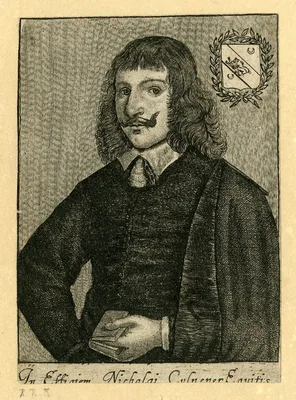
1652 CULPEPER, Nicholas (1616 – 1654)
The English physitian: Or, an astrologo-physical discourse of the vulgar herbs of this nation. Being a compleat method of physick, whereby a man may preserve his body in health; or cure himself, being sick, for three pence charge, with such things only as grow in England, as they being most fit for English bodies. Herein is also shewed, 1. The way of making plaisters, oyntments, oyls, pultisses, syrups, julips, or waters, of all sorts of physical herbs, that you may have them readie for your use at all times of the yeer. 2. What planet governeth every herb or tree (used in physick) that groweth in England. 3. The time of gathering all herbs, both vulgarly, and astrologically. 4. The way of drying and keeping the herbs all the yeer. 5. The way of keeping their juyces ready for use at all times. 6. The way of making and keeping all kind of useful compounds made of herbs. 7. The way of mixing medicines, according to cause and mixture of the disease, and part of the body afflicted.
"Culpeper attempted to make medical treatments more accessible to laypersons by educating them about maintaining their health. Ultimately his ambition was to reform the system of medicine by questioning traditional me…
GMN 8588 · https://historyofmedicine.com/id/10765
1665
London’s dreadful visitation, or, a collection of all the Bills of Mortality for the present year: beginning the 27th of December 1664, and ending the 19th of December following…By the Company of Parish Clerks of London.
BILLS OF MORTALITY
This is a valuable statistical record of the great plague of 1665. (No. 6052 in the Bibliotheca Osleriana.)
GMN 5119 · https://historyofmedicine.com/id/8855
1670 RAY, John (1628 – 1705)
Catalogus plantarum Angliae, et insularum adjacentium: tum indigenas, tum in agris passim cultas complectens.
Includes some ethnobotanical notes regarding medical remedies. Digital facsimile from Google Books at this link.
GMN 9286 · https://historyofmedicine.com/id/11468
1672 CLERMONT, Charles [CLAROMONTIUS]
De aere, locis, et aquis terrae Angliae; deque morbis Anglorum vernaculis. Cum observationibus ratiocinatione & curandi method illustratis.
An outline of the medical topography of England.
GMN 1769 · https://historyofmedicine.com/id/3309
1682 YONGE, James (1646 – 1721)
Wounds of the brain proved curable, not only by the opinion and experience of many (the best) authors, but the remarkable history of a child four years old cured of two very large depressions, with the loss of a great part of the skull, a portion of the brain also issuing thorough a penetrating wound of the dura and pia mater…
Probably the first monograph in English on surgery of the head and brain. Yonge was a naval surgeon who set up in practice in Plymouth after he gave up the sea. He had just performed the operation for an injury of the…
GMN 8836 · https://historyofmedicine.com/id/11014
1683 TRYON, Thomas (1634 – 1703)
The way to health, long life and happiness, or, a discourse of temperance and the particular nature of all things requisit for the life of man as all sorts of meats, drinks, air, exercise, &c. with special directions how to use each of them to be the best advantage of the body and mind. Shewing from the true ground of nature whence most diseases proceed, and how to prevent them. To which is added, a treatise of most sorts of English herbs ... the like never before published / communicated to the world for a general good, by Philotheos Physiologus.
Tryon, an English merchant, was the author of popular self-help books and an early advocate of vegetarianism. Digital facsimile from the Hathi Trust at this link.
GMN 9308 · https://historyofmedicine.com/id/11490
c. 1695 PEPYS, Samuel (1633 – 1703)
Order of the hospitalls: The order of the hospitalls of K. Henry the viiith and K. Edward the vith, viz; St. Batholomew's. Christ's. Bridewell. St. Thomas's
First printing of the sixteenth-century statues of the London hospitals. Tradition has it that it was published at the instigation of Samuel Pepys. Hospitals in the sixteenth and seventeenth centuries were of more gen…
GMN 9867 · https://historyofmedicine.com/id/12055
1717 TURNER, Daniel (1667 – 1742)
Syphilis: A practical dissertation on the venereal disease. In which, after a short account of its nature and original; the diagnostick and prognostick signs, with the best ways of curing the several degrees of that distemper, together with some historical observations relating to the same, are candidly and without reserve, communicated. In two parts.
The first work published in English to include the word syphilis, and also the first English work to include the word condom. Digital facsimile from the Internet Archive at this link.
GMN 10530 · https://historyofmedicine.com/id/12723
1722 DEFOE, Daniel (1660 – 1731)
A journal of the plague year: Being observatrions or memorials, of the most remarkable occurrences, as well publick as private, which happened in London during the last great visitation in 1665. Written by a citizen who continued all the while in London. Never made publick before.
Though he may be most widely remembered as a novelist--especially for Robinson Crusoe, Defoe was an English trader, writer of non-fiction as well as fiction, journalist, pamphleteer and spy. This book is an account of…
GMN 10199 · https://historyofmedicine.com/id/12388
1776 DIMSDALE, Thomas (1712 – 1800)
Thoughts on general and partial inoculations: Containing a translation of two treatises written when the author was at Petersburg, and published there in the Russian language; also outlines of two plans: One, for the general inoculation of the poor in small towns and villages. The other, for the general inoculation of the poor in London and other large and populous places.
Digital facsimile from the Internet Archive at this link.
GMN 9520 · https://historyofmedicine.com/id/11705
1777 HOWARD, John (1726 – 1790)
The state of the prisons in England and Wales.
Howard devoted much of his life to the improvement of the conditions then prevailing in prisons. The publication of his book led to legislation abolishing abuses in prisons and providing for their proper cleaning. The…
GMN 1598 · https://historyofmedicine.com/id/1716
1780 CLARK, John (1744 – 1805)
Observations on fevers, especially those of the continued type, and on the scarlet fever attended with ulcerated sore-throat, as it appeared at Newcastle upon Tyne in the year 1778: Together with a comparative view of that epidemic with the scarlet fever as described by authors, and the angina maligna.
Digital facsimile from the Intenet Archive at this link.
GMN 2205 · https://historyofmedicine.com/id/1642
1783 FOTHERGILL, John (1712 – 1780)
Observations on the weather and diseases of London. In his Works, 1, 145-240
GMN 1774 · https://historyofmedicine.com/id/3332
1790 ADAIR, James Makittrick (1728 – 1802)
Essays on fashionable diseases. The dangerous effects of hot and crouded rooms. The cloathing of invalids. Lady and gentlemen doctors. And on quacks and quackery. With the genuine patent prescriptions of Dr. James's fever power, Tickell's aetherial spirit, & Godbold's balsam, taken from the Rolls in Chancery, and under the seal of the proper officers; and also the ingredients and compostion of many of the most celebrated quack nostrums, as analized by several of the best chemists in Europe. By James M. Adair, Formerly M.D.... With a dedication to Philip Thicknesse ... To which is added a dramatic dialogue. Published for the benefit of the tin-miners in Cornwal
An attack on quack medicines, etc. with one of the most verbose title pages of the 18th century. Digital facsimile from the Internet Archive at this link.
GMN 10002 · https://historyofmedicine.com/id/12191
1790 –1814 SMITH, Sir James Edward (1759 – 1828); SOWERBY, James (1757 – 1822)
English botany; or, coloured figures of British plants, with their essential characters, synonyms, and places of growth. To which will be added, occasional remarks. 36 vols.
Issued in parts. Images by Sowerby; text by Sir James Edward Smith. Only Sowerby is credited on the title page. Includes 2,592 hand-colored plates of British plants. "Buyers of this work today must exercise extreme ca…
GMN 13642 · https://historyofmedicine.com/id/15923
1792 –1813 DONOVAN, Edward (1768 – 1837)
The natural history of British insects; explaining them in their several states, with the periods of their transformations, their food, oeconomy, &c. Together with the history of such minute insects as require investigation by the microscope. The whole illustrated by coloured figures, designed and executed from living specimens. 16 vols.
Includes a total of 576 plates, of which 568 were colored.
GMN 9087 · https://historyofmedicine.com/id/11266
1794 LONGMATE, Barak (1768 – 1836)
Article on Indian rhinoplasty.
The first report published in Europe on the so-called Indian or Hindu method of rhinoplasty using a forehead flap, accompanied by an engraving of the patient, Cowasjee, with a restored nose and showing the stages of t…
GMN 5735.1 · https://historyofmedicine.com/id/6521
1794 –1819 DONOVAN, Edward (1768 – 1837)
The natural history of British birds; or, a selection of the most rare, beautiful and interesting birds which inhabit this country: The descriptions from the Systema naturae of Linnaeus; with general observations, either original or collected from the latest and most esteemed English ornithologists; and embellished with figures, drawn, engraved, and coloured from the original specimens. 10 vols.
The first 5 volumes were issued in monthly parts, each consisting of 2 plates and accompanying text. A volume came out each year between 1794 and 1798; the fifth volume stated: "This work being now completed." However…
GMN 9086 · https://historyofmedicine.com/id/11265
1800 FRERE, John (1740 – 1807)
Account of flint weapons discovered at Hoxne in Suffolk.
Frere described the discovery of several flint artifacts, which he believed to be “weapons of war,” associated with “some extraordinary bones, particularly a jaw-bone of enormous size of some unknown animal” (p. 204).…
GMN 7291 · https://historyofmedicine.com/id/9461
1800 –1804 DONOVAN, Edward (1768 – 1837)
The natural history of British shells, including figures and descriptions of all the species hitherto discovered in Great Britain, systematically arranged in the Linnean manner, with scientific and general observations on each. 5 vols.
Digital facsimile from the Biodiversity Heritage Library at this link.
GMN 9090 · https://historyofmedicine.com/id/11269
1801 –1802 RICKMAN, John (1771 – 1840)
Abstract of the answers and returns made pursuant to an act, passed in the forty-first year of His Majesty King George III. Intituled, “An act for taking an account of the population of Great Britain, and the increase or diminution thereof.” 2 vols. in 3.
The first census of England, Scotland and Wales. The study of population was one of the major concerns of political economy at this time and the first census came at a crucial point in the debate. When Malthus publish…
GMN 8579 · https://historyofmedicine.com/id/10756
1802 –1808 DONOVAN, Edward (1768 – 1837)
The natural history of British fishes, including scientific and general descriptions of the most interesting species, and an extensive selection of accurately finished coloured plates. Taken entirely from original drawings, purposely made from the specimens in a recent state, and for the most part whilst living. 5 vols.
"the paint is laid on so thickly that it is frequently impossible to see the engraved lines underneath. The already rich colouring is heightened by the addition of burnished highlights, albumen overglazes and metallic…
GMN 9089 · https://historyofmedicine.com/id/11268
1813 TUKE, Samuel (1784 – 1857)
Description of The Retreat, an institution near York, for insane persons…
The pioneer work by an Englishman advocating humane treatment of the mentally ill. Tuke set out in this work the successful results of his experience with the “mild system of treatment” which had been instituted at Th…
GMN 4925.1 · https://historyofmedicine.com/id/6135
1819 BATEMAN, Thomas (1778 – 1821)
Reports on the diseases of London, and the state of the weather, from 1804-1816; including practical remarks on the causes and treatment of the former; and preceded by a historical view of the state of health and disease in the metropolis in past times.
GMN 10065 · https://historyofmedicine.com/id/12254
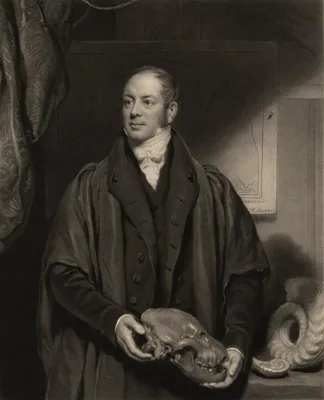
1823 BUCKLAND, William (1784 – 1856)
Reliquiae diluvianae; or, observations on the organic remains contained in caves, fissures, and diluvial gravel, and on other geological phenomena, attesting the action of an universal deluge.
Buckland’s elaborately illustrated Reliquiae diluvianae (Relics of the Flood) describes his geological and paleontological researches of the early 1820s, including his investigations of the Kirkdale and Paviland caves…
GMN 7254 · https://historyofmedicine.com/id/9423
1828 GREAT BRITAIN. PARLIAMENT
Report from the select committee on anatomy. House of Commons, 22 July 1828.
In the first half of 1828, in response to increasing calls for reform, the British Parliament appointed a committee to "enquire into the manner of obtaining subjects for dissection by schools of Anatomy and the State …
GMN 7096 · https://historyofmedicine.com/id/9263
1831 ROYAL COLLEGE OF SURGEONS OF ENGLAND
Anatomy. Copy of a letter from the council of the Royal College of Surgeons in London, to Viscount Melbourne.
On December 5, 1831, the notorious London "resurrection men" John Bishop and Thomas Williams were executed for the murder of an itinerant fourteen-year-old (known only as the "Italian Boy"), whose corpse they had then…
GMN 9995 · https://historyofmedicine.com/id/12184
1832 NATIONAL POLITICAL UNION
Anatomy. Proceedings at the National Political Union, respecting legislative interference in the study of anatomy, and the supply of bodies for anatomical research.
Digital facsimile from the Internet Archive at this link.
GMN 9993 · https://historyofmedicine.com/id/12182
1833 GASKELL, Peter (1806 – 1841)
The manufacturing population of England, its moral, social, and physical conditions, and the changes which have arisen from the use of steam machinery; with an examination of infant labour.
Gaskell, a physician, addressed social, political and public health problems that resulted from the Industrial Revolution. Gaskell issued a revised edition of this work in 1836 under a different title: Artisans and Ma…
GMN 10389 · https://historyofmedicine.com/id/12581
1842 CHADWICK, Sir Edwin (1800 – 1890)
Report…from the Poor Law Commissioners on an inquiry into the sanitary conditions of the labouring population of Great Britain.
Chadwick devoted his life to social reform. He was secretary to the Poor Law Commission when he made the above report to Parliament. In it he included a careful analysis of causes of death in 1838 and 1839 and gave a …
GMN 1608 · https://historyofmedicine.com/id/1890
1843 HOLLAND, George Calvert (1801 – 11865)
Diseases of the lungs from mechanical causes; and inquiries into the condition of the artisans exposed to the inhalation of dust.
Digital facsimile from the Internet Archive at this link.
GMN 10390 · https://historyofmedicine.com/id/12583
1844 –1845 CHADWICK, Sir Edwin (1800 – 1890)
First [Second] report of the commissioners for inquiring into the state of large towns and populous districts [Appendix- Part II].
The publication of Chadwick's 1842 Report inspired the creation in 1843 of the Royal Commission for Inquiry into the State of Large Towns and Populous Districts, in which Chadwick once again played a leading role, dra…
GMN 8884 · https://historyofmedicine.com/id/11062
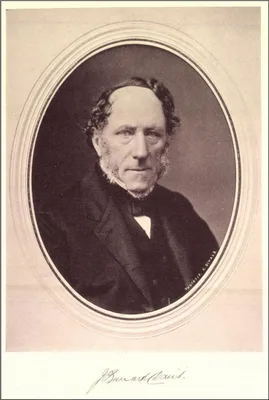
1856 –1865 DAVIS, Joseph Barnard (1801 – 1881); THURNHAM, John (1810 – 1873)
Crania Britannica. Delineations and descriptions of the skulls of the aboriginal and early inhabitants of the British Islands: With notices of their other remains. 6 "Decades" in 2 vols.
Digital facsimile from Google Books at this link.
GMN 203 · https://historyofmedicine.com/id/3571
1860 PRESTWICH, Joseph (1812 – 1896)
On the occurrence of flint-implements, associated with the remains of animals of extinct species in beds of a late geological period, in France at Amiens and Abbeville, and in England at Hoxne.
This paper is a key record of the early recognition of the antiquity of man by the scientific establishment. Having returned from a visit to Abbeville, France, in May 1859, where he viewed the evidence for the antiqui…
GMN 7262 · https://historyofmedicine.com/id/9431
1861 WILSON, Sir William James Erasmus (1809 – 1884)
The eastern, or Turkish bath: Its history, revival in Britain, and application to the purposes of health.
Digital facsimile from the Internet Archive at this link.
GMN 10049 · https://historyofmedicine.com/id/12238
1862 MURCHISON, Charles (1830 – 1879)
A treatise on the continued fevers of Great Britain.
Murchison was one of the greatest clinical teachers London has ever known; of his many writings his book on continued fever is probably the most important. Digital facsimile from the Internet Archive at this link.
GMN 2220 · https://historyofmedicine.com/id/3756
1862 CLARK, William (1788 – 1869); CLARK, John Willis (1833 – 1910)
Catalogue of the osteological portion of specimens contained in the Anatomical Museum of the University of Cambridge.
Digital facsimile from the Internet Archive at this link.
GMN 7621 · https://historyofmedicine.com/id/9793