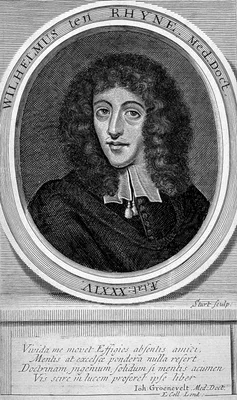
1683 TEN RHIJNE, Willem (1647 – 1700)
Dissertatio de arthritide: mantissa schematica: de acupunctura: et orationes tres…
This work by the resident physician at Deshima, the Dutch East India Company’s trading station in Nagasaki Bay, Japan, contains the first detailed description of acupuncture, and the first illustration of acu-points p…
GMN 6374.1 · https://historyofmedicine.com/id/8316
1712 KAEMPFER, Engelbert (1651 – 1716)
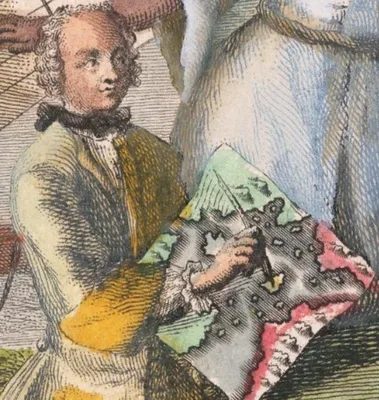
Amoentitatum exoticarum politico-physico-medicarum fasciculi V.
Kaempfer’s illustrated accounts of Japanese acupuncture and moxibustion are among the best of the 17th century. They appeared for the first time in the above work and were translated into English in his The History of…
GMN 6374.11 · https://historyofmedicine.com/id/8317
1774 KULMUS, Johann Adam (1689 – 1745); SUGITA, Genpaku (杉田 玄白) (1733 – 1817)
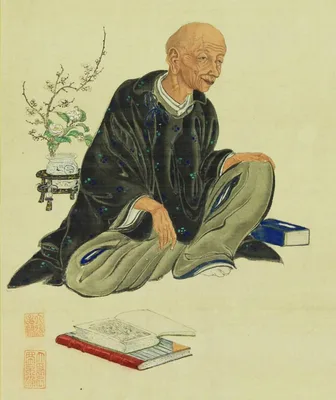
Kaitai Shinsho (解体新書 Kyūjitai: 解體新書,(Anatomical Tables). A translation of Johan Adam Kulmus's Ontleedkundige Tafelen by Sugita Genpaku.
The first translation of any Western medical text into Japanese. "Kaitai Shinsho represented the beginning of two epoch-making developments. First and most directly Gempaku's work set in motion the modern transformati…
GMN 6835 · https://historyofmedicine.com/id/8999
1791 KAEMPFER, Engelbert (1651 – 1716); BANKS, Sir Joseph (1743 – 1820)
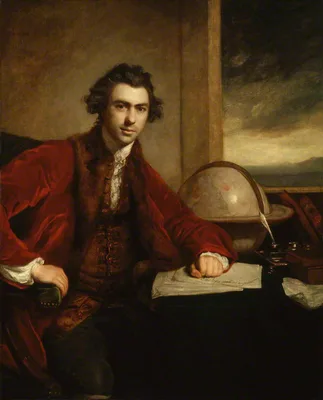
Icones selectæ plantarum, quas in Japonia collegit et delineavit; Engelbertus Kaempfer; ex archetypis in Museo Britannico asservatis. Edited by Sir Joseph Banks.
Sir Joseph Banks was responsible for publishing most of Kaempfer's studies of Japanese plants, which had remained unpublished for more than 70 years. This work introduced many Japanese plants to Western botanists. Dig…
GMN 12825 · https://historyofmedicine.com/id/15071
1878 –1883 GEERTS, Antonius Johannes Cornelius (1843 – 1883)
Les produits de la nature japonaise et chinoise: comprenant la dénomination, l'histoire et les applications aux arts, à l'industrie, à l'économie, à la médecine, etc. des substances qui dérivent des trois règnes de la nature et qui sont employées par les Japonais et les Chinois / Partie inorganique et minéralogique, contenant la description des minéraux et des substances qui dérivent du règne minéral.
Digital facsimile from Google Books at this link.
GMN 7515 · https://historyofmedicine.com/id/9687
1879 BÄLZ, Erwin Otto Eduard von (1849 – 1933); KAWAKAMI
Das japanische Fluss- oder Ueberschwemmings-fieber, eine acute Infectionskrankheit.
Early scientific account of tsutsugamushi fever.
GMN 5376.1 · https://historyofmedicine.com/id/7038
1880 –1884 BÄLZ, Erwin Otto Eduard von (1849 – 1933)
Kakke (Beriberi).
In his important account of beriberi, Baelz dealt with the Tokyo outbreak of 1881.
GMN 3739 · https://historyofmedicine.com/id/4537
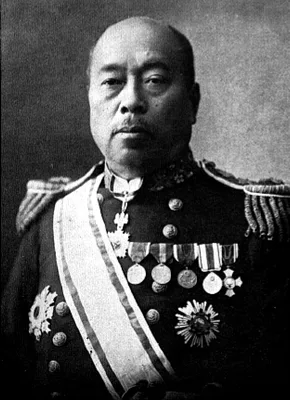
1885 KANEHIRO, Takaki (1849 – 1915)
On the cause and prevention of kakke.
Takaki was the first conclusively to show the dietary origin of beriberi. Measures introduced by him resulted in its eradication from the Japanese Navy, where it had previously been a serious problem.
GMN 3740 · https://historyofmedicine.com/id/4541
1885 WHITNEY, Willis Norton (1855 – 1918)
Notes on the history of medical progress in Japan.
From Trans. Asiatic Soc. Japan, 1885, 12, 245-469. Digital facsimile from the Internet Archive at this link.
GMN 6604 · https://historyofmedicine.com/id/8529
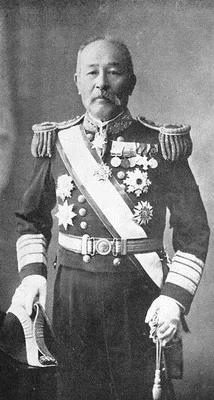
1900 YASUZUMI, Saneyoshi (1848 – 1932)
The surgical history of the naval war between Japan & China during 1894-95. Translated from the original Japanese report under the supervision of Baron Y. Saneyoshi by S. Suzuki.
Surgical history of the naval aspects of the First Sino-Japanese War. Digital facsimile from the Internet Archive at this link.
GMN 9421 · https://historyofmedicine.com/id/11604
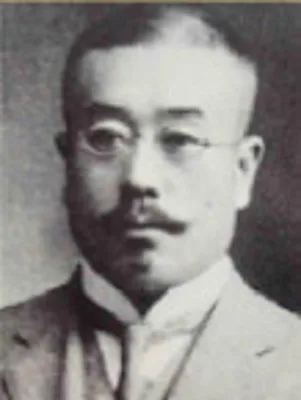
1904 KATSURADA, Fujiro (1867 – 1946)
The aetiology of a parasitic disease (in Japanese)
First description of Schistosoma japonicum. Translation in Kean (No. 2368.1), p. 518.
GMN 5349.1 · https://historyofmedicine.com/id/6829
1907 FUJINAMI, Akira (1870 – 1934); NAKAMURA, Hachitaro
Ueber den Wohnort von Schistosomum japonicum. [Japanese text.]
Fujinami and Nakamura identified the intermediate host of S. japonicum. Abstract in Arch. Schiffs-u. Tropenhyg., 1908, 12,471. Later (1909, 6, 224-52) they demonstrated that infection occurred by skin penetration. Eng…
GMN 5350.1 · https://historyofmedicine.com/id/6841
1907 MATIGNON, Jean-Jacques (1866 – 1928)
Enseignements médicaux de la Guerre Russo-Japonaise. Avec cartes, plans, croquis, schémas et photographies de l'auteur.
Digital facsimile from Google Books at this link.
GMN 12815 · https://historyofmedicine.com/id/15061
1909 INOUYE, Tatsuji (1880 – 1976)
Die Sehstörungen bei Schussverletzungen der kortikalen Sehsphäre, nach Beobachtungen an Verwundeten der letzten japanischen Kriege.
During and after Japan’s war with Russia (1904-1905 ) Inouye tested the visual fields in wounded soldiers for insurance purposes, and set out his observations in this work. English translation: Glickstein, M. & Fahle,…
GMN 7397 · https://historyofmedicine.com/id/9569
1909 MACPHERSON, William Grant (1958 – 1927)
The Russo-Japanese war: Medical and sanitary reports from officers attached to the Japanese and Russian forces in the field, General staff, War office, April 1908.
Digital facsimile from the Internet Archive at this link.
GMN 9444 · https://historyofmedicine.com/id/11627
1911 FUJIKAWA, Yū (1865 – 1940)
Geschichte der Medizin in Japan.
History of Japanese medicine from the earliest times to 1911. Expanded English translation, translated from the German by John Ruhrah, with a chapter on the recent history of medicine in Japan, by Kageyas W. Amano. Ne…
GMN 6604.1 · https://historyofmedicine.com/id/8530
1912 HATA, Sahachiro (1873 – 1938)
Salvarsantherapie der Rattenbisskrankheit in Japan.
Salvarsan first used in the treatment of rat-bite fever.
GMN 5324 · https://historyofmedicine.com/id/6624
1914 MIYAIRI, Keinosuke (1865 – 1946); SUZUKI, Masatsugu
Der Zwischenwirt des Schistosomum japonicum Katsurada.
Miyairi and Suzuki confirmed that snails are the intermediate hosts of S. japonicum, and their paper completed the description of the life cycle from ova to snail intermediate host. Translation in Kean (No. 2268.1), p…
GMN 5350.2 · https://historyofmedicine.com/id/6847
1919 MITSUDA, Kensuke (1876 – 1964)
On the value of a skin reaction to a suspension of leprous nodules.
Mitsuda (lepromin) reaction. English translation by the author in Int. J. Leprosy, 1953, 21, 347-58.
GMN 2440 · https://historyofmedicine.com/id/2914
1921 NAKAGAWA, Koan (1874 – 1959)
On the life cycle of Fasciolopsis buski Lankester.
GMN 5350.7 · https://historyofmedicine.com/id/6872
1923 DOHI, Keizo (1866 – 1931)
Beiträge zur Geschichte der Syphilis: insbesondere über ihren Ursprung und ihre Pathologie in Ostasien.
Gives, in an appendix, a list of writers on syphilis from 1495 to 1829. Digital facsimile from wellcomecollection.org at this link.
GMN 2426 · https://historyofmedicine.com/id/2884
1928 KANEKO, Renjiro (1886 – ); AOKI, Y
Ueber die Encephalitis epidemica in Japan.
Japanese encephalitis distinguished from encephalitis lethargica.
GMN 4654 · https://historyofmedicine.com/id/760
1928 ADACHI, Buntarō (1865 – 1945); HASEBE, Kotondo (1882 – 1969)
Das Arteriensystem der Japaner von Dr. Buntaro Adachi unter Mitwirkung von Dr. Kotondo Hasebe ... mit 539 Abbildungen im Text und auf vier farbigen Tafeln sowie mit etwa 700 Tabellen.
GMN 9516 · https://historyofmedicine.com/id/11701
1930 OHARA, Hachiro
Ueber Identität von “Yato-Byo” (Ohara’s disease) und “Tularämie”, sowie ihren Erreger.
In Japan tularemia is known as “Ohara’s disease”.
GMN 5177 · https://historyofmedicine.com/id/6284
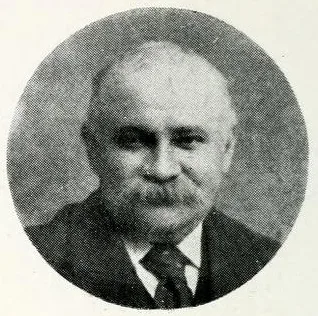
1930 BÄLZ, Erwin (1849 – 1914); BÄLZ, Erwin Toku (1889 – )
Erwin Bälz: Das Leben eines deutschen Arztes im erwachenden Japan. Tagebücher, Briefe, Berichte hrsg. von Toku Bälz.
Bälz was personal physician to the Japanese Imperial Family and cofounder of modern western medicine in Japan. "Bälz taught more than 800 students in Western medicine during his tenure at the Tokyo Imperial University…
GMN 9846 · https://historyofmedicine.com/id/12034
1934 HAYASHI, Michitomo
Übertragung des Virus von Encephalitis epidemica auf Affen.
Experimental transmission of Japanese B encephalitis.
GMN 4657 · https://historyofmedicine.com/id/767
1936 TANIGUCHI, Tenji (1889 – 1961); ET AL
A virus isolated in 1935 epidemic of summer encephalitis in Japan.
T. Taniguchi, M. Hosokawa, and S. Kuga established a virus etiology for Japanese B encephalitis.
GMN 4659 · https://historyofmedicine.com/id/774
1952 FOLLEY, J. H.; BORGES, T.; YAMASAKI, T.
Incidence of leukemia in survivors of the atom bomb in Hiroshima and Nagasaki, Japan.
Leukemia was the first cancer to be linked with radiation exposure in atomic bomb survivors.
GMN 7764 · https://historyofmedicine.com/id/9936
1953 KUROYA, Masahiko (1921 – 1976)
Newborn virus pneumonitis (type Sendai). II. The isolation of a new virus possessing hemagglutinin activity.
M. Kuroya, N. Ishida, and T. Shiratori isolated the first recognized Sendai (para-influenza) virus.
GMN 3215.3 · https://historyofmedicine.com/id/4374
1967 KAWASAKI, Tomisaku (1925 – )
In Japanese: [Acute febrile mucocutaneous syndrome with lymphoid involvement with specific desquamation of the fingers and toes in children.]
Kawasaki first reported this disease in 1961 in a four-year-old child with a rash and fever at the Red Cross Hospital in Tokyo; by the time he wrote this paper he had seen 50 cases. The mysterious novel illness was ev…
GMN 12716 · https://historyofmedicine.com/id/14962
1968 MAKI, Hiroshi; ISHIMARU, Toranosuke; KATO, Hiroo; WAKABAYASHI, Toshiro
Carcinogenesis in atomic bomb survivors. Technical report 24-68. Atomic Bomb Casuality Commission.
Published 23 years after the atomic bombs dropped on Hiroshima and Nagasaki, allowing for carcinogenesis after the latency period. Digital facsimile available from the Radiation Effects Research Foundation at this link.
GMN 7789 · https://historyofmedicine.com/id/9961
1970 BOWERS, John Zimmerman (1913 – 1993)
Western medical pioneers in feudal Japan.
Covers the influence of Western medicine on Japan from the seventeenth century through 1870.
GMN 6604.2 · https://historyofmedicine.com/id/8531
1972 HAMARNEH, Sami Khalaf (1925 – 2010)
Temples of the muses and a history of pharmacy museums.
Prepared for the opening in June 1971 of the Naito Museum of Pharmaceutical Science and Industry in Japan, and emphasizing that museum and museums in the Middle East.
GMN 13714 · https://historyofmedicine.com/id/15998
1974 HUARD, Pierre Alphonse (1901 – 1983); WONG, Ming (1926 – 1989)
La médecine japonaise des origines à nos jours.
With Z. Ohya.
GMN 6604.3 · https://historyofmedicine.com/id/8532
1974 KAWASAKI, Tomisaku (1925 – ); KOSAKI, Fumio; OKAWA, Sumio; ET AL
A new infantile acute febrile mucocutaneous lymph node syndrome (MLNS) prevailing in Japan.
The first report on Kawasaki Disease in English. By 1973, 6,000 cases of Kawasaki disease were reported in Japan. (Thanks to Juan Weiss for this reference and its interpretation.)
GMN 12717 · https://historyofmedicine.com/id/14963
1974 KOBAYASHI, Noboru (1927 – 2019); MATSUYA, Shoji; YANAGISAWA, Masayoshi
Myocardial infarction due to coronary thromboarteritis following acute febrile mucocutaneous lymph node syndrome (MLNS) in an infant.
The authors reported the case of a 6 month old baby who died from a myocardiac infarction after "recovering" from Kawasaki disease. Autopsy showed that the baby died from classical coronary artery thrombosis accompani…
GMN 12718 · https://historyofmedicine.com/id/14964
1980 NAKAHARA, Sen; ET AL
Manners and customs of dentistry in Ukiyoe
Reproduces all the classic Japanese prints that concern the teeth or dentistry. By Nakahara, Yoshihisa Shindo, and Kuninori Homma.
GMN 3705.2 · https://historyofmedicine.com/id/4446
1980 BOWERS, John Zimmerman (1913 – 1993)
When the twain meet. The rise of western medicine in Japan.
Suppl. to Bull. Hist. Med., new ser., 5.
GMN 6604.31 · https://historyofmedicine.com/id/8533
1991 VERBURGT, J. W.
Four Dutch pharmacists in Japan 1869-1885.
GMN 7514 · https://historyofmedicine.com/id/9686
1991 BEUKERS, Harm; LUYENDIJK-ELSHOUT, A. M.
Red-hair medicine: Dutch-Japanese medical relations.
A collection of essays by various scholars. Editors also included M.E. van Opstall and F. Vos.
GMN 7516 · https://historyofmedicine.com/id/9688
1995 SCHULL, William Jackson (1922 – 2017)
Effects of atomic radiation: A half-century of studies from Hiroshima and Nagasaki.
GMN 7787 · https://historyofmedicine.com/id/9959
1998 COWDREY, Albert E.; CONDON-RALL, Mary Ellen (1938 – )
The Medical Department: Medical service in the war against Japan. United States Army in World War II: The technical services.
GMN 8018 · https://historyofmedicine.com/id/10194
2001 ROLAND, Charles Gordon (1933 – 2009)
Long night's journey into day: Prisoners of war in Hong Kong and Japan, 1941-1945.
GMN 7840 · https://historyofmedicine.com/id/10012
2004 MISHIMA, Saichi; ET AL
The history of ophthalmology in Japan.
GMN 13657 · https://historyofmedicine.com/id/15938
2011 WALKER, Brett L. (1967 – )
Toxic archipelago: A history of industrial disease in Japan.
GMN 9710 · https://historyofmedicine.com/id/11897
2011 UMEMURA, Maki
The Japanese pharmaceutical industry: Its evolution and current challenges.
GMN 11469 · https://historyofmedicine.com/id/13668
2014 KIM, Hoi-Eun (1976 – )
Doctors of empire: Medical and cultural encounters between Imperial Germany and Meiji Japan
GMN 12296 · https://historyofmedicine.com/id/14518
2015 AKIRA, Hayami (1929 – )
The influenza pandemic in Japan, 1918-1920: The first world war between humankind and a virus. Translation by Lynne E. Riggs and Takechi Manbu.
GMN 11923 · https://historyofmedicine.com/id/14128
2018 TERAZAWA, Yuki
Knowledge, power, and women's reproductive health in Japan, 1690–1945.
GMN 10645 · https://historyofmedicine.com/id/12838