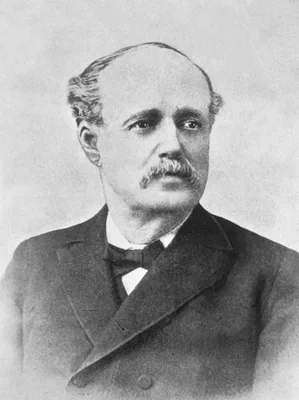
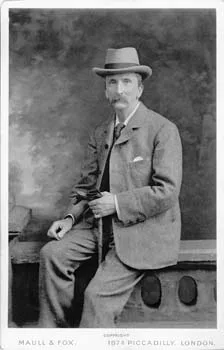
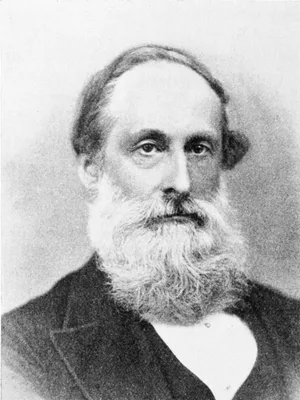
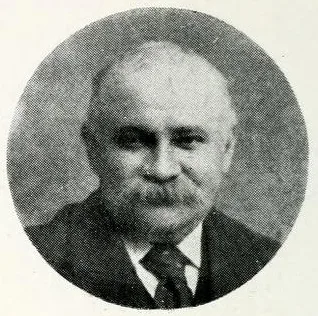
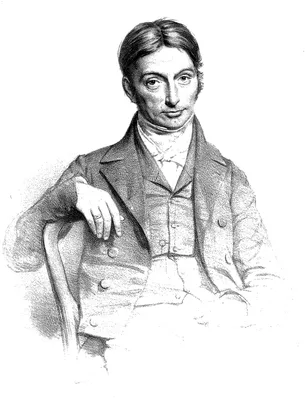
1884 RAUCH, John Henry (1828 – 1894)
Medical education and the regulation of the practice of medicine in the United States and Canada. prepared by the Illinois State Board of Health, and published by permission of the board.
Rauch, Secretary of the Illinois State Board of Health, was responsible for compiling and publishing this detailed report. It was the most important and comprehensive summary of American, and Canadian medical educatio…
GMN 10114 · https://historyofmedicine.com/id/12303
1884 –1888 FRANCHET, Adrien René (1834 – 1900); DAVID, Jean Pierre Armand (1826 – 1900)
Plantae Davidianae ex Sinarum Imperio: Première partie: Plantes de Mongolie du Nord et du Centre de la Chine. Deuxieme Partie: Plantes du Thibet Oriental (Province de Moupine)
Catalogue of the very extensive collection of plants collected by the Lazarist missionary Father Armand David for the Musée d'Histoire Naturelle during his three major naturalist expeditions in China, Mongolia and Tib…
GMN 12947 · https://historyofmedicine.com/id/15194
1884 MURRAY, James A.
The vertebrate zoology of Sind. A systematic account, with descriptions of all the known species of mammals, birds, and reptiles inhabiting the province; observations on their habits, &c; tables of their geographical distribution in Persia, Belochistan, and Afghanistan; Punjab, North-west provinces, and the peninsula of India generally, with woodcuts, lithographs, and coloured illustrations.
GMN 13051 · https://historyofmedicine.com/id/15302
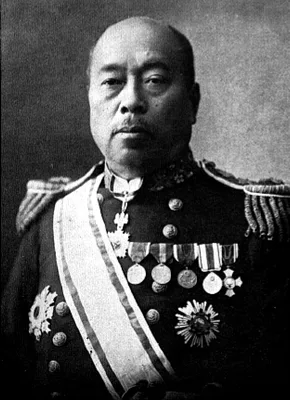
1885 KANEHIRO, Takaki (1849 – 1915)
On the cause and prevention of kakke.
Takaki was the first conclusively to show the dietary origin of beriberi. Measures introduced by him resulted in its eradication from the Japanese Navy, where it had previously been a serious problem.
GMN 3740 · https://historyofmedicine.com/id/4541
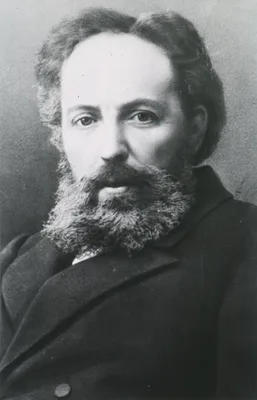
1885 –1887 FILATOV, Nil Feodorovich (1847 – 1902)
Lektsii ob ostrikh infektsionnîkh bolierznyakh u dietei. [Lectures on acute infectious diseases of children.] 2 vols.
Glandular fever (infectious mononucleosis) was first described by Filatov under the name of idiopathic adenitis (“Filatov’s disease”). A German translation of his book appeared in 1895-97.
GMN 5485 · https://historyofmedicine.com/id/6418
1885 CUNNINGHAM, David Douglas (1843 – 1914)
On the presence of peculiar parasitic organisms in the tissue of a specimen of Delhi boil.
Cunningham saw and described bodies in Delhi boil; these were almost certainly Leishman–Donovan bodies.
GMN 5293 · https://historyofmedicine.com/id/6419
1885 TUKE, Daniel Hack (1827 – 1895)
The insane in the United States and Canada.
The first history of psychiatry in the United States and Canada. Chapter 5 is the first survey of psychiatry in Canada.
GMN 5003.1 · https://historyofmedicine.com/id/6563
1885 WHITNEY, Willis Norton (1855 – 1918)
Notes on the history of medical progress in Japan.
From Trans. Asiatic Soc. Japan, 1885, 12, 245-469. Digital facsimile from the Internet Archive at this link.
GMN 6604 · https://historyofmedicine.com/id/8529
1885 SMITH, Andrew (1828 – 1898)
A contribution to South African materia medica, chiefly from plants in use among the natives.
The first edition was a pamphlet of 23 pp. Smith issued a much-expanded second edition with 163 pp., also at Lovedale in 1888, and a further expanded third edition with 262 pp. (Cape Town, 1895). Digital facsimile of …
GMN 9500 · https://historyofmedicine.com/id/11685
1885 MATHEWS, Percy W.
Notes on diseases among the Indians frequenting York Factory, Hudson's Bay. Read before the Medico-Chirurgical Society of Montreal, February, 1885.
Mathews was a surgeon employed by the Hudson's Bay Company. "York Factory was a settlement and Hudson's Bay Company (HBC) factory (trading post) located on the southwestern shore of Hudson Bay in northeastern Manitoba…
GMN 10192 · https://historyofmedicine.com/id/12381
1885 PENNA, José (1855 – 1919)
La viruela en la América del Sud y principalmente en la República Argentina: Historia, estadística, clínica, y profilaxia.
Digital facsimile from wellcomecollection.org at this link.
GMN 13805 · https://historyofmedicine.com/id/16093
1886 KARTULIS, Stephanos (1852 – 1920)
Zur Aetiologie der Dysenterie in Aegypten.
Kartulis discovered amoebae in liver abscess. It was principally through the work of Kartulis that amoebae came to be considered the cause of dysentery in man.
GMN 5186 · https://historyofmedicine.com/id/6327
1886 SOUTH, John Flint (1797 – 1882); POWER, Sir D’Arcy (1855 – 1941)
Memorials of the craft of surgery in England. From materials compiled by John Flint South. Edited by D'Arcy Power.
South, trained in Germany, became surgeon to St. Thomas’s Hospital. Through his efforts John Hunter’s body was reburied in Westminster Abbey and South himself wrote the inscription on the tablet there. Digital facsimi…
GMN 5797 · https://historyofmedicine.com/id/6886
1886 –1888 FLORES Y TRONCOSO, Francisco De Asís (1852 – 1931)
Historia de la medicina en México desde la epoca de los Indios hasta la presente. 3 vols.
Digital facsimile from the Internet Archive at this link.
GMN 6597 · https://historyofmedicine.com/id/8513
1886 –1890 MANSUROV, Nikolai Porfir'evich (1834 – 1892)
Klinicheskii sbornik po dermatologii i sifilologii. 4 vols.
Mansurov was the first dermatologist in Russia, and one of the first physicians to use photography systematically in medical illustration. This was a periodical, illustrated with original photographs, of which Manusro…
GMN 7744 · https://historyofmedicine.com/id/9916
1886 LÉON CALDÉRON, Nicolas (1859 – 1929)
Apuntes para la historia de la medicina en Michoacán desde los tiempos Pre-Colombianos hasta el año 1875.
GMN 8848 · https://historyofmedicine.com/id/11026
1886 SAVTSCHENKO, Peter Nikolaevich (SAVCHENKO) (1846 – 1885)
Atlas des poissons vénéneux et descriptions des ravages produits par eux sur l'organisme humain, et des contre-poisons à employer. Atlas iadovitykh ryb s opisaniem vida ikh, deistviia iada na organizm cheloveka i ukazaniem protivuiadii.
The first well-illustrated medical military manual on toxic marine organisms. Text in French and Russian.
GMN 9665 · https://historyofmedicine.com/id/11852
1886 BELL, Robert (1847 – 1917)
The "medicine-man"; or, Indian and Eskimo notions of medicine. Reprinted from the "Canada Medical and Surgical Journal" for March and April, 1886.
Digital facsimile from the Internet Archive at this link.
GMN 10191 · https://historyofmedicine.com/id/12380
1886 WITHINGTON, Charles Francis (1852 – 1917)
The relation of hospitals to medical education.
Withington, pp. 18-22, proposed Bills of Rights for subjects of experiments "to secure patients again any injustice from the votaries of science." Digital facsimile from the Internet Archive at this link.
GMN 10350 · https://historyofmedicine.com/id/12542
1886 MURRAY, James A.
The reptiles of Sind: A systematic account, with descriptions of all the species inhabiting the province, and a table of their geographical distribution in Persia, Bloochistan, Afghanistan, Punjab, Northwest Provinces, and the Peninsula of India generally, with woodcuts, lithographs, and colored illustrations.
A re-issue with additions to date, of "Reptilian fauna" in the author's Vertebrate zoology of Sind. Digital facsimile from the Hathi Trust at this link.
GMN 13052 · https://historyofmedicine.com/id/15303
1887 QUATREFAGES DE BRÉAU, Jean Louis Armand de (1810 – 1892)
Les pygmées.
De Quatrefages showed that pygmies are descended from ancient races and are not, as was believed by many, a retrograde or degenerate type of negro of comparatively recent growth. English translation by Frederick Starr…
GMN 182 · https://historyofmedicine.com/id/3364
1887 BRUCE, Sir David (1855 – 1931)
Note on the discovery of a micro-organism in Malta fever.
Malta fever was shown by Bruce to be due to Micrococcus (Brucella) melitensis. The disease was later named Brucellosis.
GMN 5098 · https://historyofmedicine.com/id/6020
1887 FILATOV, Nil Feodorovich (1847 – 1902)
Lektsii ob ostrikh infektsionnîkh bolieznyakh u dietei. [Lectures on acute infectious diseases of children.] Vol. 2
On p. 113 is Filatov’s account of a form of rubella with a scarlatiniform rash. To this he gave the name “rubeola scarlatinosa”. (See also No. 5505.)
GMN 5503 · https://historyofmedicine.com/id/6476
1887 MILLSPAUGH, Charles Frederick (1854 – 1923)
American medicinal plants; an illustrated and descriptive guide to the American plants used as homoeopathic remedies: Their history, preparation, chemistry and physiological effects. Illustrated by the author.
Plates printed by chromolithography. Digital facsimile from the Internet Archive at this link.
GMN 8716 · https://historyofmedicine.com/id/10894
1887 LÉON CALDÉRON, Nicolas (1859 – 1929)
Apuntes par la historia de la medicina, cirurgía y obstetricia, en Michoacán desde los tiempos pre-Colombianos, hasta et año 1875.
GMN 8849 · https://historyofmedicine.com/id/11027
1887 BALFOUR, Edward Green (1813 – 1889)
The agricultural pests of India, and of eastern and southern Asia, vegetable and animal, injurious to man and his products.
Digital facsimile from the Internet Archive at this link.
GMN 11756 · https://historyofmedicine.com/id/13956
1887 –1890 MURRAY, James A.
The avifauna of British India and its dependencies. A systematic account, with descriptions of all the known species of birds inhabiting British India, observations on their habits, nidification, &c., tables of their geographical distribution in Persia, Beloochistan, Afghanistan, Sind, Punjab, N.W. Provinces, and the peninsula of India generally, with woodcuts, lithographs, and coloured illustrations. 2 vols.
Digital facsimile from Biodiversity Heritage Library at this link.
GMN 13053 · https://historyofmedicine.com/id/15304
1888 NOCARD, Edmond Isidore Etienne (1850 – 1903)
Note sur la maladie des boeufs de la Guadeloupe, connue sous le nom de farcin.
The first pathogenic aerobic actinomycete to be described. It was later named Nocardia farcinica and is probably identical with N. asteroides.
GMN 5512.1 · https://historyofmedicine.com/id/6515
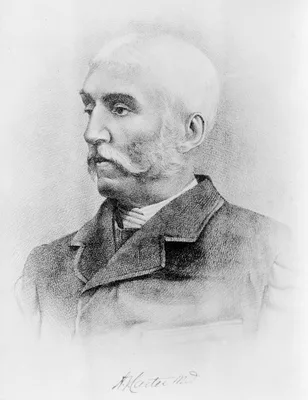
1888 CARTER, Henry Vandyke (1831 – 1897)
Note on the occurrence of a minute blood-spirillum in an Indian rat.
Demonstration of Spirillum minus, later shown to be a cause of rat-bite fever. (See also No. 5327).
GMN 5323 · https://historyofmedicine.com/id/6621
1888 RIVINGTON, Walter (1835 – 1897)
The medical profession in the United Kingdom.
(1200pp.) This is the greatly expanded edition of the book first published with the same title nine years earlier. "His most important and voluminous writings were the two Carmichael Prize essays of the Royal College …
GMN 8746 · https://historyofmedicine.com/id/10924
1888 ANDREWS, Edward Wyllys (1856 – 1927); ANDREWS, Edmund (1824 – 1904)
Rectal and anal surgery, with a description of the secret methods of the itinerants.
The authors were father and son. An unusual feature of this work was its critical analysis of the methods used by itinerant or untrained practitioners. Digital facsimile from the Hathi Trust at this link.
GMN 9533 · https://historyofmedicine.com/id/11719
1888 KUHN, Georges Paul Emile
L'Enseignement et l'organisation de l'art dentaire aux États-Unis. Rapport adresse à Monsieur le Ministre de l'Instruction publique.
The first study of the American dental profession, and the system of teaching dentistry in the United States.
GMN 13173 · https://historyofmedicine.com/id/15433
1888 CARRIER, Henriette
Origines de La Maternité de Paris: Les maitresses sage-femmes et l'office des accouchées de l'ancien Hotel-Dieu (1378-1796).
Digital facsimile from Google Books at this link.
GMN 13468 · https://historyofmedicine.com/id/15742
1888 PERY, G.
Histoire de la Faculté de Médecine de Bordeaux et de l'enseignement médical dans cette ville 1441-1888.
Digital facsimile from Google Books at this link.
GMN 13617 · https://historyofmedicine.com/id/15897
1889 DAVID, Théophile-Timothée (1851 – 1892)
Bibliographie français de l’art dentaire.
Concerns the French literature of dentistry.
GMN 3694.1 · https://historyofmedicine.com/id/5748
1889 MAIDEN, Joseph Henry (1859 – 1925)
The useful native plants of Australia. (Including Tasmania).
Maiden, a botanist, was Curator and Secretary of The Technological, Industrial, and Sanitary Museum of New South Wales. Chapters include. 1. Human Food and Food adjuncts; 2. Forage Plants; 3. Drugs; 4. Gums, Resins, a…
GMN 13509 · https://historyofmedicine.com/id/15784
1890 MOSSO, Angelo (1846 – 1910)
Les lois de la fatigue étudiées dans les muscles de l’homme.
Mosso invented the ergograph from the study of voluntary contraction. The description of the instrument is on pages 124-41 of the above article.
GMN 636 · https://historyofmedicine.com/id/516
1890 SIMON, Sir John (1816 – 1904)
English sanitary institutions, reviewed in their course of development, and in some of their political and social relations.
Simon "viewed the state as provider of the basic conditions needed for subsistence (without interfering in the iron law of wages) through sanitary reform of the environment, prevention of epidemic diseases, and the re…
GMN 1650 · https://historyofmedicine.com/id/2163
1890 YOUNG, Sidney (1843 – )
The annals of the Barber-Surgeons of London, compiled from their records and other sources
Digital facsimile from the Internet Archive at this link.
GMN 5798 · https://historyofmedicine.com/id/6888
1890 GUY DE CHAULIAC, (Guido de Cauliaco) (1298 – 1368); NICAISE, Édouard (1838 – 1896)
La grande chirurgie de Guy de Chauliac...composée en l'an 1363, revue et collationnée sur les manuscrits et imprimes Latins et Français, ornée de gravures avec des notes, une introduction sur le moyen age, sur la vie et les oeuvres de Guy de Chauliac, un glossaire et une table alphabétique by E. Nicaise.
The standard edition in French includes a very extensive bibliography of both manuscript and printed versions. English translation of sections on wounds and fractures, Chicago, 1923.
GMN 6999 · https://historyofmedicine.com/id/9165
1890 BÜTTIKOFER, Johann (1850 – 1928)
Reisebilder aus Liberia: Resultate geographischer, naturwissenschaftlicher und ethnographischer untersuchungen während der jahre 1879-1882 und 1886-1887. 2 vols.
The first comprehensive monograph on the Republic of Liberia, published 50 years after its colonization by freed American slaves and their descendents. Digital facsimile from the Internet Archive at this link. Transla…
GMN 8287 · https://historyofmedicine.com/id/10463
1890 HILLIER, Alfred Peter (1858 – 1911)
The antiquity of man in South Africa, and evolution.
The first separately published work on human origins published in the continent of Africa. Hillier's text was read on his behalf before the Eastern Province Literary and Scientific Society in Grahamstown, Eastern Cape…
GMN 11449 · https://historyofmedicine.com/id/13648
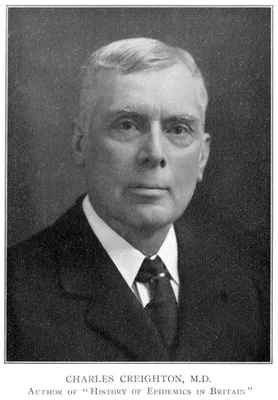
1891 –1894 CREIGHTON, Charles (1847 – 1927)
A history of epidemics in Britain. Vol. 1: From A. D. 664 to the extinction of plague. Vol. 2: From the extinction of plague to the present time.
A classical contribution to modern epidemiology, of which Creighton may be said to have been the founder. Reprinted with new introductory material, 1965. Digital facsimile from the Internet Archive at this link.
GMN 1680 · https://historyofmedicine.com/id/2363
1891 NEPVEU, Gustav (1841 – 1903)
Étude sur les parasites du sang chez les paludiques.
Nepveu, whilst in Algeria, was the first to see trypanosomes in human blood.
GMN 5272 · https://historyofmedicine.com/id/8578
1891 ALTUKHOV, Nikolai
Entsefalometriya mozga cheloveka v otnoshenii k polu, vozrastu i cherepnomu ukazatelyu [in Cyrillic].
In 1889, nearly 20 years before Horsley and Clarke published their paper on the use of stereotaxy to examine the brain, Dmitrii Zernov, a professor of anatomy at Moscow University, invented the first prototype of a st…
GMN 7243 · https://historyofmedicine.com/id/9412
1892 POSADAS, Alejandro (1870 – 1902)
Un nuovo caso de micosis fungoides con psorospermias.
As an intern in Buenos Aires, Posadas described an Argentine soldier who had a dermatological problem since 1889. Posadas had seen the patient while a medical student in 1891, and skin biopsies revealed organisms rese…
GMN 5528.1 · https://historyofmedicine.com/id/6639
1892 WERNICKE, Roberto Johann (1854 – 1922)
Pentastomas.
Posadas (No. 5528.1) and Wernicke, a professor pathology in Buenos Aires, were the first to report cases of coccidioidomycosis. German translation of Wernicke’s paper in Zbl. Bakt., 1892, 12, 859-61.
GMN 5528.2 · https://historyofmedicine.com/id/6642
1892 BOURKE, John Gregory (1846 – 1896)
The medicine-men of the Apache.
Bourke, a U.S. Army officer with experience on the American Indian frontier, was a pioneer student of native American medicine and anthropology. Digital facsimile from the Internet Archive at this link.
GMN 6452.1 · https://historyofmedicine.com/id/7595
1892 FAIDHERBE, Alexandre Joseph (1867 – )
Les médecins et les chirurgiens de Flandre avant 1789.
Digital facsimile from BnF Gallica at this link.
GMN 6532 · https://historyofmedicine.com/id/8131
1892 COSTA, Carlos (1844 – )
Catalogo systematico da bibliotheca da Faculdade de Medicina do Rio de Janeiro organisado pelo Carlos Costa.
Digital facsimile from U.S. National Library of Medicine at this link.
GMN 13498 · https://historyofmedicine.com/id/15773