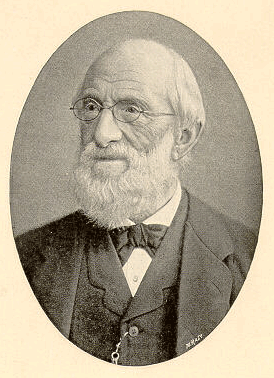
1893 HIRSCH, August (1817 – 1894)
Geschichte der medicinischen Wissenschaften in Deutschland.
Reprinted, Hildesheim, 1966.
GMN 6558 · https://historyofmedicine.com/id/8240
1893 MUSÉUM D'HISTOIRE NATURELLE
Centenaire de la fondation de Muséum d'Histoire Naturelle 10 juin 1793 - 10 juin 1893. Volume commemoratif publiée par les professeurs du muséum.
Digital facsimile from the Internet Archive at this link.
GMN 9540 · https://historyofmedicine.com/id/11726
1893 –1903 CATHCART, Charles Walker (1853 – 1932); SHENNAN, Theodore
Descriptive catalogue of the anatomical and pathological specimens in the museum of the Royal College of Surgeons of Edinburgh. 3 Vols. Vols. 1 & 2 by Charles W. Cathcart; Vol. 3 by Theodore Shennan. Vol. 1.- The skeleton and organs of motion.
Digital facsimile of vol. 1 from the Biodiversity Heritage Library at this link.
GMN 10367 · https://historyofmedicine.com/id/12559
1893 SAVILLE-KENT, William (1845 – 1908)
The Great Barrier Reef of Australia; Its products and potentialities, containing an account, with copious coloured and photographic illustrations (the latter here produced for the first time), of the corals and coral reefs, pearl and pearl-shell, bêche-de-mer, other fishing Industries, and the marine fauna of the Australian Great Barrier region.
Digital facsimile from Biodiversity Heritage LIbrary at this link.
GMN 11810 · https://historyofmedicine.com/id/14012
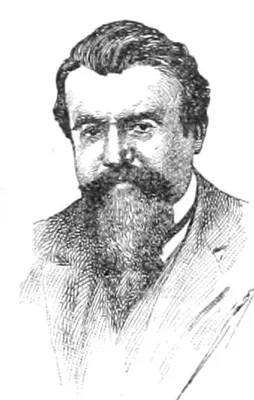
1894 DUBOIS, Marie Eugène François Thomas (1858 – 1940)
Pithecanthropus erectus. Eine menschenähnliche Uebergangsform aus Java.
Privately issued first report on Homo erectus. In 1891 Dubois discovered remains of what he described as "a species in between humans and apes" at Trinil, Java. He called his finds Pithecanthropus erectus ("ape-human …
GMN 210 · https://historyofmedicine.com/id/3848
1894 KORÁNYI DE TOLCSVA, Baron Sandor (1866 – 1944)
A vizelet fagypontjának diagnostikus érteke. [The diagnostic value of the freezing point of urine.]
Korányi established cryoscopy of the urine as a kidney function test. See also his later papers in Z. klin. Med., 1897, 33, 1-54; 1898, 34, 1-52. Previously H. Dreser had made experiments on this subject; for these se…
GMN 4226 · https://historyofmedicine.com/id/5052
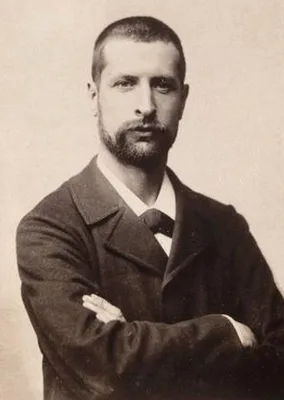
1894 YERSIN, Alexandre Émile Jean (1863 – 1943)
La peste bubonique à Hong-Kong.
Yersin discovered the plague bacillus Pasteurella (Yersinia) pestis, isolating it from excised buboes. He published the first account of this organism. Preliminary note in C. R. Acad. Sci. (Paris), 1894, 119, 356.
GMN 5125 · https://historyofmedicine.com/id/6113
1894 CANNIFF, William (1830 – 1910)
The medical profession in Upper Canada, 1783-1850.
Rescues from oblivion many historical facts and discusses the pioneer medical men of Canada. Biographies of many famous physicians of Canada are included. Reprinted Toronto, 1980.
GMN 6582 · https://historyofmedicine.com/id/8490
1894 SOLAS OLANO, Eduardo
Historia de la medicina en Chile: Con importantes documentos sobre la medicina de nuestros predecesores.
Digital facsimile from the Internet Archive at this link.
GMN 13836 · https://historyofmedicine.com/id/16126
1895 BREDA, Achille (1850 – 1933)
Beitrag zum klinischen und bacteriologischen Studium der brasilianischen Framboesie oder “Boubas”.
“Breda’s disease” – Brazilian yaws. English translation New Sydenham Society, 1897.
GMN 5293.1 · https://historyofmedicine.com/id/6435
1895 ODRIOZOLA, Ernesto (1862 – 1921)
La erupción en la enfermedad de Carrión (verruga peruana).
“Carrion’s disease” (Oroya fever) was named by the Peruvian physician Ernesto Odriozola, after Daniel Alcides Carrión Garcia (1859-85), a student. In order to prove or disprove the connection between Oroya fever and v…
GMN 5530 · https://historyofmedicine.com/id/6655
1895 BRUCE, Sir David (1855 – 1931)
Preliminary report on the tsetse fly disease or nagana, in Zululand.
In 1895 Bruce found that nagana, the tsetse fly disease of Zululand, was due to a trypanosome (T. brucei). He described a hematozoon in the blood of the affected animals that had not been previously described. Digital…
GMN 5273 · https://historyofmedicine.com/id/8580
1895 LÉON, Nicholás (1859 – 1929)
Biblioteca botánico-mexicana: Catálogo bibliográfico, biográfico y crítico de autores y escritos referentes a vegetales de México y sus aplicaciones, desde la conquista hasta el presente.
Digital facsimile from Biodiversity Heritage Library at this link.
GMN 13839 · https://historyofmedicine.com/id/16129
1896 LOOSS, Arthur (1861 – 1923)
Notizen zur Helminthologie Aegyptens. Die Lebensgeschichte des Anchylostomum duodenale (Dub.).
Looss elucidated the life cycle and mode of transmission of the hookworm. See also No. 5365. English translation in Kean (No. 2268.1).
GMN 5361 · https://historyofmedicine.com/id/6968
1896 CONYERS, James Salters (1841 – 1896); DANIELS, Charles Wilberforce (1862 – 1927)
The lupoid form of the so-called “groin ulceration” of this colony.
Granuloma inguinale distinguished from other similar lesions in the genital region.
GMN 5205.1 · https://historyofmedicine.com/id/7797
1896 WATSON, Irving Allison (1849 – 1918)
Physicians and surgeons of America. (Illustrated.) A collection of biographical sketches of the regular medical profession.
Digital facsimile from Google Books at this link.
GMN 6719 · https://historyofmedicine.com/id/7832
1896 BHAGVAT SINH JEE, Maharajah of Gondal (Bhagavat Simhaji; Bhagvatsingh Sahib) (1865 – 1944)
A short history of Aryan medical science.
From the Wikipedia: "Bhagvatsingh Sahib GCSI GCIE was the ruling Maharaja of the princely state of Gondal from 1869 till his death in 1944, in whose reign the state was raised to 11-gun salute state.[1] He was the onl…
GMN 6486 · https://historyofmedicine.com/id/7979
1896 PITRÈ, Giuseppe (1842 – 1916)
Medicina popolare siciliana.
English translation, Lawrence, Kansas, Coronado Press, 1971.
GMN 6562 · https://historyofmedicine.com/id/8249
1896 HOLMES, Edward Morrell (1843 – 1930)
Catalogue of the medicinal plants in the Museum of the Pharmaceutical Society of Great Britain.
Digital facsimile from the Internet Archive at this link.
GMN 10382 · https://historyofmedicine.com/id/12574
1896 CUTLER, Harry Gardner (1856 – )
Medical and dental colleges of the west: Historical and biographical.
Covers institutions in Chicago and environs: Augustana Hospital, the College of Physicians and Surgeons, Hahnemann Medical College and Hospital, Mercy Hospital, Michael Reese Hospital, Northwestern University Medical …
GMN 10825 · https://historyofmedicine.com/id/13021
1896 BRUCE, Sir David (1855 – 1931)
Further report on the tsetse fly disease or nagana, in Zululand.
In this more-detailed follow-up to his "preliminary" paper of 1895 published in Durban, South Africa, Bruce provided definitive proof that the Trypanosoma was the cause of nagana, and the tsetse fly was the vector of …
GMN 11077 · https://historyofmedicine.com/id/13273
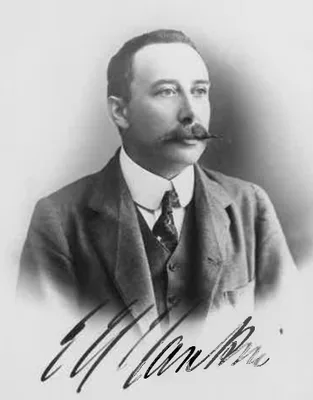
1896 HANKIN, Ernest Hanbury (1865 – 1939)
L'action bactericide des eaux de la Jumna et du Gange sur le vibrion du cholera.
Hankin described the antibacterial activity of a then-unknown source in the Ganges and Jumna Rivers in India. He noted that "It is seen that the unboiled water of the Ganges kills the cholera germ in less than 3 hours…
GMN 11380 · https://historyofmedicine.com/id/13579
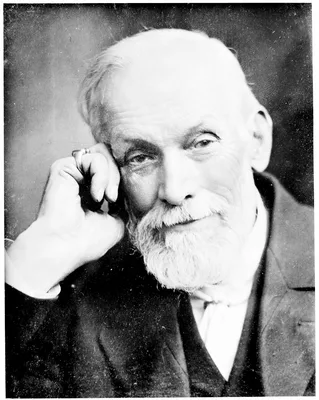
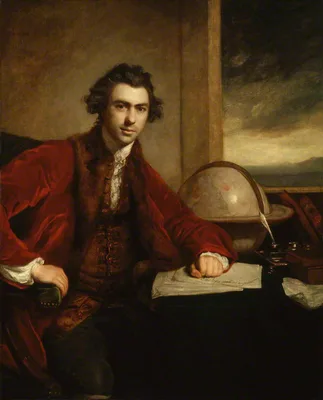
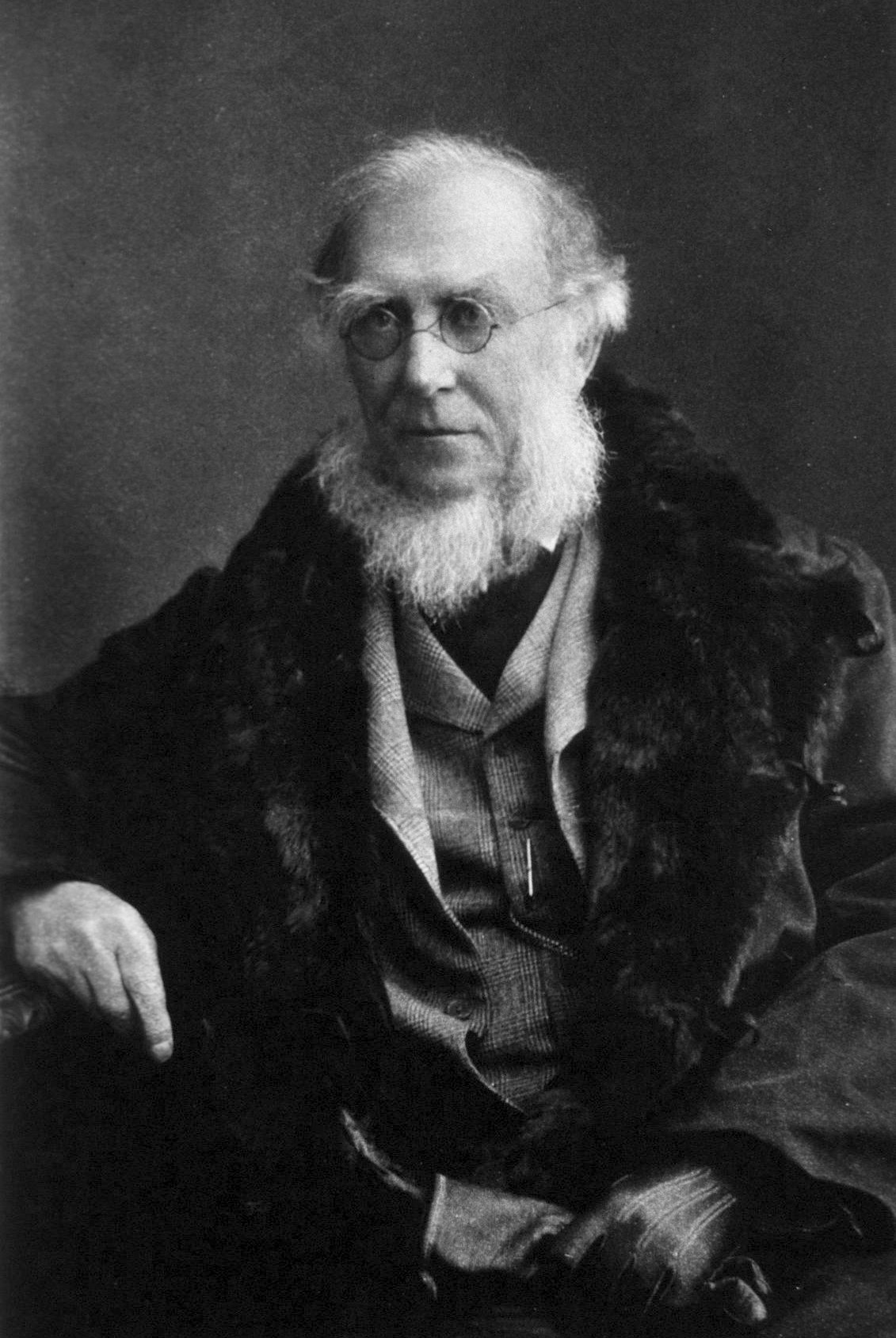
1896 BANKS, Sir Joseph (1743 – 1820); HOOKER, Sir Joseph Dalton (1817 – 1911)
Journal of the Right Hon. Sir Joseph Banks...during Captain Cook's first voyage in H.M.S. Edeavour in 1766-71 to Terra de Fuego, Otahite, New Zealand, Australia, the Dutch East Indies. Etc. Edited by Sir Joseph D. Hooker.
Digital facsimile from Biodiversity Heritage Library at this link.
GMN 12949 · https://historyofmedicine.com/id/15196
1896 CORLIEU, Auguste (1825 – 1907)
Centenaire de la faculté de médecine de Paris (1794-1894).
Digital facsimile from Google Books at this link.
GMN 14309 · https://historyofmedicine.com/id/16634
1897 HUGHES, Matthew Louis (1867 – 1899)
Mediterranean, Malta, or undulant fever.
An authoritative summary of current knowledge of Malta fever.
GMN 5100 · https://historyofmedicine.com/id/6025
1897 OGATA, Masanori (1852 – 1919)
Ueber die Pestepidemie in Formosa.
Ogata considered the flea (principally Xenopsylla cheopis) to be the principal, if not the sole, vector of bubonic plague infection.
GMN 5128 · https://historyofmedicine.com/id/6130
1898 KOCH, Robert Heinrich Hermann (1843 – 1910)
Reise-Bericht über Rinderpest, Bubonenpest in Indien und Afrika, Tsetse-oder Surrakrankheit, Texasfieber, tropische Malaria, Schwarzwasserfieber.
GMN 2457 · https://historyofmedicine.com/id/2986
1898 BOROVSKII, Petr Fokich (1863 – 1932)
On sart sore.
First description of the protozoon later named Leishmania tropica. The paper is in Russian; for a translation, see C. A. Hoare, in Trans. roy. Soc. trop. Med. Hyg., 1938, 32, 78-90.
GMN 5294 · https://historyofmedicine.com/id/6438
1898 TILLMANS, Robert Hermann (1844 – 1927)
Hundert Jahre Chirurgie.
History of 18th-century German surgery.
GMN 5801 · https://historyofmedicine.com/id/6896
1898 –1900 GHON, Anton (1866 – 1936); ALBRECHT, Heinrich; MÜLLER, Hermann Franz (1866 – 1898)
Über die Beulenpest in Bombay im Jahre 1897. Gesamtbericht von der Kaiserlichen Akademie der Wissenschaften in Wien zur Studium der Beulenpest nach Indien entsendeten Commission. 2 vols. in 3.
Müller died at the age of 32 as a result of exposure to this plague.
GMN 11394 · https://historyofmedicine.com/id/13593
1898 REYNAUD, Gustave-Adolphe (1855 – 1924)
Considérations sanitaires sur l'expédition de Madagascar et quelques autres expéditions coloniales, françaises et anglaises.
Digital facsimile from wellcomecollection.org at this link.
GMN 13857 · https://historyofmedicine.com/id/16147
1899 LEMOS, Maximiano Augusto d’Oliviera (1860 – 1923)
História da medicina em Portugal. 2 vols.
GMN 6577 · https://historyofmedicine.com/id/8291
1900 CARTER, Henry Rose (1852 – 1925)
A note on the interval between infecting and secondary cases of yellow fever from the records of yellow fever at Orwood and Taylor, Mississippi, in 1898.
Carter's determination of the incubation period yellow fever influenced the direction of Reed’s researches, and was instrumental in the discovery of the mode of transmission of the yellow fever virus.
GMN 5456 · https://historyofmedicine.com/id/7553
1900 REED, Walter (1851 – 1902); CARROLL, James (1854 – 1907); AGRAMONTE Y SIMONI, Aristides (1868 – 1931); LAZEAR, Jesse William (1866 – 1900)
The etiology of yellow fever. A preliminary note.
First definite proof that the organism causing yellow fever is transmitted to man by the mosquito Aëdes aegypti. During the period spent by these workers in the investigation of the disease in Cuba Lazear and Carroll …
GMN 5457 · https://historyofmedicine.com/id/7559
1900 GYÖRY, Tibor (1869 – 1938)
Bibliographia medica Hungariae, 1472-1899,
GMN 6766 · https://historyofmedicine.com/id/8241
1900 SEEBER, Guillermo Rodolfo (1876 – )
Un nuevo esporozoario parásito del hombre. Dos casos encontrados en pólipos nasales: Tesis presentada para optar al grado de doctor en medicina.
Rhinosporidiosis first described. Digital facsimile from bibliomedicinadigital.fmed.uba.ar at this link.
GMN 4131.1 · https://historyofmedicine.com/id/8628
1900 YASUZUMI, Saneyoshi (1848 – 1932)
The surgical history of the naval war between Japan & China during 1894-95. Translated from the original Japanese report under the supervision of Baron Y. Saneyoshi by S. Suzuki.
Surgical history of the naval aspects of the First Sino-Japanese War. Digital facsimile from the Internet Archive at this link.
GMN 9421 · https://historyofmedicine.com/id/11604
1900 MATIGNON, Jean-Jacques (1866 – 1928)
Superstition, crime et misère en Chine.
Pages 275-288 are titled "Note sur la médecine des Mongols." Digital facsimile from Google Books at this link.
GMN 12816 · https://historyofmedicine.com/id/15062
1900 DENTON, Sherman Foote (1856 – 1937)
As nature shows them. Moths and butterflies of the United States east of the Rocky Mountains. With over 400 photographic illustrations in the text and many transfers of species from life. 2 vols.
Includes 56 nature-printed and handcolored plates produced from impressions of the wings of the actual insects pressed onto the paper. Digital facsimile from Biodiversity Heritage Library at this link.
GMN 13204 · https://historyofmedicine.com/id/15465
1901 MORTIMER, William Golden (1854 – 1933)
Peru: The history of coca, “the divine plant of the Incas”.
The most comprehensive work on the coca plant and the history of its use by the Incas and their descendants. Reprinted, San Francisco, And/Or Press, 1974.
GMN 2040.1 · https://historyofmedicine.com/id/2212
1901 JOLLY, Julius (1849 – 1932)
Medicin. Grundriss der Indo-Arischen Philologie und Altertumskunde.(Encyclopedia of Indo-Aryan Research). III. Band, 10. Heft.
Digital facsimile from the Internet Archive at this link.
GMN 6486.1 · https://historyofmedicine.com/id/7981
1901 PARDO DE TAVERA, Trinidad Hermenegildo José Maria Francisco (1857 – 1925); THOMAS, Jerome B. Jr.
The medicinal plants of the Philippines. Translated and revised by Jerome B. Thomas, Jr.
Digital facsimile from the Internet Archive at this link.
GMN 8540 · https://historyofmedicine.com/id/10717
1901 REED, Walter (1851 – 1902)
The etiology of yellow fever: An additional note.
"The article describes a series of experiments conducted to explore how yellow fever is propagated from individual to individual and how the contagium is spread within households. The study was conducted in an experim…
GMN 9372 · https://historyofmedicine.com/id/11555
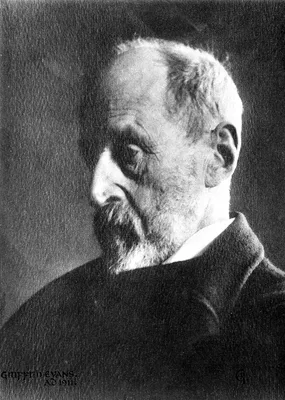
1901 EVANS, Griffith (1835 – 1935)
Elephants and their diseases: A treatise on elephants.
Digital facsimile of the 1910 edition from Biodiversity Heritage Library at this link.
GMN 10138 · https://historyofmedicine.com/id/12327
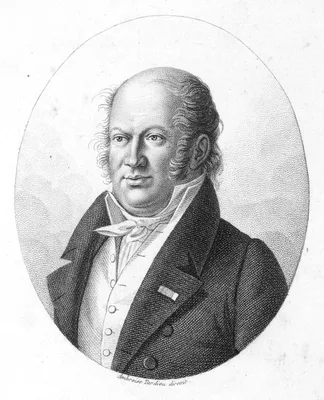
1901 GEOFFROY SAINT-HILAIRE, Étienne (1772 – 1844); HAMY, Ernest Théodore Jules (1842 – 1908)
Étienne Geoffroy Saint-Hilaire. Lettres écrites d'Égypte à Cuvier, Jussieu, Lacépède, Monge, Desgenettes, Redouté le Jeune, Norry, etc., aux professeurs du muséum et à sa famille. Receuillies et publiées avec un préface et des notes par le Dr. E.-T. Hamy.
Digital facsimile from BnF Gallica at this link.
GMN 12210 · https://historyofmedicine.com/id/14420
1902 BENTLEY, Charles Albert (1873 – 1949)
On the causal relationship between “ground itch”, or “pani-ghao”, and the presence of the larvae of the Ankylostoma duodenale in the soil.
While a medical officer in the tea plantations in Assam, India, Bentley demonstrated the mode of entry of Ankylostoma into the body.
GMN 5362.1 · https://historyofmedicine.com/id/6980
1902 OEFELE, Rudolf Klemens 'Felix' Freiherr von (1861 – 1955)
Keilschriftmedicin. Einleitendes zur Medicin der Kouyunjik-Collection.
Medicine preserved on cuneiform tablets, with a chronological account of discoveries in this field. Digital facsimile from the Internet Archive at this link.
GMN 6472 · https://historyofmedicine.com/id/7933
1902 FORDE, Robert Michael (1861 – 1948)
Some clinical notes on a European patient in whose blood a trypanosoma was observed.
In 1901 Forde saw (but did not at first recognize as such) trypanosomes in the blood of a patient in Gambia. (See No. 5275.)
GMN 5274 · https://historyofmedicine.com/id/8581
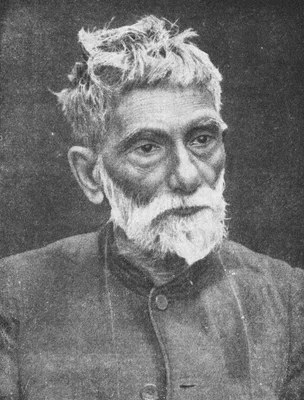
1902 –1909 RAY, Prafulla Chandra (1861 – 1944)
A history of Hindu chemistry from the earliest times to the middle of the sixteenth century, A.D. With Sanskrit texts, variants, translation and illustrations. 2 vols.
Digital facsimile of the 1903 revised 2nd ed. plus the 1st ed. of vol. 2 from the Internet Archive at this link.
GMN 10875 · https://historyofmedicine.com/id/13071
1902 ASTURIAS, Francisco
Historia de la medicina en Guatemala.
Digital facsimile from Google Books at this link. Second edition, 1958 with appendix listing physicians, surgeons and pharmacists who received degrees or taught at the University of Guatemala from1902 to 1953.
GMN 14071 · https://historyofmedicine.com/id/16382