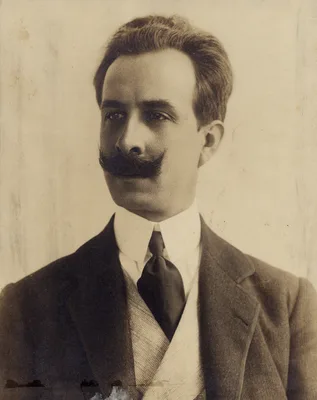
1903 BRUNNER, Conrad (1859 – 1927)
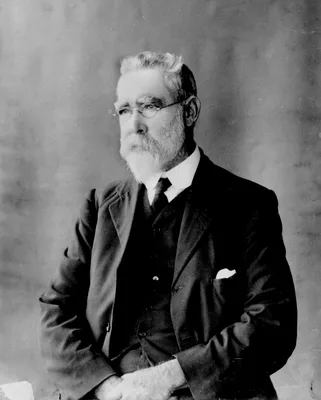
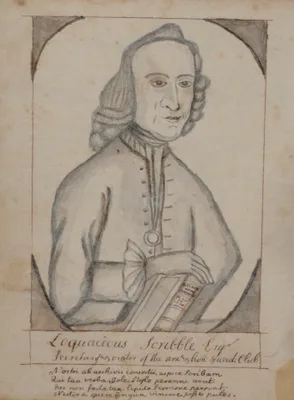
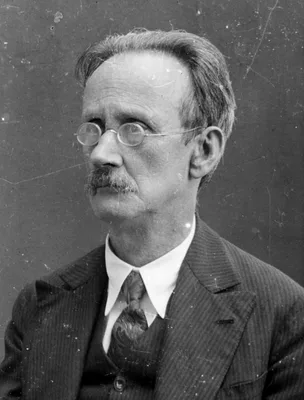
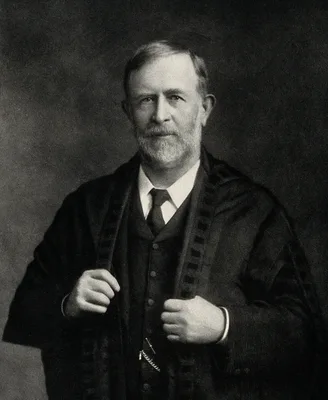
Die Verwundeten in den Kriegen der alten Eidgenossenschaft.
History of the care of the wounded during the Wars of the Swiss Confederation. Brunner shows that the Swiss were the first nation in Europe to organize state care of the wounded. Part 2 of the above work was published…
GMN 2183 · https://historyofmedicine.com/id/1291
1903 CASTELLANI, Aldo (1877 – 1971)
On the discovery of a species of trypanosoma in the cerebrospinal fluid of cases of sleeping sickness.
While in Uganda, Castellani discovered T. gambiense in human cerebrospinal fluid. A paper in Notes Rec. roy. Soc., 1973, 23, 93-110, discounts Castellani’s claim that although he first discovered trypanosomes in the c…
GMN 5276 · https://historyofmedicine.com/id/8585
1903 –1919 BRUCE, Sir David (1855 – 1931); NABARRO, David N.
Reports of the Sleeping Sickness Commission of the Royal Society, 1903-1912. 17 pts.
Bruce and D.N. Nabarro were sent to Africa by the Royal Society to study sleeping sickness, and in their report they showed that the tsetse fly was the vector of trypanosomiasis. They also found that Gambia fever and …
GMN 5277 · https://historyofmedicine.com/id/8587
1903 WRIGHT, James Homer (1871 – 1928)
Protozoa in a case of tropical ulcer (Delhi sore).
Wright found Leishmania tropica in Delhi sore. He was unaware of Borovskii’s paper (No. 5294).
GMN 5297 · https://historyofmedicine.com/id/8607
1903 DONOVAN, Charles (1863 – 1951)
On the possibility of the occurrence of typanosomiasis in India.
Leishimania donovani, independently discovered by two British medical officers William Boog Leishman in Netley, England, and Donovan in Madras, India, in 1903. However, the correct taxonomy was provided by Ronald Ross…
GMN 5296 · https://historyofmedicine.com/id/8972
1903 –1910 DOMÍNGUEZ, Juan Aníbal (1876 – 1946)
Datos par la materia médica Argentina. 2 vols. (Vol. 2: Trabajos de Instituto de Farmacología de la Facultad de Ciencias Médicas de Buenos Aires No. 25).
Digital facsimile from the Internet Archive at this link.
GMN 8543 · https://historyofmedicine.com/id/10720
1903 WILLIAMS, John Whitridge (1866 – 1931)
A sketch of the history of obstetrics in the United States up to 1860.
First published in Dohrn's Geschichte der Geburtshülfe der Neuzeit, zugleich als dritter Band des Versuchs einer Geschichte der Geburtshülfe, von Eduard von Siebold, Erste Abtheilung (Tübingen, 1903) 193-264. Digital …
GMN 10633 · https://historyofmedicine.com/id/12826
1903 GORGAS, William Crawford (1854 – 1920)
Notes on the treatment of yellow fever at Las Animas Hospital, the hospital of the Sanitary Department, during the epidemic of 1900 at Havana, Cuba.
In 1901 Gorgas was sent to Havana to undertake a special campaign against the yellow fever mosquito Aëdes aegypti. His methods of sanitation were so successful that in three months yellow fever was practically eradica…
GMN 13923 · https://historyofmedicine.com/id/16217
1904 ROST, Ernest Reinhold (1872 – )
The cultivation of the Bacillus leprae.
Rost cultivated the leprosy bacillus, and he prepared leprolin, formerly used in treating leprosy.
GMN 2438 · https://historyofmedicine.com/id/2909
1904 KATSURADA, Fujiro (1867 – 1946)
The aetiology of a parasitic disease (in Japanese)
First description of Schistosoma japonicum. Translation in Kean (No. 2368.1), p. 518.
GMN 5349.1 · https://historyofmedicine.com/id/6829
1904 PAYNE, Joseph Frank (1840 – 1910)
English medicine in the Anglo-Saxon times.
FitzPatrick Lectures, 1903.
GMN 6535 · https://historyofmedicine.com/id/8142
1904 –1924 CORDIER, Henri (1849 – 1925)
Bibliotheca Sinica: Dictionnaire bibliographique des ouvrages relatifs à l'empire Chinois. Deuxième édition, revue, corrigée et considérablement augmentée. 4 vols. (1904-1908), plus Supplement (1923-1945).
The "standard enumerative bibliography" of 70,000 works on China up to 1921, including the full titles, tables of contents, and annotations regarding many books. Cordier was able to achieve this despite having only mi…
GMN 12952 · https://historyofmedicine.com/id/15199
1904 AUDAIN, Léon (1862 – 1930)
Pathologie intertropicale. Doctrines et clinique.
Digital facsimile from BnF Gallaica at this link.
GMN 13362 · https://historyofmedicine.com/id/15633
1904 HIRSCHFELD, Magnus (1868 – 1935)
Berlins drittes Geschlecht.
"Third sex" was Hirschfeld's provisional term for gays and lesbians. Translated into English by James J. Conway as Berlin's third sex, Berlin: Rixdorf Editions, 2017.
GMN 13379 · https://historyofmedicine.com/id/15650
1905 KOROTKOV, Nikolai Sergeievich (1874 – 1920)
On methods of studying blood pressure.
Korotkov introduced the modern method of applying the stethoscope to the brachial artery during blood-pressure examination with Riva-Rocci’s sphygmomanometer, for the purpose of investigating the sounds made by the bl…
GMN 2818 · https://historyofmedicine.com/id/3498
1905 –1907
REPORTS of the Commission appointed by the Admiralty, the War Office, and the Civil Government of Malta, for the investigation of Mediterranean fever, under the supervision of an advisory committee of the Royal Society. 7 pts.
The important findings of the Mediterranean Fever Commission are summarized in Topley & Wilson’s Bacteriology,1975, p. 2173; probably the most valuable was that of T. Zammit, who showed goat’s milk to be the main sour…
GMN 5102 · https://historyofmedicine.com/id/6032
1905 DUTTON, Joseph Everett (1877 – 1905); TODD, John Lancelot (1876 – 1949)
The nature of tick fever in the eastern part of the Congo Free State.
Independently of Ross and Milne, Dutton and Todd demonstrated relapsing fever in monkeys conveyed by infected ticks, Omithodorus moubata. The organism was named Sp. (now Borrelia) duttoni. Both Dutton and Todd contrac…
GMN 5318 · https://historyofmedicine.com/id/6610
1905 –1911 LOOSS, Arthur (1861 – 1923)
The anatomy and life history of Agchylostoma duodenale Dub. A. monograph. 2 pts.
Vols. 3 and 4 of Records of the School of Medicine, Cairo. In 1898 Looss discovered that hookworm larvae can penetrate the skin. His monograph epitomized all knowledge of the condition to 1911.
GMN 5365 · https://historyofmedicine.com/id/6987
1905 –1922 CARØE, Kristian Frederik (1851 – 1921)
Den Danske Laegestand, 1749-1900. 5 vols.
Biographies of Danish physicians and surgeons. Supplements about every ten years.
GMN 6571 · https://historyofmedicine.com/id/8275
1905 KING, William Harvey (1861 – 1942)
History of homoeopathy and its institutions in America: Their founders, benefactors, faculties, officers, hospitals, alumni, etc., with a record of achievement of its representatives in the world of medicine .... 4 vols.
Digital facsimile from the Internet Archive at this link.
GMN 6868 · https://historyofmedicine.com/id/9032
1905 LAWRENCE, Charles (1837 – )
History of the Philadelphia almshouses and hospitals from the beginning of the eighteenth to the ending of the nineteenth centuries, covering a period of nearly two hundred years. showing the mode of distributing public relief through the management of the Boards of Overseers of the Poor, Guardians of the Poor and the Directors of the Department of Charities and Correction.
Digital facsimile from the Internet Archive at this link.
GMN 8689 · https://historyofmedicine.com/id/10866
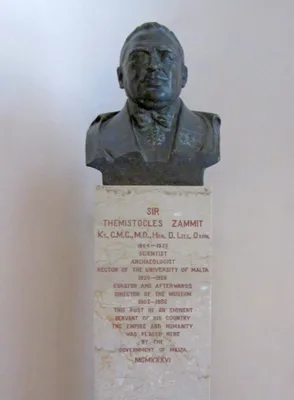
1905 ZAMMIT, Themistocles (1864 – 1935)
A preliminary note on the susceptibility of goats to Malta fever.
Zammit discovered that contaminated goat milk was the vector for transmission to humans of the Malta fever bacterium, Brucellosis melitensis. At the time goat milk was a primary source of milk in Malta and other parts…
GMN 10780 · https://historyofmedicine.com/id/12976
1906 GOTSCHLICH, Felix (1874 – 1914)
Über Cholera- und choleraähnliche Vibrionen unter den aus Mekka zurückkehrenden Pilgern.
Isolation of El Tor vibrio, a particular strain of the bacterium Vibrio cholerae. Gotschlich first identified this strain in 1905 at a quarantine camp on the Sinai Peninsula in El Tor, Egypt . The vibrios were found i…
GMN 5111.1 · https://historyofmedicine.com/id/6061
1906 RICKETTS, Howard Taylor (1871 – 1910)
The transmission of Rocky Mountain spotted fever by the bite of the wood-tick (Dermacentor occidentalis).
Ricketts (who himself died of typhus) demonstrated that the wood tick Dermacentor andersoni is a vector of Rocky Mountain spotted fever.
GMN 5378 · https://historyofmedicine.com/id/7054
1906 BANCROFT, Thomas Lane (1860 – 1933)
On the etiology of dengue fever.
Bancroft was the first to produce evidence that Aëdes aegypti is a vector of dengue.
GMN 5472 · https://historyofmedicine.com/id/7611
1906 WICKERSHEIMER, Charles Adolphe Ernest (1880 – 1965)
La médecine et les médecins en France à l’époque de la Renaissance.
Wickersheimer, librarian of University of Strasbourg, contributed several scholarly works on the history of medicine.
GMN 6554 · https://historyofmedicine.com/id/8230
1906 GAUTIER, Léon (1853 – 1916)
La médecine à Genève jusqu’à la fin du dix-huitième siècle.
GMN 6580 · https://historyofmedicine.com/id/8300
1906 GEORGIADÈS, Nicolas (1875 – )
La pharmacie en Egypte.
Digital facsimile from the Internet Archive at this link.
GMN 13137 · https://historyofmedicine.com/id/15395
1906 MARIADASSOU, Paramananda
Moeurs médicales de l'Inde et leurs rapports avec la médecine européenne.
Digital facsimile from wellcomecollection.org at this link.
GMN 13502 · https://historyofmedicine.com/id/15777
1907 FUJINAMI, Akira (1870 – 1934); NAKAMURA, Hachitaro
Ueber den Wohnort von Schistosomum japonicum. [Japanese text.]
Fujinami and Nakamura identified the intermediate host of S. japonicum. Abstract in Arch. Schiffs-u. Tropenhyg., 1908, 12,471. Later (1909, 6, 224-52) they demonstrated that infection occurred by skin penetration. Eng…
GMN 5350.1 · https://historyofmedicine.com/id/6841
1907 HOERNLÉ, Augustus Friedrich Rudolf (1841 – 1918)
Studies in the medicine of ancient India. Part 1. Osteology or the bones of the human body.
All published.
GMN 6487 · https://historyofmedicine.com/id/7983
1907 HAMILTON, Alexander (1712 – 1756)
Hamilton's Itinerarium; being a narrative of a journey from Annapolis, Maryland, through Delaware, Pennsylvania, New York, New Jersey, Connecticut, Rhode Island, Massachusetts and New Hampshire, from May to September, 1744, Edited by Albert Bushnell Hart.
Hamilton's Itinerarium was first issued by Albert Bushnell Hart in an edition privately printed by William K. Bixby, St. Louis, Missouri, 1907. It was republished as Gentleman's progress: the Itinerarium of Dr. Alexan…
GMN 7364 · https://historyofmedicine.com/id/9536
1907 HAM, Bertie Burnett (1865 – )
Plague in Queensland, 1900-1907.
Ham was Queensland's first Commissioner of Public Health. Extensively illustrated. Digital facsimile from the Internet Archive at this link.
GMN 12138 · https://historyofmedicine.com/id/14347
1907 MATIGNON, Jean-Jacques (1866 – 1928)
Enseignements médicaux de la Guerre Russo-Japonaise. Avec cartes, plans, croquis, schémas et photographies de l'auteur.
Digital facsimile from Google Books at this link.
GMN 12815 · https://historyofmedicine.com/id/15061
1907 CRAINICIANU, Gheorghe (1853 – )
Literatura medicală românească; biografii si bibliografie.
Covers the period 1700-1900. Digital facsimile from Google Books at this link.
GMN 13488 · https://historyofmedicine.com/id/15762
1908 IGNATOVSKI, Alexander I. (1875 – 1955)
[In Russian:] Changes in parenchymatous organs and in the aorta of rabbits under the influence of animal protein.
Experimental atherosclerosis produced by a cholesterol-rich diet of whole milk, egg yolks, and meat. French translation as" Influence de la nourriture animale sur l'organisme des lapins," Arch. Méd. exp. Anat. path.,1…
GMN 2913 · https://historyofmedicine.com/id/4886
1908 LUTZ, Adolfo (1855 – 1940)
Uma mycose pseudococcidica localisada na bocca e observada no Brazil. Contribuiçao ao conhocimento das hyphoblastomycoses americanas.
South American blastomycosis.
GMN 5532.1 · https://historyofmedicine.com/id/6677
1908 SPLENDORE, Alfonso (1871 – 1953)
Un nuovo protozoa parassito de’ conigli incontrato nelle lesioni anatomiche d’una malattia che ricorda in molti punti il kala azar dell’uomo.
Splendore discovered Toxoplasma in a rabbit; it was named T. cuniculi.
GMN 5534.1 · https://historyofmedicine.com/id/6689
1908 HUBBELL, Alvin Allace (1846 – 1911)
The development of ophthalmology in America, 1800 to 1870.
Of limited value, but the only available history of early American ophthalmology.
GMN 6002 · https://historyofmedicine.com/id/7138
1908 MOORE, Sir Norman (1847 – 1922)
The history of the study of medicine in the British Isles.
FitzPatrick Lectures, 1905-06.
GMN 6536 · https://historyofmedicine.com/id/8145
1908 LENNMALM, Karl Gustav Frithiof (1858 – 1924)
Svenska Läkaresällskapets historia 1808-1908.
Continued (1908-38) by Gunnar Nilson, Stockholm, General-Statens litograf. Anstalt, 1947.
GMN 6572 · https://historyofmedicine.com/id/8276
1908 COMMENGE Y FERRER, Luis (1854 – 1916)
La medicina en Cataluña (bosquejo histórico).
GMN 6578 · https://historyofmedicine.com/id/8292
1908 HRDLIČKA, Aleš (1869 – 1943)
Physiological and medical observations among the Indians of Southwestern United States and Northern Mexico.
Digital facsimile from the Internet Archive at this link.
GMN 6455.1 · https://historyofmedicine.com/id/8626
1908 SCHOETENSACK, Otto (1850 – 1912)
Der Unterkiefer des Homo heidelbergensis aus den Sanden von Mauer bei Heidelberg. Ein Beitrag zur Paläontologie des Menschens.
First report on the Mauer jaw discovered by Schoetensack in a sandpit or quarry in the environs of Heidelberg. This was the first fossil specimen unearthed of an extinct hominin species which Schoetensack named Homo h…
GMN 7253 · https://historyofmedicine.com/id/9422
1908 WALLACE, Alfred Russel (1823 – 1913); SPRUCE, Richard (1817 – 1893)
Notes of a botanist on the Amazon & Andes, being records of travel on the Amazon and its tributaries, the Trombetas, Rio Negro, Uaupés, Casiquiari, Pacimoni, Huallaga, and Pastas; as also to the cataracts of the Orinoco, along the eastern side of the Andes of Peru and Ecuador, and the shores of the Pacific during the years 1849-1864. Edited and condensed by Alfred Russel Wallace..., with a biographical introduction, portrait, seventy-one illustrations and seven maps. 2 vols.
Digital facsimile from Google Books at this link.
GMN 7444 · https://historyofmedicine.com/id/9616
1908 CHÉRIF, Ahmed
Histoire de la médecine Arabe en Tunisie.
Digital facsimile from the Internet Archive at this link.
GMN 8238 · https://historyofmedicine.com/id/10414
1908 BEERS, Clifford Whittingham (1876 – 1943)
A mind that found itself.
In 1900 Beers was confined to a private mental institution for depression and paranoia. He was later confined to another private hospital as well as a state institution. During those periods he experienced and witness…
GMN 9724 · https://historyofmedicine.com/id/11911
1909 FRASER, Henry (1873 – 1930); STANTON, Sir Ambrose Thomas (1875 – 1938)
An inquiry concerning the etiology of beri-beri.
Studies from the Institute for Medical Research, F. M. S., No. 10. Careful and long-continued experiments on the aetiology of beriberi were carried out by Fraser and Stanton in Malaya.
GMN 3743 · https://historyofmedicine.com/id/4553
1909 CHAGAS, Carlos Justiniano Ribiero (1879 – 1934)
Nova tripanozomiaze humana. Estudos sobre a morfolojia e o ciclo evolutivo do Schizotrypanum cruzi n.gen., n.sp., ajente etiolojico de nova entidade morbida do homen.
Chagas discovered T. cruzi, causal organism in American trypanosomiasis (“Chagas’s disease”). Partial English translation in Kean (No. 2268.1).
GMN 5283 · https://historyofmedicine.com/id/6345
1909 LINDENBERG, Adolfo Carlos (1872 – 1944)
L’ulcère de Bauru ou le bouton d’orientau Brésil.
Muco-cutaneous leishmaniasis of South America. English translation in Kean (No. 2268.1).
GMN 5299.1 · https://historyofmedicine.com/id/6483