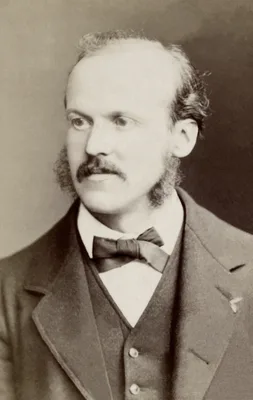
1864 LARTET, Édouard (1801 – 1871); CHRISTY, Henry (1810 – 1865)
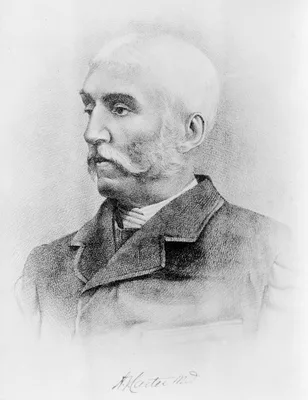
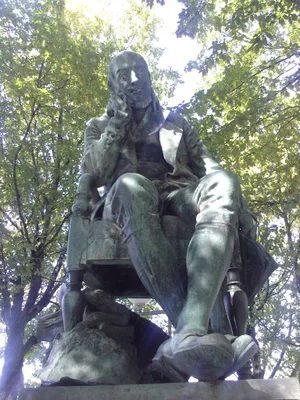
Cavernes du Périgord. Objets gravés et sculptés des temps pré-historiques dans l’Europe occidentale.
In 1863 Lartet and Christy began systematically examining the caves in the Périgord (Dordogne) region of France. This study of mobiliary or portable art, such as carved stones, carved ivory, carved bones, or carved re…
GMN 7258 · https://historyofmedicine.com/id/9427
1864 JOURDANET, Denis (1815 – 1892)
Le Mexique et l'Amérique tropicale: climats, hygiène et maladies.
Digital facsimile from the Internet Archive at this link.
GMN 8109 · https://historyofmedicine.com/id/10285
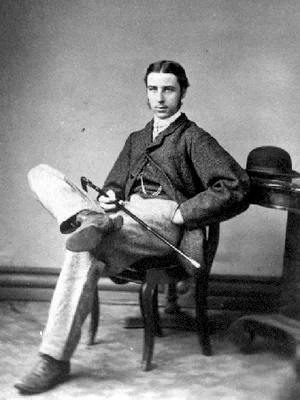
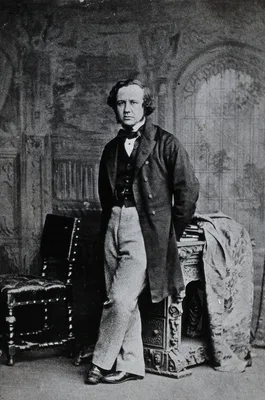
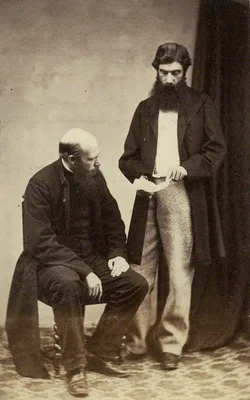
1865 CHEADLE, Walter Butler (1836 – 1910); WENTWORTH-FITZWILLIAM, William Viscount Milton (1839 – 1877)
The North-West passage by land. Being the narrative of an expedition from the Atlantic to the Pacific, undertaken with the view of exploring a route across the continent to British Columbia through British territory, by one of the northern passes in the Rocky Mountains.
Together with William Fitzwilliam (Viscount Milton), Cheadle travelled up the Athabasca River and in 1863 they became the first "tourists" to travel through the Yellowhead Pass. Arriving in Quebec City in July 1862, t…
GMN 12659 · https://historyofmedicine.com/id/14903
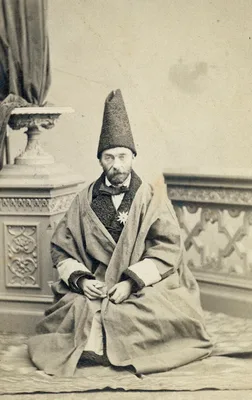
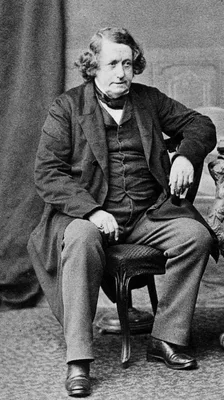
1865 POLAK, Jakob Eduard (1818 – 1891)
Persien. Das Land und seine Bewohner. Ethnographische Schilderungen. 2 vols.
In this wide-ranging ethnographic study Polak provided the most authoritative account of his introduction of western medicine into Iran as well as the state of medicine in Iran generally. "Polak (1865, II, pp. 192-348…
GMN 14037 · https://historyofmedicine.com/id/16345
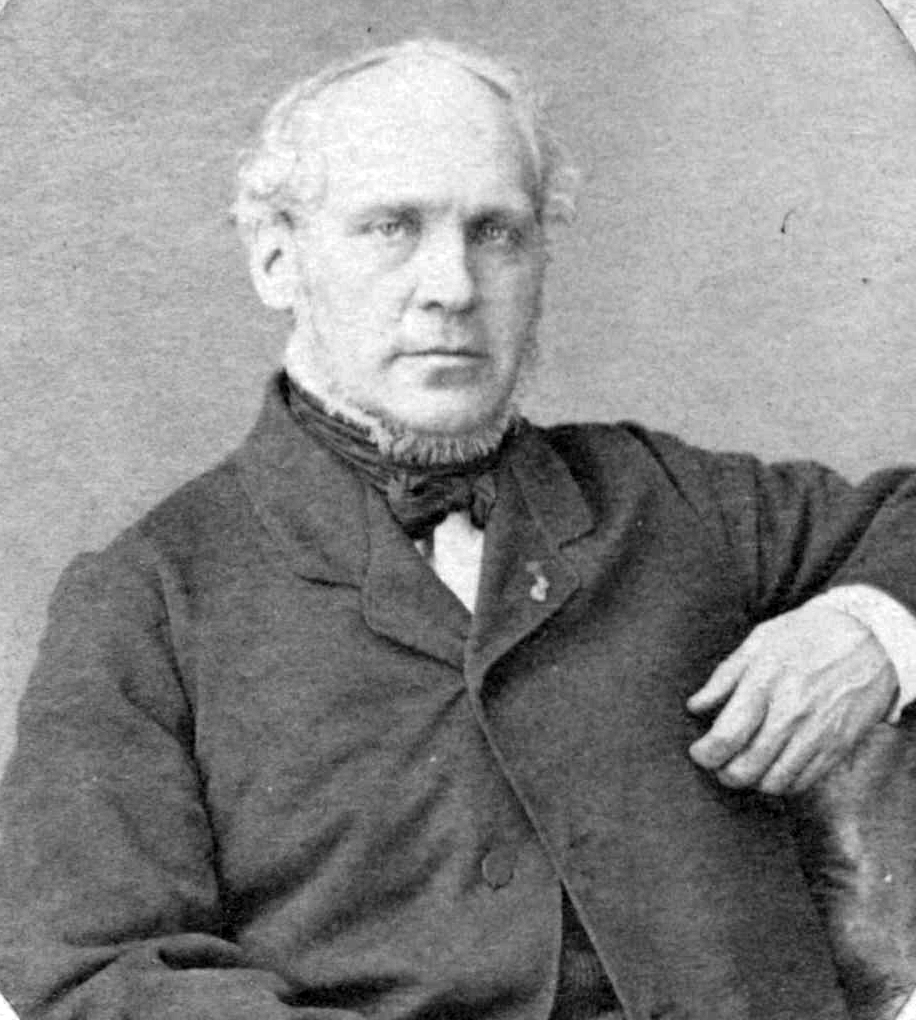
1866 WOODHULL, Alfred Alexander (1837 – 1921)
Catalogue of the surgical section of the United States Army Medical Museum.
Digital facsimile from the Internet Archive at this link.
GMN 10375 · https://historyofmedicine.com/id/12567
1866 OGLE, John William (1824 – 1905); HOLMES, Timothy (1825 – 1907)
Catalogue of the pathological museum of St. George's Hospital.
Digital facsimile from the Internet Archive at this link.
GMN 10378 · https://historyofmedicine.com/id/12570
1867 BROCA, Pierre Paul (1824 – 1880)
Cas singulier de trépanation chez le Incas.
Broca attributed a defect in an ancient Peruvian skull to antemortem trepanation; prior to this paleopathologists and paleoanthropologists were unaware that the Incas practiced trepanation.
GMN 7704 · https://historyofmedicine.com/id/9876
1867 RANSONNET-VILLEZ, Eugen, Freiherr von (1838 – 1926)
Sketches of the inhabitants, animal life and vegetation in the lowlands and high mountains of Ceylon: As well as of the submarine scenery near the coast taken from a diving bell.
This work was illustrated with 26 tinted lithographs of natives and scenery in Sri Lanka after drawings from nature by the author, of which four were colored reproductions of underwater scenes made by the author using…
GMN 11705 · https://historyofmedicine.com/id/13906
1868 VIRCHOW, Rudolf Ludwig Karl (1821 – 1902)
Ueber die Canalisation von Berlin.
Virchow advocated a canal sewer system for Berlin. Such a system was constructed by Hobrecht. See No. 1624.
GMN 1616 · https://historyofmedicine.com/id/1930
1868 MORÉNO Y MÄIZ, Tomás
Recherches chimiques et physiologiques sur l’erythroxylum coca du Pérou et la cocaïne.
The author, formerly a surgeon in the Peruvian army, issued the first study of the pharmacological action of cocaine, containing the earliest suggestion of its use as a local anesthetic. Leclerc issued the commercial …
GMN 1868 · https://historyofmedicine.com/id/2451
1868 WUCHERER, Otto Eduard Heinrich (1820 – 1873)
Noticiar preliminar sobre vermes de uma especie ainda nao descripta, encontrados na urina de doentes de hematuria intertropical no Brazil.
In 1866 Wucherer saw the embryo form of the filaria worm. Later the name Wuchereria bancrofti was applied to it. English translation in Kean (No. 2268.1).
GMN 5344.6 · https://historyofmedicine.com/id/6781
1868 LARTET, Louis (1840 – 1899)
Mémoire sur une sépulture des anciens troglodytes du Périgord.
In March 1868, railway workers clearing away debris from a rock shelter known locally as the Abri de Crô-Magnon (shelter of Crô-Magnon) at Les Eyzies, Dordogne, noticed stone tools and pieces of skeleton imbedded in t…
GMN 7252 · https://historyofmedicine.com/id/9421
1868 WARING, Edward John (1819 – 1891)
Pharmacopoeia of India, prepared under the authority of Her Majesty's Secretary of State for India in Council
Waring was "Surgeon in Her Majesty's Indian Army." Digital facsimile from the Internet Archive at this link.
GMN 8817 · https://historyofmedicine.com/id/10995
1868 WÜSTENFELD, Heinrich Ferdinand (1808 – 1899); AL-QAZWINI, Abu Yahya Zakariya ibn Muhammad (Zakarya Qazini) (1203 – 1283); ETHÉ, Carl Hermann (1844 – 1917)
Zakarīyā b. Muḥammad al-Qazwīnī's Kosmographie. Nach der Wüstenfeldschen Textausgabe, mit Benutzung und Beifügung der reichhaltigen Anmerkungen und Verbesserungen des Herrn Prof. Dr. Fleischer in Leipzig, aus dem Arabischen zum ersten Male vollständig übersetzt von Dr. Hermann Ethé. Die Wunder der Schöpfung. 1. Halbband
Digital facsimile from Bayerische StaatsBibliothek at this link.
GMN 10180 · https://historyofmedicine.com/id/12369
1868 –1874 MILNE-EDWARDS, Henri (1800 – 1885); MILNE-EDWARDS, Alphonse (1835 – 1900)
Recherches pour servir à l'histoire naturelle des mammifères comprenant des considérations sur la classification de ces animaux. 2 vols.
Concerns primarily the mammals of China and Tibet. Volume 2 is an atlas of 108 plates. Digital facsimile from Biodiversity Heritage Library at this link.
GMN 13444 · https://historyofmedicine.com/id/15716
1868 MURCHISON, Charles (1830 – 1879); FALCONER, Hugh (1808 – 1865)
Palaeontological memoirs and notes of the late Hugh Falconer. For many years superintendent of the H.E.I. Company's botanical gardens at Suharunpoor and Calcutta. With a biographical sketch of the author. Compiled and edited by Charles Murchison. Vol. 1. Fauna Antiqua Sivalensis. Vol. II. Mastodon, elephant, rhinoceros, ossiferous caves, primeval man and his cotemporaries. 2 vols.
Falconer's writings on human antiquity appear in Vol. 2 of his Palaeontogical memoirs. Together with William Pengelly, Falconer was one of the first two scientists to visit Brixham Cave after its discovery in 1858, an…
GMN 14093 · https://historyofmedicine.com/id/16404
1869 –1870 TURNER, George Alexander (1845 – 1900)
Lafa Tokelau, or Tokelau ringworm.
First description, tinea imbricata. Turner described the disease while serving as a medical missionary in Samoa.
GMN 4059 · https://historyofmedicine.com/id/5424
1869 DAREMBERG, Charles Victor (1817 – 1872)
État de la médecine entre Homère et Hippocrate: Anatomie, physiologie, pathologie, médecine militaire, histoire des écoles médicales pour fair suite à la médecine dans Homère.
Digital facsimile from Google Books at this link.
GMN 6475 · https://historyofmedicine.com/id/7938
1869 –1870 FEDCHENKO, Alexei Pavlovich (Aleksei FEDTSCHENKO) (1844 – 1873)
On the structure and reproduction of Filaria medinensis L.
Fedchenko, a Russian naturalist and explorer of central Asia, elucidated the life cycle of Dracunculus medinensis, the parasite of dracunculiasis. He discovered its means of transmission via copepod intermediate hosts…
GMN 5344.7 · https://historyofmedicine.com/id/8616
1869 BEANEY, James George (1828 – 1891)
Syphilis: Its nature & diffusion popularly considered.
The first work on dermatology or syphilology written, printed and published in Australia. This work is illustrated with chromolithographed plates printed in Australia. This may be the earliest medical book printed in …
GMN 10890 · https://historyofmedicine.com/id/13086
1870 –1888 WOODWARD, Joseph Janvier (1833 – 1884); OTIS, George Alexander (1830 – 1881); HUNTINGTON, David Low (1834 – 1899); BARNES, Joseph K. (1817 – 1883); SMART, Charles (1830 – 1881); LETTERMAN, Jonathan (1824 – 1872)
The medical and surgical history of the War of the Rebellion, 1861-65. 6 vols.
UNITED STATES. War Dept. Surgeon General
Written by Woodward, Smart, Otis, and Huntington under the direction of Joseph K. Barnes, Surgeon General of the Army. This massive, graphically illustrated set has been called the “first comprehensive American medica…
GMN 2171 · https://historyofmedicine.com/id/1174
1870 BRISCOE, Thomas Benjamin
Kala azar.
Kala azar is mentioned briefly in the Proceedings in 1869 (No. 34, p. 19) but the above is the first full description, given by Briscoe in a report dated 1 Dec 1869.
GMN 5292 · https://historyofmedicine.com/id/8609
1870 BILLINGS, John Shaw (1838 – 1913)
Report on barracks and hospitals, with descriptions of military posts.
Describes military posts in all regions of the U.S., including the Western territories, with details of their hospitals, barracks, etc. In a 1928 talk at Mayo Clinic historian Fielding Garrison wrote about this work, …
GMN 10448 · https://historyofmedicine.com/id/12641
1870 CALLAWAY, Henry (1817 – 1890)
The religious system of the Amazulu. Izinyanga zokubula; or, divination, as existing among the Amazulu, in their own words, with a translation into English, and notes.
Callaway, a surgeon turned missionary and bishop of the Diocese of Natal, may have been the first to publish actual transcriptions of Zulu divination, including indigenous medical beliefs and practices, in their origi…
GMN 10567 · https://historyofmedicine.com/id/12760
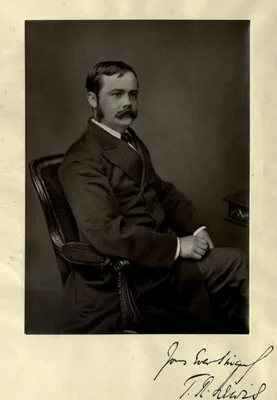
1871 LEWIS, Timothy Richards (1841 – 1886)
On a haemotozoon inhabiting human blood. Its relation to chyluria and other diseases.
Independently of Demarquay (No. 5344.3) and Wucherer (No. 5344.6), Lewis found microfilariae in the urine and blood in chyluria. He was first to use the term Filaria sanguinis hominis for the parasite.
GMN 5344.8 · https://historyofmedicine.com/id/6785
1871 –1872 DUHRING, Louis Adolphus (1845 – 1913); MAURY, Francis Fontaine (1840 – 1879)
Photographic review of medicine and surgery. A bi-monthly illustration of interesting cases, accompanied by notes. Edited by F.F. Maury [and] L.A. Duhring. Vols. 1 & 2 (All published).
The leading 19th century American publication of artistic medical photography. Each of the two volumes includes 24 mounted photographs. The photographs ilustrate cases of unusual and extreme disease, such as gross def…
GMN 10585 · https://historyofmedicine.com/id/12778
1871 CUNNINGHAM, Robert Oliver (1841 – 1918)
Notes on the natural history of the Strait of Magellan and the west coast of Patagonia made during the voyage of HMS 'Nassau' in the years 1866, 67, 68, & 69.
Cunningham, a physician, was naturalist aboard the Nassau, a steamer sent to survey the Strait of Magellan and the adjacent channels. This book contains a narrative of the voyage and natural history descriptions. Cunn…
GMN 12475 · https://historyofmedicine.com/id/14708
1871 –1880 OLAVIDE Y LANDAZÁBAL, José Eugenio de (1836 – 1901)
Dermatología general y clínica iconográfica de enfermedades de la piel ó dermatósis.
This very large format publication was issued in four parts from 1871 to 1880. It included 168 large plates in the style of Alibert, and was the first major illustrated work on dermatology published in Spain. Digital …
GMN 12583 · https://historyofmedicine.com/id/14822
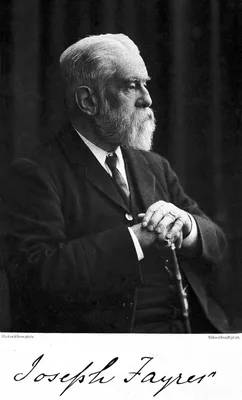
1872 FAYRER, Sir Joseph (1824 – 1907)
The thanatophidia of India. Being a Description of the venomous snakes of the Indian Peninsula, with an account of the influence of their poison on life and a series of experiments
Considered the first systematic work on venomous snakes. Describes all the venomous snakes of India. Digital facsimile from the Internet Archive at this link.
GMN 2105 · https://historyofmedicine.com/id/2604
1872 VILANOVA Y PIERA, Juan (1821 – 1893)
Origen, naturaleza y antigüedad del hombre.
The first book on human origins or human evolution published in Spanish. Digital facsimile from Google Books at this link.
GMN 7609 · https://historyofmedicine.com/id/9781
1872 BOWDITCH, Nathaniel Ingersoll (1805 – 1861); ELLIS, George Edward (1814 – 1894)
A history of the Massachusetts General Hospital. [Privately printed in 1851.] Second edition, with a continuation to 1872.
Digital facsimile from the Internet Archive at this link.
GMN 8613 · https://historyofmedicine.com/id/10790
1873 INGERSLEV, Johan Vilhelm Christian (1835 – 1918)
Danmarks Laeger og Laegevaesen fra de aeldste Tider indtil Aar 1800. 2 vols.
GMN 6570 · https://historyofmedicine.com/id/8273
1873 BROWN, Harvey Ellicott (1840 – 1889)
The medical department of the United States army from 1775 to 1873. Compiled under the direction of the Surgeon General by Harvey E. Brown.
Digital facsimile from the Internet Archive at this link.
GMN 10796 · https://historyofmedicine.com/id/12992
1873 REEVES, Charles Evans
Heart studies in Australia, with observations on aneurism of the aorta.
The first book on heart disease written by an Australian physician and published in Australia.
GMN 11749 · https://historyofmedicine.com/id/13949
1874 FLÜCKIGER, Friedrich August (1828 – 1894); HANBURY, Daniel (1825 – 1875)
Pharmacographia. A history of the principal drugs of vegetable origin met with in Great Britain and British India.
Digital facsimile from the Biodiversity Heritage Library at this link.
GMN 2032 · https://historyofmedicine.com/id/2157
1874 CARTER, Henry Vandyke (1831 – 1897)
On mycetoma, or the fungus disease of India.
See No. 4047.
GMN 4066 · https://historyofmedicine.com/id/5459
1874 CHÉREAU, Achille (1817 – 1885)
Le Parnasse médicale français, ou dictionnaire des médecins-poètes de la France, anciens ou modernes, morts ou vivants.
Dictionary of French medical poets. Digital facsimile from BnF Gallica at this link.
GMN 6616 · https://historyofmedicine.com/id/7672
1874 TONER, Joseph Meredith (1825 – 1896)
Contributions to the annals of medical progress and medical education in the United States before and during the War of Independence.
Digital facsimile from the Hathi Trust at this link.
GMN 6585 · https://historyofmedicine.com/id/8496
1874 BELT, Thomas (1832 – 1878)
The naturalist in Nicaragua: A narrative of a residence at the gold mines of Chontales; journeys in the savannahs and forests, with observations on animals and plants in reference to the theory of evolution of living forms.
In this book Belt first described "the mutualistic relationship of certain Acacias and the ant we now know as Pseudomyrmex spinicola. These are a species of red myrmecophyte-inhabiting neotropical ants which are found…
GMN 7443 · https://historyofmedicine.com/id/9615
1874 MONTEIL, Amans-Alexis (1769 – 1850); LE PILEUR, Auguste (1810 – )
La médecine en France, hommes et doctrines depuis l'antiquité jusqu'à nos jours; avec introduction, notes et supplément par A[uguste] Le Pileur. Ouvrage publié sur la dernière édition de l'Histoire des français des divers états, couronnée deux fois par l'Académie française.
One of the pioneer histories of medicine in France. "He [Monteil] boasted of having been the first to write really 'national' history, and he wished further to show this in a memoir entitled L'Influence de l'histoire …
GMN 9592 · https://historyofmedicine.com/id/11779
1874 BERGER, Charles; REY, Henri
Répertoire bibliographique des médecins et des pharmaciens de la marine française 1698-1873.
Digital facsimile from Google Books at this link.
GMN 11129 · https://historyofmedicine.com/id/13325
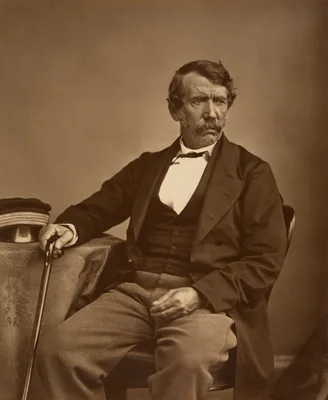
1874 LIVINGSTONE, David (1813 – 1873); WALLER, Horace (1833 – 1896)
The Last Journals of David Livingstone, in Central Africa. From eighteen hundred and sixty-five to his death. Continued by a narrative of his last Moments and sufferings, obtained from his faithful servants, Chuma and Susi, by Horace Waller, F.R.G.S.
"Livingstone’s most famous expedition was in 1866–73, when he traversed much of central Africa in an attempt to find the source of the Nile. This book contains the daily journals that Livingstone kept on this expediti…
GMN 12705 · https://historyofmedicine.com/id/14950
1875 JOURDANET, Denis (1815 – 1892)
Influence de la pression de l’air sur la vie de l’homme. Climats d'altitude et climats du montagne. 2 vols.
Jourdanet’s observational work in remote areas of Latin America and Asia produced important evidence for Bert’s proof that altitude sickness is due to anoxemia. In La pression barométrique (No. 944) Bert described how…
GMN 943.1 · https://historyofmedicine.com/id/201
1875 O’NEILL, John
On the presence of a Filaria in “craw-craw”.
In 1874, while examining skin snips from craw-craw patients in Ghana, during his service on the H. M. S. Decoy, the Irish surgeon O’Neill discovered the subcutaneous microfilaria. This was the earliest known visual id…
GMN 5344.10 · https://historyofmedicine.com/id/6790
1875 LARTET, Édouard (1801 – 1871); CHRISTY, Henry (1810 – 1865); JONES, Thomas Rupert (1819 – 1911)
Reliquiae Aquitanicae; being contributions to the archaeology and palaeontology of Périgord and the adjoining provinces of southern France. Edited by Thomas Rupert Jones.
This beautiful and bibliographically complicated work was issued in 17 parts from 1865 to 1875. It includes 82 tinted lithographic plates, and is the first visually spectacular large extensively illustrated publicatio…
GMN 9492 · https://historyofmedicine.com/id/11677
1875 HAVILAND, Alfred Joseph (1824 – 1903)
The geographical distribution of heart disease and dropsy, cancer in females & phthisis in females, in England and Wales. Illustrated by six small and three large coloured maps.
Haviland used the national mortality statistics for England and Wales to develop an elaborate geographical explanation based on map analysis for the cause of heart, cancer, and tuberculosis deaths. He found that femal…
GMN 10451 · https://historyofmedicine.com/id/12644
1875 BALFOUR, Edward Green (1813 – 1889)
Medical hints to the people of India. Eminent medical men of Asia, Africa, Europe and America, who had advanced medical science; Compiled for the use of students and for the Vydians and Hakims of India.
A compilation of biographical sketches of selected figures in medical history written by Balfour as Surgeon-General, Madras Medical Department, "for the hindu Vydian, for the muhammadan Hakim, and for the students of …
GMN 11758 · https://historyofmedicine.com/id/13958
1876 NOVINSKY, Mstislav Alexandrovich (1841 – 1914)
O privivanii rakovikh novoobrazovanii. [On the inoculation of cancerous neoplasms.]
Novinsky successfully transplanted two tumors in dogs. German translation in Zbl. med. Wiss., 1876, 14, 790-91. A fuller report appeared in his thesis K voprosu o privivanii zlokachestvennich novoobrazovanii (eksperim…
GMN 2620.1 · https://historyofmedicine.com/id/3144
1876 NORMOND, Louis Alexis (1834 – 1885)
Sur la maladie dite diarrhée de Cochinchine.
Normond found Strongyloides stercoralis, the causal parasite in strongyloidiasis. English translation in Kean (No. 2268.1).
GMN 5344.11 · https://historyofmedicine.com/id/6792
1876 GROSS, Samuel David (1805 – 1884)
A century of American surgery.
The first serious history of American surgery to 1876. Also published in No. 6586.
GMN 5795 · https://historyofmedicine.com/id/6879