1734 TENNENT, John (1700 – 1760)
Every man his own doctor: or, The poor planter's physician. Prescribing plain and easy means for persons to cure themselves of all, or most of the distempers, incident to this climate, and with very little charge, the medicines being chiefly of the growth and production of this country.
The first medical hand-book for lay persons written and published in America. It is probable that this book was first published in 1734, though the earliest recorded copy or copies appear to be the "second edition" wi…
GMN 9675 · https://historyofmedicine.com/id/11862
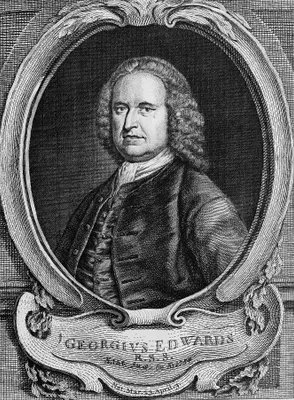
1754 CATESBY, Mark (1683 – 1749); EDWARDS, George (1693 – 1773)
The natural history of Carolina, Florida, and the Bahama Islands, containing the figures of birds, beasts, fishes, serpents, insects, and plants, particulary the forest trees, shrubs, and other plants, not hitherto described, or very incorrectly figured by authors. Together with their descriptions in English and French. To which are added, observations on the air, soil, and waters with remarks upon agriculture, grain, pulse, roots, &c. To the whole is prefixed a new and correct map of the countries treated of / by the late Mark Catesby; revised by Mr. [George] Edwards. 2 vols.
Second edition, edited by ornithologist George Edwards. Digital facsimile from the Internet Archive at this link.
GMN 7678 · https://historyofmedicine.com/id/9850
1776 CHALMERS, Lionel (1715 – 1777)
An account of the weather and diseases of South-Carolina. 2 vols.
Originally published in the Gentleman’s Magazine, 1751-54.
GMN 1773 · https://historyofmedicine.com/id/3326
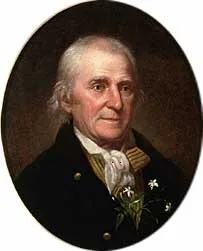
1791 BARTRAM, William (1739 – 1823)
Travels through North & South Carolina, George, East & West Florida, the Cherokee country, the extensive territories of the Muscogulges, or Creek confederacy, and the country of the Chactaws [sic]...
Digital facsimile of London, 1794 second edition from the Internet Archive at this link.
GMN 7770 · https://historyofmedicine.com/id/9942
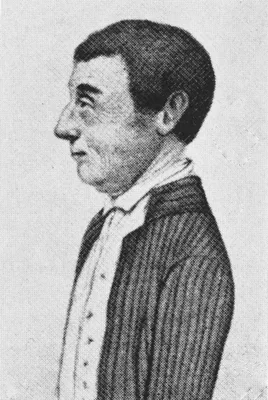
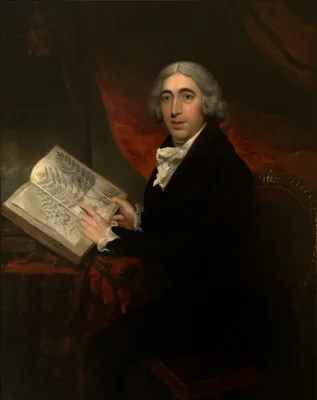
1797 ABBOT, John (1751 – 1840); SMITH, Sir James Edward (1759 – 1828)
The natural history of the rarer lepidopterous insects of Georgia. Including their systematic characters, the particulars of their several metamorphoses, and the plants on which they feed. Collected from the observations of Mr. John Abbot, many years resident in that country, by James Edward Smith.
The earliest illustrated monograph on the butterflies and moths of North America. Text in English and French. 104 hand-colored plates. Digital facsimile from the Internet Archive at this link.
GMN 7768 · https://historyofmedicine.com/id/9940
1807 EWELL, James (1773 – 1832)
The planter's and mariner's medical companion: treating, according to the most successful practice, I. The diseases common to warm climates and on ship board. II. Common cases in surgery, as fractures, dislocations, &c. &c. III. The complaints peculiar to women and children. To which are subjoined a dispensatory, shewing how to prepare and administer family medicines, and a glossary giving an explanation of technical terms.
Ewell, then practicing in Savannah, Georgia, wrote this self-help book for southern residents, directing his book toward plantation owners. It was "the constant friend of a large number of slave-masters. In emergencie…
GMN 7049 · https://historyofmedicine.com/id/9216
1814 HENRY, Samuel
Botanic medicine: A new and complete American medical family herbal: Wherein is displayed the true properties and medical virtues of the plants, indigenous to the United States of America, together with Lewis' secret remedy newly discovered, which has been found infallible in the cure of that dreadful disease hydrophobia, produced by the bite of a mad dog.
Henry wrote that he had been a captive of the Indians during the Creek War and that he incorporated what he learned during his captivity. His work was one of the first illlustrated herbals published in the United Stat…
GMN 9641 · https://historyofmedicine.com/id/11828
1821 NUTTALL, Thomas (1786 – 1859)
A journal of travels into the Arkansas territory, during the year 1819. With occasional observations on the manners of the aborigines. Illustrated by a map and other engravings.
Nuttall travelled from Philadelphia, down the Ohio and Mississippi rivers to the Arkansas. From there he travelled across Arkansas to the interior of the modern Oklahoma; returning via the Arkansas and Mississippi riv…
GMN 7772 · https://historyofmedicine.com/id/9944
1825 HEUSTIS, Jabez Wiggins (1784 – 1841)
Medical facts and inquiries, respecting the causes, nature, prevention and cure of fever: more expressly in relation to the endemic fevers of summer and autumn in the southern states: Together with a history of the bilious remitting fever of Alabama, as it appeared in Cahawba and its vicinity in the summers and autumns of 1821 and 1822.
Digital facsimile from the U.S. National Library of Medicine at this link.
GMN 10518 · https://historyofmedicine.com/id/12711
1830 GUNN, John C.
Gunn’s domestic medicine, or poor man’s friend in the hours of affliction, pain, and sickness. This book points out, in plain language, free from doctor's terms the diseases of men, women, and children, and the latest and most approved means used in their cure, and is expressly written for the benefit of families in the western and southern states. It also contains descriptions of the medicinal roots and herbs of the western and southern country, and how they are to be used in the cure of diseases: arranged on a new and simple plan, by which the practice of medicine reduced to the principles of common sense.
Gunn intended his book to serve as a guide for frontier and rural families who lived far away from any sort of medical care so it contained instructions on how to treat a wide variety of illnesses. While the first edi…
GMN 9150 · https://historyofmedicine.com/id/11329
1832 YATES, Christopher C. (1778 – 1848)
Observations on the epidemic now prevailing in the city of New-York; called the Asiatic or spasmodic cholera; with advice to the planters of the South, for the medical treatment of their slaves.
Digital facsimile from the Internet Archive at this link.
GMN 10812 · https://historyofmedicine.com/id/13008
1850 –1851 FENNER, Erasmus Darwin (1807 – 1866)
Southern medical reports: Consisting of general and special reports, on the medical topography, meteorology, and prevalent diseases, in the following states: Louisiana, Alabama, Mississippi, North Carolina, South Carolina, Georgia, Florida, Arkansas, Tennessee, Texas. Edited by E. D. Fenner. 2 vols.
Regarding Fenner see, John Duffy, "Erasmus Darwin Fenner (1807–1866) Journalist, Educator, and Sanitarian," Academic Medicine. 35 (1960) 819-831. Digital facsimile of the 1850-51 edition from the Internet Archive at t…
GMN 10517 · https://historyofmedicine.com/id/12710
1857 AGASSIZ, Louis Jean Rodolphe (1807 – 1873); LEIDY, Joseph (1823 – 1891); NOTT, Josiah Clark (1804 – 1873); GLIDDON, George Robbins (1809 – 1857); MAURY, Louis Ferdinand Alfred (1817 – 1892); PULSZKY DE CESLFALVA ET LUBÓCZ, Ferenc Aurél (Francis Pulszky) (1814 – 1897); MEIGS, James Aitken (1829 – 1879)
Indigenous races of the earth; or new chapters of ethnological enquiry: Including monographs on special departments of philology, iconography, cranioscopy, palaeontology, pathology, archaeology, comparative geography and natural history: Contributed by Alfred Maury, Francis Pulszky, and J. Aiken Meigs. With contributions from Jos. Leiden and L. Agassiz. Presenting fresh investigations by J. C. Nott and Geo. R. Glidden.
Expensively produced, and sold in both standard and large paper subscriber editions, Nott and Gliddon's work was one of the most egregiously racist publications in the history of physical anthropology. Nott, a promine…
GMN 8825 · https://historyofmedicine.com/id/11003
1861 SCHUPPERT, Moritz (1817 – 1887)
A treatise on gun-shot wounds: written for and dedicated to the surgeons of the Confederate States Army.
Digital facsimile from the Hathi Trust at this link.
GMN 7814 · https://historyofmedicine.com/id/9986
1863 PORCHER, Francis Peyre (1825 – 1895)
Resources of the southern fields and forests, medical, economical, and agricultural: Being also a medical botany of the Confederate States; with practical information on the useful properties of the trees, plants and shrubs.
The first extensive treatise on the botany of the Southern States of the US and the only Confederate manual of materia medica. This is also a manual of “survival information”, teaching how live off the land and how to…
GMN 1865.1 · https://historyofmedicine.com/id/2429
1863 FORMENTO, Felix (1837 – 1907)
Notes and observations on army surgery.
Digital facsimile from the Internet Archive at this link.
GMN 7813 · https://historyofmedicine.com/id/9985
1876 STEVENSON, R. Randolph (1834 – 1891)
The southern side: Or, Andersonville Prison. Complied from official documents. Together with an examination of the Wirz Trial: A comparison of the mortality in Northern and Southern prisons; remarks on the exchange bureau, etc. An appendix, showing the number of prisoners that died at Andersonville, and the causes of death; classified lists of all that died in stockade and hospital, etc., etc.
Stevenson was chief surgeon at the Confederate States Military Prison Hospitals in Andersonville, Georgia. The appendix lists the causes of death of 12,912 men. "Andersonville Prison, established in Georgia early in 1…
GMN 10795 · https://historyofmedicine.com/id/12991
1900 CARTER, Henry Rose (1852 – 1925)
A note on the interval between infecting and secondary cases of yellow fever from the records of yellow fever at Orwood and Taylor, Mississippi, in 1898.
Carter's determination of the incubation period yellow fever influenced the direction of Reed’s researches, and was instrumental in the discovery of the mode of transmission of the yellow fever virus.
GMN 5456 · https://historyofmedicine.com/id/7553
1926 MAXCY, Kenneth Fuller (1889 – 1966)
Clinical observations on endemic typhus (Brill’s disease) in Southern United States.
Maxcy described murine (flea-borne) typhus (“Maxcy’s disease”).
GMN 5396 · https://historyofmedicine.com/id/7169
1930 –1933 BLANTON, Wyndham Bolling (1890 – 1960)
Medicine in Virginia in the seventeenth (eighteenth, nineteenth) century. 3 vols.
GMN 6588 · https://historyofmedicine.com/id/8498
1939 COBB, William Montague (1904 – 1990)
The first Negro medical society. A history of the Medico-Chirurgical Society of the District of Columbia.
A detailed history of the “first American Negro medical society formed in America and probably in the world”. Cobb was the first black American medical historian of note.
GMN 6594 · https://historyofmedicine.com/id/8501
1951 POSTELL, William Dosite (1908 – 1982)
The health of slaves on southern plantations.
Chiefly from contemporary MS records.
GMN 6596.1 · https://historyofmedicine.com/id/8504
1964 –1971 WARING, Joseph Ioor Jr. (1897 – 1977)
A history of medicine in South Carolina. Vol. 1: 1670-1825. Vol. 2: 1825-1900. Vol. 3: 1900-1970.
GMN 8783 · https://historyofmedicine.com/id/10961
1969 KROCHMAL, Arnold (1919 – ); WALTERS, Russell S.; DOUGHTY, Richard M.
A guide to medicinal plants of Appalachia. (U.S.D.A. Forest Service Research Paper NE-138).;
Digital facsimile from www.fs.fed.us at this link.
GMN 8415 · https://historyofmedicine.com/id/10592
1982 HOLLEY, Howard Lamar (1914 – 1988)
The history of medicine in Alabama.
GMN 10403 · https://historyofmedicine.com/id/12596
1984 BRIDGFORTH, Lucie Robertson
Medical education in Mississippi: A history of the School of Medicine.
GMN 10298 · https://historyofmedicine.com/id/12489
1984 CARROLL, Douglas
Medicine in Maryland, 1634-1900,
GMN 10302 · https://historyofmedicine.com/id/12494
1988 YOUNG, James Harvey (1915 – 2006); SAVITT, Todd L. (1943 – )
Disease and distinctiveness in the American South. Edited by Todd Savitt and James Harvey Young.
GMN 10015 · https://historyofmedicine.com/id/12204
1994 FONTENOT, Wonda L.
Secret doctors: Ethnomedicine of African Americans.
"Based on an ethnographic study of the traditional medicine of African Americans in the rural southern United States, this work concentrates on the original Louisiana Territory, with its Native and African American in…
GMN 10090 · https://historyofmedicine.com/id/12279
1996 STOUT, Samuel Hollingsworth (1822 – 1903); SCHROEDER-LEIN, Glenna R. (1951 – )
Confederate hospitals on the move: Samuel H. Stout and the Army of Tennessee.
GMN 10288 · https://historyofmedicine.com/id/12479
1998 BANKOLE-MEDINA, Katherine
Slavery and medicine: Enslavement and medical practices in antebellum Louisiana.
GMN 8205 · https://historyofmedicine.com/id/10381
1999 MOSS, Kay K.
Southern folk medicine 1750-1820.
GMN 9745 · https://historyofmedicine.com/id/11933
2002 FETT, Sharla M.
Working cures: Healing, health, and power on Southern slave plantations.
GMN 9624 · https://historyofmedicine.com/id/11811
2003 CAVENDER, Anthony
Folk medicine in southern Appalachia.
GMN 9631 · https://historyofmedicine.com/id/11818
2004 STOWE, Steven M.
Doctoring the South: Southern physicians and everyday medicine in the mid-nineteenth century.
GMN 10999 · https://historyofmedicine.com/id/13195
2006 SCHWARTZ, Marie Jenkins (1946 – )
Birthing a slave: Motherhood and medicine in the Antebellum South.
GMN 8090 · https://historyofmedicine.com/id/10266
2010 WARD, Thomas J. Jr.
Black physicians in the Jim Crow South.
GMN 8085 · https://historyofmedicine.com/id/10261
2012 WEINER, Marli F. (1953 – 2009); HOUGH, Mayzie
Sex, sickness, and slavery: Illness in the antebellum South.
GMN 8206 · https://historyofmedicine.com/id/10382
2012 THOMAS, James G. Jr.; WILSON, Charles Reagan (1948 – )
The New Encyclopedia of Southern Culture: Volume 22: Science and medicine. Edited by James G. Thomas, Jr. & Charles Reagan Wilson.
GMN 9977 · https://historyofmedicine.com/id/12166
2015 ELLIS, John H.
Yellow Fever and Public Health in the New South.
"The public health movement in the South began in the wake of a yellow fever epidemic that devastated the lower Mississippi Valley in 1878--a disaster that caused 20,000 deaths and financial losses of nearly $200 mill…
GMN 9859 · https://historyofmedicine.com/id/12047