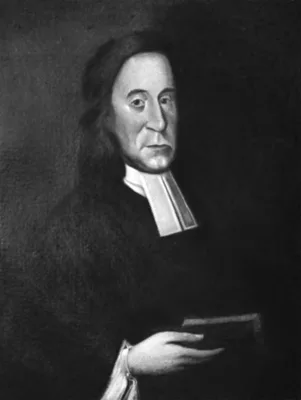
1667 VINCENT, Thomas (1634 – 1678)
Gods terrible voice in the city of London wherein you have the narration of the two late dreadful judgements of plague and fire, inflicted by the Lord upon that city; the former in the year 1665. The latter in the year 1666
This edition of a plague tract by English puritan minister Thomas Vincent was the first medical or biological publication in North America. It was issued by printer Samuel Green, using a press in Cambridge, Massachuse…
GMN 6823 · https://historyofmedicine.com/id/8986
1672 JOSSELYN, John (1630 – 1675)
New-Englands rarities discovered: in birds, beasts, fishes, serpents, and plants of that country. Together with the physical and chyrurgical remedies wherewith the natives constantly use to cure their distempers, wounds, and sores…
The first detailed account of the natural history and botany of North America, including the first extensive study of native North American medicine.
GMN 1826.1 · https://historyofmedicine.com/id/2138
1672 JOSSELYN, John (1630 – 1675)
New-Englands rarities discovered: In birds, beasts, fishes, serpents, and plants of that country. Together with the physical and chyrurgical remedies wherewith the natives constantly use to cure their distempers, wounds, and sores; also A perfect description of an Indian squa, in all her bravery, with a poem not improperly conferr'd upon her; lastly, a chronological table of the most remarkable passage in that country amongst the English.
Josselyn's books give some of the earliest and most complete information on New England flora and fauna in colonial times, and his outlook was later praised by Henry Thoreau, among others. Digital facsimile from Biodi…
GMN 13878 · https://historyofmedicine.com/id/16168
1674 JOSSELYN, John (1630 – 1675)
An account of two voyages to New-England. Wherein you have the setting out of a ship, with the charges; The prices of all necessaries for furnishing a planter and his family at his first coming: a description of the countrey [sic], natives, and creatures; with their merchantil [sic] and physical use; the government of the countrey as it is now possessed by the English, &c. A large chronological table of the most remarkable passages, from the first discovering of the continent of America, to the year 1673.
Josselyn first visited America in 1638-39 and returned from 1663 to 1671. His second and more extensive book includes an herbal, with numerous botanical as well as medical and surgical descriptions, and is considered …
GMN 13261 · https://historyofmedicine.com/id/15527
1677 THACHER, Thomas (1620 – 1678)
A brief rule to guide the common-people of New-England how to order themselves and theirs in the small pocks, or measels.
The first medical publication of North America and the only one to appear in the 17th century. Only one copy of the original printing of this broadside survived, written by Thacher, a Boston minister. The sheet was re…
GMN 5406 · https://historyofmedicine.com/id/7256
1680 COUCH, Robert; PACKE, Christopher (1657 – 1708)
Praxis catholica: or the countryman's universal remedy wherein is plainly and briefly laid down the nature, matter, manner, place and cure of most diseases, incident to the body of man, not hitherto discovered, whereby any one of an ordinary capacity may apprehend the true cause of his distempers, wherein his cure consists, and the means to effect it : together with rules how to order children in that most violent disease of vomiting and looseness, &c. : useful likewise for seamen and travellers : also an account of an imcomparable powder for wounds or hurts which cure any ordinary ones at once dressing. Written by Robert Couch, sometime practitioner in physick and chyrurgery, at Boston in New-England. Now published with divers useful additions (for public benefit) by Chr. Pack, operator in chymistry.
The first medical book written in the British colonies of North America. The introduction, "To all ingenious students and practitioners in physick and chyrurgery", is signed Robert Couch, but the extent of additions i…
GMN 9698 · https://historyofmedicine.com/id/11885
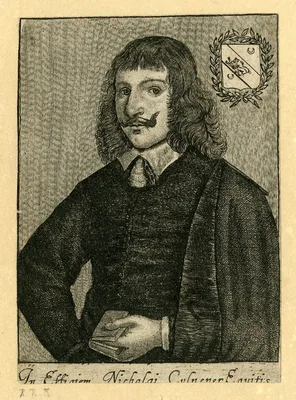
1708 CULPEPER, Nicholas (1616 – 1654)
The English physician.
This reprint of Culpeper’s popular work on herbal remedies was the first medical book (94pp.) printed in North America.
GMN 1828.1 · https://historyofmedicine.com/id/2155
1720 CULPEPER, Nicholas (1616 – 1654)
Pharmacopoeia Londinensis; or the London dispensatory…
The first herbal printed in North America, and the first full-length medical book published in North America. From the 1653 London edition.
GMN 1828.2 · https://historyofmedicine.com/id/2160
1721 BOYLSTON, Zabdiel (1679 – 1766)
Some account of what is said of inoculating or transplanting the small pox by the learned Dr. Emmanuel Timonius, and Jacobus Pylarinus. With some remarks theron. To which are added, a few queries in answer to the scruples of many about the lawfulness of this method.
An abridgement of Nos. 5409 & 5410 together with Boylston’s remarks. From internal evidence this 24-page pamphlet would appear to be the first North American publication on inoculation. See No. 5415. Digital facsimile…
GMN 5410.1 · https://historyofmedicine.com/id/7308
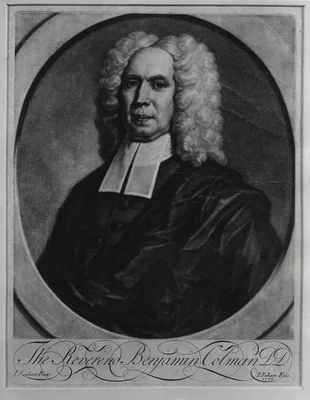
1721 COLMAN, Benjamin (1673 – 1747)
Some observations on the new method of receiving the smallpox by ingrafting or inoculating.
This work offers general support for the practice of Zabdiel Boylston, detailing some of Boylston’s cases, including accounts of occasions when patients died. Reprinted with additional material by Daniel Neal, as A na…
GMN 5411 · https://historyofmedicine.com/id/7309
1722 DOUGLASS, William (1691 – 1752)
Inoculation of the smallpox as practised in Boston.
GMN 5412 · https://historyofmedicine.com/id/7312
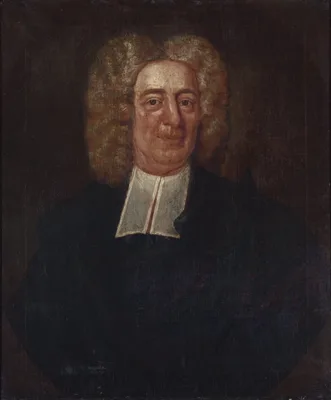
1722 MATHER, Cotton (1663 – 1728)
An account of the method and success of inoculating the small pox in Boston in New England.
Mather republished reports of earlier writers on inoculation. He persuaded Boylston to adopt the practice in June 1721, and he supported Boylston during a period of great opposition to inoculation.
GMN 5414 · https://historyofmedicine.com/id/7318
1736 DOUGLASS, William (1691 – 1752)
The practical history of a new epidemical eruptive miliary fever, with an angina ulcusculosa, which prevailed in Boston New England in the years 1735 and 1736.
Douglass left the first adequate clinical description of scarlet fever, which he called angina ulcusculosa, in his account of New England’s first scarlet fever epidemic. He was one of the first American physicians to …
GMN 5076 · https://historyofmedicine.com/id/5925
1751 BARTRAM, John (1699 – 1777); KALM, Pehr [Pietari; Peter] (1716 – 1779)
Observations on the inhabitants, climate, soil, rivers, productions, animals, and other matter worthy of notice. Made by Mr. John Bartram, in his travels from Pensilvania to Onondago, Oswego and the Lake Ontario, in Canada. To which is annex'd, a curious account of the cataracts at Niagara, by Mr. Peter Kalm....
Digital facsimile from Biodiversity Heritage Library at this link.
GMN 7677 · https://historyofmedicine.com/id/9849
1753 –1761 KALM, Pehr [Pietari; Peter] (1716 – 1779)
En Resa til Norra America. 2 vols.
Between 1748 and 1749, Kalm, a Swedish naturalist and student of Linnaeus, traveled throughout northeast America, specifically in Pennsylvania, Delaware, New Jersey, New York, and Canada, surveying the countryside, an…
GMN 9923 · https://historyofmedicine.com/id/12111
1754 FRANKLIN, Benjamin (1706 – 1790)
Some account of the Pennsylvania Hospital, from its first rise, to the beginning of the fifth month, called May 1754.
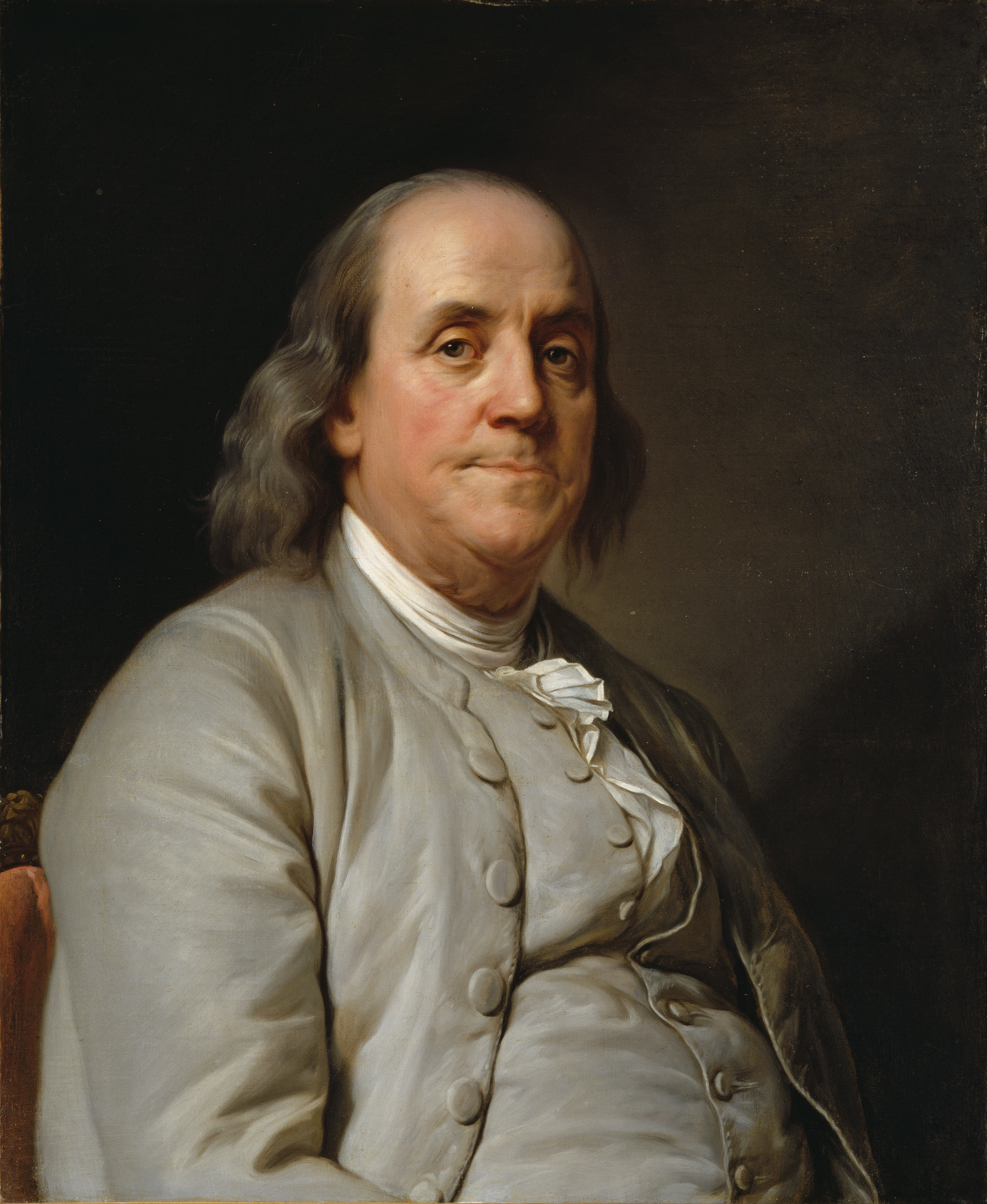
Franklin was a prime mover in establishing the Pennsylvania Hospital, the first permanent hospital built in the future United States. This publication included the text of most of the founding documents of the hospita…
GMN 7429 · https://historyofmedicine.com/id/9601
1761 FRANKLIN, Benjamin (1706 – 1790); RHOADS, Samuel (1711 – 1784)
Continuation of the account of the Pennsylvania Hospital, from the first of May 1754, to the fifth of May 1761.
Written in Franklin's absence, this continuation was printed in the same style and format as Franklin's 1761 work. Rhoads was an American architect who served as the 59th mayor of Philadelphia.
GMN 7430 · https://historyofmedicine.com/id/9602
1763 CLOSSY, Samuel (1724 – 1786)
Observations on some of the diseases of the parts of the human body. Chiefly taken from the dissections of morbid bodies.
Clossy, an Irish physician, previously at Trinity College, Dublin, gave the first anatomy classes and dissections at King’s College in New York City (now Columbia) in 1763. Clossy worked closely with other King’s Coll…
GMN 10989 · https://historyofmedicine.com/id/13185
1765 MORGAN, John (1735 – 1789)
A discourse upon the institution of medical schools in America.…
The first American publication on medical education. Morgan founded the first medical school in the United States, in connection with what is now the University of Pennsylvania.
GMN 1766.5 · https://historyofmedicine.com/id/3208
1769 BARD, Samuel (1742 – 1821)
A discourse upon the duties of a physician, with some sentiments, on the usefulness and necessity of a public hospital: Delivered before the president and governors of King's College, at the commencement, held on the 16th of May, 1769. As advice to those gentlemen who then received the first medical degrees conferred by that university.
The first American treatise on medical ethics, and the first treatise on medical ethics published in the English language. Samuel Bard was one of the founders of King’s College, New York. Digital facsimile from the Na…
GMN 1763 · https://historyofmedicine.com/id/3195
1785 MARSHALL, Humphrey (1722 – 1801)
Arbustrum Americanum: the American grove, or, an alphabetical catalogue of forest trees and shrubs…
Like his cousin, John Bartram (No. 1832), Marshall maintained a private botanical garden. According to W. Darlington the above work is “the first truly indigenous botanical essay published in the Western Hemisphere”. …
GMN 1836.1 · https://historyofmedicine.com/id/2189
1787 LATHROP, John (1740 – 1816)
A Discourse before the Humane Society, ... Delivered on the Second Tuesday of June, 1787.
The first separate work on resuscitation published in the United States. A list of “Methods of Treatment to be used with Persons apparently dead from drowning, &c.” appears on p. iv; these methods included warming the…
GMN 7214 · https://historyofmedicine.com/id/9381
1790 GARDETTE, James (1756 – 1831)
Remarks on the diseases of the teeth.
The first "scientific" paper on dentistry to appear in an American periodical. Trained in France, Gardette accepted a commission as a surgeon in the French navy and went to America in 1778 when France sent her ships t…
GMN 3677.1 · https://historyofmedicine.com/id/5543
1791 UNITED STATES
Return of the whole number of persons with the several districts of the United States, according to "An Act Providing for the Enumeration of the Inhabitants of the United States," passed March the first, one thousand seven hundred and ninety-one.
The first Census of the United States was conducted on August 2, 1790. The results were used to allocate Congressional seats (congressional apportionment), electoral votes, and funding for government programs.The fede…
GMN 8580 · https://historyofmedicine.com/id/10757
1797 SEAMAN, Valentine (1770 – 1817)
An inquiry into the cause of the prevalence of the yellow fever in New-York.
Includes four early plot maps; Seaman was one of the first to create maps that attempted to show the spread of contagious disease.
GMN 7687 · https://historyofmedicine.com/id/9859
1798 BARTON, Benjamin Smith (1766 – 1815)
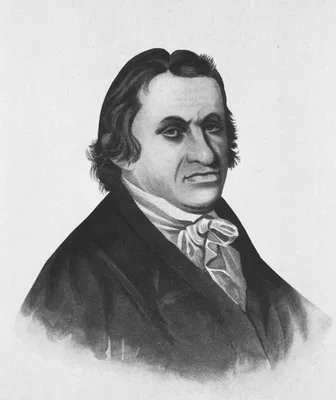
Collections for an essay towards a materia medica of the United States. Read before the Philadelphia Medical Society, on the twenty-first of February, 1798.
Digital facsimile of the 1798 edition from the U.S. National Library of Medicine at this link. Digital facsimile of the much-expanded third edition (1810) from Google Books at this link.
GMN 9309 · https://historyofmedicine.com/id/11491
1799 BARTON, Benjamin Smith (1766 – 1815)
Fragments of the Natural History of Pennsylvania. Part First [All Published].
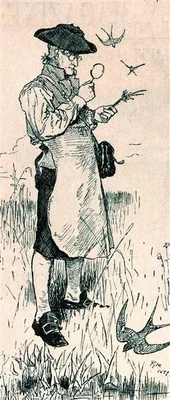
This 24-page pamphlet is the first work by an American devoted entirely to American birds. It deals predominantly with migratory birds, arranged according to the dates throughout the year 1791 in which they were first…
GMN 7218 · https://historyofmedicine.com/id/9386
1801 SKINNER, Richard Cortland ( – 1834)
A treatise on the human teeth, concisely explaining their structure and cause of disease and decay.
First American book on the teeth, a pamphlet of 26pp. It was intended for the lay public and listed sound rules of oral hygiene, explained the nature of dental diseases and their treatment, and stressed preventive mai…
GMN 3678 · https://historyofmedicine.com/id/5545
1802 COXE, John Redman (1773 – 1864)
Practical observations on vaccination: or inoculation for the cow pock.
Coxe did much to destroy ignorant prejudice against vaccination; he was the first in Philadelphia to practice it. Like Waterhouse, he inoculated his own child as his first case.
GMN 5425 · https://historyofmedicine.com/id/7362
1803 BARTON, Benjamin Smith (1766 – 1815)
Elements of botany, or outlines of the natural history of vegetables.
The first American textbook of botany. Digital facsimile of the revised 1804 London edition from the Hathi Trust at this link.
GMN 9310 · https://historyofmedicine.com/id/11492
1807 BARD, Samuel (1742 – 1821)
A compendium of the theory and practice of midwifery.
First significant textbook on obstetrics written by an American. Bard gave an excellent description of the mechanism of labor, and of pre-eclampsia. Woodcut illustrations were engraved by American physician and illust…
GMN 6163.1 · https://historyofmedicine.com/id/7749
1811 TYLER, Mary Hunt Palmer (1775 – 1866)
The maternal physician; a treatise on the nurture and management of infants, from the birth until two years old. Being the result of sixteen years' experience in the nursery. Illustrated by extracts from the most approved medical authors
The first American book on pediatrics, in the tradition of "advice books" or childcare manuals for mothers. This was the first American printed book on a medical subject written by a woman. Pages 248-75 publish a list…
GMN 7801 · https://historyofmedicine.com/id/9973
1812 RUSH, Benjamin (1745 – 1813)
Medical inquiries and observations upon the diseases of the mind.
The first American textbook on psychiatry, and, considering the state of that science in Rush’s time, one of the most noteworthy. It underwent four editions.
GMN 4924 · https://historyofmedicine.com/id/6121
1814 HENRY, Samuel
Botanic medicine: A new and complete American medical family herbal: Wherein is displayed the true properties and medical virtues of the plants, indigenous to the United States of America, together with Lewis' secret remedy newly discovered, which has been found infallible in the cure of that dreadful disease hydrophobia, produced by the bite of a mad dog.
Henry wrote that he had been a captive of the Indians during the Creek War and that he incorporated what he learned during his captivity. His work was one of the first illlustrated herbals published in the United Stat…
GMN 9641 · https://historyofmedicine.com/id/11828
1816 MANN, James (1759 – 1832)
Medical sketches of the campaigns of 1812, 13, 14. To which are added, surgical cases, observations on military hospitals; and flying hospitals attached to a moving army.
The primary record of medicine during the War of 1812.
GMN 2161.1 · https://historyofmedicine.com/id/905
1822 HARDIE, James (1758 – 1826)
An account of the yellow fever which occurred in the city of New York, in the year 1822, to which is prefixed a brief sketch of the different pestilential diseases, with which this city was afflicted, in the years 1798, 1799, 1803 & 1805, with the opinion of several of our most eminent physicians, respecting the origin of the disease, its prevention and cure.To which is added a correct list of all the deaths by yellow fever during the late season.
Digital facsimile from the Internet Archive at this link.
GMN 9523 · https://historyofmedicine.com/id/11709
1825 GRAM, Hans Burch (1786 – 1840)
The characteristics of homoeopathia. From Hahnemann's "Geist der Homöopathischen Heil-lehre."
The first publication on homeopathy issued in the United States— a translation of Hahnemann's essay. The 24-page pamphlet was dedicated to David Hosack of New York, and gratuitously distributed to leading physicians t…
GMN 6861 · https://historyofmedicine.com/id/9025
1826 DEWEES, William Potts (1768 – 1841)
A treatise on the diseases of females.
First American textbook on gynecology.
GMN 6026.1 · https://historyofmedicine.com/id/7249
1828 THACHER, James (1754 – 1844)
American medical biography. 2 vols.
Thacher was the first American medical historian. The above biography is a valuable source of information on the early medical history of the United States. Reprinted, New York, Da Capo Press, 1967.
GMN 6710 · https://historyofmedicine.com/id/7814
1832 YATES, Christopher C. (1778 – 1848)
Observations on the epidemic now prevailing in the city of New-York; called the Asiatic or spasmodic cholera; with advice to the planters of the South, for the medical treatment of their slaves.
Digital facsimile from the Internet Archive at this link.
GMN 10812 · https://historyofmedicine.com/id/13008
1845 WILLIAMS, Stephen West (1790 – 1855)
American medical biography…
Biographies of American physicians who died after publication of Thacher (No. 6710). Reprint, New York, Milford House, 1967.
GMN 6711.1 · https://historyofmedicine.com/id/7819
1845 GRISCOM, John Hoskins (1809 – 1874)
The sanitary condition of the laboring population of New York with suggestions for its improvement.
Digital facsimile from the Internet Archive at this link.
GMN 9556 · https://historyofmedicine.com/id/11742
1850 BECK, John Brodhead (1794 – 1851)
An historical sketch of the state of medicine in the American Colonies, from their first settlement to the period of the Revolution.
A pioneering historical interpretation of the development of medicine in the 13 colonies up to the American Revolution. Digital facsimile from the Internet Archive at this link. This is the second, significantly expan…
GMN 10295 · https://historyofmedicine.com/id/12486
1856 HUNT, Harriot Kezia (1805 – 1875)
Glances and glimpses; or fifty years social, including twenty years professional life.
The autobiography of the first woman to practice medicine professionally in the United States. Digital facsimile from U.S. National Library of Medicine at this link.
GMN 14125 · https://historyofmedicine.com/id/16436
1872 BOWDITCH, Nathaniel Ingersoll (1805 – 1861); ELLIS, George Edward (1814 – 1894)
A history of the Massachusetts General Hospital. [Privately printed in 1851.] Second edition, with a continuation to 1872.
Digital facsimile from the Internet Archive at this link.
GMN 8613 · https://historyofmedicine.com/id/10790
1907 HAMILTON, Alexander (1712 – 1756)
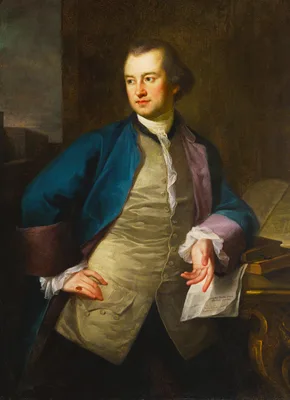
Hamilton's Itinerarium; being a narrative of a journey from Annapolis, Maryland, through Delaware, Pennsylvania, New York, New Jersey, Connecticut, Rhode Island, Massachusetts and New Hampshire, from May to September, 1744, Edited by Albert Bushnell Hart.
Hamilton's Itinerarium was first issued by Albert Bushnell Hart in an edition privately printed by William K. Bixby, St. Louis, Missouri, 1907. It was republished as Gentleman's progress: the Itinerarium of Dr. Alexan…
GMN 7364 · https://historyofmedicine.com/id/9536
1908 BEERS, Clifford Whittingham (1876 – 1943)
A mind that found itself.
In 1900 Beers was confined to a private mental institution for depression and paranoia. He was later confined to another private hospital as well as a state institution. During those periods he experienced and witness…
GMN 9724 · https://historyofmedicine.com/id/11911
1911 AIKENS, Charlotte Albina (1868 – 1949)
Hospital management: A handbook for hospital trustees, superintendents, training-school principals, physicians, and all who are actively engaged in promoting hospital work. Edited by Charlotte A. Aikens.
Digital facsimile from the Google Books at this link.
GMN 8598 · https://historyofmedicine.com/id/10775
1957 HAZLETT, Theodore Lyle (1885 – 1967); HUMMEL, William W
Industrial medicine in western Pennsylvania, 1850-1950.
Probably the first history of occupational medicine in any part of the United States. Digital facsimile from the Hathi Trust at this link.
GMN 8669 · https://historyofmedicine.com/id/10846
1963 COLDEN, Jane (1724 – 1766); RICKETT, Harold William (1896 – 1989); HALL, Elizabeth Cornelia (1898 – 1989)
Botanic manuscript of Jane Colden, 1724-1766. Edited by H.W. Rickett and E.C. Hall.
Colden was the first distinguished American woman botanist. Her work is known only from an untitled manuscript by her on the flora of the lower Hudson River Valley of New York that is preserved in the Natural History …
GMN 7868 · https://historyofmedicine.com/id/10040