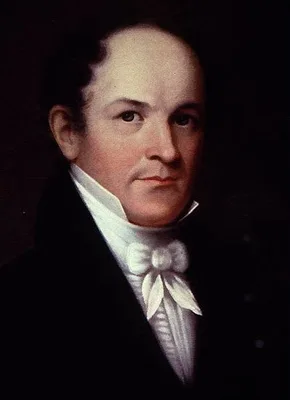
1818 NUTTALL, Thomas (1786 – 1859)
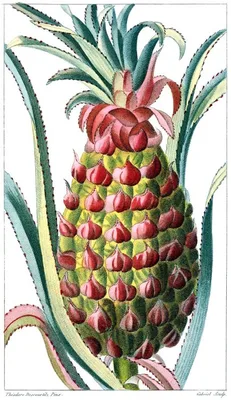
The genera of North American plants, and a catalogue of the species to the year 1817. 2 vols.
The first comprehensive botany of the United States. Digital facsimile from the Internet Archive at this link.
GMN 7771 · https://historyofmedicine.com/id/9943
1818 FACULTÉ DE MÉDECINE DE PARIS
Codex medicamentarius sive pharmacopoea gallica jussu regis optimi et ex mandato summi rerum internarum regni administri, editus a Facultate Medica Parisiensi anno 1818.
The first French national pharmacopeia. The French pharmacopeia became the model for later national attempts to publish national pharmacopeias. Notably the first U.S. pharmacopeia was issued in 1820. After a legal not…
GMN 10268 · https://historyofmedicine.com/id/12459
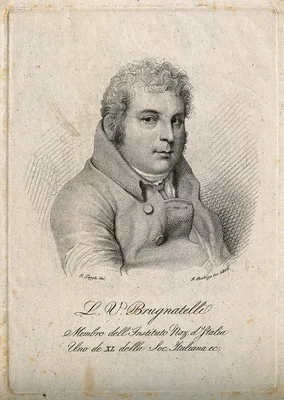
1818 BRUGNATELLI, Luigi Valentino (1761 – 1818)
Pharmacopoeia Geniki.
The first pharmacopeia printed in Turkey. This was a translation into Greek from Brugnatelli's Farmakopoea ad uso degli Speziali, e Medici Moderni della Repubblica Italiana. The printer in Istanbul was not identified.…
GMN 13075 · https://historyofmedicine.com/id/15327
1819 DOUGLAS, John (1788 – 1861)
Medical topography of Upper Canada.
The only book on the War of 1812 by a British or Canadian surgeon, and the first medical book on the Province of Ontario, Canada. This and the work of Mann (No. 2161.1) are the only books on medicine in the War of 181…
GMN 2162.1 · https://historyofmedicine.com/id/1005
1819 BATEMAN, Thomas (1778 – 1821)
Reports on the diseases of London, and the state of the weather, from 1804-1816; including practical remarks on the causes and treatment of the former; and preceded by a historical view of the state of health and disease in the metropolis in past times.
GMN 10065 · https://historyofmedicine.com/id/12254
1819 BÉRARD, Joseph Frédéric (1789 – 1828)
Doctrine médicale de l'École de Montpellier, et comparaison de ses principes avec ceux des autres écoles d'Europe.
Digital facsimile from Google Books at this link.
GMN 10066 · https://historyofmedicine.com/id/12255
1819 PASCALIS OUVIERE, Felix (1762 – 1833)
A statement of the occurrences during a malignant yellow fever in the city of New-York, in the summer and autumnal months of 1819; and of the check given to its progress, by the measures adopted by the Board of Health. With a list of cases and names of sick persons, and a map of their places of residence within the infected and proscribed limits: With a view of ascertaining, by comparative arguments, whether the distemper was engendered by domestic causes, or communicated by human contagion from foreign ports.
Pascalis mapped this yellow fever outbreak using a method similar to Valentine Seaman, but with a more extensive and detailed list of cases. A condensation of his 60-page pamphlet with a reissue of his map appeared in…
GMN 10456 · https://historyofmedicine.com/id/12649
1820 SPALDING, Lyman (1775 – 1821)
Pharmacopoeia of the United States of America. 1820
The first official US pharmacopoeia. Spalding began campaigning for a national pharmacopeia in 1815. His efforts finally bore fruit in a national convention that met in 1820 and adopted a pharmacopeia based mainly on …
GMN 1845 · https://historyofmedicine.com/id/2297
1820 STEPHENSON, John (1797 – 1842)
Dissertatio chirurgo-medica inauguralis de velosynthesi.
Stephenson, a medical student from Montreal, was the first to be operated upon by Roux (No. 5739.1) for the repair of cleft of the soft palate. He described the operation in his graduation thesis. Stephenson later fou…
GMN 5740 · https://historyofmedicine.com/id/6538
1820 THOMSON, James
A treatise on the diseases of Negroes, as they occur in the island of Jamaica: with observations on the country remedies.
Digital facsimile from the National Library of Medicine, Internet Archive, at this link.
GMN 7055 · https://historyofmedicine.com/id/9222
1820 PARISET, Étienne (1770 – 1847); MAZET, André (1793 – 1821)
Observations sur la fièvre jaune, faites à Cadix, en 1819 par MM. Pariset et Mazet, docteurs en médecine de la Faculté de Paris, et rédigées par M. Pariset.
Pariset and Mazet distinguished themselves combating an outbreak of yellow fever in Spain. Pariset's colleague was apparently not involved with publication of the book, and died in a yellow fever outbreak in Barcelona…
GMN 8948 · https://historyofmedicine.com/id/11127
1820 GOMES, Bernardino António (1769 – 1823)
Ensaio dermosographico ou Succinta e systematica descripção das doenças cutaneas, conforme os principios e observações dos doutores Willan, e Bateman, com indicacão dos respectivos remedios aconselhados por estes celebres authores, e alguns outros.
The first book on dermatology published in Portuguese. Digital facsimile from the Internet Archive at this link.
GMN 9072 · https://historyofmedicine.com/id/11251
1820 SĀNĪZĀDE, Mehmed Atāullah Efendi (1771 – 1826)
Hamse-i Şanizade. Miratü'l Ebdan fi Teşrih-i Azaü'l-İnsan [About anatomy]; Usulü't Tabia [Book of physiology]; Miyaru'l-Etibba [Practice of medicine].
This illustrated compendium of anatomy, physiology, and internal medicine was first medical work in Turkish printed by letterpress in the Ottoman Empire. It was also one of the first medical works in Turkish to draw t…
GMN 9696 · https://historyofmedicine.com/id/11883
1820 RAFINESQUE, Constantine Samuel (1783 – 1840)
Ichthyologia Ohiensis, or natural history of the fishes inhabiting the river Ohio and its tributary streams, preceded by a physical description of the Ohio and its branches.
In Rafinesque's polemic style the title page includes the following statement: "The art of seeing well, or of noticing and distinguishing with accuracy the objects which we perceive, is a high faculty of the mind, unf…
GMN 10617 · https://historyofmedicine.com/id/12810
1820 –1824 ROXBURGH, William (1751 – 1815); WALLICH, Nathaniel (1786 – 1854); CAREY, William (1761 – 1834)
Flora Indica; or descriptions of Indian plants by the late William Roxburgh. Edited by William Carey, to which are added descriptions of plants recently discovered by Nathaniel Wallich. 2 vols.
Digital facsimile from the Internet Archive at this link.
GMN 10762 · https://historyofmedicine.com/id/12958
1820 CHÂNI-ZÂDÉH MEHEMMED ATAOULLA
Mirât ul-abd fi techrīhh azâ il-insân.
The first book on anatomy and medicine printed in Turkish. The title may be translated as Miroir des corps dans l'anatomie des membres de l''homme. The work was primarily derived from European sources and included 56 …
GMN 13116 · https://historyofmedicine.com/id/15369
1820 ATAULLAH ('ATĀ' ALLĀH), Sanizade Mehmed (1771 – 1826)
Hamse-i-Sânizade.
Written in Ottoman Turkish, and printed in Istabul, this was the first illustrated medical book printed in the Muslim world. Digital facsimile from the Bayerische StaatsBibliothek at this link.
GMN 13927 · https://historyofmedicine.com/id/16221
1821 NUTTALL, Thomas (1786 – 1859)
A journal of travels into the Arkansas territory, during the year 1819. With occasional observations on the manners of the aborigines. Illustrated by a map and other engravings.
Nuttall travelled from Philadelphia, down the Ohio and Mississippi rivers to the Arkansas. From there he travelled across Arkansas to the interior of the modern Oklahoma; returning via the Arkansas and Mississippi riv…
GMN 7772 · https://historyofmedicine.com/id/9944
1821 –1829 DESCOURTILZ, Michel Étienne (1777 – 1835); DESCOURTILZ, Jean-Théodore (1796 – 1855)
Flore pittoresque et médicale des Antilles, ou, Histoire naturelle des plantes usuelles des colonies françaises, anglaises, espagnoles et portugaises; par M. E. Descourtilz. Peinte par J. Th. Descourtilz. 8 vols.
Medical botany of the Caribbean, finely illustrated with colored plates after paintings by the author's son. Digital facsimile from the Biodiversity Heritage Library at this link.
GMN 8547 · https://historyofmedicine.com/id/10724
1821 TULLY, James D.
The history of plague, as it has lately appeared in the islands of Malta, Gozo, Corfu, Cephalonia, &c. detailing specific contagion of that disease, with particulars of the means adeopted for its eradication.
Concerns the Maltese plague,. 1813-1814. Digital facsimile from the Internet Archive at this link.
GMN 12757 · https://historyofmedicine.com/id/15003
1821 BIANCHI, T. - X.
Notice sur le premier ouvrage d'anatomie et de médecine, imprimé en Turc, à Constantinople, en 1820, intitulé Miroir des corps dans l'anatomie de l'homme envoyé et offert par S. Exc. L'Ambassadeur de France près la sublime porte a la Bibliothèque du Roi; Suivie du Catalogue des livres turcs, arabes et persans, imprimés à Contantinople, depuis l'introduction de l'Imprimerie, en 12726-27, jusqu'en 1820.
Bianchi characterized himself on the title page as Adj. Secretarty-Interpreter of the King for Oriental Languages. In this pamphlet he translated parts of the text of Chani-Zadeh and also translated the Table of Conte…
GMN 13115 · https://historyofmedicine.com/id/15368
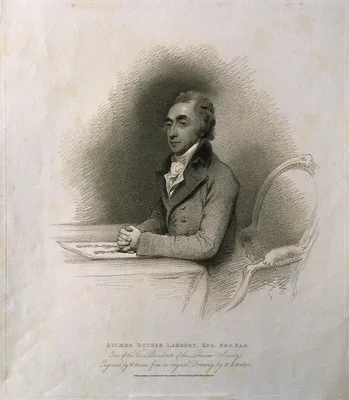
1821 HUMBOLDT, Friedrich Wilhelm Heinrich Alexander von (1769 – 1859); LÓPEZ, Hipólito Ruiz (1754 – 1816); LAMBERT, Aylmer Bourke (1761 – 1842); LAUBERT, Jean Charles (1762 – 1834)
An illustration of the genus cinchona; comprising descriptions of all the officinal Peruvian barks, including several new species. Baron de Humboldt's Account of the Cinchona forests of South America, and Laubert's Memoir on the different species of quinquina: To which are added several dissertations of Don Hippolito Ruiz on various medicinal plants of South America ... And a short account of the spikenard of the ancients.
Digital facsimile from Biodiversity Heritage Library at this link.
GMN 13324 · https://historyofmedicine.com/id/15591
1821 –1824 ELLIOTT, Stephen (1771 – 1830)
A sketch of the botany of South-Carolina and Georgia. 2 vols.
A founding work of botany of the American South, containing first botanical descriptions of many species. Initially published in parts from 1816 to 1824. Digital facsimile from Biodiversity Heritage Library at this link.
GMN 13911 · https://historyofmedicine.com/id/16204
1822 –1935 SACKLÉN, Johan Fredric (1763 – 1851); ET AL
Sveriges läkare-historia ifran Konung Gustaf den I:s till närvarande tid. 5 vols.
GMN 6731 · https://historyofmedicine.com/id/7851
1822 GOMES, Bernardino António (1769 – 1823)
Memoria sobre a virtude toenifuga da romeira, com observações zoologicas e zoonomicas relativas á toenea, e com huma estampa.
On the use of a root medicine to treat tapeworms, roundworms and similar parasites. The author refers to cases from Portuguese Africa, India and Brazil, and gives clinical observations based on his own case studies, s…
GMN 9071 · https://historyofmedicine.com/id/11250
1822 HARDIE, James (1758 – 1826)
An account of the yellow fever which occurred in the city of New York, in the year 1822, to which is prefixed a brief sketch of the different pestilential diseases, with which this city was afflicted, in the years 1798, 1799, 1803 & 1805, with the opinion of several of our most eminent physicians, respecting the origin of the disease, its prevention and cure.To which is added a correct list of all the deaths by yellow fever during the late season.
Digital facsimile from the Internet Archive at this link.
GMN 9523 · https://historyofmedicine.com/id/11709
1822 BIGELOW, Jacob (1786 – 1879)
A treatise on the materia medica, intended as a sequel to the Pharmacopoeia of the United States: Being an account of the origin, qualities and medical uses of the articles and compounds, which constitute that work, with their modes of prescription and administration.
Bigelow, who with Lyman Spalding, was largely responsible for the creation and publication in 1820 of the first U.S. pharmacopeia, published this valuable explanatory and supplementary volume two years later. It was p…
GMN 10068 · https://historyofmedicine.com/id/12257
1822 RICHARDSON, Robert (1779 – 1847)
Travels along the Mediterranean, and parts adjacent; in the company with the Earl of Belmore, during the years 1816-17-18: Extending as far as the second cataract of the Nile, Jerusalem, Damascus, Balbec &c. &c. 2 vols.
Digital facsimile from the Internet Archive at this link.
GMN 12497 · https://historyofmedicine.com/id/14730
1823 THACHER, James (1754 – 1844)
A military journal during the American Revolutionary War, from 1775-1783…
The first American medical historian, Thacher gave the best contemporary account of medicine during the Revolutionary War, as well as an important history of the war in general. See No. 6710.
GMN 6584.9 · https://historyofmedicine.com/id/8495
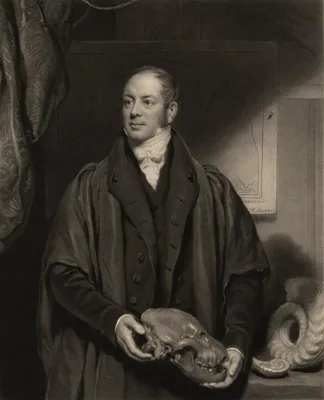
1823 BUCKLAND, William (1784 – 1856)
Reliquiae diluvianae; or, observations on the organic remains contained in caves, fissures, and diluvial gravel, and on other geological phenomena, attesting the action of an universal deluge.
Buckland’s elaborately illustrated Reliquiae diluvianae (Relics of the Flood) describes his geological and paleontological researches of the early 1820s, including his investigations of the Kirkdale and Paviland caves…
GMN 7254 · https://historyofmedicine.com/id/9423
1823 HUNTER, John Dunn (1788 – 1827)
Manners and customs of several Indian tribes located west of the Mississippi; including some account of the soil, climate, and vegetable productions, and the Indian materia medica: to which is prefixed the history of the author's life during a residence of several years among them.
Hunter claimed that as a child he had been captured by the Cherokee before they came to Texas. He adopted the name of an English benefactor, John Dunn, and later added the name "Hunter" given by the Indians because of…
GMN 8798 · https://historyofmedicine.com/id/10976
1823 PARROTT, William Stuart (1798 – 1863)
Reflexiones sobre la importancia de conservar la dentadura y manejo necesario al efecto: En lo que se incluyen una explicacion de los principios teoricos de dentista, y un método practico de curacion en casos de abandono.
In addition to his dental training Parrott was a merchant, businessman, consult to Mexico (1834-1836) and confidential U.S. agent to Mexico during 1845-1848, the period of the Mexican-American War. This 72 page bookle…
GMN 12860 · https://historyofmedicine.com/id/15107
1824 –1828 SAY, Thomas (1787 – 1834)
American entomology, or descriptions of the insects of North America. Illustrated by coloured figures from original drawings executed from nature. 3 vols.
Plates by Titian Ramsay Peale, H. Bridport, C. A. Lesueur, W. W. Wood, and C. Tiebout; engraved by Tiebout, G. Lang, and Longacre. Digital facsimile from the Internet Archive at this link.
GMN 9484 · https://historyofmedicine.com/id/11668
1824 –1827 GÜNTHER, Gustav Biedermann (1801 – 1866); THIENEMANN, Friedrich August Ludwig (1793 – 1858)
Reise im Norden Europa's, vorzüglich in Island: in den Jahren 1820 bis 1821. 2 vols.
Digital facsimile from Google Books at this link.
GMN 9531 · https://historyofmedicine.com/id/11717
1824 WALLACE, James
A voyage to India: Containing reflections on a voyage to Madras and Bengal, in 1821, in the ship Lonach; instructions for the preservation of health in Indian climates; and hints to surgeons and owners of private trading-ships.
Digital facsimile from Google Books at this link.
GMN 13875 · https://historyofmedicine.com/id/16165
1825 WATERTON, Charles (1782 – 1865)
Wanderings in South America, the North-West of the United States, and the Antilles, in the years 1812, 1816, 1820, and 1824.
Waterton traveled to the Guyana region of South America to obtain curare. He provided a detailed description of its paralyzing effects, its preparation by distillation, and the blowpipe and darts used to deliver it. O…
GMN 2074 · https://historyofmedicine.com/id/2541
1825 GRAM, Hans Burch (1786 – 1840)
The characteristics of homoeopathia. From Hahnemann's "Geist der Homöopathischen Heil-lehre."
The first publication on homeopathy issued in the United States— a translation of Hahnemann's essay. The 24-page pamphlet was dedicated to David Hosack of New York, and gratuitously distributed to leading physicians t…
GMN 6861 · https://historyofmedicine.com/id/9025
1825 BELL, John (1763 – 1820)
Observations on Italy.
Digital facsimile of the 1825 edition from the Internet Archive at this link. The second, posthumous, edition published in English in Naples by Fibreno in 1834 includes additional chapters by Bell that were not includ…
GMN 7320 · https://historyofmedicine.com/id/9490
1825 –1828 BONAPARTE, Charles Lucien Jules Laurent, 2nd Prince of Canino (1803 – 1857)
American ornithology; or, the natural history of birds inhabiting the United States, not given by Wilson. 4 vols.
Bonaparte, nephew of Napoleon, set out to document birds in the United States that were not mentioned by Alexander Wilson.
GMN 9499 · https://historyofmedicine.com/id/11684
1825 HEUSTIS, Jabez Wiggins (1784 – 1841)
Medical facts and inquiries, respecting the causes, nature, prevention and cure of fever: more expressly in relation to the endemic fevers of summer and autumn in the southern states: Together with a history of the bilious remitting fever of Alabama, as it appeared in Cahawba and its vicinity in the summers and autumns of 1821 and 1822.
Digital facsimile from the U.S. National Library of Medicine at this link.
GMN 10518 · https://historyofmedicine.com/id/12711
1825 LYALL, Robert (1789 – 1831)
Travels in Russia, the Krimea, the Causcasus and Georgia.
GMN 13874 · https://historyofmedicine.com/id/16164
1826 DEWEES, William Potts (1768 – 1841)
A treatise on the diseases of females.
First American textbook on gynecology.
GMN 6026.1 · https://historyofmedicine.com/id/7249
1826 TORREY, John (1796 – 1873)
A compendium of the flora of the northern and middle states, containing generic and specific descriptions of all the plants, exclusive of the cryptogamia, hitherto found in the United States, north of the Potomac.
Published after Torrey's appointment as profess or chemistry at West Point, in a small, handy format for botanical students, that "its small size will enable them to use it without inconvenience in their herborization…
GMN 10513 · https://historyofmedicine.com/id/12706
1826 GRIFFITH, Mary (1772 – 1846)
Observations on the May-Bug, and its ravages on plum and other trees, and also on the means of preventing the mischief.
Griffth was probably the first American woman to publish in the sciences outside of materia medica and childcare. This article was probably her earliest non-geological publication. See Robt S. Cox, "A spontaneous flow…
GMN 11415 · https://historyofmedicine.com/id/13614
1826 RICORD, Jean Baptiste (1777 – 1837)
Recherches et expériences sur les poisons d'Amérique: Tirés des trois règnes de La nature, et envisagés sous les rapports de l'histoire naturelle, de la physiologie, de le pathologie et de la chimie, avec un essai sur l'empoisonnement par Les miasmes des marais, le mal d'estomac des nègres (cachexia Africana), et les maladies qui ressemblent aux empoisonnemens; pour servir à la toxicologie générale du continent d'Amérique et des Antilles.
GMN 13365 · https://historyofmedicine.com/id/15636
1827 MOTT, Valentine (1785 – 1865)
Successful amputation at the hip-joint.
This is “the first reported amputation at the hip joint found in the American medical literature” (Rutkow). See No. 4462.
GMN 4451.1 · https://historyofmedicine.com/id/59
1828 –1830 RAFINESQUE, Constantine Samuel (1783 – 1840)
Medical flora; or, manual of the medical botany of the United States of North America. Containing a selection of above 100 figures and descriptions of medical plants, with their names, qualities, properties, history &c; and notes or remarks on nearly 500 equivalent substitutes. 2 vols.
Rafinesque was a great botanist, conchologist, archaeologist, and economist. Born in a suburb of Istanbul, he was also a world citizen and a prolific writer with 939 works to his credit. He died in extreme poverty in …
GMN 1849 · https://historyofmedicine.com/id/2331
1828 ANNESLEY, Sir James (1780 – 1847)
Researches into the causes, nature and treatment of the more prevalent diseases of India, and of warm climates generally. Illustrated with cases, post mortem examinations, and numerous coloured engravings of morbid structures. 2 vols.
A landmark in geographical pathology, superbly illustrated. Annesley’s cases, collected over many years’ service throughout India, represented the most complete treatment of diseases on the sub-continent to date. Digi…
GMN 1776.1 · https://historyofmedicine.com/id/3342
1828 THACHER, James (1754 – 1844)
American medical biography. 2 vols.
Thacher was the first American medical historian. The above biography is a valuable source of information on the early medical history of the United States. Reprinted, New York, Da Capo Press, 1967.
GMN 6710 · https://historyofmedicine.com/id/7814
1828 GREAT BRITAIN. PARLIAMENT
Report from the select committee on anatomy. House of Commons, 22 July 1828.
In the first half of 1828, in response to increasing calls for reform, the British Parliament appointed a committee to "enquire into the manner of obtaining subjects for dissection by schools of Anatomy and the State …
GMN 7096 · https://historyofmedicine.com/id/9263