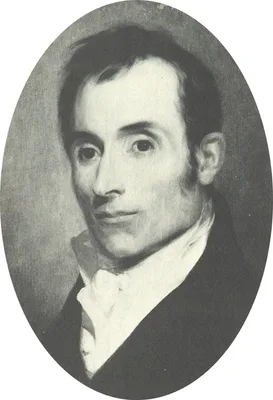
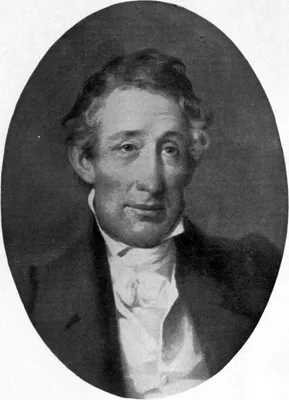
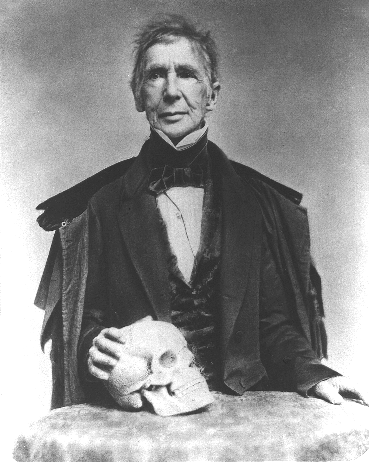
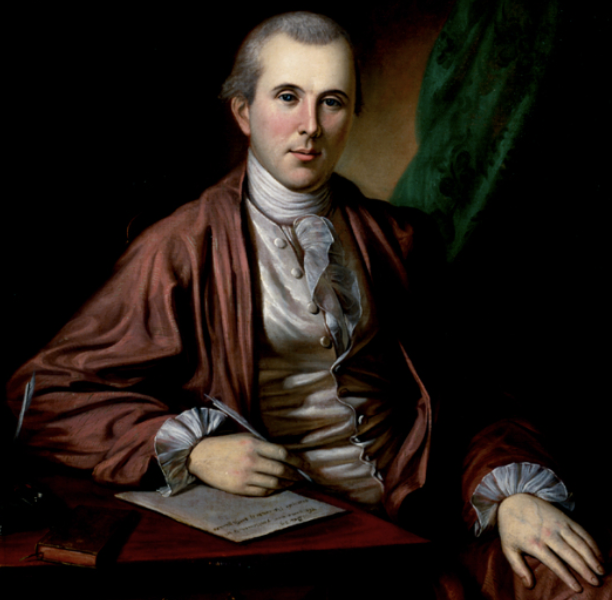
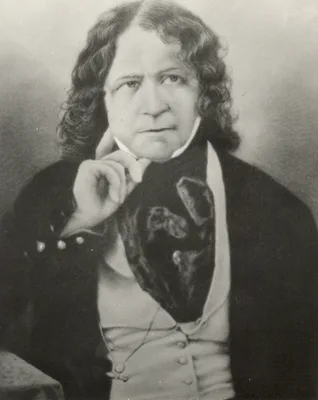
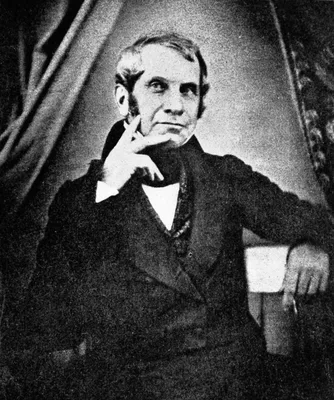
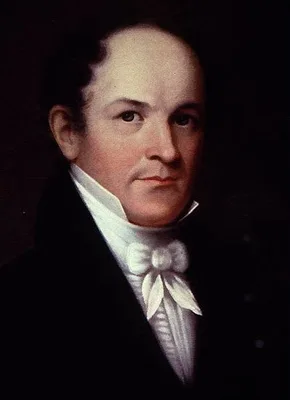
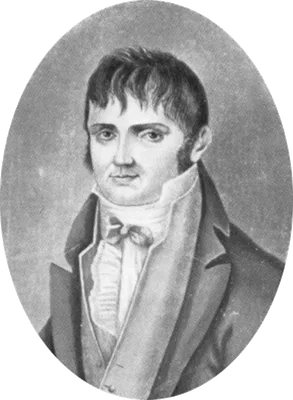
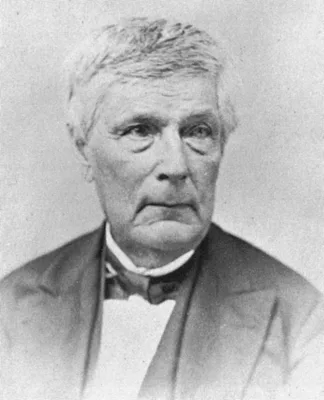
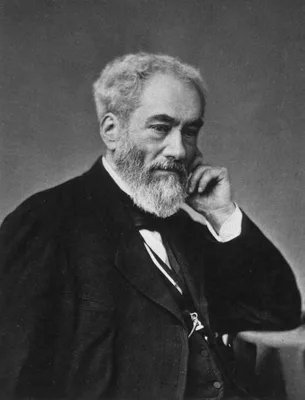
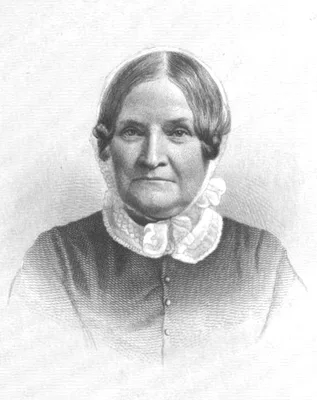
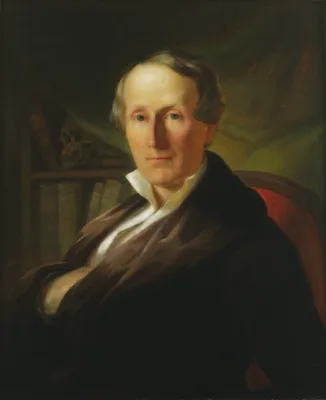
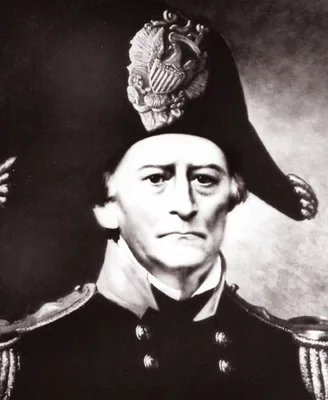
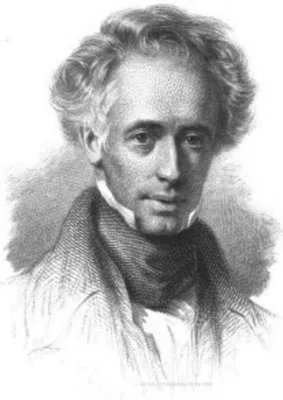
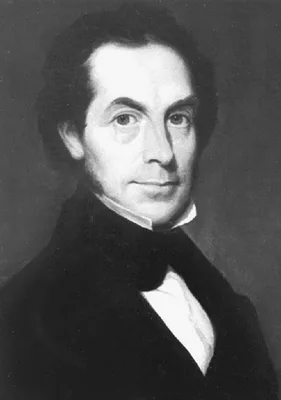
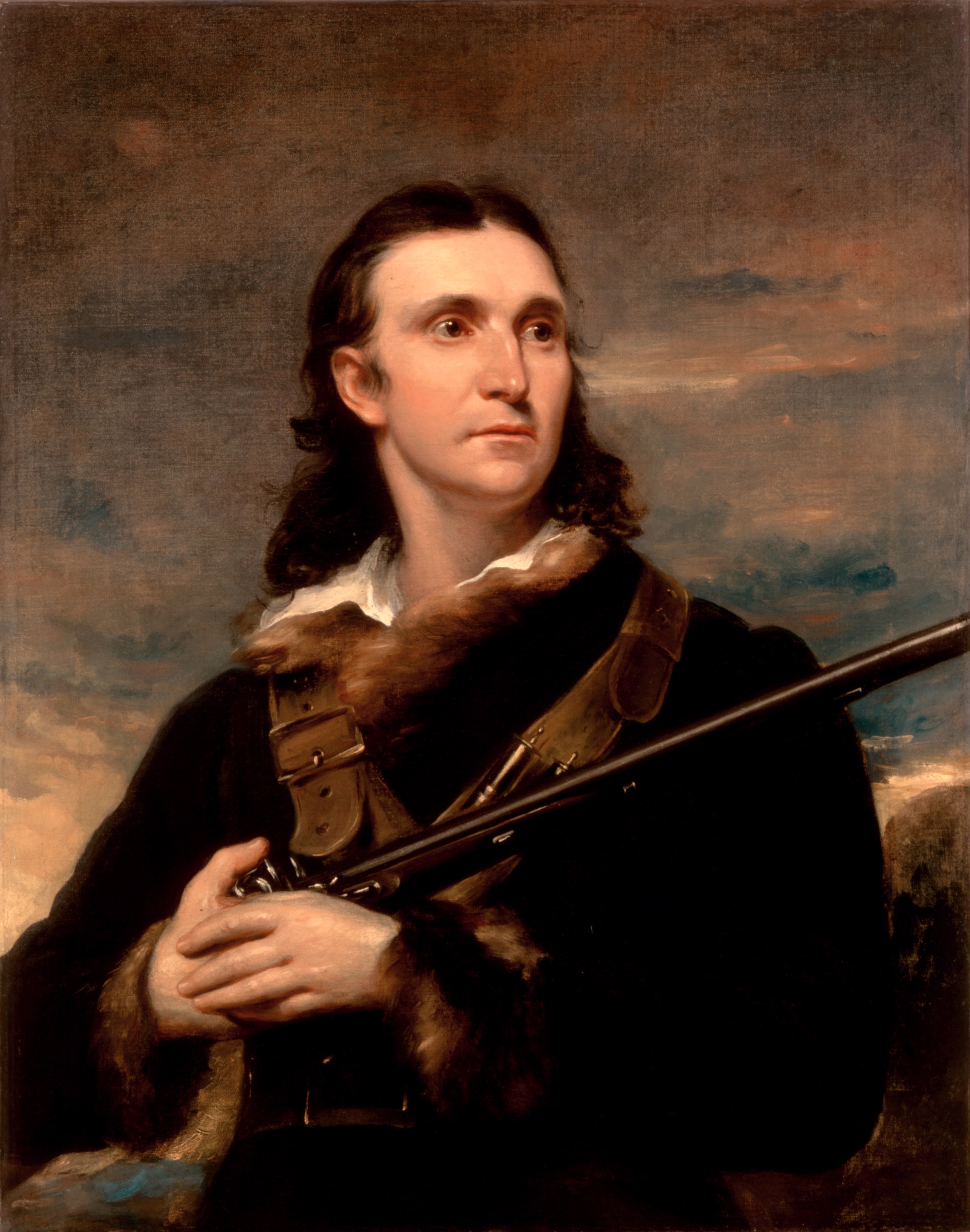
1808 –1814 WILSON, Alexander (1766 – 1813); ORD, George
American ornithology; or, the natural history of the birds of the United States: Illustrated with plates engraved and colored from original drawings taken from nature. 9 vols.
Considered the "father of American ornithology," Wilson was the greatest American ornithologist before Audubon. Wilson died with the 7th volume in press, and the 8th and 9th volumes were completed by Wilson's friend G…
GMN 9498 · https://historyofmedicine.com/id/11683
1809 WARREN, John Collins (1778 – 1856)
Cases of organic diseases of the heart. With dissections and some remarks intended to point out the distinctive symptoms of these diseases.
The first monograph on heart disease written and published in the United States. Digital text from Project Gutenberg at this link.
GMN 10602 · https://historyofmedicine.com/id/12795
1811 TYLER, Mary Hunt Palmer (1775 – 1866)
The maternal physician; a treatise on the nurture and management of infants, from the birth until two years old. Being the result of sixteen years' experience in the nursery. Illustrated by extracts from the most approved medical authors
The first American book on pediatrics, in the tradition of "advice books" or childcare manuals for mothers. This was the first American printed book on a medical subject written by a woman. Pages 248-75 publish a list…
GMN 7801 · https://historyofmedicine.com/id/9973
1812 RUSH, Benjamin (1745 – 1813)
Medical inquiries and observations upon the diseases of the mind.
The first American textbook on psychiatry, and, considering the state of that science in Rush’s time, one of the most noteworthy. It underwent four editions.
GMN 4924 · https://historyofmedicine.com/id/6121
1814 PURSH, Frederick Traugott (1774 – 1820)
Flora Americae septentrionalis; or, a systematic arrangement and description of the plants of North America. Containing, besides what have been described by preceding authors, many new and rare species, collected during twelve years travels and residence in that country. 2 vols.
The first survey of all plants of North America above Mexico, including more than 3,000 species and 470 genera; describes more than 100 species collected by the Lewis and Clark expedition. Digital facsimile from Botan…
GMN 7876 · https://historyofmedicine.com/id/10048
1814 HENRY, Samuel
Botanic medicine: A new and complete American medical family herbal: Wherein is displayed the true properties and medical virtues of the plants, indigenous to the United States of America, together with Lewis' secret remedy newly discovered, which has been found infallible in the cure of that dreadful disease hydrophobia, produced by the bite of a mad dog.
Henry wrote that he had been a captive of the Indians during the Creek War and that he incorporated what he learned during his captivity. His work was one of the first illlustrated herbals published in the United Stat…
GMN 9641 · https://historyofmedicine.com/id/11828
1816 MANN, James (1759 – 1832)
Medical sketches of the campaigns of 1812, 13, 14. To which are added, surgical cases, observations on military hospitals; and flying hospitals attached to a moving army.
The primary record of medicine during the War of 1812.
GMN 2161.1 · https://historyofmedicine.com/id/905
1817 –1819 BARTON, William Paul Crillon (1786 – 1856)
Vegetable materia medica of the United States. 2 vols.
Barton served as a naval surgeon and, in 1815, became Professor of Botany at Philadelphia. Along with Bigelow (No. 1842) Barton’s work is one of the first two botanical works with colored plates issued in the United S…
GMN 1841 · https://historyofmedicine.com/id/2277
1817 –1820 BIGELOW, Jacob (1786 – 1879)
American medical botany, being a collection of the native medicinal plants of the United States, containing their botanical history and chemical analysis, and properties and uses in medicine, diet and the arts. 3 vols.
Bigelow was professor of materia medica and botany at Harvard. This work included native American remedies. It was the first book printed in the United States to include color plates printed in color. See R.J. Wolfe, …
GMN 1842 · https://historyofmedicine.com/id/2280
1818 NUTTALL, Thomas (1786 – 1859)
The genera of North American plants, and a catalogue of the species to the year 1817. 2 vols.
The first comprehensive botany of the United States. Digital facsimile from the Internet Archive at this link.
GMN 7771 · https://historyofmedicine.com/id/9943
1819 PASCALIS OUVIERE, Felix (1762 – 1833)
A statement of the occurrences during a malignant yellow fever in the city of New-York, in the summer and autumnal months of 1819; and of the check given to its progress, by the measures adopted by the Board of Health. With a list of cases and names of sick persons, and a map of their places of residence within the infected and proscribed limits: With a view of ascertaining, by comparative arguments, whether the distemper was engendered by domestic causes, or communicated by human contagion from foreign ports.
Pascalis mapped this yellow fever outbreak using a method similar to Valentine Seaman, but with a more extensive and detailed list of cases. A condensation of his 60-page pamphlet with a reissue of his map appeared in…
GMN 10456 · https://historyofmedicine.com/id/12649
1820 SPALDING, Lyman (1775 – 1821)
Pharmacopoeia of the United States of America. 1820
The first official US pharmacopoeia. Spalding began campaigning for a national pharmacopeia in 1815. His efforts finally bore fruit in a national convention that met in 1820 and adopted a pharmacopeia based mainly on …
GMN 1845 · https://historyofmedicine.com/id/2297
1820 RAFINESQUE, Constantine Samuel (1783 – 1840)
Ichthyologia Ohiensis, or natural history of the fishes inhabiting the river Ohio and its tributary streams, preceded by a physical description of the Ohio and its branches.
In Rafinesque's polemic style the title page includes the following statement: "The art of seeing well, or of noticing and distinguishing with accuracy the objects which we perceive, is a high faculty of the mind, unf…
GMN 10617 · https://historyofmedicine.com/id/12810
1821 NUTTALL, Thomas (1786 – 1859)
A journal of travels into the Arkansas territory, during the year 1819. With occasional observations on the manners of the aborigines. Illustrated by a map and other engravings.
Nuttall travelled from Philadelphia, down the Ohio and Mississippi rivers to the Arkansas. From there he travelled across Arkansas to the interior of the modern Oklahoma; returning via the Arkansas and Mississippi riv…
GMN 7772 · https://historyofmedicine.com/id/9944
1822 HARDIE, James (1758 – 1826)
An account of the yellow fever which occurred in the city of New York, in the year 1822, to which is prefixed a brief sketch of the different pestilential diseases, with which this city was afflicted, in the years 1798, 1799, 1803 & 1805, with the opinion of several of our most eminent physicians, respecting the origin of the disease, its prevention and cure.To which is added a correct list of all the deaths by yellow fever during the late season.
Digital facsimile from the Internet Archive at this link.
GMN 9523 · https://historyofmedicine.com/id/11709
1822 BIGELOW, Jacob (1786 – 1879)
A treatise on the materia medica, intended as a sequel to the Pharmacopoeia of the United States: Being an account of the origin, qualities and medical uses of the articles and compounds, which constitute that work, with their modes of prescription and administration.
Bigelow, who with Lyman Spalding, was largely responsible for the creation and publication in 1820 of the first U.S. pharmacopeia, published this valuable explanatory and supplementary volume two years later. It was p…
GMN 10068 · https://historyofmedicine.com/id/12257
1823 THACHER, James (1754 – 1844)
A military journal during the American Revolutionary War, from 1775-1783…
The first American medical historian, Thacher gave the best contemporary account of medicine during the Revolutionary War, as well as an important history of the war in general. See No. 6710.
GMN 6584.9 · https://historyofmedicine.com/id/8495
1823 HUNTER, John Dunn (1788 – 1827)
Manners and customs of several Indian tribes located west of the Mississippi; including some account of the soil, climate, and vegetable productions, and the Indian materia medica: to which is prefixed the history of the author's life during a residence of several years among them.
Hunter claimed that as a child he had been captured by the Cherokee before they came to Texas. He adopted the name of an English benefactor, John Dunn, and later added the name "Hunter" given by the Indians because of…
GMN 8798 · https://historyofmedicine.com/id/10976
1824 –1828 SAY, Thomas (1787 – 1834)
American entomology, or descriptions of the insects of North America. Illustrated by coloured figures from original drawings executed from nature. 3 vols.
Plates by Titian Ramsay Peale, H. Bridport, C. A. Lesueur, W. W. Wood, and C. Tiebout; engraved by Tiebout, G. Lang, and Longacre. Digital facsimile from the Internet Archive at this link.
GMN 9484 · https://historyofmedicine.com/id/11668
1825 WATERTON, Charles (1782 – 1865)
Wanderings in South America, the North-West of the United States, and the Antilles, in the years 1812, 1816, 1820, and 1824.
Waterton traveled to the Guyana region of South America to obtain curare. He provided a detailed description of its paralyzing effects, its preparation by distillation, and the blowpipe and darts used to deliver it. O…
GMN 2074 · https://historyofmedicine.com/id/2541
1825 GRAM, Hans Burch (1786 – 1840)
The characteristics of homoeopathia. From Hahnemann's "Geist der Homöopathischen Heil-lehre."
The first publication on homeopathy issued in the United States— a translation of Hahnemann's essay. The 24-page pamphlet was dedicated to David Hosack of New York, and gratuitously distributed to leading physicians t…
GMN 6861 · https://historyofmedicine.com/id/9025
1825 –1828 BONAPARTE, Charles Lucien Jules Laurent, 2nd Prince of Canino (1803 – 1857)
American ornithology; or, the natural history of birds inhabiting the United States, not given by Wilson. 4 vols.
Bonaparte, nephew of Napoleon, set out to document birds in the United States that were not mentioned by Alexander Wilson.
GMN 9499 · https://historyofmedicine.com/id/11684
1825 HEUSTIS, Jabez Wiggins (1784 – 1841)
Medical facts and inquiries, respecting the causes, nature, prevention and cure of fever: more expressly in relation to the endemic fevers of summer and autumn in the southern states: Together with a history of the bilious remitting fever of Alabama, as it appeared in Cahawba and its vicinity in the summers and autumns of 1821 and 1822.
Digital facsimile from the U.S. National Library of Medicine at this link.
GMN 10518 · https://historyofmedicine.com/id/12711
1826 DEWEES, William Potts (1768 – 1841)
A treatise on the diseases of females.
First American textbook on gynecology.
GMN 6026.1 · https://historyofmedicine.com/id/7249
1826 TORREY, John (1796 – 1873)
A compendium of the flora of the northern and middle states, containing generic and specific descriptions of all the plants, exclusive of the cryptogamia, hitherto found in the United States, north of the Potomac.
Published after Torrey's appointment as profess or chemistry at West Point, in a small, handy format for botanical students, that "its small size will enable them to use it without inconvenience in their herborization…
GMN 10513 · https://historyofmedicine.com/id/12706
1826 GRIFFITH, Mary (1772 – 1846)
Observations on the May-Bug, and its ravages on plum and other trees, and also on the means of preventing the mischief.
Griffth was probably the first American woman to publish in the sciences outside of materia medica and childcare. This article was probably her earliest non-geological publication. See Robt S. Cox, "A spontaneous flow…
GMN 11415 · https://historyofmedicine.com/id/13614
1827 MOTT, Valentine (1785 – 1865)
Successful amputation at the hip-joint.
This is “the first reported amputation at the hip joint found in the American medical literature” (Rutkow). See No. 4462.
GMN 4451.1 · https://historyofmedicine.com/id/59
1828 –1830 RAFINESQUE, Constantine Samuel (1783 – 1840)
Medical flora; or, manual of the medical botany of the United States of North America. Containing a selection of above 100 figures and descriptions of medical plants, with their names, qualities, properties, history &c; and notes or remarks on nearly 500 equivalent substitutes. 2 vols.
Rafinesque was a great botanist, conchologist, archaeologist, and economist. Born in a suburb of Istanbul, he was also a world citizen and a prolific writer with 939 works to his credit. He died in extreme poverty in …
GMN 1849 · https://historyofmedicine.com/id/2331
1828 THACHER, James (1754 – 1844)
American medical biography. 2 vols.
Thacher was the first American medical historian. The above biography is a valuable source of information on the early medical history of the United States. Reprinted, New York, Da Capo Press, 1967.
GMN 6710 · https://historyofmedicine.com/id/7814
1829 –1837 BOISDUVAL, Jean Baptiste Alphonse Déchauffour de (1799 – 1879); LE CONTE, John Eatton Jr. (1784 – 1860)
Histoire général et iconographie des lepidoptérès et des chenilles de l’Amerique septentrionale.
Includes illustrations from drawings by John Abbot.
GMN 9574 · https://historyofmedicine.com/id/11761
1830 GUNN, John C.
Gunn’s domestic medicine, or poor man’s friend in the hours of affliction, pain, and sickness. This book points out, in plain language, free from doctor's terms the diseases of men, women, and children, and the latest and most approved means used in their cure, and is expressly written for the benefit of families in the western and southern states. It also contains descriptions of the medicinal roots and herbs of the western and southern country, and how they are to be used in the cure of diseases: arranged on a new and simple plan, by which the practice of medicine reduced to the principles of common sense.
Gunn intended his book to serve as a guide for frontier and rural families who lived far away from any sort of medical care so it contained instructions on how to treat a wide variety of illnesses. While the first edi…
GMN 9150 · https://historyofmedicine.com/id/11329
1830 –1836 SAY, Thomas (1787 – 1834)
American conchology, or descriptions of the shells of North America illustrated from coloured figures from original drawings executed from nature. 7 parts. Parts 1–6: New Harmony, 1830–1834; Part 7: Philadelphia, 1836.
The printer or publisher of part 7 is not identified. Digital facsimile from the Biodiversity Heritage Library at this link.
GMN 9485 · https://historyofmedicine.com/id/11669
1832 –1834 NUTTALL, Thomas (1786 – 1859)
A manual of the ornithology of the United States and of Canada. Vol. 1: The land birds. Vol. 2: The water birds.
Digital facsimile from the Internet Archive at this link.
GMN 7773 · https://historyofmedicine.com/id/9945
1832 DRAKE, Daniel (1785 – 1852)
Practical essays on medical education, and the medical profession, in the United States.
Digital facsimile from the Internet Archive at this link.
GMN 8630 · https://historyofmedicine.com/id/10807
1832 YATES, Christopher C. (1778 – 1848)
Observations on the epidemic now prevailing in the city of New-York; called the Asiatic or spasmodic cholera; with advice to the planters of the South, for the medical treatment of their slaves.
Digital facsimile from the Internet Archive at this link.
GMN 10812 · https://historyofmedicine.com/id/13008
1833 BACHE, Franklin (1792 – 1864); WOOD, George Bacon (1797 – 1879)
The dispensatory of the United States of America.
Digital facsimile of this, the first, and later editions from the Hathi Trust at this link.
GMN 10824 · https://historyofmedicine.com/id/13020
1836 –1840 HOLBROOK, John Edwards (1794 – 1871)
North American herpetology; or, a description of the reptiles inhabiting the United States. 4 vols.
The greatest American book on herpetology, and one of the finest American color plate books on natural history. The fourth volume is particularly rare. Digital facsimile from Biodiversity Heritage Library at this link…
GMN 326.1 · https://historyofmedicine.com/id/171
1836 –1837 MCCREADY, Benjamin William (1813 – 1892)
On the influence of trades, professions, and occupations, in the United States in the production of disease.
The first American work devoted entirely to occupational diseases. Reprinted with introduction, Baltimore, Johns Hopkins Press, 1943.
GMN 2123.1 · https://historyofmedicine.com/id/2639
1836 GRIFFITH, Mary (1772 – 1846)
Discoveries in light and vision; with a short memoir containing discoveries in the mental faculties.
The first work on vision written by a woman and published in the United States. Griffith published the work anonymously. "Griffith’s work had its start in print in 1834, when she published two articles on vision in Da…
GMN 11430 · https://historyofmedicine.com/id/13629
1837 DUNGLISON, Robley (1798 – 1869)
The medical student; or, aids to the study of medicine. Including a glossary of the terms of the science, and of the mode of prescribing,--bibliographical notices of medical works; the regulations of different medical colleges of the union, &c. &c.
A remarkable survey of medical education in the U.S. at the time, with a thorough analysis of the different medical schools and the courses they offered, and an extensively annotated bibliography of 195 recommended me…
GMN 10107 · https://historyofmedicine.com/id/12296
1837 CHILD, Lydia Maria Francis (1802 – 1880)
The family nurse; or companion of the frugal housewife. Revised by a member of the Massachusetts Medical Society.
Child was was an abolitionist, women's rights activist, Native American rights activist, novelist, journalist, and opponent of American expansionism. Her journals, both fiction and domestic manuals, reached wide audie…
GMN 10411 · https://historyofmedicine.com/id/12604
1839 MORTON, Samuel George (1799 – 1851)
Crania Americana; or, A comparative view of the skulls of various aboriginal nations of North and South America. To which is prefixed an essay on the varieties of the human species.
In his day Morton was the most eminent craniologist in the United States. He had a collection of nearly 1,000 skulls. In this work, which described both modern and fossil skulls, Morton described fractures and anthrop…
GMN 201 · https://historyofmedicine.com/id/3545
1840 –1856 LAWSON, Thomas (1789 – 1861); COOLIDGE, Richard Henry (1816 – 1866)
Statistical report on the sickness and mortality in the Army of the United States. Vol. 1 (1819-1839), Vol. 2 (1839-1855), Vol. 3 (1855-1860).
UNITED STATES. War Dept. Surgeon General's Office
Vol.1 by Thomas Lawson; Vols 2 & 3 by Richard H. Coolidge. Digital facsimiles from the Internet Archive at this link.
GMN 2163.1 · https://historyofmedicine.com/id/1025
1840 MORTON, Samuel George (1799 – 1851)
Catalogue of skulls of man, and the inferior animals, in the collection of Samuel George Morton.
Numbers 901-929 in Morton's catalogue are "Thirty Skulls of genuine unmixed NEGROES born in Africa. This interesting series series was collected by Don José Rodriguez Cisnerso, M. D. of Havana, in the island of Cuba, …
GMN 8828 · https://historyofmedicine.com/id/11006
1841 –1849 NUTTALL, Thomas (1786 – 1859); MICHAUX, François André (1770 – 1855)
The North American sylva; or, A description of the forest trees of the United States, Canada, and Nova Scotia, considered particularly with respect to their use in the arts, and their introduction into commerce; to which is added a description of the most useful of the European trees. Illustrated by 156 coloured engravings. Translated from the French of F. Andrew Michaux ... With three additional volumes, containing all the forest trees discovered in the Rocky Mountains, the Territory of Oregon, down to the shores of the Pacific and into the confines of California, as well as in various parts of the United States. Illustrated by 122 finely coloured plates. 6 vols.
The first study of all the trees of North America. Digital facsimile of all 6 vols. from the Hathi Trust at this link.
GMN 7774 · https://historyofmedicine.com/id/9946
1841 COMBE, George (1788 – 1858)
Notes on the United States of North America during a phrenological visit in 1838-9-40. 3 vols.
Digital facsimile from the Hathi Trust at this link.
GMN 10072 · https://historyofmedicine.com/id/12261
1842 BARTLETT, Elisha (1804 – 1855)
The history, diagnosis, and treatment of typhoid and of typhus fever: With an essay on the diagnosis of bilious remittent and of yellow fever.
Bartlett's book contains the first complete description of typhoid fever in English. In 1908 Osler wrote, "The chief interest of the work today lies in the remarkably accurate picture which is given of typhoid fever--…
GMN 10064 · https://historyofmedicine.com/id/12253
1845 WILLIAMS, Stephen West (1790 – 1855)
American medical biography…
Biographies of American physicians who died after publication of Thacher (No. 6710). Reprint, New York, Milford House, 1967.
GMN 6711.1 · https://historyofmedicine.com/id/7819
1845 –1854 AUDUBON, John James Laforest (1785 – 1851); BACHMAN, John (1790 – 1874)
The viviparous quadrupeds of North America. 2 vols. of plates in folio; 3 vols. 8vo text.
The largest and most significant color plate book produced in America during the 19th century.
GMN 7769 · https://historyofmedicine.com/id/9941
1845 GRISCOM, John Hoskins (1809 – 1874)
The sanitary condition of the laboring population of New York with suggestions for its improvement.
Digital facsimile from the Internet Archive at this link.
GMN 9556 · https://historyofmedicine.com/id/11742