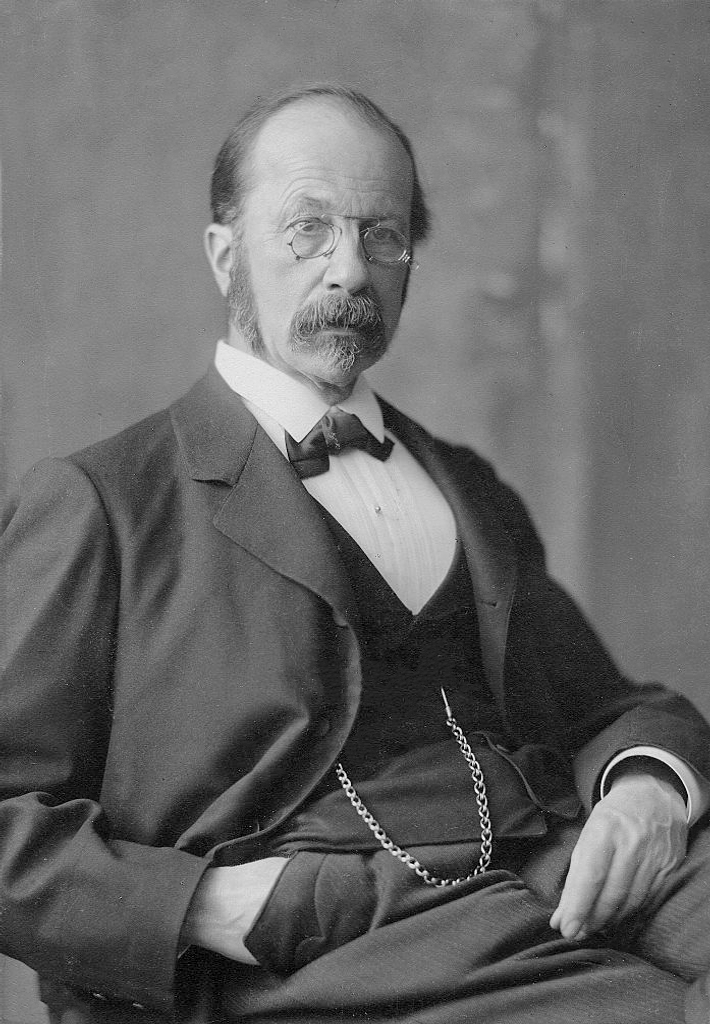
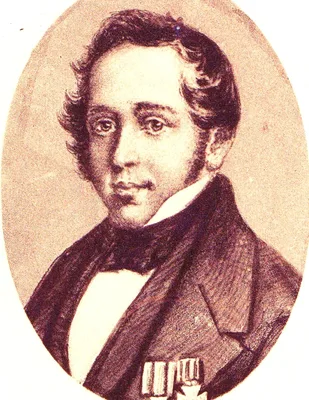
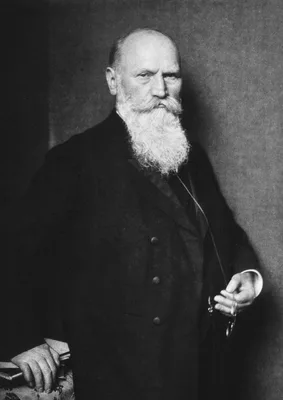
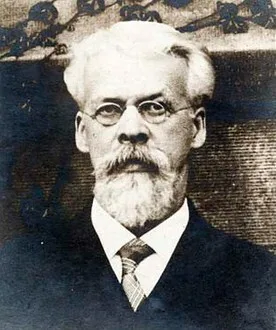
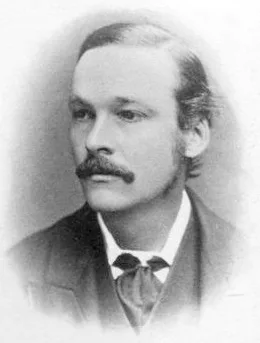
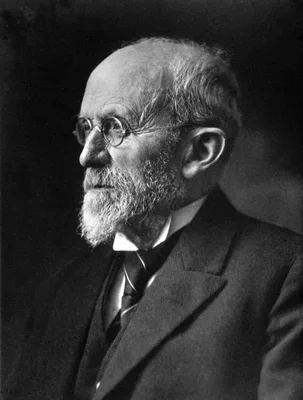
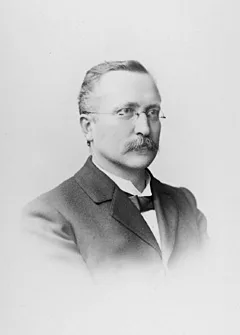
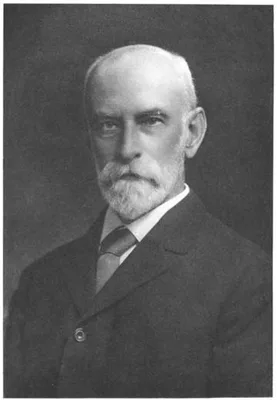
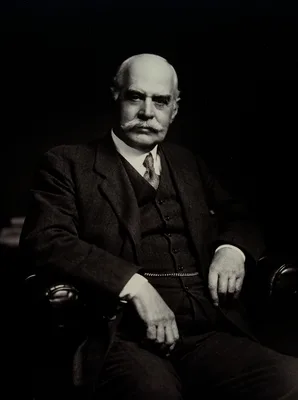
1865 HIS, Wilhelm Sr. (1831 – 1904)
Die Häute und Höhlen des Körpers.
A new classification of tissues based on histogenesis.
GMN 490 · https://historyofmedicine.com/id/1416
1865 VROLIK, Willem (1801 – 1863)
Catalogue de la superbe bibliothèque d'ethnographie, de zoologie, d'anatomie comparée, etc....
The auction catalogue of Vrolik's library, sold two years after his death, organized by subject. Prefaced by an essay about Vrolik's life and work by J. van der Hoeven, and a chronological list of Vrolik's publication…
GMN 6938 · https://historyofmedicine.com/id/9103
1866 HAECKEL, Ernest Heinrich Philipp August (1834 – 1919)
Generelle Morphologie der Organismen. 2 vols.
Haeckel accepted the general principles of Darwinism, disagreeing on some points. He was the first to promote Darwin’s theories in Germany. This work contains the first statement of his theory that “ontogeny recapitul…
GMN 223 · https://historyofmedicine.com/id/4399
1866 SIMS, James Marion (1813 – 1883)
Clinical notes on uterine surgery, with reference to the management of the sterile condition.
A revolutionary and controversial work, written in Paris while Sims was in voluntary exile because of the U.S. Civil War, and first serialized in Lancet 2 (1864) and 1 (1865). Includes, pp. 16-18, the description of S…
GMN 6057 · https://historyofmedicine.com/id/7410
1870 WALDEYER-HARTZ, Heinrich Wilhelm Gottfried von (1836 – 1921)
Eierstock und Ei.
Waldeyer discovered the germinal epithelium.
GMN 492 · https://historyofmedicine.com/id/1423
1874 HAECKEL, Ernest Heinrich Philipp August (1834 – 1919)
Anthropogenie oder Entwicklungsgeschichte des Menschen.
GMN 493 · https://historyofmedicine.com/id/1428
1874 HIS, Wilhelm Sr. (1831 – 1904)
Unsere Körperform und das physiologische Problem ihrer Entstehung.
In this work His compared the various layers and organs of the embryo to a series of elastic tubes and plates. He thought that the local inequalities of growth and the differences in the consistency of the tissues mig…
GMN 494 · https://historyofmedicine.com/id/1430
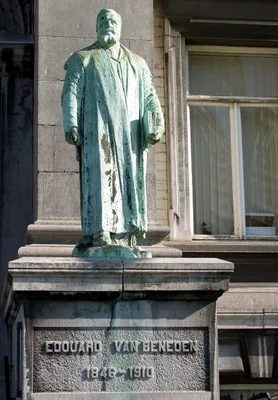
1875 BENEDEN, Edouard Joseph Louis Marie van (1846 – 1910)
Le maturation de l’oeuf, la fécondation et les premières phases du développement embryonnaire des mammifères.
First detailed description of the segmentation of the mammalian ovum.
GMN 496 · https://historyofmedicine.com/id/1436
1876 HENSEN, Christian Andreas Victor (1834 – 1924)
Beobachtungen über die Befruchtung und Entwicklung des Kaninchens and Meerschweinchens.
Hensen's node. "Hensen’s research focused on the embryonic development of guinea pigs and rabbits. While studying those organisms he noticed something previously undiscovered—an enlarged area above the primitive strea…
GMN 14097 · https://historyofmedicine.com/id/16408
1878 WHITMAN, Charles Otis (1842 – 1910)
The embryology of Clepsine.
The study of cell-lineage was initiated by Whitman’s paper on Clepsine.
GMN 499 · https://historyofmedicine.com/id/1454
1880 –1881 BALFOUR, Francis Maitland (1851 – 1882)
A treatise on comparative embryology. 2 vols.
This work sums up all the previous knowledge on the subject, and includes Balfour’s own significant contributions. Balfour, a pupil of Michael Foster, became professor of animal morphology in 1882; in the same year he…
GMN 500 · https://historyofmedicine.com/id/1462
1880 –1885 HIS, Wilhelm Sr. (1831 – 1904)
Anatomie menschlicher Embryonen. 3 pts. and atlas.
A systematic account of early human embryology that stimulated further investigation in a field in which His stood highest among his contemporaries. He was the first to study the human embryo as a whole.
GMN 501 · https://historyofmedicine.com/id/1469
1881 HERTWIG, Wilhelm August Oscar (1849 – 1922); HERTWIG, Richard Wilhelm Karl Theodor Ritter von (1850 – 1937)
Die Coelomtheorie. Versuch einer Erklärung des mittleren Keimblattes.
The Hertwig brothers formulated the “coelom” theory to account for the classification and phylogeny of metazoan animals. Digital facsimile from the Internet Archive at this link.
GMN 502 · https://historyofmedicine.com/id/1477
1882 –1883 WINSLOW, Ralph (1868 – 1924)
"A study of the malformations, variations, and anomalies of the circulatory apparatus in man," with a brief consideration of some of the principles governing their production.
A pioneering study of the embryology of the cardiovascular system and its relationship to congenital heart disease.
GMN 11737 · https://historyofmedicine.com/id/13938
1883 BENEDEN, Edouard Joseph Louis Marie van (1846 – 1910)
Récherches sur la maturation de l’oeuf, la fécondation et la division cellulaire.
This work extended Hertwig’s work on fertilization (No. 495) down to the level of chromosomes, which were clearly visible in Ascaris after the sperm and egg united.
GMN 502.1 · https://historyofmedicine.com/id/1479
1883 PFLÜGER, Eduard Friedrich Wilhelm (1829 – 1910); SMITH, William J.
Untersuchungen über Bastardirung der anuren Batrachier und die Principien der Zeugung.
Pflüger was one of the earliest workers in the field of experimental embryology. Above, his first work on the subject, deals with the cross fertilization of different species of frog.
GMN 503 · https://historyofmedicine.com/id/1482
1886 HERTWIG, Wilhelm August Oscar (1849 – 1922)
Lehrbuch der Entwicklungsgeschichte des Menschen und der Wirbelthiere.
GMN 504 · https://historyofmedicine.com/id/1490
1887 HIS, Wilhelm Sr. (1831 – 1904)
Zur Geschichte der menschlichen Rückenmarkes und der Nervenwurzeln.
This is generally considered the first clear statement that nerve cells in the brain might be independent units rather than forming an anastomotic network—as Gerlach, Golgi, and most others believed—although there are…
GMN 1368.1 · https://historyofmedicine.com/id/1720
1888 ROUX, Wilhelm (1850 – 1924)
Beiträge zur Entwickelungsmechanik des Embryo. Ueber die künstliche Hervorbringung halber Embryonen durch Zerstörung einer der beiden ersten Furchungskugeln, sowie über die Nachentwickelung (Postgeneration) der fehlenden Körperhalfte.
Roux is regarded as the founder of developmental mechanics (“Entwicklungsmechanik” as he named it). His work on the production of half-embryos initiated a turning point by shifting emphasis from descriptive to experim…
GMN 505 · https://historyofmedicine.com/id/1494
1889 MINOT, Charles Sedgwick (1852 – 1914)
Uterus and embryo.
GMN 506 · https://historyofmedicine.com/id/1499
1889 HIS, Wilhelm Sr. (1831 – 1904)
Die Neuroblasten und deren Entstehung im embryonalen Mark.
In this paper on neuroblasts (young neurons) and their development in the embryonic spinal cord, His coined the term, “dendrite,” for what had been called protoplasmic processes since the term was introduced by Deiter…
GMN 7335 · https://historyofmedicine.com/id/9506
1891 MINOT, Charles Sedgwick (1852 – 1914)
A theory of the structure of the placenta.
GMN 507 · https://historyofmedicine.com/id/1502
1891 HENKING, Hermann (1858 – 1942)
Untersuchungen über den ersten Entwicklungsvorgänge in den Eiern der Insekten. II. Ueber Spermatogenese und deren Beziehung zur Eientwicklung bei Pyrrhocoris apterus.
In his study of the testicles of the firebug (Pyrrhocoris) Henking noticed that one chromosome did not take part in meiosis. He named this X element because its strange behavior made him unsure whether it was genuinel…
GMN 517.1 · https://historyofmedicine.com/id/1596
1892 DRIESCH, Hans Adolf Eduard (1867 – 1941)
Entwicklungsmechanische Studien. I. Der Werth der beiden ersten Furchungszellen in der Echinodermentwicklung. Experimentelle Erzeugen von Theil-und Doppelbildung. II. Ueber die Beziehungen des Lichtes zur ersten Etappe der thierischen Formbildung.
In the spring of 1891 Driesch succeeded in separating the blastomeres of the cleaving sea urchin egg. English translation in No. 534.3.
GMN 509 · https://historyofmedicine.com/id/1512
1892 WILSON, Edmund Beecher (1856 – 1939)
The cell-lineage of Nereis.
Wilson traced the development of Nereis in minute detail from fertilized egg to the free-swimming larval stage, a pioneer study of cell-lineage.
GMN 510 · https://historyofmedicine.com/id/1528
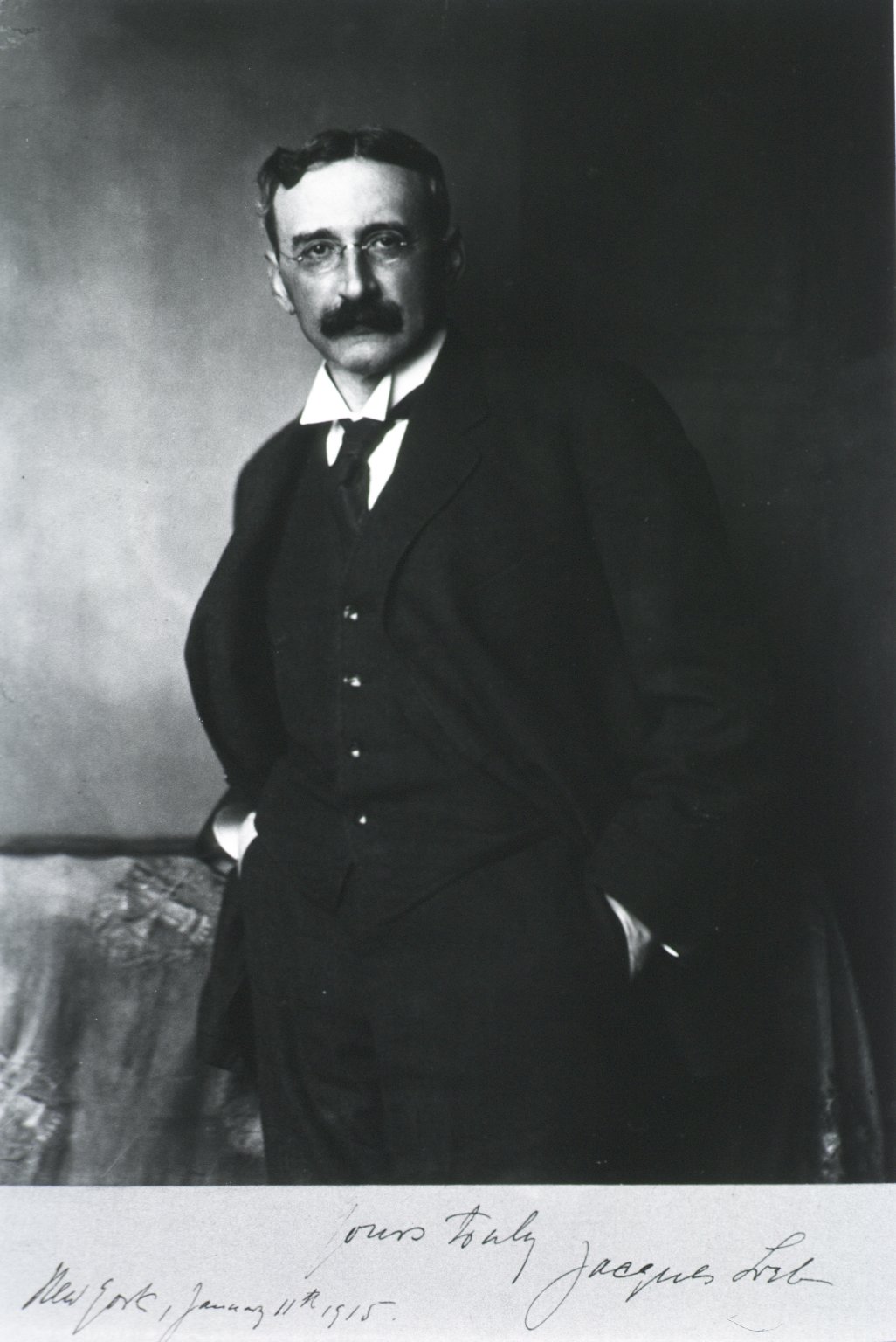
1894 –1895 LOEB, Jacques (1859 – 1924)
Ueber die Grenzen der Theilbarkeit der Eisubstanz.
English translation in Loeb’s Studies in general physiology, Vol.l., Chicago, 1905.
GMN 511 · https://historyofmedicine.com/id/1532
1895 LILLIE, Frank Rattray (1870 – 1947)
The embryology of the Unionidae. A study in cell-lineage.
GMN 512 · https://historyofmedicine.com/id/1536
1895 DONALDSON, Henry Herbert (1857 – 1938)
The growth of the brain.
GMN 1425 · https://historyofmedicine.com/id/2162
1895 WILSON, Edmund Beecher (1856 – 1939); LEAMING, Edward (1861 – 1916)
An atlas of the fertilization and karyokinesis of the ovum.
The first atlas of photomicrographs showing fertilization and cellular development during mitosis. The photomicrographs were taken by Leaming. Digital facsimile from the Internet Archive at this link.
GMN 8653 · https://historyofmedicine.com/id/10830
1896 WILSON, Edmund Beecher (1856 – 1939)
The cell in development and inheritance.
Wilson emphasized the function of cytology in the study of embryology, heredity, evolution and general physiology. The above work has been called the single most influential treatise on cytology of the 20th century. T…
GMN 238 · https://historyofmedicine.com/id/8354
1897 –1938 KEIBEL, Franz Karl Julius (1861 – 1929)
Normentafeln zur Entwicklungsgeschichte der Wirbelthiere. 16 pts.
GMN 513 · https://historyofmedicine.com/id/1549
1897 MORGAN, Thomas Hunt (1866 – 1945)
The development of the frog's egg; an introduction to experimental embryology.
First work in English on experimental embryology.
GMN 514 · https://historyofmedicine.com/id/1553
1897 SCHAPER, Alfred (1863 – 1905)
Die frühesten Differenzirungsvorgänge in Centralnervensystem.
GMN 515 · https://historyofmedicine.com/id/1560
1897 FASBENDER, Heinrich (1843 – 1914)
Entwickelungslehre, Geburtshülfe und Gynäkologie in der hippokratischen Schriften.
Digital facsimile from the Internet Archive at this link.
GMN 12198 · https://historyofmedicine.com/id/14408
1897 MALPIGHI, Marcello (1628 – 1694); FRATI, Carlo (1863 – 1930)
Bibliografia malpighiana: Catalogo descrittivo delle opere a stampa di Marcello Malpighi e degli scritti che lo riguardano
GMN 13184 · https://historyofmedicine.com/id/15445
1899 LOEB, Jacques (1859 – 1924)
On the nature of the process of fertilization and the artificial production of normal larvae (plutei) from the unfertilized eggs of the sea urchin.
Loeb first achieved parthenogenesis in 1899.
GMN 515.1 · https://historyofmedicine.com/id/1565
1899 PETERS, Hubert (1859 – 1934)
Ueber die Einbettung des menschlichen Eies und das früheste bisher bekannte menschliche Placentationsstadium.
GMN 516.1 · https://historyofmedicine.com/id/1577
1900 –1908 MALL, Franklin Paine (1862 – 1917)
Contributions to the study of the pathology of early human embryos. 3 pts. : (1). A contribution to the study of the pathology of early human embryos. Welch Festschrift, Johns Hopkins Hospital Reports, IX (1900). (2). Second contribution to the study of the pathology of early human embryos. Contributions to medical research. Dedicated to Victor C. Vaughan. Ann Arbor (1903). (3). A study of the causes underlying the origin of human monsters. Third contribution to the study of the pathology of human embryos. Reprinted from Journal of morphology, 29, No. 1 (1908).
Part 3, with 365 pages and illustrations was the main work of this series. Mall began the introduction to the third part as follows: "The present communication is the outcome of a study of 163 pathological human embry…
GMN 516 · https://historyofmedicine.com/id/1572
1901 SABIN, Florence Rena (1871 – 1953)
An atlas of the medulla and midbrain: A laboratory manual.
GMN 11180 · https://historyofmedicine.com/id/13377
1902 –1909 KORSCHELT, Eugen (1858 – 1946); HEIDER, Karl (1856 – 1935)
Lehrbuch der vergleichenden Entwicklungsgeschichte der wirbellosen Thiere.
GMN 517 · https://historyofmedicine.com/id/1581
1902 MCCLUNG, Clarence Erwin (1870 – 1946)
The accessory chromosome; sex determination.
McClung showed that the accessory chromosomes are the determinants of sex.
GMN 518 · https://historyofmedicine.com/id/1602
1902 –1904 BALLANTYNE, John William (1861 – 1923)
Manual of antenatal pathology and hygiene. Volume 1, The foetus. Volume 2, The embryo.
Ballantyne was a pioneer advocate of antenatal care. Volume 2, The Embryo, is the most complete history of teratology in English, and among the best in any language. American edition, New York, 1905. Digital facsimile…
GMN 534.69 · https://historyofmedicine.com/id/7601
1904 WILSON, Edmund Beecher (1856 – 1939)
Experimental studies on germinal localisation.
GMN 519 · https://historyofmedicine.com/id/1607
1904 HIS, Wilhelm Sr. (1831 – 1904)
Die Entwickelung des menschlichen Gehirns, während der ersten Monate.
"This final summary of brain development, published in the year of his death, contains a wealth of classic illustrations that have been adapted ever since in textbooks" (Larry W. Swanson).
GMN 7339 · https://historyofmedicine.com/id/9510
1905 CONKLIN, Edwin Grant (1863 – 1952)
The organization and cell-lineage of the Ascidian egg.
Digital facsimile from Biodiversity Heritage Library at this link.
GMN 13158 · https://historyofmedicine.com/id/15417
1906 HERTWIG, Wilhelm August Oscar (1849 – 1922)
Handbuch der vergleichenden und experimentellen Entwicklungslehre der Wirbelthiere. 3 vols.
GMN 520 · https://historyofmedicine.com/id/1635
1907 HARRISON, Ross Granville (1870 – 1959)
Observations on the living developing nerve fiber.
Harrison demonstrated the development of nerve fibres by independent growth from cells outside the organism.
GMN 521 · https://historyofmedicine.com/id/1640
1907 –1908 LEWIS, Warren Harmon (1870 – 1964)
Experiments on the origin and differentiation of the optic vesicle in amphibia.
GMN 522 · https://historyofmedicine.com/id/1644
1908 BRYCE, Thomas Hastie (1862 – 1946); TEACHER, John Hammond (1869 – 1930)
Contributions to the study of the early development and imbedding of the human ovum. An early ovum imbedded in the decidua.
The “Bryce-Teacher ovum”, age estimated at 13-14 days.
GMN 523 · https://historyofmedicine.com/id/1652
1908 LOEB, Jacques (1859 – 1924)
Ueber den chemischen Character des Befruchtungvorgangs.
GMN 524 · https://historyofmedicine.com/id/1655